The Winker by Andrew Martin

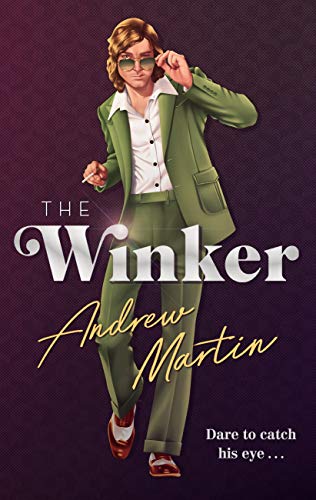
The Winker

Corsair| 6 June 2019| 272 pages| e-book| review copy via NetGalley|4 stars

I haven’t read anything by Andrew Martin before and as I began reading The Winker I found it decidedly odd and a bit creepy. I don’t like the cover at all and the title didn’t appeal to me either. But the description interested me:

London, 1976.

In Belgravia in the heat of summer, Lee Jones, a faded and embittered rock star, is checking out a group of women through the heavy cigarette smoke in a crowded pub. He makes eye contact with one, and winks. After allowing glances to linger for a while longer, he finally moves towards her.

In that moment, his programme of terror – years in the making – has begun.

Months later, the first of the many chilling headlines to come appears: ‘Police hunting winking killer.’

Meanwhile in France.

Charles Underhill, a wealthy Englishman living in Paris, has good reason to be interested in the activities of the so-called Winking Killer. With a past to hide and his future precarious, Charles is determined to discover the Winker’s identity.

In the overheating cities of London, Oxford, Paris and Nice, a game of cat and mouse develops, and catching someone’s eye becomes increasingly perilous. But if no one dares look, a killer can hide in plain sight . . .

From ‘a master of historical crime fiction’ (The Guardian), The Winker is a gripping thriller that won’t let you look away.

My thoughts:

I like the structure of this book. It is set in 1976 with flashbacks to 1951, in several locations, mainly London and Nice and sometimes in Paris and Oxford. Each time and place is clearly highlighted. The book is largely character-led. Lee Jones, a failed pop singer and psychopath is working on a ‘project’, nothing to do with music, aiming to achieve world-wide fame. He calls it a ‘programme’ and involves something he calls a ‘folder’ and his ‘trademark’. He is living in a fantasy world, accompanied by Abigail a journalist who intermittently interviews Lee. It was all a bit ambiguous at first and it took me a few pages to decide what I thought about Abigail and her role in the book. 

Then there is Charles Underhill, a man of about fifty,  living a self-imposed exile in France, because of an event in Oxford whilst he was a student there. He lives a very routine life in Paris with his mother Syl, except for his annual holiday in Nice. His routine is upset when he receives a postcard with a picture of the river at Oxford showing a boat full of university rowers, but no message on the back. When more unsigned postcards arrive he is worried that they are from Pat Price who was at the university with him in 1951.

In Nice Charles meets Howard Miller, a crime fiction writer. His first novel wasn’t a great success and he is looking for inspiration for his next novel, to prove to his father he wasn’t wasting his time. These three men are now set on a collision course as Charles offers to pay Howard for a couple of days work in Oxford to find out who had sent him the anonymous postcards. From that point onwards everything fell into place for me and I was hooked.

This is psychological crime fiction, you know right from the beginning who the ‘Winker’ is, but the precise method of the murders is not clear (at least not to me) until later in the book. And Charles’ secret is revealed quite early in the book. Neither Lee nor Charles are pleasant characters and this is decidedly a creepy tale, but it’s also a compelling one. Howard, on the other hand, is rather a naive character, who nevertheless gets to the bottom of the mystery. I loved the settings – they are so vivid and evocative of the 1970s; the places, the intense heat of the summer  of 1976, the people, their clothes, the hairstyles, sunglasses, cars, exotic cigarettes, and especially the music of the 70s, bring it all to life in technicolour. I think this is ripe for being made into a film.

Andrew Martin, a former Spectator Young Writer of the Year, grew up in Yorkshire. He has written for the Evening Standard, the Sunday Times, the Independent on Sunday and the Daily Telegraph, among others. His weekly column appears in the New Statesman and he is the author of numerous articles and books – of both fiction and non-fiction. For more information see his website.

I received a copy of this book from the publisher, via NetGalley, for review.
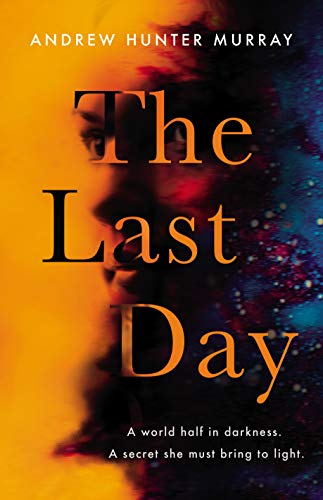
The Last Day by Andrew Hunter Murray

A thriller set in a world which has spun to a halt, bringing civilisation to the brink of collapse

The last day

Cornerstone| 6 February 2020| 432 pages| e-book| review copy via NetGalley| 5 stars

It’s not often I read dystopian fiction, a bit wary that I won’t like it, but I’m glad to say that I was fascinated by The Last Day by Andrew Hunter Murray. I’m not sure about the plausibility of the concept but I was gripped by the story of a world coming to an end and the effects that had on the planet and the population.

A white dwarf star, the size of earth but two hundred thousand times as dense had barrelled through space, and travelling at two thousand kilometres a second its trajectory and gravity had dragged the earth backwards. The earth’s rotation had gradually slowed and eventually came to a full stop. Chaos followed, earthquakes, volcanic eruptions and gales swept the earth’s surface, but gravity still functioned as the planet was still the same mass and exerted gravitational force. As the planet stopped on the dawning of the last day in 2029 the boundaries of day and night were locked in place, with a slender ring of borderlands that varied between total darkness and a fractional glimpse of light. Europe was in the constant light of the sun with an isolationist Britain on the warm side far enough in to raise crops but far enough out to still be habitable.

Set in 2059, thirty years after the earth had finally stopped spinning The Last Day presents a totalitarian world, and gives such a vivid picture of what life has become for the people who live on the burning sun side of the planet. There is, of course, no night, but there is a curfew during the ‘night’ hours.  I warmed to Ellen Hopper, a scientist working on a rig two hundred miles off the south-west coast of England in the North Atlantic, where it is always dawn, as she studies the ocean’s currents. She receives a letter from Dr Edward Thorne her old college tutor at Oxford who is dying. He has something important to tell her, information that would ruin the British government and that they would do anything to keep hidden. Prior to his appointment at Oxford he had  been a scientist and an adviser to the British Prime Minister, Richard Davenport, until he had been ignominiously sacked. 

What follows is Hopper’s search to discover the details of this secret, interspersed with flashbacks to her past and her family history, in particular about what happened to her parents, her relationship with her brother, who works in security, her fears that she shouldn’t trust him, and her ex-husband David. It is full of political intrigue and danger with a high body count and builds to a dramatic conclusion. I thoroughly enjoyed it, was glued to the pages and by the end of the book I was convinced of the reality of this implausible world (at least I hope it is). 

Andrew Hunter Murray, is a writer and journalist from London. The Last Day is his first novel. when he’s not writing fiction he works for the TV show QI, as one of the ‘Elves’ finding out Quite Interesting facts about everything under the sun. He also co-hosts the podcast No Such Thing As A Fish, and write jokes and journalism for Private Eye, the UK’s leading satirical magazine. No Such Thing As A Fish has also led to a spin-off TV series, No Such Thing As The News, and three books co-written with his colleagues on the show – the Book Of The Year, The Book Of The Year 2018, and the Book Of The Year 2019.

He is already working on his next novel idea. I definitely want to read it when he’s finished it!

Many thanks to Cornerstone for a review copy via NetGalley.

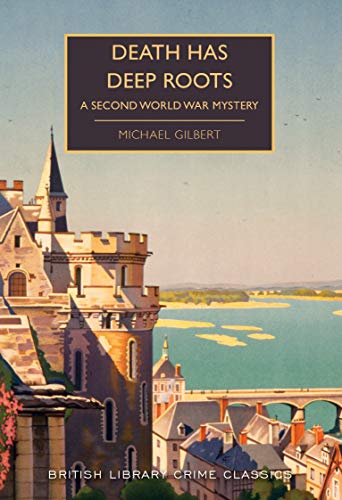
Death Has Deep Roots by Michael Gilbert (British Library Crime Classics)


Death has deep roots

Poisoned Pen Press| 5 November 2019| 288 pages|reprint edition| 4.5*

Death Has Deep Roots: a Second World War Mystery by Michael Gilbert was first published in 1951. This edition, published in association with the British Library, has an introduction by Martin Edwards.

I thoroughly enjoyed Death Has Deep Roots. Set in 1950 it’s a mix of courtroom drama, spy novel and an adventure thriller. Victoria Lamartine, a hotel worker, and an ex-French Resistance fighter is on trial for the murder of Major Eric Thoseby, her supposed lover, and alleged father of her dead child. The story alternates between the courtroom scenes, where QC Hargest Macrea is in charge of Vicky’s defence, and the investigations of solicitor Nap Rumbold in France, and his friend Major Angus McCann, who now keeps a pub in Shepherd Market.

Vicky is the obvious suspect – she was found standing over Thoseby’s dead body in his room at the Family Hotel in Soho, a room that was only accessed by one staircase – making this a variation on a locked room murder mystery. In evidence was also against her as Thoseby had been stabbed using the same method that the Resistance fighters had been taught. But she insists that she is not guilty.  Macrea and Nap believe her and Nap sets out to find the Englishman, Julian West, who Vicky says is the father of her dead child, whilst McCann investigates events in London.

I always like courtroom dramas and I think the courtroom scenes are impressive and persuasive as Macrea questions the prosecutions witnesses and manages to stall proceedings whilst Nap is away in France. It is, of course, much more complicated than I’ve described – there is a lot of information about the war in France and the work of the French Resistance, and the dangers that confront Nap as he digs deeper into what had happened to Wells. And I enjoyed the thrill of the chase as he travels through France with only a week to discover the truth.

I think what makes this book so good is not just the murder mystery, which I couldn’t solve, but also the setting and the characters. It was written not long after the end of the Second World War and it conveys a vivid impression of what life was like in both France and England, with memories of the war still fresh on people’s minds. Whilst Vicky is maybe a stereotypical character Nap, in particular, comes across as a more developed character – and a very likeable one too. It’s described as a book in the Inspector Hazelrigg series, but he only makes a brief appearance, with Nap, Macrea and McCann doing the main investigations.

Michael Gilbert was a British lawyer who wrote police procedurals, spy novels and many short stories, courtroom dramas, classical mysteries, adventure thrillers, and crime novels. I have another one of his to read, Smallbone Deceased and I hope to get round to it soon.

Many thanks to Poisoned Pen Press for a review copy via NetGalley.

Hitler’s Secret by Rory Clements

Hitler's secret

Bonnier Zaffre| 23 January 2020| 339 pages| e-book| review copy via NetGalley| 4 stars

Description from the author’s website:

In late autumn 1941, Nazi Germany has conquered most of western Europe and is now laying waste to the Soviet Union with a relentless drive towards the East. But a secret from Hitler’s past life threatens to destabilise the Nazi regime – and there are men who will stop at nothing to prevent it coming out. 

My thoughts

I enjoyed Rory Clements’ first book in his Tom Wilde series, Corpus so much that I decided to look out for more of his books. But somehow I missed the next two books as Hitler’s Secret is the fourth book in the series. Luckily for me, it reads perfectly as a standalone, although at some point I would like to read the books I missed.

This is a complicated novel and I am not going to attempt to describe all the details.  Just before the USA’s entry into the Second World War, Cambridge professor Tom Wilde, an American, is smuggled into Nazi Germany at the instigation of an American intelligence officer to collect a mysterious package from Berlin. He isn’t told what is in the package, but I thought it was obvious from quite early in the book what it was.  I think that increased the tension and suspense throughout the book and at several points in the story, I just couldn’t imagine how Tom would succeed in his mission as he is pursued by numerous people including the powerful Nazi, Martin Borman and his agents. Hermann Goering and his wife Emmy also play an important role in the story as does the internal struggle for power under Hitler, whereas Hitler himself does not appear.

I enjoyed all of it – the somewhat predictable plot, the amazing coincidences, the chase across Germany and the Baltic, the doubtful characters, as well as all the twists and turns and seemingly impossible situations that they encounter. It’s fast paced, full of action, danger, violence and double-cross – a most satisfying and compelling thriller. The ending in England is also intriguing, full of heart stopping moments in scenes that had my head whirling. Needless to say really, but I was gripped by this book and I just had to find out what happened. I think the last final twist about Hitler’s secret was very well done.

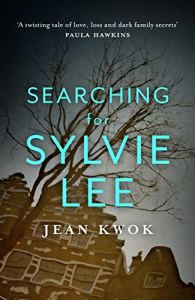
Searching for Sylvie Lee by Jean Kwok

Searching for Sylvie Lee

John Murray|17 October 2019|341 pages|e-book via NetGalley|Review copy|4*

Description extracted from the publishers’ blurb:

It begins with a mystery. Sylvie, the beautiful, brilliant, successful older daughter of the Lee family, flies to the Netherlands for one final visit with her dying grandmother – and then vanishes.

Amy, the sheltered baby of the Lee family, is too young to remember a time when her parents were newly immigrated and too poor to keep Sylvie. Seven years older, Sylvie was raised by a distant relative in a faraway, foreign place, and didn’t rejoin her family in America until age nine. Timid and shy, Amy has always looked up to her sister, the fierce and fearless protector who showered her with unconditional love.

But what happened to Sylvie? Amy and her parents are distraught and desperate for answers. Sylvie has always looked out for them. Now, it’s Amy’s turn to help. 

My thoughts:

I loved Searching For Sylvie Lee by Jean Kwok.  I enjoyed reading its beautiful descriptive language and the mystery of what had happened to Sylvie. I think the characterisation is very good, the three main characters, Sylvie, her younger sister Amy and their mother Ma are each clearly recognisable by the way they speak. The story alternates between the two sisters and their mother’s perspectives, as the details of what happened to Sylvie are revealed.

Sylvie had left her home in the USA to visit her dying grandmother in the Netherlands where she had lived until she was nine. After the funeral she was supposed to return home, but she never arrived. Amy and her parents are distraught and she flies to the Netherlands to find out what had happened to her.

This is a mystery full of suspense and it is also a story about family relationships, about secrets and the barriers that language can raise – Amy’s dominant language is English, whereas her mother and father, Chinese immigrants living in America, have just a basic grasp of English and still speak Chinese. Sylvie also speaks Dutch as until the age of nine she had lived with the Tan family, Chinese immigrants living in the Netherlands. It’s not just the language but also the different cultures and the racism they experienced that separated the characters.

I had realised quite early on what the family secret was and what had happened to Sylvie, but that didn’t spoil my enjoyment of the book. My only criticism is that in the latter part of the book, particularly as Sylvie describes her visit to Venice I thought that the book veered offline. Although the episode is essential to the plot the detailed description took away the momentum of the mystery and my attention wandered a bit. But the ending made up for that!

The Author:

I would like to read more of Jean Kwok’s books. She is trilingual, fluent in Dutch, Chinese, and English, and studied Latin for seven years. Jean immigrated from Hong Kong to Brooklyn when she was five and worked in a Chinatown clothing factory for much of her childhood. She received her bachelor’s degree from Harvard and completed an MFA in fiction at Columbia University. She currently lives in the Netherlands. Her work has been published in twenty countries and taught in universities, colleges, and high schools across the world.  

My thanks to the publishers for my review copy via NetGalley.

Calendar of Crime Wrap-Up Post

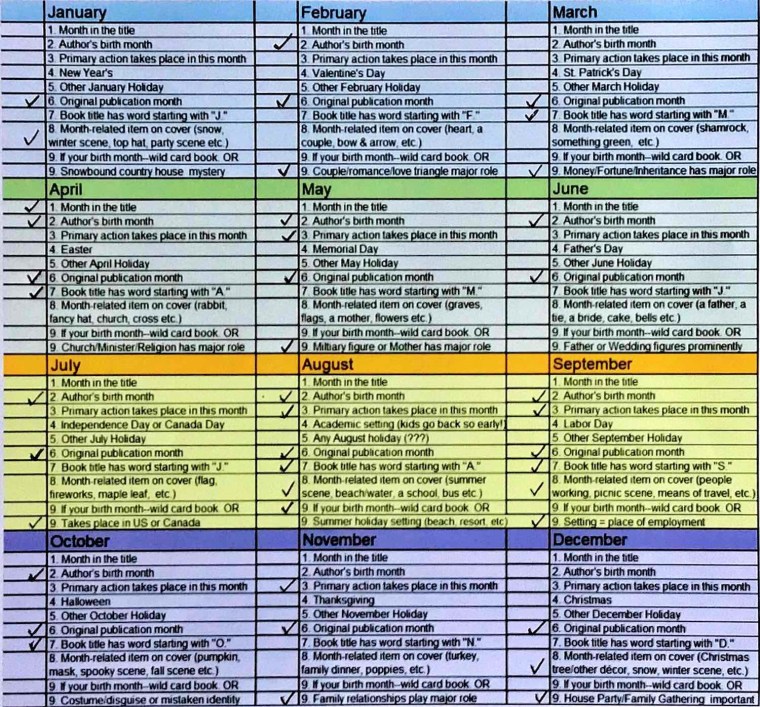
The Calendar of Crime is a reading challenge hosted by Bev at My Reader’s Block. It allows mystery readers to include any mystery regardless of publication date. If it falls in a mystery category (crime fiction/detective novel/police procedural/suspense/thriller/spy & espionage/hard-boiled/cozy etc.), then it counts and it does not matter if it was published in 1892 or 2019.

The Challenge ran from January 1, 2019 to December 31, 2019. I really enjoyed doing this and completed 42 of the 108 categories as shown in the chart and listed below:

Calendar of C 2019 2

January:

February:

March:

April:

May:

  • The Lying Room by Nicci French author’s birth month (Sean French)
  • The Seeker by S G Maclean – original publication month
  • Who Killed Ruby? by Camilla Way – mother has a major role
  • Wild Fire by Ann Cleeves – action takes place this month

June:

July:

August:

September:

October:

November:

  • The Stranger Diaries by Elly Griffiths – primary action takes place in this month
  • The Lost Man by Jane Harper – Family relationships play major role
  • Not Dead Enough by Peter James – book title has word beginning with ‘N’

December:

And now I’m looking forward to taking part in this year’s challenge – you can sign up too on Bev’s blog My Readers Block.