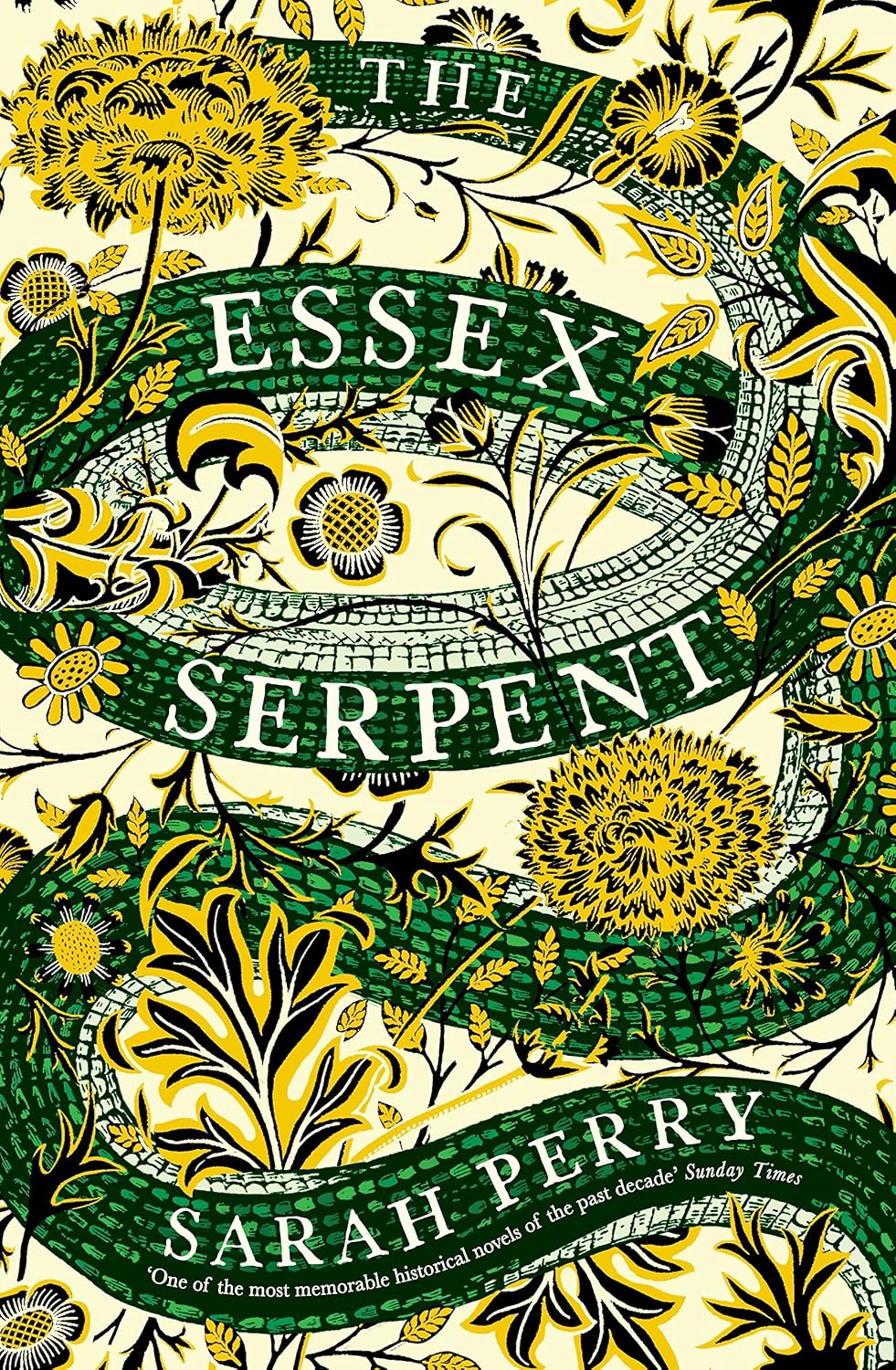
Quite Ugly One Evening by Chris Brookmyre

Abacus| 7 May 2026| 359 pages e-book| Review copy 4*

An Atlantic voyage. A family at war. A secret worth killing over.

Reporter Jack Parlabane thrives on chasing stories in unlikely places, and where could be less likely than a fan convention on a cruise liner celebrating a contentious Sixties TV series? But unlike the media family exploiting their show’s renewed relevance, he’s not there to stoke controversy: he’s there to solve a murder.

Already in deep water with his employer, Jack desperately needs a win, and solving this decades-old mystery could be it. Problem is, he’s in the middle of the Atlantic, and someone onboard has already killed once to keep their secret.

And that’s not even the tricky part. No, the tricky part is definitely the dead body locked in a stateroom with him, covered in his blood. Now Jack has to solve two murders, otherwise the only way he’s getting off this ship is in handcuffs – or in a body bag.

Quite Ugly One Evening by Chris Brookmyre is the ninth book in the Jack Parlabane series. Jack, now 60, is an investigative journalist, who finds himself in competition with his younger colleagues, grateful that he still has a job.

The first book by Chris Brookmyre I read was Quite Ugly One Morning, the first in the series. That was in 2010 and since then I have read and enjoyed more of his books, including those he’s written under the pseudonym Ambrose Parry with his wife, Marisa Haetzman. But, I haven’t read the other Jack Parlabane books. However, it wasn’t a problem and I don’t think you need to have read the other books to enjoy this one, as it does read well as a standalone.

It is a ‘locked room’ type mystery as the action takes place on a cruise liner as it crosses the Atlantic. The ship is full of fans of the Maskyn family’s 1960s TV puppet series, The Imaginators, attending a convention, symposium and 60th anniversary celebration. They are also looking to update the series as sixty years later the series is not only dated but also obviously racist in some of the puppet designs. And the family are split over a takeover bid from a billionaire, with some wanting to accept his offer and others bitterly opposed to it.

It’s also complicated, with a large cast of characters and multiple layers. It took me a while to work out who is who, as I was reading a proof copy which does not have the Maskyn family tree included in the published edition – it would have been really helpful. Jack is onboard after being approached by MI5 who want him to act as an undercover agent investigating the death of an agent, Simeon Wickham forty years earlier. MI 5 had intelligence that the Maskyns had been infiltrated by an agent of a foreign power at that time. Just who was Simeon Wickham, what was his involvement with the Maskyns and who killed him?

Right from the start of the book it appears that Jack is the main suspect for killing the man found dead in suite 1114. The first half is slow going with detailed descriptions of the layout of the ship, with Jack getting lost in the different staircases that looked the same, confused by the position and direction of the ship and not sure which deck he was on. There is a great deal of description about the TV puppet show and about the current criticism it’s attracting. However, the pace begins to speed up at about 49%, and it was a race to the end.

I thoroughly enjoyed it, murder, onboard a luxury line in the middle of the Atlantic, with a complex plot, interesting characters, social commentary, told with humour and a hint back to the Golden Age of murder mysteries.

Spell the Month in Books June 2026

Spell the Month in Books is a linkup hosted by Jana on Reviews From the Stacks on the first Saturday of each month. The goal is to spell the current month with the first letter of book titles, excluding articles such as ‘the’ and ‘a’ as needed. That’s all there is to it! Some months there are optional theme challenges, such as “books with an orange cover” or books of a particular genre, but for the most part, any book you want to use is fair game!

As Jana is not back on her blog yet, there is no theme for this month, so I am featuring books that spell the word June using the first letters of the book titles. These are all books that I’ve read and are linked to my posts on them.

J is for Julius by Daphne du Maurier

Julius is the life story of a ruthless man, driven by his lust for power, and his dedication to getting ‘something for nothing’. It’s a chilling tale about a man whose love for his daughter brings about his ruin. It was her third book written when she was twenty-six. It may lack that magic quality of her later books, but it is still compelling and disturbing reading, rich in detail and characterisation.

U is for Ultimate Prizes by Susan Howatch

I read this book before I began blogging, so no review. It’s the third book in the Starbridge series, six self-contained yet interconnected novels that explore the history of the Church of England through the 20th century. I loved all six books. This one is about Neville Aysgarth, archdeacon, and right-hand man of the Bishop of Starbridge, who has spent his life chasing worldly success. In 1942 he has a perfect wife, a perfect family and a perfect future in the Church of England – all ultimate prizes.Then Aysgarth meets an attractive young socialite and is soon dangerously and chaotically involved in adultery, hypocrisy and obsession.

N is for No Further Questions by Gillian McAllister

I was hooked right from the start of this book. It plunges straight into a trial as Martha sits in the courtroom listening to expert witnesses being questioned  and cross-examined about the death of her baby, Layla, just eight weeks old. Her sister Becky is accused of murdering her. Martha doesn’t want to believe Becky is guilty but as the trial proceeds, as medical and social worker witnesses as well as neighbours and a school teacher present their accounts it looks increasingly bad for Becky.This is a tense, tightly plotted book and I was gripped. I didn’t want to stop reading it and when I wasn’t reading it I was thinking about it, about the characters and their relationships, about how they had got themselves into such a terrible situation. 

E is for The Elopement by Gill Hornby

This is historical fiction about the life of Jane Austen’s niece Fanny Knight and Mary Dorothea Knatchbull, Fanny’s stepdaughter. Fanny’s father was Edward Austen, who was adopted by the wealthy Knight family. In 1820 Fanny married Sir Edward Knatchbull, a widower, with six children. Fanny and Mary Dorothea, the only daughter, had a difficult relationship right from the start. Fanny is not a warm character and Mary is reluctant to accept her as a substitute mother, but Fanny comes from a large, happy and sociable family and Fanny’s sisters become Mary’s first friends. Her aunt, Miss Cassandra Austen of Chawton, is especially kind. Her brothers are not only amusing, but handsome and charming, and when Mary and one of the Knight brothers fall in love and want to marry Fanny is not all happy.

Top Ten Tuesday: Books with Handwriting on the Cover

Top Ten Tuesday is a weekly meme hosted by Jana @ That Artsy Reader Girl. For the rules see her blog.

The topic this week is Books with Handwriting on the Cover (Or fonts that look like handwriting. Titles, subtitles, covers with letters on them, etc.) These are all paperback books I own, some of which I haven’t read yet. I’ve linked those I have read to my posts on them.

I’m a bit late posting my Top Ten Tuesday, but it still is Tuesday!

The Sweetness at the Bottom of the Pie by Alan Bradley – I’ve avoided reading this book because of all the hype when it was first published, but maybe I should just ignore that now. It’s a murder mystery set in 1950. When a body is found in the garden Fiona, who is very nearly 11 years old, decides to do her own investigations.

Fire by L C Tyler – I’ve read a few novels set in 1666 about the Great Fire of London and this is yet another one. It’s the fourth in the John Grey Historical Mystery series. Lawyer John Grey investigates a Frenchman who admits to having started the fire together with an accomplice, whom he says he has subsequently killed.

Old Filth by Jane Gardam, which I loved. This tells the story of Sir Edward Feathers, variously known as Eddie, The Judge, Fevvers, Master of the Inner Temple and Teddy. Not a dirty old man, he is ‘spectacularly clean. You might say ostentatiously clean.’ Filth is his nickname standing for Failed In London Try Hong Kong. It’s a gentle book, full of humour and heartbreak.

Daphne du Maurier by Margaret Forster, an extremely well researched and informative account of Daphne Du Maurier’s life, taken from her letters and private papers, with personal memories of her from her children, grandchildren and friends. It is a candid account of her relationships and also an excellent source of information on Du Maurier’s method of writing and views on life.

The Bone Clocks by David Mitchell. I loved Mitchell’s book Cloud Atlas, so I’m hoping to love this one too. It is described inside the front cover thus: ‘Metaphysical thriller, meditation on mortality and chronicle of our self-devouring times, this kaleidoscopic novel crackles with the invention and wit that have made David Mitchell one of the most celebrated writers of his generation.’

Mr Mac and Me by Emma Freud, a novel about a young boy and his unlikely friendship with the Glaswegian artist Charles Rennie Mackintosh.  Freud paints a vivid portrait of a home front community during the First World War, and of a man who was one of the most brilliant and misunderstood artists of his generation. I thought this looked interesting so I bought a copy.

Him and Me by Jack Whitehall. I’ve enjoyed TV programmes with Jack and his father, Michael so I’d meant to read this book about their relationship and memories. But I haven’t started it yet.

The Heretics by Rory Clements, historical mystery, set in 1595. This is one of Clements’ John Shakespeare mysteries. I haven’t read any of them before but I have enjoyed his Tom Wilde spy mysteries.

To Kill a Mockingbird by Harper Lee. Set in the Deep South of America in the 1930s. It is narrated by Scout (Jean Louise Finch) as she looks back as an adult to the Depression, the years when with her older brother, Jem, and their friend, Dill, she witnessed the trial of Tom Robinson, a black man accused of raping a white girl.

Come Tell Me How You Live by Agatha Christie Mallowan, written with love and humour. I loved this archaeological memoir, which she wrote in answer to her friends’ questions about what life was like when she accompanied her husband Max on his excavations in Syria and Iraq in the 1930s.

Why I’ve not been blogging much this year

This year I haven’t been very active on my blog and that is because in January I had a CT scan as part of a check up on my bowel, after an operation for colon cancer in 2023. As far as the colon was concerned it was negative, but it revealed a small left breast lesion. So I’ve had a lump removed and am currently coming to the end of a course of radiotherapy. This has meant a series of appointments taking up so much time in travelling to hospitals that I haven’t had as much time, or inclination, as usual to spend on blogging and even my reading time has been reduced. Later this month I have an appointment in Ophthalmology for an assessment for a cataract operation, which I am dreading, although I know it’s a routine outpatient procedure.

Top Ten Tuesday: Books I Can’t Believe I’ve Never Read

Top Ten Tuesday is a weekly meme hosted by Jana @ That Artsy Reader Girl. For the rules see her blog.

The topic this week is: Books I Can’t Believe I’ve Never Read.  These can be super popular books you’re surprised you haven’t read yet, books that have been on your to-read list forever, review copies you’ve been sitting on for a decade, books you were so excited to get your hands on and haven’t read yet, etc

These books are just the tip of an iceberg. They are books I’ve had for many years and for one reason or another I’ve left on the shelves. They are the books that came to my mind this week – next week I could list another ten books and the next week and the next week …

Love in the Time of Cholera by Gabriel García Márquez

One Hundred Years of Solitude by Gabriel García Márquez

The Day of the Jackal by Frederick Forsyth

The Agony and the Ecstasy by Irving Stone

Brideshead Revisited by Evelyn Waugh

Lady Chatterley’s Lover by D.H Lawrence

 Don Quixote by Miguel Cervantes

Thomas Hardy: The Time-Torn Man by Claire Tomalin

Moby Dick by Herman Melville

The Pickwick Papers by Charles Dickens

Like a Cat Loves a Bird by James Bailey

Hodder & Stoughton| 9 April 2026| 309 pages e-book| Review copy 4*

Description:

Muriel Spark (1918–2006) was one of literature’s great shapeshifters. That mercurial quality is found in her strange, brilliant, cruel novels—with their plots featuring a cast of elderly characters receiving telephone calls from Death, the devil going clubbing in Peckham, and a fascist schoolmistress leading her coterie of girls astray—but it is also true of her as a person. As sly, nimble, and elegant as Spark’s own work, Like a Cat Loves a Bird offers a thrilling new perspective on a remarkable life and career that spanned much of the twentieth century.

From Spark’s childhood in Edinburgh to her final years in Tuscany—via South Africa, London, New York, and Rome—James Bailey traces a light-footed journey around the world and through the novelist’s strange and magnificent books. The result is an irresistible story of transformation, wit, and fierce determination—and a passionate case for this vital modern artist.

Like a Cat Loves a Bird: The Nine Lives of Muriel Spark by James Bailey appealed to me partly because I’ve read a couple of books by Muriel Spark and last year I read Appointment in Arezzo: A Friendship with Muriel Spark by Alan Taylor, a warm, personal and affectionate account. Taylor first met Muriel Spark in 1990, when he interviewed her for a newspaper article on the publication of her novel, Symposium. They became friends and met frequently during the last fifteen years of her life. It’s a fascinating insight into her life, and what she thought about writing, as well as reflecting on her books. So, I thought this book would help me learn more about her life and work.

It seems a comprehensive account of Spark’s life and works, drawing on a wide range of sources, including interviews with and essays by her, profiles in newspapers and magazines,radio and television programmes, literary criticism, reviews as well as letters, manuscripts, receipts and research folders contained in her own archive. He also used Michael Stannards’s Muriel Spark: the Biography. At the end of the book there are notes on each chapter, giving where he found the information and also an extensive bibliography.

Bailey describes Spark thus:

Dame Muriel Sarah Spark (née Camberg) is perhaps modern literature’s finest shapeshifter, who over the course of her eighty-eight years and in the twenty years since her death, remains elusive, contradictory and endlessly fascinating. … She was, if you believe what you read in the papers: a genius, a survivor, a bad mother, a fickle friend, a closeted lesbian, a tyrant, a loner, an eccentric, a recluse, a control freak, and a terrible gossip. She would politely encourage you not to believe what you read in the papers.

What came over to me is an impression that Muriel Spark, like most of us I suppose, changed over the years. She was a complex person who took brave choices in her life, but writing was her main motivation, or even her obsession. Bailey’s book is balanced between giving insights into her personal life, and into her work, showing how the two were intricately intertwined. He writes about her childhood and family life, her relationships with parents, her husband, Sidney and her son, Robin who became estranged from her after his parents divorced. He paints an objective picture of Muriel Spark which doesn’t flatter her. It seems she was rather formidable and a difficult person to get to know.

He also writes about her books, giving a synopsis of each book, stating that they resist easy definition and that her novels and short stories are different in style and genre. Some are social satire, whilst others are detective fiction, ghost stories, political parody, gothic melodrama and the roman clef. As I’ve only read two of her novels I’m now keen to read more and I’ll also seek out her short stories.

Spark’s friend Penny Jardine first met Muriel Spark in 1968 in Rome at a hairdresser’s salon. She was looking for secretarial work and handed Spark her a card bearing her credentials. Six months later she was employed to sort Spark’s library. Some years later, having become friends Jardine moved in with Spark, living in Oliveto, near Arezzo in Tuscany, where she also took care of the household as well as acting as her secretary, liaising with agents and translators, responding to requests for interviews and public appearances, and replying to fan mail on Spark’s behalf. The arrangement got people talking but Spark said that they were not lesbians although they were very fond of each other.

I wondered where the title, Like a Cat Loves a Bird came from. Bailey states that ‘cats wandered in and out of Spark’s life’. Spark was like her feline companions – ‘she came and went as she pleased. Forever on the prowl for her own kind of ‘mousing prospects’, she searched intently for freedom, intellectual stimulation, and the perfect conditions under which her writing could flourish’. The title comes from an interview in which she replied to a question about ‘the cruelty and violence she inflicted on her characters and did she hate them?’ She said ‘Oh no I love them most intensely like a cat loves a bird. You know cats do love birds; they love to fondle them’.

If you enjoy Muriel Spark’s books, I hope you’ll enjoy this book too. It’s not just a biography, but also a literary biography.

Many thanks to the author and Penguin for a review copy via NetGalley.