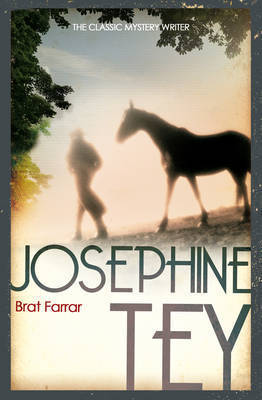
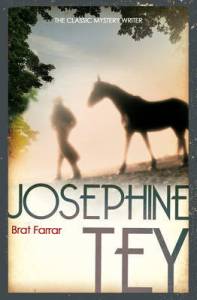
I’ve just finished reading Brat Farrar by Josephine Tey, first published in 1949. I’ll be posting my review later this week.
I’m currently reading an e-book copy of the The Third Man by Graham Greene, along with a short story, The Fallen Idol. Its publication history is interesting, in that The Third Man was not intended to be a book. It was an early draft for a screenplay, commissioned in 1947 by the film producer Alexander Korda. Greene wrote it whilst he was on holiday in Italy in 1948. After the release of the film in 1949, Greene’s draft was published as a short novel in 1950. And I’ll write more about later this week.
Directions: Share two snippets (a sentence or short paragraph) from a) the book’s opening and b) page 56 (or another page) from the book you are currently reading. No spoilers, please.
I’m currently reading Brat Farrar by Josephine Tey, a novel about the Ashbys, an English country-squire family, first published in 1949.
Book beginning, Chapter One:
‘Aunt Bree,’ said Jane, breathing heavily into her soup, was Noah a cleverer back-room boy than Ulysses, or was Ulysses a cleverer back-room boy than Noah?’
Second snippet: Page 6
How shadowy was he to her: the kind solemn little boy who should have been coming into his inheritance next month? She tried to call up his face in front of her but there was only a blur. He had been small and immature for his age, but otherwise he was just an Ashby. Less an individual than a family resemblance.
Description from Amazon UK:
Young orphan, Brat Farrar, closely resembles the dead heir to Latchetts, a centuries-old family estate on the south coast of England. Against his better judgement, Brat is persuaded to pose as Patrick Ashby, the true heir, and claim the inheritance. Most of the Ashbys accept the imposter, only one suspects him, but his reasons are so strange that Brat comes to believe something very evil has happened to Patrick…
Judi Dench and Brendan O’Hea take us on a heartfelt and hilarious tour of her extraordinary life and career. From growing up in York and being miffed at not getting the part of Mary in the school Nativity play, to playing before sold-out houses on Broadway and in London’s West End, she’s done it all. She walked the red carpets of Hollywood, turned James Bond’s M into the most astute, unflinching Head of MI6 anyone could ever have imagined, and won an Oscar, a Tony, Golden Globes, Oliviers, and BAFTAs along the way.
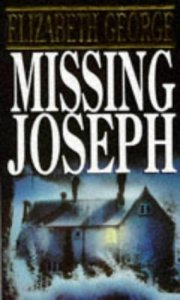
The last book I read was Missing Joseph by Elizabeth George, the 6th Inspector Lynley book. I hadn’t read any of the Inspector Lynley novels, although I’ve watched the TV adaptation. It does fill in some of the background of the main characters, so it did work reasonably well as a standalone.
There are several strands to the book which I did find somewhat confusing at times. The main one is the mystery surrounding the death the story of an Anglican priest, Robin Sage, who apparently died as a result of accidental poisoning. Deborah and her husband, Simon, turn to their old friend, Inspector Lynley to solve it.
However, there’s too much description for me (and I do like description) of everything with too much detail about small things that have nothing to do with the plot, and too many minor characters. The main story doesn’t really get anywhere until the last third, or so, of the book. There’s also too much detail about teenage sex and also a particularly nasty rape scene, that didn’t have much, if any, relevance to the plot. Inspector Lynley only has a minor role and Detective Sergeant Barbara Havers has an even smaller role. The main theme is about children, mothers desperate to have a baby, and relationships between parents and children.
Overall I was a bit disappointed, although I kept reading because I wanted to know why and how Sage died.
What will I read next? I’m not sure, but it could be Brat Farrar by Josephine Tey, a Golden Age crime mystery novel.
A stranger enters the inner sanctum of the Ashby family posing as Patrick Ashby, the heir to the family’s sizeable fortune. The stranger, Brat Farrar, has been carefully coached on Patrick’s mannerisms, appearance and every significant detail of Patrick’s early life, up to his thirteenth year when he disappeared and was thought to have drowned himself.
It seems as if Brat is going to pull off this most incredible deception until old secrets emerge that threaten to jeopardise the imposter’s plan and his very life…
Today I am pleased to welcome a new weekly event. It is Friday Book Snippets, combining Book Beginnings on Friday and Friday56, co-hosted by Anne@HeadFullofBooks and Olivia at Bemused and Bookish.
Directions: Share two snippets (a sentence or short paragraph) from a) the book’s opening and b) page 56 (or another page) from the book you are currently reading. No spoilers, please.
I like this idea of using any page number for the second snippet.
One of the books I’m currently reading is It Could Have Been Her by Lisa Jewell. This is her latest book, published in June this year.
The book begins with a Prologue:
4 June 2005
I liked the girl. She had a nice smile. She was friendly. I could tell she liked us.
Page 4:
On the eighth day of May 2026, Jane Trevally does something terrifying.
She invites an estate agent into her home.
Page 51:
She has never told Tony about the night she went home with a complete stranger on the flimsy promise of a job. She’s certain he would not judge her, not all these years later, but still, she can’t quite bring herself to let him see the desperate broken fool she’d once been.
Description from Amazon UK:
It was the night she almost died.
Newly divorced and feeling a little lost, Jane Trevally agrees to accompany a man she doesn’t know to his house in the darkest corner of Hampstead Heath.
She’s offered a drink. She steps inside.
And then she hears a scream.
Jane runs.
Twenty five years later, Jane finds herself outside the same house, this time to return a dog who’s been found near her home. A dog whose owner has just been reported missing.
A fleeting glimpse of a haunted looking woman through the window sends Jane on a mission to uncover the house’s secrets – secrets more terrifying than she could have ever imagined.
And she can’t stop thinking:
It could have been her . . .
I’ve enjoyed all of Lisa Jewell’s books that I’ve read, so it’s no surprise that this one too is promising to be just as good.
This is a monthly link-up hosted by Kate atBooks Are My Favourite and Best. This month we are starting with either with your book group’s current selection or if you’re not in a book group, start with the book that you’re currently reading.
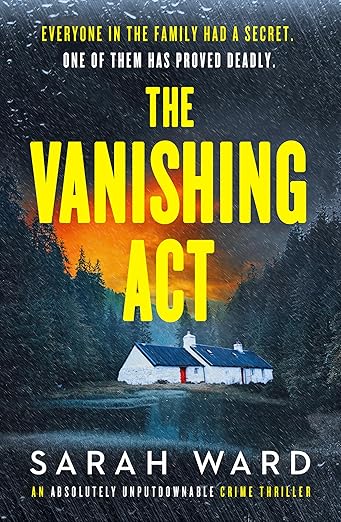
I’m not in a book group so I’m starting with the book I’m currently reading, which is The Vanishing Act by Sarah Ward. It’s the third book in the Mallory Dawson Crime Thriller series. I enjoyed the first two books and so far (I’ve read over half the book) I’m really enjoying this one too.
This is about a missing family. They disappeared from the holiday cottage, they were renting in a remote part of Wales. Apparently they had left in a hurry whilst making sandwiches for a picnic and leaving a kettle still steaming on the Aga.
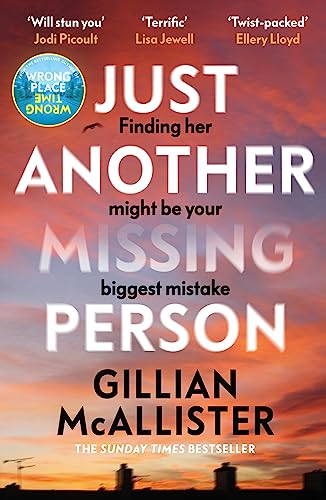
Just Another Missing Person by Gillian McAllister, a book that totally gripped and baffled me. Olivia just disappeared from a dead-end alley without being seen coming back out. The investigating police officer is DCI Julia Day, a detective with a passion for solving things, piecing things together and helping people to get to the truth. But she has come up against what seems to be an impossible crime.
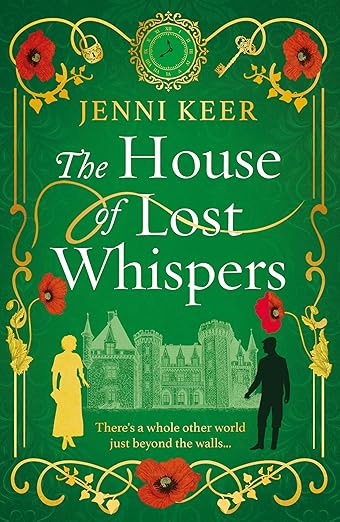
The House of Lost Whispers by Jenni Keer, a review copy, which also contains a character called Olivia. I don’t often read romance or fantasy novels but this book has both elements and it’s also historical fiction set before, during and after the First World War. It explores loss and grief, family life, friendship and romantic relationships, as well as the devastating and horrific events of the First World War.
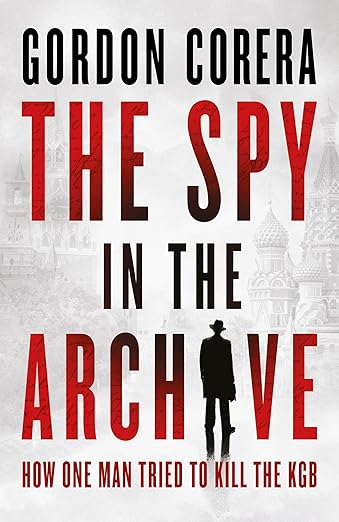
Next is another review copy, The Spy in the Archive by Gordon Corera. It’s nonfiction about Vasili Mitrokhin, a KGB archivist who defected to Britain in 1992. Mitrokhin, a quiet, introverted and determined man, was a reluctant defector, because whilst he loved Russia he came to hate the KGB and the Soviet system. It is a remarkable book about a remarkable man; an in-depth account, that took me weeks to read as it’s not a book to read quickly. It’s both fascinating and informative.
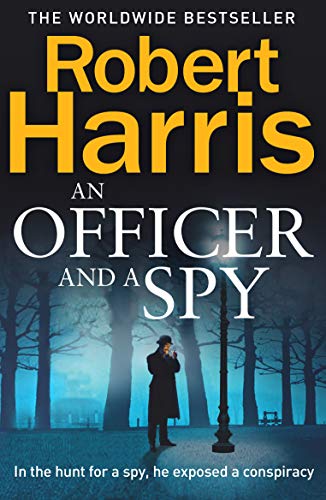
An Officer and a Spy by Robert Harris, historical fiction about the Dreyfus Affair. In his Author’s Note Harris writes that his aim in writing this novel was to ‘retell the true story of the Dreyfus affair‘, describing it as ‘perhaps the greatest political scandal and miscarriage of justice in history, which in the 1890s came to obsess France an ultimately the entire world‘. What follows is a chillingly dark, and realistic novel of conspiracy and espionage.
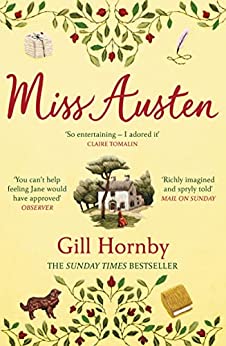
Miss Austen by Gillian Hornby – the untold story of the most important person in Jane’s life – her sister Cassandra. After Jane’s death, Cassandra lived alone and unwed, spending her days visiting friends and relations and quietly, purposefully working to preserve her sister’s reputation. It’s very well researched, a novel that held my attention from the beginning right to the end. A definite 4.5 star book.
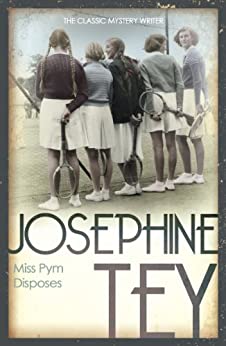
Miss Pym Disposes by Josephine Tey. Miss Pym was pleased and flattered to be invited to Leys Physical Training College to give a lecture on psychology. But then there was a ’nasty accident‘. This is not a conventional crime fiction novel. It’s a psychological study focussing on the characters, their motivation and analysis of facial characteristics. It looks at the consequences of what people do and say and, as Miss Pym discovers who she thinks is responsible, it also looks at how much a person should intervene, or as one of the characters tells her, ‘Do the obvious right thing, and let God dispose.’ Miss Pym agonises over her decision, was she really going to condemn someone to death?
Making this chain into a very loosely linked circle I went from crime fiction to crime fiction, with historical fiction, non fiction and spy stories in between.
Next month (October 3, 2026), we’ll start with Rachel Cusk’s latest novel, Life of M.
Abacus| 7 May 2026| 359 pages e-book| Review copy 4*
An Atlantic voyage. A family at war. A secret worth killing over.
Reporter Jack Parlabane thrives on chasing stories in unlikely places, and where could be less likely than a fan convention on a cruise liner celebrating a contentious Sixties TV series? But unlike the media family exploiting their show’s renewed relevance, he’s not there to stoke controversy: he’s there to solve a murder.
Already in deep water with his employer, Jack desperately needs a win, and solving this decades-old mystery could be it. Problem is, he’s in the middle of the Atlantic, and someone onboard has already killed once to keep their secret.
And that’s not even the tricky part. No, the tricky part is definitely the dead body locked in a stateroom with him, covered in his blood. Now Jack has to solve two murders, otherwise the only way he’s getting off this ship is in handcuffs – or in a body bag.
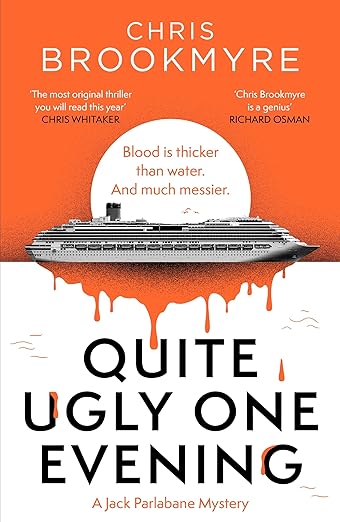
Quite Ugly One Evening by Chris Brookmyre is the ninth book in the Jack Parlabane series. Jack, now 60, is an investigative journalist, who finds himself in competition with his younger colleagues, grateful that he still has a job.
The first book by Chris Brookmyre I read was Quite Ugly One Morning, the first in the series. That was in 2010 and since then I have read and enjoyed more of his books, including those he’s written under the pseudonym Ambrose Parry with his wife, Marisa Haetzman. But, I haven’t read the other Jack Parlabane books. However, it wasn’t a problem and I don’t think you need to have read the other books to enjoy this one, as it does read well as a standalone.
It is a ‘locked room’ type mystery as the action takes place on a cruise liner as it crosses the Atlantic. The ship is full of fans of the Maskyn family’s 1960s TV puppet series, The Imaginators, attending a convention, symposium and 60th anniversary celebration. They are also looking to update the series as sixty years later the series is not only dated but also obviously racist in some of the puppet designs. And the family are split over a takeover bid from a billionaire, with some wanting to accept his offer and others bitterly opposed to it.
It’s also complicated, with a large cast of characters and multiple layers. It took me a while to work out who is who, as I was reading a proof copy which does not have the Maskyn family tree included in the published edition – it would have been really helpful. Jack is onboard after being approached by MI5 who want him to act as an undercover agent investigating the death of an agent, Simeon Wickham forty years earlier. MI 5 had intelligence that the Maskyns had been infiltrated by an agent of a foreign power at that time. Just who was Simeon Wickham, what was his involvement with the Maskyns and who killed him?
Right from the start of the book it appears that Jack is the main suspect for killing the man found dead in suite 1114. The first half is slow going with detailed descriptions of the layout of the ship, with Jack getting lost in the different staircases that looked the same, confused by the position and direction of the ship and not sure which deck he was on. There is a great deal of description about the TV puppet show and about the current criticism it’s attracting. However, the pace begins to speed up at about 49%, and it was a race to the end.
I thoroughly enjoyed it, murder, onboard a luxury line in the middle of the Atlantic, with a complex plot, interesting characters, social commentary, told with humour and a hint back to the Golden Age of murder mysteries.