My Friday Post: World Enough & Time by Christian McEwan

Book Beginnings Button

Every Friday Book Beginnings on Friday is hosted by Gillion at Rose City Reader where you can share the first sentence (or so) of the book you are reading, along with your initial thoughts about the sentence, impressions of the book, or anything else the opener inspires.

World Enough & Time: On Creativity and Slowing Down

This week I’m featuring World Enough & Time: On Creativity and Slowing Down by Christian McEwen, a book I’ve borrowed from a friend:


When the Lilliputians first saw Gulliver’s watch, ‘that wonderful kind of engine … a globe, half silver and half of some transparent metal [glass!]’, they told themselves it had to be his god. After all, ‘he very seldom did anything without consulting it; he called it his oracle, and said it pointed out the time for every action of his life.’

Also every Friday there is The Friday 56, hosted by Freda at Freda’s Voice.

30879-friday2b56These are the rules:

  1. Grab a book, any book.
  2. Turn to page 56, or 56% on your eReader. If you have to improvise, that is okay.
  3. Find any sentence (or a few, just don’t spoil it) that grabs you.
  4. Post it.
  5. Add the URL to your post in the link on Freda’s most recent Friday 56 post.

Page 56:

Consider this quotation:

and this is what we mean by friends. Even when they are absent, they are with us … even when they are weak, they are strong; and … even when they are dead, they are alive.

CICERO

~~~

About the Book (extracted from Goodreads)

Slowness can open doors to sustained creativity, claims poet and teacher Christian McEwen. Over the course of ten years training teachers to write their own poems in order to pass the craft along to students, McEwen realized that nothing comes easily when life is conducted at a high rate of speed. She draws not only on personal experience, but on readings ranging from literary anecdote and poetry to Buddhism, anthropology, current news, and social history, all supplemented by interviews with contemporary writers and artists. This is a real reader’s book, one that stands up as both sustained narrative and occasional inspiration.

~~~

This is a book to take your time over reading it – you can read straight through or dip in and out of the chapters, focusing on different themes. I don’t want to rush through it – so at times, as I’m reading it I may quote further extracts  in future posts rather than writing a review.

What about you? Does it tempt you or would you stop reading? 

Once Upon a River by Diane Setterfield

An intriguing and mystifying book by Diane Setterfield – Once Upon a River – without doubt one of the best books I read last year – I was entranced from the beginning to the end. It’s a mystery beginning in the Swan Inn at Radcot, an ancient inn, well-known for its storytelling, on the banks of the Thames. A badly injured stranger enters carrying the drowned corpse of a little girl. It’s mystifying as hours later the dead child, miraculously it seems, takes a breath, and returns to life. The mystery is enhanced by folklore, by science that appears to be magic, and by romance and superstition.

The story has a timeless feel to it but it is set somewhere towards the end of the nineteenth century. There are numerous strands and characters to the story and Diane Setterfield drew me slowly into the book with a leisurely description of the characters and their situations. Just as the river, a character in its own right, takes many twists and turns and has many tributaries, it becomes apparent that the little girl could belong to a number of different families all with links to the river. As the story progresses these individual families each claim the child as theirs and I was never really certain which of them – if any – were telling the truth. Much is hidden and much eventually is revealed.

It’s a multi-layered book that you need time to digest, richly atmospheric and told from multiple viewpoints. I loved all the detail – about the river itself, about photography as Henry Daunt (based on Henry Taunt, the real-life photographer of the Thames and surrounding areas) travelled along the river in a houseboat with its own darkroom, about the body’s metabolism and the treatment of injuries and diseases of the late Victorian period and about belief in the afterlife. Various people refer to Quietly, the ferryman who featured in the stories people told – he appeared when you were in trouble on the water, gliding in his punt, either guiding you to the safety of the bank, or if it is your time he takes you to another shore ‘on the other side of the river.

Once Upon a River is a beautifully and lyrically told story, and cleverly plotted so that I was not completely sure at times what it was that I was reading. It’s historical fiction with a touch of magic that completely beguiled me with its mysteries and fascinating characters. I enjoyed reading her first book, The Thirteenth Tale, years ago before I began my blog, but I loved this one so much more!

My thanks to the publishers, Transworld Digital, for my review copy via NetGalley.

  • Format: Kindle Edition
  • File Size: 2336 KB
  • Print Length: 419 pages
  • Page Numbers Source ISBN: 0857525662
  • Publisher: Transworld Digital (4 Dec. 2018)
  • Source: Review copy
  • My Rating: 5*

Happy New Year 2019!


HNY19
Happy New Year 2019!

Ten of the Best Books I Read In 2018

I’m starting my 2019 posts with Top Ten Tuesday, a weekly meme created by The Broke and the Bookish and now hosted by Jana at That Artsy Reader Girl.

I was very generous last year in the star ratings I gave to the books I read, so these are just 10 of my 5* books. These are not in any particular order – I loved them all.

Victoria: A Life

Victoria: A Life by A N Wilson – a masterful biography of Queen Victoria. Wilson had access to the Royal Archives and permission from Her Majesty Queen Elizabeth II to quote from materials in royal copyright. He portrays Victoria both as a woman, a wife and mother as well as a queen set against the backdrop of the political scene in Britain and Europe.

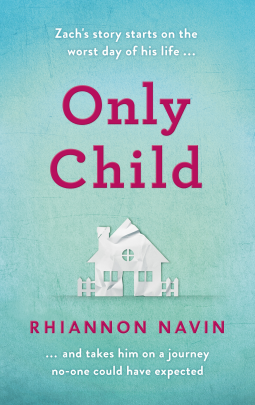
Only Child by Rhiannon Navin. It’s one of the most powerful books I’ve read for ages. It’s about a shooting at a school and its effect on six year old Zach and his family. It’s emotional, moving and absolutely compelling, sad but ultimately uplifting.

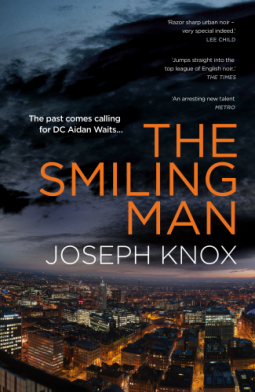
The Smiling Man by Joseph Knox. Aidan Waits is a Detective Constable working night shifts with Detective Inspector Peter Sutcliffe, known as Sutty. They don’t like each other – at all. The only thing they have in common is that they each try to make things as difficult as possible for the other. But strangely their partnership gets results as they search for the identity of the ‘smiling man’ and his killer.


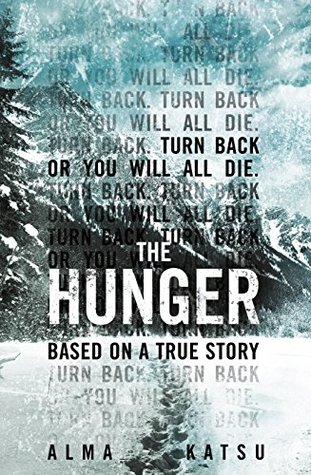
The HungerThe Hunger
by Alma Katsu, historical fiction based on the true story of the Donner Party, pioneers who were looking for a better life in the American West. They formed a wagon train under the leadership of George Donner and James Reed making their way west to California in 1846. It interweaves facts and fiction and with hints of the supernatural and Indian myths it becomes a thrilling, spine tingling horrific tale.

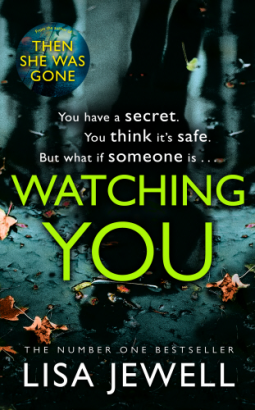
Watching You by Lisa Jewell, crime fiction that keeps you guessing about everything right from the first page – someone was murdered, but who was it and why, and just who was the killer? It’s full of suspense and drama. It is only right at the end of the book that all becomes clear.

I was hooked right from the start of No Further Questions by Gillian McAllister. It plunges straight into a trial as Martha sits in the courtroom listening to expert witnesses being questioned  and cross-examined about the death of her baby, Layla, just eight weeks old. Her sister Becky is accused of murdering her. This is a tense, tightly plotted book, narrated from several viewpoints, but mainly alternating between Martha and Becky.

Absent in the SpringSomething completely different from Agatha Christie – Absent in the Spring which she wrote under the name of Mary Westmacott.  Set in Mesopotamia (corresponding to today’s Iraq, mostly, but also parts of modern-day Iran, Syria and Turkey) in a railway rest-house at Tel Abu Hamid on the Turkish border, it’s the story of Joan Scudamore who was stranded in the desert, after visiting her daughter in Baghdad – an in-depth character study, with a growing sense of tension.

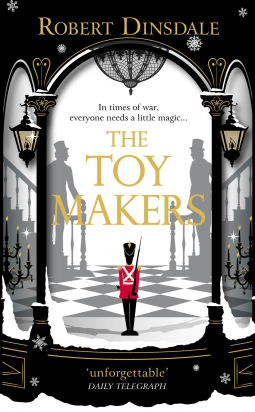
The Toymakers by Robert Dinsdale, an extraordinary, magical and wonderful book that captivated me, a book set mainly in 1917 whilst the First World War was taking its toll of humanity, leaving despair and tragedy in its wake. It’s a blend of historical fiction and magic realism. Papa Jack’s Emporium in London is a toyshop extraordinaire. It opens with the first frost of winter each year and closes when the first snowdrop blooms. And the toys it sells aren’t ordinary toys – they seem alive!

Tombland (Matthew Shardlake, #7)

Tombland by C J Sansom, historical fiction set in 1549, mainly in Norwich. Edward VI is king, a minor and England is ruled by the Duke of Somerset as Lord Protector. Rebellion is spreading in protest against the landowners’ enclosures of the common land. Lawyer Matthew Shardlake is asked to investigate the murder of Edith, the wife of John Boleyn – a distant Norfolk relation of Anne Boleyn. However, he gets caught up in Kett’s Rebellion as thousands of peasants establish a vast camp overlooking the city.

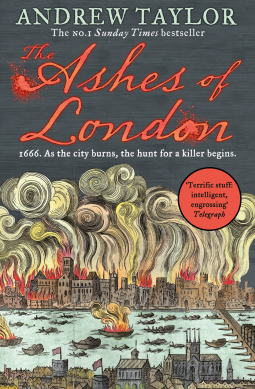
And last but not least, The Ashes of London by Andrew Taylor, set in 1666 in London. It was just six years after the Stuart Monarchy had been restored – Charles II was reinstated as King – and people are struggling with the aftermath of the Great Fire that had reduced a large part of London to ashes and rubble. It’s a complex story interweaving a murder mystery, the hunt for the regicides responsible for the execution of Charles I and details of the rebuilding of London after the Great Fire.

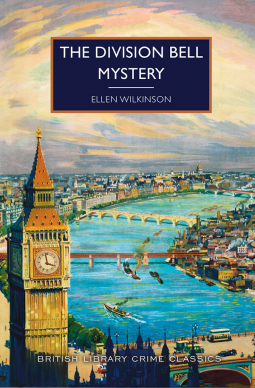
The Division Bell Mystery by Ellen Wilkinson

Poisoned Pen Press|4 December 2018 |227 pages|e-book |Review copy|5* This edition, published in association with the British Library, has a preface by Rachel Reeves, Member of Parliament for Leeds West and an introduction by Martin Edwards. It was first published in 1932 by George G Harrap & Co. I thoroughly enjoyed reading The Division Bell Mystery – it’s entertaining on several levels both from the mystery ‘locked room’ aspect and historically, socially and culturally with its insight into how Parliament worked in the 1930s and the status of women in Parliament in the inter-war years. In fact political commentary runs throughout the novel. It was a period of great social injustice, people were still struggling in the aftermath of the Great War – a period of mass unemployment with demands for both political and social change. Ellen Wilkinson was one of the first women Labour MPs. I’ve come across her before as a fiery politician, known as ‘Red Ellen’ both for her red hair and her left-wing politics. She supported the men from Jarrow in Tyneside in 1936 as they marched from their home town to London to present a petition against the mass unemployment and extreme poverty in the north-east of England. She marched with them for part of the way and handed in their petition to the House of Commons. She was a keen murder mystery fan and The Division Bell Mystery is her one entry into the Golden Age Detective fiction. The classic mystery was popular in the interwar years as people entertained themselves with puzzles such as the ‘locked room’ mysteries as in this book. The main character is the Home Secretary’s Parliamentary Private Secretary, young Robert West. As a Parliamentary Private Secretary herself, Ellen Wilkinson portrays his role and political intrigue with convincing detail. There’s a financial crisis and the Home Secretary is negotiating with the American financier Georges Oissel for a loan. The Division Bell rings – a signal to MPs to cast their votes – and West is shocked to hear a gunshot as he is making his way down the corridor leading to Room J, where the Home Secretary and Oissel had been dining. On entering the room he finds the Home Secretary has left to vote and Oissel is slumped on the floor, his shirt front stained with blood and a revolver lying beside him. No one else was in the room, no one had been seen entering or leaving the room and there is no evidence of who had killed him. It falls to West to work with the police investigating his death. It is a nicely complicated mystery but for me it is the setting and the characters that makes this book so interesting. West is the main character but I particularly liked Grace Richards, a young female MP, based on Ellen Wilkinson herself – in her preface Rachel Reeves points out the similarities between Ellen and Grace. Once I started to read The Division Bell Mystery I didn’t want to put it down – definitely a 5* read for me! My thanks to the publishers, Poisoned Pen Press, for my review copy via NetGalley.

The Last Ten Books Tag…

I’ve seen this tag recently on Annabel’s blog (see her answers here) and on Simon’s blog (see his answers here) and I thought I’d do it too …

  1. The last book I gave up on

I don’t think there’s been one book I’ve given up on this year, but there are several books that I’ve started, read a few pages, or even a few chapters, and found them difficult to get into, so I’ve stopped reading them. But I haven’t abandoned them as the right time to read them could come round sooner or later.

2. The last book I re-read

The Poisonwood Bible

I don’t do much re-reading, although I’d like to. The last book I re-read was The Poisonwood Bible by Barbara Kingsolver, one of my favourite books.

3. The last book I bought

A Deadly Thaw (DC Connie Childs, #2)That was Sarah Ward’s A Deadly Thaw – her second book, just before Christmas. I loved her first book, In Bitter Chill. And I have a few to catch up with as she has now written books three and four in her DC Childs series.

4. The last book I said I read but actually didn’t

I’ve never said I’ve read a book when I haven’t – although there are books I think I’ve read and then when I look at them realise that I haven’t – I’ve just known about them, or seen a dramatisation.

5. The last book I wrote in the margins of

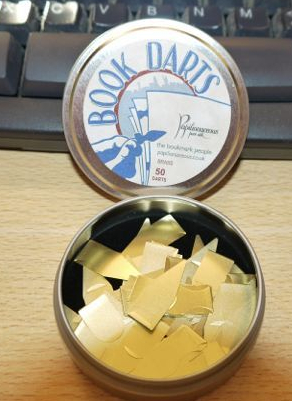
Book Darts

I’ve only written (and underlined/highlighted) in books I’ve been studying for a course – otherwise I don’t. One of the benefits of reading e-books is that you can highlight and make notes to your heart’s content without spoiling the pages. And for ‘real’ books I have a tin of little book darts to mark pages of interest, as well as ordinary bookmarks.

6. The last book I had signed

A Life in QuestionsThat was by Jeremy Paxman when he visited Mainstreet Trading to talk about his book, A Life in Questions.

7. The last book I lost

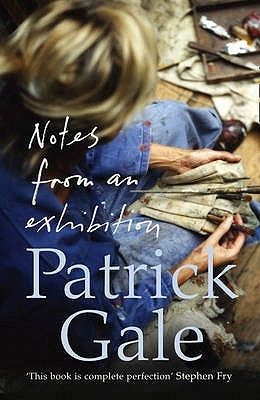
Notes from an Exhibition

That was Notes from an Exhibition by Patrick Gale – but I hadn’t actually lost it – I just hadn’t put it back where I thought I had. I was going to buy another copy but luckily I found it in a box of books to return to the library!

8. The last book I had to replace

The Magus

The Magus by John Fowles because it was chosen by my book group to read earlier this year. I’d read it years ago and given it away, so I bought the e-book version to re-read it.

9. The last book I argued over

I can’t remember ever arguing over a book – discussed yes, but actually argued over, no.

10. The last book you couldn’t find

See no 7 above.  I often misplace books. It’s mainly because they’re double shelved and end up out of the original a-z author I’d shelved them. And I’m not very good at putting them back on the shelves in the right place.

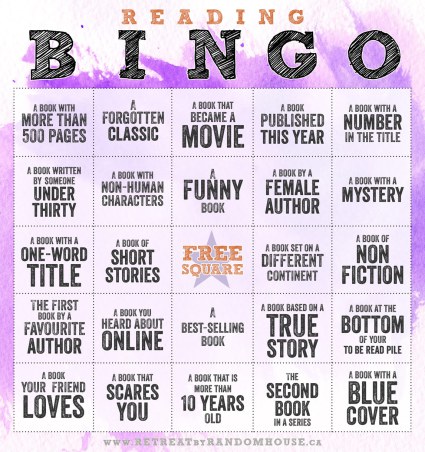
Reading Bingo 2018

reading-bingo-small

This is my  third year of playing the Reading Bingo Card.  I like it because during the year I don’t look for books to fill in the card – I just read what I want to read and then see whether the books I’ve read will match the squares. I also like it because it is an excellent way of looking back at the books I’ve read and reminding me of how much I enjoyed them.

Here is my completed card for 2018:

A Book With More Than 500 pages.

Victoria: A Life

Victoria: A Life by A N Wilson – 656 pages. It took me three months to read this biography and I learned so much and enjoyed it immensely. Victoria was 81 when she died and had been Queen for nearly 64 years, from 1837 to 1901. She’d had 9 children and was grandmother of 42. It’s detailed, well researched and illustrated, with copious notes, an extensive bibliography and an index. He portrays Victoria both as a woman, a wife and a mother as well as a queen, set against the backdrop of the political scene in Britain and Europe.

A Forgotten Classic 

Bats in the Belfry (British Library Crime Classics)

The British Library series of crime classics presents forgotten classics many of which have been out of print since before the Second War. I’ve read several of them, including Bats in the Belfry by E C R Lorac, a pen name of Edith Caroline Rivett who was a prolific writer of crime fiction from the 1930s to the 1950s. It was first published in 1937 and I think it is one of the better Golden Age Mysteries that I’ve read. It’s set in London in the 1930s, full of descriptive writing, painting vivid pictures of the streets of London and in particular the spooky, Gothic tower in which a corpse is discovered, ‘headless and handless’.

A Book That Became a Movie 

The Grapes of Wrath

The Grapes of Wrath by John Steinbeck Set against the background of dust bowl Oklahoma and Californian migrant life, it tells of the Joad family, who, like thousands of others, are forced to travel West in search of the promised land. The book became a movie in 1940 directed by John Ford and starring Henry Fonda.

A Book Published This Year

Turning for Home by Barney Norris was published in January this year. It’s a novel of  love and loss, grief and guilt. Every year, Robert’s family come together at a rambling old house to celebrate his birthday. Aunts, uncles, distant cousins – it has been a milestone in their lives for decades. But this year Robert doesn’t want to be reminded of what has happened since they last met.

A Book with a Number in the Title

The Three Evangelists (Three Evangelists, #1)

The Three Evangelists by Fred Vargas, quirky crime fiction, with eccentric characters and an intricate plot.  The three title characters are thirty-something historians, Mathias, Marc and Lucien, all down on their luck. Together with Marc’s uncle and godfather, Armand Vandoosler, an ex-policeman, they have just moved into a house next door to retired opera singer Sophia Siméonidis and her husband Pierre. When a tree unexpectedly appears in Sophia’s garden she asks for their help in digging around the tree to see if something has been buried there.

A Book Written by Someone Under Thirty

The Dancer at the Gai-Moulin (Maigret #10)

The Dancer at the Gai-Moulin by Georges Simenon, is one of the early Maigret books published in 1931 when Simenon was 28. Set in Liege in Belgium, a corpse is found in the Botanical Gardens in a large laundry basket in the middle of a lawn.

A Book With Non-Human Characters 
The Toymakers

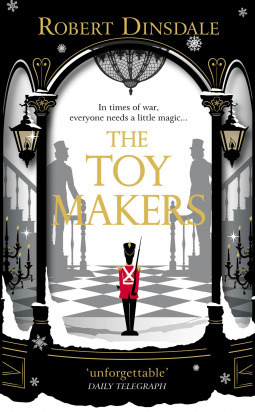
The Toymakers by Robert Dinsdale –  a wonderful book about Papa Jack’s Emporium in London, a toyshop extraordinaire. The toys it sells aren’t ordinary toys – they seem alive, from patchwork dogs, to flying pegasi, Russian dolls that climb out of one another, runnerless rocking horses, whales that devour ships, fire-breathing dragons and many others to the toy soldiers that wage war on each other.

A Funny Book
Three Men in a Boat

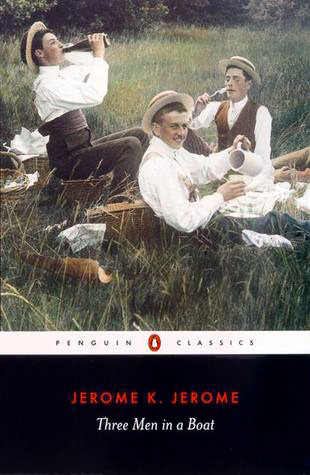
Three Men in a Boat by Jerome K Jerome. When Jerome began writing this book he intended it to be a serious travel book about the Thames, its scenery and history, but, as he wrote, it turned into a funny book. The Thames remains at the centre of the book but it is also full of anecdotes about the events that happened to him and his friends whilst out on the river, interspersed with passages about the scenery and history. It’s a gentle, witty book that kept me entertained all the way through

A Book By A Female Author 

I’m spoilt for choice in this category, with lots of female authors to choose from. In the end I’ve picked No Further Questions by Gillian McAllister, one of the 5* books I’ve read this year. It plunges straight into a trial as Martha sits in the courtroom listening to expert witnesses being questioned and cross-examined about the death of her baby, Layla, just eight weeks old. Her sister Becky is accused of murdering her. She found Layla dead in her cot and denies killing her. It looked like a cot death – until the postmortem showed otherwise – and the police are convinced it was murder.

A Book With A Mystery

Watching You

I could have chosen any one of the many crime fiction novels I’ve read this year, but I’ve picked Watching You by Lisa Jewell, crime fiction that keeps you guessing about everything right from the first page – someone was murdered, but who was it and why, and just who was the killer? Full of suspense and drama, it is only right at the end of the book that all becomes clear. I loved it.

A Book With A One Word Title

Munich

Munich by Robert Harris is a novel about the 1938 Munich Conference, a mix of fact and fiction. Harris uses two fictional characters, Hugh Legat as one of Chamberlain’s private secretaries and Paul Hartmann, a German diplomat and a member of the anti-Hitler resistance to tell his story.

A Book of Short Stories
Foreign Bodies

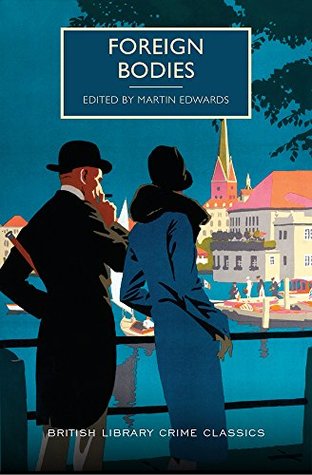
Foreign Bodies edited by Martin Edwards. A collection of 15 stories, vintage crime fiction in translation, written by authors from Hungary, Japan, Denmark, India, Germany, Mexico, Belgium, the Netherlands, Russia and France.  Martin Edwards has prefaced each one with a brief biographical note. Authors include – Arthur Conan Doyle, G K Chesterton, Michael Innes, Margery Allingham and Dorothy L Sayers.

Free SquareTime is a Killer

For this square I’ve chosen a book in translation. It’s Time is a Killer by Michel Bussi, translated from the French by Shaun Whiteside. Every summer Clotilde, her brother, Nicolas and her parents, Paul and Palma Idrissi visit Paul’s parents in Corsica. In 1989 Paul, Palma and Nicolas are killed in a car crash. Twenty seven years later Clotilde returns. Her grandparents are still alive but are reluctant to talk about the accident and the locals seem to resent her presence. As Clotilde delves into her memories she begins to realise that the past is not quite as she thought it was.

A Book Set On A Different Continent

Force of Nature

Force of Nature by Jane Harper – I loved this book, set in the fictional Giralang Ranges in Australia, seeing the Mirror Falls roaring down from a cliff edge into the pool fifteen metres below, the eucalyptus trees and the dense bush, and the breathtaking views of rolling hills and valleys as the gum trees give way,  with the sun hanging low in the distance. But this is the story of a team-building event that went badly wrong when Alice went missing and a search party is sent out into the bush to find her.

A Book of Non Fiction

Painting as a Pastime

Painting as a Pastime by Winston Churchill – a wonderful book, I loved it. He wrote about the pleasure he discovered in a heightened sense of observation and also about the need for a change to rest and strengthen the mind that painting provided – ‘Whatever the worries of the hour or the threats of the future, once the picture has begun to flow along, there is no room for them in the mental screen. They pass out into shadow and darkness.’

The First Book By a Favourite Author

After You'd Gone

After You’d Gone by Maggie O’Farrell – her debut novel. The main character, Alice is in a coma after being in road accident, which may or may not have been a suicide attempt. She has been grieving the death of her husband, John.

A Book You Heard About On Line

A Perfectly Good Man

Many of the books I read these days are books I’ve heard about on line. I’ve chosen A Perfectly Good Man by Patrick Gale because when I wrote about Notes From an Exhibition Café Society recommended it. The ‘perfectly good man‘ is Barnaby Johnson, a parish priest, a man who always tries to do the right thing, but he doesn’t always manage it. It’s a beautifully written book about faith and the loss of faith, about love and cruelty and deception, about ordinary life and about everyday tragedies, and also sublime moments.

A Best Selling Book
Tombland (Matthew Shardlake, #7)

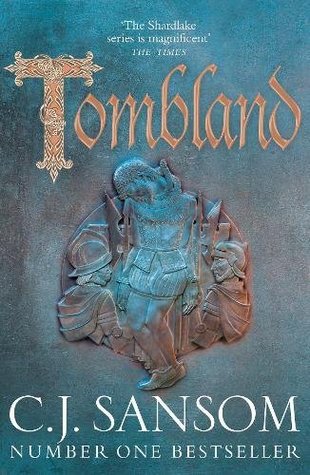
Tombland by C J Sansom, the 7th book in his Shardlake series. Another 5* book! It’s 1549, Edward VI is king, England is ruled by the Duke of Somerset as Lord Protector and rebellion is spreading throughout the land. Matthew Shardlake is asked to investigate the murder of Edith Boleyn, the wife of John Boleyn – a distant Norfolk relation of Elizabeth’s mother Anne Boleyn.  Then he and his assistants get caught up in the rebellion against the landowners’ enclosures of the common land as thousands of peasants led by Robert Kett establish a vast camp outside Norwich.

A Book Based On A True Story

The Hunger

The Hunger by Alma Katsu, one of the 5* books I’ve read this year. It’s historical fiction based on the true story of the Donner Party, a group of pioneers, people who were looking for a better life in the American West. They formed a wagon train under the leadership of George Donner and James Reed making their way west to California in 1846. Alma Katsu’s book interweaves fact with fiction and with hints of the supernatural and Indian myths it becomes a thrilling, spine tingling horrific tale.

A Book At The Bottom of Your To Be Read Pile

The Tenderness of Wolves

The Tenderness of Wolves by Stef Penney –  I’ve had this book since 2007. It’s set in Canada in 1867 beginning in a small place called Dove River on the north shore of Georgian Bay where Mr and Mrs Ross were the first people to settle. The setting is beautiful and as I read I felt as though I was in the wilds of Canada. It’s complex book with many characters  and many sub-plots as the search for the murderer of the French-Canadian trapper, Laurent Jammet.

A Book Your Friend Loves

Wedlock: How Georgian Britain's Worst Husband Met His Match

Wedlock by Wendy Moore is a book recommended by a friend, who thought it was very good. She was quite right and I loved this biography of Mary Eleanor Bowes, who was one of Britain’s richest young heiresses in 18th century Britain. Her first husband was the Count of Strathmore – the Queen Mother, Elizabeth Bowes-Lyon, was a direct descendant of their marriage. Her second marriage to Andrew Robinson Stoney was an absolute disaster. He was brutally cruel and treated her with such violence, humiliation, deception and kidnap, that she lived in fear for her life.

A Book that Scares You

The Craftsman

The Craftsman by Sharon Bolton. This is one of her standalone books. They are all really scary, creepy books and I was inescapably drawn into this chilling and terrifying story with the horrors of being buried alive clearly described. It is a remarkably powerful book, full of tension and fear about coffin-maker Larry Glassbrook, a serial child killer who buried his victims alive.

A Book That Is More Then Ten Years Old
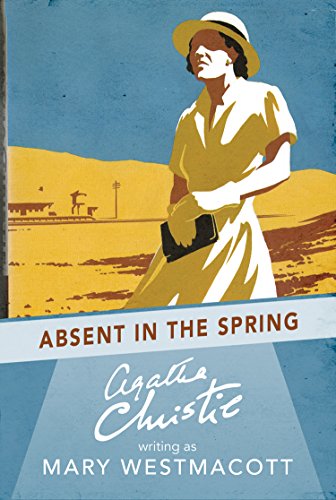
Absent in the Spring by Agatha Christie,  writing as Mary Westmacott, first published in 1944. I was thoroughly absorbed in the story of Joan Scudamore.  It is set in Mesopotamia (corresponding to today’s Iraq, mostly, but also parts of modern-day Iran, Syria and Turkey) in a railway rest-house at Tel Abu Hamid on the Turkish border, where Joan is stranded, delayed by floods. She occupies the time with reading and then by thinking about herself. Gradually she relives her past, all the time with a growing feeling of unease and anxiety that she is not the person she thought she was.

The Second Book In A Series

Bump in the Night (Flaxborough Chronicles, #2)

Bump in the Night by Colin Watson, the second book in his Flaxborough series. It’s crime fiction full of wordplay, innuendo, practical jokes and murder. Inspector Purbright investigates a series of explosions, culminating in the death of the local haulage contractor.

A Book With A Blue Cover

The Burning Chambers

 The Burning Chambers by Kate Mosse, the first in a new trilogy set in Languedoc in the south-west of France. It’s set in 1562 during the French Wars of Religion, centred on the Joubert family, Catholics living in Carcassonne and Piet Reydon, one of the Huguenot leaders.  Bernard Joubert, a bookseller had been imprisoned accused of being a traitor and a heretic, and Pietis on a dangerous mission in Carcassone to further the Huguenot cause. He finds his life is in danger from the priest Vidal.