A Far Cry from Kensington: Book Beginnings on Friday & The Friday 56

Every Friday Book Beginnings on Friday is hosted by Gillion at Rose City Reader where you can share the first sentence (or so) of the book you are reading. You can also share from a book you want to highlight just because it caught your fancy.

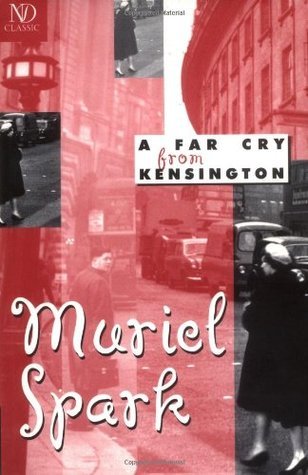
I’ve borrowed A Far Cry from Kensington by Muriel Spark from my local library. After reading Like a Cat Loves a Bird by James Bailey about Spark’s life and works, I wanted to read more of her books. In the introduction to this novel William Boyd states that her novels are very varied –

there are surreal novels, allegorical novels, some philosophical fables – but all are united by a tone of voice, a very dry sense of humour, and a particularly honed terse style … However, A Far Cry from Kensington … belongs in a loose group of novels in the Sparkian canon that has a recognisable footing in history and the real world – environments that Spark was familiar with and with a clear connection to her biography.( page xi)

The book begins:

So great was the noise during the day that I used to lie awake at night listening to the silence. I eventually fell asleep contented, filled with soundlessness but while I was awake I enjoyed the experience of darkness, thought, memory, sweet anticipations.

Also every Friday there is The Friday 56, hosted by Freda at Freda’s Voice, but she is taking a break and Anne at My Head is Full of Books has taken on hosting duties in her absence. You grab a book and turn to page 56 (or 56% of an eBook), find one or more interesting sentences (no spoilers), and post them.

Page 56:

Before we sent Wanda to bed I gave her a notebook and told her to write down as soon as possible everything she could remember about the voice and what it said. ‘I don’t want to write down things’, said Wanda. I think already she had an inkling of who the voice belonged to. Perhaps, already, she had started putting two and two together.

Description from Goodreads

Set on the crazier fringes of 1950s literary London, A Far Cry from Kensington is a delight, hilariously portraying love, fraud, death, evil, and transformation. Mrs. Hawkins, the majestic narrator, takes us well in hand and leads us back to her threadbare years in postwar London.

There, as a fat and much admired young war widow, she spent her days working for a mad, near-bankrupt publisher (“of very good books”) and her nights dispensing advice at her small South Kensington rooming house. At work and at home Mrs. Hawkins soon uncovered evil: shady literary doings and a deadly enemy; anonymous letters, blackmail, and suicide. With aplomb, however, Mrs. Hawkins confidently set about putting things to order, little imagining the mayhem that would ensue.

Now decades older, thin, successful, and delighted with life in Italy–quite a far cry from Kensington–Mrs. Hawkins looks back to all those dark doings and recounts how her own life changed forever. She still, however, loves to give advice: “It’s easy to get thin. You eat and drink the same as always, only half…I offer this advice without fee; it is included in the price of this book.”

If you have read this book, what did you think?
A Small Part of History: Book Beginnings on Friday & The Friday 56

Every Friday Book Beginnings on Friday is hosted by Gillion at Rose City Reader where you can share the first sentence (or so) of the book you are reading. You can also share from a book you want to highlight just because it caught your fancy.

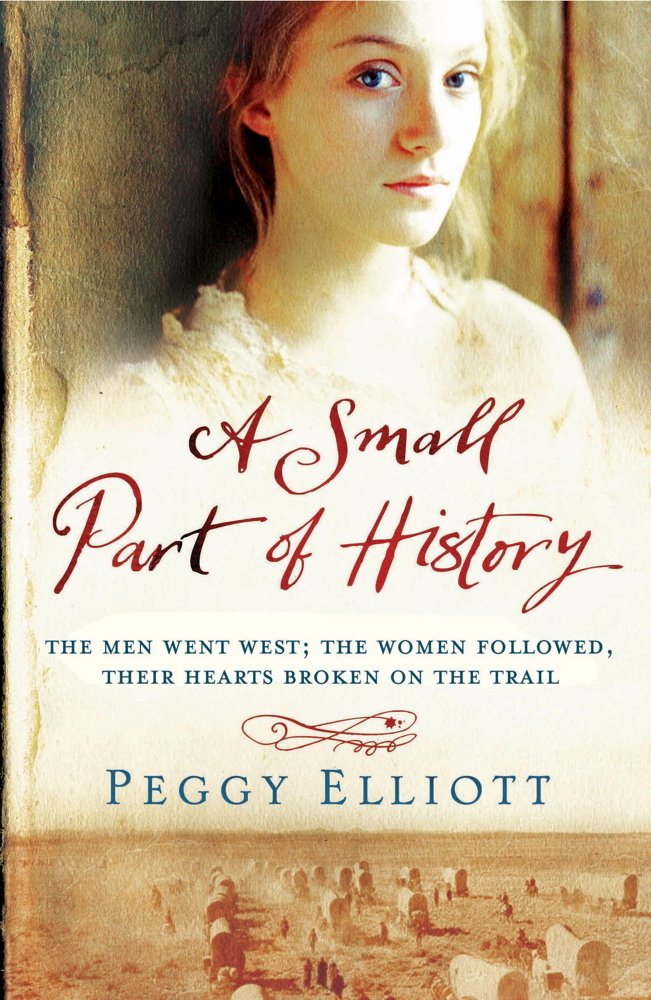
A Small Part of History by Peggy Elliott, is one of the books I’ll be reading soon. It’s one of my TBRs, historical fiction I bought in 2008. I’m featuring it today as the book caught my eye this morning as I browsed my bookshelves. I took it off the shelf and it made me think of all those cowboy series on TV that I used to watch about pioneers venturing out West. More recently I’ve enjoyed watching Taylor Sheridan’s television series Yellowstone and the prequels 1883 and 1923

It’s described on the back cover as:

an epic, heartfelt story of courage in the face of appalling adversity, and a haunting portrayal of how America was forged. Above all, it is a story of people and how the ties that bind us most strongly are those of friendship, of family and of love.

But what makes this book look a bit different is that it’s told from a woman’s perspective. In her Author’s Note Peggy Elliott explains that she’d read ‘a wonderfully thought- provoking book, Women’s Diaries of the Westward Journey which pointed out how different women’s experience on the Oregon Trail had been compared to men’s.’

The book begins :

My papa always told me it was best to start a story at the beginning when I confused him by jumping into the things somewhere in the middle. so I am not going to talk about where I am today or even last month, because it all really begun back in June of 1845.

Also every Friday there is The Friday 56, hosted by Freda at Freda’s Voice, but she is taking a break and Anne at My Head is Full of Books has taken on hosting duties in her absence. You grab a book and turn to page 56 (or 56% of an eBook), find one or more interesting sentences (no spoilers), and post them.

Page 56:

Poor Lizzie! There were dark shadows beneath her eyes and Rebecca could see pale blue veins throbbing in her forehead. What words of comfort could she possibly bring her, not being a mother herself? To have a young child on the trail brought one set of worries, but to bring yet another into the world while still travelling must present even more of a burden.

The map at the front of the book shows the length of the Oregon Trail from Independence, Missouri to Oregon City.

Description from the back cover:

In the summer of 1845 Rebecca Springer and her family join the Oregon wagon train in search of land thousands of miles away. It’s a hard and dangerous journey through blizzards and searing heat, over prairies, desert plains and mountains and, at times, it seems as if it will never end. But an unbreakable bond develops amongst the travelling women as they are tested, physically and emotionally, and their shared experiences of new life and tragic death will bring them closer than blood ever could.

And now I’m really looking forward to reading this book.

If you have read A Small Part of History, what did you think?

The Unicorn: Book Beginnings on Friday & The Friday 56

Every Friday Book Beginnings on Friday is hosted by Gillion at Rose City Reader where you can share the first sentence (or so) of the book you are reading. You can also share from a book you want to highlight just because it caught your fancy.

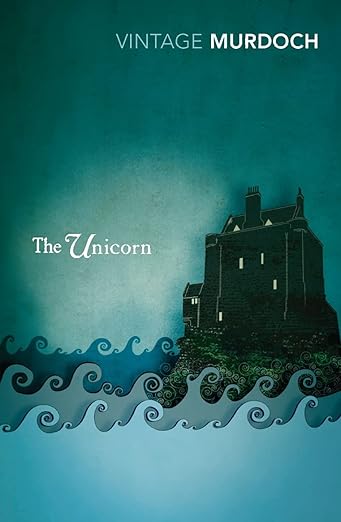
The Unicorn by Iris Murdoch is one of the books I’ll be reading soon. It’s one of my TBRs, a book I bought in a secondhand bookshop in Old Melrose in the Scottish Borders in 2014. It’s a book I’d nearly forgotten, double-shelved at the back of one of my bookcases.

The book begins with the strange conversation:

‘How far away is it?’

‘Fifteen miles’.

‘Is there a bus?’

‘There is not.’

‘Is there a taxi or a car I can hire in the village?’

‘There is not.’

‘Then how am I to get there?’

‘You might hire a horse hereabouts’, someone suggested after a silence.

‘I can’t ride a horse’, she said in exasperation, ‘and in any case there’s my luggage’.

They stared at her with quiet dreamy curiosity.

Also every Friday there is The Friday 56, hosted by Freda at Freda’s Voice, but she is taking a break and Anne at My Head is Full of Books has taken on hosting duties in her absence. You grab a book and turn to page 56 (or 56% of an eBook), find one or more interesting sentences (no spoilers), and post them.

Page 56:

She had never felt quite like this before, alone in her own mind; and yet not quite alone, for somewhere in the big darkness something was haunting her.

Description from Amazon UK

When Marian Taylor takes the post of governess at Gaze castle, remote house on a beautiful but desolate coast, she finds herself confronted with many strange mysteries. What kind of crime or catastrophe in the past still keeps the house under a brooding spell? And is her employer Hannah an innocent victim, a guilty woman, a lunatic, or a witch?

If you have read this book, what did you think?
The Crow’s Inn Tragedy: Book Beginnings on Friday & The Friday 56

Every Friday Book Beginnings on Friday is hosted by Gillion at Rose City Reader where you can share the first sentence (or so) of the book you are reading. You can also share from a book you want to highlight just because it caught your fancy.

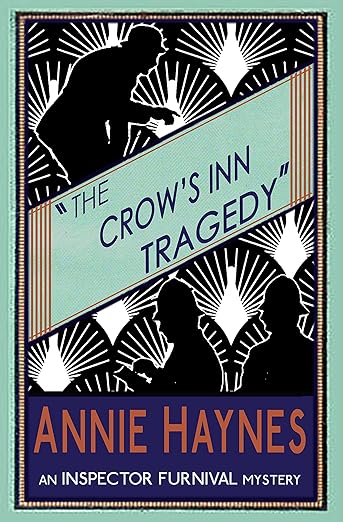
One of the books I’m currently reading is The Crow’s Inn Tragedy by Annie Haynes, the third Inspector Furnival Mystery. Originally published in 1927 and republished by Dean Street Press in 2015.

The book begins:

The offices of Messrs Babcombe and Turner took up the whole of the first floor of the corner house of Crow’s Inn Square. Babcome and Turner was one of the oldest firms in London. Their offices were dingy, not to say grimy-looking.

Also every Friday there is The Friday 56, hosted by Freda at Freda’s Voice, but she is taking a break and Anne at My Head is Full of Books has taken on hosting duties in her absence. You grab a book and turn to page 56 (or 56% of an eBook), find one or more interesting sentences (no spoilers), and post them.

Page 56:

‘By the way, I come into some more money when Aunt Madeleine dies. You will be expecting me to murder her next! You had something left you too. You may have done it to get that!

Description from Amazon UK

“I cannot understand why Mr. Bechcombe apparently offered no resistance. His hand-bell, his speaking-tube, the telephone—all were close at hand. It looks as though he had recognized his assassin and had no fear of him.”
The corner house of Crow’s Inn Square was the most dignified set of solicitors’ chambers imaginable. But this monument to law and order nonetheless becomes the scene of murder – when the distinguished lawyer Mr. Bechcombe, despite giving strict instructions not to be disturbed, is strangled in his own office.

Inspector Furnival of Scotland Yard has to wrestle with fiendish clues, unearth priceless gems and tangle with a dangerous gang before he can solve this case, his third and final golden age mystery. Originally published in 1927, this new edition is the first printed in over 80 years, and features an introduction by crime fiction historian Curtis Evans.

If you have read this book, what did you think?
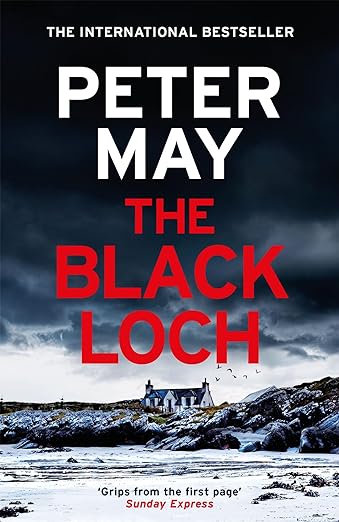
The Black Loch by Peter May: Book Beginnings on Friday & The Friday 56

Every Friday Book Beginnings on Friday is hosted by Gillion at Rose City Reader where you can share the first sentence (or so) of the book you are reading. You can also share from a book you want to highlight just because it caught your fancy.

The book I’m currently reading is The Black Loch by Peter May, the fourth book in May’s Lewis Trilogy. I’ve read and loved the first three books. So I was keen to read it, and so far (I’ve read 45%) it’s living up to my expectations.

The book begins with a Prologue:

The sun set some time ago. Although it is not yet dark enough, somehow for murder.

Also every Friday there is The Friday 56, hosted by Freda at Freda’s Voice, but she is taking a break and Anne at My Head is Full of Books has taken on hosting duties in her absence. You grab a book and turn to page 56 (or 56% of an eBook), find one or more interesting sentences (no spoilers), and post them.

Page 56:

‘Did I ever tell you about the whaling boy?’

He never had.

‘You know what a whale is, Finn?’

‘Of course!’

‘Well there was a time when we killed them all over the planet. Hundreds and thousands of them.’

Description from Amazon:

A MURDER

The body of eighteen-year-old TV personality Caitlin is found abandoned on a remote beach at the head of An Loch Dubh – the Black Loch – on the west coast of the Isle of Lewis. A swimmer and canoeist, it is inconceivable that she could have drowned.

A SECRET

Fin Macleod left the island ten years earlier to escape its memories. When he learns that his married son Fionnlagh had been having a clandestine affair with the dead girl and is suspected of her murder, he and Marsaili return to try and clear his name.

A RECKONING

But nothing is as it seems, and the truth of the murder lies in a past that Fin would rather forget, and a tragedy at the cages of a salmon farm on East Loch Roag, where the tense climax of the story finds its resolution.

If you have read this book, what did you think?
Loitering with Intent by Muriel Spark: Book Beginnings on Friday & The Friday 56

Every Friday Book Beginnings on Friday is hosted by Gillion at Rose City Reader where you can share the first sentence (or so) of the book you are reading. You can also share from a book you want to highlight just because it caught your fancy.

Loitering with Intent by Muriel Spark is a book I’ve had since 2017, when I bought it from Barter Books in Alnwick, one of my favourite secondhand bookshops. One of my favourite books is The Prime of Miss Jean Brodie, so I was hoping to love this book too. I did enjoy it, but not as much as Prime of Miss Jean Brodie.

The book begins:

One day in the middle of the twentieth century I sat in an old graveyard which had not been demolished, in the Kensington area of London, when a young policeman stepped off the path and came over to me.

Also every Friday there is The Friday 56, hosted by Freda at Freda’s Voice, but she is taking a break and Anne at My Head is Full of Books has taken on hosting duties in her absence. You grab a book and turn to page 56 (or 56% of an eBook), find one or more interesting sentences (no spoilers), and post them.

Page 55-56:

Several people turned round to look at Edwina as she spoke with her high cry. People often turned round to stare at her painted wizened face, her green teeth, the raised, red-blood fingernail accompanied by her shrieking voice, the whole wrapped up to the neck in luxurious fur. Edwina was over ninety and might die at any time, as she did about six years later. My dear, dear Solly lived into the seventies of this century, when I was far away.

Description from Amazon:

A funny and clever novel about art and reality and the way they imitate each other, from the author of The Prime of Miss Jean Brodie. With an introduction by Mark Lawson.

Would-be novelist Fleur Talbot works for the snooty Sir Quentin Oliver at the Autobiographical Association, whose members are at work on their memoirs. When her employer gets his hands on Fleur’s novel-in-progress, mayhem ensues when its scenes begin coming true.

If you have read this book, what did you think?