Happy New Year 2020!

Wishing everyone a happy, healthy and peaceful 2020!

Happy New Year

For my first post of the new year I’m looking back at books I read in 2019 using a Reading Bingo Card

reading-bingo-small

This is my  fourth year of playing the Reading Bingo Card.  I like it because during the year I don’t look for books to fill in the card – I just read what I want to read and then see whether the books I’ve read will match the squares. I also like it because it is an excellent way of looking back at the books I’ve read and reminding me of how much I enjoyed them.

Here is my completed card for 2019:

A Book With More Than 500 pages.

The Butterfly Room

The Butterfly Room by Lucinda Riley – 640 pages. The story revolves around Posy Montague and her family home, Admiral House in the Suffolk countryside, a house that had been in her family for generations. The narrative alternates between the different periods of her life from her childhood in the 1940s to the present day in 2006

A Forgotten Classic 

Man on a donkey

The Man on a Donkey by H F M Prescott, published in 1952. A classic of historical fiction, written by Hilda Prescott, a historian, this is the story of ordinary people caught up in great events in the year 1536, when Henry VIII’s kingdom was split apart by rebellion.

A Book That Became a Movie 

Breakfast at tiffany's

Breakfast at Tiffany’s by Truman Capote. Audrey Hepburn’s sparkling performance in the 1961 film of the same name, Breakfast at Tiffany’s is Truman Capote’s timeless portrait of tragicomic cultural icon Holly Golightly.

A Book Published This Year

Fallen Angel Brookmyre

Fallen Angel by Chris Brookmyre was published in April this year. It’s a novel about a family in crisis, about toxic relationships and about the psychology of conspiracy theories.

A Book with a Number in the Title

seven sisters ebook

The Seven Sisters by Lucinda Riley. Maia D’Aplièse and her five sisters gather together at their childhood home, ‘Atlantis’ – a fabulous, secluded castle situated on the shores of Lake Geneva – having been told that their beloved father, the elusive billionaire they call Pa Salt, has died.

A Book Written by Someone Under Thirty

The Shadow Puppet

The Shadow Puppet by Georges Simenon is one of the early Maigret books written in 1931 when Simenon was 29. A man is shot dead in his office in the Place des Vosges in Paris and Maigret uncovers a tragedy involving desperate lives, unhappy people, addiction and an all-consuming greed.

A Book With Non-Human Characters 

Rivers of London

Rivers of London by Ben Aaronovitch –  a novel centred around the adventures of Peter Grant, a young officer in the Metropolitan Police, who, following an unexpected encounter with a ghost, is recruited into the small branch of the Met that deals with magic and the supernatural. Featuring gods and goddesses and vampires.

A Funny Book

Murder of my aunt

The Murder of My Aunt by Richard Hull. An original and funny murder mystery and, whilst not laugh-out-loud funny, I thought it was brilliant. It’s witty and ironic from the start.  It makes very entertaining reading and I loved the ending, which took me by surprise and I thought was so clever.

A Book By A Female Author 

a beautiful corpse

I have plenty of choice for this and have chosen a book by a new-to-me author, Christi Daugherty and her book, A Beautiful Corpse. It’s a murder mystery set in Savannah, with its historic buildings, parks and ancient oak trees covered in Spanish moss. Harper McLain, a crime reporter with the Savannah Daily News investigates a murder on downtown River Street, a narrow cobblestoned lane between the old wharves and warehouses and the Savannah River.

A Book With A Mystery

Ruin

The Rúin by Dervla McTiernan, the first in the detective Cormac Reilly series set in Ireland. In Irish, Rúin means something hidden, a mystery, or a secret, but the word also has a long history as a term of endearment. It has a powerful opening in 1993 in Galway when Garda Cormac Reilly, new to the job, finds 15-year-old Maude and her little brother, Jack, who’s only five, alone in an old, decaying Georgian house, whilst their mother Hilaria Blake lies dead of an overdose.

A Book With A One Word Title

Dolly

Dolly by Susan Hill is a small book – in size and in length and I read it very quickly. It’s a supernatural tale with an uneasy foreboding and melancholic atmosphere, mainly set in a mysterious isolated country house in the Fens.

A Book of Short Stories

Blood on the tracks

Blood on the Tracks edited by Martin Edwards. A collection of fifteen railway themed stories presented in roughly chronological order from 1898 up to  the 1950s. The ones I enjoyed the most are by R Austin Freeman, Roy Vickers, Dorothy L Sayers, F Tennyson Jesse and Freeman Crofts Willis

Free Square

The island Jonasson

For this square I’ve chosen a book in translation. It’s The Island by Ragnar Jónasson, translated from Icelandic by Victoria Cribb. Detective Inspector Hulda Hermannsdóttir is sent to the isolated island of Elliðaey to investigate a disappearance. But she finds haunting similarities to an old case – the murder of a young woman ten years ago.  A novel full of suspense and foreboding, set against the beautiful and dramatic Icelandic landscape.

A Book Set On A Different Continent

Good Son

The Good Son by by You-jeong Jeong, a South Korean writer of psychological crime and thriller fiction. When Yu-jin wakes up covered in blood, and finds the body of his mother downstairs, he decides to hide the evidence and pursue the killer himself. It is set in South Korea, mainly in Incheon, a city south of Seoul but the main focus is on Yu-jin’s dysfunctional family and their relationships.

A Book of Non Fiction

Henrietta Lacks

The Immortal Life of Henrietta Lacks by Rebecca Skloot – a wonderful book, fascinating, but harrowing to read in parts, from all the details of Henrietta’s life, how she was treated for cervical cancer in 1951, when she was just 30, to her death nine months later.

The First Book By a Favourite Author

Mary Barton Gaskell

Mary Barton: A Tale of Manchester Life a novel by Elizabeth Gaskell published in two volumes in 1848. It covers the years 1837 to 1842, telling the story of ordinary working people struggling with the rapid social change and terrible working and living conditions.

A Book You Heard About On Line

Gallows Court

Many of the books I read these days are books I’ve heard about on line. I’ve chosen Gallows Court by Martin Edwards because I first read about it on his blog Do You Write Under Your Own Name? It is set in 1930s London, a change of direction for Martin Edwards, born out of his fascination with that period in history and his love of Golden Age detective fiction. I loved this intricately plotted murder mystery with plenty of suspense and intrigue

A Best Selling Book

The Lost Man

The Lost Man by Jane Harper, her third novel. The story revolves around the death of Cameron Bright. There are three Bright brothers – Nathan the oldest, then Cameron and the youngest brother, Bub. They have a vast cattle ranch in the Queensland outback. Cameron’s body is found lying at the the base of the headstone of a stockman’s grave – a headstone standing alone, a metre high, facing west, towards the desert, in a land of mirages.

A Book Based On A True Story

Katharina fortitude

Katharina: Fortitude by Margaret Skea, historical fiction based on the life of Katharina von Bora from the beginning of her married  life with Martin Luther in 1525 to her death in 1552. It is the conclusion to Katharina: Deliverance, which covered the early years of her life from 1505 up to her wedding to Luther. Margaret Skea is a skilful storyteller and seamlessly blends historical fact into her fiction. I was totally immersed in this story, enhanced by the richly descriptive writing, which made it compulsively readable for me.

A Book At The Bottom of Your To Be Read Pile

Sweet thursday

Sweet Thursday by John Steinbeck –  a sequel to Cannery Row. I’ve had this book for five years. It’s set in Monterey on the California coast in the 1950s after the Second World War when the cannery had closed down. It has great dialogue, great sense of location, eccentric and funny characters, wit, humour, irony and a touch of farce and surrealism, along with plenty of philosophy. I loved it.

A Book Your Friend Loves

Bitter Lemons

Bitter Lemons of Cyprus by Lawrence Durrell is a book recommended by a friend. It’s Durrell’s account of his time in Cyprus, during the 1950s Enosis movement for freedom of the island from British colonial rule, set mainly in Kyrenia in Northern Cyprus, where he bought a house in the Greek village of Bellapaix.  

A Book that Scares You

Wakenhyrst

Wakenhyrst by Michelle Paver. This is a dark and horrific tale of mystery and imagination laced with terror. It’s a story of disintegrating madness, set in a remote hamlet in the Suffolk Fens, an eerie waterlogged landscape.

A Book That Is More Then Ten Years Old

Operation Pax

Operation Pax by Michael Innes first published in 1951, about a petty thief, Alfred Routh, an unpleasant little man, who for much of the time is confused and bewildered by his own thoughts and fears, which plunge him into utter panic. It is pure escapism with an incredibly unbelievable plot and strange eccentric characters that wormed their way into my mind and made it a book I just had to finish.

The Second Book In A Series

An Advancement of learning

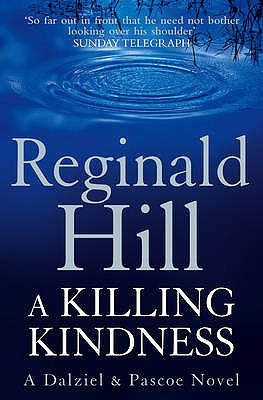
An Advancement of Learning by Reginald Hill, the second book in his Dalziel and Pascoe series.  Although not up to the standard of his later books the strength of this book is in the writing and the characterisation. It is a character-driven murder mystery, showing the early relationship between Chief Superintendent Dalziel, a rude, boorish character, and Pascoe, the university educated young DS.

A Book With A Blue Cover

Those who are loved

 Those who Are Loved by Victoria Hislop, is historical fiction in which Themis Koralis/Stravidis tells her grandchildren her life story, beginning from when she was a small child in the 1930s, through the German occupation of Greece during the Second World War, the civil war that followed, then the oppressive rule of the military junta and the abolition of the Greek monarchy, up to the present day.

Wild Fire by Ann Cleeves

Wild Fire

Macmillan|6 September 2018|417 pages| paperback|4*

Wild Fire is the 8th and last book in Ann Cleeves’ Shetland series. I have loved this series ever since I read the first book, Raven Black, back in 2010. And because I began reading the books before they were televised my picture of Inspector Jimmy Perez is drawn from them rather than from the dramatisations. There are some significant changes  between the TV dramatisations and the books – notably in the characters of Cassie, Fran’s daughter who is still a child in the books is older in the TV stories, and the relationship between her father, Duncan Hunter and Perez is different. And Douglas Henshall, who plays the part of Perez, is not physically like Jimmy Perez – Perez has long dark hair with Spanish ancestry in his blood, whereas Douglas Henshall is a redheaded Scot.

It’s not necessary to have read the earlier books in the series as each one works well on their own, but I think it helps enormously if you have as the personal stories of the main characters form a continuous thread.

Wild Fire is set in Deltaness, an invented village in Northmavine where the Fleming family, Helen, a knitwear designer, her architect husband, Daniel, and their children, autistic Christopher, and Ellie,  have recently relocated from London. They are finding it hard to settle and matters were only made worse when the previous owner of their house is founding hanging in their barn. But they have made friends with the Moncrieff family, Belle, her husband Robert the local doctor and their four children – the eldest two,Martha and Charlie are teenagers, with a younger brother and sister. 

Things go from bad to worse for the Flemings when Christopher discovers the hanged body of the Moncrieff’s nanny, Emma Shearer in the barn. Suspicion immediately falls on Daniel and Helena as the rumours spread like wild fire that Emma and Daniel had been having an affair. Chief Inspector Willow Reeves, Jimmy’s boss returns to Shetland to lead the investigation and it is immediately obvious that they have personal issues to resolve as well as finding the murderer.

But of course it is not that straight forward. Emma comes from a dysfunctional family and has issues of her own to work through, and the Moncrieffs are also suspects. In fact there are plenty of people who bear grudges against the incomers and they become a focus of resentment and jealousy. Emma’s boyfriend Magnie Riddell and his mother Margaret are two more people whose motives and movements come under suspicion.

The main interest for me is the relationship between Jimmy and Willow and how Jimmy reacts to her news. It causes him to question what he really feels and what form his life will take for the future. I don’t think it is giving away any spoilers, as this is the last book in the series, to say that things are about to change for them both. As in all the Shetland books it is Ann Cleeves’ beautiful descriptions of the islands that stand out – that and the characters themselves who have become like real people to me and I shall miss reading about them. But then, I can always re-read the series!

Reading Challenges – Calendar of Crime (the main action takes place in May), and Mount TBR 2019 (a book I’ve owned for 2 years)

As it is the last day of the year, this is my last post in 2019 (you may have noticed that I’ve written three posts today to complete my entries in the two Reading Challenges above).

And now I’m looking forward to the start of a new decade and lots of books to read.


The Shadow Puppet by Georges Simenon

The Shadow Puppet

Penguin Classics|2 October 2014|160 pages|Paperback|4*

Georges Simenon wrote his 13th Maigret book, The Shadow Puppet in December 1931 at the villa Les Roches Grises at Antibes (Alpes-Maritimes) on the French Riviera. It was first published in 1932 under the title L’Ombre chinoise. 

It’s the second Maigret book I’ve read in the last two days and I think this is better than the other one I read, The Saint-Fiacre Affair. It is a more typical murder mystery – a man is shot dead in his office in the Place des Vosges in Paris and Maigret uncovers a tragedy involving desperate lives, unhappy people, addiction and an all-consuming greed. He gets to the truth through careful examination of the facts, questioning those involved and applying his knowledge and understanding of human nature.

One evening Raymond Couchet, the owner of a serum company in the Place des Vosges, was shot dead, seated at his desk, and the safe behind him was empty, the 3600 francs that should have been there have gone. The building contains Couchet’s medical laboratory  as well as residential apartments, set around a central courtyard. Called to the scene Maigret notices the shadowy figures in the lighted windows of the building and suspects that the murderer could be one of the residents of the apartments where Couchet’s first wife, Juliette Martin and her husband live. Then there is his son, Roger, a drug addict living in the Hôtel Pigalle, and in the next room to him, Couchet’s girlfriend, Nine Moinard, a dancer at the Moulin Bleu.

It is an entertaining mystery and Maigret finds himself getting to really like Couchet as the details of his life emerge – and equally disliking both his son and his bitter ex-wife. What I like about these Maigret books are that they are concise and tightly structured yet convey such convincing characters and depths of perception. In this particular book Maigret comes across feelings of enmity, greed, class distinction, hatred and paranoia in the course of his investigations.

Reading Challenges – Calendar of Crime (the setting is a place of employment), and Mount TBR 2019 (a book I’ve owned for 2 years)

The Saint-Fiacre Affair by Georges Simenon

The Saint-Fiacre Affair

Penguin Classics|6 November 2014|160 pages|Paperback|3*

The Saint-Fiacre Affair by Georges Simenon was first published in January 1932, under the title Maigret Goes Home. My copy is one of the Penguin Classics publications in new translations.

Saint-Fiacre is where Maigret was born and grew up. His father had been the steward of the château there for thirty years. So when an anonymous note predicting a crime during All Souls’ Day mass at the church is handed in to the Moulins police office, Maigret went back there for the first time since his father had died. It is a melancholy visit for as well as a death to investigate, Maigret finds so much had changed and the atmosphere was oppressing him – he had never imagined that he would find the village in such a sorry state.

The predicted death took place in the church whilst Maigret was attending the the first Mass on All Soul’s Day – the old Countess of Saint-Fiacre died during the mass, of heart failure.  But Maigret soon discovers that the heart attack had been brought on when the Countess read a fake newspaper story of her son’s suicide that had been planted in her missal. Maigret suspects a number of people could have been responsible – her son, Maurice, her secretary/lover, Jean, the steward, Ernest and his son, Emile.

I enjoyed this book, although I found it rather disjointed and at times couldn’t follow very easily who was speaking, so it was a bit difficult keeping track of what was going on – maybe that was my problem, I’m not sure. But I thought the melancholy atmosphere and the descriptions of the chateau and Maigret himself were well done and it is packed with drama and tension. The denouement in which Maigret reveals the truth reminded me of the way Poirot rounds up all the people involved and explains who had done the deed and why, and why it was a crime that was not punishable by the law. 

 Reading ChallengesCalendar of Crime (winter scene on the cover), and Mount TBR 2019(a book I’ve owned for 2 years)

Virtual Mount TBR Final Checkpoint

e5ba7-virtual2bmount2btbr2bblog

The Virtual Mount TBR Challenge, a challenge for reading books you do not own, hosted by Bev @ My Reader’s Block, comes to an end on 31 December.  I read 12 library books, so completing the first level – Mount Rum Doodle.

  1. Great Britain’s Great War by Jeremy Paxman
  2. Destroying Angel by S G. MacLean
  3. The Tea Planter’s Wife by Dinah Jefferies
  4. I Found You by Lisa Jewell
  5. Breakfast at Tiffany’s by Truman Capote
  6. Printer’s Devil Court by Susan Hill
  7. The Seeker by S G Maclean
  8. The Stranger Diaries by Elly Griffiths
  9. Dolly by Susan Hill
  10. The Riviera Set by Mary S Lovell
  11. A Lovely Way to Burn by Louise Welsh
  12. Our Betty by Liz Smith
This is My Life According to Books, using titles from my list: 
  1. My Ex is/was [a] Destroying Angel
  2.  My best friend is The Tea Planter’s Wife
  3. Lately, at work [it’s been like] Great Britain’s Great War
  4. If I won the lottery, [I’d join] The Riviera Set
  5. My fashion sense [is] A Lovely Way to Burn
  6. My next ride [will be with] Our Betty
  7. The one I love is The Seeker
  8. If I ruled the world, everyone would [be invited to] Breakfast at Tiffany’s
  9. When I look out my window, I see Printer’s Devil Court
  10. The best things in life are [because] I Found You

My Books of the Decade

I like the idea other bloggers have had to list their ‘books of the decade’, so here is my list, with links to my posts (some are very short notes). These are books I’ve read during the decade and loved, but not necessarily books that were published during the decade. They are all books that kept me wondering what happens next, that kept me engrossed, that have remained in my memory ever since I read them and that in ideal world I’d like to re-read. And, of course, this is just the tip of the iceberg as there are many more that I could have chosen.

This list shows I like a lot of fiction, mainly historical and crime fiction with a few non-fiction books as well. Which books would you have on your list?