Nonfiction November: Week 1 – Your Year in Nonfiction

This year I’m taking part in Nonfiction November, hosted by Kim of Sophisticated Dorkiness, Rennie of What’s Nonfiction, Katie of Doing Dewey, Julz of JulzReads and Sarah of Sarah’s Bookshelves.  Each week, we’ll have a different prompt and a different host looking at different ideas about reading and loving nonfiction.

This week’s topic is: Your Year in Nonfiction

Take a look back at your year of nonfiction and reflect on the following questions:

What was your favourite nonfiction read of the year?
Do you have a particular topic you’ve been attracted to more this year?
What nonfiction book have you recommended the most?
What are you hoping to get out of participating in Nonfiction November?

I’ve not been reading much nonfiction this year – just 7 books up to now. I’ve read two biographies – Victoria: A Life by A N Wilson, a long and fascinating book that portrays her both as a woman, a wife and mother as well as a queen set against the backdrop of the political scene in Britain and Europe, and Wedlock:  How Georgian Britain’s Worst Husband Met His Match by Wendy Moore, about Mary Eleanor Bowes, who was one of the richest young heiresses in 18th century Britain. I also read Jeremy Paxman’s A Life in Questions mainly about his career with little about his personal life.

The other books I read are on reading – Bookworm: A memoir of childhood reading by Lucy Mangan, on painting – Painting as a Pastime by Winston S. Churchill, on time – Timekeepers by Simon Garfield and on sleep – Why We Sleep by Matthew Walker.

Wedlock: How Georgian Britain's Worst Husband Met His Match

They are all so different that it’s hard to choose a favourite, but the one that sticks in my mind most is Wedlock, a biography of Mary Eleanor Bowes, who was one of the richest young heiresses in 18th century Britain. She fell under the spell of a handsome Irish soldier, Andrew Robinson Stoney. Her marriage to Andrew Robinson Stoney was an absolute disaster. He was brutally cruel and treated her with such violence, humiliation, deception and kidnap, that she lived in fear for her life.

The topics I’m attracted to are mainly memoirs, biographies and history, although I do like a variety of subjects. I think Bookworm is a must read for bookworms, it’s full of the joy of books – it’s not just what Lucy Mangan read, it’s also a history of children’s books, details of their authors and a memoir of Lucy’s childhood.

By participating in Nonfiction November I’m hoping this will encourage me to read more nonfiction rather than picking up the next novel to read and I’m looking forward to seeing what others recommend.

WWW Wednesday: 24 October 2018

IMG_1384-0

WWW Wednesday is run by Taking on a World of Words.

The Three Ws are:

What are you currently reading?
What did you recently finish reading?
What do you think you’ll read next?

I’m currently reading: three books, one historical fiction in hardback, one crime fiction on my Kindle and one non-fiction that I’ve borrowed from the library.

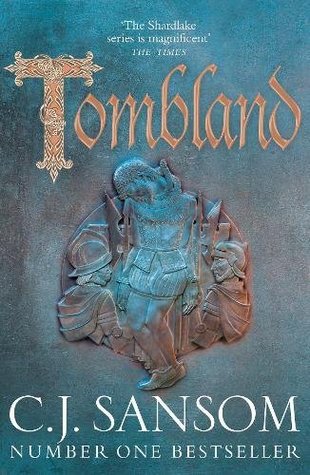
Tombland by C J Sansom, the 7th book in his Shardlake series, set in 1549 two years after the death of Henry VIII.

Tombland (Matthew Shardlake, #7)

I’m just settling into this book – Edward VI, is eleven years old and his uncle Edward Seymour, Lord Hertford, rules England as Protector. Matthew Shardlake, a lawyer in the employ of Lady Elizabeth, the old King’s younger daughter, is once more called on to investigate a murder, that of Elizabeth’s distant relative, Edith Boleyn. 1549 is the year of Kett’s Rebellion, which began when a group of rebels destroyed fences that wealthy landowners had erected to enclose their land.

I’m also reading The Darkest Place by Jo Spain, the Kindle edition was published on 20 September 2018. It’s the fourth Inspector Tom Holland mystery. I’ve read nearly 70% and am really enjoying it.

The Darkest Place (Inspector Tom Reynolds, #4)

Synopsis:

Christmas day, and DCI Tom Reynolds receives an alarming call. A mass grave has been discovered on Oileán na Caillte, the island which housed the controversial psychiatric institution St. Christina’s. The hospital has been closed for decades and onsite graves were tragically common. Reynolds thinks his adversarial boss is handing him a cold case to sideline him.

But then it transpires another body has been discovered amongst the dead – one of the doctors who went missing from the hospital in mysterious circumstances forty years ago. He appears to have been brutally murdered.

As events take a sudden turn, nothing can prepare Reynolds and his team for what they are about to discover once they arrive on the island . . .

And I’ve also started to read Jacob’s Room is Full of Books, by Susan Hill in which she writes about the books she has read, reread or returned to the shelf during one year.

Jacob's Room is Full of Books: A Year of Reading

It’s a mix of reflections on the books, on writing and of observations about a variety of topics, month by month.

I’ve recently finished:  
The Ghost

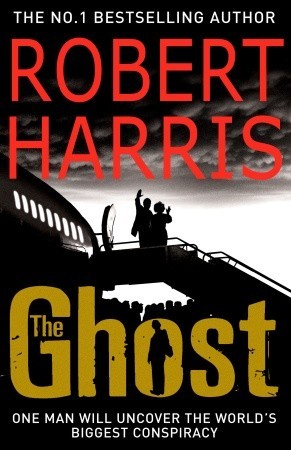
The Ghost by Robert Harris. I quoted the opening paragraph and synopsis in this post. It’s a political thriller with an anonymous narrator who is the ‘ghost’ or rather a ghostwriter employed to write the autobiography of Adam Peter Benet Lang, recently retired prime minister of Great Britain. I’m writing my review and will post it in the next few days.

My next book could be:

I am torn, as usual, wanting to read several books at once. I so want to start Daisy in Chains by Sharon Bolton – I wrote a bit about this book in this post.  It’s crime fiction about a convicted murderer, Hamish Wolfe who tries to convince, defence barrister Maggie Rose that he is innocent.

Daisy in Chains

But there are many more books also crying out to be read, so when the time comes to start another book, it could be something completely different.

Have you read any of these books?  Do any of them tempt you? 

Timekeepers: How the World Became Obsessed with Time by Simon Garfield

Timekeepers: How the World Became Obsessed With Time

3*

Synopsis:

Time flies like an arrow, but fruit flies like a banana. The Beatles learn to be brilliant in an hour and a half. An Englishman arrives back from Calcutta but refuses to adjust his watch. Beethoven has his symphonic wishes ignored. A US Senator begins a speech that will last for 25 hours. The horrors of war are frozen at the click of a camera. A woman designs a ten-hour clock and reinvents the calendar. Roger Bannister lives out the same four minutes over a lifetime. And a prince attempts to stop time in its tracks.

Timekeepers is a book about our obsession with time and our desire to measure it, control it, sell it, film it, perform it, immortalise it and make it meaningful. It has two simple intentions: to tell some illuminating stories, and to ask whether we have all gone completely nuts.

My thoughts:

Timekeepers fulfils Simon Garfield’s intentions – to tell some illuminating stories, and to ask whether we have all gone completely nuts. It covers a wide variety of topics, all in one way or another about time – how it’s been recorded, the development of the calendar, the standardisation of time to aid with railway timetables, and aspects of time management, for example.

The chapters vary in length and some are more interesting than others. The one that interested me most was Movie Time, with an account of how the silent film, Safety Last! was made in 1923.

File:Safetylast-1.jpg
Harold Lloyd dangling from the clock in Safety Last! (1923)

Harold Lloyd climbs the outside of a department store, obstacles falling on him as he does so, until he reaches the giant clock at the top, grabs hold of it, and dangles above the street below. Garfield recalls that for the first audiences time just froze, some went into hysterics and others fainted. Garfield’s focus is on the concept of time that the movies portrayed and goes on to explain how films were originally produced and shown when the timing depended on the cranking skills of the cameraman during filming and the projectionist during showing.

I was also interested in the chapter on performances of Beethoven’s Ninth Symphony, a long and complex piece of music involving a large orchestra, solo singers and a chorus, where Garfield’s focus is on the tempo of the music and the differences made by different composers’ interpretations; and also in the chapter on Nic Ut’s photograph of children fleeing after a napalm bomb had been dropped on a village in Trảng Bàng, Vietnam. Garfield’s focus here is on the fraction of a second when the photograph was captured that brought the story home to its viewers.

Several other chapters also interested me but I wasn’t taken with those on the technicalities of time measurement, time management,or the production of clocks and watches, that Garfield describes in great detail. The book jumps about from topic to topic with, as far as I can make out, no chronological order. But it is full of facts, and going off the Further Reading and Acknowledgement section it is well researched. A book to dip into rather than read straight through.

  • Format: Kindle Edition
  • File Size: 4503 KB
  • Print Length: 369 pages
  • Publisher: Canongate Books; Main edition (29 Sept. 2016)
  • Source: Canongate Books via NetGalley
  • My Rating: 3 stars

Thanks to Canongate Books and NetGalley for my copy of this book for review.

WWW Wednesday: 17 October 2018

IMG_1384-0

WWW Wednesday is run by Taking on a World of Words.

The Three Ws are:

What are you currently reading?
What did you recently finish reading?
What do you think you’ll read next?

I’m currently reading:

The GhostTimekeepers: How the World Became Obsessed With Time

The Ghost by Robert Harris. I quoted the opening paragraph and synopsis in yesterday’s post. It’s a political thriller with an anonymous narrator who is the ‘ghost’ or rather a ghostwriter employed to write the autobiography of Adam Peter Benet Lang, recently retired prime minister of Great Britain. And he has a month to do it, or rather complete the manuscript started by his predecessor McAra, Lang’s assistant who was found dead, drowned, after falling overboard on the ferry to Martha’s Vineyard.

The film, The Ghost (in the UK)/ The Ghost Writer (in the US) is an adaptation of this book, with Ewan McGregor playing the part of the unnamed ghostwriter.

I’m also reading Timekeepers by Simon Garfield, a book of short essays on different aspects of time. It’s full of facts, but still easy reading written in an entertaining style. But so far I’m finding it ‘interesting’ rather than ‘fascinating’.

I’ve recently finished:  

Now We Shall Be Entirely Free

Now We Shall Be Entirely Free by andrew Miller. See this post for my review – historical fiction set in 1809 Captain John Lacroix, home from Britain’s disastrous campaign against Napoleon’s forces in Spain.

My next book could be:

Tombland (Matthew Shardlake, #7)

Although I have several books in mind to read next, it will most probably be Tombland by C J Sansom, which is to be published tomorrow. It’s the 7th book in his Shardlake series.

Synopsis:

Spring, 1549.

Two years after the death of Henry VIII, England is sliding into chaos…

The nominal king, Edward VI, is eleven years old. His uncle Edward Seymour, Lord Hertford, rules as Protector, presiding over a collapsing economy, a draining, prolonged war with Scotland and growing discontent amongst the populace as the old religion is systematically wiped out by radical Protestants.

Matthew Shardlake, meanwhile, is a lawyer in the employ of Lady Elizabeth, the old King’s younger daughter. The gruesome murder of Elizabeth’s distant relative Edith Boleyn soon takes him and his assistant Nicholas Overton to Norwich where he is reunited with Overton’s predecessor Jack Barak. As another murder drags the trio into ever-more dangerous waters, Shardlake finds his loyalties tested as Barak throws in his lot with the exploding peasant rebellion and Overton finds himself prisoner in Norwich castle.

Simultaneously, Shardlake discovers that the murder of Boleyn may have connections reaching into both the heart of the rebel camp and of the Norfolk gentry…

Have you read any of these books?  Do any of them tempt you? 

Books Read in September 2018

How my reading habits have changed! It was only a few years ago that I read mostly paper books, but these days I read mostly e-books – six out of the nine books I read in September are e-books. Another major change is the amount of review copies I read. This month I read five review copies that came to me via NetGalley. I also read one library book and the other three books are all my own books – but only one of those is an actual physical book! And only one of the nine books is non-fiction.

They range from 5 star to 2 star books and are a mix of crime and historical fiction plus one biography. My ratings are based solely on my reactions to the books.

I’ve written about five of these books – click on the links to read my reviews:

  1. The Way of All Flesh by Ambrose Parry 5* – historical fiction set in Edinburgh in 1847 as Dr James Young Simpson, a professor of midwifery, discovered the anaesthetic properties of chloroform.
  2. The Dancer at the Gai-Moulin by Georges Simenon 3.5* – one of the early Maigret books, set in Belgium not France.
  3. The Clockmaker’s Daughter by Karen Morton 3* – historical fiction set over multiple time-lines and with multiple narrators. I loved parts of it and it’s richly descriptive, but found it hard to keep track of all the characters and separate strands of the story.
  4. Appleby’s End by Michael Innes 3* – an Inspector Appleby book. It’s surreal, a macabre fantasy with a  complex and completely unrealistic plot and strange characters.
  5. Down to the Woods by M J Arlidge 2.5* – crime fiction, a DI Helen Grace murder mystery, tense and dark with several twists and turns. Not my favourite book of the month!

Here are some brief notes about the remaining four books:

Dead Woman WalkingDead Woman Walking by Sharon Bolton 5* – Sharon Bolton is a brilliant storyteller and this is a brilliant book – complex, very cleverly plotted, full of suspense and completely gripping with great characters and set in Northumberland. It begins with a balloon flight that ends in disaster and only Jessica survives as the balloon crashes to the ground, but she is pursued by a man who is determined to kill her.  I loved this book.

Wedlock: How Georgian Britain's Worst Husband Met His Match

Wedlock:  How Georgian Britain’s Worst Husband Met His Match by Wendy Moore 4* – a biography of Mary Eleanor Bowes, who was one of Britain’s richest young heiresses. Her first husband was the Count of Strathmore – the Queen Mother, Elizabeth Bowes-Lyon, was a direct descendant of their marriage. Her second marriage to Andrew Robinson Stoney was an absolute disaster. He was brutally cruel and treated her with such violence, humiliation, deception and kidnap, that she lived in fear for her life. This is non-fiction and is full of detail, but even so it reads like a novel.

East of Eden

East of Eden by John Steinbeck 4* –  the story of two families—the Trasks and the Hamiltons—whose generations helplessly re-enact the fall of Adam and Eve and the poisonous rivalry of Cain and Abel. I enjoyed this beautifully written book, which begins slowly, but not as much as The Grapes of Wrath, which I thought was amazing. It’s long – too long really – and to my mind it reads like a morality tale of good versus evil. There are many parallels to the Bible stories, with surely one of the most evil characters ever in Cathy. I liked the way Steinbeck set out the moral dilemmas and gave the characters choice using the Hebrew word ‘timshel‘, meaning ‘thou mayest’.

The Gaslight Stalker (Esther & Jack Enright Mystery #1)The Gaslight Stalker by David Field 2* – historical crime fiction set in London in 1888. This was a disappointing book, that provides a new solution to the Jack the Ripper murders. There are two elements to the plot and I don’t think they mixed well. I liked the historical facts based on the evidence in the Jack the Ripper case and thought they were well written, if a little repetitive. But the romance between Esther, a young seamstress and Jacob Enright, a young police officer, felt out of place and is too simplistically narrated.

Top Ten Tuesday: Top Ten Books On My Fall 2018 TBR

Top Ten Tuesday new

Top Ten Tuesday is a weekly meme created by The Broke and the Bookish and now hosted by Jana at That Artsy Reader Girl. This is the first time I’m taking part.

The rules are simple:

  • Each Tuesday, Jana assigns a new topic. Create your own Top Ten list that fits that topic – putting your unique spin on it if you want.
  • Everyone is welcome to join but please link back to The Artsy Reader Girl in your own Top Ten Tuesday post.
  • Add your name to the Linky widget on that day’s post so that everyone can check out other bloggers’ lists.
  • Or if you don’t have a blog, just post your answers as a comment.

This week’s topic is Top Ten Books On My Fall 2018 TBR.  Autumn (Fall) begins on 23 September and I have so many books to choose from – new releases, review copies,  and library books. Here are just some of the books that I’m hoping to read before winter sets in. I’m not sure these are my top ten – only time will tell:

New Releases coming in October

In a House of Lies (Inspector Rebus, #22)Tombland (Matthew Shardlake, #7)The Reckoning

  • In a House of Lies by Ian Rankin – the 22nd Rebus book. I’ve read all the previous books, so this is a must for me.
  • Tombland by C J Sansom – the 7th Shardlake book, historical fiction – also a must read, having read the previous 6 books.
  • The Reckoning by John Grisham – not too sure about this one. Years ago I read loads of his books and then stopped as I felt they became rather formulaic.

Review copies (some are new releases)

  • Now We Shall Be Entirely Free by Andrew Miller – historical fiction set in 1809 during the Napoleonic Wars. A new-to-me author, but an award winning author.
  • Down to the Woods by M J Arlidge – the 8th DI Helen Grace thriller – another new-to-me author, with good reviews for his books.

  • Absolute Truth by Peter James – a standalone thriller. One of my favourite authors.
  • Timekeepers by Simon Garfield – non-fiction about our obsession with time,  promises to be fascinating.

Library books

In a Dark, Dark WoodHag-Seed (Hogarth Shakespeare)Destroying Angel (Damian Seeker #3)

  • In a Dark Dark Wood by Ruth Ware – a psychological thriller – I’m hoping I’ll enjoy it more than The Woman in Cabin 10.
  • Hag-Seed by Margaret Atwood – The Tempest retold, one of the Hogarth Shakespeare Project novels.
  • Destroying Angel by S G MacLean – the third Damian Seeker book, historical crime fiction. I loved the previous two books.