Nonfiction November Week 5: Additions to my TBR

Week 5: (Nov. 26 to 30) – New to My TBR (Katie @ Doing Dewey): It’s been a month full of amazing nonfiction books! Which ones have made it onto your TBR? Be sure to link back to the original blogger who posted about that book!

I’ve had a great time doing these Nonfiction November posts, found yet more book bloggers and I’ve added these books to my TBR:

From the comments on my Ask the Expert post asking for recommendations about books on World War One:

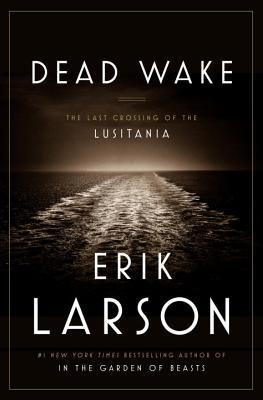
The War that Ended Peace: How Europe abandoned Peace for the First World WarThe Sleepwalkers: How Europe Went to War in 1914Rites of Spring: The Great War and the Birth of the Modern AgeDead Wake: The Last Crossing of the Lusitania

From posts on Nonfiction that reads like fiction:

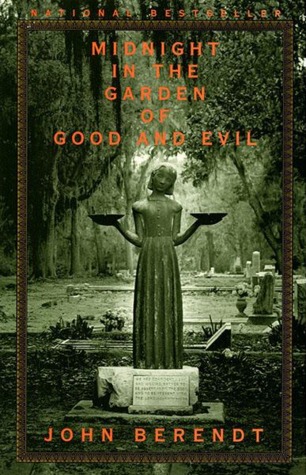
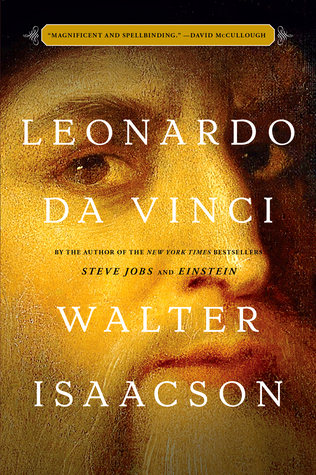
Midnight in the Garden of Good and EvilLeonardo da VinciThe Sound of a Wild Snail Eating

  • Midnight in the Garden of Good and Evil by John Berendt from Rennie of What’s Nonfiction. She writes ‘Berendt’s story begins with a murder in the old-fashioned, uniquely southern atmosphere of Savannah but develops into so much more.’
  • Leonardo da Vinci by Walter Isaacson from Deb Nance at ReaderbuzzWalter Isaacson is not an art historian, he’s simply a lover of Leonardo, who manages to communicate the sheer joy of this remarkable man’ Books of the Year – The Times.
  • The Sound of a Wild Snail Eating by Elisabeth Tova Bailey from Brona’s Books, Brona writes, ‘Bailey uses examples from poetry, literature and science to bring forth the nature of her snail. Each little nugget is revealed with care and circumspection. Watching her snail, Bailey comes to terms with her own illness.’

Thanks everyone for your recommendations!

Nonfiction November Week 4: Reads Like Fiction

The topic for Week 4: (Nov. 19 to 23) is Reads Like Fiction (Rennie @ What’s Nonfiction): 

Nonfiction books often get praised for how they stack up to fiction. Does it matter to you whether nonfiction reads like a novel? If it does, what gives it that fiction-like feeling? Does it depend on the topic, the writing, the use of certain literary elements and techniques? What are your favorite nonfiction recommendations that read like fiction? And if your nonfiction picks could never be mistaken for novels, what do you love about the differences?

It doesn’t matter to me whether a nonfiction book reads like a novel, although I think those that do read like novels are easier to read, even though they are packed full of details and information. It does depend on the topic though and looking through the nonfiction I’ve read in recent years I see that most of the ones that read like fiction are either autobiographies or biographies.

Biographies are written using a mass of material gathered from various sources and are a result of selection – choosing what to include and what to leave out, how to interpret the gaps in the material available. Claire Tomalin in the foreword to her biography of Dora Jordan writes that ‘History – and biography, which is a branch of history is always a matter of choice and control. The writer or editor decides what is history and what is not.

Likeness must be there in a biography, whether it is more like history or fiction. I like historical fiction and, to a certain extent, fictionalised biography but I like to know what is fact and what is not. But then facts are open to interpretation – biographies are given a story-like shape  but still need to be accurate.

Mrs. Jordan's Profession: The Actress and the PrinceSisters of Sinai: How Two Lady Adventurers Found the Hidden Gospels

Mrs Jordan’s Profession: The Story of a Great Actress and a King, Claire Tomalin’s biography of Dora Jordan. It is both well researched and well written making it easy to read despite being packed with information, brilliantly bringing the late 18th and early 19th centuries to life as she tells the story of Dora and her relationship with the Duke of Clarence, later King William IV. Dora was an actress, known as ‘Mrs Jordan’, although there was never a Mr Jordan. She made her stage debut in 1777 at the age of 15 and her first Drury Lane appearance in 1785. She met William, the Duke of Clarence (later William IV) and she became his mistress in 1790.

Another example of a biography that reads like fiction is Sisters of Sinai: How Two Lady Adventurers Found the Hidden Gospels by Janet Soskice. As I was reading I remember thinking that if this were a novel I would think it was a most unlikely story. It tells the story of twin sisters in the latter half of the nineteenth century, who travelled to St Catherine’s Monastery at Mount Sinai where they discovered one of the earliest copies of the Gospels written in ancient Syriac. They also went to Jerusalem and beyond crossing the desert on camel or walking miles on foot.

An AutobiographyCider With Rosie

Then there are autobiographies. These can be very different depending on how much the author wants to reveal about themselves. I loved Agatha Christie’s An Autobiography, written in such an easy style that it was as though I was listening to her talking. It took her fifteen years to write and is filled with her thoughts and reflections as well as telling the story of her life. But although she wrote about her childhood, teenage years, friends and family, her marriage to Archibald Christie and their divorce, about her travels around the world, the two world wars, her interest and involvement with archaeology and her marriage to Max Mallowan, she didn’t write about her disappearance in 1926.

A very different autobiography is Laurie Lee’s autobiography Cider With RosieIt is a beautiful book, full of wonderful word pictures of life in a remote Cotswold village at the beginning of the twentieth century. Laurie Lee was also a poet and this book reads like a prose poem throughout. Cider with Rosie covers his childhood years and it is absolutely fascinating. He was born in Stroud and moved to Slad when he was three in 1917. His love for his mother permeates the book (his father had left his wife with seven young children).

I’ve also read two more of Laurie Lee’s books – As I Walked Out One Midsummer Morning (1969), which is about his life after he left his home in Slad, and A Rose for Winter (1955), which is a record of his travels in Andalusia 15 years after he first went there. Again in these books he writes vivid, lyrical prose with beautiful descriptions of the countryside, the scorching heat, the poverty and the people, It’s not just the scenery he captures, but also the atmosphere, the splendour and squalor, and the desperation and also the love and enthusiasm for life.

But are these books fiction? There are doubts that Lee falsified and embellished his involvement in the Spanish Civil War in A Moment of War (which I haven’t read). However, his widow denied this. In an interview recorded in The New York Times, 24 February 1985, Lee, talking about Cider With Rosie said  “… it is not so much about me as about the world that I observed from my earliest years. It was a world that I wanted to record because it was such a miracle visitation to me. I wanted to communicate what I had seen, so that others could see it.”

It’s a fascinating topic – and I’m looking forward to seeing what other readers think? do let me know.

More New-to-Me Books

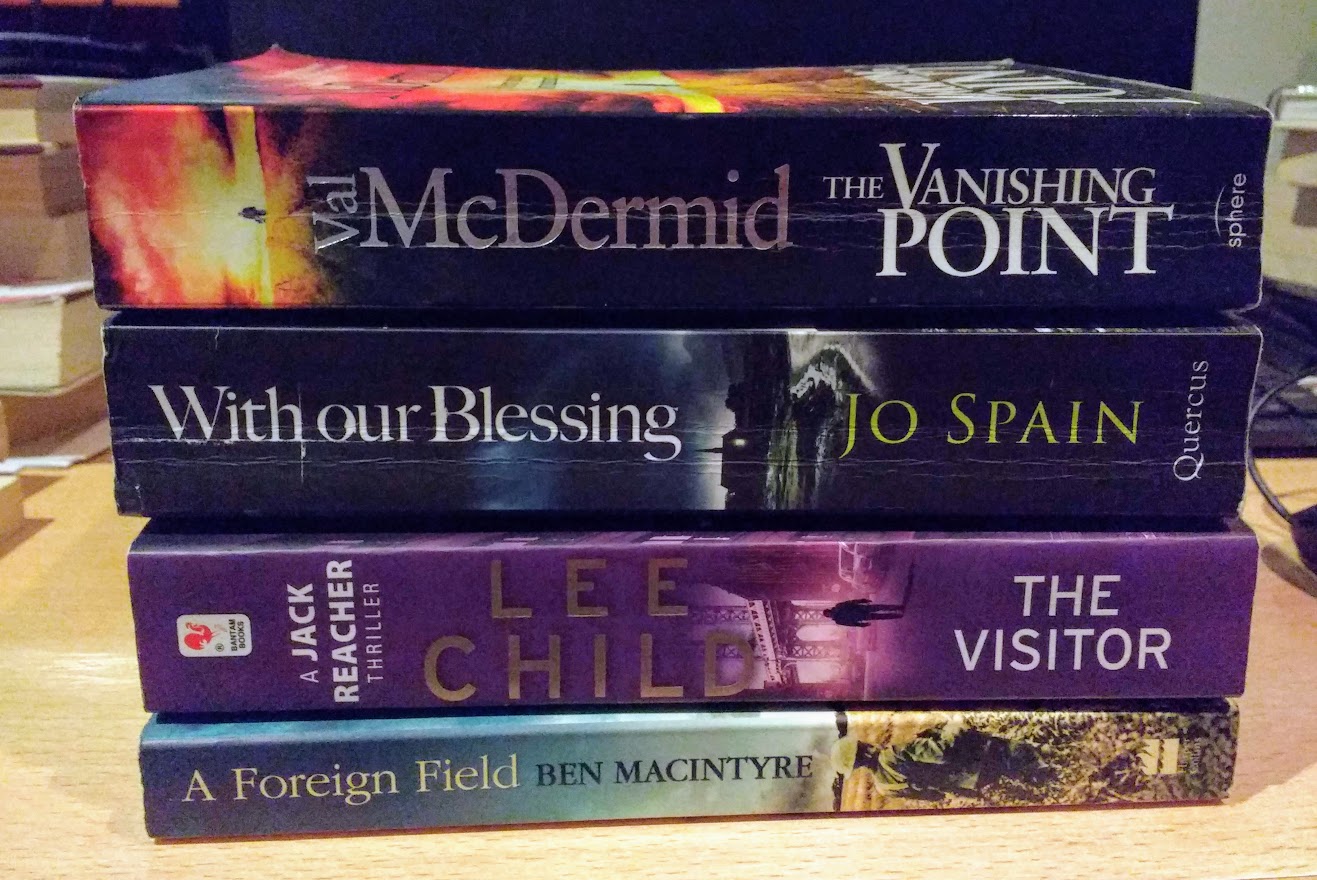
A visit to Barter Books  at Alnwick this week has added 4 books to my TBRs.

 I usually steer clear of books about kidnapped or missing babies/children, so I’m not sure about the first two books shown below. But I’ve read books by both authors before and enjoyed them so I’m hoping they’ll be OK – or at least not too heart-wrenching:

The Vanishing Point by Val McDermid – a standalone psychological thriller beginning with a nightmare scenario: a parent who loses her child in a bustling international airport.

Blurb

Stephanie Harker is travelling through security at O’Hare airport with five-year-old Jimmy. But in a moment, everything changes. In disbelief, Stephanie watches as a uniformed agent leads her boy away – and she’s stuck the other side of the gates, hysterical with worry.

The authorities, unaware of Jimmy’s existence, just see a woman behaving erratically; Stephanie is wrestled to the ground and blasted with a taser gun. By the time she can tell them what has happened, Jimmy is long gone.

But as Stephanie tells her story to the FBI, it becomes clear that everything is not as it seems. There are many potential suspects for this abduction. With time rapidly running out, how can Stephanie get him back?

A breathtakingly rich and gripping psychological thriller, The Vanishing Point is Val McDermid’s most accomplished standalone novel to date, a work of haunting brilliance.

With Our Blessing by Jo Spain – a murder mystery and another book about mothers and babies in the Magdalene Laundries in Ireland, also known as Magdalene asylums.

Blurb

1975
A baby, minutes old, is forcibly taken from its devastated mother.

2010
The body of an elderly woman is found in a Dublin public park in the depths of winter.

Detective Inspector Tom Reynolds is on the case. He’s convinced the murder is linked to historical events that took place in the notorious Magdalene Laundries. Reynolds and his team follow the trail to an isolated convent in the Irish countryside. But once inside, it becomes disturbingly clear that the killer is amongst them . . . and is determined to exact further vengeance for the sins of the past.

The Visitor by Lee Child – a Jack Reacher – I’ve read one of the Jack Reacher books and did enjoy it but looking at the reviews of this book it seems a lot of readers weren’t keen on it whilst many others were. A marmite book, maybe. 

Blurb

Sergeant Amy Callan and Lieutenant Caroline Cook have a lot in common. High-flying army career women, both are victims of sexual harassment from their superiors; both are force to resign from the service.

And now they’re both dead.

Their unmarked bodies are discovered in their homes, naked, in baths filled with army-issue camouflage paint. Expert FBI psychological profilers start to hunt for a serial murderer, a smart guy with a score to settle, a loner, an army man, a ruthless vigilante known to them both.

Jack Reacher, a former US military cop, is a smart guy, a loner and a drifter, as tough as they come. He knew both victims. For Agent-in-Charge Nelson Blake and his team, he’s the perfect match. They’re sure only Reacher has the answers to their burning questions: how did these women die? And why?

A Foreign Field: a True Story of Love and Betrayal in the Great War by Ben Macintyre – nonfiction – because I’m interested in reading about World War One in both fiction and nonfiction. I enjoyed reading his book Operation Mincemeat so I’m hoping I’ll like this one too.  

Blurb

A wartime romance, survival saga and murder mystery set in rural France during the First World War, from the bestselling author of ‘Operation Mincemeat’ and ‘Agent Zig-Zag’.

Four young British soldiers find themselves trapped behind enemy lines at the height of the fighting on the Western Front in August 1914. Unable to get back to their units, they shelter in the tiny French village of Villeret, where they are fed, clothed and protected by the villagers, including the local matriarch Madame Dessenne, the baker and his wife.

The self-styled leader of the band of fugitives, Private Robert Digby, falls in love with the 20-year-old-daughter of one of his protectors, and in November 1915 she gives birth to a baby girl. The child is just six months old when someone betrays the men to the Germans. They are captured, tried as spies and summarily condemned to death.

Using the testimonies of the daughter, the villagers, detailed town hall records and, most movingly, the soldiers’ last letters, Ben Macintyre reconstructs an extraordinary story of love, duplicity and shame – ultimately seeking to discover through decades of village rumour the answer to the question, ‘Who betrayed Private Digby and his men?’ In this new updated edition the mystery is finally solved.

Which one would you recommend I read first?

Nonfiction November Week 3: Be/Ask/ Become the Expert

nonfiction-november-20181

We’re now in Week 3: (Nov. 12 to 16) of Nonfiction November. The topic is – Be The Expert/Ask the Expert/Become the Expert (Julie @ JulzReads)

Three ways to join in this week! You can either share three or more books on a single topic that you have read and can recommend (be the expert), you can put the call out for good nonfiction on a specific topic that you have been dying to read (ask the expert), or you can create your own list of books on a topic that you’d like to read (become the expert).

I’ve read a few books on World War 1, but I am nowhere near an expert. I’ve looked on Amazon and Wikipedia and am struggling to know  where to start, there are so many books.  So I would like some suggestions of books, specifically about the causes of the war and its progression, but not military history detailing the specific battles blow by blow! Also any personal memoirs that you can recommend.

I’ve just started to read Jeremy Paxman’s history of the First World War – Great Britain’s Great War. The back cover describes it: ‘He tells the story of the war through the experience of those who lived it – nurses, soldiers, politicians, factory workers, journalists and children.’

These are some of the books I’ve read:

  • Testament of Youth by Vera Brittain – based on her diaries, telling of her life up to 1925, concentrating on the World War One years.
  • Memoirs of a Fox-Hunting Man by Siegfried Sassoon – part of his fictionalised autobiography
  •  The Monocled Mutineer by John Fairley and William Allison – the main sources of information in this book are personal accounts from the veterans as they remembered them many years later.

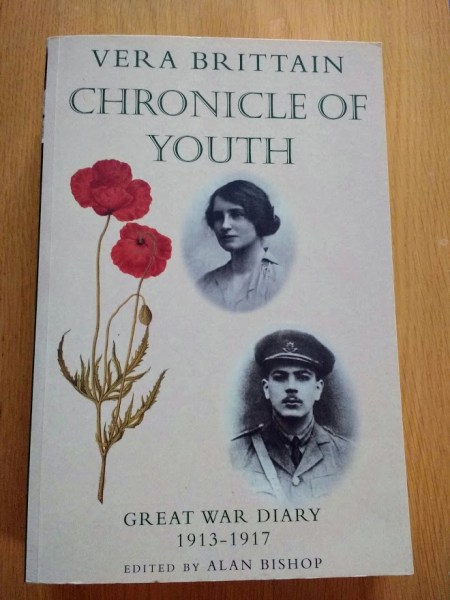
I also have a copy of Chronicle of Youth: Great War Diary 1813 – 1917 by Vera Brittain, her war diary on which she based Testament of Youth. I’ve read parts of this book.

chronicle of youth


Nonfiction November: Week 2 Fiction/ NonfictionPairing

nonfiction-november-20181

Week 2: (Nov. 5 to 9) – Fiction / Nonfiction Book Pairing (Sarah’s Book Shelves): This week, pair up a nonfiction book with a fiction title. It can be a “If you loved this book, read this!” or just two titles that you think would go well together. Maybe it’s a historical novel and you’d like to get the real history by reading a nonfiction version of the story.

I couldn’t stick to just pairs of books because I read more fiction than nonfiction, so my pairings are trios.

The first three I’ve chosen are about Richard III – what is the truth about him, was he deformed, with a withered arm, a hunch back and a limp as Shakespeare portrayed him, was he a cold-blooded, evil villain? Or has he been maligned and been turned into a  monster who killed his brother’s sons in order to take the Crown?

The Princes in the TowerThe Daughter of Time (Inspector Alan Grant #5)The Sunne In Splendour

Many years ago I read The Princes in the Tower by Alison Weir, which examined the available evidence of the disappearance of the princes in 1483 at the time her book was first published in 1992. It has an extensive bibliography, her sources mainly supporting the view that Richard was guilty of their deaths. Alison Weir has since revised this book and published it as Richard III and the Princes in the Tower, published in 2014. I haven’t read this revised edition, but looking at Alison Weir’s website I see that she still holds the same views on Richard’s guilt.

Years later I came across The Daughter of Time by Josephine Tey, a novel in which Inspector Alan Grant of Scotland Yard, recuperating from a broken leg, becomes fascinated with a contemporary portrait of Richard III and investigates Richard’s role in the death of his nephews and his own death at the Battle of Bosworth. He concluded that Richard hadn’t murdered his nephews.

And two years ago I read The Sunne in Splendour by Sharon Penman, probably the best historical novel that I’ve read. Penman portrays a very likeable Richard. From his childhood onwards he comes across as a kind, generous and brave man, a skilled leader on the battlefield, a loving husband to his wife, Anne, and devoted and loyal to his brother, Edward IV. I’m not going to reveal her solution to who killed the princes, but I was convinced by her version of events.

The discovery of Richard’s skeleton buried beneath a car park in Leicester in 2012 revealed that although ‘the curved spine on the skeleton does show he had Scoliosis, he did not have a withered arm or other details attributed to him in some characterisations’ (see the Incredible Discovery at the King Richard III Visitor Centre).

There are many books about Richard III, especially following the discovery of his remains, and in time I hope to explore more of them.

The next three books are about Thomas Cromwell, Earl of Essex, Baron Cromwell of Okeham. He was born c.1485, Putney, near London and was executed on July 28, 1540.

Thomas Cromwell: The Untold Story of Henry VIII's Most Faithful Servant

Wolf Hall & Bring Up the Bodies PBS Masterpiece E-Book Bundle


Tracy Borman’s biography of Thomas Cromwell and Hilary Mantel’s novels, Wolf Hall/Bring Up the Bodies all cover the life of Cromwell, the son of a blacksmith, who rose to become Henry VIII’s Chief Minister and was executed for heresy and treason.

Hilary Mantel’s books bring the Tudor world to life for me. They are beautifully written, full of colour and detail so that there is no doubt that this is 16th century England, with vivid descriptions of the people, buildings, fabrics, and landscapes of both town and countryside. Her Thomas Cromwell is not the saint I thought he was from watching ‘A Man for All Seasons’, and neither is he the hard-hearted, cold and stern character I’d read about before, but he is humane, kind and considerate, hardworking, generous and cultured. But tough and ruthless too. I haven’t read Tracy Borman’s biography yet, so I have yet to see how it compares to the novels (and the TV adaptation), which I loved.

My third trio of books are about Robert Scott’s 1912 Antarctic expedition, comparing Beryl Bainbridge’s novel with two nonfiction books.

South with ScottThe Birthday BoysRace to the End: Scott, Amundsen and the South Pole

Ever since I bought South with Scott by Edward Evans, Lord Mountevans when I was at school I’ve been fascinated by the race to reach the South Pole. Evans was the Second-in-Command of the British Antarctic Expedition under Captain Scott. He nearly lost his life on the return journey from the Pole, falling ill with scurvy and was rescued. Years later I was delighted to find that Beryl Bainbridge’s novel, The Birthday Boys is about the expedition. It’s narrated by Captain Robert Falcon Scott and the other four men who died in the Antarctic having reached the South Pole. It gets inside each man’s mind, vividly describing the events as they progressed to the South Pole and the terrible conditions they had to endure.

I enjoyed it so much I wanted to find out more – which I did in Race to the End: Scott, Amundsen and the South Pole by Ross D E MacPhee, a beautifully illustrated account of each team’s trek to Antarctica and the Pole. Comparing the books I think Beryl Bainbridge’s fictionalised version is remarkable accurate, bringing the terrible hardships vividly to life.

I’ve enjoyed comparing these books – what books would you choose to compare?

My Friday Post: I Am, I Am, I Am

Book Beginnings Button

Every Friday Book Beginnings on Friday is hosted by Gillion at Rose City Reader where you can share the first sentence (or so) of the book you are reading, along with your initial thoughts about the sentence, impressions of the book, or anything else the opener inspires.

This week I’m featuring I Am, I Am, I Am: Seventeen Brushes with Death by Maggie O’Farrell, one of the books I’m currently reading.

I Am, I Am, I Am: Seventeen Brushes With Death

I chose this book because I love Maggie O’Farrell’s books and as soon as I read the description I knew I had to read it:

About the Book

I AM, I AM, I AM is Maggie O’Farrell’s electric and shocking memoir of the near-death experiences that have punctuated her life. The childhood illness she was not expected to survive. A teenage yearning to escape that nearly ended in disaster. A terrifying encounter on a remote path. A mismanaged labour in an understaffed hospital.

This is a memoir with a difference: seventeen encounters with Maggie at different ages, in different locations, reveal to us a whole life in a series of tense, visceral snapshots. Spare, elegant and utterly candid, it is a book to make you question yourself. What would you do if your life was in danger? How would you react? And what would you stand to lose?

It begins:

Neck 1990

On the path ahead, stepping out from behind a boulder, a man appears.

This opening sentence drew me in immediately, knowing from the title and book description that this was not going to be a happy encounter – this is the ‘terrifying encounter on a remote path.’

~~~

Also every Friday there is The Friday 56, hosted by Freda at Freda’s Voice.

30879-friday2b56These are the rules:

  1. Grab a book, any book.
  2. Turn to page 56, or 56% on your eReader. If you have to improvise, that is okay.
  3. Find any sentence (or a few, just don’t spoil it) that grabs you.
  4. Post it.
  5. Add the URL to your post in the link on Freda’s most recent Friday 56 post.

Pages 55-56:

Suddenly the plane is falling, dropping, plummeting, like a rock fallen from a cliff. The downward velocity is astonishing, the drag, the speed of it. It feels like the world’s most unpleasant fairground ride, like a dive into nothing, like being pulled by the ankles into the endless maw of the underworld. My ears and face bloom like petals of pain, the seatbelt cutting into my thighs as I am thrown upwards.

~~~

The title is taken from Sylvia Plath’s The Bell Jar:

I took a deep breath and listened to the old brag of my heart. I am, I am, I am.

What about you? Does it tempt you or would you stop reading?