Down to the Woods by M J Arlidge

If you go down to the woods today, you’d better not go alone …

Down to the Woods (Helen Grace #8)

Penguin UK – Michael Joseph|20 September 2018|480 pages|Review copy

Synopsis – Amazon UK:

There is a sickness in the forest. First, it was the wild horses. Now it’s innocent men and women, hunted down and murdered by a faceless figure. Lost in the darkness, they try to flee, they try to hide. In desperation, they call out for help. But there is no-one to hear their cries here…

DI Helen Grace must face down a new nightmare. The arrow-ridden victims hang from the New Forest’s ancient oaks, like pieces of strange fruit. Why are helpless holidaymakers being targeted in peak camping season? And what do their murders signify? Is a psychopath stalking the forest? Is there an occult element to the killings? Could the murders even be an offering to the Forest itself? Helen must walk into the darkness to discover the truth behind her most challenging, most macabre case yet.

My thoughts:

Down to the Woods is the 8th DI Helen Grace thriller by M J Arlidge. I haven’t read any of the earlier books and it’s obvious that Helen has a particularly dramatic and traumatic backstory, but enough explanation is given for me to read this book as a stand-alone. It’s tense and dark with several twists and turns and red herrings, that seemed obviously so to me. It’s on the grisly side of gruesome with graphic descriptions of violence and death and details of information on the dark web, all of which I find off-putting.

I don’t intend to retell the plot as I think the synopsis gives as much detail as you need to know to begin the book. It’s fast-paced in parts, but in others it’s slowed down considerably by the amount of description of the location and characters. Having said that I did like the description of the New Forest, with its ancient woodland, beautiful glades and of course the New Forest ponies.

However, I think the characters aren’t very credible, with maybe the exception of DS Charlie Brooke who has her own problems at home. DS Joseph Hudson is a new character to the series and there are several questions to be answered about his background that seemed rather dubious to me. The reporter Emilia Garanita is the stereotypical journalist with all the unlikable journalistic traits rolled into her character and you’re meant to dislike her. I expected Helen to be the main character but for most of the book she on the sidelines until the final section when she ends up close to death. The chapters are very short with cliff-hanger endings, designed to keep you turning the pages. I did want to know the outcome, but I got rather tired of all the violence and chase scenes throughout the book and was relieved to finish it.

2.5 stars rounded up to 3 stars on Goodreads. Other people liked it more than me – there are many 5 and 4 star reviews on Goodreads.

Thank you to Penguin UK – Michael Joseph and NetGalley for my copy of this book for review.

The Clockmaker’s Daughter by Kate Morton

Mantle|20 September 2018|592 pages|Review copy|3*

Synopsis:

My real name, no one remembers.
The truth about that summer, no one else knows.

In the summer of 1862, a group of young artists led by the passionate and talented Edward Radcliffe descends upon Birchwood Manor in rural Berkshire. Their plan: to spend a secluded summer month in a haze of inspiration and creativity. But by the time their stay is over, one woman has been shot dead while another has disappeared; a priceless heirloom is missing; and Edward Radcliffe’s life is in ruins.

Over one hundred and fifty years later, Elodie Winslow, a young archivist in London, uncovers a leather satchel containing two seemingly unrelated items: a sepia photograph of an arresting-looking woman in Victorian clothing, and an artist’s sketchbook containing a drawing of a twin-gabled house on the bend of a river.

Why does Birchwood Manor feel so familiar to Elodie? And who is the beautiful woman in the photograph? Will she ever give up her secrets?

Told by multiple voices across time, The Clockmaker’s Daughter is a story of murder, mystery and thievery, of art, love and loss. And flowing through its pages like a river, is the voice of a woman who stands outside time, whose name has been forgotten by history, but who has watched it all unfold: Birdie Bell, the clockmaker’s daughter.

My thoughts:

I was looking forward to reading The Clockmaker’s Daughter as Kate Morton’s The House at Riverton and The Secret Keeper are two of my favourite books, but I’m in two minds about it. Whilst I loved parts of it I struggled to read other parts, bogged down by the many changes of time, places and characters, even though I like complicated plots and dual time-lines. It could easily have been made into several books.

I found it difficult to separate the various strands and to create a coherent whole – and it is so long and drawn out. And then there is the supernatural element, which intrigued and delighted me. So, all in all, my reaction is confused and mixed, so much so that at times I wanted to give it 5 stars and then plummeted right down to 2 stars – hence the 3 stars!

It’s richly descriptive and I loved the descriptions of the locations, and of Birchwood Manor, the house on the bend of the river and the story of how Elodie searches to find the history and connections between the satchel, the photograph of a beautiful Victorian woman and an artist’s sketchbook certainly caught my imagination. I also loved the story of Birdie, the clockmaker’s daughter, who is the catalyst for the disaster that befell Edward’s life.

There are multiple narrators very gradually building up a history of Birchwood Manor and the people who lived there over the years up to 2016. But it’s hard to keep track of them all as the narrative jumps backwards and forwards so disjointedly. The connections between what seem to be separate stories eventually become clear – but you have to keep all the separate strands in your head and remember who is related and how their paths meet and diverge.

As the synopsis says it is a story of murder, mystery and thievery, of art, love and loss – all of which appeals to me. And I’m sure plenty of other readers will love this book. It’s a book that I really needed to concentrate on, which is not a bad thing, but for most of its 592 pages it moves at a snail’s pace and I found it an effort. But once you have got to the end and can see the whole picture it really is a good story; very cleverly plotted, maybe too cleverly for me.

Thank you to Mantle and NetGalley for my copy of this book for review.
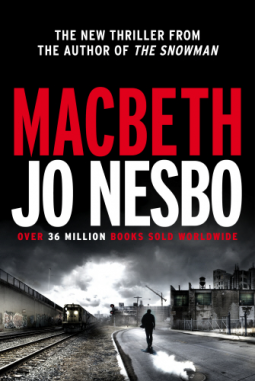
Macbeth by Jo Nesbo

William Shakespeare’s Macbeth retold

5*

He’s the best cop they’ve got. 

When a drug bust turns into a bloodbath it’s up to Inspector Macbeth and his team to clean up the mess.

He’s also an ex-drug addict with a troubled past. 

He’s rewarded for his success. Power. Money. Respect. They’re all within reach. 

But a man like him won’t get to the top.

Plagued by hallucinations and paranoia, Macbeth starts to unravel. He’s convinced he won’t get what is rightfully his.

Unless he kills for it.

I haven’t read any of Jo Nesbo’s books so I wasn’t sure what to expect from his version of Macbeth, translated from the Norwegian by Don Bartlett. And it’s been a long time since I read or saw a performance of Macbeth, one of my favourite plays, but it seems to me that Jo Nesbo’s retelling of Shakespeare’s Macbeth sticks well to Shakespeare’s version (which itself wasn’t original!) – it has the same themes and plot lines.

I loved the opening of Nesbo’s version describing the rain falling on an industrial town, the second largest after Capitol. The setting is rather vague – it is somewhere in the 1970s in a fictional Scotland in a lawless town full of drug addicts, where there is a titanic struggle for control between the police force, corrupt politicians, motorbike gangs and  drug dealers.

All the characters are here, including Duncan, the new police Chief Commissioner after Kenneth was killed, Malcolm his deputy, Banquo, Macbeth’s friend and his son, Fleance, Inspector Duff (Shakespeare’s Macduff, Thane of Fife), head of the Narcotics Unit, Caithness, the three witches, Lennox and so on. And watch out for Nesbo’s version of Great Birnam Wood – I don’t want to give any spoilers here!

It’s a tragedy, like Shakespeare’s, a tale of political ambition and the destructive power it wields, a tale of love and guilt, and of enormous greed of all kinds. Inspector Macbeth, an ex-drug addict is the head of the SWAT team, ruled by his passions, violent and paranoid. He is manipulated by Hecate, Shakespeare’s chief witch, here one of the drug lords, a man with a friendly smile and cold eyes, called by some the Invisible Hand; his ‘brew’ has made him one of the town’s richest men. Macbeth is corrupted by his renewed dependency on brew and fuelled by his passion for his wife, Lady, a tall, beautiful woman with flame-red hair who whispers seductively to Macbeth that he has to kill Duncan. And there’s a mole in their midst.

This is a dark, gritty and violent tale that had me completely enthralled and I loved it. It is the first book by Jo Nesbo that I’ve read – but it won’t be the last.

Thank you to Random UK/Vintage and NetGalley for my copy of this book for review.

  • Paperback: 624 pages (also available on Kindle and in Hardcover)
  • Publisher: Vintage (20 Sept. 2018)
  • Language: English
  • ISBN-10: 009959806X
  • ISBN-13: 978-0099598060
  • Review Copy
Note: Macbeth was first published  March 15th 2018 by Hogarth as part of  the Hogarth Shakespeare project that sees Shakespeare’s works retold by acclaimed and bestselling novelists of today. The series launched in October 2015 and to date will be published in twenty countries.


The Dancer at the Gai-Moulin by Georges Simenon

The Dancer at the Gai-Moulin (Maigret #10)

Penguin is publishing the entire series of Maigret novels in new translations. This novel has been published in a previous translation as Maigret at the “Gai-Moulin”.

The Dancer at the Gai-Moulin by Georges Simenon, translated by Siân Reynolds is one of the early Maigret books, first published in 1931. Two teenage boys, Delfosse and Chabot, attempt to burgle Le Gai-Moulin, a nightclub in Liege in Belgium, but on finding a body they panic and leave, fearing they’ll be suspected of murder. The next day, to the boys’ amazement, the corpse is found in the Botanical Gardens in a large laundry basket in the middle of a lawn. Who was he, who killed him, why was he killed and who had moved the body from the nightclub to the Botanical Gardens?

This short book is mainly concerned with Delfosse and Chabot and their subsequent actions that set them at odds with each other and land them in police custody. It’s an unusual Maigret book in that Detective Chief Inspector Maigret is not immediately involved in the police investigation – that is carried out by Chief Inspector Delvigne of the Belgian police and part of the mystery is why Maigret is even in Liege. Adèle is the dancer referred to in the title but she doesn’t play a major role in the book, although the two teenagers are obsessed with her. It’s quite a puzzle and Maigret doesn’t reveal his thoughts, or his reasoning until the end, much to the annoyance of Delvigne.

The plot is unconvincing and Maigret’s actions seem quite implausible, but that didn’t spoil my enjoyment of this book. It’s not really the crime that is in focus, as Simenon is skilled at setting the scene and drawing convincing characters in a few paragraphs. In this novel the two boys and Adèle stand out:

She wasn’t beautiful, especially now, lounging about in her mules and shabby peignoir. But perhaps, in the familiarity of this intimacy, she held even more allure for him.

How old was she, twenty five, thirty? She’d certainly seen life. She often talked about Paris, Berlin, Ostend. She mentioned the names of famous nightclubs.

But without any excitement or pride, without showing off. On the contrary. Her main characteristic seemed to be weariness, as could be guessed from the expression in her green eyes, from the casual way she held a cigarette in her mouth, from all her movements and smiles. Weariness with a smile. (page 28)

I knew that Simenon was a prolific author, writing seventy five novels and twenty eight short stories featuring Maigret, but I was surprised to find that The Dancer at the Gai-Moulin was the 10th book that he published in 1931. By the end of 1931 his books had been translated into 18 languages.

  • Paperback: 160 pages
  • Publisher: Penguin Classics (7 Aug. 2014)
  • Language: English
  • ISBN-10: 0141393521
  • ISBN-13: 978-0141393520
  • Source: my own copy – thanks to Sarah’s Giveaway at Crimepieces blog
  • My rating: 3.5*

This book slots into the only reading challenge I’m doing this year – What’s in a Name 2018. It fits into the category of a book with the word ‘the‘ used twice in the title. It is also one of my TBR books (a book I’ve owned prior to 1 January 2018) and also a book on my Classics Club list.

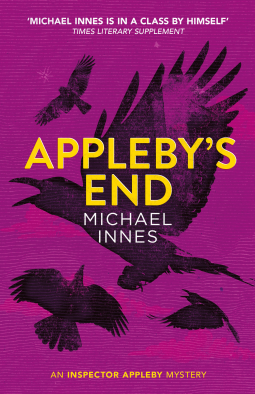
Appleby’s End by Michael Innes

3*

Appleby’s End was first published in 1945.

Description

The Way of All Flesh by Ambrose Parry

Edinburgh, 1847. City of Medicine, Money, Murder

Canongate Books|30 August 2018|417 pages|Review copy|5*

The Way of All Flesh is the debut novel from Ambrose Parry: co-written by best-selling crime writer Chris Brookmyre and consultant anaesthetist Dr Marisa Haetzman.

I knew as soon as I began reading The Way of All Flesh that I was going to enjoy it – it’s historical crime fiction at its very best.

Full of atmosphere and historical detail, I could easily believe I was there in Edinburgh in 1847 as Dr James Young Simpson, a professor of midwifery, discovered the anaesthetic properties of chloroform. It combines fact and fiction most successfully, the social scene, historical and medical facts slotting perfectly into the plot.

It begins with the death of Evie, a prostitute in Edinburgh’s Old Town, found by Will Raven, a young medical student about to start his apprenticeship with Dr Simpson. Will, Evie’s friend is suspicious, the place was reeking of drink and Evie’s body was in a state of contortion. He flees the scene, not wanting to be implicated in her death. There is a mystery surrounding Will – he has a past that he wants to conceal, and he is in trouble with a couple of villains who beat him, slashing his face when he is unable to repay his debt to a moneylender.

Will is anxious to fit in with the more genteel society of the New Town, where Dr Simpson has his surgery, a place where people from all levels of society congregated – the poor who attended his clinics, the wealthy who also wanted treatment, and the medical students and colleagues experimenting with new drugs and medical techniques. When Will comes across similar deaths during his work with Dr Simpson he is determined to find out who is responsible  – was it the same person who had killed Evie?

Sarah, Dr Simpson’s housemaid is an ambitious and enterprising young woman who would love to have a career in medicine just like the male medical students. Initially she dislikes Will, but eventually they join forces to uncover the killer in the depths of Edinburgh’s dark underworld . Through Sarah’s eyes we see the frustrations and limitations that all women experienced and through Will’s eyes we see the grim realities and danger that women at all levels of society faced with childbirth and unwanted pregnancies, and the brutally primitive state of the medicine of the period. The medical scenes are indeed gruesome and the attitudes of some of the clergy with their opposition to the use of anaesthetics is deplorable. The authors have combined their specialities to provide a compelling murder mystery interwoven with the exciting discovery of chloroform and how it transformed surgery.

This is without doubt an impressive and well written book that gripped me throughout – definitely one of the best books that I’ve read so far this year.

And I am so pleased that this is not the end of Will as Chris and his wife, Marisa are planning more novels revealing the development of medicine and the part that the Simpson household played. Also, I see that Benedict Cumberbatch’s SunnyMarch production company has secured the TV rights to The Way of All Flesh.

Thank you to Canongate Books and NetGalley for my copy of this book for review.