Jacob’s Room is Full of Books by Susan Hill

Nine years ago I read Susan Hill’s Howards End is on the Landing: A Year of Reading, a book in which she wrote about the books from her own collection she’d read or re-read over the course of a year. Jacob’s Room is Full of Books is a similar book in that it follows month by month a year during which she reflects on the books she has read, reread, or returned to the shelves as well as her thoughts on a whole variety of topics.

Jacob's Room is Full of Books: A Year of Reading

It’s full of her observations on the weather, on nature – birds, flowers, trees, moles, eels, egrets and so on – on writers and writing, about religion and fairy tales and many more besides as well as on books. She also writes about herself and notes her obsessions with, for example, Virginia Woolf and the Bloomsbury Set, Marilyn Monroe, wood engravings, medieval monasticism, Elizabeth Bowen, Benjamin Britten and her collection of Ladybird Books. Some of her observations on other topics are short but conjure up vivid pictures, such as in November she recorded: ‘RAINING. Sky like the inside of a saucepan.‘ (page 208) And in October: ‘THIS GOLDEN OCTOBER continues to drift slowly down like a twirling leaf.’  (page 186)

One of the things I like about this book is the passion with which Susan Hill writes and her strong opinions about books, writers, literary prizes, what makes a good reader and so on and so forth, that she has no qualms about expressing (and why should she?) You are left in no doubt about what she does and does not like. For example she likes Robert Louis Stevenson (so do I) and the way he cleverly and cunningly creates a sense of sinister and evil in his creation of Mr Hyde. She thinks he’s the ‘perfect writer’ (page 188) and describes him thus: ‘Next to Dickens, I think RLS was the greatest writer of his time.’ (page 54) She didn’t like fairy tales as a child (I did), describing fairies as

Wispy, wafty, wish-washy things. Nowhere near on a par with sprites and goblins, witches, wizards, trolls. As a child I lapped up stories about any of these. I can understand why I did not, and do not, have any patience with fairies and their stories. They are so colourless (despite Andrew Lang’s best attempts). So dull. Yes. Just dull. (page 21)

And yet as a child she also liked the Flower Fairies books by Cecily Mary Baker (as did I) and pored over their illustrations, but followed that up by describing them as ‘just an excuse for pretty pastel pictures.

She doesn’t like fantasy and science fiction, although as a child she loved fantasy. She likes, amongst others, Thomas Hardy, Somerset Maugham, Raymond Chandler, Muriel Spark and Barbara Pym, to a certain extent, describing her books as ‘dated, but not dated enough’, but not Jane Austen – oh my, I love Jane Austen’s books:

I read most of the reissued novels [of Pym’s] at the time and never entirely saw the point of the praise, probably because everyone compared them to Jane Austen and that is never a good recommendation to me. (page 200)

She then goes on to change her mind about Pym after reading Shirley Hazzard’s review of Pym’s Quartet in Autumn, which I haven’t read, but after reading her description I think I would like.

She has no interest left in the First World War, particularly in fiction about it (I have) since she wrote Strange Meeting in 1971, but she admires Ford Madox Ford’s The Good Soldier, but has ‘not even tried Parade’s End‘. She seems to have more time for the Second World War novels, praising Olivia Manning’s novels, the Balkan and Levant trilogies, which reminds  me I still haven’t read the third book in the Balkan Trilogy.

She is scathing about creative writing courses: ‘I don’t suppose anything is obligatory for these courses, which are as thick as autumn leaves on the ground. Writing is the thing. Ye gods.’ (page 189)

There’s plenty more on the same lines about other authors and books – there are many, many more that I could mention – and I found it all fascinating, rambling and chatty, a bit repetitive in parts, but still fascinating. And there is a list of the books she refers to at the end of the book. It’s probably a book that could stand a second reading.

And as she says:

Reading is magic. Books are magic. It starts when we are shown picture books and realise there is another world beyond the everyday one we know. Once we can read ourselves, we live inside the magic. The only problem is that we have to emerge at the end of a book, and we don’t want to return to that dull domestic world we know. The only solution to that problem, of course, is that there is always the next book, and the next and there is bonus magic if it is another in a series we already love, so we are plunging back into a magic other world but one we already know. We feel a lift of the heart, a lurch of the stomach, when we find ourselves in it again. (pages 55 – 56)

Yes, reading is, indeed, magic!

  • Hardcover: 272 pages
  • Publisher: Profile Books (5 Oct. 2017)
  • Language: English
  • ISBN-10: 9781781250808
  • ISBN-13: 978-1781250808
  • ASIN: 1781250804
  • Source: a library book
  • My Rating: 5*

In a Dark, Dark Wood by Ruth Ware

In a Dark, Dark Wood

Nora hasn’t seen Clare for ten years. Not since the day Nora walked out of her old life and never looked back.

Until, out of the blue, an invitation to Clare’s hen party arrives. A weekend in a remote cottage – the perfect opportunity for Nora to reconnect with her best friend, to put the past behind her.

But something goes wrong.

Very wrong.

And as secrets and lies unravel, out in the dark, dark wood the past will finally catch up with Nora.

I featured In a Dark, Dark Wood by Ruth Ware in this Friday Post on book Beginnings and said that I wasn’t sure I wanted to read it having been disappointed  by the only other book by her that I’ve read, The Woman in Cabin 10.  But as some people commented that they had enjoyed it and as it has good reviews on Amazon and Goodreads I decided to read on. It promises to be a psychological thriller – a scary book – but maybe I’ve read too many psychological thrillers as I didn’t find it thrilling or scary. It’s mystery novel that slowly reveals why Leonora, known either as Lee or Nora or Leo, and Clare haven’t seen  or even spoken to each other since they were 16, ten years ago. That was also when Nora’s heart was broken when her relationship with James came to an abrupt end. She had never come to terms with their break up.

I thought the setting was good – the hen party is held in a glass house in the middle of a wood in Northumberland. The mobile phone signal is practically nonexistent and they are cut off from the outside world and isolated when the snow sets, in cutting off the landline. But the characters are stereotypes – a new mother pining for her baby back home, a gay male actor, a gay female doctor (who is in my opinion the most sensible of the group), the dippy devoted friend of the bride who has organised this terrible hen party, the bride, self-obsessed, selfish and manipulative as well as Nora, who can’t move on from her past. The outcome is predictable when footprints appear in the snow, the backdoor that was supposed to be locked is found open and the hen party keep arguing and antagonising each other. It’s obvious from the start that something terrible had happened when Nora wakes up in a hospital bed and realises that she can’t remember what had happened … or what she had done.

In a Dark, Dark Wood is Ruth Ware’s debut novel and the film rights have been optioned  by New Line Cinema.  I can imagine that a film would be much more terrifying than the book – it should be, the potential is there. I don’t like being critical of a book, but I can’t recommend this book.


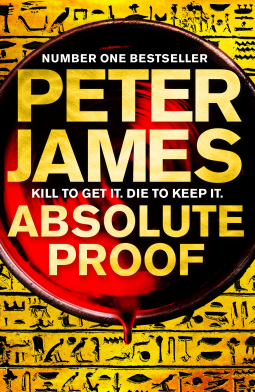
Absolute Proof by Peter James

3.5*

Pan Macmillan|4 October 2018|570 pages|Review copy Investigative reporter Ross Hunter nearly didn’t answer the phone call that would change his life – and possibly the world – for ever. ‘I’d just like to assure you I’m not a nutcase, Mr Hunter. My name is Dr Harry F. Cook. I know this is going to sound strange, but I’ve recently been given absolute proof of God’s existence – and I’ve been advised there is a writer, a respected journalist called Ross Hunter, who could help me to get taken seriously.’ What would it take to prove the existence of God? And what would be the consequences? This question and its answer lie at the heart of Absolute Proof, an international thriller from bestselling author Peter James. The false faith of a billionaire evangelist, the life’s work of a famous atheist, and the credibility of each of the world’s major religions are all under threat. If Ross Hunter can survive long enough to present the evidence . . . Absolute Proof is a long book and at times I struggled to carry on reading as, although for the most part it is fast-paced, it is slow going in parts. And it certainly tested my ability to suspend my disbelief several times. I’ve only read two of Peter James’ books previously, both crime fiction set in Brighton featuring Detective Superintendent Roy Grace. Absolute Proof is a standalone thriller and is very different from the Roy Grace books. It has similarities to Dan Brown’s The Da Vinci Code, as the search is on for proof of  God’s existence. Ross Hunter is married to Imogen and they are expecting their first child – however he has serious doubts about his marriage and suspects Imogen of cheating on him. The story of their marriage unfolds, underlying the main plotline.  Dr Harry  F Cook, a former RAF officer and  retired history of art professor, contacts Ross and drip feeds him information that Cook claims proves that God exists. The grid references Cook gives Hunter takes him to various places including Glastonbury, where he visits the Chalice Well in search of the Holy Grail, and Egypt in search of Queen Hatshepsut’s Temple. All the time he is in danger of death as he is pursued by those who do not want Cook’s claims to be made public. It’s a dramatic and hair-raising story that made me want to know what happened next at the same time as it made me question its credibility. It is certainly thought provoking and entertaining. One of the things that intrigued me was that in his Acknowledgements Peter James explains that the book began with a phone call he received in 1989 from someone who did indeed claim that he had been given absolute proof of God’s existence and that he had been given Peter James’s name as an author who would help him to get taken seriously. This started James’s ‘journey of exploration into what might be considered absolute proof – and just what the consequences might be.’ During the intervening years he has talked to many people from different faiths and had discussions with scientists, academics, theologians and clerics. He has certainly done his research and gives a long list of the people who have helped him, plus a list of his sources of reference, giving me yet more details of books I’d like to read. Thanks to Pan Macmillan and NetGalley for provided a review copy of this book.

The Darkest Place by Jo Spain

The Darkest Place (An Inspector Tom Reynolds Mystery, #4)

4*

Quercus Books|20 September 2018|352 pages|Review copy

The Darkest Place is Jo Spain’s 4th Inspector Tom Reynolds Mystery book and although I haven’t read the first three I was keen to read this book when I saw it offered on NetGalley as I’d enjoyed her standalone book The Confession. As I expected there are references to the cases Tom Reynolds and his team investigated in the earlier books and it’s probably best to read those first, but actually this didn’t affect my enjoyment of this book.

I was soon gripped by the mystery right from the opening lines of the book:

Forty years was too long to wait for somebody to come back from the dead.

But still, she liked to get  everything ready. Just in case.

The ‘somebody’ is Conrad Howe, who was one of the senior doctors at St Christina’s asylum on Oilean na Coillte,  known to locals as the island of lost souls, an island (fictional) off the south-west corner of Ireland. His wife, Miriam had never given up hope that he was alive and would return home.

The psychiatric hospital was closed down years ago, but now there are plans to build a retreat on the island, an exclusive hotel, and during the demolition work a mass grave for the patients had been uncovered. Conrad’s body was found, hidden beneath some of the body bags and it was obvious that he had been murdered.

The narrative alternates between the police investigation and extracts from the diary Miriam had found hidden in the attic, describing what was happening at the hospital and the horrific treatment some of the patients were subjected to by one of the doctors. A few of the hospital staff, including the former head of St Christina’s, Dr Lawrence Boylan and an ex-nurse, Carla Crowley, and it is soon clear that something evil is still going on at the asylum.

This really is a chilling book and in parts I found it disturbing and difficult to read. Jo Spain makes it clear in her Acknowledgements that although this is crime fiction it is based on fact – such terrible things really did happen in mental institutions, housing vulnerable people. They were patients with dementia, deformities, depression, epilepsy and homosexuals – people whose families could not deal with them and they were treated mainly as though they were suffering from a physical illness or disorder, that could be fixed. Those that couldn’t be fixed were kept locked up.

For most of the book I kept wondering what had actually happened to Conrad Howe and suspecting various people of killing him, mainly thinking it was one particular person until halfway into the book, then thinking it couldn’t be that one. I was right about that, but it was only just before the truth was revealed that I had the slightest suspicion of what had really happened, which makes it a very satisfying book indeed. I’m now on the lookout for more books by Jo Spain.

Thanks to Quercus Books and NetGalley for provided a review copy of this book.

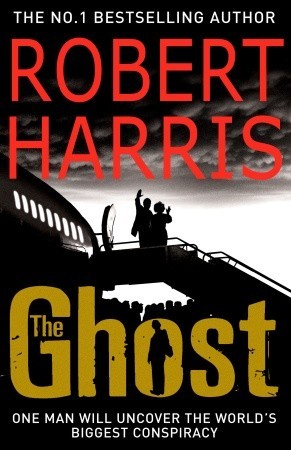
The Ghost by Robert Harris

The Ghost

4*

I have enjoyed all of Robert Harris’s books that I’ve read and The Ghost is no exceptionThe ‘ghost’ in this novel is a professional  ghostwriter employed to finish writing the memoirs of recently retired prime minister of Great Britain, Adam Peter Benet Lang. McAra, Lang’s long-term assistant, had nearly completed Lang’s memoir when he was found dead, drowned. He had gone overboard during the ferry crossing to Martha’s Vineyard, where Lang and his wife, Ruth are staying.

The setting of Martha’s Vineyard in winter reflects Lang’s mood, it is out-of-season, closed down, practically empty – as isolated as Lang himself, disconnected from the world of power he once dominated and stuck on this bleak island with his volatile wife and his aide, the beautiful Amelia Bly, who Ruth suspects is having an affair with Lang. The ghostwriter soon discovers that Lang has secrets in his past that are returning to haunt him – secrets with the power to kill. And he suspects that McAra’s death was neither an accident nor a suicide.

This is fiction, but Adam and Ruth, do have similarities to Tony and Cherie Blair. Lang is charming, personable, full of restless energy, with an engaging smile and thick wavy hair. The narrator, an unnamed writer, who Adam calls ‘man’, is a likeable character more used to ghostwriting the memoirs of footballers than politicians, who has just one month to complete Lang’s memoirs. But soon after he arrives this is reduced to two weeks when news breaks that Lang is accused of war crimes. The International Criminal Court in The Hague are investigating the allegations of Richard Rycart, the former British Foreign Secretary, that Lang had ordered the illegal handover of suspects for torture by the CIA.

I liked the details about ghostwriting from the quotes heading each chapter taken from Andrew Crofts handbook, Ghostwriting. But what I liked most about The Ghost is that it is fast- paced, full of tension and written in a straightforward linear narrative – no flashbacks or fly forwards, or multiple narrators. As in his other books  I’ve read it’s written in such a way that I feel as though I’m there with the characters taking part in the action. And his characters are distinct people, easily distinguishable from each other. In so many books I’ve read recently I’ve come across a character and have been unable to place them and have had to backtrack to find out who they are and how they fit into the plot, or the characters have similar sounding names or all begin with the same letter. Not so with The Ghost the characters have depth, the structure is clear, and there is a twist at the end that revealed the menace implied through the whole novel. Harris is a great storyteller.

My copy:

  • Paperback: 416 pages
  • Publisher: Arrow; Reprint edition (3 July 2008)
  • Language: English
  • ISBN-13: 978-009952749
  • Source: I bought the book
  • My rating: 4*


Timekeepers: How the World Became Obsessed with Time by Simon Garfield

Timekeepers: How the World Became Obsessed With Time

3*

Synopsis:

Time flies like an arrow, but fruit flies like a banana. The Beatles learn to be brilliant in an hour and a half. An Englishman arrives back from Calcutta but refuses to adjust his watch. Beethoven has his symphonic wishes ignored. A US Senator begins a speech that will last for 25 hours. The horrors of war are frozen at the click of a camera. A woman designs a ten-hour clock and reinvents the calendar. Roger Bannister lives out the same four minutes over a lifetime. And a prince attempts to stop time in its tracks.

Timekeepers is a book about our obsession with time and our desire to measure it, control it, sell it, film it, perform it, immortalise it and make it meaningful. It has two simple intentions: to tell some illuminating stories, and to ask whether we have all gone completely nuts.

My thoughts:

Timekeepers fulfils Simon Garfield’s intentions – to tell some illuminating stories, and to ask whether we have all gone completely nuts. It covers a wide variety of topics, all in one way or another about time – how it’s been recorded, the development of the calendar, the standardisation of time to aid with railway timetables, and aspects of time management, for example.

The chapters vary in length and some are more interesting than others. The one that interested me most was Movie Time, with an account of how the silent film, Safety Last! was made in 1923.

File:Safetylast-1.jpg
Harold Lloyd dangling from the clock in Safety Last! (1923)

Harold Lloyd climbs the outside of a department store, obstacles falling on him as he does so, until he reaches the giant clock at the top, grabs hold of it, and dangles above the street below. Garfield recalls that for the first audiences time just froze, some went into hysterics and others fainted. Garfield’s focus is on the concept of time that the movies portrayed and goes on to explain how films were originally produced and shown when the timing depended on the cranking skills of the cameraman during filming and the projectionist during showing.

I was also interested in the chapter on performances of Beethoven’s Ninth Symphony, a long and complex piece of music involving a large orchestra, solo singers and a chorus, where Garfield’s focus is on the tempo of the music and the differences made by different composers’ interpretations; and also in the chapter on Nic Ut’s photograph of children fleeing after a napalm bomb had been dropped on a village in Trảng Bàng, Vietnam. Garfield’s focus here is on the fraction of a second when the photograph was captured that brought the story home to its viewers.

Several other chapters also interested me but I wasn’t taken with those on the technicalities of time measurement, time management,or the production of clocks and watches, that Garfield describes in great detail. The book jumps about from topic to topic with, as far as I can make out, no chronological order. But it is full of facts, and going off the Further Reading and Acknowledgement section it is well researched. A book to dip into rather than read straight through.

  • Format: Kindle Edition
  • File Size: 4503 KB
  • Print Length: 369 pages
  • Publisher: Canongate Books; Main edition (29 Sept. 2016)
  • Source: Canongate Books via NetGalley
  • My Rating: 3 stars

Thanks to Canongate Books and NetGalley for my copy of this book for review.