My Friday Post: Cold Earth by Ann Cleeves

Book Beginnings Button

Every Friday Book Beginnings on Friday is hosted by Gillion at Rose City Reader where you can share the first sentence (or so) of the book you are reading, along with your initial thoughts about the sentence, impressions of the book, or anything else the opener inspires.

My book today is Cold Earth by Ann Cleeves, one of my TBR books, that I’ve just begun to read.

Cold Earth (Shetland Island, #7)

It begins:

The land slipped while Jimmy Perez was standing beside the grave. The dead man’s family had come from Foula originally and they’d carried the body on two oars, the way bodies were always brought for burial on that island.

Also every Friday there is The Friday 56, hosted by Freda at Freda’s Voice.
30879-friday2b56These are the rules:

  1. Grab a book, any book.
  2. Turn to page 56, or 56% on your eReader. If you have to improvise, that is okay.
  3. Find any sentence (or a few, just don’t spoil it) that grabs you.
  4. Post it.
  5. Add the URL to your post in the link on Freda’s most recent Friday 56 post.

Page 56:

Outside the rain had stopped and a faint, milky sunlight filtered through the gloom. Instead of looking back towards Lerwick, Sandy headed towards Sullom Voe and stopped at the new hotel that had been built just outside the village of Brae. Its accommodation was used solely for oil, gas and construction workers and had been full since it had been slotted together like a giant bit of Lego several years before. Sandy had been inside once for the Sunday-lunch carvery. It felt a bit like going abroad and wandering into another world.

~~~

Blurb

In the dark days of a Shetland winter, torrential rain triggers a landslide that crosses the main Lerwick-Sumburgh road and sweeps down to the sea.

At the burial of his old friend Magnus Tait, Jimmy Perez watches the flood of mud and peaty water smash through a croft house in its path. Everyone thinks the croft is uninhabited, but in the wreckage he finds the body of a dark-haired woman wearing a red silk dress. In his mind, she shares his Mediterranean ancestry and soon he becomes obsessed with tracing her identity.

Then it emerges that she was already dead before the landslide hit the house. Perez knows he must find out who she was, and how she died.

~~~

I have read all the preceding Shetland books and watched the TV adaptations of Ann Cleeves’ novels, both the Shetland and Vera series. The books and the TV versions are separate things – the TV versions are based on Ann Cleeves’ characters but plotlines and the characters can differ. For example Cassie, Fran’s daughter, in the TV version is a teenager and goes to university, whereas in the books she is a child. I prefer the books, although I really appreciate seeing the beautiful setting and the scenery of both Shetland and Northumberland in the TV versions.

What about you? Does it tempt you or would you stop reading? 

What’s In a Name? Update

WhatsinaName14

When I decided to do this year’s What’s In a Name?Challenge I didn’t have any books in the category of a book with a meal in the title. So I decided to see what my local library had to offer and came up with three books and reserved all three – of course they all turned up quickly almost all at once and I now have them here waiting to be read. And I can’t decide which one to read first – should it be breakfast, tea, or a feast?

The shortest is Breakfast at Tiffany’s by Truman Capote – Holly Golightly in 1940s New York, pursued by gangsters and playboy millionaires. There are also three short stories in this book, House of Flowers, A Diamond Guitar and A Christmas Memory.

Or should I read A Moveable Feast by Ernest Hemingway first? According to the back cover this book ‘brilliantly evokes the exuberant mood of Paris after the First World War, and the unbridled creativity and unquenchable enthusiasm that Hemingway himself epitomised.’

I am actually drawn more to reading the longest book first – The Tea Planter’s Wife by Dinah Jefferies – historical fiction set in Ceylon (now called Sri Lanka) in the 1920s and 30s. Nineteen year old Gwendolyn Hooper arrived from  England eager to join her husband, Laurence, but he was away working, leaving her alone to explore the vast tea plantation. She wanders into forbidden places and finds clues to a hidden unspeakable past.

What do you think? Have you read any of them? Which one would you read first?

Greenmantle by John Buchan

Greenmantle by John Buchan was my Classics Club Spin book to read by 31 January. I read the free Kindle edition (525 pages).

Greenmantle (Richard Hannay Book 2)

3*

Greenmantle is the second of five novels by John Buchan featuring the character of Richard Hannay, first published in 1916, the first being The Thirty-Nine Steps. It was written as the First World War was being fought, before the Battle of the Somme. Many of Buchan’s friends and his younger brother were killed in the war and his adventure stories are a form of escapism. It continues Hannay’s story, taking him from convalescence in  a big country house in Hampshire following the Battle of Loos in 1915, back to London for a vital meeting at the Foreign Office, and then to a top-secret and perilous mission across war-torn German-occupied Europe.

Narrated by Hannay, this is basically an adventure and spy story with a highly improbable plot. It’s pure escapism, as Hannay and his comrades, Sandy Arbuthnot, Peter Pienaar, a South African Boer, who Hannay met in South Africa when he was working as a mining engineer before the First World War, and an American, a dyspeptic businessman, John S Blenkiron embark on a quest, travelling incognito across Germany to Constantinople, reaching a climax at the battle of Erzurum in eastern Anatolia (Asian Turkey) in 1916.

Sandy, a master of disguise, is I think the hero of the book, although Hannay is the man in charge of their investigation. Ludovick Gustavus Arbuthnot, known as Sandy, was in the same battalion as Hannay during the Battle of Loos. The book begins as Hannay received a telegram from Sir Walter Bullivant summoning him to the Foreign Office where he offers him a ‘crazy and impossible mission’ to investigate the rumours of an uprising in the Muslim world. Bullivant tells him:

There is a dry wind blowing through the East, and the parched grasses wait the spark. And the wind is blowing towards the Indian border. Whence comes the wind, think you. (page 9)

The only clues they have to guide them are the words ‘Kasredin’, ‘cancer’ and ‘v.I’.

I was fascinated by the first half of the book as Hannay and the others set out on their mission, following the events of 1916, after the Gallipoli disaster as the Germans were supplying munitions to their allies, the Young Turks. Hannay describes his brief meeting with the Kaiser, Wilhelm II, who he felt had ‘loosed Hell, and the furies of Held had got hold of him.’

I didn’t think Buchan’s villains were particularly convincing as characters, the most evil being the mysterious Hilda von Einem. She fascinated Hannay whilst at the same time he instinctively hated her as he realised she was trying to cast a spell over him. The German Colonel von Stumm is a big man, a brute and a bully, whose ‘head was exactly the shape of a pear with the sharp end topmost’. Hannay thought he was

the German of caricature, the real German, the fellow we were up against.  He was as hideous as a hippopotamus, but effective. Every bristle on his odd head was effective. (page 84)

I liked the contrast between the ordinary and the exotic. The ordinary, such as the domestic scenes as in the opening scene of the book with Hannay just finishing breakfast and Sandy hunting for the marmalade. When Hannay returns from the Foreign Office with his mission in hand Sandy is eating teacakes and muffins. Blenkiron’s diet is mentioned several times as he only eats boiled fish and dry toast whilst drinking hot milk. On the other hand the exotic is found in the Garden-House of Suliman the Red, in the garden of a tumble-down coffee house, transformed from a common saloon into a place of mystery where the Companions of the Rosy Hours perform their potent magic of dance, making the world appear at one point ‘all young and fresh and beautiful’ then changing into something savage and passionate, ‘monstrous, inhuman, devilish’, until the spell is broken.

In the second half or the book the pace increases when they reach Constantinople and Buchan describes the action of the battle at Erzerum. But I found that it didn’t hold my attention as much as the earlier sections of the book, but then again I’m not keen on descriptions of battles and fighting. Overall, then I enjoyed it, which is why I’ve given it 3* on Goodreads.

This is my third book for the Mount TBR Challenge, a book I’ve owned for nearly 5 years, and as well as being on my Classics Club list it is also a book that fits into the When Are You Reading Challenge, being set in 1916, and as it it a spy/espionage story it also qualifies for the Calendar of Crime Challenge.


Top Ten Tuesday: Books I Meant to Read In 2018 but Didn’t Get To

top-ten-tuesday-new

Top Ten Tuesday is a weekly meme created by The Broke and the Bookish and now hosted by Jana at That Artsy Reader Girl.

The rules are simple:

  • Each Tuesday, Jana assigns a new topic. Create your own Top Ten list that fits that topic – putting your unique spin on it if you want.
  • Everyone is welcome to join but please link back to That Artsy Reader Girl in your own Top Ten Tuesday post.
  • Add your name to the Linky widget on that day’s post so that everyone can check out other bloggers’ lists.
  • Or if you don’t have a blog, just post your answers as a comment.

This week’s topic is Books I Meant to Read In 2018 but Didn’t Get To. Oh, dear there were lots – here are ten of them, in no particular order of preference. They are all books I really wanted to read as soon as I got them, but then other books got in the way! They are by authors whose books I’ve read before, with the exception of the last book, and most are books I bought in 2017 or 2018.

I loved Peter May’s Lewis Trilogy and I’m sure this will be as good – it’s Coffin Road, a standalone book set on the Hebridean Isle of Harris where a bewildered man is standing on a beach, wondering why he is there – and even more worrying, he is not able to remember who he is. His only clue is a folded map of a path named the Coffin Road.

My second book is also by Peter May – I’ll Keep You Safe and is also set in the Hebrides. Niamh and Ruairidh Macfarlane co-own the Hebridean company Ranish Tweed. On a business trip to Paris to promote their luxury brand, Niamh learns of Ruairidh’s affair, and then looks on as he and his lover are killed by a car bomb. She returns home to Lewis, bereft.

Next, An Advancement of Learning by Reginald Hill – the second in his Dalziel and Pascoe series. I’ve been reading this series completely out of order and so am now trying to fill in the gaps. This one is about the discovery of a dead body found buried under a statue in the grounds of Holm Coultram College. As soon as they think they have solved the problem more bodies are discovered.

I really should have read The Dry by Jane Harper before now. I’ve read both her second and third books and loved them. I’ve never been to Australia, but her description of of the outback makes me feel as though I am there in the places she describes. In this, the first Aaron Falk book, the farming community of Kiewarra is in the grip of the worst drought in a century and people are facing life and death choices daily – then three members of a local family are found brutally slain – it appears that Luke Hadler has shot his wife and young son, and then killed himself.

Ann Cleeves is one of my favourite writers and I love her Vera and Shetland books, but somehow I have got behind with reading her last two Shetland books – book 7, Cold Earth and book 8, Wildfire. So both these books are high on my list of books to read this year.

Cold Earth begins with a landslide during the funeral of Magnus Tait and in the resulting wreckage the body of a dark-haired woman wearing a red silk dress is found. DI Jimmy Perez thinks that she shares his Mediterranean ancestry and he becomes obsessed with tracing her identity.

 Wildfire, the final book in this series,is about the Flemings -designer Helena and architect Daniel, who move into a remote community in the north of Shetland. They think it’s a fresh start for themselves and their children, but their arrival triggers resentment, and Helena begins to receive small drawings of a gallows and a hanged man. Gossip spreads like wildfire.

A Deadly Thaw by Sarah Ward is her second book. I loved her first book, In Bitter Chill, and I have a few to catch up with as she has now written books three and four in her DC Childs series. A Deadly Thaw is set in the fictional town of Bampton in Derbyshire. Lena Fisher was convicted of he husband’s murder, but within months of her release nearly two decades later, his body is found in a disused morgue, recently killed. Who was the man she killed before, and why did she lie about his identity?

Another favourite author is Anthony Horowitz and I really should have read Moriarty, his second Sherlock Holmes book, before now as I enjoyed his first one, The House of Silk – and also his more recent books, Magpie Murders, The Sentence is Death, and The Word is Murder. It’s 1891, Holmes and Moriarty are dead and London is in the grip of a fiendish new criminal mastermind. Frederick Chase, a Pinkerton agent and Inspector Athelney Jones are faced with finding a brutal murderer.

I loved We Have Always Lived in the Castle, so have great expectations for The Haunting of Hill House by Shirley Jackson. Four people visit Hill House searching for evidence that is haunted. At first, their stay seems destined to be merely a spooky encounter with inexplicable phenomena. But Hill House is gathering its powers—and soon it will choose one of them to make its own. I’m expecting this to be just as strange, spooky and disturbing as We Have Always Lived in the Castle.

And finally, The Salt Path by Raynor Winn. It’s her first book and it was shortlisted for the 2018 Costa Biography Award and the Wainwright Prize. I want to read it because it’s a true story about a couple, Raynor and Moth, her husband who is terminally ill, who had lost their home and their business. Faced with this terrible situation they decided to buy a tent and walk the Salt Path, the south-west coastal path, from Minehead in Somerset to Poole in Dorset, via Devon and Cornwall.

My Friday Post: Bitter Lemons of Cyprus by Lawrence Durrell

Book Beginnings Button

Every Friday Book Beginnings on Friday is hosted by Gillion at Rose City Reader where you can share the first sentence (or so) of the book you are reading, along with your initial thoughts about the sentence, impressions of the book, or anything else the opener inspires.

My book today is Bitter Lemons of Cyprus by Lawrence Durrell, one of the books I’m currently reading.

Bitter Lemons of Cyprus

It begins:

Journeys, like artists, are born and not made. A thousand differing circumstances contribute to them, few of them willed or determined by the will – whatever we may think. They flower spontaneously out of the demands of our natures – and the best of them lead us not only outwards in space, but inwards as well. Travel can be one of the most rewarding forms of introspection …

Also every Friday there is The Friday 56, hosted by Freda at Freda’s Voice.

30879-friday2b56These are the rules:

  1. Grab a book, any book.
  2. Turn to page 56, or 56% on your eReader. If you have to improvise, that is okay.
  3. Find any sentence (or a few, just don’t spoil it) that grabs you.
  4. Post it.
  5. Add the URL to your post in the link on Freda’s most recent Friday 56 post.

Page 56: Durrell is buying a house in the Greek village of Bellapaix and the owners have gathered their family in the village cafe to agree upon the price.

They sat on a semicircle of chairs, sipping coffee and arguing in low voices; a number of beards waggled, a number of heads nodded. They looked like a rugger scrum in an American film receiving last-minute instructions from their captain. Soon they would fall upon us like a ton of bricks and gouge us. I began to feel rather alarmed.

~~~

I’ve visited Cyprus several times, but not the area Durrell wrote about in this book – Kyrenia in Northern Cyprus. His description of it and Bellapaix makes me wish I could have seen it then in the 1950s.

Blurb

Bitter Lemons of Cyprus is Lawrence Durrell’s unique account of his time in Cyprus, during the 1950s Enosis movement for freedom of the island from British colonial rule. Winner of the Duff Cooper Memorial Prize, it is a document at once personal, poetic and subtly political – a masterly combination of travelogue, memoir and treatise.

‘He writes as an artist, as well as a poet; he remembers colour and landscape and the nuances of peasant conversation . . . Eschewing politics, it says more about them than all our leading articles . . . In describing a political tragedy it often has great poetic beauty.’ Kingsley Martin, New Statesman

‘Durrell possesses exceptional qualifications. He speaks Greek fluently; he has a wide knowledge of modern Greek history, politics and literature; he has lived in continental Greece and has spent many years in other Greek islands . . . His account of this calamity is revelatory, moving and restrained. It is written in the sensitive and muscular prose of which he is so consummate a master.’ Harold Nicolson, Observer

~~~

What about you? Does it tempt you or would you stop reading? 

Top Ten Tuesday: New-to-Me Authors I Read In 2018

Top Ten Tuesday new

Top Ten Tuesday is a weekly meme created by The Broke and the Bookish and now hosted by Jana at That Artsy Reader Girl.

The rules are simple:

  • Each Tuesday, Jana assigns a new topic. Create your own Top Ten list that fits that topic – putting your unique spin on it if you want.
  • Everyone is welcome to join but please link back to The Artsy Reader Girl in your own Top Ten Tuesday post.
  • Add your name to the Linky widget on that day’s post so that everyone can check out other bloggers’ lists.
  • Or if you don’t have a blog, just post your answers as a comment.

This week’s topic is New-to-Me Authors I Read In 2018. I read books by 40 new-to-me authors, so I have plenty to choose from. 

Here are my top ten, in a-z author order:

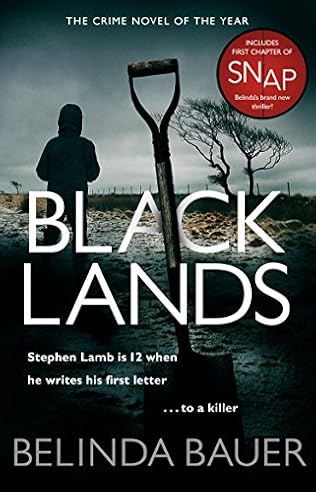
Belinda Bauer – I read Blacklandsher debut novel about a battle of wits between a child serial killer and a twelve year old boy. Since reading this book I’ve also read Snap and Rubbernecker.

Belinda Bauer's picture

book cover of Blacklands

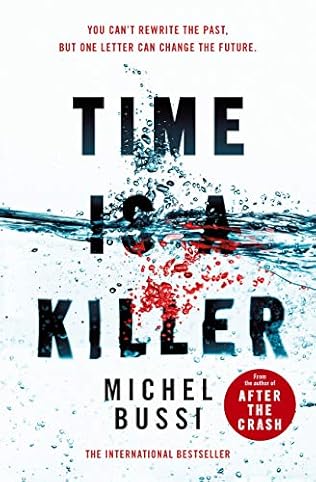
Michel Bussi –  Time is a Killera psychological thriller, translated from the French; this shifts from the past to the present, set on the island of Corsica.

Michel Bussi's picture

book cover of Time Is a Killer

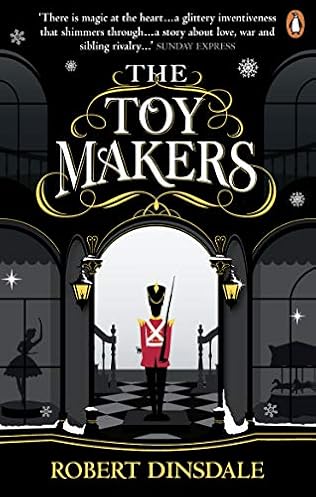
Robert Dinsdale: The Toymakers – a magical and wonderful book set mainly in 1917 whilst the First World War was taking its toll of humanity, leaving despair and tragedy in its wake. It’s a blend of historical fiction and magic realism.

Robert Dinsdale's picture

book cover of The Toymakers

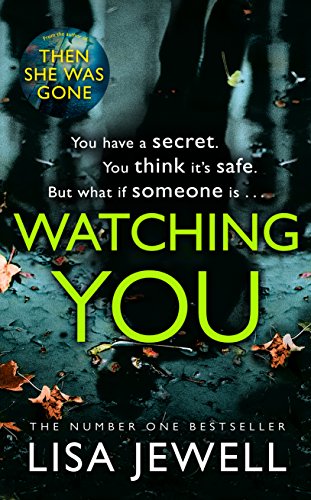
Lisa Jewell -Her first book, Ralph’s Party, came out in 1998 and since then she has written many books. Watching You is her latest book,  crime fiction that keeps you guessing about everything right from the first page – someone was murdered, but who was it and why, and just who was the killer? 

Lisa Jewell's picture

book cover of Watching You

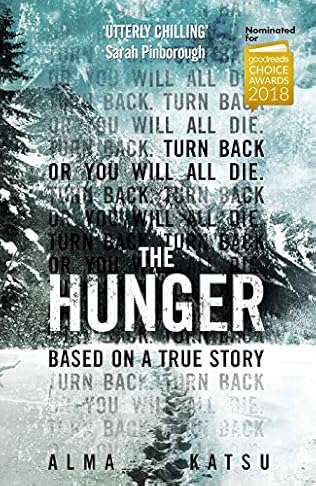
Alma Katsu: The Hunger, historical fiction, weaving facts with hints of the supernatural and Indian myths, about the Donner Party, pioneers as they made their way west to California in 1846.

Alma Katsu's picture

book cover of The Hunger

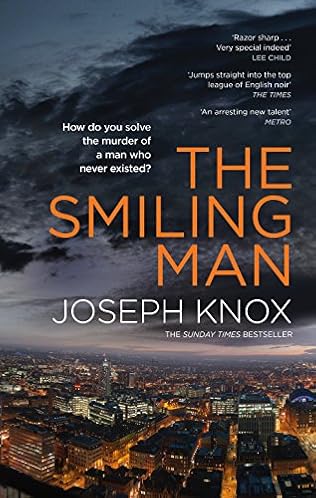
Joseph Knox: The Smiling Man the second Aidan Waits book. Waits is a Detective Constable who plays very close to the edge and has little regard for his own safety in this fascinating and complex murder mystery.

Joseph Knox's picture

book cover of The Smiling Man

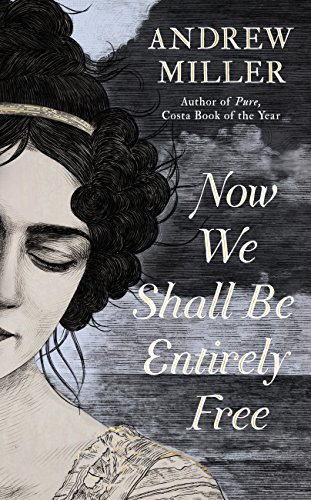
Andrew Miller: Now We Shall Be Entirely Free historical fiction, set in 1809 during the Peninsular Wars. Captain John Lacroix has returned to England, injured and close to death. as he regains his physical health  it is clear that he is on the edge of a breakdown, mentally and emotionally.

Andrew Miller's picture

book cover of Now We Shall Be Entirely Free

Rhiannon Navin: Only Child, her debut novel. It’s one of the most powerful books I’ve read for ages. It’s emotional, moving and absolutely compelling reading.  

Rhiannon Navin's picture

Only Child

Barney Norris: Turning for Home set on the day of Robert’s 80th birthday celebration. Still grieving after his wife’s recent death, he is finding it a sad, rather than a joyful occasion as the family gather together. A moving book with emotional depth.

Barney Norris's picture

Turning for Home

Jo Spain: The Confession her fifth book this is set in Ireland. It begins as Harry McNamara, a banker, recently cleared of multiple accounts of fraud, is brutally attacked in his own home in front of his wife, Julie.

Jo Spain's picture

The Confession

Since reading The Confession I’ve also read The Darkest Place and Dirty Little Secrets.