Historical Fiction read in 2017

Historical fiction is one of my favourite genres and this year I’ve read 28 books. The majority are set in the 19th/20th centuries. I rated the starred books with 5 stars and my favourite book, ie the one I enjoyed the most is Days without End by Sebastian Barry.

Days Without End

I was spellbound, the storytelling is superb, the characters are unforgettable, and the setting comes across so vividly that I had no difficulty in imagining the locations. Add to that the narration written in Thomas McNulty’s own uneducated voice, fluent and richly descriptive, lyrical and so easy to read.

20th century: 

  1. An Artist of the Floating World by Kazuo Ishiguro
  2. The Vanishing Box by Elly Griffiths
  3. The Buttonmaker’s Daughter by Merryn Allingham
  4. The Secret of Summerhayes by by Merryn Allingham
  5. Past Encounters by Davina Blake
  6. The Stars are Fire by Anita Shreve
  7. All the Light We Cannot See by Anthony Doerr
  8. A Death in the Dales by Frances Brody
  9. The Kill Fee by Fiona Veitch Smith
  10. The Taxidermist’s Daughter by Kate Mosse

19th century

  1. Property by Valerie Martin
  2. Beneath a Burning Sky by Jenny Ashcroft
  3. His Bloody Project by Graeme Macrae Burnet
  4. The Invention of Wings by Sue Monk Kidd*
  5. At the Edge of the Orchard by Tracy Chevalier
  6. See What I Have Done by Sarah Schmidt
  7. The Good People by Hannah Kent*
  8. Days without End by Sebastian Barry*

18th century

  1. Birdcage Walk by Helen Dunmore
  2. The Body in the Ice by A J MacKenzie*

17th century

  1. The Witchfinder’s Sister by Beth Underdown*

16th century

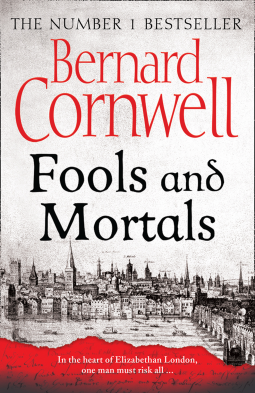
  1. Fools and Mortals by Bernard Cornwell*
  2. Six Tudor Queens: Anne Boleyn: a King’s Obsession by Alison Weir
  3. Katharina by Margaret Skea

14th century

  1. The Last Hours by Minette Walters

10th century

  1. Dunstan by Conn Iggulden*

Roman Britain

  1. The Eagle of the Ninth by Rosemary Sutcliff*
  2. Vindolanda by Adrian Goldsworthy

Six Degrees from It to The Vanishing Box

I love doing Six Degrees of Separation, a monthly link-up hosted by Kate at Books Are My Favourite and Best. Each month a book is chosen as a starting point and linked to six other books to form a chain. A book doesn’t need to be connected to all the other books on the list, only to the one next to it in the chain.

This month the chain begins with It by Stephen King – in the storm drains, in the sewers, IT lurks, taking on the shape of every nightmare, each one’s deepest dread. Sometimes IT appears as an evil clown named Pennywise and sometimes IT reaches up, seizing, tearing, killing…

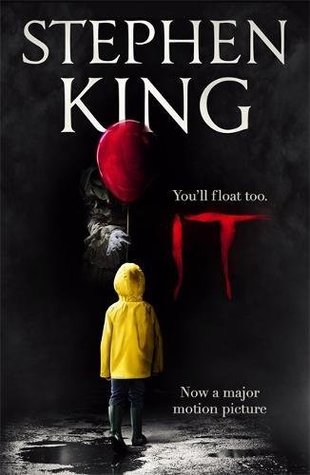
It

I haven’t read It but I have read  a few of Stephen King’s books including Joyland, which is a ghost story, a love story, a story of loss and heartbreak, set in a funfair. It’s also a murder mystery and utterly compelling to read. (my review)
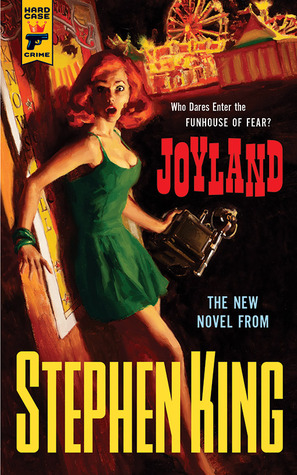
13596166

The next link in my chain is to an another ghost story – Dark Matter by Michelle Paver, a chilling book, very chilling, both in the setting in the High Arctic and in atmosphere.

Dark Matter

It’s a ghost story in the form of a diary – that of Jack Miller who in 1937 was part of an expedition to the High Arctic to study its biology, geology and ice dynamics and to carry out a meteorological survey. As the darkness descends, Jack is left alone at the camp and his nightmare really begins. And it is very scary! (my review)

I’m moving away from dark and scary stories to another book with ‘matter in its title – to Alive, Alive Oh! And Other Things That Matter by Diana Athill.

Alive, Alive Oh!: and Other Things that Matter

It’s only a short book but it covers a wide range of Diana Athill’s memories, many images of beautiful places, and the friends and lovers she has known. The chapters follow on chronologically but are unconnected except for the fact that they demonstrate her love of life. It was heart breaking to read her remarkably candid account of  the miscarriage she had when she was in her early 40s and she nearly died. (my review)

Katherine of Aragon also suffered from miscarriages during her marriage to Henry VIII. Antonia Fraser’s Six Tudor Queens: Katherine of Aragon, the True Queen is fictional biography at its most straight forward, written in an uncomplicated style.
It’s a long and comprehensive study, told from Katherine’s point of view it follows her life from the time she arrived in England at the age of sixteen to marry Prince Arthur, the elder of Henry VII’s two sons, to her death in 1536. (my review)

Another Katherine living in the Tudor period is Lady Katherine Grey, who was one of the heirs to the throne and a rival to the Tudor Queens, Mary and Elizabeth I. Leanda de Lisle tells her story and that of her sisters in The Sisters Who Would Be Queen: The tragedy of Mary, Katherine and Lady Jane Grey. 

The Sisters Who Would Be Queen


Lady Jane Grey  is remembered in British history as the monarch with the shortest reign… just nine days. In 1553 after the death of her cousin, the protestant King Edward VI she was proclaimed Queen in place of his Catholic half sister, Mary Tudor. Mary overthrew Jane 13 days later, and she was tried for treason, found guilty and was executed. (this is one of my TBR books)

Lady Jane Grey features in The Vanishing Box by Elly Griffiths, the fourth book in the DI Stephens and Max Mephisto series.
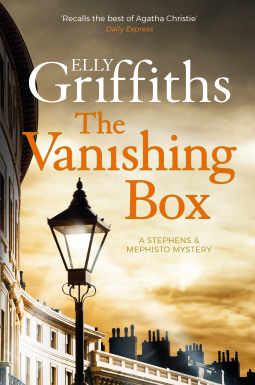
Lily Burtenshaw was murdered. She was found in her room tied to a chair, leaning forward and pointing to an empty crate with ‘King Edward Potatoes’ written on the side. She had been posed to look like Lady Jane Grey in the painting by Delaroche, of her execution at the moment she was being helped to lay her head upon the block. (my review)

My chain began with a book  about a scary clown, moved to a scary funfair to yet another scary book set in the Arctic. It then travelled to a different matter – that of miscarriages, then to the sister of a short-lived queen and finally to a murder mystery in which the victim was posed as Lady Jane Grey.  From America to England in both the past and the present, from fiction to historical biography and then to a murder mystery – from horror to murder in six steps!

Next month January 6, 2018), the chain will begin with an international bestseller (that I haven’t read) – Alexander McCall Smith’s No.1 Ladies Detective Agency.

My Week in Books: 15 November 2017

This Week in Books is a weekly round-up hosted by Lypsyy Lost & Found, about what I’ve been reading Now, Then & Next.

IMG_1384-0

A similar meme,  WWW Wednesday is run by Taking on a World of Words.

Now:

Victoria: A Life

I’m still reading Victoria: a Life by A N Wilson and have just finished Part One, ending with the death of William IV at 2.20 on the morning of 20 June 1837. Victoria is woken to the news that she is now Queen.

The Skeleton Road

I’ve also started The Skeleton Road by Val McDermid, the third  of her DCI Karen Pirie novels.  So far I’m finding it a bit slow going with rather a bewildering number of characters introduced one after the other. When a skeleton with a bullet hole in its skull is found at the top of a crumbling, gothic building in Edinburgh Karen and her Historic Cases Unit is called in to identify the body and investigate how long it has been there.

Then:

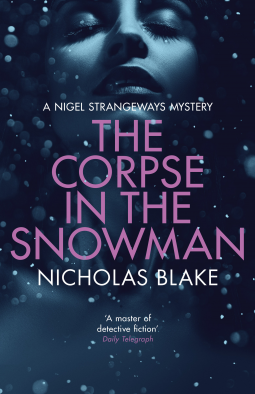
I’ve just finished The Corpse in the Snowman by Nicholas Blake, first published in 1941 as The Case of the Abominable Snowman. This is a manor house murder mystery  in which it first appears that Elizabeth Restorick has committed suicide. Or was it murder? Nigel Strangeways and Inspector Blount investigate.

Next:

Call the Dying (Lydmouth, #7)

I’m not sure, but Andrew Taylor’s Call the Dying caught my eye this morning when I passed the bookshelves in the hall. It’s set in the 1950s in the grip of a long, hard winter when dark forces are at play – a dead woman calls the dying in a seance, in a town shrouded in intrigue and suspicion. This is the seventh in Taylor’s Lydmouth series. I haven’t read any of the earlier books and I’m hoping that won’t matter.

Have you read any of these books?  Do any of them tempt you? 

A Pile of Books

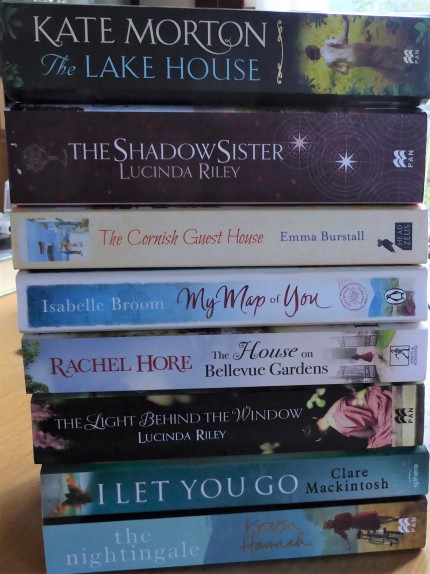
I had a lovely surprise yesterday when a friend gave me this pile of books – which another friend had given to her.

Pile of Bks Nov17 P1020312

Some are by authors I’ve never heard of before and am not sure what to expect. From top to bottom they are:

  • The Lake House by Kate Morton (on of my favourite authors), historical fiction spanning different time periods and characters, centred on the disappearance of a baby boy from his home in 1933.
  • The Shadow Sister by Lucinda Riley, historical fiction and book three in The Seven Sisters series. I haven’t read the first two books. There’s an antiquarian bookshop, and links with Beatrix Potter and Alice Keppel.
  • The Cornish Guest House by Emma Burstall, the second book in the Tremarnock series (I haven’t read the first book), set in a small fishing village, crowded with holidaymakers.
  • My Map of You by Isabelle Broom, set on the Greek island of Zakynthos (Zante), where Holly has inherited a house.
  • The House on Bellevue Gardens by Rachel Hore – different characters seeking refuge in Leonie’s house in a tranquil London Square.
  • The Light Behind the Window by Lucinda Riley, in which Emilie inherits a chateau in southern France and an old notebook of poems that leads her in search of Sophia and a web of deception in occupied France in 1943.
  • I Let You Go by Clare Mackintosh, a book already on my list of books I want to read, about Jenna Gray as she moves to a ramshackle cottage on the remote Welsh coast, trying to escape the memory of the car accident, haunted by her fears and grief.
  • The Nightingale by Kirstin Hannah, another book on my list of books I want to read. This is also historical fiction about two French sisters during World War 2 and in 1955.

These should keep me going for quite a while – before I pass them on to another reader.

If you’ve read any of these books please let me know what you thought of them!


Birdcage Walk by Helen Dunmore

Birdcage Walk

Blurb:

It is 1792 and Europe is seized by political turmoil and violence. Lizzie Fawkes has grown up in Radical circles where each step of the French Revolution is followed with eager idealism. But she has recently married John Diner Tredevant, a property developer who is heavily invested in Bristol’s housing boom, and he has everything to lose from social upheaval and the prospect of war. Soon his plans for a magnificent terrace built above the two-hundred-foot drop of the Gorge come under threat. Tormented and striving Diner believes that Lizzie’s independent, questioning spirit must be coerced and subdued. She belongs to him: law and custom confirm it, and she must live as he wants—his passion for Lizzie darkening until she finds herself dangerously alone.

Weaving a deeply personal and moving story with a historical moment of critical and complex importance, Birdcage Walk is an unsettling and brilliantly tense drama of public and private violence, resistance and terror from one of our greatest storytellers.

My thoughts:

This is Helen Dunmore’s last book, but the first one of hers I’ve read, although Exposure is sitting in my Kindle waiting to be read. It’s historical fiction, although I think it’s mainly a meditation on death and the legacy we leave behind. And that is most poignant as although at the time she was writing the book Helen Dunmore didn’t know it she was seriously ill and she died earlier this year. She was the author of 12 novels, three books of short stories, numerous books for young adults and children and 11 collections of poetry.

As she wrote in the Afterword:

I suppose that a writer’s creative self must have access to knowledge of which the conscious mind and the emotions are still ignorant, and that a novel written at such a time, under such a growing shadow, cannot help being full of a sharper light, rather as a landscape becomes brilliantly distinct in the last sunlight before a storm. I have rarely felt the existence of characters more clearly, or understood them more deeply – or enjoyed writing about them more.

I was completely absorbed in this book as I read it. It’s written beautifully and poetically, moving slowly as the details of Lizzie and Diner’s marriage come sharply into focus. Birdcage Walk was first published in March 2017, so I’m coming a bit late to reading it and the drawbacks of that are that I’ve seen several reviews and have realised that (like many books) there are mixed opinions about it. I’ve seen criticisms that the pace is too slow, and that much of the plot is given away in the opening chapters. But I felt the pace was just right for the story and the subject matter, and I think the opening chapters set the scene and the theme of the book – that is, that life is transitory, that the individual vanishes, as it were, that no record is left of the lives of many of past generations, despite the effect they had on the lives of their contemporaries.

The Prelude reveals that Birdcage Walk in the present day is a paved path between railings with pleached lime trees arching overhead on their cast-iron frame. But back at the end of the 18th century it was where Diner had started to build a terrace of houses with fantastic views over the Avon Gorge (before the building of the Clifton Suspension Bridge). When war was declared between Britain and France in 1793 this had a disastrous effect and like many builders and developers, Diner’s building work slowed and then ceased as he went bankrupt.

The novel shows the effect of the French Revolution on England through newspaper reports and letters, which I thought was effective casting light on the contemporary scene and showing the horror of what was happening across the Channel. The main focus, however, is on Lizzie. Diner’s repressive and jealous nature comes increasingly to the fore as his building work decreases, and the tension between him and Lizzie soars, accelerated when she discovers what had happened to Lucie, his first wife. The sense of foreboding and menace present in their marriage pervades the whole novel.

Many thanks to Grove Atlantic for providing me with an ARC copy through NetGalley.

My rating: 4*

Amazon UK
Amazon US

Fools and Mortals by Bernard Cornwell

Publication: 19 October 2017, Harper Collins

Source: Review copy from the publisher via NetGalley

My rating: 5*