First Chapter First Paragraph: The Skeleton Road

eca8f-fistchapEvery Tuesday Diane at Bibliophile by the Sea hosts First Chapter First Paragraph Tuesday Intros to share the first paragraph sometimes two, of a book that she’s reading or is planning to read soon.

This week’s first paragraph is from her third Karen Pirie book,  The Skeleton Road by Val McDermid, a book I’m about to read.

The Skeleton Road


Chapter 1

Fraser Jardine wanted to die. His stomach was knotted tight, his bowels in the twisted grip of panic. A teardrop of sweat trickled down his left temple. The voice in his head sneered at his weakness, just as it had since boyhood. Biting his lip in shame, Fraser forced open the skylight and pushed it outwards. He climbed the last three steps on the ladder one at a time and gingerly emerged on the pitched roof.

Never mind that tourists would have paid for this sensational view of a city classified as a World Heritage Site. All Fraser cared about was how far he was from the ground.

I can empathise with Fraser – I’ve never liked heights and always get that terrifying feeling that I’m about to fall whenever I climb up to the top of a tall building.

Blurb:

When a skeleton is discovered hidden at the top of a crumbling, gothic building in Edinburgh, Detective Chief Inspector Karen Pirie is faced with the unenviable task of identifying the bones. As Karen’s investigation gathers momentum, she is drawn deeper into a dark world of intrigue and betrayal, spanning the dark days of the Balkan Wars.

Karen’s search for answers brings her to a small village in Croatia, a place where people have endured unspeakable acts of violence. Meanwhile, someone is taking the law into their own hands in the name of justice and revenge — but when present resentment collides with secrets of the past, the truth is more shocking than anyone could have imagined . . .

I’ve read the first two Karen Pirie books and enjoyed them both, although I think the first one, The Distant Echo, is better than the second, A Darker Domain.

What do you think?  Would you continue reading? 

Six Degrees from Less than Zero to The Book of Dust

I love doing Six Degrees of Separation, a monthly link-up hosted by Kate at Books Are My Favourite and Best. Each month a book is chosen as a starting point and linked to six other books to form a chain. A book doesn’t need to be connected to all the other books on the list, only to the one next to it in the chain.

This month the chain begins with a controversial bestseller by a member of the eighties ‘literary Brat Pack’ – Bret Easton Ellis’s Less Than Zero.

Lessthan01st1.png

I haven’t read this book and can’t say that it appeals to me at all. Filled with relentless drinking in seamy bars and glamorous nightclubs, wild, drug-fuelled parties, and dispassionate sexual encounters, Less Than Zero – narrated by Clay, an eighteen-year-old student returning home to Los Angeles for Christmas – is a fierce coming-of-age story, justifiably celebrated for its unflinching depiction of hedonistic youth, its brutal portrayal of the inexorable consequences of such moral depravity, and its author’s refusal to condone or chastise such behaviour. (Amazon UK)

Towards Zero

So, the first link in my chain is to an another book with the word ‘zero‘ in the title – Towards Zero by Agatha Christie.

It’s one of my favourite of Agatha Christie’s books, first published in 1944, with an intricately plotted murder mystery featuring Superintendent Battle. The hypothesis is that murder is not the beginning of a detective story, but the end. It is the culmination of causes and events bringing together certain people, converging towards a certain place and time – towards the Zero Hour. The idea presupposes that there is an inevitability – that once events have been set in motion then the outcome is determined. Agatha Christie dedicated this book to Robert Graves, author of I Claudius, who was her neighbour in Devon during the Second World War and the two had become friends.
I, Claudius & Claudius the God by Robert…

I read I, Claudius and Claudius the God  by Robert Graves many years ago after watching the TV adaptation with Derek Jacobi playing the role of Claudius. Set in the first century A.D. in Rome, this is the life story of the Roman Emperor Claudius. A lame man and a stammerer, he was despised and dismissed as an idiot. He recorded the antics of the imperial household as its members vied for power; a story of murders, greed and folly. He had a disastrous love affair with the depraved Messalina but his reign as Emperor was surprisingly successful.
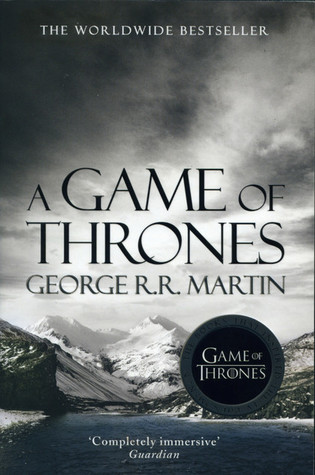
22740513My next link is to another book I read after first watching the TV adaptation – it’s A Game of Thrones by G R R Martin, fantasy fiction. I loved both the book and the TV series. It’s complex and multifaceted, and it’s full of stories and legends, set in a grim and violent world full of tragedy, betrayals and battles; a tale of good versus evil in which family, duty, and honour are in conflict, the multiple viewpoints giving a rounded view of the conflicts the characters face. It’s a love story too.
The Sunne In Splendour

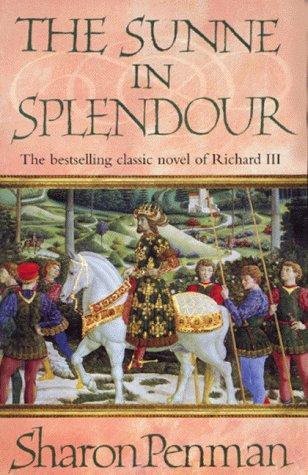
Just before I read The Game of Thrones I’d read The Sunne in Splendour by Sharon Penman, historical fiction about the Wars of the Roses and had noticed the similarities between that and A Game of Thrones, the battles between the Houses of York and Lancaster paralleled by those between the Houses of Stark and Lancaster for example. This is one of the best historical novels that I’ve read. It is full of detail, bringing Richard III’s world to life. It’s a long book, nearly 900 pages and it took me a while to read it, but never once did I think it was too long, or needed editing. I loved it.

Another very long book is The Pillars of the Earth by Ken Follett. It has 1,076 pages and is historical fiction set in 12th century England during the time of the civil war between Stephen and Matilda/Maud (she’s known by both names – in this book she’s called Maud, but at school we were taught her name was Matilda). It’s also the story of the building of a cathedral.  It is really a medieval soap opera – in essence a family saga. Parts of the novel came to life more than others and it is rather long-winded and repetitive, terrible things happen, the characters overcome them and recover only to be knocked down again by more terrible events.

La Belle Sauvage (The Book of Dust, #1)Earth‘ made me think of ‘dust to dust’ which in turn made me think of Philip Pullman’s La Belle Sauvage, volume one of The Book of Dust. This is his latest book – I haven’t read it yet – set ten years before His Dark Materials, telling the story of Lyra Belacqua’s early life. Eleven-year-old Malcolm Polstead and his daemon, Asta, live with his parents at the Trout Inn near Oxford. Across the River Thames is the Godstow Priory where the nuns live. A baby by the name of Lyra Belacqua.

The next two books in the series, Pullman has said, will take place after the events of His Dark Materials – he describes this trilogy as neither a prequel nor a sequel but as an ‘equel’.

My chain began with a book I haven’t read and don’t want to read and ended, so far from where it began, with another book I haven’t read, but a book I’m looking forward to reading. It has travelled through time and space, taking in ancient Rome, medieval England and the fantasy worlds of G R R Martin and Philip Pullman.

Next month (December 2, 2017) the chain begins with Stephen King’s It – where that will end I have no idea yet.

The Last Hours by Minette Walters

Blurb:

June, 1348: the Black Death enters England through the port of Melcombe in the county of Dorsetshire. Unprepared for the virulence of the disease, and the speed with which it spreads, the people of the county start to die in their thousands. 

In the estate of Develish, Lady Anne takes control of her people’s future – including the lives of two hundred bonded serfs. Strong, compassionate and resourceful, Lady Anne chooses a bastard slave, Thaddeus Thurkell, to act as her steward. Together, they decide to quarantine Develish by bringing the serfs inside the walls. With this sudden overturning of the accepted social order, where serfs exist only to serve their lords, conflicts soon arise. Ignorant of what is happening in the world outside, they wrestle with themselves, with God and with the terrible uncertainty of their futures. 

Lady Anne’s people fear starvation but they fear the pestilence more. Who amongst them has the courage to leave the security of the walls?

And how safe is anyone in Develish when a dreadful event threatens the uneasy status quo…?

My thoughts:

I liked the historical setting of The Last Hours in 1348 at the time of the Black Death.  It’s well researched, giving vivid descriptions of the setting in an moated manor in the Dorsetshire countryside and of the Black Death, the plague that ravaged the population in 1348. The characters are interesting, showing the clear division between the serfs and the lord of the manor, but I thought some of them were rather one-dimensional, such as Sir Richard of Develish (Lady Anne’s husband) who is portrayed as irredeemably villainous.

I think the book as a whole is overlong and so slow in parts where the description is so detailed that it slows down the action to snail’s pace. It could have been shorter without losing any of the drama.

What really interested me was the medical development and health issues, as people struggled to understand the nature of the plague, what caused it, how it spread so quickly and how could they treat it. And what disappointed me most is the ending – there isn’t one. The last sentence reads: ‘To be continued …

You can watch Minette Walters talking about her book:

My thanks to the publishers and NetGalley for a digital review copy.

Amazon UK

First Chapter First Paragraph: Fools and Mortals

eca8f-fistchapEvery Tuesday Diane at Bibliophile by the Sea hosts First Chapter First Paragraph Tuesday Intros to share the first paragraph sometimes two, of a book that she’s reading or is planning to read soon.

This week’s first paragraph is from Fools and Mortals by Bernard Cornwell.

Fools and Mortals


I died just after the clock in the passageway struck nine.

There are those who claim that Her Majesty, Elizabeth, by the grace of God, Queen of England, France and of Ireland, will not allow clocks to strike the hour in her palaces. Time is not allowed to pass for her. She has defeated time. But that clock struck. I remember it.

I counted the bells. Nine. Then my killer struck.

And I died.


Blurb:

A dramatic new departure for international bestselling author Bernard Cornwell, FOOLS AND MORTALS takes us into the heart of the Elizabethan era, long one of his favourite periods of British history.

Fools and Mortals follows the young Richard Shakespeare, an actor struggling to make his way in a company dominated by his estranged older brother, William. As the growth of theatre blooms, their rivalry – and that of the playhouses, playwrights and actors vying for acclaim and glory – propels a high-stakes story of conflict and betrayal.

Showcasing his renowned storyteller’s skill, Bernard Cornwell has created an Elizabethan world incredibly rich in its portrayal: you walk the London streets, stand in the palaces and are on stage in the playhouses, as he weaves a remarkable story in which performances, rivalries and ambition combine to form a tangled web of intrigue.

This is Bernard Cornwell’s latest book, published on 19th October 2017 and as the blurb says is a new departure for him, set in the Elizabethan era – in 1595 as William Shakespeare and his company are preparing to perform A Midsummer Night’s Dream. I’ve read over half of this book and I’m enjoying it immensely.

What do you think?  Would you continue reading? 

Days Without End by Sebastian Barry

Days Without End

Hardcover, 259 pages, published October 20th 2016 by Faber & Faber
 
Source: Library Book
 
My Rating: 5*


Blurb:

After signing up for the US army in the 1850s, aged barely seventeen, Thomas McNulty and his brother-in-arms, John Cole, fight in the Indian Wars and the Civil War. Having both fled terrible hardships, their days are now vivid and filled with wonder, despite the horrors they both see and are complicit in. Then when a young Indian girl crosses their path, the possibility of lasting happiness seems within reach, if only they can survive.

My thoughts:

This is without doubt one of the best books I’ve read this year. I was spellbound, the storytelling is superb, the characters are unforgettable, and the setting comes across so vividly that I had no difficulty in imagining the locations. Add to that the narration written in Thomas McNulty’s own uneducated voice, fluent and richly descriptive and so easy to read, despite the mix of Irish and American slang.

Thomas is writing, looking back on their lives, to a time when it seemed that years of their lives were endless:

Time was not something then we thought of as an item that possessed an ending, but something that would go on for ever, all rested and stopped in that moment. Hard to say what I mean by that. You look back at all the endless years when you never had that thought. I am doing that now as I write these words in Tennessee. I am thinking of the days without end of my life. (page 39)

He is a young Irish immigrant, 17 years old when he and his friend John Cole volunteered to join the US army. Thomas, had left Sligo, starved and destitute, for Canada and then made his way to America where he had met John under a hedge in a downpour and they became friends and secretly lovers for life. He describes John Cole as ‘my love, all my love.‘  They began their life together working in a saloon in Daggesville, dancing and dressed as girls, until they were seventeen and they could no longer pass as girls:

But nature will have his way and bit by bit the bloom wore off us, and we was more like boys than girls, and more like men than women. John Cole anyhow in particular  saw big changes in them two years. He was beginning to give giraffes a run for their money, height-wise. Mr Noone couldn’t find dresses to fit him and Mrs Carmody couldn’t stitch fast enough. It was the end of an era, God knowed. One of the happiest works I ever had. (Page 12)

The fact of their love underlies the whole book. But the next stage of their lives was so different, fighting in the Indian wars against the Native Americans as the settlers moved west and then in the Civil War. I’m not keen on reading about wars, battles or fights of any kind but I found the descriptions in this novel were exceptional, truly heart-rending, although I would have preferred fewer scenes of war and massacre. Barry doesn’t spare the details and clearly depicts the horror and waste of war, commenting in Thomas’s voice: Killing hurts the heart and soils the soil (page 225).

After the wars have come to an end they leave the army and the rest of the book follows their lives together with Winona, a young Indian girl, who they come to regard as their daughter. But danger is never far away …

In a way I thought it was odd how this book held my attention. I was surprised by a number of things – the very long paragraphs, sometimes extending to several pages  – the strange grammatical errors and figures of speech, and at times passages written in the present tense. And yet, Barry’s prose is so lyrical and poetic that I think this is what made the book so compelling to read. Each time I picked it up to read I became lost in its pages. It is not perfect, but then I often find that that doesn’t matter when I’m so totally captivated by the writing, which is why I’ve given this book 5 stars.

Amazon UK link

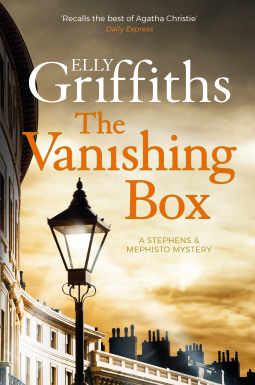
The Vanishing Box by Elly Griffiths

Publication date: 2 November, 2017, Quercus Books

Source: review copy via NetGalley

My rating: 3*

Blurb:

Christmas 1953. Max Mephisto and his daughter Ruby are headlining Brighton Hippodrome, an achievement only slightly marred by the less-than-savoury support act: a tableau show of naked ‘living statues’. This might appear to have nothing in common with DI Edgar Stephens’ investigation into the death of a quiet flowerseller, but if there’s one thing the old comrades have learned it’s that, in Brighton, the line between art and life – and death – is all too easily blurred…

My thoughts:

This is the fourth book in the DI Stephens and Max Mephisto series. Known as the ‘Magic Men’ they had been part of a top-secret espionage unit during the War.

It is set in 1953 at Christmas just a few months after the previous book in the series, The Blood Card and magician Max Mephisto is still sceptical about performing magic on TV with his daughter Ruby in a show called Magician and Daughter. Meanwhile his old friend, DI Edgar Stephens and his team are faced with solving the murder of Lily Burtenshaw, who had been strangled and found in her room tied to a chair, leaning forward and pointing to an empty crate with ‘King Edward Potatoes’ written on the side.

Max and Ruby are performing at the Brighton Hippodrome using a human sized version of the Vanishing Box in their act. The variety show also includes an act called the Living Tableaux, showing scenes from famous paintings or classical statutory, posed by a troupe of showgirls, naked apart from skimpy flesh coloured pants. Two of the showgirls, Betty and Janette, have become friends with Lily and are lodging at the same boarding house, but Edgar wonders if there is another connection between Lily and the Living Tableau? There is something so theatrical about the way the body was posed. Edgar and his two sergeants, Emma Homes and Bob Willis, begin their search for the killer, looking for motives and suspects. Then more murders are discovered and it becomes a desperate hunt to find the killer before he/she strikes again.

I enjoyed this book but for me there is too much focus on the main characters and their relationships. Edgar is engaged to Ruby, although Max is still not too happy about it.  However, his work means he isn’t able to spend much time with her. Meanwhile Emma’s feelings for him are getting stronger and their relationship deepens as she is drawn into deadly danger. Max’s relationship with Mrs M, his landlady in Brighton, is winding down and he is attracted to Florence, another one of the showgirls.

I liked the insight into the 1950s, particularly the theatre life. Illusion and misdirection play a large part – from the acts in the variety show to the murders, and all is not what it seems. The misdirection in the form of several twists and turns threw me off course.The clues are there, if you can but see them, yet I still had little idea who the killer could be until very near the end.

My thanks to Quercus Books and Netgalley for an advance review copy of this book ahead of publication on 2nd November.