Call for the Dead by John Le Carré – the 1961 Club

This week Simon  and  Karen  are hosting the 1961 Club. To join in all you have to do is read and review any book published in 1961 in whatever format, language, place.

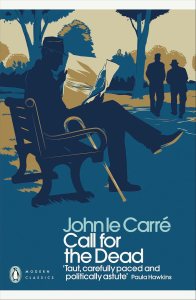
I originally thought I’d like to read The Agony and the Ecstasy by Irvine Stone for this event but I ran out of time. But I did find time to read Call for the Dead by John Le Carré, which has been buried deep in my Kindle. I’d bought it back in 2017 and read a few pages, meaning to get back to it before long. But of course I didn’t – until now. It’s a novella of 162 pages.

It’s the first of his many books to feature the tenacious, unassuming and singular George Smiley. Previously I’ve read the third book, The Spy Who Came in from the Cold (1963) and the fifth and sixth books Tinker, Tailor, Soldier, Spy  (1974), which I read before I had a blog, and The Honourable Schoolboy  (1977), which I think is brilliant.

Description:

An apparent suicide. A deepening mystery. A letter from a dead man…

Secret agent George Smgeorge Smiley iley is in trouble. A Foreign Office civil servant, Samuel Fennan, has killed himself, and Smiley realizes that Intelligence head Maston is going to set him up to take the blame. Beginning his own investigation, Smiley is shocked to receive an urgent letter from the dead man, and slowly uncovers a network of deceit and betrayal

This is a spy thriller but George Smiley is not James Bond.

Short, fat, and of a quiet disposition, he appeared to spend a lot of money on really bad clothes, which hung about his squat frame like skin on a shrunken toad. Sawley, in fact, declared at the wedding that ‘Sercomb was mated to a bullfrog in a sou’wester’. And Smiley, unaware of this description, had waddled down the aisle in search of the kiss that would turn him into a Prince.

He married the beautiful Lady Ann Sercomb, but they divorced after two years, when she left him for a Cuban motor racing driver. He was ‘without parents, school, regiment or trade, without wealth or poverty ordinary’.

The first chapter gives a brief history of George Smiley, describing him as ‘breathtakingly ordinary’. The only part of himself that survived was his profession, that of an intelligence officer in the Secret Service. Having read some of the later books it was interesting to find out about his background, his academic life and early career and failed marriage.

He had got to that stage in his career,with the appearance of younger men, when he realised he had entered middle age without ever being young. He had carried out his job during the second world war well, but after that amongst the smart young men he felt old-fashioned and he became more ‘hunched and frog-like’ and had acquired the nickname of ‘Mole’. He was considered too old to go abroad and that was when he was transferred Cambridge Circus in London – the headquarters of the Secret Intelligence Service (SIS), commonly known as MI6 (Military Intelligence, Section 6).

John Le Carré began writing the book whilst working for MI6. He initially called it A Clear Case of Suicide and there are clear elements of crime fiction at first, but then it develops into more of a spy thriller. Samuel Fennan, who had access to sensitive information had apparently committed suicide. Feenan had been found dead, leaving a letter saying that Smiley had cast doubts on his loyalty, that his career in the Foreign Office was over and that he was the victim of paid informers. He thought the interview was particularly a friendly one and that he’d told Fennan not to worry, that he could see no reason why they should bother him further.

Smiley can’t accept this was suicide, thinking Fennan had been murdered. He then resigned from the service when Maston ordered him to drop the investigation, but with the help of a CID man, Mendel, and Peter Guillam, Smiley’s assistant, Smiley unravels the truth behind Fennan’s death. At the end of the book, Smiley wrote a long report summarising the case, listing the facts and explaining his thoughts in much the same way as Hercule Poirot does in the Agatha Christie books.

I like Le Carré’s writing style, which is clear and straight forward, although Call for the Dead has quite a complicated plot. I thoroughly enjoyed reading it.

I’ve previously read and reviewed read these four books, that were also published in  1961:

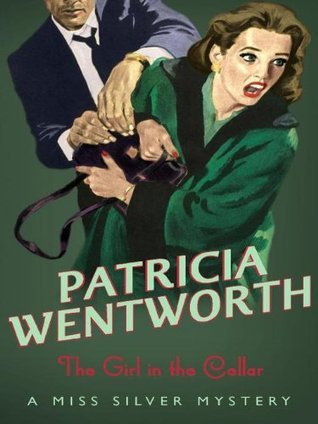
The Girl in the Cellar  by Patricia Wentworth, a Miss Silver Mystery. It begins well as the main character finds herself in the dark in a cellar, not knowing who she is or how she got there. Overall, I thought the book was odd and not very convincing. There are too many coincidences, improbabilities, and loose ends.

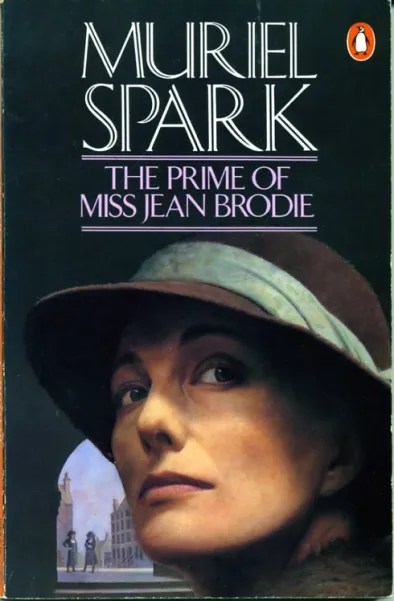
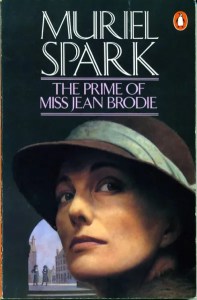
The Prime of Miss Jean Brodie  by  Muriel Spark, was first published in  The New Yorker magazine on 14th October 1961. It is perhaps Muriel Spark’s most famous novel about the ‘Brodie set’. But which one of them causes her downfall and her loss of pride and self-absorption? What really impresses me about this book is the writing, so compact, so perceptive and so in control of the  shifts in time backwards and forwards. It’s a joy to read.

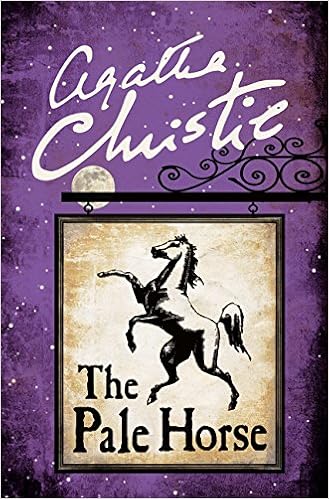
The Pale Horse by Agatha Christie. Neither Hercule Poirot, nor Miss Marple feature in this novel and Mrs Ariadne Oliver has only a small part. Detective Inspector Lejeune is in charge of the investigation into the murder of Father Gorman who was killed one night on his way home. The Pale Horse is an old house  which was formerly an inn in the village and is now the home of three weird women, thought by the locals to be witches. It’s also the name of a sinister organisation that arranges murders based on black magic. The book is a study of evil, a fascinating book conveying a feeling of real menace. 

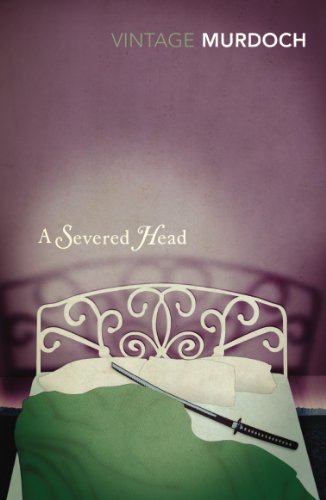
A Severed Head by Iris Murdoch. Reading this I felt I was looking into a different world and time. It’s not comfortable reading, but it is farcical and entertaining. It’s a tightly-structured novel, with just a few characters, narrated by Martin, who is shocked when his wife announces that she wants a divorce because she is deeply in love with Palmer, her analyst. This sets in motion a sequence of events in which Martin’s weakness and need are clearly evident.

Appointment in Arezzo by Alan Taylor – Short Nonfiction

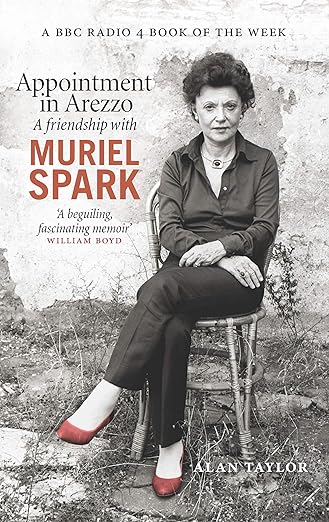
Appointment in Arezzo: A friendship with Muriel Spark by Alan Taylor

Polygon| 2017| 169| e-book| My own copy| 5*

Description:

This book is an intimate, fond and funny memoir of one of the greatest novelists of the last century. This colourful, personal, anecdotal, indiscreet and admiring memoir charts the course of Muriel Spark’s life revealing her as she really was. Once, she commented sitting over a glass of chianti at the kitchen table, that she was upset that the academic whom she had appointed her official biographer did not appear to think that she had ever cracked a joke in her life.

Alan Taylor here sets the record straight about this and many other things. With sources ranging from notebooks kept from his very first encounter with Muriel and the hundreds of letters they exchanged over the years, this is an invaluable portrait of one of Edinburgh’s premiere novelists. The book was published to celebrate the 100th anniversary of Muriel’s birth in 2018.

My thoughts:

This is a short nonfiction book of 169 pages on Kindle, so it’s just right for both Nonfiction November and Novellas in November. It’s a book I’ve had for a few years after a friend recommended it to me. I didn’t read it straight away because at the time the only book by Muriel Sparks I’d read was The Prime of Miss Jean Brodie, which I loved. Since then I’ve read Loitering with Intent, (review to follow in due course), so I thought it was time I read Appointment in Arezzo.

Muriel Spark was born on 1 February 1918, in Edinburgh, the daughter of Bertie Camberg, a Jew who was born in Scotland and her mother, Sarah who was English and an Anglican. Alan Taylor touches on her early life and teenage years in Edinburgh in a middle -class enclave , where she attended James Gillespie’s High School for Girls – immortalised as Marcia Blaine School in The Prime of Miss Jean Brodie.

In July 1990 Alan Taylor first met Muriel Spark and her friend Penelope – Penny – Jardine in a hotel in Arezzo for dinner. The two women had shared a rambling house deep in the Val di Chiana 15 kilometres from Arezzo in Tuscany for twenty years. Penny is a sculptor who has exhibited at the Royal Academy in London; she supplied the domestic and business circumstances which allowed Muriel to flourish. Alan Taylor, a former deputy editor of The Scotsman and the founder-editor of the Scottish Review of Books, was there to interview her on the publication of her novel Symposium (1990). Their meeting led to a friendship and since then they met frequently during the last fifteen years of her life. She died at her home in Tuscany in April 2006 and is buried in the cemetery of Sant’Andrea Apostolo in Oliveto.

Following that first meeting, over the next fifteen years they met many times, when Taylor visited her in Tuscany, New York, London, Prague and finally in 2004 in Scotland and Edinburgh as well as exchanging many letters and telephone conversations. Taylor outlined details of her brief marriage in 1937 to Sidney Oswald Spark, which only lasted until 1940 when they separated, and about her son, Robin and their disagreement over her Jewishness. Robin believed that one must be either a Jew or a Gentile, whereas Muriel believed:

It was impossible ‘to separate’ the Jewess within her from the Gentile. In her mind, the two coexisted in harmony’ ‘uncomplainingly amongst one’s own bones’. Was she a Gentile? Or a Jewess? ‘Both and neither. What am I? I am what I am.

But Robin couldn’t cope with such ambiguity; he wanted certainty – in his mind one must be either Jew or Gentile. Their beliefs were irreconcilable. The full details are in Chapter 6, A Question of Jewishness.

Amongst many other topics they talked about her writing:

Fleur in Loitering with Intent spoke for her when she said: ‘I’ve come to learn for myself how little one needs, in the art of writing, to convey the lot, and how a lot of words, on the other hand, can convey so little. (page 17)

She had no idea when writing a book how it might turn out. Its theme built of itself and if it did not develop, it ramified. I wanted to know what she saw as her achievement, her legacy. ‘I have realised myself, ‘ she replied. ‘I have expressed something I brought into the world with me. I have liberated the novel in many ways, shown how anything whatever can be narrated, any experience set down, including sheer damn cheek. I think I have opened doors and windows in mind, and challenged fears – especially the most inhibiting fears about what a novel should be. (pages 98-99)

In a very real sense Muriel’s life is to be found in her work. She always said that if anyone wanted to know about the person behind the prose and poems they had only to read them closely and imaginatively. She is there, in the times and places and characters, in the choice of words and the construction of sentences, in the tone of voice, above all in the philosophy of existence. (pages 141-142)

There is so much more in this book. It is a fascinating insight into her life, and what she thought about writing, as well as reflecting on her books, as well as much more. I’ve really only touched the surface of this very readable book and I finished it knowing a lot more about Muriel Spark and her books – and keen to read more of them. And it’s illustrated with many photographs making it a warm, personal and affectionate account.

Six Degrees of Separation from We Have Always Lived in the Castle to Ryan’s Christmas

This is a monthly link-up hosted by Kate at Books Are My Favourite and Best. On the first Saturday of every month, a book is chosen as a starting point and linked to six other books to form a chain. Readers and bloggers are invited to join in by creating their own ‘chain’ leading from the selected book.

Books can be linked in obvious ways – for example, books by the same authors, from the same era or genre, or books with similar themes or settings. Or, you may choose to link them in more personal ways: books you read on the same holiday, books given to you by a particular friend, books that remind you of a particular time in your life, or books you read for an online challenge.

A book doesn’t need to be connected to all the other books on the list, only to the ones next to them in the chain.

This month we are starting with We Have Always Lived in the Castle by Shirley Jackson is a fantastic book; a weirdly wonderful book about sisters, Merricat and Constance. They live in a grand house, away from the village, behind locked gates, feared and hated by the villagers. Merricat is an obsessive-compulsive, both she and Constance have rituals that they have to perform in an attempt to control their fears. Merricat is a most unreliable narrator.

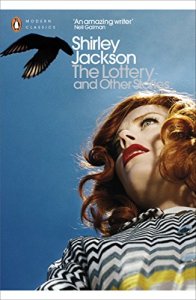
I’m starting my chain with The Lottery is a short story also written by Shirley Jackson. It was first published on June 25, 1948, in The New Yorker, (the link takes you to the story.) The lottery is an annual rite, in which a member of a small farming village is selected by chance. This is a creepy story of casual cruelty, which I first read several years ago. The shocking consequence of being selected in the lottery is revealed only at the end.

The Prime of Miss Jean Brodie by Muriel Spark, was first published in The New Yorker magazine on 14th October 1961. It is perhaps Muriel Spark’s most famous novel about the ‘Brodie set’. But which one of them causes her downfall and her loss of pride and self-absorption? What really impresses me about this book is the writing, so compact, so perceptive and so in control of the shifts in time backwards and forwards. It’s a joy to read.

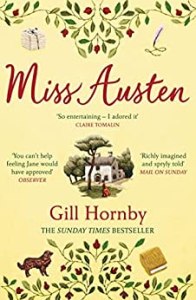
Another book that was a joy to read is Miss Austen by Gill Hornby. This is the untold story of the most important person in Jane’s life – her sister Cassandra. After Jane’s death, Cassandra lived alone and unwed, spending her days visiting friends and relations and quietly, purposefully working to preserve her sister’s reputation. Cassandra is convinced that her own and Jane’s letters to Eliza Fowle, the mother of Cassandra’s long-dead fiancé, are still somewhere in the vicarage. Eventually she finds the letters and confronts the secrets they hold, secrets not only about Jane but about Cassandra herself. Will Cassandra reveal the most private details of Jane’s life to the world, or commit her sister’s legacy to the flames?

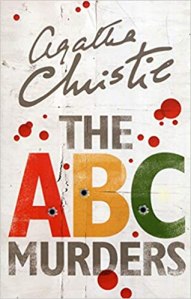
My next link is also a book in which letters play a key part. It’s The ABC Murders by Agatha Christie, a Golden Age of Detective Fiction novel first published in 1936. A series of murders are advertised in advance in letters to Poirot, and signed by an anonymous ‘ABC’. An ABC Railway guide is left next to each of the bodies. So the first murder is in Andover, the victim a Mrs Alice Ascher; the second in Bexhill, where Betty Barnard was murdered; and then Sir Carmichael Clarke in Churston is found dead. The police are completely puzzled and Poirot gets the victims’ relatives together to see what links if any can be found. Why did ABC commit the murders and why did he select Poirot as his adversary?

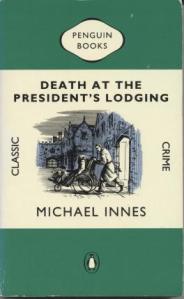
Another Golden Age murder mystery published in 1936 is Death at the President’s Lodging by Michael Innes. This is essentially a ‘locked room’ mystery. Dr Umpleby, the unpopular president of St Anthony’s College (a fictional college similar to an Oxford college)  is found in his study, shot through the head. His head was swathed in a black academic gown, a human skull beside his body and surrounding it, little piles of human bones. Inspector Appleby from Scotland Yard is in charge of the investigation, helped by Inspector Dodd from the local police force. 

Innes’s writing is intellectual, detailed, formal and scattered with frequent literary allusions and quotations. The plot is complex and in the nature of a puzzle. There are plenty of characters, the suspects being the dons of the college. 

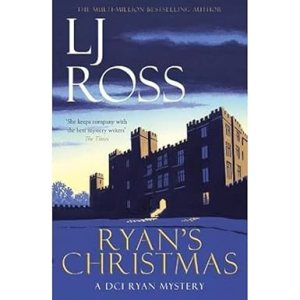
And my final link is Ryan’s Christmas by L J Ross, another ‘locked room mystery’. DCI Ryan, and DS Phillips and their wives are stranded in Chillingham Castle when a snowstorm forces their car off the main road and into the remote heart of Northumberland. Cut off from the outside world by the snow, with no transport, mobile signals or phone lines they join the guests who had booked a ‘Candlelit Ghost Hunt’. Then Carole Black, the castle’s housekeeper is found dead lying in the snow, stabbed through the neck. There’s only one set of footpaths in the snow, and those are Carole’s, so who committed the murder?

My chain includes books by the same author, books first published in the same magazine, letters, Golden Age murder mysteries, and ‘locked room’ mysteries.

‘Next month (December 6, 2025), we’ll start with a novella that you may read as part of this year’s Novellas in November – Seascraper by Benjamin Wood.

Loitering with Intent by Muriel Spark: Book Beginnings on Friday & The Friday 56

Every Friday Book Beginnings on Friday is hosted by Gillion at Rose City Reader where you can share the first sentence (or so) of the book you are reading. You can also share from a book you want to highlight just because it caught your fancy.
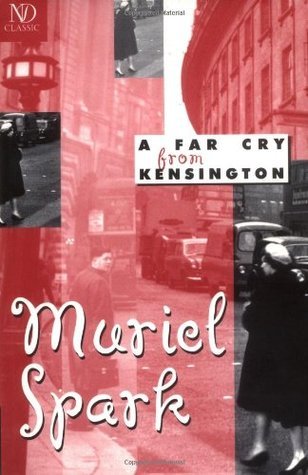
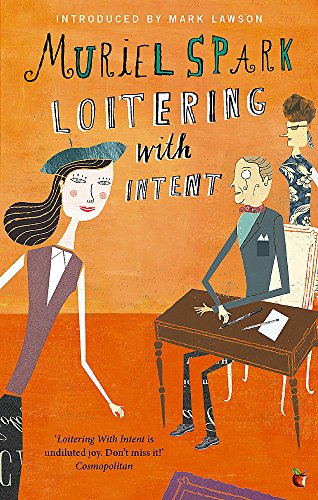
Loitering with Intent by Muriel Spark is a book I’ve had since 2017, when I bought it from Barter Books in Alnwick, one of my favourite secondhand bookshops. One of my favourite books is The Prime of Miss Jean Brodie, so I was hoping to love this book too. I did enjoy it, but not as much as Prime of Miss Jean Brodie.

The book begins:

One day in the middle of the twentieth century I sat in an old graveyard which had not been demolished, in the Kensington area of London, when a young policeman stepped off the path and came over to me.

Also every Friday there is The Friday 56, hosted by Freda at Freda’s Voice, but she is taking a break and Anne at My Head is Full of Books has taken on hosting duties in her absence. You grab a book and turn to page 56 (or 56% of an eBook), find one or more interesting sentences (no spoilers), and post them.

Page 55-56:

Several people turned round to look at Edwina as she spoke with her high cry. People often turned round to stare at her painted wizened face, her green teeth, the raised, red-blood fingernail accompanied by her shrieking voice, the whole wrapped up to the neck in luxurious fur. Edwina was over ninety and might die at any time, as she did about six years later. My dear, dear Solly lived into the seventies of this century, when I was far away.

Description from Amazon:

A funny and clever novel about art and reality and the way they imitate each other, from the author of The Prime of Miss Jean Brodie. With an introduction by Mark Lawson.

Would-be novelist Fleur Talbot works for the snooty Sir Quentin Oliver at the Autobiographical Association, whose members are at work on their memoirs. When her employer gets his hands on Fleur’s novel-in-progress, mayhem ensues when its scenes begin coming true.

If you have read this book, what did you think?
Novellas in November 2025

It’s almost time for Novellas in November, hosted by Cathy of 746 Books and Rebecca of Bookish Beck. It’s now in it’s sixth year. I took part in 2020, 2021 and 2022.

There are no categories this year, although participants are invited to start the month with a My Year in Novellas retrospective looking at any novellas read since last NovNov, and finish it with a New to My TBR list based on the novellas that others have tempted them with over the course of the month.

There are also two buddy reads this year – Seascraper by Benjamin Wood and Sister Outsider by Audre Lorde. 

These are some of the novellas from my TBR shelves:

  • Women and Writing by Virginia Woolf – 198 pages
  • Loitering with Intent by Muriel Spark – 172 pages
  • The Gate of Angels by Penelope Fitzgerald – 167 pages
  • Hotel du Lac by Anita Brookner – 184 pages
  • The Case of the Canterell Codicil by PJ Fitzsimmons – 177 pages

At the moment I think I’ll start with The Case of the Canterell Codicil: the first Anty Boisjoly Mystery, described on the back cover:

Anty Boisjoly, nineteen-twenty-never Wodehousian gadabout and clubman , takes on his first case when his old Oxford chum and coxswain is facing the gallows, accused of the murder of his wealthy uncle.

Not one but two locked-room murders later, Anty’s pitting his wits and witticisms against a subversive butler, a senile footman, a single-minded detective-inspector, an irascible goat, and the eccentric conventions of the pastoral Sussex countryside to untangle a multi-layered mystery of secret bequests, ancient writs, love triangles, and revenge, and with a twist in the end that you’ll never see coming.

Where would you start?

Six Degrees of Separation: from How To Be Both to The Prime of Miss Jean Brodie

I love doing Six Degrees of Separation, a monthly link-up hosted by Kate at Books Are My Favourite and Best. Each month a book is chosen as a starting point and linked to six other books to form a chain. A book doesn’t need to be connected to all the other books on the list, only to the one next to it in the chain.

This month (April 6, 2019), the chain begins with Ali Smith’s award-winning novel, How to be Both.

How to be both

How to be Both is a novel all about art’s versatility. Borrowing from painting’s fresco technique to make an original literary double-take, it’s a fast-moving genre-bending conversation between forms, times, truths and fictions. There’s a Renaissance artist of the 1460s. There’s the child of a child of the 1960s. Two tales of love and injustice twist into a singular yarn where time gets timeless, structural gets playful, knowing gets mysterious, fictional gets real—and all life’s givens get given a second chance.’ (Goodreads)

I haven’t read this book but I’d like to sometime. I see that there are two versions: one begins with the contemporary story, the other with the 15th-century story. This reminded me of Carol Shields’ book Happenstance, two stories about the same five-day period – one from Jack Bowman’s point of view, and the other from his wife, Brenda’s. They’re printed in the same book in an unusual format of containing two books in one, either can be read first – then turn the book upside down and read the other story.

Happenstance

My next link is a bit of a jump – from the character Brenda in Happenstance I immediately thought of Brenda Blethyn, who plays Vera in Ann Cleeves’s books. One of these books is Silent Voices in which D I Vera Stanhope finds a dead body in the sauna room of her local gym. The victim, a woman had worked in social services – and was involved in a shocking case involving a young child.

Social Services also feature in Fair of Face by Christina James. Ten year old Grace is being fostered when her foster mother and her baby are found dead in their beds. Social Services are asked to work with the police, in order to question Grace and her friend Chloe, a child from a troubled family.

Another author with the name James, is P D James, also a crime writer. An Unsuitable Job for a Woman is a Cordelia Gray detective story in which she takes on an assignment from Sir Ronald Callander, a famous scientist, to investigate the death of his son, Mark who had been found hanged in suspicious circumstances. Mark had left Cambridge University without completing his degree and had taken a job as a gardener.

My next link is to Agatha Christie’s Cat Among the Pigeons, set mainly in an exclusive and expensive girls’ school, Meadowbank, in England. Some new staff members have been appointed, including Adam Goodman, a handsome young gardener.

My final link is to another school, the Marcia Blaine School for Girls in Muriel Spark’s novel, The Prime of Miss Jean Brodie. Marcia Blaine is a traditional school where Miss Brodie’s ideas and methods of teaching are viewed with dislike and distrust. The Head Teacher is looking for ways to discredit and get rid of her. The girls in her ‘set’ fall under her spell, but one of them betrays her, ruining her teaching career.

Different formats, the name ‘Brenda’, Social Services, authors’ surname ‘James’, gardeners,  and girls’ schools all link How To Be Both to The Prime of Miss Jean Brodie.

Except for The Prime of Miss Jean Brodie the books in my chain are all crime fiction and apart from How To Be Both I’ve read all the books in the chain – clicking on the titles takes you to my posts, where they exist.

Next month (May 4, 2019), the chain will begin with Jane Harper’s debut best-seller, The Dry.