Call for the Dead by John Le Carré – the 1961 Club

This week Simon  and  Karen  are hosting the 1961 Club. To join in all you have to do is read and review any book published in 1961 in whatever format, language, place.

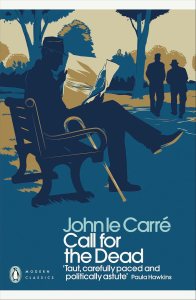
I originally thought I’d like to read The Agony and the Ecstasy by Irvine Stone for this event but I ran out of time. But I did find time to read Call for the Dead by John Le Carré, which has been buried deep in my Kindle. I’d bought it back in 2017 and read a few pages, meaning to get back to it before long. But of course I didn’t – until now. It’s a novella of 162 pages.

It’s the first of his many books to feature the tenacious, unassuming and singular George Smiley. Previously I’ve read the third book, The Spy Who Came in from the Cold (1963) and the fifth and sixth books Tinker, Tailor, Soldier, Spy  (1974), which I read before I had a blog, and The Honourable Schoolboy  (1977), which I think is brilliant.
Description:

An apparent suicide. A deepening mystery. A letter from a dead man…

Secret agent George Smgeorge Smiley iley is in trouble. A Foreign Office civil servant, Samuel Fennan, has killed himself, and Smiley realizes that Intelligence head Maston is going to set him up to take the blame. Beginning his own investigation, Smiley is shocked to receive an urgent letter from the dead man, and slowly uncovers a network of deceit and betrayal

This is a spy thriller but George Smiley is not James Bond.

Short, fat, and of a quiet disposition, he appeared to spend a lot of money on really bad clothes, which hung about his squat frame like skin on a shrunken toad. Sawley, in fact, declared at the wedding that ‘Sercomb was mated to a bullfrog in a sou’wester’. And Smiley, unaware of this description, had waddled down the aisle in search of the kiss that would turn him into a Prince.

He married the beautiful Lady Ann Sercomb, but they divorced after two years, when she left him for a Cuban motor racing driver. He was ‘without parents, school, regiment or trade, without wealth or poverty ordinary’.

The first chapter gives a brief history of George Smiley, describing him as ‘breathtakingly ordinary’. The only part of himself that survived was his profession, that of an intelligence officer in the Secret Service. Having read some of the later books it was interesting to find out about his background, his academic life and early career and failed marriage.

He had got to that stage in his career,with the appearance of younger men, when he realised he had entered middle age without ever being young. He had carried out his job during the second world war well, but after that amongst the smart young men he felt old-fashioned and he became more ‘hunched and frog-like’ and had acquired the nickname of ‘Mole’. He was considered too old to go abroad and that was when he was transferred Cambridge Circus in London – the headquarters of the Secret Intelligence Service (SIS), commonly known as MI6 (Military Intelligence, Section 6).

John Le Carré began writing the book whilst working for MI6. He initially called it A Clear Case of Suicide and there are clear elements of crime fiction at first, but then it develops into more of a spy thriller. Samuel Fennan, who had access to sensitive information had apparently committed suicide. Feenan had been found dead, leaving a letter saying that Smiley had cast doubts on his loyalty, that his career in the Foreign Office was over and that he was the victim of paid informers. He thought the interview was particularly a friendly one and that he’d told Fennan not to worry, that he could see no reason why they should bother him further.

Smiley can’t accept this was suicide, thinking Fennan had been murdered. He then resigned from the service when Maston ordered him to drop the investigation, but with the help of a CID man, Mendel, and Peter Guillam, Smiley’s assistant, Smiley unravels the truth behind Fennan’s death. At the end of the book, Smiley wrote a long report summarising the case, listing the facts and explaining his thoughts in much the same way as Hercule Poirot does in the Agatha Christie books.

I like Le Carré’s writing style, which is clear and straight forward, although Call for the Dead has quite a complicated plot. I thoroughly enjoyed reading it.

I’ve previously read and reviewed read these four books, that were also published in  1961:
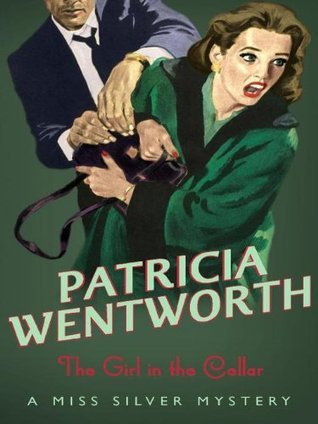
The Girl in the Cellar  by Patricia Wentworth, a Miss Silver Mystery. It begins well as the main character finds herself in the dark in a cellar, not knowing who she is or how she got there. Overall, I thought the book was odd and not very convincing. There are too many coincidences, improbabilities, and loose ends.

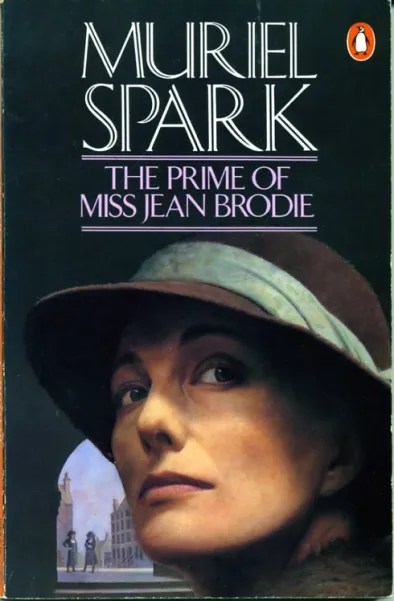
The Prime of Miss Jean Brodie  by  Muriel Spark, was first published in  The New Yorker magazine on 14th October 1961. It is perhaps Muriel Spark’s most famous novel about the ‘Brodie set’. But which one of them causes her downfall and her loss of pride and self-absorption? What really impresses me about this book is the writing, so compact, so perceptive and so in control of the  shifts in time backwards and forwards. It’s a joy to read.

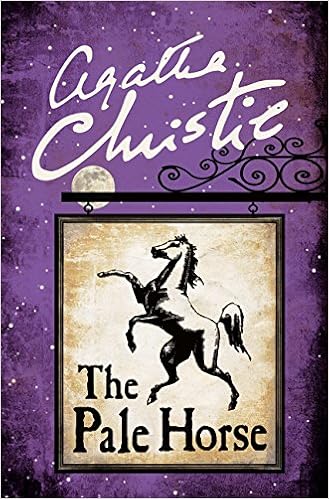
The Pale Horse by Agatha Christie. Neither Hercule Poirot, nor Miss Marple feature in this novel and Mrs Ariadne Oliver has only a small part. Detective Inspector Lejeune is in charge of the investigation into the murder of Father Gorman who was killed one night on his way home. The Pale Horse is an old house  which was formerly an inn in the village and is now the home of three weird women, thought by the locals to be witches. It’s also the name of a sinister organisation that arranges murders based on black magic. The book is a study of evil, a fascinating book conveying a feeling of real menace. 

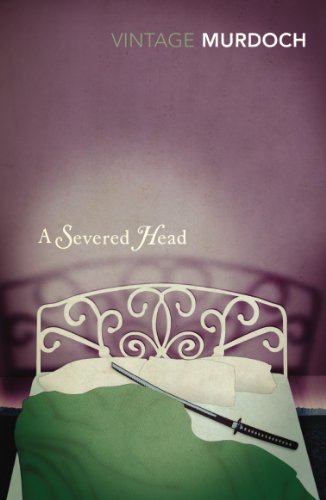
A Severed Head by Iris Murdoch. Reading this I felt I was looking into a different world and time. It’s not comfortable reading, but it is farcical and entertaining. It’s a tightly-structured novel, with just a few characters, narrated by Martin, who is shocked when his wife announces that she wants a divorce because she is deeply in love with Palmer, her analyst. This sets in motion a sequence of events in which Martin’s weakness and need are clearly evident.
Six Degrees of Separation from We Have Always Lived in the Castle to Ryan’s Christmas

This is a monthly link-up hosted by Kate at Books Are My Favourite and Best. On the first Saturday of every month, a book is chosen as a starting point and linked to six other books to form a chain. Readers and bloggers are invited to join in by creating their own ‘chain’ leading from the selected book.

Books can be linked in obvious ways – for example, books by the same authors, from the same era or genre, or books with similar themes or settings. Or, you may choose to link them in more personal ways: books you read on the same holiday, books given to you by a particular friend, books that remind you of a particular time in your life, or books you read for an online challenge.

A book doesn’t need to be connected to all the other books on the list, only to the ones next to them in the chain.

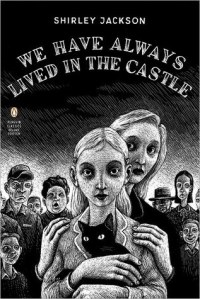
This month we are starting with We Have Always Lived in the Castle by Shirley Jackson is a fantastic book; a weirdly wonderful book about sisters, Merricat and Constance. They live in a grand house, away from the village, behind locked gates, feared and hated by the villagers. Merricat is an obsessive-compulsive, both she and Constance have rituals that they have to perform in an attempt to control their fears. Merricat is a most unreliable narrator.

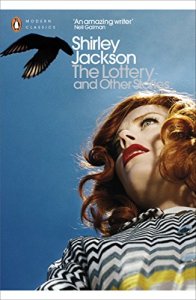
I’m starting my chain with The Lottery is a short story also written by Shirley Jackson. It was first published on June 25, 1948, in The New Yorker, (the link takes you to the story.) The lottery is an annual rite, in which a member of a small farming village is selected by chance. This is a creepy story of casual cruelty, which I first read several years ago. The shocking consequence of being selected in the lottery is revealed only at the end.

The Prime of Miss Jean Brodie by Muriel Spark, was first published in The New Yorker magazine on 14th October 1961. It is perhaps Muriel Spark’s most famous novel about the ‘Brodie set’. But which one of them causes her downfall and her loss of pride and self-absorption? What really impresses me about this book is the writing, so compact, so perceptive and so in control of the shifts in time backwards and forwards. It’s a joy to read.

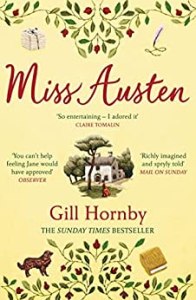
Another book that was a joy to read is Miss Austen by Gill Hornby. This is the untold story of the most important person in Jane’s life – her sister Cassandra. After Jane’s death, Cassandra lived alone and unwed, spending her days visiting friends and relations and quietly, purposefully working to preserve her sister’s reputation. Cassandra is convinced that her own and Jane’s letters to Eliza Fowle, the mother of Cassandra’s long-dead fiancé, are still somewhere in the vicarage. Eventually she finds the letters and confronts the secrets they hold, secrets not only about Jane but about Cassandra herself. Will Cassandra reveal the most private details of Jane’s life to the world, or commit her sister’s legacy to the flames?

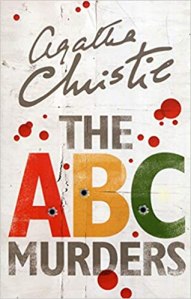
My next link is also a book in which letters play a key part. It’s The ABC Murders by Agatha Christie, a Golden Age of Detective Fiction novel first published in 1936. A series of murders are advertised in advance in letters to Poirot, and signed by an anonymous ‘ABC’. An ABC Railway guide is left next to each of the bodies. So the first murder is in Andover, the victim a Mrs Alice Ascher; the second in Bexhill, where Betty Barnard was murdered; and then Sir Carmichael Clarke in Churston is found dead. The police are completely puzzled and Poirot gets the victims’ relatives together to see what links if any can be found. Why did ABC commit the murders and why did he select Poirot as his adversary?

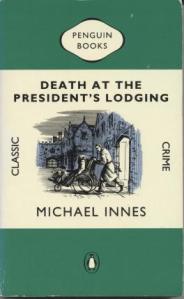
Another Golden Age murder mystery published in 1936 is Death at the President’s Lodging by Michael Innes. This is essentially a ‘locked room’ mystery. Dr Umpleby, the unpopular president of St Anthony’s College (a fictional college similar to an Oxford college)  is found in his study, shot through the head. His head was swathed in a black academic gown, a human skull beside his body and surrounding it, little piles of human bones. Inspector Appleby from Scotland Yard is in charge of the investigation, helped by Inspector Dodd from the local police force. 

Innes’s writing is intellectual, detailed, formal and scattered with frequent literary allusions and quotations. The plot is complex and in the nature of a puzzle. There are plenty of characters, the suspects being the dons of the college. 

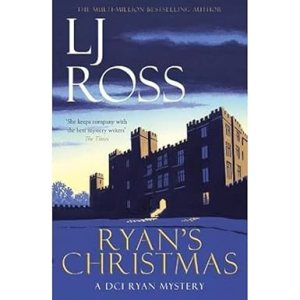
And my final link is Ryan’s Christmas by L J Ross, another ‘locked room mystery’. DCI Ryan, and DS Phillips and their wives are stranded in Chillingham Castle when a snowstorm forces their car off the main road and into the remote heart of Northumberland. Cut off from the outside world by the snow, with no transport, mobile signals or phone lines they join the guests who had booked a ‘Candlelit Ghost Hunt’. Then Carole Black, the castle’s housekeeper is found dead lying in the snow, stabbed through the neck. There’s only one set of footpaths in the snow, and those are Carole’s, so who committed the murder?

My chain includes books by the same author, books first published in the same magazine, letters, Golden Age murder mysteries, and ‘locked room’ mysteries.

‘Next month (December 6, 2025), we’ll start with a novella that you may read as part of this year’s Novellas in November – Seascraper by Benjamin Wood.

Read Scotland 2014 Challenge: two books

I’ve got a bit behind with writing reviews, so here are some notes on two books I’ve recently read, both of which fit into the Read Scotland 2014 Challenge.

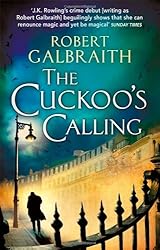
It’s common knowledge now that Robert Galbraith is J K Rowling’s pseudonym. I wish I’d read The Cuckoo’s Calling without knowing that, as although I have no problem with authors writing under pseudonyms, I found myself thinking how like the Harry Potter books it is in some ways and I doubt I’d have thought that if I’d read it ‘blind’.

Anyway, I liked The Cuckoo’s Calling. It is crime fiction, set in the world of Cormoran Strike (a Harry Potterish name, I thought), an ex-army private detective, who is struggling to get clients and pay his bills, sleeping on a camp bed in his office. Along comes Robin Ellacott, from the Temporary Solutions Agency to help out (think, Hermione Granger). She’s intelligent, efficient, remarkably resourceful, and she soon has Strike organised, which is essential as he is asked by John Bristow, a lawyer and the brother of a childhood friend to investigate the death of his sister, Lula Landry. The police are satisfied that Lula, a model, had committed suicide, but Bristow is certain that she didn’t.
What follows is at times a leisurely narrative and the plot is quite complex, but not too difficult to work out. The characters are convincing, Robin in particular soon became my favourite. She has an enquiring mind, ‘fascinated by the interior workings of other people’s minds‘ and despite her fiancé’s opposition to her job, she carries on, motivated by her fascination with investigating, and her secret ambition to be a private detective. In fact without Robin, Strike would have really struggled to get to the truth.

I’ve counted this book towards the Read Scotland 2014 Challenge because J K Rowling, although she was born in England has lived in Scotland for twenty-one years and plans to spend the rest of her life in Scotland. Whereas the author of the next book, Muriel Spark is an author who was born and grew up in Edinburgh, but who later lived in London. To qualify for this challenge books have to be by Scottish authors, either by birth or immigration, or about or set in Scotland – quite a wide brief!

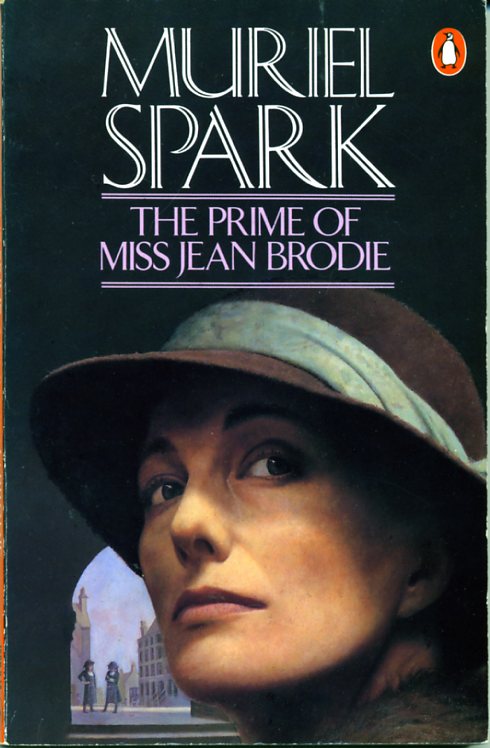
brodie001The Prime of Miss Jean Brodie is perhaps Muriel Spark’s most famous novel. I’ve read it before and seen the film, with Maggie Smith in the title role. Each time I’ve read it I’ve really enjoyed it – it’s one of those books that isn’t spoilt by knowing what happens, because part of the pleasure of reading it is the fact that I do know who betrayed Miss Brodie. Despite her declaration: ‘Give me a girl at an impressionable age and she will be mine for life‘, it is one of the ‘Brodie set’ who causes her downfall, that and her pride and self-absorption.

But what really impresses me about this book is the writing, so compact, so perceptive and so in control of the shifts in time backwards and forwards. It’s a joy to read. I’ve written more about it in this post.

The Prime of Miss Jean Brodie by Muriel Spark


I was pleased this book was chosen for discussion for Cornflower’s Book Group because I thought it was a brilliant  book when I first read it some years ago. I like to re-read books I’ve enjoyed and sometimes I find that my views/mood have changed and I no longer think the book is as good as I first thought. No such problem with The Prime of Miss Jean Brodie! I still think it’s an excellent book.

It’s set in Edinburgh and starts in 1936 with schoolteacher Miss Brodie and the Brodie Set, a group of girls she has groomed to accept her ideas. The school is the Marcia Blaine School for Girls, a traditional school where Miss Brodie’s ideas and methods of teaching are viewed with dislike and distrust. The Head Teacher is looking for ways to discredit and get rid of her. The story is told in flashbacks from 1930 – 1939 and quite early on in the book we are told who ‘betrayed’ Miss Brodie.

Although it’s a short book I immediately was plunged into the school world, reminded so much of my own schooldays when you had to wear the school hat or beret under penalty of detention and it was absolutely forbidden that any girl from my school should be found eating even an ice cream in the street. Like the Brodie Set my friends and I used to meet boys either before or after school, both boys and girls leaning on the handlebars of our bikes as we talked. The likeness to Marcia Blaine ends there though – there were no teachers like Miss Brodie at my school, but I did enjoy that trip down memory lane for a brief time.

Team spirit is encouraged at Marcia Blaine but team spirit is despised by Miss Brodie, who encourages the girls to recognise their ‘prime’ and live it to the full. Instead of lessons she takes them outside and with text books open in case anyone comes she regales them with stories of her life and loves. Miss Brodie’s love affairs intrigue the girls, from her lover who was killed in World War 1 to the love triangle of Miss Brodie, Gordon Lowther the singing teacher and Teddy Lloyd the married art teacher with six children.

Miss Brodie wants to dominate the girls’ lives and the darker side of her character is shown through her admiration of Mussolini and fascism. Despite, or may be because, of her failings the girls are all loyal to her until one of them betrays her and she is left to wonder just which girl it was.

The novel is not so much concerned with plot as with character. The moral aspect of Miss Brodie’s betrayal is not questioned but how people are influenced by others, their vulnerability or indifference to others’ feelings and thoughts, how we appear to others and how we try to impose our beliefs are amongst the issues explored.

Coincidentally, I see that the film, The Prime of Miss Jean Brodie starring Maggie Smith is being shown on ITV1 today at 1.00pm. I saw this after I first read the book and loved it. Maggie Smith was just right as Jean Brodie.