This week Simon and Karen are hosting the 1961 Club. To join in all you have to do is read and review any book published in 1961 in whatever format, language, place.
I originally thought I’d like to read The Agony and the Ecstasy by Irvine Stone for this event but I ran out of time. But I did find time to read Call for the Dead by John Le Carré, which has been buried deep in my Kindle. I’d bought it back in 2017 and read a few pages, meaning to get back to it before long. But of course I didn’t – until now. It’s a novella of 162 pages.
It’s the first of his many books to feature the tenacious, unassuming and singular George Smiley. Previously I’ve read the third book, The Spy Who Came in from the Cold (1963) and the fifth and sixth books Tinker, Tailor, Soldier, Spy (1974), which I read before I had a blog, and The Honourable Schoolboy (1977), which I think is brilliant.
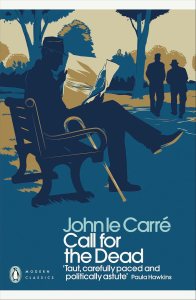
Description:
An apparent suicide. A deepening mystery. A letter from a dead man…
Secret agent George Smgeorge Smiley iley is in trouble. A Foreign Office civil servant, Samuel Fennan, has killed himself, and Smiley realizes that Intelligence head Maston is going to set him up to take the blame. Beginning his own investigation, Smiley is shocked to receive an urgent letter from the dead man, and slowly uncovers a network of deceit and betrayal
This is a spy thriller but George Smiley is not James Bond.
Short, fat, and of a quiet disposition, he appeared to spend a lot of money on really bad clothes, which hung about his squat frame like skin on a shrunken toad. Sawley, in fact, declared at the wedding that ‘Sercomb was mated to a bullfrog in a sou’wester’. And Smiley, unaware of this description, had waddled down the aisle in search of the kiss that would turn him into a Prince.
He married the beautiful Lady Ann Sercomb, but they divorced after two years, when she left him for a Cuban motor racing driver. He was ‘without parents, school, regiment or trade, without wealth or poverty ordinary’.
The first chapter gives a brief history of George Smiley, describing him as ‘breathtakingly ordinary’. The only part of himself that survived was his profession, that of an intelligence officer in the Secret Service. Having read some of the later books it was interesting to find out about his background, his academic life and early career and failed marriage.
He had got to that stage in his career,with the appearance of younger men, when he realised he had entered middle age without ever being young. He had carried out his job during the second world war well, but after that amongst the smart young men he felt old-fashioned and he became more ‘hunched and frog-like’ and had acquired the nickname of ‘Mole’. He was considered too old to go abroad and that was when he was transferred Cambridge Circus in London – the headquarters of the Secret Intelligence Service (SIS), commonly known as MI6 (Military Intelligence, Section 6).
John Le Carré began writing the book whilst working for MI6. He initially called it A Clear Case of Suicide and there are clear elements of crime fiction at first, but then it develops into more of a spy thriller. Samuel Fennan, who had access to sensitive information had apparently committed suicide. Feenan had been found dead, leaving a letter saying that Smiley had cast doubts on his loyalty, that his career in the Foreign Office was over and that he was the victim of paid informers. He thought the interview was particularly a friendly one and that he’d told Fennan not to worry, that he could see no reason why they should bother him further.
Smiley can’t accept this was suicide, thinking Fennan had been murdered. He then resigned from the service when Maston ordered him to drop the investigation, but with the help of a CID man, Mendel, and Peter Guillam, Smiley’s assistant, Smiley unravels the truth behind Fennan’s death. At the end of the book, Smiley wrote a long report summarising the case, listing the facts and explaining his thoughts in much the same way as Hercule Poirot does in the Agatha Christie books.
I like Le Carré’s writing style, which is clear and straight forward, although Call for the Dead has quite a complicated plot. I thoroughly enjoyed reading it.
I’ve previously read and reviewed read these four books, that were also published in 1961:
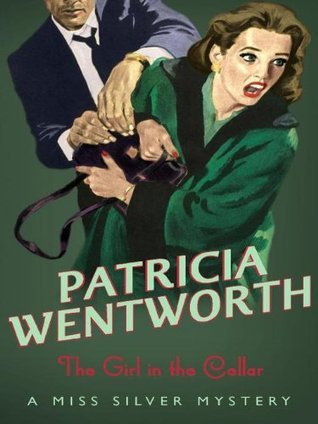
The Girl in the Cellar by Patricia Wentworth, a Miss Silver Mystery. It begins well as the main character finds herself in the dark in a cellar, not knowing who she is or how she got there. Overall, I thought the book was odd and not very convincing. There are too many coincidences, improbabilities, and loose ends.
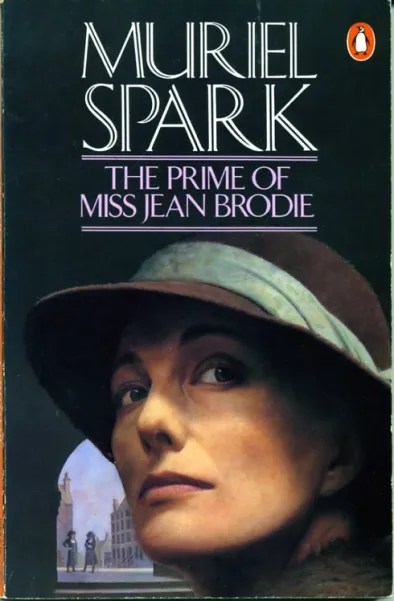
The Prime of Miss Jean Brodie by Muriel Spark, was first published in The New Yorker magazine on 14th October 1961. It is perhaps Muriel Spark’s most famous novel about the ‘Brodie set’. But which one of them causes her downfall and her loss of pride and self-absorption? What really impresses me about this book is the writing, so compact, so perceptive and so in control of the shifts in time backwards and forwards. It’s a joy to read.
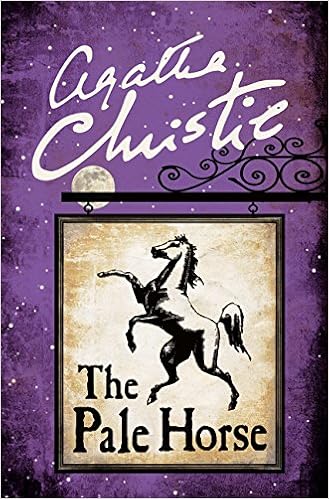
The Pale Horse by Agatha Christie. Neither Hercule Poirot, nor Miss Marple feature in this novel and Mrs Ariadne Oliver has only a small part. Detective Inspector Lejeune is in charge of the investigation into the murder of Father Gorman who was killed one night on his way home. The Pale Horse is an old house which was formerly an inn in the village and is now the home of three weird women, thought by the locals to be witches. It’s also the name of a sinister organisation that arranges murders based on black magic. The book is a study of evil, a fascinating book conveying a feeling of real menace.
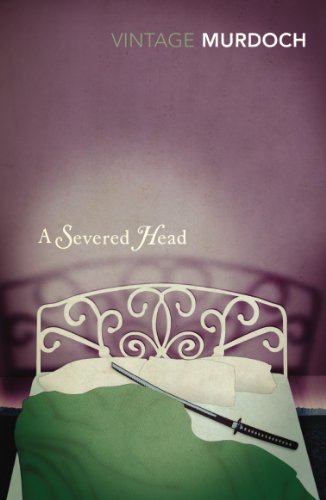
A Severed Head by Iris Murdoch. Reading this I felt I was looking into a different world and time. It’s not comfortable reading, but it is farcical and entertaining. It’s a tightly-structured novel, with just a few characters, narrated by Martin, who is shocked when his wife announces that she wants a divorce because she is deeply in love with Palmer, her analyst. This sets in motion a sequence of events in which Martin’s weakness and need are clearly evident.


I enjoyed this one, too, Margaret. As you say, the writing style is clear and I found it compelling. I like the George Smiley character, too. He’s not exactly an everyman, but he’s also no superhero, and I think that makes him more appealing. It doesn’t surprise me that this series is considered a classic spy/espionage series.
LikeLiked by 1 person
I’m glad you enjoyed it too, Margot. As you say he is no superhero. I think that makes him a more believable character too.
LikeLiked by 1 person
This was the first of his books I read, and I thoroughly enjoyed it. In fact, I went on to love the second in the series too so I really should get on to reading some more!!
LikeLiked by 1 person
I’m glad you enjoyed this too and the second book as well. I have a copy of the second book – I think I’ll have to read it soon.
LikeLike
Nice!I liked a lot as well: https://wordsandpeace.com/2026/04/15/book-review-for-the-1961-club-call-for-the-dead/
LikeLike