Call for the Dead by John Le Carré – the 1961 Club

This week Simon  and  Karen  are hosting the 1961 Club. To join in all you have to do is read and review any book published in 1961 in whatever format, language, place.

I originally thought I’d like to read The Agony and the Ecstasy by Irvine Stone for this event but I ran out of time. But I did find time to read Call for the Dead by John Le Carré, which has been buried deep in my Kindle. I’d bought it back in 2017 and read a few pages, meaning to get back to it before long. But of course I didn’t – until now. It’s a novella of 162 pages.

It’s the first of his many books to feature the tenacious, unassuming and singular George Smiley. Previously I’ve read the third book, The Spy Who Came in from the Cold (1963) and the fifth and sixth books Tinker, Tailor, Soldier, Spy  (1974), which I read before I had a blog, and The Honourable Schoolboy  (1977), which I think is brilliant.
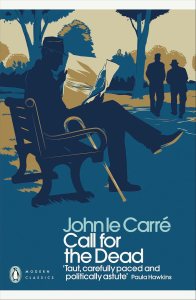
Description:

An apparent suicide. A deepening mystery. A letter from a dead man…

Secret agent George Smgeorge Smiley iley is in trouble. A Foreign Office civil servant, Samuel Fennan, has killed himself, and Smiley realizes that Intelligence head Maston is going to set him up to take the blame. Beginning his own investigation, Smiley is shocked to receive an urgent letter from the dead man, and slowly uncovers a network of deceit and betrayal

This is a spy thriller but George Smiley is not James Bond.

Short, fat, and of a quiet disposition, he appeared to spend a lot of money on really bad clothes, which hung about his squat frame like skin on a shrunken toad. Sawley, in fact, declared at the wedding that ‘Sercomb was mated to a bullfrog in a sou’wester’. And Smiley, unaware of this description, had waddled down the aisle in search of the kiss that would turn him into a Prince.

He married the beautiful Lady Ann Sercomb, but they divorced after two years, when she left him for a Cuban motor racing driver. He was ‘without parents, school, regiment or trade, without wealth or poverty ordinary’.

The first chapter gives a brief history of George Smiley, describing him as ‘breathtakingly ordinary’. The only part of himself that survived was his profession, that of an intelligence officer in the Secret Service. Having read some of the later books it was interesting to find out about his background, his academic life and early career and failed marriage.

He had got to that stage in his career,with the appearance of younger men, when he realised he had entered middle age without ever being young. He had carried out his job during the second world war well, but after that amongst the smart young men he felt old-fashioned and he became more ‘hunched and frog-like’ and had acquired the nickname of ‘Mole’. He was considered too old to go abroad and that was when he was transferred Cambridge Circus in London – the headquarters of the Secret Intelligence Service (SIS), commonly known as MI6 (Military Intelligence, Section 6).

John Le Carré began writing the book whilst working for MI6. He initially called it A Clear Case of Suicide and there are clear elements of crime fiction at first, but then it develops into more of a spy thriller. Samuel Fennan, who had access to sensitive information had apparently committed suicide. Feenan had been found dead, leaving a letter saying that Smiley had cast doubts on his loyalty, that his career in the Foreign Office was over and that he was the victim of paid informers. He thought the interview was particularly a friendly one and that he’d told Fennan not to worry, that he could see no reason why they should bother him further.

Smiley can’t accept this was suicide, thinking Fennan had been murdered. He then resigned from the service when Maston ordered him to drop the investigation, but with the help of a CID man, Mendel, and Peter Guillam, Smiley’s assistant, Smiley unravels the truth behind Fennan’s death. At the end of the book, Smiley wrote a long report summarising the case, listing the facts and explaining his thoughts in much the same way as Hercule Poirot does in the Agatha Christie books.

I like Le Carré’s writing style, which is clear and straight forward, although Call for the Dead has quite a complicated plot. I thoroughly enjoyed reading it.

I’ve previously read and reviewed read these four books, that were also published in  1961:
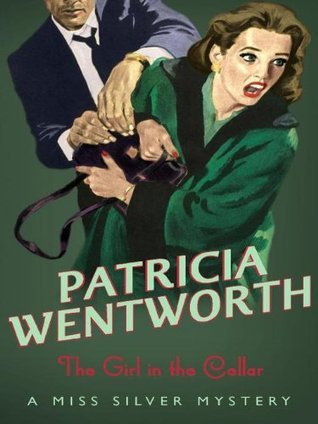
The Girl in the Cellar  by Patricia Wentworth, a Miss Silver Mystery. It begins well as the main character finds herself in the dark in a cellar, not knowing who she is or how she got there. Overall, I thought the book was odd and not very convincing. There are too many coincidences, improbabilities, and loose ends.

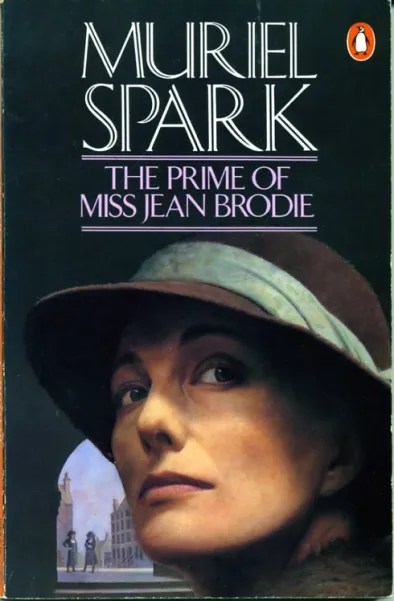
The Prime of Miss Jean Brodie  by  Muriel Spark, was first published in  The New Yorker magazine on 14th October 1961. It is perhaps Muriel Spark’s most famous novel about the ‘Brodie set’. But which one of them causes her downfall and her loss of pride and self-absorption? What really impresses me about this book is the writing, so compact, so perceptive and so in control of the  shifts in time backwards and forwards. It’s a joy to read.

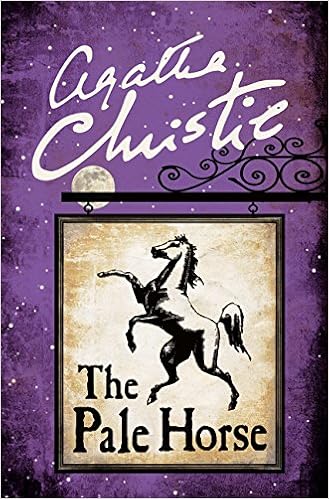
The Pale Horse by Agatha Christie. Neither Hercule Poirot, nor Miss Marple feature in this novel and Mrs Ariadne Oliver has only a small part. Detective Inspector Lejeune is in charge of the investigation into the murder of Father Gorman who was killed one night on his way home. The Pale Horse is an old house  which was formerly an inn in the village and is now the home of three weird women, thought by the locals to be witches. It’s also the name of a sinister organisation that arranges murders based on black magic. The book is a study of evil, a fascinating book conveying a feeling of real menace. 

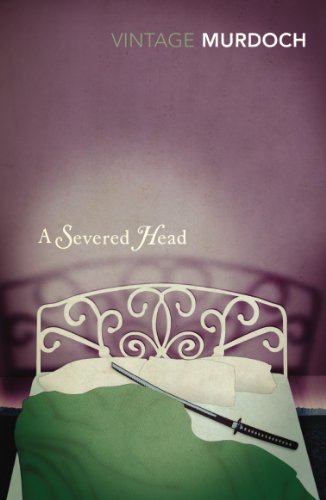
A Severed Head by Iris Murdoch. Reading this I felt I was looking into a different world and time. It’s not comfortable reading, but it is farcical and entertaining. It’s a tightly-structured novel, with just a few characters, narrated by Martin, who is shocked when his wife announces that she wants a divorce because she is deeply in love with Palmer, her analyst. This sets in motion a sequence of events in which Martin’s weakness and need are clearly evident.

Spell the Month in Books – April 2025

Spell the Month in Books is a linkup hosted by Jana on Reviews From the Stacks on the first Saturday of each month. The goal is to spell the current month with the first letter of book titles, excluding articles such as ‘the’ and ‘a’ as needed. That’s all there is to it! Some months there are optional theme challenges, such as “books with an orange cover” or books of a particular genre, but for the most part, any book you want to use is fair game!

This option this month is Animal on the Cover or in the Title, which I found much easier to do than some of the previous options. These are all books I’ve read, apart from Inchworm.

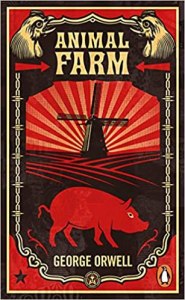
A is for Animal Farm by George Orwell is an allegorical novella, of the Russian Revolution and the rise of the Soviet Union. It tells the story of a farm where the animals rebel against the farmer, Mr Jones, and throw him off the land. They hope to create a society where they are all equal, free and happy. Ultimately, the farm ends up in a state that is as bad, if not worse than it was before, under the dictatorship of a pig named Napoleon. It begins as the old boar Major tells the animals about his dream of overthrowing the human race when the produce of their labour would then be their own and he incites them to rebel. In the story that follows the Major is based on Marx, Farmer Jones on the Tsar, the pigs Napoleon and Snowball are based on Stalin and Trotsky respectively. Their revolution began by declaring that all animals are equal and ended with the added phrase but some animals are more equal than others.

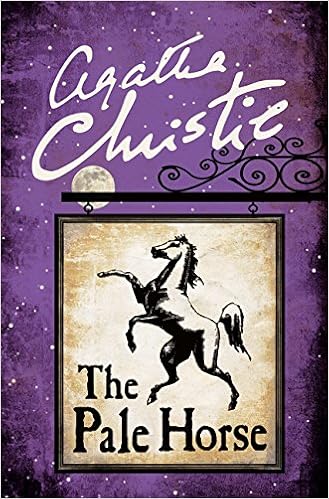
P is for The Pale Horse by Agatha Christie. Neither Hercule Poirot, nor Miss Marple feature in this novel and Mrs Ariadne Oliver has only a small part. Detective Inspector Lejeune is in charge of the investigation into the murder of Father Gorman who was killed one night on his way home. A list of names is found on Father Gorman’s body, seemingly unconnected in any way. The title,  a reference from the Book of Revelation  to a pale horse ridden by Death suggested to me from the beginning that what they had in common was death.

The Pale Horse is an old house  which was formerly an inn in the village and is now the home of three weird women, thought by the locals to be witches. The Pale Horse is also the name of a sinister organisation that arranges murders based on black magic. It’s a fascinating book conveying a feeling of real menace.

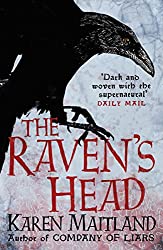
R is for The Raven’s Head by Karen Maitland. Set in 1224 in France and England this is a dark book. I found parts of it very uncomfortable and disturbing to read and yet also very compelling. Life in the medieval world was cruel and brutal and The Raven’s Head describes that world in minute detail, evoking the superstitious fear of the period.

The story is told from the three main characters point of view – Vincent, Wilky, a young boy taken from his family to live in a monastery in Norfolk where unspeakable terrors await him and the other young boys, and Gisa also living in Norfolk, working in her uncle’s apothecary’s shop. Their lives are connected through Lord Sylvain who is trying to find a way to bring the dead back to life and the abbot, trying to find the elixir of life – both experimenting with alchemy.

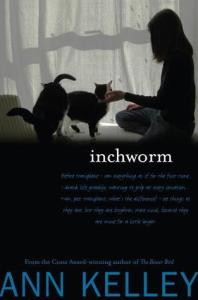
I is for Inchworm by Ann Kelly. Gussie is a twelve year old girl from St. Ives in Cornwall. She is passionate about learning, wildlife, poetry, literature, and she wants to be a photographer when she grows up. But her dreams were put on hold as she struggled with a serious heart condition. Now she has got what she needed: a heart and lung transplant. But it isn’t working out quite the way she thought. Firstly she has to leave her beloved Cornwall to live in London and in the months following her operation she is unable to do very much except read and adopt a stray kitten, but she could do that when she was sick. She craves adventure and experience beyond her four walls, until, that is, she hits upon a plan – she is going to get her divorced parents to fall in love again. It’s not going to be easy, her mum is still dating her doctor boyfriend and despises Gussie’s father, who happens to be living with his new girlfriend – the Snow Queen. But Gussie is a determined girl and there is only one thing that could stop her now.

L is for Lion by Conn Iggluden. This is the first book in Conn Iggulden’s Golden Age series set in Amcient Greece in the 5th century BCE. I thoroughly enjoyed it which surprised me as generally speaking I’m not keen on reading battle scenes and the book starts and ends with battles. But I had no problem with following the action of the battles between the Greeks and the Persians, and was able to visualise what was going on without any difficulty. The characters’ names took me a little while to get clear in my mind but I soon got used to them. The two main characters are both young men, Cimon the older of the two has more authority than Pericles, the younger man. Lion is the story of their early careers.

The next link up will be on May 3, 2025 when the theme will be: Freebie

Crime Fiction Alphabet: P is for …

The Pale Horse by Agatha Christie. My copy is a hardback published in 1961 for The Crime Club.

Neither Hercule Poirot, nor Miss Marple feature in this novel and Mrs Ariadne Oliver has only a small part. Detective Inspector Lejeune is in charge of the investigation into the murder of Father Gorman who was killed one night on his way home. A list of names is found on Father Gorman’s body, seemingly unconnected in any way. The title,  a reference from the Book of Revelation  to a pale horse ridden by Death suggested to me from the beginning that what they had in common was death.

Mark Easterbrook, an historian and friend of Mrs Oliver, is drawn into the mystery when he meets an old friend Dr Corrigan, a police doctor, who shows him the list. Mark recognises two of the named people, both of whom are now dead. His cousin Rhoda lives in Much Deeping where he meets Ginger, a young red-haired woman and a friend of Rhoda. They visit The Pale Horse, an old house  which was formerly an inn in the village and is now the home of three weird women, thought by the locals to be witches. The Pale Horse is also the name of a sinister organisation that arranges murders based on black magic. Together, Mark and Ginger set out to unravel the mystery of the Pale Horse, but it is down to Inspector Lejeune to find the killer.

The book is a study of evil. Some of the characters are together discussing witchcraft and the nature of evil. Venables, a man crippled with polio says:

‘I can’t really go along with this modern playing down of evil as something that doesn’t really exist. There is evil. And evil is powerful. Sometimes more powerful than good. It’s there. It has to be recognised – and fought. Otherwise -‘ he spread out his hands.’We go down to darkness.’ (page 70)

It’s a fascinating book conveying a feeling of real menace. As usual with Agatha Christie’s books there are several suspects and various red herrings. However, I began to suspect who the culprit was quite early on in the book and this time I was right. This did not detract at all from my enjoyment and I hadn’t worked out the method until right at the end. I liked the various references to previous crimes that Agatha Christie dropped into the narrative, and also the portrait of Mrs Oliver as an author who liked her own privacy and disliked the embarrassing questions, always the same, that people asked her every time:

What made you first think of taking up writing? How many books have you written? How much money do you make? (page 17)

Reading about The Pale Horse in John Curran’s book Agatha Christie’s Secret Notebooks I discovered that this novel was mentioned during the trial in 1972 when Graham Young was convicted of murder, using the same method as detailed in the book, although he denied having read The Pale Horse. Still, it’s a disturbing thought, one that often occured to me when I used to watch TV programmes such as Wire in the Blood (I can’t watch it any more, it’s far too gory for me).