Call for the Dead by John Le Carré – the 1961 Club

This week Simon  and  Karen  are hosting the 1961 Club. To join in all you have to do is read and review any book published in 1961 in whatever format, language, place.

I originally thought I’d like to read The Agony and the Ecstasy by Irvine Stone for this event but I ran out of time. But I did find time to read Call for the Dead by John Le Carré, which has been buried deep in my Kindle. I’d bought it back in 2017 and read a few pages, meaning to get back to it before long. But of course I didn’t – until now. It’s a novella of 162 pages.

It’s the first of his many books to feature the tenacious, unassuming and singular George Smiley. Previously I’ve read the third book, The Spy Who Came in from the Cold (1963) and the fifth and sixth books Tinker, Tailor, Soldier, Spy  (1974), which I read before I had a blog, and The Honourable Schoolboy  (1977), which I think is brilliant.
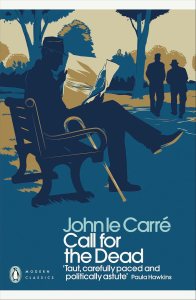
Description:

An apparent suicide. A deepening mystery. A letter from a dead man…

Secret agent George Smgeorge Smiley iley is in trouble. A Foreign Office civil servant, Samuel Fennan, has killed himself, and Smiley realizes that Intelligence head Maston is going to set him up to take the blame. Beginning his own investigation, Smiley is shocked to receive an urgent letter from the dead man, and slowly uncovers a network of deceit and betrayal

This is a spy thriller but George Smiley is not James Bond.

Short, fat, and of a quiet disposition, he appeared to spend a lot of money on really bad clothes, which hung about his squat frame like skin on a shrunken toad. Sawley, in fact, declared at the wedding that ‘Sercomb was mated to a bullfrog in a sou’wester’. And Smiley, unaware of this description, had waddled down the aisle in search of the kiss that would turn him into a Prince.

He married the beautiful Lady Ann Sercomb, but they divorced after two years, when she left him for a Cuban motor racing driver. He was ‘without parents, school, regiment or trade, without wealth or poverty ordinary’.

The first chapter gives a brief history of George Smiley, describing him as ‘breathtakingly ordinary’. The only part of himself that survived was his profession, that of an intelligence officer in the Secret Service. Having read some of the later books it was interesting to find out about his background, his academic life and early career and failed marriage.

He had got to that stage in his career,with the appearance of younger men, when he realised he had entered middle age without ever being young. He had carried out his job during the second world war well, but after that amongst the smart young men he felt old-fashioned and he became more ‘hunched and frog-like’ and had acquired the nickname of ‘Mole’. He was considered too old to go abroad and that was when he was transferred Cambridge Circus in London – the headquarters of the Secret Intelligence Service (SIS), commonly known as MI6 (Military Intelligence, Section 6).

John Le Carré began writing the book whilst working for MI6. He initially called it A Clear Case of Suicide and there are clear elements of crime fiction at first, but then it develops into more of a spy thriller. Samuel Fennan, who had access to sensitive information had apparently committed suicide. Feenan had been found dead, leaving a letter saying that Smiley had cast doubts on his loyalty, that his career in the Foreign Office was over and that he was the victim of paid informers. He thought the interview was particularly a friendly one and that he’d told Fennan not to worry, that he could see no reason why they should bother him further.

Smiley can’t accept this was suicide, thinking Fennan had been murdered. He then resigned from the service when Maston ordered him to drop the investigation, but with the help of a CID man, Mendel, and Peter Guillam, Smiley’s assistant, Smiley unravels the truth behind Fennan’s death. At the end of the book, Smiley wrote a long report summarising the case, listing the facts and explaining his thoughts in much the same way as Hercule Poirot does in the Agatha Christie books.

I like Le Carré’s writing style, which is clear and straight forward, although Call for the Dead has quite a complicated plot. I thoroughly enjoyed reading it.

I’ve previously read and reviewed read these four books, that were also published in  1961:
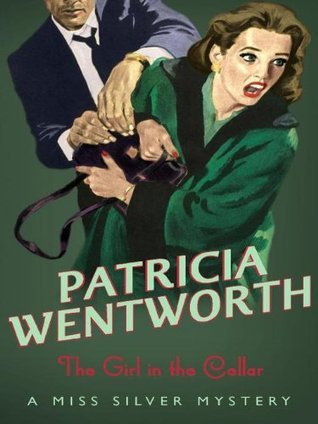
The Girl in the Cellar  by Patricia Wentworth, a Miss Silver Mystery. It begins well as the main character finds herself in the dark in a cellar, not knowing who she is or how she got there. Overall, I thought the book was odd and not very convincing. There are too many coincidences, improbabilities, and loose ends.

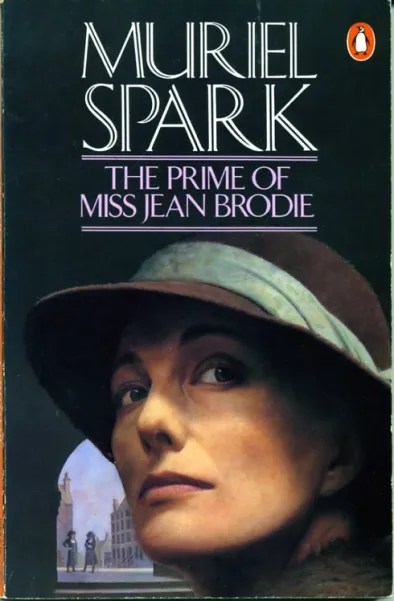
The Prime of Miss Jean Brodie  by  Muriel Spark, was first published in  The New Yorker magazine on 14th October 1961. It is perhaps Muriel Spark’s most famous novel about the ‘Brodie set’. But which one of them causes her downfall and her loss of pride and self-absorption? What really impresses me about this book is the writing, so compact, so perceptive and so in control of the  shifts in time backwards and forwards. It’s a joy to read.

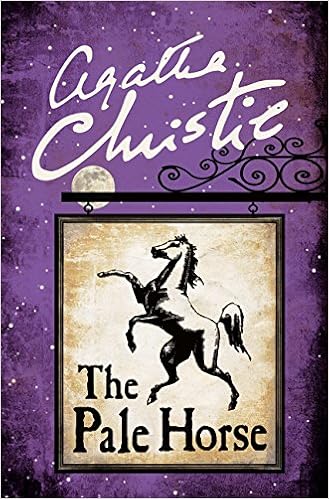
The Pale Horse by Agatha Christie. Neither Hercule Poirot, nor Miss Marple feature in this novel and Mrs Ariadne Oliver has only a small part. Detective Inspector Lejeune is in charge of the investigation into the murder of Father Gorman who was killed one night on his way home. The Pale Horse is an old house  which was formerly an inn in the village and is now the home of three weird women, thought by the locals to be witches. It’s also the name of a sinister organisation that arranges murders based on black magic. The book is a study of evil, a fascinating book conveying a feeling of real menace. 

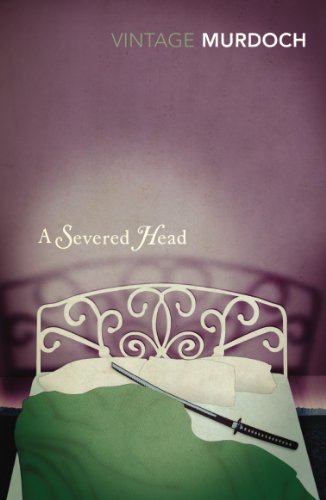
A Severed Head by Iris Murdoch. Reading this I felt I was looking into a different world and time. It’s not comfortable reading, but it is farcical and entertaining. It’s a tightly-structured novel, with just a few characters, narrated by Martin, who is shocked when his wife announces that she wants a divorce because she is deeply in love with Palmer, her analyst. This sets in motion a sequence of events in which Martin’s weakness and need are clearly evident.

WWW Wednesday 28 January 2026

WWW Wednesday is run by Taking on a World of Words.

The Three Ws are:

What are you currently reading?
What did you recently finish reading?
What do you think you’ll read next?

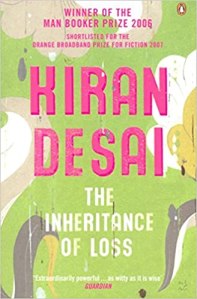
Currently I’m reading The Inheritance of loss by Kiran Desai, the winner of several prizes including the 2006 Booker Prize. It’s a book I bought in 2007 and meant to read long before now. I’m reading this slowly and so far it’s looking good.

This is set in the Himalayas where a judge and his granddaughter live in a dilapidated mansion. The judge, broken by a world too messy for justice, is haunted by his past. His orphan granddaughter has fallen in love with her handsome tutor, despite their different backgrounds and ideals. The cook’s heart is with his son, who is working in a New York restaurant, mingling with an underclass from all over the globe as he seeks somewhere to call home.

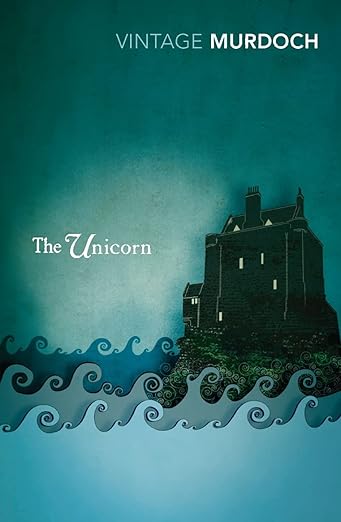
I’m also reading The Unicorn by Iris Murdoch, another book I’ve had and left on the shelves for far too long. I’ve read just a few opening chapters and think I’m going to enjoy this book. It’s set in Ireland, where a young woman goes to work as a governess in the remote Gaze Castle only to find there are no children. She is confronted with a number of weird mysteries and involved in a drama she only partly understands.

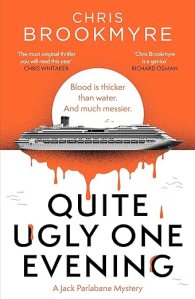
The last book I read Quite Ugly One Evening by Chris Bookmyre which will be published in May, so I’ll write about it later. It’s crime fiction set on the Atlantic.

Description from Amazon:

An Atlantic voyage. A family at war. A secret worth killing over.

Reporter Jack Parlabane thrives on chasing stories in unlikely places, and where could be less likely than a fan convention on a cruise liner celebrating a contentious Sixties TV series? But unlike the media family exploiting their show’s renewed relevance, he’s not there to stoke controversy: he’s there to solve a murder.

Already in deep water with his employer, Jack desperately needs a win, and solving this decades-old mystery could be it. Problem is, he’s in the middle of the Atlantic, and someone onboard has already killed once to keep their secret.

And that’s not even the tricky part. No, the tricky part is definitely the dead body locked in a stateroom with him, covered in his blood. Now Jack has to solve two murders, otherwise the only way he’s getting off this ship is in handcuffs – or in a body bag.recalling the unforgettable experience he cannot take to his grave.

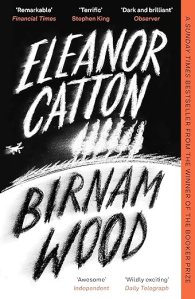
What will I read next? It could be Birnam Wood by Eleanor Catton

Like her previous novel The Luminaries, which I loved, this book is set in a fictionalised New Zealand, primarily in and around a national park in the South Canterbury region. The title is taken from a line in Macbeth. It follows members of a guerilla gardening collective, Birnam Wood as, with the help of a charismatic tech billionaire, they undertake a new project on abandoned farmland.

But when the time comes to start another book it could be something completely different.

The Unicorn: Book Beginnings on Friday & The Friday 56

Every Friday Book Beginnings on Friday is hosted by Gillion at Rose City Reader where you can share the first sentence (or so) of the book you are reading. You can also share from a book you want to highlight just because it caught your fancy.

The Unicorn by Iris Murdoch is one of the books I’ll be reading soon. It’s one of my TBRs, a book I bought in a secondhand bookshop in Old Melrose in the Scottish Borders in 2014. It’s a book I’d nearly forgotten, double-shelved at the back of one of my bookcases.

The book begins with the strange conversation:

‘How far away is it?’

‘Fifteen miles’.

‘Is there a bus?’

‘There is not.’

‘Is there a taxi or a car I can hire in the village?’

‘There is not.’

‘Then how am I to get there?’

‘You might hire a horse hereabouts’, someone suggested after a silence.

‘I can’t ride a horse’, she said in exasperation, ‘and in any case there’s my luggage’.

They stared at her with quiet dreamy curiosity.

Also every Friday there is The Friday 56, hosted by Freda at Freda’s Voice, but she is taking a break and Anne at My Head is Full of Books has taken on hosting duties in her absence. You grab a book and turn to page 56 (or 56% of an eBook), find one or more interesting sentences (no spoilers), and post them.

Page 56:

She had never felt quite like this before, alone in her own mind; and yet not quite alone, for somewhere in the big darkness something was haunting her.

Description from Amazon UK

When Marian Taylor takes the post of governess at Gaze castle, remote house on a beautiful but desolate coast, she finds herself confronted with many strange mysteries. What kind of crime or catastrophe in the past still keeps the house under a brooding spell? And is her employer Hannah an innocent victim, a guilty woman, a lunatic, or a witch?

If you have read this book, what did you think?

Six Degrees from Lincoln in the Bardo to Iris

I love doing Six Degrees of Separation, a monthly link-up hosted by Kate at Books Are My Favourite and Best. Each month a book is chosen as a starting point and linked to six other books to form a chain. A book doesn’t need to be connected to all the other books on the list, only to the one next to it in the chain.

This month the chain begins with Lincoln in the Bardo by George Saunders, a book I haven’t read.

Lincoln in the Bardo

It’s about Abraham Lincoln and the death of his eleven year old son, Willie, at the dawn of the Civil War. Willie finds himself trapped in a transitional realm – called, in Tibetan tradition, the bardo – and as ghosts mingle, squabble, gripe and commiserate, and stony tendrils creep towards the boy, a monumental struggle erupts over young Willie’s soul.

Moving from a fictional and highly original book by the looks of it my chain goes next to a biographical account of Lincoln:

Team of Rivals: The Political Genius of Abraham Lincoln

Team of Rivals: the Political Genius of Abraham Lincoln, a biography of Abraham Lincoln and others, by  Doris Kearns Goodwin, a book I bought after watching the film, Lincoln, which is loosely based on this book covering the final four months of Lincoln’s life. Goodwin examines his relationships with three men he selected for his cabinet, all of whom were opponents for the Republican nomination in 1860: William H. Seward, Salmon P. Chase, and Edward Bates.

Body Parts: Essays on Life-Writing

Writing biography is the subject of Body Parts: Essays on Life Writing by Hermione Lee, a collection of essays on Shelley,  T S Eliot, J M Coetzee, Jane Austen, Eudora Welty  and Virginia Woolf, to name but a few. Lee explores the relation of biography to fiction and history and of the connection of writers’ lives to their works.

So my next link is a collection of essays by Virginia Woolf –

The Death of the Moth and Other Essays

The Death of the Moth and Other Essays, originally published in 1942 by Leonard Woolf. Virginia had been getting together essays, which she proposed to publish in the autumn of 1941, or the spring of 1942. She had left behind her many essays, sketches and short stories, some of which had been previously published in newspapers, which he decided were worth republishing and in this book he also included some of those previously unpublished.

The title essay is a meditation on the nature of life and death seen through the perspective of a moth. It flies by day, fluttering from side to side of a window pane. As the day progresses the moth tires and falls on his back. He struggles vainly to raise himself. Woolf watches, realising that it is useless to try to do anything to help and ponders the power of death over life.

Moths provide the next link  – to a novel, The Behaviour of Moths by Poppy Adams.

Behavior Of Moths

This is the story of two sisters, Ginny and Vivi. Vivi, the younger sister left the family mansion 47 years earlier and returns unexpectedly one weekend. Ginny, a reclusive moth expert has rarely left the house in all that time.  What happens when they meet again is shocking to both of them. It’s a story full of mystery and suspense as it is revealed that the two have very different memories of their childhood and the events of the past. Two events in particular affected their lives. One was when Vivi, aged 8, fell from the bell tower and nearly died. The story alternates between the past and the present as Ginny recalls their lives.

Bell‘ is the next link in my chain – to Iris Murdoch’s novel The Bell, a book with an impending sense of evil and menace. It looks at the angst and self-denial of the relationship between religion and sex.

The Bell

A lay community lives next to an enclosed order of nuns, a new bell is being installed and then the old bell, a legendary symbol of religion and magic  is retrieved from the bottom of the lake. The legend of the bell is that it fell into the lake after a 14th century Bishop had cursed the Abbey when a nun was discovered to have a lover and had drowned herself.

And my final link is to a book about the author of The Bell, Iris Murdoch – Iris: A Memoir by John Bayley.

Iris: A Memoir of Iris Murdoch

I first read this in 2003. It’s a very loving and touching account. Iris died in February 1999 after suffering from Alzheimer’s Disease. Bayley explained how he had coped emotionally and practically with the illness that beset the woman he loved and cherished.

Writing this post as disrupted my reading because I got Bayley’s book off the shelves and began reading it again. He writes in such a warm and affectionate way that I’ve decided to read it right away.

For once there is no crime fiction in my chain! It contains books pondering the nature of life and death, beginning with a meditation on the death of Willie Lincoln and ending with a memoir of the life of Iris Murdoch.

Next month (March 3, 2018), the chain begins with a controversial book that Kate reports had everyone talking in the nineties – The Beauty Myth by Naomi Wolf. Everyone that is, apart from me – I don’t know anything (yet) about this book.

The Bell by Iris Murdoch: a Book Review

I first read The Bell years ago and it remained in my memory as an excellent book, but this time round I think my reading tastes have changed because, although I still liked it, I no longer found it so enchanting. Iris Murdoch wrote beautiful English, with detailed descriptions of the location – Imber Court, Imber Abbey and the lake and woods around them. But I just couldn’t work out the layout and that is actually relevant in this book. There was also too much detail about the thoughts and feelings of one of the characters – Michael Meade – for my liking, and yet for all the description he didn’t seem a real person, but more a mouthpiece for Murdoch’s philosophical thoughts. In fact most of the characters, with the exception of Dora, come across more as stereotypes than real people.

A lay community lives next to an enclosed order of nuns, a new bell is being installed and then the old bell, a legendary symbol of religion and magic  is retrieved from the bottom of the lake. The legend of the bell is that it fell into the lake after a 14th century Bishop had cursed the Abbey when a nun was discovered to have a lover and had drowned herself. The various characters include Dora Greenfield who is staying at Imber Court whilst her husband Paul is researching the Abbey archives. Paul is thirteen years older and is an art historian. Dora had left him six months earlier because she was afraid of him and was returning for the same reason. She is a young woman, a rather silly young woman who thinks one thing and immediately says the opposite, but Paul is probably the most obnoxious character in the book – he is a manipulative bully. The other residents at Imber Court are a mixed-up bunch, there for both religious and other reasons. As the date for the installation of the new bell approaches their weaknesses begin to be exposed.

Much of the book is taken up with discussions and examining the thoughts of the characters about the relationship of goodness to power. On the surface everything appeared to Dora to be peaceful, but underneath stresses and strains are causing the community to diverge into two parties. It’s not just a matter of organisation but also of morals and there is an impending sense of evil and menace.  Bearing in mind that The Bell was first published in 1958 this must have been quite a shocking book at the time – about the relationship between religion and sex and the angst and self-denial that it depicts.

  • Paperback: 352 pages
  • Publisher: Vintage Classics; New Ed edition (2 July 2009)
  • Language English
  • ISBN-10: 0099470489
  • ISBN-13: 978-0099470489
  • Source: I bought this book

For a rather more positive view of The Bell see The Senior Common Room.

Book Beginnings: The Bell

I love starting a book. There’s such potential to find a book that really satisfies the imagination, that draws you into its world and also makes you think. It’s even better when you can start a book you’ve read before, knowing that you enjoyed it but not remembering all the details and have it unfold before you still with the power to enchant. Such a book is The Bell by Iris Murdoch.

I first read it in the early 199os (I think), so my memory of it is only of the outline story – a new bell is to be installed at an Abbey, which triggers the discovery of the old bell and then tragedy strikes. I also remember that it was peopled by some interesting characters, but I couldn’t have told you who they are.

Here is the opening paragraph:

Dora Greenfield left her husband because she was afraid of him. She decided six months later to return to him for the same reason. The absent Paul, haunting her with letters and telephone bells and imagined footsteps on the stairs had begun to be the greater torment. Dora suffered from guilt, and with guilt came fear. She decided at last that the persecution of his presence was to be preferred to the persecution of his absence. (page 7)

Now, that’s not a good marriage, but it is a great opening to this story of a lay community at Imber Court, a beautiful house outside Imber Abbey, the home of an enclosed order of nuns. Paul is a guest at Imber Court studying some 14th century manuscripts which belong to the Abbey. You know straight away that Dora and Paul’s marriage is a disaster area, that Paul is a man to be feared and that Dora is a mass of contradictions, a complex character – will she be able to stand living with Paul? My immediate reaction was that she is making a big mistake.

So far I’ve read about a quarter of the book and it’s just as good as I remember. Iris Murdoch’s writing is so good, full of description so that you can see the people and places as though you were there and also full of insights into the characters thoughts and feelings. There is an impending sense of evil  and menace, for below the peaceful surface stress and tension abound.

Book Beginnings is hosted by Katy at A Few More Pages, where you can leave a link to your own post on the opening lines of a book you’re currently reading.