Six Degrees of Separation from Kairos to The One I Was: July 2024

It’s time again for Six Degrees of Separation, a monthly link-up hosted by Kate at Books Are My Favourite and Best. Each month a book is chosen as a starting point and linked to six other books to form a chain. A book doesn’t need to be connected to all the other books on the list, only to the one next to it in the chain.
This month starts with Kairos by Jenny Erpenbeck. Kairos is the winner of the International Booker Prize 2024. An intimate and devastating story of the path of two lovers through the ruins of a relationship, set against the backdrop of a seismic period in European history. Translated from German by Michael Hofmann.

Berlin. 11 July 1986. They meet by chance on a bus. She is a young student, he is older and married. Theirs is an intense and sudden attraction, fuelled by a shared passion for music and art, and heightened by the secrecy they must maintain. But when she strays for a single night he cannot forgive her and a dangerous crack forms between them, opening up a space for cruelty, punishment and the exertion of power. And the world around them is changing too: as the GDR begins to crumble, so too do all the old certainties and the old loyalties, ushering in a new era whose great gains also involve profound loss.

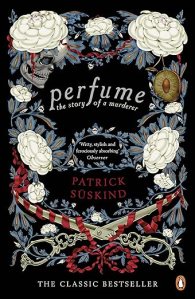
My first link is another novel translated from German, Perfume:the story of a murderer by Patrick Süskind, translated from German by John E Woods. It is an extraordinary novel, a Gothic work in the vein of Edgar Allen Poe, or Oscar Wilde’s The Picture of Dorian Grey. It depicts the strange life of Jean-Baptiste Grenouille and is a book of smells. This is a horror story, one that made me not want to read it and yet also want to read it to the bitter end.

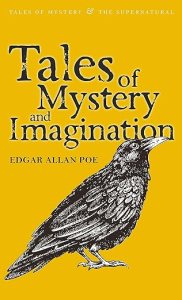
My second link is Tales of Mystery and Imagination by Edgar Allan Poe, which is a collection of Poe’s best stories containing all the terrifying and bewildering tales that characterise his work. As well as the Gothic horror of such famous stories as ‘The Pit and the Pendulum’, ‘The Fall of the House of Usher’, ‘The Premature Burial’ and ‘The Tell-Tale Heart’, all of Poe’s Auguste Dupin stories are included.

These are the first modern detective stories and include ‘The Murders in the Rue Morgue’, ‘The Mystery of Marie Roget’ and ‘The Purloined Letter’.

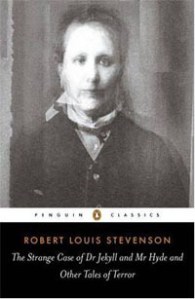
My third link stays on the theme of tales of horror with Tales of Terror by Robert Louis Stevenson, which are published in my copy of The Strange Case of Dr. Jekyll and Mr Hyde. It consists of two short stories, both written for the Christmas “crawler” tradition in 1884 and 1885. Christmas was a season traditionally associated with supernatural and creepy tales. The Body Snatcher is very much a traditional Christmas ghost story, beginning with four men gathered in an inn on a dark winter’s night telling tales round the fireside of grisly deeds. The other story is Olalla, a Gothic tale, set in an ancient Spanish castle surrounded by deep woodland, about a young man recovering from his war wounds and to “renew his blood”, who finds himself living with a strange family.

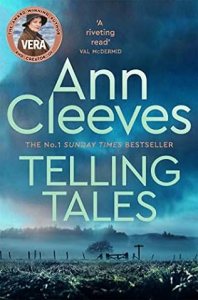
My fourth link moves away from horror stories to crime fiction, linked by the word ‘tales’ in the title. It is Telling Tales by Ann Cleeves, a book I have read but I didn’t write a review. It’s the 2nd of her Vera Stanhope series in which the residents of an East Yorkshire village are revisited with the nightmare of a murder that happened 10 years before. There was some doubt about the guilty verdict passed on Jeanie Long and now it would seem that the killer is still at large. Inspector Vera Stanhope builds up a picture of a community afraid of itself and of outsiders.

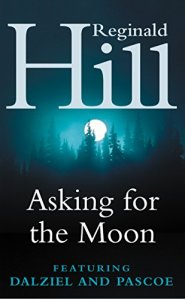
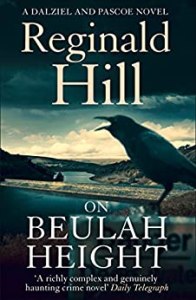
My fifth link is On Beulah Height, Reginald Hill’s 17th Dalziel and Pascoe novel. It’s also set in a Yorkshire village, Dendale. Three little girls had gone missing from the village one summer. Their bodies were never found, and the best suspect, a strange lad named Benny Lightfoot, was held for a time, then released. Fifteen years later another little girl, Lorraine, aged seven went out for a walk one morning with her dog before her parents got up and didn’t return home, reviving memories of the missing children from fifteen years earlier.

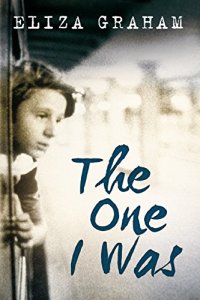
My final link is to a another book featuring a character called Benny – The One I Was by Eliza Graham – historical fiction split between the present and the past following the lives of Benny Gault and Rosamund Hunter. Benny first came to Fairfleet in 1939, having fled Nazi Germany on a Kindertransport train. As an adult he bought the house and now he is dying of cancer. Rosamund returns to Fairfleet, her childhood home, to nurse Benny. I was totally engrossed in both their life stories as the various strands of the story eventually combined.

Half of my chain consists of horror stories, not a genre I often read and the other half is made up of crime fiction novels, as usual.

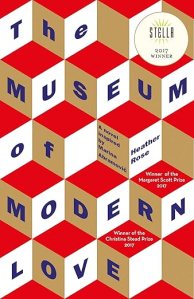
Next month (August 3, 2024), we’ll start with  The Museum of Modern Love by Heather Rose (Kate’s pick was inspired by Sue’s recent post about writers and artists).

Six Degrees of Separation from Butter to the Betrayal of Trust: June 2024

It’s time again for Six Degrees of Separation, a monthly link-up hosted by Kate at Books Are My Favourite and Best. Each month a book is chosen as a starting point and linked to six other books to form a chain. A book doesn’t need to be connected to all the other books on the list, only to the one next to it in the chain.

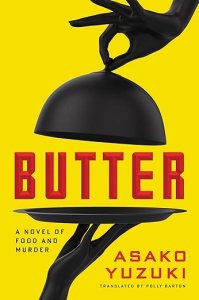
This month starts with Butter by Asako Yuzuki, a novel of food and murder. Inspired by a true story this is described on Amazon as a cult Japanese bestseller about a female gourmet cook and serial killer and the journalist intent on cracking her case, a vivid, unsettling exploration of misogyny, obsession, romance and the transgressive pleasures of food in Japan.

My first link is based simply on the title Toast by Nigel Slater, because I love hot buttered toast. It’s the story of his childhood and adolescence told through food; food he liked and food he hated. There are no recipes, but descriptions of toast, cakes, puddings, jam tarts, pancakes, sweets and toffee, tinned ham, lamb chops – you name it and it’s in this book. It’s also a very frank book about a young boy’s feelings and a teenager’s sexual experiences, and his relationship with his mother whom he loved, and his father who sometimes scared him.

My second link is another book by Nigel Slater, Kitchen Diaries. This is an account of more or less everything Nigel cooked in the course of a year, presented as an illustrated diary. The photographs are sublime, and they are done in ‘real time’; they are photos of the food he cooked and ate on that day.The book follows the seasons so you can find suggestions about what is worth eating and when – a book to dip into throughout the year and for years to come. There are recipes for Onion Soup Without Tears, Thyme and Feta Lamb, Roast Tomatoes with Anchovy and Basil, Mushroom Pappardella, Stilton, Onion and Potato Pie and many many more.

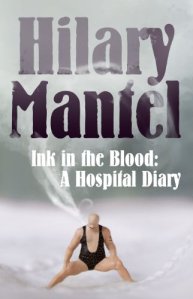
My third link is another diary – Ink in the Blood: a Hospital Diary by Hilary Mantel. I was really pleased to find this because I loved Wolf Hall and had tickets for Hilary Mantel’s talk at the Borders Book Festival at Melrose in the summer of 2010.  She had to cancel that because she wasn’t well – I didn’t know just how ill she was. Ink in the Blood reveals all – how she had surgery to remove an intestinal obstruction that ended up in a marathon operation, followed by intense pain, nightmares and hallucinations. Writing was Hilary Mantel’s lifeline – it was the ink, as she wrote in her diary, that reassured her she was alive.

Hallucinations gives me My fourth link in Don’t Look Now, a short story (52 pages, one of five short stories in a collection of Daphne du Murier). It’s a supernatural tale about a couple, John and Laura who have come to Venice to recover after their young daughter’s death. They encounter two old women who claim to have second sight and find themselves caught up in a train of increasingly strange and violent events, involving hallucinations, mistaken identity and a murderer.

My fifth link is also set in Venice, Drawing Conclusions by Donna Leon. It’s the 20th book in her Commissario Guido Brunetti series. Brunetti is somewhat of a rarity in crime fiction novels – a detective who is happily married with two children. He doesn’t smoke or drink to excess and often goes home for lunch to his beautiful wife Paolo. I was immediately drawn into this book, with its wonderful sense of locality, believable characters and intricate plot. It’s more than crime fiction as Brunetti ponders on life, the problems of ageing, and the nature of truth and honesty. 

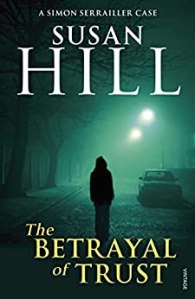
My final link is via ageing in the crime fiction novel The Betrayal of Trust by Susan Hill. It’s  character-driven, concentrating on the people involved in the crime, a cold case, that of a teenager missing for 16 years, and on Simon’s family. It focuses on the problems of ageing, hospice care, Motor Neurone Disease, assisted suicide, Parkinson’s Disease and Alzheimer’s Disease. A lot to cope with all at once and at times I found The Betrayal of Trust a deeply depressing book.

My chain consists mainly of mystery/crime fiction books, as usual, plus books on food and cooking and a frank account of a stay in hospital after a nightmare operation.

Next month (July , 2024), we’ll start with the 2024 winner of the International Booker Prize, Kairos by Jenny Erpenbeck (translated by Michael Hofmann).

Six Degrees of Separation from The Anniversary to The Body on the Beach

It’s time again for Six Degrees of Separation, a monthly link-up hosted by Kate at Books Are My Favourite and Best. Each month a book is chosen as a starting point and linked to six other books to form a chain. A book doesn’t need to be connected to all the other books on the list, only to the one next to it in the chain.

This month starts with The Anniversary a novel longlisted for the 2024 Stella Prize, by Stephanie Bishop, a psychological thriller, described as a ‘simmering page-turner about an ascendant writer, the unresolved death of her husband, and what it takes to emerge on her own’. I haven’t read this but it’s apparently about a married couple on a cruise celebrating their wedding anniversary. When a storm hits the ship the husband falls overboard and the truth about their marriage is gradually revealed.

My first link is The Woman in Cabin 10 by Ruth Ware. A type of locked room mystery. Journalist Lo Blacklock is on a luxury press launch on a boutique ship and hopes it will help her recover from a traumatic break-in at her flat. But woken in the night by a scream from cabin 10 next to hers she believes a woman was thrown over board, only to discover that the ship’s records show that cabin 10 was unoccupied.  I liked the beginning of the book but was a bit disappointed with it overall after liking the beginning of it so much.

My second link is a different type of cabin in Another Part of the Wood by Beryl Bainbridge. Joseph decides to take his mistress and son, together with a few friends, to stay in a cabin in deepest Wales for the weekend – with absolutely disastrous results. It is set in a holiday camp, which consists of huts in a wood at the foot of a mountain. The wood, as in fairy tales, is not a safe place.

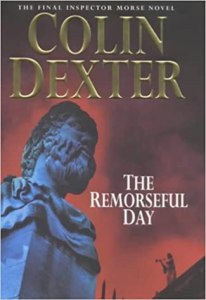
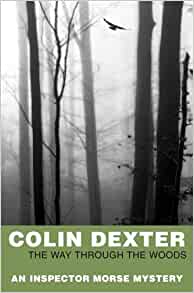
Woods can be dangerous places – as in My third link, a book set in another wood in The Way Through the Woods by Colin Dexter. Inspector Morse aided by Sergeant Lewis investigates the case of a beautiful young Swedish tourist who had disappeared on a hot summer’s day somewhere near Oxford twelve months earlier. After unsuccessfully searching the woods of the nearby Blenheim Estate the case was unsolved, and Karin Eriksson had been recorded as a missing person. A year later the case is reopened.

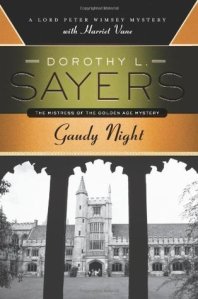
Oxford gives me My fourth link in Gaudy Night by Dorothy L Sayers set Shrewsbury College, a fictional all female college, at Oxford University (based on Somerville College, Sayers’ own college). Harriet Vane is asked to find who is writing poison pen letters, writing nasty graffiti and vandalism causing mayhem and upset. An excellent book and a pleasure to read.

My fifth link is via the word ‘night‘ in the book title in The Night Hawks by Elly Griffiths, the 13th book in the Dr Ruth Galloway books. The Night Hawks are a group of metal detectorists. They are searching for buried treasure when they find a body on the beach in North Norfolk. At first DCI Nelson thinks that the dead man might be an asylum seeker, but he turns out to be a local boy, Jem Taylor, recently released from prison. Ruth is more interested in the treasure, a hoard of Bronze Age weapons also found on the beach.

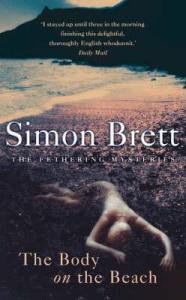
My final link is to The Body on the Beach by Simon Brett,  first in his Fethering Mysteries, set in a fictitious village on the south coast of England. Neighbours Carole and Jude join forces to work out the identity of the body and the culprit. Carole is a retired civil servant, cautious and analytical, whereas Jude is impulsive, an alternative healer and very inquisitive (nosey). I quite like this series. They are entertaining whodunnits.

My chain consists mainly of mystery/crime fiction books, as usual.

Next month (June 4, 2024), we’ll start with  – Butter by Asako Yuzuki, a novel of food and murder.

Six Degrees of Separation from Maiden Voyages to Nineteen-Eighty-Four

It’s time again for Six Degrees of Separation, a monthly link-up hosted by Kate at Books Are My Favourite and Best. Each month a book is chosen as a starting point and linked to six other books to form a chain. A book doesn’t need to be connected to all the other books on the list, only to the one next to it in the chain.

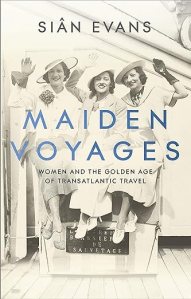
This month starts with a travel book: Maiden Voyages: Women and the Golden Age of Transatlantic Travel by Siân Evans, a social history of the experiences of women on transatlantic travel in the interwar years.

Before convenient air travel, transatlantic travel was the province of the great ocean liners and never more so than in the glory days of the interwar years. It was an extraordinary undertaking made by many women. Some travelled for leisure, some for work; others to find a new life, marriage, to reinvent themselves or find new opportunities. Their stories have remained largely untold – until now. This book is a fascinating portrait of these women, and their lives on board magnificent ocean liners as they sailed between the old and the new worlds.

My first link is A Time of Gifts by Patrick Leigh Fermor, about his travels in Europe walking from the Hook of Holland to Constantinople in 1933/34. Many passages are so vividly described that I could easily visualise them, such as the picture of the author who was then nearly nineteen years old, striding through the German countryside reciting Shakespeare in a loud voice and accompanied with gestures, sword thrusts, a staggering gait and with his arms upflung, looking as though he was drunk, or a lunatic.

In a way his journey was a gilded experience as he had introductions to people in different places – people who gave him a bed for the night, or longer stays. There were also people who didn’t know him who welcomed him into their homes as a guest – as the title says it was a time of gifts.

My second link is ‘time‘ in the title – Old God’s Time by Sebastian Barry. It’s set in Dalkey, a small coastal town south of Dublin, where Tom Kettle, a recently retired policeman is living in a tiny flat annexed to a Victorian castle. Two of his former colleagues disturbed his peaceful afternoon, asking for his help on a cold case he had worked on. This appears to be a detective story, but the main focus is Tom, himself as the narrative reveals in streams of consciousness. It soon becomes clear that his memories are unreliable and for a while I was confused, not knowing what was going on, whether Tom was remembering, or imagining what had happened in his life. 

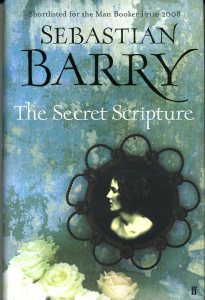
My third link is also by Sebastian Barry – The Secret Scripture about an old woman in a mental hospital in Ireland, secretly writing her life story. I’d not long finished The Gravedigger’s Daughter by Joyce Carol Oates and was surprised to find that I was reading yet another tragic tale about a gravedigger’s daughter.

My fourth link is The Gravedigger’s Daughter by Joyce Carol Oates The main character is Rebecca Schwart, born in New York Harbour, the daughter of Jacob and Anna, escaping from Nazi Germany in 1936. They live a life of abject poverty whilst Jacob can only find work as a caretaker of Milburn Cemetery, a non-demoninational cemetery at the edge of the town. It’s a grim, dark world, a violent and pessimistic world, gothic and grotesque.

My fifth link is Rebecca by Daphne du Maurier, one of my favourite books of all time. I love the first line – Last night I dreamt I went to Manderley again. It has never failed to delight me and that dream sets the tone for the book. I’ve read it many times and each time I fall under its spell. Identity is a recurrent theme, just who was Rebecca, what was she really like and what lead to her death. I still want to know the narrator’s name and her awe of Rebecca still exasperates me. Daphne du Maurier described the book to her publisher as ‘a sinister tale about a woman who marries a widower … Psychological and rather macabre.’

My final link is to another book whose first line stands out in my mind. It’s Nineteen Eighty-Four by George Orwell: It was a bright cold day in April, and the clocks were striking thirteen. It was George Orwell’s last novel, written in 1948 and presents his vision of a dystopian society, a totalitarian state complete with mass surveillance, where individuality is brutally suppressed. This is possibly the least enjoyable book I’ve read, horrific in content, lacking in convincing characterisation, and has a poor plot. It is depressing and dreary in the extreme, but I can see why it can be considered a brilliant book in its depiction of a dystopian society. It is seriously thought provoking!

I never thought my chain would finish with Nineteen-Eighty-Four! It consists of two non- fiction travel books and four novels and for once there are no crime fiction books.

Next month (May 4, 2024), we’ll start with a novel longlisted for the 2024 Stella Prize – The Anniversary by Stephanie Bishop.

Six Degrees of Separation from Tom Lake to Come Tell Me How You Live

It’s time again for Six Degrees of Separation, a monthly link-up hosted by Kate at Books Are My Favourite and Best. Each month a book is chosen as a starting point and linked to six other books to form a chain. A book doesn’t need to be connected to all the other books on the list, only to the one next to it in the chain.

This month starts with Tom Lake by Ann Patchett.

My first link is The Magician’s Assistant also by Ann Patchett, the first book of hers that I read. It’s about illusion – Parsifal was a magician and Sabine had been his assistant for twenty years. She and Parsifal had been married for less than a year when he died suddenly of an aneurysm, leaving her alone in their large house in Los Angeles, apart from a large white rabbit, called Rabbit, who was retired from the stage as he was too big to be pulled out of a hat.

My second link is Hemingway’s Chair by Michael Palin. Martin Sproale is an assistant postmaster obsessed with Ernest Hemingway. Martin lives in a small English village, where he studies his hero and potters about harmlessly–until an ambitious outsider, Nick Marshall, is appointed postmaster instead of Martin. I haven’t written a review of this yet so the link in the title takes you to Goodreads.

My third link is Nothing Ventured by Jeffrey Archer, in which there is another assistant, Beth Rainsford, a research assistant at the Fitzmolean Museum. It’s the first in a series of books following William Warwick’s progress from detective constable to the commissioner of the Metropolitan Police. When William meets Beth they fall in love almost at first sight – but Beth has a secret that she keeps from him. 

My fourth link is The Smiling Man by Joseph Knox in which Aidan Waits is a Detective Constable working night shifts with Detective Inspector Peter Sutcliffe, known as Sutty. They investigate the death of the ‘Smiling Man‘ at a disused hotel, The Palace, in Manchester. This is a fascinating and complex novel. Be aware though (if this bothers you), there are some violent scenes, and one strand of the story concerning a particularly loathsome and brutal character called Bateman and an eight year old boy and his little sister is very chilling.

My fifth link is The Clocks by Agatha Christie, which Detective Inspector Hardcastle and Colin Lamb investigate the murder of a dead man found in the sitting room at the home of Miss Pebmarsh at 19 Wilbraham Crescent. The strange thing was that there were five clocks in the sitting room and all, except for the cuckoo clock, which announced the time as 3 o’clock, had stopped at 4.13. 

My final link is another book by Agatha Christie, but not a crime fiction novel. It’s Come Tell Me How You Live, an archaeological memoir. She wrote it in answer to her friends’ questions about what life was like when she accompanied her second husband, Max on his excavations in Syria and Iraq in the 1930s.

My chain is made up of the following links – assistants, detective inspectors, detective constables and books by Agatha Christie.

Next month  (April 6, 2024), Kate is changing it up a little: look at your bookshelf – do you see a Lonely Planet title there? Or an Eyewitness Travel title? Or any other travel guide? That’s your starting book.

Six Degrees of Separation from The Hog’s Back Mystery to Maisie Dobbs

It’s time again for Six Degrees of Separation, a monthly link-up hosted by Kate at Books Are My Favourite and Best. Each month a book is chosen as a starting point and linked to six other books to form a chain. A book doesn’t need to be connected to all the other books on the list, only to the one next to it in the chain.

This month starts with the book that I ended my last Six Degrees chain with, which was The Hog’s Back Mystery by Freeman Wills Crofts. I’ve recently finished reading this British Library Crime Classic, first published in 1933, during the Golden Age of detective fiction between the two world wars. Dr James Earle and his wife live near the Hog’s Back, a ridge in the North Downs in the beautiful Surrey countryside. When Dr Earle disappears from his cottage, Inspector French of Scotland Yard is called in to investigate. At first he suspects a simple domestic intrigue – and begins to uncover a web of romantic entanglements beneath the couple’s peaceful rural life.

I’m starting my chain with High Rising by Angela Thirkell, another book first published in 1933. Set in the 1930s it’s an entertaining and witty social comedy, in the fictional county of Barsetshire, borrowed from Trollope. Laura Morland is a widow with four sons, who supports herself by writing novels, which she knows are not ‘in any sense of the word, literature‘ but which have appeal.

My second link is to Cards on the Table by Agatha Christie, in which one of the characters, Ariadne Oliver, also writes fiction. The victim is Mr Shaitana, a collector of snuff boxes, Egyptian antiquities and murderers.This story has just four suspects and any one of them ‘given the right circumstances‘ might have committed the crime. It’s also a book first published in the 1930s, that is 1936..

My third link is via ‘card’ to A Card from Angela Carter by Susannah Clapp. She and Angela had been friends for a number of years. This book uses the postcards Angela sent to her to form a sort of biography. Sent from various places around the world some have a full message, some only a few words, which Susannah uses to paint a picture of what Angela was like, a ‘great curser’, capable of the sharpest of remarks, clever, unpredictable, quirky, and funny.

My fourth link is to a book written by another author called Susannah, The Adventures of Maud West, Lady Detective by Susannah Stepleton, subtitled ‘Secrets and Lies in the Golden Age of Crime‘. This is narrative non-fiction. Was Maud West really who she said she was? Susannah Stapleton discovered that she really did exist and was indeed a private investigator with her own detective agency, based in London in the early part of the twentieth century, from 1905 onwards.

My fifth link is to crime fiction featuring a private investigator, The Big Sleep by Raymond Chandler, first published in 1939. Private Investigator Philip Marlow is hired by the paralysed millionaire General Stallwood, to deal with the blackmailer of one of his two troublesome daughters, and Marlowe finds himself involved with more than extortion. Kidnapping, pornography, seduction, and murder are just a few of the complications he gets caught up in.

And my final link is Maisie Dobbs, a book featuring yet another private investigator. This is the first in Jacqueline Winspear’s Maisie Dobbs series. In 1929 Maisie set herself up as a private investigator, having started as a maid to the London aristocracy, studied her way to Cambridge and served as a nurse in the Great War. I’ve read a few more of the series since I read this one.

My chain forms a circle beginning and ending with crime fiction. The other links are books with the word ‘card’ in the titles, books with authors named Susannah and books featuring private investigators. The first five books, like the beginning book, were all published in the 1930s.

Next month (2 March 2024), we will start with Tom Lake by Ann Patchett.