Six Degrees of Separation from I Capture the Castle to The Secret Garden

It’s time again for Six Degrees of Separation, a monthly link-up hosted by Kate at Books Are My Favourite and Best. Each month a book is chosen as a starting point and linked to six other books to form a chain. A book doesn’t need to be connected to all the other books on the list, only to the one next to it in the chain.
The starting book this month is I Capture the Castle by Dodie Smith. It’s written in such a seemingly simple style, but it captures so well the innocence and naivety of youth and hope for the future. It’s just, well, so English. I first read it as a teenager and it didn’t fail to live up to my memories of it when I reread it years later.

My first link is via castle to Titus Groan by Mervyn Peake, and the fabulous Gormenghast Castle, another book I first read in my teens. The novel is poetic,  rich in imagination, description and characters. It all came alive as I reread it, and the same magic I felt the first time was still there.

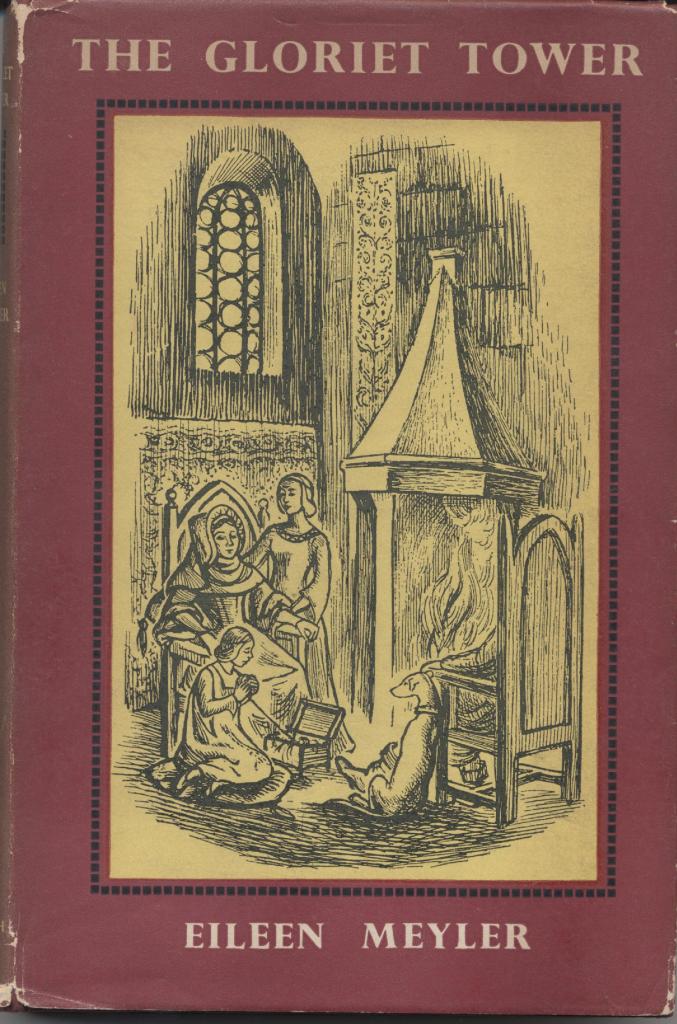
My second link is via another castle – Corfe Castle, in Dorset, in The Gloriet Tower by Eileen Meyler. Another book I read as a child. It’s set in Corfe Castle a few years before the beginning of the Hundred Years War, but it is mainly fiction. As far as I remember I chose this book because of its historical setting in a castle – I loved castles (and still do).  

My third link is Corfe as it is also the setting in Enid Blyton’s Five on a Treasure Island, the first book in The Famous Five series, and possibly the first one I read as a child. Staying at Kirrin Cottage the five children visit Kirrin Island and explore the ruins of Kirrin Castle (Corfe Castle).

My fourth link is via Treasure to Silver: Return to Treasure Island by Andrew Motion, a sequel to Treasure Island. The children of Jim and Long John Silver return to the island. One of the crew is a certain Mr Stevenson – ‘a Scotsman and a wisp of a fellow, whose place was generally in the crow’s nest, where he acted as our lookout.’ (page 115)

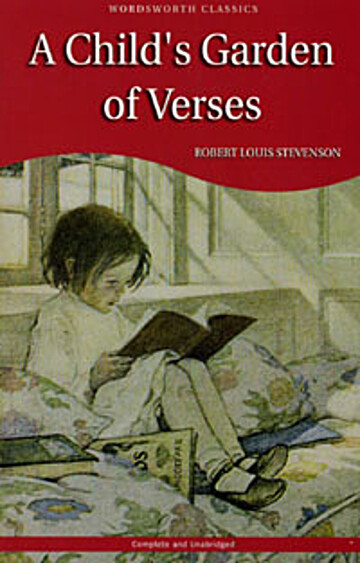
My fifth link is via Stevenson, that is Robert Louis Stevenson and the first book of his I read A Child’s Garden of Verses. My Great Aunty Sally, who was my mother’s aunt, gave me this book for my birthday one year and I loved reciting the poems out loud.

My final link is via garden to The Secret Garden by Frances Hodgson Burnett. I read this several times as a child and the story has stayed with me ever since. For years my picture of the ideal garden has been a walled garden, just like the secret garden. Rereading it as an adult I realised it is full of symbolism using nature, the Bible and myths, that I never noticed as a child. 

Apart from the first one my links are all children’s fiction, which I didn’t set out to do – all my chains just grow of their own accord. I’ve read all six books.

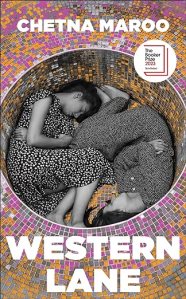
Next month (November 4 , 2023), we’ll start with Western Lane by Chetna Maroo, a novella that is part of the read-along for Novella November 2023 (and it also made the Booker Prize 2023 shortlist!).

Six Degrees of Separation from Wifedom to

2 Sept 2023

It’s time again for Six Degrees of Separation, a monthly link-up hosted by Kate at Books Are My Favourite and Best. Each month a book is chosen as a starting point and linked to six other books to form a chain. A book doesn’t need to be connected to all the other books on the list, only to the one next to it in the chain.

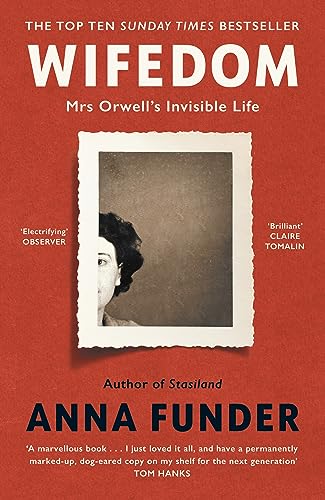
The starting book this month is Wifedom by Anna Funder, a novel about George Orwell’s wife, Eileen O’Shaughnessy.

My first link is an obvious one via Orwell:

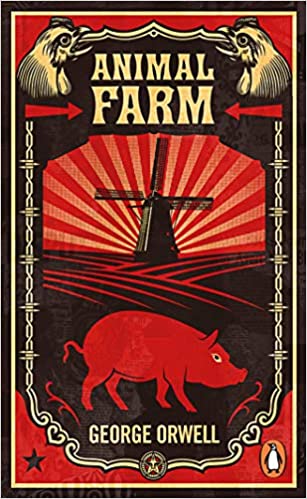
to George Orwell’s novella Animal Farm an allegorical novella, of the Russian Revolution and the rise of the Soviet Union. It tells the story of a farm where the animals rebel against the farmer, Mr Jones, and throw him off the land. They hope to create a society where they are all equal, free and happy.

My second link is via Farming to:

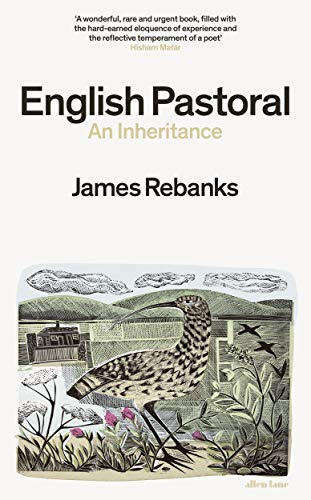
James Rebank’s non fiction book, English Pastoral, about farming. His family farm in the Lake District hills was part of an ancient agricultural landscape: a patchwork of crops and meadows, of pastures grazed with livestock, and hedgerows teeming with wildlife. It is beautifully written. I enjoyed his account of his childhood and his nostalgia at looking back at how his grandfather farmed the land. And I was enlightened about current farming practices and the effects they have on the land, depleting the soil of nutrients.

My next link is via English to:

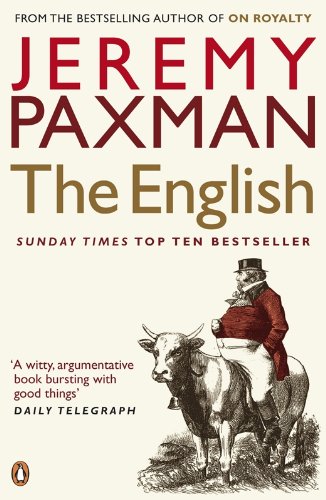
The English by Jeremy Paxman, more non fiction He writes about food, sport, football hooligans, language, individualism, education, religion, ‘John Bull’, cities and the countryside – the English idyllic village, class structure and social tone, attitudes to women, business and trade to name but a few topics. It’s well researched and very readable, with a bibliography listing all the books he mentions plus others that presumably he has used.

My next link is via Jeremy to

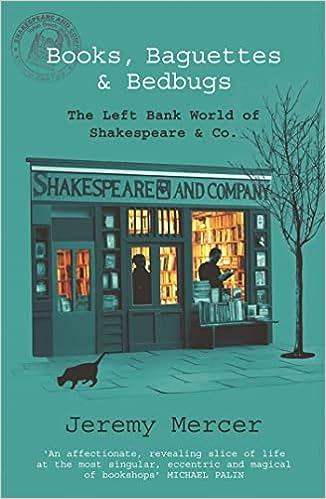
Another author called Jeremy, Books, Baguettes and Bedbugs: the Left Bank World of Shakespeare & Co. by Jeremy Mercer. A memoir of the author’s refuge at the Paris bookshop, Shakespeare & Co. on the banks of the River Seine opposite Notre Dame. Jeremy Mercer, a Canadian crime reporter, packed his bags and headed for Paris after receiving a death threat. He arrived during the last days of 1999 and shortly afterwards found his way to Shakespeare & Co, where he was amazed to find not only is it a bookshop but also a place providing beds for a number of writers. 

My fifth link is via Shakespeare to:

Shakespeare’s Restless World by Neil MacGregor, non fiction recreating Shakespeare’s world through examining twenty objects. It reveals so much about the people who lived then, who went to see Shakespeare’s plays in the 1590s and 1600s, and about their ideas and living conditions.

My final link is via a retelling of one of Shakespeare’s plays:

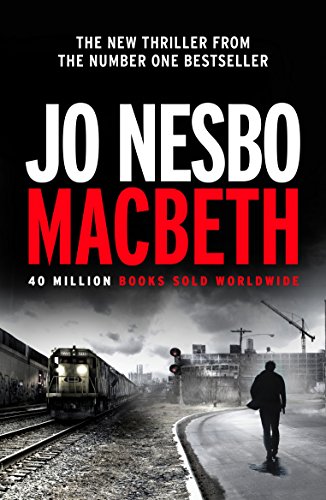
Macbeth by Jo Nesbo, a retelling of Shakespeare’s Macbeth. It sticks well to Shakespeare’s version (which itself wasn’t original!) – it has the same themes and plot lines. Inspector Macbeth, an ex-drug addict is the head of the SWAT team. All the characters are here, including Duncan, the new police Chief Commissioner, Malcolm his deputy, Banquo, Macbeth’s friend and his son, Fleance, Inspector Duff (Shakespeare’s Macduff, Thane of Fife), head of the Narcotics Unit, Caithness, the three witches, Lennox and so on. 

My chain is mainly non fiction. I’ve read all six books.

Next month (October 7, 2023), we’ll start with a classic – I Capture the Castle by Dodie Smith.

Six Degrees of Separation from Romantic Comedy to The Daughter of Time

It’s time again for Six Degrees of Separation, a monthly link-up hosted by Kate at Books Are My Favourite and Best. Each month a book is chosen as a starting point and linked to six other books to form a chain. A book doesn’t need to be connected to all the other books on the list, only to the one next to it in the chain.

The starting book this month is Romantic Comedy by Curtis Sittenfield a book I haven’t read. Amazon describes it thus: A TV script writer thinks she’s over romance, until an unlikely love interest upends all her assumptions: a humorous, subversive and tender-hearted novel from the bestselling author of Rodham, American Wife and Prep.

I don’t often read romantic comedy, or romance novels so I couldn’t immediately think of where to start my chain. And then I remembered that in 2006, before I began my blog, I enjoyed reading The Undomestic Goddess by Sophie Kinsella. It’s a romantic comedy about Samantha who leaves her job as a high-powered London lawyer and, mistaken for another woman, she finds herself employed as a housekeeper without a clue how to cook or keep house.

One of the characters in The Undomestic Goddess is Nathaniel, a hunky gardener, so my second link is to another gardener in Mr MacGregor by Alan Titchmarsh, another romantic comedy. It’s about Rob MacGregor, who is hired to recapture the declining audience for a daytime gardening programme, and quickly becomes Britain’s latest heartthrob. It’s not as funny as The Undomestic Goddess.

Moving away from romantic comedy my third link is to Deadheads (my review) by Reginald Hill in which a rose garden is the setting for a murder. Life is on the up for Patrick Aldermann: his Great Aunt Florence has collapsed into her rose bed leaving him Rosemont House with its splendid gardens. Or was she murdered?

Using ‘rose’ as my fourth link takes the chain to The Sunne in Splendour (my review) by Sharon Penman historical fiction based on the War of the Roses, the conflict between the houses of York and Lancaster for the throne of England. It tells the story of Richard III from his childhood to his death at Bosworth Field in 1485. 

My fifth link is to another book about Richard III – Alison Weir’s non-fiction about The Princes in the Tower, which examined the available evidence. She concluded that Richard III was responsible for the deaths of his nephews, the young Princes.

Much has been written about Richard, from the time of his death onwards and he remains a controversial figure. My final link is to Josephine Tey’s novel The Daughter of Time, which also investigates Richard’s role in the death of his nephews and his own death at the Battle of Bosworth and concluded that Richard hadn’t murdered his nephews.

My chain includes romantic comedy, crime and historical fiction and non fiction. I’ve read all six books.

Next month (2 September 2023), we’ll start with Wifedom by by Anna Funder.

Six Degrees of Separation from Time Shelter to The Girl Who Died

It’s time again for Six Degrees of Separation, a monthly link-up hosted by Kate at Books Are My Favourite and Best. Each month a book is chosen as a starting point and linked to six other books to form a chain. A book doesn’t need to be connected to all the other books on the list, only to the one next to it in the chain.

This month we begin with Time Shelter by Georgi Gospodinov and translated by Angela Rodel, the winner of the International Booker Prize 2023, in which an enigmatic flâneur named Gaustine opens a ‘clinic for the past’ that offers a promising treatment for Alzheimer’s sufferers: each floor reproduces a decade in minute detail, transporting patients back in time. But soon the past begins to invade the present.This is not a book I’ve read but I think I might like it.

I’m beginning my chain with David Shenk’s The Forgetting: understanding Alzheimer’s: the biography of a disease. This is a remarkable book about the wasting away of the mind, inside a still vigorous body. Shenk’s history of Alzheimer’s is both poignant and scientific, grounded by the fundamental belief that memory forms the basis of our selves, our souls, and the meaning in our lives.

Another book about memory, but about remembering not forgetting, is my second link – Footfalls in the Memory by Terry Waite. Waite was the Assistant for Anglican Communion Affairs for the then Archbishop of Canterbury, Robert Runcie, in the 1980s. As an envoy for the Church of England, he travelled to Lebanon to try to secure the release of four hostages, including the journalist John McCarthy. He was himself kidnapped and held captive from 1987 to 1991. [Wikipedia] During his captivity he wrote his autobiography in his head, and also attempted to remember the books, poems and prayers he had read during his life.

My third link is one of the books Waite described – Busman’s Honeymoon by Dorothy L Sayers. Lord Peter Wimsey and his bride, Harriet Vane are on their honeymoon. They are staying in a remote country house when they find the previous owner’s body in the cellar. It’s Dorothy L. Sayers’ last full-length detective novel. Variously described as a love story with detective interruptions and a detective story with romantic interruptions, it lives up to both descriptions with style.

‘Honeymoon’ is the link to my fourth link as Peter Pascoe is away on his honeymoon in An April Shroud by Reginald Hill, whilst Dalziel is on holiday. He meets the Fielding family on their way back home after Conrad Fielding’s funeral. Although the police had decided that Conrad’s death had been an accident, Dalziel cannot help but ferret out what really happened to him.

‘April’ is the link for my fifth link in my chain because I read Giving Up the Ghost by Hilary Mantel in April 2008. It’s a remarkable memoir that came across to me as being clear, honest and very moving. She’s not looking for sympathy but has written this memoir to take charge of her memories, her childhood and childlessness, feeling that it is necessary to write herself into being. As a child she believed their house was haunted and she was often very frightened. Home was a place where secrets were kept and opinions were not voiced. Her experience of ghosts at the age of 7 was horrifying as she felt as though something came inside her, ‘some formless, borderless evil’. She saw the children she never had as ghosts within her life; ghost children who never age, who never leave home. 

My final link is to a novel featuring a ghost – The Girl Who Died by Ragnar Jonasson. It is Icelandic noir, a mix of horror and psychological thriller. When Una arrived in Skálar, she had the feeling that it was like being a folk tale, an ominous supernatural tale set in a vague shifting world where nothing was solid or real, almost like a ghost town. The feeling grows stronger when she sees a little girl with long, pale hair in the window of Salka’s house – but Salka tells her that Edda was in bed. Later she discovers that the ghost of a young girl who had died fifty years earlier was said to haunt the house.

My chain begins and ends with books translated into English. In between are non fiction books about memory and crime fiction novels.

Next month (August 5, 2023), we’ll start with Romantic Comedy by Curtis Sittenfeld.

Six Degrees of Separation from Hydra to See What I Have Done

It’s time again for Six Degrees of Separation, a monthly link-up hosted by Kate at Books Are My Favourite and Best. Each month a book is chosen as a starting point and linked to six other books to form a chain. A book doesn’t need to be connected to all the other books on the list, only to the one next to it in the chain.

The starting book this month is Hydra by Adriane Howell, a book on the Stella Prize 2023 shortlist and a book I haven’t read. This review in the Guardian describes it as an elegant debut, sinuous and strange – a slow-burn gothic thriller spiked with antiques and Freud, and partly set on the Mornington Peninsula. Adriane Howell is a Melbourne-based writer and arts worker and Hydra is her debut novel.

Here’s my chain:

beginning with my first link which is to another Australian author’s debut novel The Dry by Jane Harper, a thriller set in a fictional town five hours west of Melbourne. A Federal Agent, Aaron Falk, returns to his old hometown to attend the funeral of his childhood best friend, Luke. Falk teams up with a local detective and tries to uncover the truth behind Luke’s sudden mysterious death, only to find more questions than answers. I loved this tense thriller.

My Second Link is another book with ‘dry‘ in the title – Dry Bones That Dream by Peter Robinson, the 7th book in the Inspector Banks series. Two masked gunmen tie up Alison Rothwell and her mother, take Keith Rothwell, a local accountant, to the garage of his isolated Yorkshire Dales farmhouse, and blow his head off with a shotgun. Why? This is the question Detective Chief Inspector Alan Banks has to ask as he sifts through Rothwell’s life.

The 7th book in Ann Cleeves’ Shetland series is my Third Link. It is Cold Earth featuring DI Jimmy Perez. The body of a dark-haired woman wearing a red silk dress is found in a croft house after a landslide had smashed through the house.

My Fourth Link is via the title of another book with the word ‘cold‘ in the title – The Spy Who Came in from the Cold by John Le Carre, first published in 1963. It’s the tale of a British agent who longs to end his career but undertakes one final, bone-chilling assignment. George Smiley appears as a supporting character.

My Fifth Link, The Clocks by Agatha Christie, was also published in 1963. A dead man is found in a room where there are five clocks, all of which, except for the cuckoo clock which announced the time as 3 o’clock, had stopped at 4.13. Poirot runs through what amounts to a potted history of crime fiction and the art of detection. He refers to real crimes, including that of Lizzie Borden and then to examples of fictional crime.

Lizzie Borden is my Sixth LinkSee What I Have Done by Sarah Schmidt, a Melbourne librarian. It was her debut novel. Lizzie Borden was charged with the murders of her parents and was acquitted in June 1893. Speculation about the murders and whether Lizzie was guilty or not continues to the present day. It is based on true events using various resources.

My chain begins and ends with debut novels by Australian authors. In between are crime fiction novels and a spy thriller.

Next month (3 June 2023), we’ll start with Elizabeth Day’s exploration of friendship, Friendaholic.

Six Degrees of Separation from Born to Run to The Dead Secret

It’s time again for Six Degrees of Separation, a monthly link-up hosted by Kate at Books Are My Favourite and Best. Each month a book is chosen as a starting point and linked to six other books to form a chain. A book doesn’t need to be connected to all the other books on the list, only to the one next to it in the chain.

I completely forgot about this meme until today, busy at the weekend, so here it is nearly a week late.

The starting book this month is Born to Run by Bruce Springsteen, a book I haven’t read, but it is described on Amazon:

Born to Run will be revelatory for anyone who has ever enjoyed Bruce Springsteen, but this book is much more than a legendary rock star’s memoir. This is a book for workers and dreamers, parents and children, lovers and loners, artists, freaks, or anyone who has ever wanted to be baptized in the holy river of rock and roll.

Here’s my chain:

For my First link I’m going to another memoir: Bookworm: A Memoir of Childhood Reading by Lucy Mangan, which is more than an account of what Lucy read, it’s also a history of children’s books, details of their authors and a memoir of Lucy’s childhood.

My Second Link is one of the books Lucy mentioned. I was delighted to find that she too loved Teddy Robinson by Joan L Robinson. Teddy visits a toy-shop, keeps house while Deborah and her mother are out, does some conjuring tricks, meets a china gnome, and lots more.

The author’s second name takes me to my Third Link – the author Peter Robinson who writes the Inspector Banks books. The first book in the series is Gallows View.

My Fourth Link is via the title of another book with the word Gallows in the title – Gallows Court by Martin Edwards, also the first in a series, the Rachel Savernake series. It’s set in 1930s London.

As is my Fifth Link, Bats in the Belfry by E C R Lorac, which incidentally has an introduction by Martin Edwards. A corpse is discovered, ‘headless and handless‘ in a spooky Gothic tower.

My Sixth Link is to another novel with a Gothic tower is The Dead Secret by Wilkie Collins – Porthgenna Tower in Cornwall in the 1820s. A dying woman, Mrs Treverton leaves her husband a letter confessing to a great secret.

My chain has worked its way from a memoir mainly through crime fiction to a 19th century ‘sensation’ novel. Not where I expected it to end.

Next month (6 May 2023), we’ll start with a book on the Stella Prize 2023 shortlist – Hydra by Adriane Howell.