Six Degrees of Separation from  Long Island by Colm Tóibín to Last Seen Wearing by Colin Dexter

It’s time again for Six Degrees of Separation, a monthly link-up hosted by Kate at Books Are My Favourite and Best. Each month a book is chosen as a starting point and linked to six other books to form a chain. A book doesn’t need to be connected to all the other books on the list, only to the one next to it in the chain.
This month starts  with ColmTóibín’s Long Island, the sequel to Brooklyn. I haven’t read this book, so this is the description on Amazon UK:

A man with an Irish accent knocks on Eilis Fiorello’s door on Long Island and in that moment everything changes. Eilis and Tony have built a secure, happy life here since leaving Brooklyn – perhaps a little stifled by the in-laws so close, but twenty years married and with two children looking towards a good future.

And yet this stranger will reveal something that will make Eilis question the life she has created. For the first time in years she suddenly feels very far from home and the revelation will see her turn towards Ireland once again. Back to her mother. Back to the town and the people she had chosen to leave behind. Did she make the wrong choice marrying Tony all those years ago? Is it too late now to take a different path?

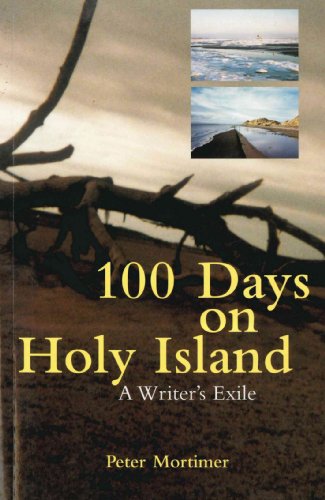
My first link is from the word ‘Island‘ in 100 Days on Holy Island by Peter Mortimer. The island is also known as Lindisfarne. This sense of being an outsider pervades the book. He always felt an ‘outsider’, not accepted by the locals. He wasn’t there as a tourist, nor had he gone to settle there, but he went with the intention of seeing how he coped with living there  for one hundred days and writing about it.

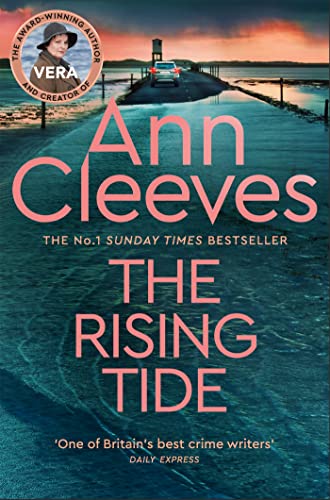
My second link is The Rising Tide by Ann Cleeves, the 10th Vera Stanhope mystery novel. It’s set on the Holy Island of Lindisfarne a tidal island just off the coast of Northumberland, only accessible across a causeway when the tide is out. DCI Vera Stanhope and her team investigate the death of Rick Kelsall who was discovered hanged from the rafters of his small bedroom on Holy Island. He is one of a group of friends who have met for a reunion each year on the island for the past fifty years

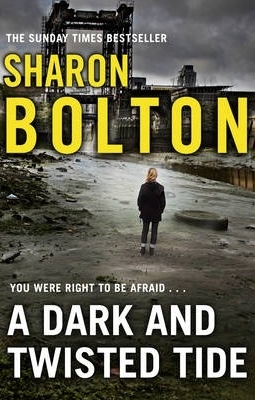
My third link is another book with the word ‘tide‘ in the title – A Dark and Twisted Tide by Sharon Bolton. This is such a terrifying novel, particularly if like me, you have a fear of drowning. Police Constable Lacey Flint thinks she’s safe. Living on the river, she’s never been happier. Until she finds a body floating on the surface, as she wild-swims in the Thames.

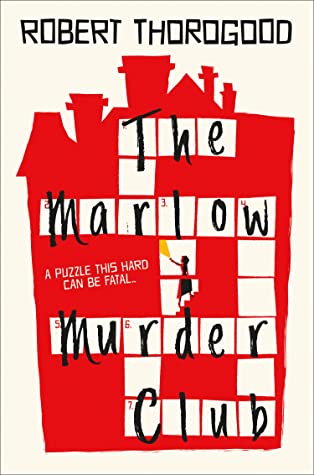
My fourth link is The Marlow Club Murder by Robert Thorogood a ‘cosy’ murder mystery. Seventy-seven year old Judith Potts is happy with her life, living in an Arts and Crafts mansion on the River Thames, although there are hints that there is something in her past she wants to forget. It’s the height of summer, in the grip of a heatwave, and Judith decides to take all her clothes off and go for swim in the Thames. She was enjoying herself when she hears a shout from her neighbour’s house on the opposite riverbank, followed by a gunshot. Later, when she goes to investigate, she finds him, dead in the river, with a bullet hole in the centre of his forehead. Judith is a crossword compiler, who writes cryptic clues.

So My fifth link is Puzzled: Secrets and Clues from a Life in Words by David Astle, a real life cryptic crossword compiler, a Melbourne-based writer of non-fiction, fiction and drama. He co-hosts Letters and Numbers (the Australian version of Countdown) as the dictionary expert, and his crosswords appear in Australian papers The Age and Sydney Morning Herald. Beginning with a Master Puzzle, he leads us through each of the clues, chapter by chapter, revealing the secrets of anagrams, double meanings, manipulations, spoonerisms and hybrid clues. More than a how-to manual and more than a memoir, Puzzled is a book for word junkies everywhere.

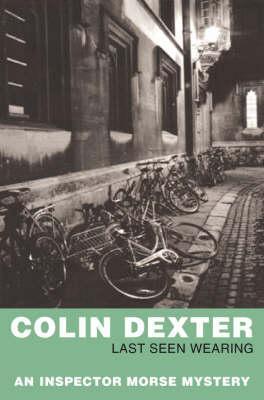
My final link is Last Seen Wearing by Colin Dexter the second book in the Inspector Morse books. Inspector Morse is perplexed when a letter of reassurance arrives from young Valerie Taylor, missing for more than two years and presumed dead, in a case that takes a bizarre turn when a mysterious body turns up. This book, like all of Dexter’s books, is a most complicated mystery, one of the ‘puzzle’ types. Dexter, himself, constructed crossword puzzles and made Morse a crossword aficionado. Morse is puzzled by this case, his brain seething in ceaseless turmoil, until he realised that if he shuffled the suspects and possibilities like the letters in an anagram the answer would come to him.

The books in my chain are a mix of crime fiction novels, and non fiction (Puzzled and 100 Days on Holy island). What is in your chain, I wonder?

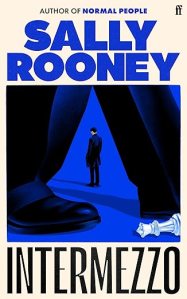
Next month (November 2, 2024), we’ll start with Sally Rooney’s latest release, Intermezzo.

Six Degrees of Separation from  After Story by Larissa Behrendt to The Butterfly Room by Lucinda Riley

It’s time again for Six Degrees of Separation, a monthly link-up hosted by Kate at Books Are My Favourite and Best. Each month a book is chosen as a starting point and linked to six other books to form a chain. A book doesn’t need to be connected to all the other books on the list, only to the one next to it in the chain.

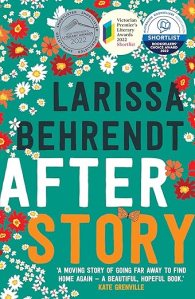
This month starts  After Story by Larissa Behrendt. This is the description on Amazon UK:

When Indigenous lawyer Jasmine decides to take her mother, Della, on a tour of England’s most revered literary sites, Jasmine hopes it will bring them closer together and help them reconcile the past. Twenty-five years earlier the disappearance of Jasmine’s older sister devastated their tight-knit community. This tragedy returns to haunt Jasmine and Della when another child mysteriously goes missing on Hampstead Heath. As Jasmine immerses herself in the world of her literary idols – including Jane Austen, the Brontë sisters and Virginia Woolf – Della is inspired to rediscover the wisdom of her own culture and storytelling. But sometimes the stories that are not told can become too great to bear. Ambitious and engrossing, After Story celebrates the extraordinary power of words and the quiet spaces between. We can be ready to listen, but are we ready to hear?

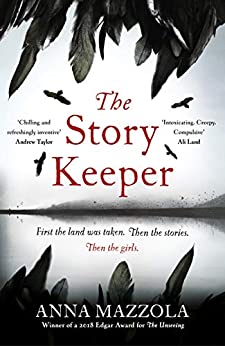
My first link is using the word Story, in the title, and it’s also a book about storytelling – The Story Keeper, set on the Isle of Skye in 1857, by Anna Mazzola. It stresses the importance of folk tales – stories that have been told to make sense of the world and reflect people’s strengths, flaws, hopes and fears. 

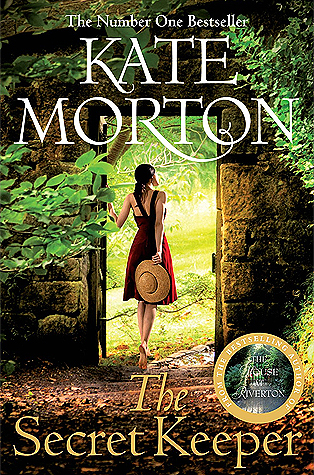
My second link is The Secret Keeper by Kate Morton, a story moving between time periods from 2011, back to the 1960s and also to the 1940s. It begins in 1961 in Suffolk when sixteen-year old Laurel is shocked when she sees her mother stabbing a stranger who had come to their farm. 

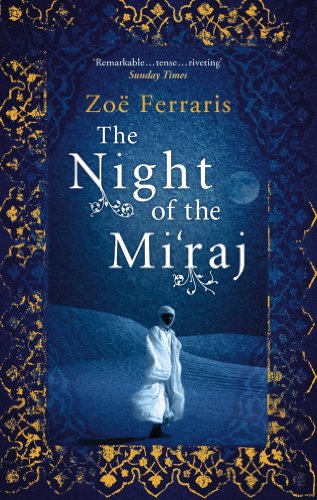
In my third link another sixteen year old girl, Nouf ash-Shrawi, disappears from her home in Jeddah, in The Night of the Mi’raj by Zoë Ferraris, just before her arranged marriage. Her body is eventually found in a desert wadi. It appears that her death was an accident and that she died by drowning in the wadi after a sudden storm.

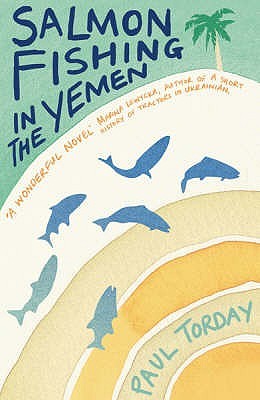
My fourth link is Salmon Fishing in the Yemen by Paul Torday about a project to introduce salmon fishing in the waters of the Wadi Aleyn in the heart of the mountains of Heraz, in Yemen.

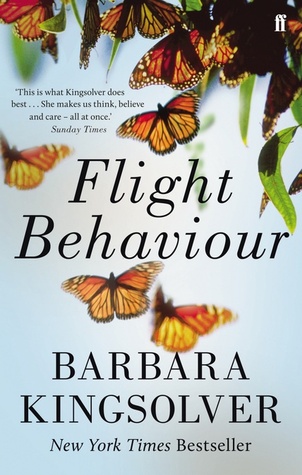
My fifth link takes the chain from the mountains of Heraz to the Appalachian Mountains in Flight Behaviour by Barbara Kingsolver in which a young mother discovers a beautiful and terrible marvel of nature: the monarch butterflies have not migrated south for the winter that year.

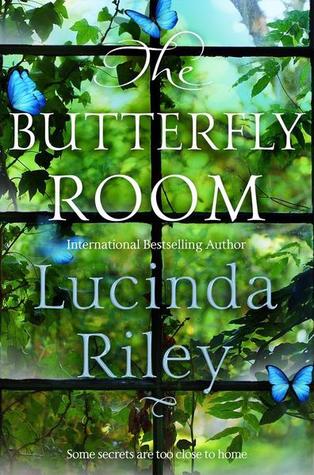
My final link is to The Butterfly Room by Lucinda Riley. The story revolves around Posy Montague and her family home, Admiral House in the Suffolk countryside. Her father encouraged her to draw plants and showed her how to catch butterflies. As a child Posy thought The Butterfly Room in the Folly in the grounds of Admiral House  looked like a fairy-tale castle with its turret made of yellow sandy brick. But the Folly was not the wonderful place she imagined – and there is a dark secret hidden behind its locked door.

The books in my chain are all fiction including historical fiction, mysteries and crime fiction. The chain travels through Australia, the UK, Saudi Arabia, Yemen and the USA,

Next month (October 5, 2024), we’ll start with Colm Tóibín’s Long Island.

Six Degrees of Separation from The Museum of Modern Love to:

It’s time again for Six Degrees of Separation, a monthly link-up hosted by Kate at Books Are My Favourite and Best. Each month a book is chosen as a starting point and linked to six other books to form a chain. A book doesn’t need to be connected to all the other books on the list, only to the one next to it in the chain.

This month starts with The Museum of Modern Love by by Heather Rose (Kate’s pick was inspired by Sue’s recent post about writers and artists). I haven’t read this, but I would like to. This is the description on Amazon UK:

Arky Levin, a film composer in New York, has promised his wife that he will not visit her in hospital, where she is suffering in the final stages of a terminal illness. She wants to spare him a burden that would curtail his creativity, but the promise is tearing him apart. One day he finds his way to MOMA and sees Mariana Abramovic in The Artist is Present. The performance continues for seventy-five days and, as it unfolds, so does Arky. As he watches and meets other people drawn to the exhibit, he slowly starts to understand what might be missing in his life and what he must do.

My first link is via a terminal illness to The Salt Path, Raynor Winn’s memoir about walking the South Coast Path when Moth her husband was diagnosed with a terminal illness. They were homeless, with no means of income except for £48 pounds a week. They had lost their home, business and livelihood, after investing in one of a friend’s companies that had failed. It is about the determination to live life, about overcoming pain and hardship, and the healing power of nature. It is about homelessness and the different reactions and attitudes of the people they met when they told them they were homeless.

My second link is How to Catch a Mole by Marc Hamer, part memoir, part a nature study of the British countryside, part poetry, and, of course, about moles. After leaving school Marc Hamer was homeless for a while. He has worked in art galleries, marketing, graphic design and taught creative writing in a prison before becoming a gardener. And before writing this book he had been a traditional molecatcher for years.

My third link is Hilary Mantel’s Giving Up the Ghost, a remarkable memoir. It came across to me as being clear, honest and very moving. She thought it was because of her that her parents were not happy and that without her they would have had a chance in life. It didn’t get any better when her father left home and she was left to live with two younger brothers, their mother and her mother’s lover. Home was a place where secrets were kept and opinions were not voiced. Her experience of ghosts at the age of 7 was horrifying as she felt as though something came inside her, ‘some formless, borderless evil’.

My fourth link is The Girl Who Died by Ragnar Jonasson, Icelandic noir, a mix of horror and psychological thriller, with a strong sense of place. Skálar is a close-knit community that doesn’t welcome newcomers, keeping its secrets well hidden. The only person who welcomes Una, to the village is Salka, the mother of Edda, one of the two girls Una is to teach. Her house is said to be haunted by the ghost of a young girl who had died fifty years earlier,

My fifth link is Asking for the Moon by Reginald Kill, a collection of four novellas. Two of them feature ghosts, Pascoe’s Ghost and Dalziel’s Ghost. But I think that the best one is the first story, The Last National Service Man which tells how Dalziel and Pascoe first met. Neither of them are impressed by the other. Dalziel thinks Pascoe is everything he dislikes – a graduate, well spoken, and a Southerner from south of Sheffield. Pascoe thinks Dalziel is an archetypical bruiser who got results by kicking down doors and beating out questions in Morse code on a suspect’s head.

My final link is to the final Inspector Morse novel, The Remorseful Day by Colin Dexter. The plot is detailed, complex and as usual, with Morse, a puzzle type murder mystery with plenty of challenging clues. Sergeant Lewis is left to investigate the murder of nurse Yvonne Harrison that had remained unsolved for a year. When Morse phones to say he is feeling unwell Lewis is most concerned – Morse seldom mentioned his health, what is wrong with him?

The main focus of the book is on Morse and how he copes with his illness and his drinking habits. It becomes obvious just how alone he is in the world and how devastating his situation is to Lewis.

The first three books in my chain are memoirs and the other three are crime fiction/psychological thriller novels. Beginning in America it travels to the UK, then to Iceland, before ending back in the UK.

Next month (September 7, 2024), we’ll start with  After Story by Larissa Behrendt.

Six Degrees of Separation from Kairos to The One I Was: July 2024

It’s time again for Six Degrees of Separation, a monthly link-up hosted by Kate at Books Are My Favourite and Best. Each month a book is chosen as a starting point and linked to six other books to form a chain. A book doesn’t need to be connected to all the other books on the list, only to the one next to it in the chain.

This month starts with Kairos by Jenny Erpenbeck. Kairos is the winner of the International Booker Prize 2024. An intimate and devastating story of the path of two lovers through the ruins of a relationship, set against the backdrop of a seismic period in European history. Translated from German by Michael Hofmann.

Berlin. 11 July 1986. They meet by chance on a bus. She is a young student, he is older and married. Theirs is an intense and sudden attraction, fuelled by a shared passion for music and art, and heightened by the secrecy they must maintain. But when she strays for a single night he cannot forgive her and a dangerous crack forms between them, opening up a space for cruelty, punishment and the exertion of power. And the world around them is changing too: as the GDR begins to crumble, so too do all the old certainties and the old loyalties, ushering in a new era whose great gains also involve profound loss.

My first link is another novel translated from German, Perfume:the story of a murderer by Patrick Süskind, translated from German by John E Woods. It is an extraordinary novel, a Gothic work in the vein of Edgar Allen Poe, or Oscar Wilde’s The Picture of Dorian Grey. It depicts the strange life of Jean-Baptiste Grenouille and is a book of smells. This is a horror story, one that made me not want to read it and yet also want to read it to the bitter end.

My second link is Tales of Mystery and Imagination by Edgar Allan Poe, which is a collection of Poe’s best stories containing all the terrifying and bewildering tales that characterise his work. As well as the Gothic horror of such famous stories as ‘The Pit and the Pendulum’, ‘The Fall of the House of Usher’, ‘The Premature Burial’ and ‘The Tell-Tale Heart’, all of Poe’s Auguste Dupin stories are included.

These are the first modern detective stories and include ‘The Murders in the Rue Morgue’, ‘The Mystery of Marie Roget’ and ‘The Purloined Letter’.

My third link stays on the theme of tales of horror with Tales of Terror by Robert Louis Stevenson, which are published in my copy of The Strange Case of Dr. Jekyll and Mr Hyde. It consists of two short stories, both written for the Christmas “crawler” tradition in 1884 and 1885. Christmas was a season traditionally associated with supernatural and creepy tales. The Body Snatcher is very much a traditional Christmas ghost story, beginning with four men gathered in an inn on a dark winter’s night telling tales round the fireside of grisly deeds. The other story is Olalla, a Gothic tale, set in an ancient Spanish castle surrounded by deep woodland, about a young man recovering from his war wounds and to “renew his blood”, who finds himself living with a strange family.

My fourth link moves away from horror stories to crime fiction, linked by the word ‘tales’ in the title. It is Telling Tales by Ann Cleeves, a book I have read but I didn’t write a review. It’s the 2nd of her Vera Stanhope series in which the residents of an East Yorkshire village are revisited with the nightmare of a murder that happened 10 years before. There was some doubt about the guilty verdict passed on Jeanie Long and now it would seem that the killer is still at large. Inspector Vera Stanhope builds up a picture of a community afraid of itself and of outsiders.

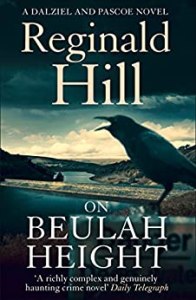
My fifth link is On Beulah Height, Reginald Hill’s 17th Dalziel and Pascoe novel. It’s also set in a Yorkshire village, Dendale. Three little girls had gone missing from the village one summer. Their bodies were never found, and the best suspect, a strange lad named Benny Lightfoot, was held for a time, then released. Fifteen years later another little girl, Lorraine, aged seven went out for a walk one morning with her dog before her parents got up and didn’t return home, reviving memories of the missing children from fifteen years earlier.

My final link is to a another book featuring a character called Benny – The One I Was by Eliza Graham – historical fiction split between the present and the past following the lives of Benny Gault and Rosamund Hunter. Benny first came to Fairfleet in 1939, having fled Nazi Germany on a Kindertransport train. As an adult he bought the house and now he is dying of cancer. Rosamund returns to Fairfleet, her childhood home, to nurse Benny. I was totally engrossed in both their life stories as the various strands of the story eventually combined.

Half of my chain consists of horror stories, not a genre I often read and the other half is made up of crime fiction novels, as usual.

Next month (August 3, 2024), we’ll start with  The Museum of Modern Love by Heather Rose (Kate’s pick was inspired by Sue’s recent post about writers and artists).

Six Degrees of Separation from Butter to the Betrayal of Trust: June 2024

It’s time again for Six Degrees of Separation, a monthly link-up hosted by Kate at Books Are My Favourite and Best. Each month a book is chosen as a starting point and linked to six other books to form a chain. A book doesn’t need to be connected to all the other books on the list, only to the one next to it in the chain.

This month starts with Butter by Asako Yuzuki, a novel of food and murder. Inspired by a true story this is described on Amazon as a cult Japanese bestseller about a female gourmet cook and serial killer and the journalist intent on cracking her case, a vivid, unsettling exploration of misogyny, obsession, romance and the transgressive pleasures of food in Japan.

My first link is based simply on the title Toast by Nigel Slater, because I love hot buttered toast. It’s the story of his childhood and adolescence told through food; food he liked and food he hated. There are no recipes, but descriptions of toast, cakes, puddings, jam tarts, pancakes, sweets and toffee, tinned ham, lamb chops – you name it and it’s in this book. It’s also a very frank book about a young boy’s feelings and a teenager’s sexual experiences, and his relationship with his mother whom he loved, and his father who sometimes scared him.

My second link is another book by Nigel Slater, Kitchen Diaries. This is an account of more or less everything Nigel cooked in the course of a year, presented as an illustrated diary. The photographs are sublime, and they are done in ‘real time’; they are photos of the food he cooked and ate on that day.The book follows the seasons so you can find suggestions about what is worth eating and when – a book to dip into throughout the year and for years to come. There are recipes for Onion Soup Without Tears, Thyme and Feta Lamb, Roast Tomatoes with Anchovy and Basil, Mushroom Pappardella, Stilton, Onion and Potato Pie and many many more.

My third link is another diary – Ink in the Blood: a Hospital Diary by Hilary Mantel. I was really pleased to find this because I loved Wolf Hall and had tickets for Hilary Mantel’s talk at the Borders Book Festival at Melrose in the summer of 2010.  She had to cancel that because she wasn’t well – I didn’t know just how ill she was. Ink in the Blood reveals all – how she had surgery to remove an intestinal obstruction that ended up in a marathon operation, followed by intense pain, nightmares and hallucinations. Writing was Hilary Mantel’s lifeline – it was the ink, as she wrote in her diary, that reassured her she was alive.

Hallucinations gives me My fourth link in Don’t Look Now, a short story (52 pages, one of five short stories in a collection of Daphne du Murier). It’s a supernatural tale about a couple, John and Laura who have come to Venice to recover after their young daughter’s death. They encounter two old women who claim to have second sight and find themselves caught up in a train of increasingly strange and violent events, involving hallucinations, mistaken identity and a murderer.

My fifth link is also set in Venice, Drawing Conclusions by Donna Leon. It’s the 20th book in her Commissario Guido Brunetti series. Brunetti is somewhat of a rarity in crime fiction novels – a detective who is happily married with two children. He doesn’t smoke or drink to excess and often goes home for lunch to his beautiful wife Paolo. I was immediately drawn into this book, with its wonderful sense of locality, believable characters and intricate plot. It’s more than crime fiction as Brunetti ponders on life, the problems of ageing, and the nature of truth and honesty. 

My final link is via ageing in the crime fiction novel The Betrayal of Trust by Susan Hill. It’s  character-driven, concentrating on the people involved in the crime, a cold case, that of a teenager missing for 16 years, and on Simon’s family. It focuses on the problems of ageing, hospice care, Motor Neurone Disease, assisted suicide, Parkinson’s Disease and Alzheimer’s Disease. A lot to cope with all at once and at times I found The Betrayal of Trust a deeply depressing book.

My chain consists mainly of mystery/crime fiction books, as usual, plus books on food and cooking and a frank account of a stay in hospital after a nightmare operation.

Next month (July , 2024), we’ll start with the 2024 winner of the International Booker PrizeKairos by Jenny Erpenbeck (translated by Michael Hofmann).

Six Degrees of Separation from The Anniversary to The Body on the Beach

It’s time again for Six Degrees of Separation, a monthly link-up hosted by Kate at Books Are My Favourite and Best. Each month a book is chosen as a starting point and linked to six other books to form a chain. A book doesn’t need to be connected to all the other books on the list, only to the one next to it in the chain.

This month starts with The Anniversary a novel longlisted for the 2024 Stella Prize, by Stephanie Bishop, a psychological thriller, described as a simmering page-turner about an ascendant writer, the unresolved death of her husband, and what it takes to emerge on her own’. I haven’t read this but it’s apparently about a married couple on a cruise celebrating their wedding anniversary. When a storm hits the ship the husband falls overboard and the truth about their marriage is gradually revealed.

My first link is The Woman in Cabin 10 by Ruth Ware. A type of locked room mystery. Journalist Lo Blacklock is on a luxury press launch on a boutique ship and hopes it will help her recover from a traumatic break-in at her flat. But woken in the night by a scream from cabin 10 next to hers she believes a woman was thrown over board, only to discover that the ship’s records show that cabin 10 was unoccupied.  I liked the beginning of the book but was a bit disappointed with it overall after liking the beginning of it so much.

My second link is a different type of cabin in Another Part of the Wood by Beryl Bainbridge. Joseph decides to take his mistress and son, together with a few friends, to stay in a cabin in deepest Wales for the weekend – with absolutely disastrous results. It is set in a holiday camp, which consists of huts in a wood at the foot of a mountain. The wood, as in fairy tales, is not a safe place.

Woods can be dangerous places – as in My third link, a book set in another wood in The Way Through the Woods by Colin Dexter. Inspector Morse aided by Sergeant Lewis investigates the case of a beautiful young Swedish tourist who had disappeared on a hot summer’s day somewhere near Oxford twelve months earlier. After unsuccessfully searching the woods of the nearby Blenheim Estate the case was unsolved, and Karin Eriksson had been recorded as a missing person. A year later the case is reopened.

Oxford gives me My fourth link in Gaudy Night by Dorothy L Sayers set Shrewsbury College, a fictional all female college, at Oxford University (based on Somerville College, Sayers’ own college). Harriet Vane is asked to find who is writing poison pen letters, writing nasty graffiti and vandalism causing mayhem and upset. An excellent book and a pleasure to read.

My fifth link is via the word ‘night‘ in the book title in The Night Hawks by Elly Griffiths, the 13th book in the Dr Ruth Galloway books. The Night Hawks are a group of metal detectorists. They are searching for buried treasure when they find a body on the beach in North Norfolk. At first DCI Nelson thinks that the dead man might be an asylum seeker, but he turns out to be a local boy, Jem Taylor, recently released from prison. Ruth is more interested in the treasure, a hoard of Bronze Age weapons also found on the beach.

My final link is to The Body on the Beach by Simon Brett,  first in his Fethering Mysteries, set in a fictitious village on the south coast of England. Neighbours Carole and Jude join forces to work out the identity of the body and the culprit. Carole is a retired civil servant, cautious and analytical, whereas Jude is impulsive, an alternative healer and very inquisitive (nosey). I quite like this series. They are entertaining whodunnits.

My chain consists mainly of mystery/crime fiction books, as usual.

Next month (June 4, 2024), we’ll start with  – Butter by Asako Yuzuki, a novel of food and murder.