Top Ten Tuesday is a weekly meme created by The Broke and the Bookish and now hosted by Jana at That Artsy Reader Girl. For the rules see her blog.
The topic this week is Books Set in Another Time (These can be historical, futuristic, alternate universes, or even in a world where you’re not sure when it takes place you just know it’s not right now.)
The difficulty I had with this post was choosing which books to feature out of so many possibilities. I decided to pick books that are set in the past and also in the future. I’ve listed them in chronological order.
The Past:
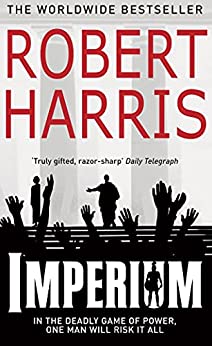
1.Imperium by Robert Harris, the first in his Cicero Trilogy, beginning in 79 BC, this book set in the Republican era is a fictional biography of Marcus Tullius Cicero by Tiro, his slave secretary.
Tiro was a real person who did write a biography of Cicero, which has since been lost in the collapse of the Roman Empire. Harris has based Imperium on, among other sources, Cicero’s letters, which Tiro had recorded, successfully interweaving Cicero’s own words with his own imagination. It is basically a political history, a story filled with intrigue, scheming and treachery in the search for political power as Cicero, a senator, works his way to power as one of Rome’s two consuls. I marked many passages that struck me as interesting and felt much of the struggle for power applies as much today as it did in Ancient Rome.
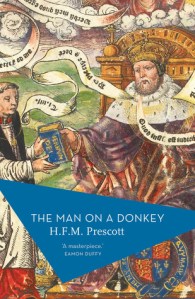
2. The Man on a Donkey by H,M, F. Prescott – set in 1536 -1537 (covering the same period as Hilary Mantel’s Wolf Hall trilogy)
An enthralling novel about a moment in history when England’s Catholic heritage was scattered to the four winds by a powerful and arrogant king. In 1536, Henry VIII was almost toppled when Northern England rose to oppose the Dissolution of the Monasteries. For a few weeks Robert Aske, the leader of the rebels, held the fate of the entire nation in his hand. It’s written in the form of a chronicle, written from the various characters’ viewpoints telling the story of the Pilgrimage of Grace. The Pilgrimage of Grace was not a revolution against Henry but an attempt to get him to change his mind and to understand how people felt. They wanted Henry to stop the dissolution and his attacks on the monks and nuns and to return the country to following the Pope.
Just like Mantel’s books, this book transported me back to that time, with lyrical descriptions of the settings, both of the countryside and of the towns, of Marrick Priory and of the king’s court, of the people, and the mood of the times, both religious and political.
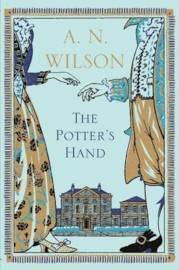
3. The Potter’s Hand by by A N Wilson – beginning in 1768 and roughly following the fortunes of the Wedgwood family until 1805, ten years after the death of Josiah Wedgwood, an English potter and the founder of the Wedgwood company.
For me it really did convey what it must have been like to live in that period – whilst the the American War of Independence, the French Revolution, were taking place. It was a time of great change (what time isn’t?) both social and political change as the industrial revolution got under way in England. It’s full of ideas about colonialism, the abolition of slavery, working conditions, and women’s rights. It brought about small changes as well as big ones.
It’s big on character (lots of them), the main ones being Josiah Wedgwood himself, ‘Owd Wooden Leg‘, his daughter Sukey, his nephew Tom Byerley, his childhood friend Caleb Bowers and Blue Squirrel, an American Cherokee Tom fell in love with in America. Overall it is the story of a remarkable family, their lives, loves, work, illnesses, depressions, addictions and deaths.
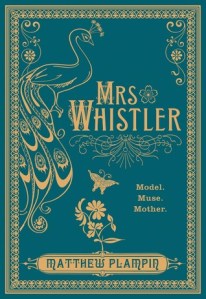
4. Mrs Whistler by Matthew Plampin – 1876 to 1880
I loved this novel about the American artist James McNeill Whistler and his model and mistress, Maud Franklin, the ‘Mrs Whistler‘ of the title. The book covers two episodes in their lives during the years 1876 to 1880 – a bitter feud with his patron Francis Leyland about his fee for painting The Peacock Room, and the libel trial in which Whistler sued the art critic John Ruskin, over a review that dismissed him as a fraud. These two events brought Whistler to the point of bankruptcy.
It’s a long book that moves quite slowly through these four years. I loved all the detail – of Whistler’s impetuous and rebellious character, his relationship with his brother and mother (the real Mrs Whistler), as well as with Maud – and the details of the house he had built in London on Tite Street in Chelsea, which he called the White House, his flight to Venice and most of all about his paintings.
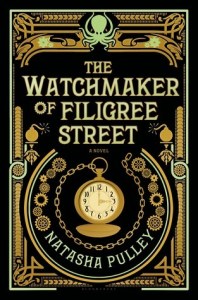
5. The Watchmaker of Filigree Street by Natasha Pulley – Victorian times, a mixture of historical fact and fantasy
This is set both in London and Japan, following the lives of the main characters, Thaniel Stapleton, Keita Mori and Grace Carrow. I was completely convinced by the setting in a different time in a world that was familiar and yet so different.
Keita Mori is an interesting character and as I read my opinion of him kept changing – just who is he? He is an enigma, why is he living in London, is he the bomb maker, does he in fact know what is going to happen, is he a magician? He baffled and confused me as much as he baffled and confused the other characters.
Equally fascinating are the sections set in Japan; Grace’s story, her research into luminiferous ether (a bit hard to follow), her relationship with Akira Matsumoto, the elegant son of a Japanese nobleman; the Japanese show village in Hyde Park where Gilbert and Sullivan went to research for the Mikado; the early days of the London Underground; and of course the clockwork inventions, in particular Katsu, the clockwork octopus.
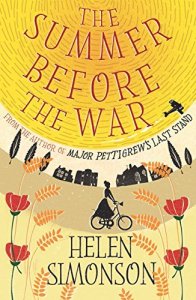
6. The Summer Before the War by Helen Simonson – 1914
This is really a book of two parts – the months before the outbreak of the First World War and then the events as the war got underway. It’s set in the summer of 1914, in Rye in East Sussex when spinster Beatrice Nash arrives to teach Latin at the local grammar school. It begins slowly with the first part describing the lazy, idyllic summer and in which all the characters are introduced. Although there is a clear distinction between the classes in society cracks are beginning to appear which will only widen as the century gets under way and the war acts as a catalyst for change.
Simonson doesn’t hold back on the horrific conditions under which the war took place and from a gentle beginning the book moves into a war novel, emotional and moving.
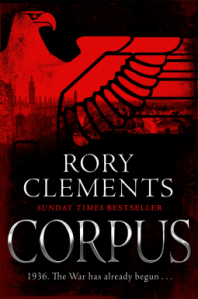
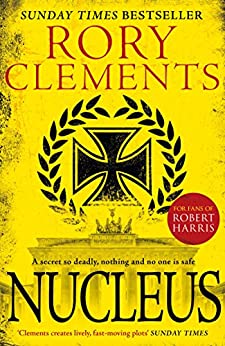
7. Corpus by Roy Clements – 1936
Set in 1936, a time when Europe was once more on the brink of war. Civil war has broken out in Spain, in Britain some people are openly supporting the Nazis in Germany and politicians are torn between wanting Edward VIII to abdicate the throne or give up his relationship with Wallis Simpson.
When a renowned member of the county set and his wife are found horribly murdered, Tom Wilde a history professor, finds himself dragged into a world of espionage which, until now, he has only read about in books. But the deeper he delves, the more he wonders whether the murders are linked to the death of the girl with the silver syringe – and, just as worryingly, to the scandal surrounding King Edward VIII and his mistress Wallis Simpson…
The Future:
8. The Passengers by John Marrs – the near future
This is a shocking book. I found it riveting, even if it is preposterous, and sinister with a frightening view of the future that may not be that ridiculous. It kept me glued to the page right to the end. Driverless cars have been developed to Level Five, with no steering wheels, pedals or a manual override option. A Hacker has taken over control of the cars, set them on a collision course, and tells each passenger that the destination they programmed into their GPS has been replaced with an alternative location. In approximately two hours time they are going to die. They are trapped inside unable to contact the outside world.
9.The Library of the Dead by T L Huchu, the first book in the Edinburgh Nights series, set in a future or alternative Edinburgh
It’s urban fantasy, with a wealth of dark secrets in its underground. Teenager Ropa, has dropped out of school to become a ghost talker and when a child goes missing in Edinburgh’s darkest streets, Ropa investigates his disappearance. Now she speaks to Edinburgh’s dead, carrying messages to those they left behind. A girl’s gotta earn a living, and it seems harmless enough. Until, that is, the dead whisper that someone’s bewitching children – leaving them husks, empty of joy and strength. It’s on Ropa’s patch, so she feels honor-bound to investigate. But what she learns will rock her world.
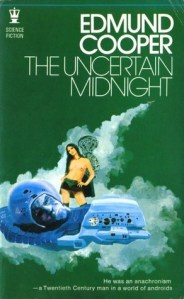
10. The Uncertain Midnight by Edmund Cooper – set on Earth in 2113
Earth is a world run by machines, androids, who have taken over the burdens of work and responsibility, a world where the humans are required to spend their lives in leisure pursuits, but are subject to ‘Analysis’ (brain-washing) if the androids think they are maladjusted.
John Markham emerges in 2113 after spending 146 years in suspended animation, frozen deep under ground after an atomic holocaust had devastated his world. In 2113 not all humans were happy to leave everything to the androids. Known as Runners these humans believed in ‘human dignity, freedom of action and the right to work’. Markham struggles to adapt and this raises the question of whether the androids could be said to be alive – leading to discussions about the definition of life, the difference between determinism and free will, and eventually leading to war between the androids and the Runners.





 BooksPlease