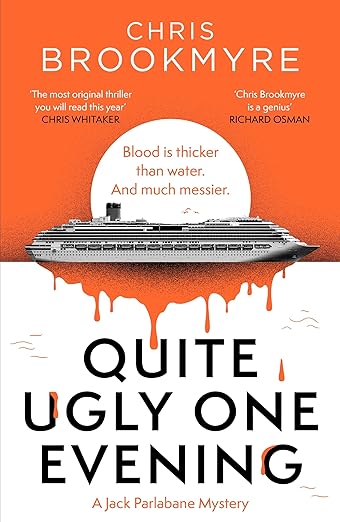
Quite Ugly One Evening by Chris Brookmyre

Abacus| 7 May 2026| 359 pages e-book| Review copy 4*

An Atlantic voyage. A family at war. A secret worth killing over.

Reporter Jack Parlabane thrives on chasing stories in unlikely places, and where could be less likely than a fan convention on a cruise liner celebrating a contentious Sixties TV series? But unlike the media family exploiting their show’s renewed relevance, he’s not there to stoke controversy: he’s there to solve a murder.

Already in deep water with his employer, Jack desperately needs a win, and solving this decades-old mystery could be it. Problem is, he’s in the middle of the Atlantic, and someone onboard has already killed once to keep their secret.

And that’s not even the tricky part. No, the tricky part is definitely the dead body locked in a stateroom with him, covered in his blood. Now Jack has to solve two murders, otherwise the only way he’s getting off this ship is in handcuffs – or in a body bag.

Quite Ugly One Evening by Chris Brookmyre is the ninth book in the Jack Parlabane series. Jack, now 60, is an investigative journalist, who finds himself in competition with his younger colleagues, grateful that he still has a job.

The first book by Chris Brookmyre I read was Quite Ugly One Morning, the first in the series. That was in 2010 and since then I have read and enjoyed more of his books, including those he’s written under the pseudonym Ambrose Parry with his wife, Marisa Haetzman. But, I haven’t read the other Jack Parlabane books. However, it wasn’t a problem and I don’t think you need to have read the other books to enjoy this one, as it does read well as a standalone.

It is a ‘locked room’ type mystery as the action takes place on a cruise liner as it crosses the Atlantic. The ship is full of fans of the Maskyn family’s 1960s TV puppet series, The Imaginators, attending a convention, symposium and 60th anniversary celebration. They are also looking to update the series as sixty years later the series is not only dated but also obviously racist in some of the puppet designs. And the family are split over a takeover bid from a billionaire, with some wanting to accept his offer and others bitterly opposed to it.

It’s also complicated, with a large cast of characters and multiple layers. It took me a while to work out who is who, as I was reading a proof copy which does not have the Maskyn family tree included in the published edition – it would have been really helpful. Jack is onboard after being approached by MI5 who want him to act as an undercover agent investigating the death of an agent, Simeon Wickham forty years earlier. MI 5 had intelligence that the Maskyns had been infiltrated by an agent of a foreign power at that time. Just who was Simeon Wickham, what was his involvement with the Maskyns and who killed him?

Right from the start of the book it appears that Jack is the main suspect for killing the man found dead in suite 1114. The first half is slow going with detailed descriptions of the layout of the ship, with Jack getting lost in the different staircases that looked the same, confused by the position and direction of the ship and not sure which deck he was on. There is a great deal of description about the TV puppet show and about the current criticism it’s attracting. However, the pace begins to speed up at about 49%, and it was a race to the end.

I thoroughly enjoyed it, murder, onboard a luxury line in the middle of the Atlantic, with a complex plot, interesting characters, social commentary, told with humour and a hint back to the Golden Age of murder mysteries.

20 Books of Summer 2026

The 20 Books of Summer challenge is back again this year hosted by Annabelle at AnnaBookBel.

  • The challenge runs from Monday June 1st to Monday August 31st
  • The first rule of 20 Books is that there are no real rules, other than signing up for 10, 15 or 20 books and trying to read from your TBR. (If you think you’ll only manage 5, that’s fine too.)
  • Pick your list in advance, or nominate a bookcase to read from, or pick just at whim from your TBR.
  • If you do pick a list, you can change it at any time – swap books in/out.
  • Don’t get panicked at not reaching your target, it’s not really a challenge as such.
  • Just enjoy a summer of great reading and make a bit of space on your shelves!
  • Don’t forget to add your posts to the monthly linkys. The final one will stay open till for a week into September to catch the last reviews.

I’ve taken part most years but usually never manage to read all the books I’ve listed, so this year I’m not listing any in advance, apart from the four books on my NetGalley shelf, all due to be published between now and the end of July.

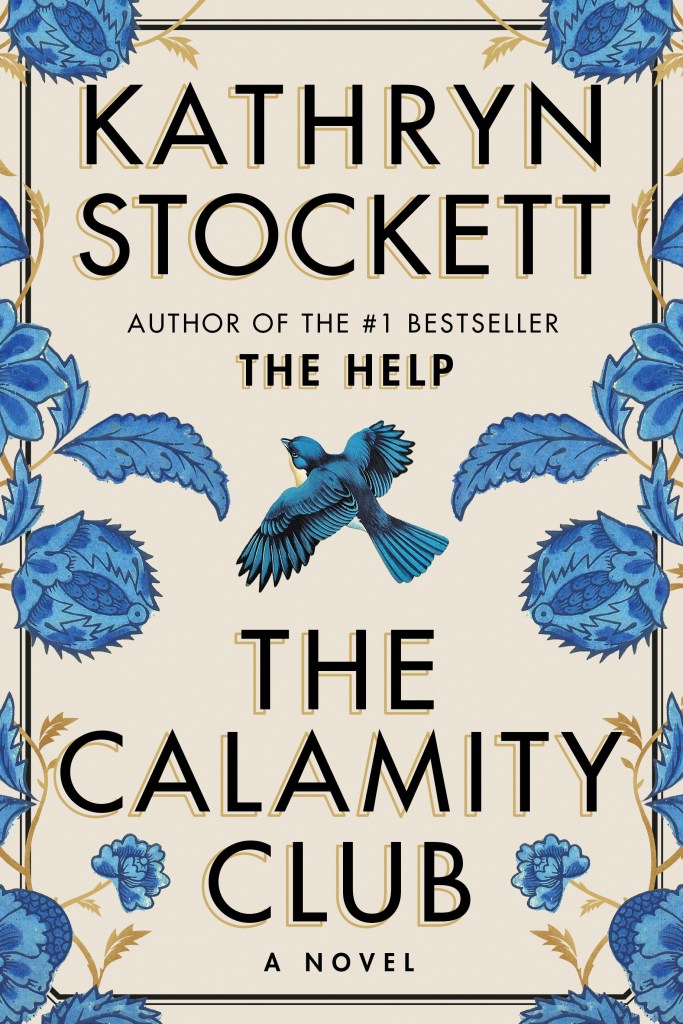
  • The Calamity Club by Kathryn Stockett, because I enjoyed her book The Help.
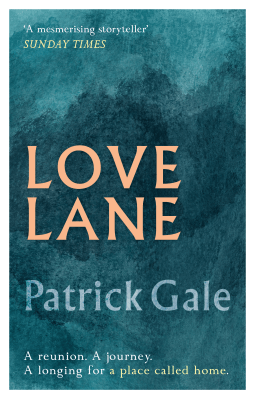
  • Love Lane by Patrick Gale, because I enjoyed his book A Perfectly Good Man.
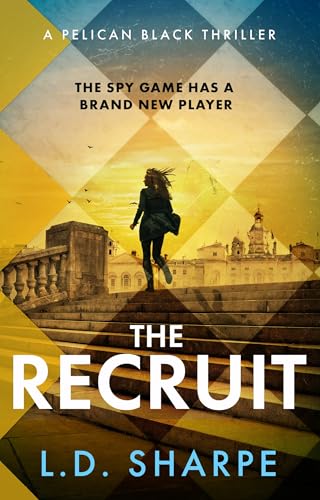
  • The Recruit by L D Sharpe, because I like spy thrillers.
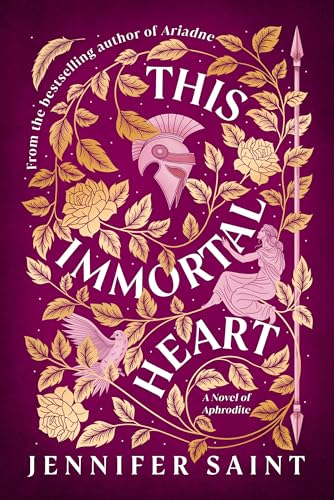
  • This Immortal Heart by Jennifer Saint, because I enjoy Greek Mythology.

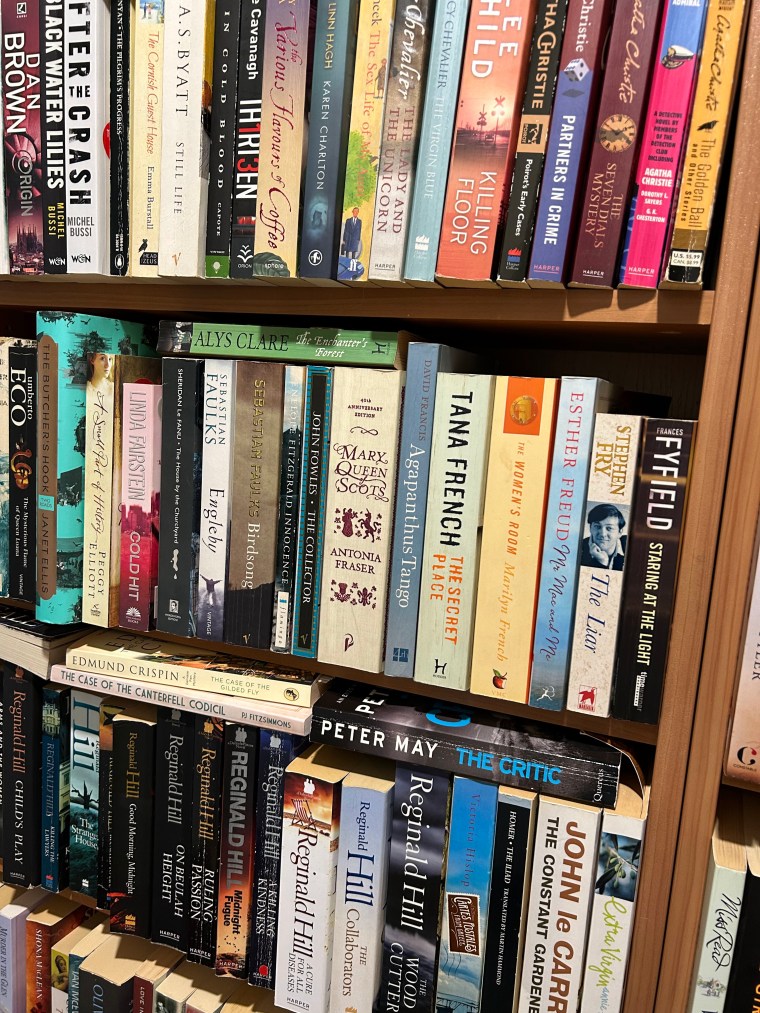
Apart from that they’ll all be books I pick as the fancy takes me from my TBRs in my ‘real’ bookcases and on my Kindle. The photo below shows some of my shelves.

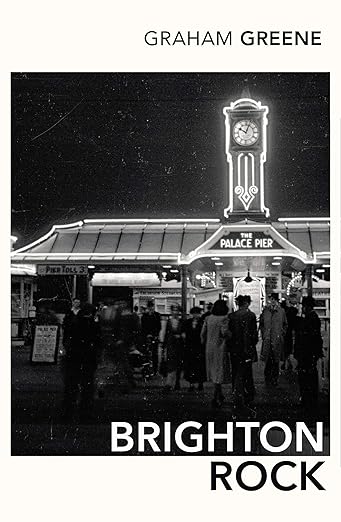
CC Spin #41 Book Review: Brighton Rock by Graham Greene

The latest Classic Club Spin challenged you to read book 11 on your CC Spin #41 list by 24th August. That was Brighton Rock by Graham Greene for me.

Vintage Digital| 2 October 2010| 258 pages| e-book| 4*

Description on Amazon:

A gang war is raging through the dark underworld of Brighton. Seventeen-year-old Pinkie, malign and ruthless, has killed a man. Believing he can escape retribution, he is unprepared for the courageous, life-embracing Ida Arnold. Greene’s gripping thriller exposes a world of loneliness and fear, of life lived on the ‘dangerous edge of things.

In this gripping, terrifying, and unputdownable read, discover Greene’s iconic tale of the razor-wielding Pinkie.

I’ve enjoyed some of Greene’s books, so I’ve been meaning to get round to reading Brighton Rock for some years and I was pleased it came up as my Spin book. It was his ninth book, first published in 1938, and one of his Catholic Novels (the others being The End of the AffairThe Power and the Glory and The Heart of the Matter). In his Introduction J M Coetzee writes that it was his first serious novel, serious in the sense of working with serious ideas. Brighton in the 1930s had two faces, one the attractive seaside resort, and the other a nest of criminal activity in the desolate industrial suburbs.

The opening line sets the scene for a murder – “Hale knew, before he had been in Brighton three hours, that they meant to murder him.’ Later he is found dead, apparently from a heart attack. Ida Arnold, who had met Fred as he tried to evade the gang, had left him alone for a few minutes and when she returned he was nowhere to be seen. She is determined to find out what really had happened to him as the official account of his death doesn’t match up with what she knew. So when the police ignore what she says she carries out her own investigation. She believes in Right and Wrong – to Ida death was the end of everything, she didn’t believe in heaven or hell, and she wants justice for Fred.

To say that Pinkie Brown, the teenage gangleader, is a complex character is an understatement. He is desperately trying to cover up his involvement with Fred. Rose is a young innocent girl who could reveal his guilt although she doesn’t realise it. Pinkie believes that if he marries her she wouldn’t be able to give evidence against him. Both of them are Roman Catholics. Rose believes in Good and Evil and salvation, whereas Pinkie believes in Hell fire and damnation, but is unsure about the existence of Heaven. He becomes increasingly paranoiac, more desperate and violent.

This novel is bleak, full of violence, menace and suspense, not a book I could enjoy. I struggled at first to understand what was going on and who all the characters were. It’s an odd mixture really – a crime is committed and the amount of violence is shocking, but it is also a psychological character study and an in-depth consideration of the questions of life and death. It’s a tough book to read and to review without giving away any spoilers, which is why I haven’t gone into much detail about the plot. Whilst it is not my favourite book by Graham Greene, it is well written with memorable characters and brilliantly described which brings it all vividly and terrifyingly to life.

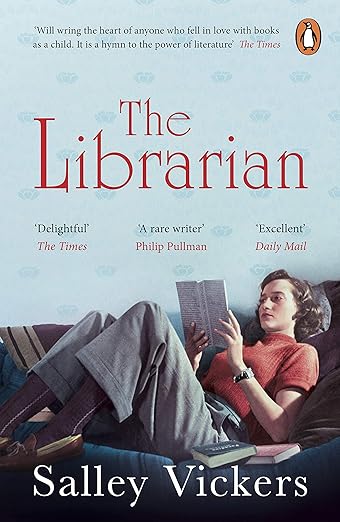
The Librarian by Salley Vickers

Penguin |26 April 2018 | 388 pages| paperback| 3*

Description from Amazon:

In 1958, Sylvia Blackwell, fresh from one of the new post-war Library Schools, takes up a job as children’s librarian in a run down library in the market town of East Mole.

Her mission is to fire the enthusiasm of the children of East Mole for reading. But her love affair with the local married GP, and her befriending of his precious daughter, her neighbour’s son and her landlady’s neglected grandchild, ignite the prejudices of the town, threatening her job and the very existence of the library with dramatic consequences for them all.

The Librarian is a moving testament to the joy of reading and the power of books to change and inspire us all.

‘Underneath the delightful patina of nostalgia for post-War England, there are stern and spiky questions about why we are allowing our children to be robbed of their heritage of story.’ Frank Cottrell Boyce

‘Vickers has a formidable knack for laying open the human heart’ Sunday Times

The Librarian is one of my TBRs (a paperback I bought four years ago) and also one of the books I decided to read as one of my 20 Books of Summer 2025. Frances @ Volatile Rule also identified it as one of her 10 Books of Summer and suggested we could do a buddy read. I am really looking forward to reading what she thinks about it.

I wanted to read The Librarian because I’ve enjoyed some of Salley Vickers’ books – especially Miss Garnet’s Angel and Mr Golightly’s Holiday (both of which I read pre-blogging). But I have to say that I was rather underwhelmed. It seems a bit shallow as I was expecting something that dug deeper beneath the surface, exploring the characters’personalities in more depth. I found the writing style naïve. Nevertheless I did enjoy it. It’s a simple story, simply told, a light read.

Having said that it does reflect life in the 1950s, a time when memories of the Second World War and Hiroshima still lingered. It’s strong on family relationships, and attitudes towards marriage, sex, and morals and shows the class divisions and the social inequality that existed, one in which the role of women was very different from that of today. It also looks at education and the nature of the 11+ exam and its divisive effects on children in deciding whether they went to a grammar or secondary modern or technical school.

In 1958 Sylvia Blackwell moves to East Mole, a fictional town, to become the Children’s Librarian. The town is described as ‘one of those small, middle-English country towns whose reputation rests on an understanding that it has known better days.’ The library is in a redbrick Victorian building that has been neglected over the years and the Children’s Library has suffered from a lack of adequate funding. It contained an outdated collection of books by mainly once fashionable Victorian authors, most of which could ‘hardly pass for children’s reading in the twentieth century.’ Sylvia is keen to update it and to introduce new books to encourage the children to use the library.

Sylvia is renting one of the cottages in Field Row on the outskirts of East Mole, a redbrick terrace, originally a two up, two down building with no inside WC, no bathroom or running hot water. It’s a damp cottage that her landlady, Mrs Bird, had modernised by adding a toilet next to the kitchen and had squeezed in a bathroom upstairs with a chipped bath and water-stained basin. Sylvia thinks it’s rustic and picturesque with its tiled roof greened over with moss.

Sylvia’s neighbours in the terrace of five houses are June and Ray Hedges, and Sam, their son and his little twin sisters, and Mr Collins, a councillor who is a member of the library committee. She gets on well with the Hedges, particularly so with the children. However, Mr Collins is not so friendly, almost antagonistic towards her. She has an affair with Hugh the local doctor, an older married man, putting her job in jeopardy and indeed threatening the closure of the Children’s Library. It causes problems between Hugh’s daughter and Sam. Sylvia’s work life and personal life become entangled, which has both negative and positive consequences for everyone involved.

I think the most interesting part for me is that it is about libraries in 1958, as I was also a librarian, although not a Children’s Librarian, like Sylvia. And I was a child in the 1950s and and used the local town library from the age of 4, so reading this has brought back many memories of using and working in libraries.

I was less enthusiastic about the ending set some sixty years later, when the library was threatened once again with closure. One of the children returned, now a famous author, to speak at an event which they hope might help to keep the library open, thus giving an update on the lives of some of the characters. However, I think it’s too long and neatly ties up all the loose ends. The book doesn’t need it.

In her Author’s Note at the end of the book, Salley Vickers writes:

The years I have spent as a novelist have taught me that there is no knowing how people will take one’s books. And I really believe that a book is finally made by its readers. Books should not be ‘about’ anything but if this book expresses any special interest it is the interest I acquired as a child in reading. The Librarian grew out of my experience as a young girl with a superb local library and a remarkable Children’s Librarian, Miss Blackwell, whose surname I have stolen (I never knew her first name) for my protagonist.

There’s also a list of children’s books from East Mole Library ‘Recommended reading from East Mole Library’, including some of my favourite books I read as a child and some I missed.

What I have taken from this book is Salley Vickers’ love of reading and enthusiasm for opening the children’s eyes to the joy of reading. It centres on Sylvia and her experiences not only as a Children’s Librarian but as a rather naive young woman in her second job away from her parents and her home. And it is that side of the story that I found less engaging. Salley’s inexperience makes her easy prey for Hugh and I thought the outcome was so predictable.

Salley Vickers

Salley Vickers was born in Liverpool, the home of her mother, and grew up as the child of parents in the British Communist Party. She won a state scholarship to St Paul’s Girl’s School and went on to read English at Newnham College Cambridge.

She has worked, variously, as a cleaner, a dancer, an artist’s model, a teacher of children with special needs, a university teacher of literature, and a psychoanalyst. Her first novel, ‘Miss Garnet’s Angel’, became an international word-of-mouth bestseller. She now writes full time and lectures widely on many subjects, particularly the connections between, art, literature, psychology and religion.

Her principal interests are opera, bird watching, dancing, and poetry. One of her father’s favourite poets, W.B.Yeats, was responsible for her name Salley, (the Irish for ‘willow’) which comes from Yeats’s poem set to music by Benjamin Britten ‘Down by the salley gardens’.(Goodreads)

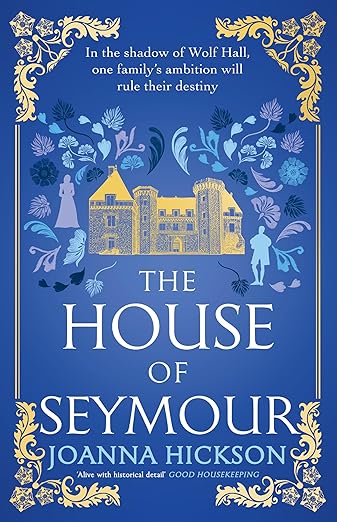
The House of Seymour by Joanna Hickson

This is my third short post to catch up with reviewing books I’ve read recently.

HarperCollins |22 May 2025| 406 pages| e-book| Review book| 3.5*

When Isabel Williams is betrothed to John Seymour, Lord of Wolf Hall Manor, she hopes that love and respect will come, despite his cold streak of ruthless ambition.

Jess the shepherdess tends her flock on the wild spaces of Avebury close by, dismissing those who believe it is work for men. Forced to flee after falling under suspicion for the disappearance of a young man, Isabel’s offer of life with the growing Seymour family is the only refuge available to her.

As John’s ambition draws them into the orbit of the divided court of the young King Henry VI, his hunger to succeed takes on a darker edge. Isabel realises her husband will pay any price to get what he wants, even if it means destroying those he has sworn to protect…

I’ve read some of Joanna Hickson’s historical fiction novels so I was hoping I’d enjoy The House of Seymour, the first in a new trilogy. However, even though it is entertaining reading I felt it’s rather underwhelming, but maybe my expectations were too high.

It opens with a Prologue set in 1537 with Jane Seymour towards the end of her pregnancy looking at a proposed new Seymour coat of arms. She was upset that it didn’t include the badges of her mother and grandmother who were commoners.

The story then goes back over a hundred years to 1424 where we meet Isabel Williams, Jane’s great great grandmother, the daughter of a wealthy merchant. She married John Seymour (c. 1395/1402 – 20 December 1464) Lord of Wulf (Wolf) Hall in Savernake Forest, Wiltshire. Isabel and John’s marriage was not an easy one. John was ambitious, cruel and ruthless, determined to gain the support of Humphrey, the Duke of Gloucester and Protector of the boy king Henry VI. Alongside Isabel’s story is that of Jess, a young shepherdess, who left her home at Avebury, accused of witchcraft. She and Isabel had met at the Easton Priory and after hearing her story Isabel offered her a place in her household to look after her young son.

I really liked the settings, Wolf Hall, close to Savernake Forest, a remnant of primeval forest which became a royal forest soon after the Norman Conquest, and the village of Avebury with its henge and stone circles and the Long Barrow on Silbury Hill, a Neolithic burial site. I enjoyed the details of family life in the fifteenth century at Wolf Hall, and the details about hunting wolves and sheep farming. But overall I think this is very light historical fiction.

At the end of the book there is a useful glossary of words, such as ‘manchet‘, which is the best ‘white-flour’ bread served in wealthy homes, and also a section containing the author’s notes, giving information about the places mentioned, which I think are well worth reading.

Many thanks to Netgalley/Joanna Hickson/HarperCollins UK for a digital review copy of this title.

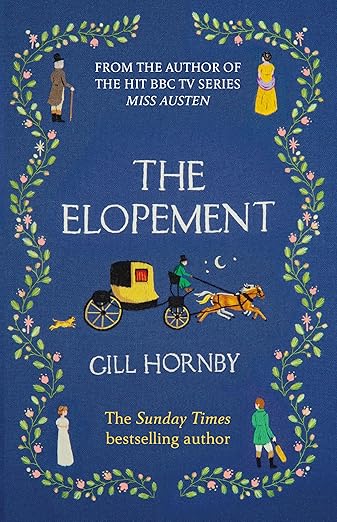
The Elopement by Gill Hornby

Another short post as I’m catching up with the backlog of books I haven’t reviewed.

Penguin |22 May 2025| 469 pages| e-book| Review book| 3*

1820. Mary Dorothea Knatchbull is living under the sole charge of her widowed father, Sir Edward – a man of strict principles and high Christian values. But when her father marries Miss Fanny Knight of Godmersham Park, Mary’s life is suddenly changed. Her new stepmother comes from a large, happy and sociable family and Fanny’s sisters become Mary’s first friends. Her aunt, Miss Cassandra Austen of Chawton, is especially kind. Her brothers are not only amusing, but handsome and charming.

And as Mary Dorothea starts to bloom into a beautiful young woman, she forms an especial bond with one Mr Knight in particular. Soon, they are deeply in love and determined to marry. They expect no opposition. After all, each is from a good family and has known the other for some years.

It promises to be the most perfect match. Who would want to stand in their way?

The Elopement by Gill Hornby is historical fiction about the life of Jane Austen’s niece Fanny Knight and Mary Dorothea Knatchbull, Fanny’s stepdaughter. I wanted to read it because I loved her earlier books about Jane Austen’s extended family, Miss Austen and Godmersham Park. However, I was a bit disappointed as I think it fails to capture that flavour of Jane Austen’s novels that I have loved ever since I first read Pride and Prejudice as a young teenager.

There are many characters listed at the beginning of the book – there are the Knights of Godmersham Park; the Knatchbulls of Mersham-le-Hatch and the Austens of Chawton Cottage, where Cassandra, Jane Austen’s elder sister, and her mother lived. Cassandra Austen only has a cameo role.

Fanny’s father was Edward Austen, who was adopted by the wealthy Knight family (Thomas Knight was a cousin), taking their name in 1812. In 1820 Fanny married Sir Edward Knatchbull, a widower, with six children. Fanny and Mary Dorothea, the only daughter, had a difficult relationship right from the start, unable to break through their natural reserve. Fanny is not a warm character and Mary is reluctant to accept her as a substitute mother – neither of them are willing to be open with each other and maintain an icy politeness. However, Mary and Fanny’s brothers and sisters get on well; very well with one brother in particular.

I didn’t find it evenly paced, beginning very slowly with a rushed ending. I found the first part of the book was too drawn out (even boring in parts) and I thought I’d have to abandon it, but I read on and the second part held my interest and I finished the book. I liked the insight into the wider Austen family and the social context – family relationships, attitudes towards duty, marriage, the position of women and the dangers of childbirth.

The Author’s Note is very interesting, explaining that the narrative exactly follows Fanny Knight’s record of events she recorded in her daily journals that she kept from 1804, when she was eleven years old until she was eighty. Gill Hornby highlights:

‘ … the perilous nature of the lives of the married women. The birth of every child is a moment of danger. The loved ones of expectant mothers are on high alert. … If you married young and were happily fertile, then it was a game of Russian roulette, year after year.

Many thanks to the publishers for a review copy via NetGalley.