Six Degrees of Separation from Kairos to The One I Was: July 2024

It’s time again for Six Degrees of Separation, a monthly link-up hosted by Kate at Books Are My Favourite and Best. Each month a book is chosen as a starting point and linked to six other books to form a chain. A book doesn’t need to be connected to all the other books on the list, only to the one next to it in the chain.

This month starts with Kairos by Jenny Erpenbeck. Kairos is the winner of the International Booker Prize 2024. An intimate and devastating story of the path of two lovers through the ruins of a relationship, set against the backdrop of a seismic period in European history. Translated from German by Michael Hofmann.

Berlin. 11 July 1986. They meet by chance on a bus. She is a young student, he is older and married. Theirs is an intense and sudden attraction, fuelled by a shared passion for music and art, and heightened by the secrecy they must maintain. But when she strays for a single night he cannot forgive her and a dangerous crack forms between them, opening up a space for cruelty, punishment and the exertion of power. And the world around them is changing too: as the GDR begins to crumble, so too do all the old certainties and the old loyalties, ushering in a new era whose great gains also involve profound loss.

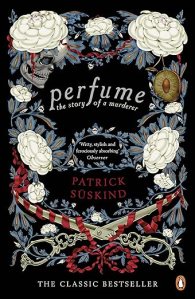
My first link is another novel translated from German, Perfume:the story of a murderer by Patrick Süskind, translated from German by John E Woods. It is an extraordinary novel, a Gothic work in the vein of Edgar Allen Poe, or Oscar Wilde’s The Picture of Dorian Grey. It depicts the strange life of Jean-Baptiste Grenouille and is a book of smells. This is a horror story, one that made me not want to read it and yet also want to read it to the bitter end.

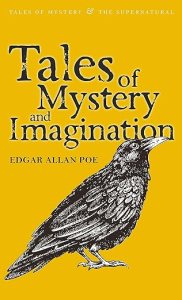
My second link is Tales of Mystery and Imagination by Edgar Allan Poe, which is a collection of Poe’s best stories containing all the terrifying and bewildering tales that characterise his work. As well as the Gothic horror of such famous stories as ‘The Pit and the Pendulum’, ‘The Fall of the House of Usher’, ‘The Premature Burial’ and ‘The Tell-Tale Heart’, all of Poe’s Auguste Dupin stories are included.

These are the first modern detective stories and include ‘The Murders in the Rue Morgue’, ‘The Mystery of Marie Roget’ and ‘The Purloined Letter’.

My third link stays on the theme of tales of horror with Tales of Terror by Robert Louis Stevenson, which are published in my copy of The Strange Case of Dr. Jekyll and Mr Hyde. It consists of two short stories, both written for the Christmas “crawler” tradition in 1884 and 1885. Christmas was a season traditionally associated with supernatural and creepy tales. The Body Snatcher is very much a traditional Christmas ghost story, beginning with four men gathered in an inn on a dark winter’s night telling tales round the fireside of grisly deeds. The other story is Olalla, a Gothic tale, set in an ancient Spanish castle surrounded by deep woodland, about a young man recovering from his war wounds and to “renew his blood”, who finds himself living with a strange family.

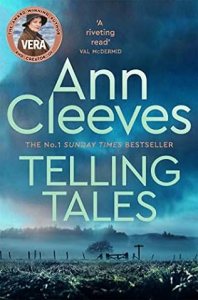
My fourth link moves away from horror stories to crime fiction, linked by the word ‘tales’ in the title. It is Telling Tales by Ann Cleeves, a book I have read but I didn’t write a review. It’s the 2nd of her Vera Stanhope series in which the residents of an East Yorkshire village are revisited with the nightmare of a murder that happened 10 years before. There was some doubt about the guilty verdict passed on Jeanie Long and now it would seem that the killer is still at large. Inspector Vera Stanhope builds up a picture of a community afraid of itself and of outsiders.

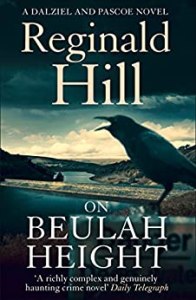
My fifth link is On Beulah Height, Reginald Hill’s 17th Dalziel and Pascoe novel. It’s also set in a Yorkshire village, Dendale. Three little girls had gone missing from the village one summer. Their bodies were never found, and the best suspect, a strange lad named Benny Lightfoot, was held for a time, then released. Fifteen years later another little girl, Lorraine, aged seven went out for a walk one morning with her dog before her parents got up and didn’t return home, reviving memories of the missing children from fifteen years earlier.

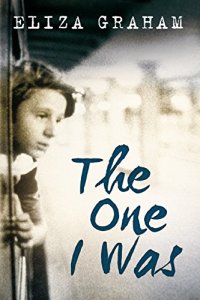
My final link is to a another book featuring a character called Benny – The One I Was by Eliza Graham – historical fiction split between the present and the past following the lives of Benny Gault and Rosamund Hunter. Benny first came to Fairfleet in 1939, having fled Nazi Germany on a Kindertransport train. As an adult he bought the house and now he is dying of cancer. Rosamund returns to Fairfleet, her childhood home, to nurse Benny. I was totally engrossed in both their life stories as the various strands of the story eventually combined.

Half of my chain consists of horror stories, not a genre I often read and the other half is made up of crime fiction novels, as usual.

Next month (August 3, 2024), we’ll start with  The Museum of Modern Love by Heather Rose (Kate’s pick was inspired by Sue’s recent post about writers and artists).

Top Ten Tuesday: Books with My Favourite Colour on the Cover

Top Ten Tuesday is a weekly meme created by The Broke and the Bookish and now hosted by Jana at That Artsy Reader Girl. For the rules see her blog.

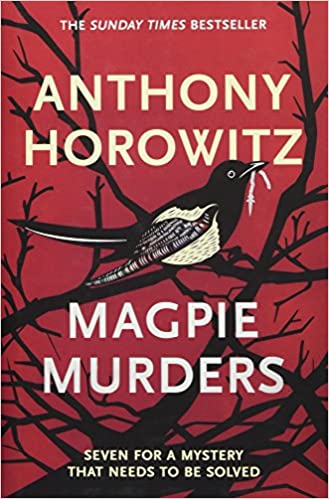
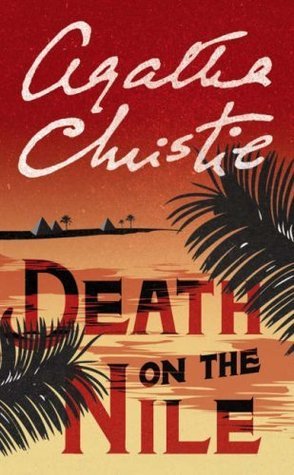
The topic this week is Books with My Favourite Colour on the Cover. Here they are in various shades of red:

Magpie Murders by Anthony Horowitz – a prime example of a puzzle-type of crime fiction combining elements of the vintage-style golden age crime novel with word-play and cryptic clues and allusions to Agatha Christie and Arthur Conan Doyle. It’s also a novel within a novel, with mystery piled upon mystery. I loved it.

The Sentence is Death by Anthony Horowitz – the second book in the Hawthorne and Horowitz Mystery series in which Daniel Hawthorne, an ex-policeman, now a private investigator, who the police call in to help when they have a case they call a ‘sticker’. What I found particularly interesting was the way that Anthony Horowitz inserted himself into the fiction, recruited by Hawthorne to write a book about him and the cases he investigates.

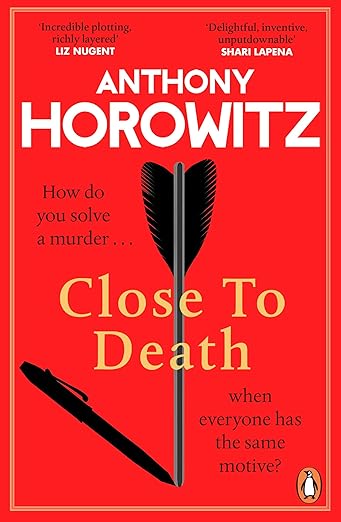
Close to Death by Anthony Horowitz – the fifth literary whodunit in the Hawthorne and Horowitz series, Detective Hawthorne is once again called upon to solve an unsolvable case—a gruesome murder in an idyllic gated community in which suspects abound, aided by Horowitz, as a fictional character.

Wolf Hall by Hilary Mantel – historical fiction, the story of Thomas Cromwell, the son of a blacksmith, and his political rise, set against the background of Henry VIII’s England and his struggle with the Pope over his desire to marry Anne Boleyn. This is the first in the Wolf Hall trilogy, based on the life of Thomas Cromwell (c. 1485-1540), who rose from obscurity to become chief minister of King Henry VIII of England.

Death on the Nile by Agatha Christie, a pre-Second World War crime fiction novel. It shows Agatha Christie’s interest in Egypt and archaeology and also reflects much of the flavour and social nuances of the pre-war period. In it she sets a puzzle to solve –  who shot Linnet Doyle, the wealthy American heiress? Although the novel is set in Egypt, an exotic location, it is essentially a ‘locked room mystery’.

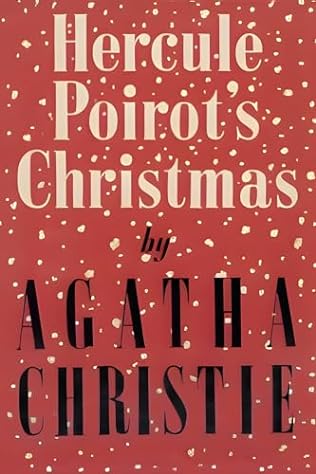
Hercule Poirot’s Christmas by Agatha Chistie in which Poirot investigates the death of Simeon Lee, the head of the Lee family. None of his family like him, in fact most of them hate him and there are plenty of suspects for his murder. He is found dead with his throat cut in a locked room – locked from the inside.

Wild Fire by Ann Cleeves, the 8th and last book in Ann Cleeves’ Shetland series. I have loved this series ever since I read the first book, Raven Black, back in 2010. And because I began reading the books before they were televised my picture of Inspector Jimmy Perez is drawn from them rather than from the dramatisations. There are some significant changes  between the TV dramatisations and the books. I love the books, but still enjoyed the TV adaptions.

Red Bones by Ann Cleeves, the third book in her Shetland Quartet. It’s set on Whalsay, where two young archaeologists, excavating a site on Mima Williams’s land, discover human bones. They are sent away for testing – are they an ancient  find or are the bones more contemporary?

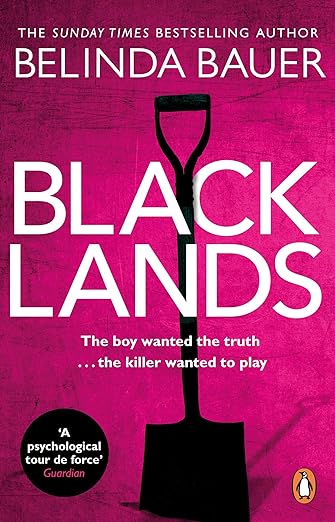
Blacklands by Belinda Bauer, crime fiction. This is an absolutely gripping battle of wits between Stephen aged twelve and serial killer Arnold Avery as they exchange letters about the whereabouts of Stephen’s uncle’s body.

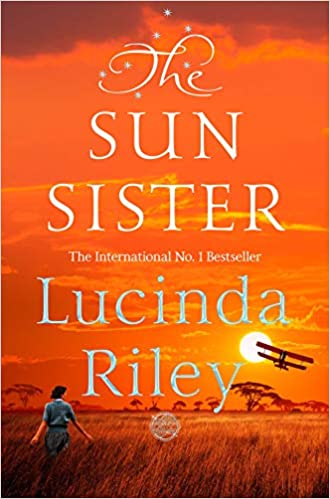
The Sun Sister by Lucinda Riley – the only book on this list that I haven’t yet read. It’s the sixth book in The Sven Sisters series, the story of love and loss, inspired by the mythology of the famous star constellation. It’s one of my TBRs only because I’m reading the series in order and so far I’ve read the first three books.

Top Ten Tuesday: Most Anticipated Books Releasing During the Second Half of 2024

Top Ten Tuesday is a weekly meme created by The Broke and the Bookish and now hosted by Jana at That Artsy Reader Girl. For the rules see her blog.

The topic this week is Most Anticipated Books Releasing During the Second Half of 2024. I don’t own any of these books – but I do fancy reading them:

To be published 2 July 2024:

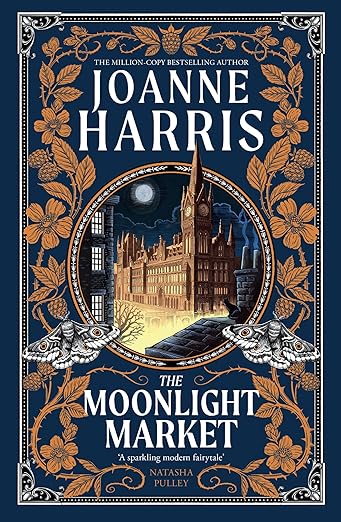
The Moonlight Market by Joanne Harris, a ‘modern fairy tale’ about a secret market that appears only in moonlight, where charms and spells are bought with memories.

To be published 18 July 2024:

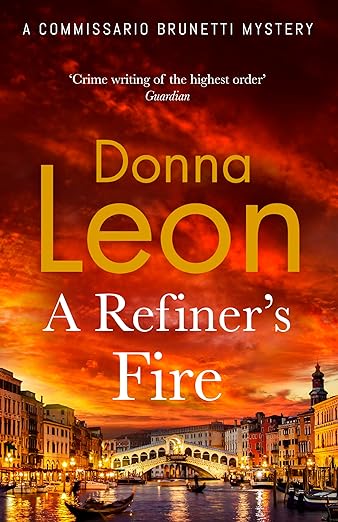
A Refiner’s Fire by Donna Leon, the 33rd Commissario Guido Brunetti in which he confronts a present-day Venetian menace and the ghosts of a heroism that never was.

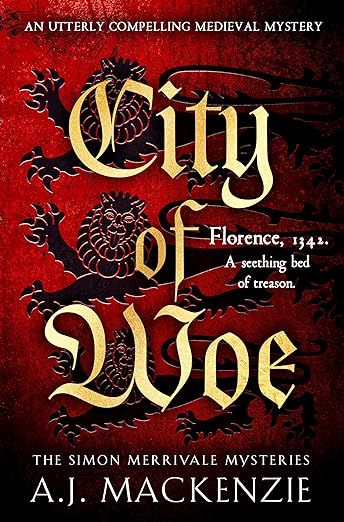
City of Woe by A.J. Mackenzie, the 2nd Simon Merrivale mystery. Florence, 1342. A city on the brink of chaos. Restored to favour at court, King’s Messenger Simon Merrivale accompanies an English delegation to Florence, to negotiate a loan to offset King Edward III’s chronic debt.

To be published 22 August 2024:

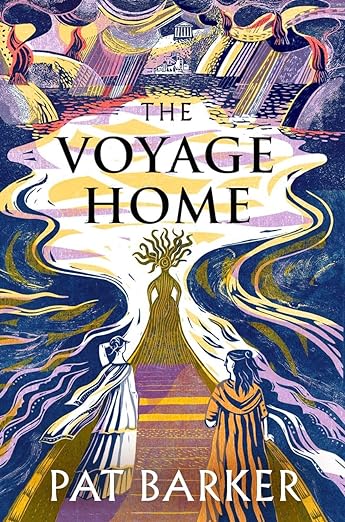
The Voyage Home by Pat Barker, the 3rd book in the Troy series, historical fiction, the follow-up to The Women of Troy and The Silence of the Girls.

To be published 29 August 2024:July 2024:

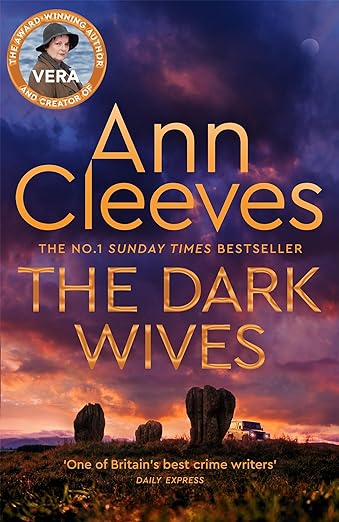
The Dark Wives by Ann Cleeves , Vera, Book 11, crime fiction, following on from The Rising Tide, which I loved.

Precipice by Robert Harris, historical fiction, summer 1914, 26-year-old Venetia Stanley – aristocratic, clever, bored, reckless – is having a love affair with the Prime Minister, H. H. Asquith, a man more than twice her age.

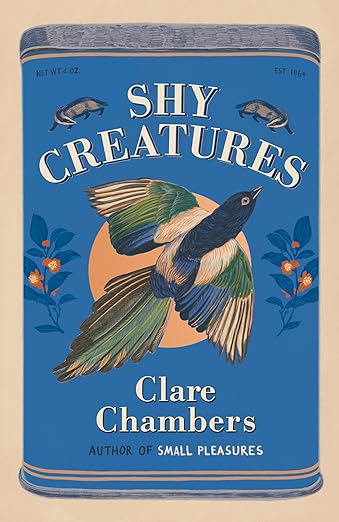
Shy Creatures by Clare Chambers, a novel about love, family and the joy of freedom.

To be published 12 September 2024:

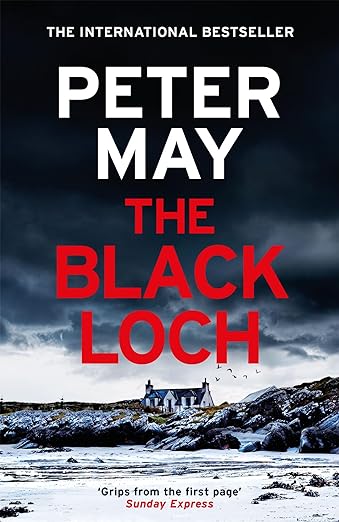
The Black Loch by Peter May, the return of Fin Macleod, hero of the Lewis Trilogy. A body is found abandoned on a remote beach at the head of An Loch Dubh – the Black Loch – on the west coast of the Isle of Lewis.

To be published 10 October 2024:

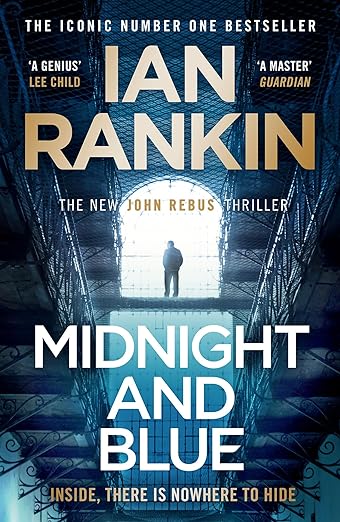
Midnight and Blue by Ian Rankin, a John Rebus thriller. John Rebus spent his life as a detective putting Edinburgh’s most deadly criminals behind bars. Now, he’s joined them…

To be published 24 October 2024:

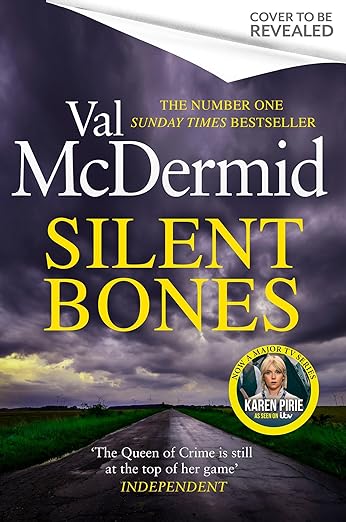
Silent Bones by Val McDermid. Book 8 in the Karen Pirie series. At the moment there is little information about this book, but as I’ve read a lot of the earlier books I’m expecting this one to be good. ‘The ingenious plot kept me guessing all the way through. It delivers on every level‘ MARIAN KEYES

The Black Tulip by Alexandre Dumas

4*

The Black Tulip is historical fiction, a love story, mixing historical characters with fictional ones. It was first published in 1850. I loved The Count of Monte Cristo by Alexandre Dumas, so I was hoping to enjoy The Black Tulip too. I did, but not quite as much. I think it’s because I don’t know much about Dutch history and so I found the early chapters, about the brothers Cornelius and Johan de Witt, a bit difficult to follow. They were Dutch statesmen, accused of treason, who were brutally killed by a mob in the Hague in 1672, during a period of political upheaval, when they escaped from prison.

The story centres on Cornelius von Baerle, the fictional godson of Cornelius de Witt and his desire to grow a black tulip. He became involved in the de Witts’ affairs when Cornelius de Witt left a sealed parcel of his correspondence with the French war minister, with him for safekeeping. He didn’t open the parcel and didn’t know what it contained.

When the Tulip Society of Haarlem offered a prize of a hundred thousand guilders for the development of a tulip ‘without a spot of colour‘, this set the tulip growers into a frenzy of activity, including Van Baerle and his neighbour, Isaac Boxtel. Boxtel spied on Van Baerle’s experiments to grow a black tulip, which were having more success than his own efforts. Indeed Boxtel was obsessed with what Van Baerle was doing, neglecting his own tulips to wither and rot as he observed, through a telescope, what his neighbour was doing both in his garden and in his laboratory.

Whilst observing Van Baerle’s laboratory, Boxtel had seen the meeting between Cornelius de Witt and Van Baerle when he entrusted his papers to his godson. On hearing that the de Witt brothers had been arrested Boxtel realised he could inform against Van Baerle and get him arrested, thus giving himself the opportunity to steal the bulb Van Baerle had produced. And the hundred thousand guilder prize would be his.

And so Van Baerle was thrown into prison, wrongly convicted of treason and under sentence of death. However William of Orange, Stadtholder of Holland granted him his life but condemned him to imprisonment for life. He was sent to the fortress of Loewestein and there kept in solitary confinement. What follows is a dark and somewhat farcical tale, as aided by the jailer’s daughter Rosa he continues to cultivate his tulip bulbs. He and Rosa fall in love, despite all the difficulties that assault them.

It’s a great story, full of drama and emotion. It’s a love story, a story about passion, hatred, jealousy, obsession and injustice. After the difficulties I had with the first four or five chapters (I had to re-read them to work out how the rest of the story was connected) I found it difficult to put down, keen to find out what would happen next. I didn’t love it like I loved The Count of Monte Cristo, but I really liked it.

Hamlet, Revenge! by Michael Innes

A Golden Age Mystery

Hamlet, Revenge! by Michael Innes has been languishing on my TBR shelves for 9 years, mainly because it is in such a small font making it difficult for me to read. It was first published in 1937. My copy was published in 1961 in paperback with the cover shown in the photo above.

Synopsis:

A Scotland Yard detective probes a high-society house party for someone rotten when a government official is murdered in this classic British mystery.

Preparations are underway for a grand party at Scamnum Court, the sweeping English country estate of the fabulously wealthy Duke of Horton. Some of the nation’s elite are invited for dinner, and some are even set to star in a semi-amateur production of Hamlet on an authentic Elizabethan stage in the banqueting hall. No expense is spared, but one guest soon pays with his life. Before the play ends, a shot is fired, and the actor playing Polonius―Lord Auldearn, the Lord Chancellor of England―is dead.

With war looming on the horizon, suspicions arise over the possibility of espionage. Therefore, the prime minister sends Insp. John Appleby not only to investigate, but to also find a confidential government document. Appleby is lucky there’s a mystery novelist eager to lend a hand with the extensive guest list at Scamnum Court. He will need all the help he can get if he hopes to prevent the killer from making an encore performance . . .

My thoughts

This is the second Inspector John Appleby book. And like the first, Death at the President’s Lodging (my review) it is a most complex mystery. When Lord Auldearn, Lord Chancellor of England is murdered on stage during an amateur production of Hamlet at Scamnum Court the Prime Minister asks Appleby to investigate. Because there’s a possibility that espionage is involved, the PM tells Appleby not to trust anybody. It’s all very vague. The PM tells him there’s a document concerning

… the organization of large industrial interests on an international basis, in the event of a certain international situation. The general drift towards the matter such a document embodies cannot, you realize, well be secret; nothing big can be secret. But the details may be. And this document might be useful in two ways: the detailed information might be useful to one powerful interest or another: and accurate possession of the details, as circumstantial evidence of something already known in general terms, might be useful to an unfriendly government.

…War? said Appleby … (pages 83,84)

The book begins with a Prologue.which is is longer than most prologues. It sets the scene, describing Scamnum Court in detail. It’s the family seat of the Crispin family, described as ‘a big place: two counties away it has a sort of little brother in Blenheim Palace.’ All the characters are introduced, including Giles Gott, who was also in Death at the President’s Lodging. An eminent Elizabethan scholar, he is the director of the play. The other characters are also introduced; Lord Auldearn, the Lord Chancellor of England, who plays Polonius, and numerous other family members, guests and members of the Scamnum Court staff.

There are thirty people involved in the play, actors and those behind the scenes, plus twenty seven in the audience. I found this section too long (74 pages in my copy) and it took me more than a while to identify who was who! My attention was drooping as I read pages of long meandering, descriptive paragraphs and I wondered when there would be a murder. And there is a lot of information about the staging of the play and numerous Shakespearean references. Before the performance the murderer delivered a number of warning messages about revenge, so everybody is on edge.

Appleby doesn’t appear until the second section and then the pace picks up considerably as he and Gott question the suspects. It gets more complicated when a second murder, that of Mr Bose, the prompter who was on stage and who could possibly have seen who shot Lord Auldearn. I was puzzled for much of the time as I read – it’s a book that you can’t read quickly and it requires concentration. I had no idea who the culprit was as Appleby and Gott tried to eliminate the suspects and answer numerous questions, such as why was Lord Auldearn shot and not stabbed as Polonius the character he played was, why did the murderer come onto the stage to shoot him and risk being seen by Bose, why did he send the mysterious messages about revenge – what revenge was being sought, and was the possible espionage plot the reason behind the shooting? Or was the reason a personal one?

From being confused and overwhelmed by the puzzle I became thoroughly absorbed by the mystery and was eagerly turning the pages to find out all the answers. It’s a book I really need to re-read to get to grips with it – I’m sure I missed so much. My post falls far short of doing justice to the book!

Close to Death: Book Beginnings & The Friday 56

Every Friday Book Beginnings on Friday is hosted by Gillion at Rose City Reader where you can share the first sentence (or so) of the book you are reading. You can also share from a book you want to highlight just because it caught your fancy.

I’m featuring Close to Death by Anthony Horowitz, book 5 in the Hawthorne and Horowitz murder mystery series. It’s on my 20 Books of Summer list.

Book Beginning:

It was four o’clock in the morning, that strange interval between night and morning when both seem to be fighting each other for control of the day ahead.
Also every Friday there is The Friday 56, hosted by Freda at Freda’s Voice, but she is taking a break and Anne at My Head is Full of Books has taken on hosting duties in her absence. You grab a book and turn to page 56 (or 56% of an eBook), find one or more interesting sentences (no spoilers), and post them.

‘We’re not going to let them get away with it,’ Roderick exclaimed. ‘Someone should do something about him! Someone should … I don’t know! Ever since he came here, he’s been nothing but trouble.’

Synopsis from Goodreads:

In New York Times–bestselling author Anthony Horowitz’s ingenious fifth literary whodunit in the Hawthorne and Horowitz series, Detective Hawthorne is once again called upon to solve an unsolvable case—a gruesome murder in an idyllic gated community in which suspects abound

Riverside Close is a picture-perfect community. The six exclusive and attractive houses are tucked far away from the noise and grime of city life, allowing the residents to enjoy beautiful gardens, pleasant birdsong and tranquility from behind the security of a locked gate.

It is the perfect idyll until the Kenworthy family arrives, with their four giant, gas-guzzling cars, a gaggle of shrieking children and plans for a garish swimming pool in the backyard. Obvious outsiders, the Kenworthys do not belong in Riverside Close, and they quickly offend every last one of their neighbours.

When Giles Kenworthy is found dead on his own doorstep, a crossbow bolt sticking out of his chest, Detective Hawthorne is the only investigator that can be called on to solve the case.

Because how do you solve a murder when everyone is a suspect?

~~~

What do you think, does it appeal to you? What are you currently reading?