Death at the Sign of the Rook by Kate Atkinson

Random House UK| 22 August 2024 | 335 pages|e-book |Review copy| 2*

Description:

Ex-detective Jackson Brodie is staving off a bad case of midlife malaise when he is called to a sleepy Yorkshire town, and the seemingly tedious matter of a stolen painting. But one theft leads to another, including the disappearance of a valuable Turner from Burton Makepeace, home to Lady Milton and her family. Once a magnificent country house, Burton Makepeace has now partially been converted into a hotel, hosting Murder Mystery weekends.
As paying guests, a vicar, an ex-army officer, impecunious aristocrats, and old friends converge, we are treated a fiendishly clever mystery; one that pays homage to the masters of the genre―from Agatha Christie to Dorothy Sayers.

My thoughts:

Death at the Sign of the Rook by Kate Atkinson begins so well I thought that I was in for a treat. But sadly, as I read on I was disappointed. I was looking forward to reading more about Jackson Brodie, but he only has a minor role. It is amusing in parts. But there are so many other characters, and the story became far too long winded, the narrative jumping around from one set of characters to another, and then another, which made it confusing. The ending was just pure farce, which I’ve never liked, pushing it into the absurd.

Looking back at some of Kate Atkinson’s other books I’ve read I see I had the same reaction to her previous book, Shrines of Gaiety. My favourite books by her are Life After Life and A God in Ruins, both of which I loved.

My thanks to NetGalley and the publishers for my review copy.

Spell the Month in Books August 2024

Spell the Month in Books is a linkup hosted by Jana on Reviews From the Stacks on the first Saturday of each month. The goal is to spell the current month with the first letter of book titles, excluding articles such as ‘the’ and ‘a’ as needed. That’s all there is to it! Some months there are optional theme challenges, such as “books with an orange cover” or books of a particular genre, but for the most part, any book you want to use is fair game!

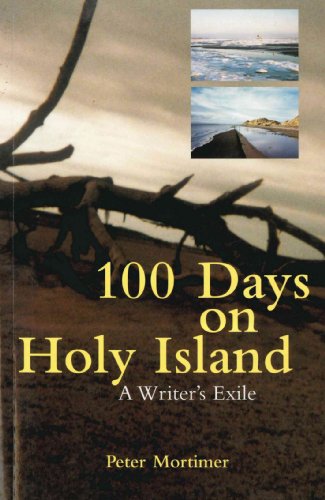
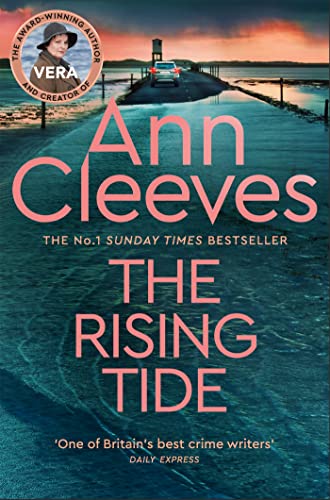
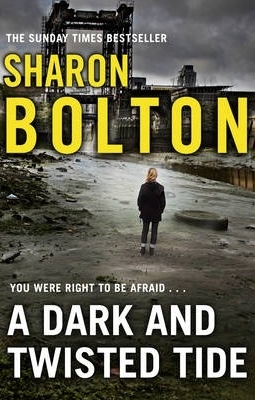
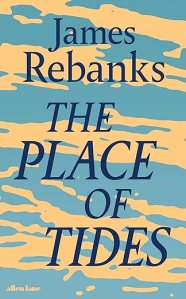
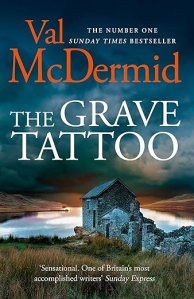
The optional theme this month is Water. These books all have water on the covers

A is for The Art of Drowning by Frances Fyfield, a very edgy and tense crime thriller.

Rachel Doe is a shy accountant at a low ebb in life when she meets charismatic Ivy Schneider, nee Wiseman, at her evening class and her life changes for the better. Ivy is her polar oppositte: strong, six years her senior and the romantic survivor of drug addiction, homelessness and the death of her child. Ivy does menial shift work, beholden to no one, and she inspires life; as do her farming parents, with their ramshackle house and its swan- filled lake, the lake where Ivy’s daughter drowned. As Rachel grows closer to them all she learns how Ivy came to be married to Carl, the son of a WWII prisoner, as well as the true nature of that marriage to a bullying and ambitious lawyer who has become a judge and who denies her access to her surviving child. Rachel wants justice for Ivy, but Ivy has another agenda and Rachel’s naive sense of fair play is no match for the manipulative qualities in the Wisemen women. (Goodreads)

U is for Undercurrent by Barney Norris, a moving and intimate portrait of love, of life and why we choose to share ours with the people we do.

The main story centres around Ed and his immediate family, but the narrative also includes the stories of his grandparents and great grandparents. He had a troubled childhood, living on a farm in Wales with his mother, stepfather and stepsister, Rachel. When he was ten At the age of 10 in an almost accidental moment of heroism, he saved Amy from drowning. Years later when he meets Amy again by chance they form a relationship. But then tragedy overtakes him, and Ed must decide whether to let history and duty define his life, or whether he should push against the tide and write his own story.

G is for Gently by the Shore by Alan Hunter

George Gently is called in to investigate a murder in Starmouth, a British seaside holiday resort. An unidentified body was found on the beach. The victim was naked, punctured with stab wounds. It was first published in 1956 and reflects that period of time. Gently smokes a pipe and puffs his way through the investigation often in a haze of smoke when questioning suspects who also smoke. And it has a very ‘English’ feel about it. The fifties were also the period where the death sentence was still in force and Gently and the main suspect discuss the ethics of killing comparing a hired killer with the hangman.

U is for The Unquiet Dead by Ausma Zehanat Khan, a powerful and thought provoking story.

When Christopher Drayton’s body is found at the foot of the Scarborough Bluffs, Detectives Esa Khattak and Rachel Getty are called to investigate his death. But as the secrets of his role in the 1995 Srebrenica Massacre surface, the harrowing significance of the case makes it difficult to remain objective. In a community haunted by the atrocities of war, anyone could be a suspect. And when the victim is a man with far more deaths to his name, could it be that justice has at long last been served?

S is for The Seagull by Ann Cleeves, crime fiction, set in Northumberland.

In Ann Cleeves’ eighth novel in her Vera Stanhope series Vera investigates a cold case involving her late father, Hector. he had been one of a ‘Gang of Four’, who had traded in rare birds’ eggs and sold raptors from the wild for considerable sums. Was he also involved in the Gang’s illegal activities? At the same time Vera and her team, Joe, Charlie and Holly – Vera’s own ‘gang of four’ – investigate a present day murder that looks very much as though it links in with their cold case. I enjoy watching Vera on TV, but I enjoy the books even more.

T is for Turn of the Tide by Margaret Skea, crime fiction set in 16th century Scotland.

This is historical fiction and it captivated me completely transporting me  back in time to 16th century Scotland. If you have ever wondered,  as I have, what it must have been like to live in a Tower House in the Scottish Borders then this book spells it out so clearly. And it puts you firmly in the middle of the centuries old feud between the Cunninghames and the Montgomeries, with all the drama of their battles, ambushes and schemes to further their standing with the young King James VI. It’s a tale of love, loyalty, tragedy and betrayal.

The next link up will be on September 7, 2024 when the optional theme will be Back to School.

Six Degrees of Separation from The Museum of Modern Love to:

It’s time again for Six Degrees of Separation, a monthly link-up hosted by Kate at Books Are My Favourite and Best. Each month a book is chosen as a starting point and linked to six other books to form a chain. A book doesn’t need to be connected to all the other books on the list, only to the one next to it in the chain.

This month starts with The Museum of Modern Love by by Heather Rose (Kate’s pick was inspired by Sue’s recent post about writers and artists). I haven’t read this, but I would like to. This is the description on Amazon UK:

Arky Levin, a film composer in New York, has promised his wife that he will not visit her in hospital, where she is suffering in the final stages of a terminal illness. She wants to spare him a burden that would curtail his creativity, but the promise is tearing him apart. One day he finds his way to MOMA and sees Mariana Abramovic in The Artist is Present. The performance continues for seventy-five days and, as it unfolds, so does Arky. As he watches and meets other people drawn to the exhibit, he slowly starts to understand what might be missing in his life and what he must do.

My first link is via a terminal illness to The Salt Path, Raynor Winn’s memoir about walking the South Coast Path when Moth her husband was diagnosed with a terminal illness. They were homeless, with no means of income except for £48 pounds a week. They had lost their home, business and livelihood, after investing in one of a friend’s companies that had failed. It is about the determination to live life, about overcoming pain and hardship, and the healing power of nature. It is about homelessness and the different reactions and attitudes of the people they met when they told them they were homeless.

My second link is How to Catch a Mole by Marc Hamer, part memoir, part a nature study of the British countryside, part poetry, and, of course, about moles. After leaving school Marc Hamer was homeless for a while. He has worked in art galleries, marketing, graphic design and taught creative writing in a prison before becoming a gardener. And before writing this book he had been a traditional molecatcher for years.

My third link is Hilary Mantel’s Giving Up the Ghost, a remarkable memoir. It came across to me as being clear, honest and very moving. She thought it was because of her that her parents were not happy and that without her they would have had a chance in life. It didn’t get any better when her father left home and she was left to live with two younger brothers, their mother and her mother’s lover. Home was a place where secrets were kept and opinions were not voiced. Her experience of ghosts at the age of 7 was horrifying as she felt as though something came inside her, ‘some formless, borderless evil’.

My fourth link is The Girl Who Died by Ragnar Jonasson, Icelandic noir, a mix of horror and psychological thriller, with a strong sense of place. Skálar is a close-knit community that doesn’t welcome newcomers, keeping its secrets well hidden. The only person who welcomes Una, to the village is Salka, the mother of Edda, one of the two girls Una is to teach. Her house is said to be haunted by the ghost of a young girl who had died fifty years earlier,

My fifth link is Asking for the Moon by Reginald Kill, a collection of four novellas. Two of them feature ghosts, Pascoe’s Ghost and Dalziel’s Ghost. But I think that the best one is the first story, The Last National Service Man which tells how Dalziel and Pascoe first met. Neither of them are impressed by the other. Dalziel thinks Pascoe is everything he dislikes – a graduate, well spoken, and a Southerner from south of Sheffield. Pascoe thinks Dalziel is an archetypical bruiser who got results by kicking down doors and beating out questions in Morse code on a suspect’s head.

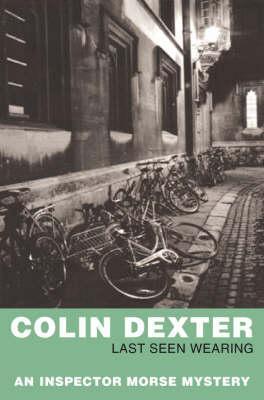
My final link is to the final Inspector Morse novel, The Remorseful Day by Colin Dexter. The plot is detailed, complex and as usual, with Morse, a puzzle type murder mystery with plenty of challenging clues. Sergeant Lewis is left to investigate the murder of nurse Yvonne Harrison that had remained unsolved for a year. When Morse phones to say he is feeling unwell Lewis is most concerned – Morse seldom mentioned his health, what is wrong with him?

The main focus of the book is on Morse and how he copes with his illness and his drinking habits. It becomes obvious just how alone he is in the world and how devastating his situation is to Lewis.

The first three books in my chain are memoirs and the other three are crime fiction/psychological thriller novels. Beginning in America it travels to the UK, then to Iceland, before ending back in the UK.

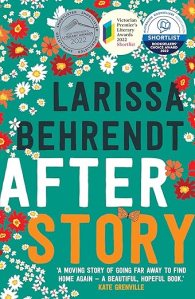
Next month (September 7, 2024), we’ll start with  After Story by Larissa Behrendt.

WWW Wednesday: 31 July 2024

WWW Wednesday is run by Taking on a World of Words.

The Three Ws are:

What are you currently reading?
What did you recently finish reading?
What do you think you’ll read next?

Currently I’m reading The Women of Troy by Pat Barker. this is the second book on The Women of Troy trilogy, a retelling of the classic Greek myth. I’ve recently read the first book, The Silence of the Girls (my review will follow shortly) which I loved. So far this second book looks as though it will be just as good. Troy has fallen but high winds are keeping the Greeks from sailing home.

Description from Goodreads:

Troy has fallen and the victorious Greeks are eager to return home with the spoils of an endless war—including the women of Troy themselves. They await a fair wind for the Aegean.

It does not come, because the gods are offended. The body of King Priam lies unburied and desecrated, and so the victors remain in suspension, camped in the shadows of the city they destroyed as the coalition that held them together begins to unravel. Old feuds resurface and new suspicions and rivalries begin to fester.

Largely unnoticed by her captors, the one time Trojan queen Briseis, formerly Achilles’s slave, now belonging to his companion Alcimus, quietly takes in these developments. She forges alliances when she can, with Priam’s aged wife the defiant Hecuba and with the disgraced soothsayer Calchas, all the while shrewdly seeking her path to revenge.

I’m also reading Into the Tangled Bank by Lev Parikian, non fiction about nature. It’s easy reading, Parikian writes with humour, in a chatty style, but also richly descriptive. I’m loving it, it is compulsive reading. He is a storyteller, so there are lots of anecdotes and stories, plus his thoughts on nature and how we view it. Amongst many other topics he ponders about the ethics of zoos – something that puzzles me too – and wonders if the definition of a nature lover is becoming that of one who loves nature programmes. There’s a lot packed into this book.

The last book I read was Death at the Sign of the Rook by Kate Atkinson, a review copy. My review will follow after the book is published on 22 August 2024. I have very mixed feelings about this book from loving parts of it to frustration at other parts.

Synopsis from Amazon:

The stage is set. The players are ready. By night’s end, a murderer will be revealed. 
Ex-detective Jackson Brodie is staving off a bad case of midlife malaise when he is called to a sleepy Yorkshire town, and the seemingly tedious matter of a stolen painting. But one theft leads to another, including the disappearance of a valuable Turner from Burton Makepeace, home to Lady Milton and her family. Once a magnificent country house, Burton Makepeace has now partially been converted into a hotel, hosting Murder Mystery weekends.

As paying guests, a vicar, an ex-army officer, impecunious aristocrats, and old friends converge, we are treated a fiendishly clever mystery; one that pays homage to the masters of the genre—from Agatha Christie to Dorothy Sayers.

What will I read next? At the moment I have no idea.

Unnatural Death by Dorothy L Sayers

From the back cover:

‘No sign of foul play,’ says Dr Carr after the post-mortem on Agatha Dawson. The case is closed. But Lord Peter Wimsey is not satisfied.

With no clues to work on, he begins is own investigation. No clues, that is, until the sudden, senseless murder of Agatha’s maid.

What is going on in the mysterious Mrs Forrest’s Mayfair flat? And can Wimsey catch a desperate murderer before he himself becomes one of the victims?

This is the third book in the Lord Peter Wimsey series by Dorothy L Sayers, first published in 1927. My copy was reprinted in 2016 and I bought it secondhand five years ago. I’ve been reading this series totally out of order – I’ve already read the first two and several of the later books too. I think they each read well on their own.

Miss Climpson makes her first appearance in Unnatural Death, helping Lord Peter, working undercover. She is an elderly spinster, who runs what Wimsey calls ‘My Cattery’, ostensibly a typing bureau, but actually an amateur detective/enquiry agency. As in the first two books he works with his friend, Inspector Charles Parker, who is a Scotland Yard detective. Bunter, his manservant, only has a very minor role in this book. I think it’s an interesting mystery, not so much about discovering who killed Agatha Dawson and her maid, Bertha, but more about how the murders were committed.

Uncertain Death is most definitely a book of its time – that is the early 20th century. There is much banter, wit and humour, and plenty of snobbery of all types, clearly showing the class distinctions between the working and upper classes. Racism is prevalent and also lesbianism, although that is not directly stated. It is a clever story, well told, with colourful characters. There is a biographical note at the end of the book that reveals much about Lord Peter’s background, about his early years, school and university, and his experiences during the First World War.

The Cracked Mirror by Chris Brookmyre

Little, Brown Book Group UK| 18 July 2024 | 495 pages|e-book |Review copy| 3*

Description from the publishers

FORGET WHAT YOU THINK YOU KNOW
THIS IS NOT THAT CRIME NOVEL


You know Penny Coyne. The little old lady who has solved multiple murders in her otherwise sleepy village, despite bumbling local police. A razor-sharp mind in a twinset and tweed.

You know Johnny Hawke. Hard-bitten LAPD homicide detective. Always in trouble with his captain, always losing partners, but always battling for the truth, whatever it takes.

Against all the odds, against the usual story, their worlds are about to collide. It starts with a dead writer and a mysterious wedding invitation. It will end with a rabbit hole that goes so deep, Johnny and Penny might come to question not just whodunnit, but whether they want to know the answer.

A cross-genre hybrid of Agatha Christie and Michael Connelly, The Cracked Mirror is the most imaginative and entertaining crime novel of the year, a genre-splicing rollercoaster with a poignantly emotional heart.

My thoughts:

I’ve read several books by Chris Brookmyre and those he’s co-written with his wife, Marisa Haetzman under the pseudonym Ambrose Parry and thoroughly enjoyed each one. The Cracked Mirror is not like any of his other books and it took me quite a while to get into it.

First of all there’s the title – as the publishers’ description alludes to, it’s not another version of Agatha Christie’s The Mirror Crack’d from Side to Side, but it is a cross-genre hybrid of Agatha Christie and Michael Connelly. I’ve read all of Christie’s crime fiction novels and none of Michael Connelly’s books, so I didn’t know quite what to expect. Maybe a mash-up of British/American crime fiction/thriller, and that is what it is, with plenty of twists and turns, complications and rollercoaster fast action chases, most of it unbelievable. It’s brutal, violent, with quite a bit of dark humour thrown in. It’s also tense and full of suspense.

At first I was happily reading about Penny Coyne – think a sort of Miss Marple like character, a Scottish elderly spinster with a successful record of solving murder mysteries in her home village. The book begins as a body is found in the confessional booth of the chapel of Saint Bride’s in Glen Cluthar, where Ms Penelope Coyle lives. And then I was suddenly confused when I came to read a completely different story about Johnny Hawke, an LAPD homicide detective, not bothered about sticking to the rules. He’s investigating an apparent suicide of a screen writer in LA. But, as their cases came together I settled into this bizarre book and it became a unified whole. It has a very clever plot (maybe just too clever for me) that kept me guessing right to the end.

My thanks to Little, Brown Book Group UK and NetGalley for the ARC.