Reading in May

I’ve been reading eight books in May, and have finished reading six of them, but only reviewed four of them:

  1. The Butterfly Room by Lucinda Riley 4* –  a family saga spanning generations  revealing the dark secret hidden behind the locked door of the Butterfly Room
  2. Mrs Whistler by Matthew Plampin 5* – not about his mother, but about him and his model and mistress, Maud Franklin
  3. Codename Villanelle by Luke Jennings 3* – the basis for the TV series Killing Eve 
  4. The Doll Factory by Elizabeth Macneal 5* –  the story of Iris who dreamed of being an artist and her involvement with the Pre-Raphaelites

The other two books I finished are:

Before the Fall by Noah Hawley, which I didn’t enjoy and I’m just writing a few notes here about it. It won the 2017 Edgar Award for Best Novel and was selected by The Sunday Times as one of the top page-turners of summer 2017, so I’m in the minority because I thought it was boring and tedious. The plot is simple – a plane crashes into the sea after taking off from Martha’s Vineyard, just two people survive and the mystery is why did the plane crash and who was responsible. The main part of the book is made up of the long backstories of the people on the plane. It’s not gripping or thrilling and definitely not a page-turner. 1*

However I thoroughly enjoyed The Ruin Dervla McTiernan’s debut novel and I’ll be writing more about it in the next few days. Now this is a page-turner, about a current murder linked to a cold case. It’s complex and compelling reading as DI Cormac Reilly unravels a web of secrets. 4*

I’m still reading two books:

D H Lawrence: the Life of an Outsider by John Worthen, from his childhood in Nottinghamshire to his death at the age of 44. I’m reading this slowly and it will be some time before I finish it. An ‘outsider’, he always felt he didn’t fit in or belong either with his family or his work colleagues or the literary elite of the times.

The other book I’ve been reading is Sweet Thursday by John Steinbeck, my Classics Club Spin book that I was hoping to finish by the end of May. I’ve only read half of it so far. It’s a follow up to Cannery Row, with some of the same characters and I’m enjoying its humour and view of life in Monterey in the 1950s.

And now it’s June! I’ll be concentrating on reading the books I’ve listed for the 20 Books of Summer challenge – and hoping I won’t be distracted by too many other books!
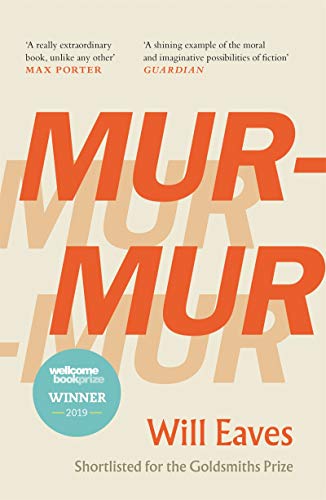
Six Degrees of Separation: from Murmur to Alan Turing: The Enigma

I love doing Six Degrees of Separation, a monthly link-up hosted by Kate at Books Are My Favourite and Best. Each month a book is chosen as a starting point and linked to six other books to form a chain. A book doesn’t need to be connected to all the other books on the list, only to the one next to it in the chain.

Murmur

This month the chain begins with a book I haven’t read or heard of before, Murmur by Will Eaves. This is the summary from Amazon: Taking its cue from the arrest and legally-enforced chemical castration of Turing, Eaves fictionalises the devastating period before the mathematician’s death in an extraordinary contemplation of consciousness.

Murmur has won several prizes including the 2019 Wellcome Book Prize, an annual award, open to new works of fiction or non-fiction. To be eligible for entry, a book should have a central theme that engages with some aspect of medicine, health or illness.

I checked back to see if I had read any of the earlier  Wellcome Book prize winners. I had to go back to 2010 when The Immortal Life of Henrietta Lacks by Rebecca Skloot was the winning book. I read this in April and thought it was excellent. Henrietta Lacks died of cervical cancer in 1951. The cancer cells taken from her tumour were cultured and became known as HeLa cells which have formed the basis for medical research and drug development ever since.

The Quarry by Iain Banks is a novel about Guy, a man dying from cancer. He lives in a house that is gradually falling to pieces, situated on the edge of a quarry in the Pennines..Feeling his death is imminent, Guy gathers around him his oldest friends as they reminisce about their time as film students and search through the house for a video tape they had made that could ruin all of their lives if it became public.  It’s the last book Iain Banks wrote – whilst writing it he, himself, was diagnosed with cancer.

Another house in ruins is the setting for the opening of The Ruin, Dervla McTiernan’s debut novel. DI Cormac Reilly has left his high-flying Dublin career to return to Galway, where he is confronted with a case that has haunted him for twenty years. As a young constable he was called to a decrepit country house where he found two silent, neglected children and their mother lying dead upstairs.

Another debut novel is Everything But the Truth by Gillian McAllister set in Newcastle and Oban. This is a thriller about lies, secrets and relationships; about how we get to know people and learn to trust them.

Also set partially in Newcastle is Harbour Street by Ann Cleeves. It begins ten days before Christmas, as the Newcastle Metro is packed with shoppers, babies screaming, office workers merry after pre-Christmas parties where an old lady, Margaret Krukowski, is found fatally stabbed. This book was adapted for TV adaptation, but with many changes from the original.

Another adaptation is the film The Imitation Game starring Benedict Cumberbatch and Keira Knightley about Alan Turing as he tries to crack the German Enigma code.  It’s an adaptation of the book Alan Turing: The Enigma by Andrew Hodges. In 1952 Turing’s homosexuality rendered him a criminal and he was subjected to humiliating treatment. In 1954, aged 41, Alan Turing took his own life – thus linking back to Murmur.

I’ve started and ended with books about Alan Turing, linked by books that have won the Wellcome Book Prize, books about cancer, set in ruined houses, debut novels, books set in Newcastle and books that have been adapted for TV and film.

The books are mostly crime fiction, all of which I’ve read. Although I haven’t read Andrew Hodges’ book I have seen the film – which is excellent!

Next month (July 6, 2019), the chain will begin with the children’s classic, Where the Wild Things Are by Maurice Sendak.

My Friday Post: Snowblind by Ragnar Jónasson

Book Beginnings Button

Every Friday Book Beginnings on Friday is hosted by Gillion at Rose City Reader where you can share the first sentence (or so) of the book you are reading, along with your initial thoughts about the sentence, impressions of the book, or anything else the opener inspires.

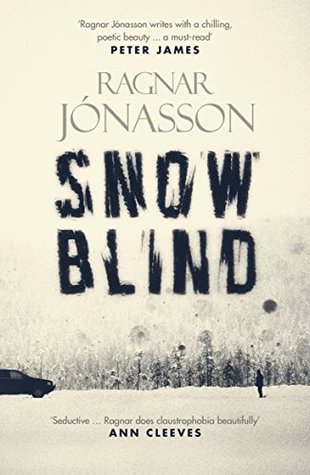
The book I’m featuring this week is Snowblind by Ragnar Jónasson, one of my TBRs.

Snowblind

The red stain was like a scream in the silence.

Also every Friday there is The Friday 56, hosted by Freda at Freda’s Voice.

30879-friday2b56These are the rules:

  1. Grab a book, any book.
  2. Turn to page 56, or 56% on your eReader. If you have to improvise, that is okay.
  3. Find any sentence (or a few, just don’t spoil it) that grabs you.
  4. Post it.
  5. Add the URL to your post in the link on Freda’s most recent Friday 56 post.

Page 56:

Ari Thor picked up the book he had bought, in spite of the promise he’d made to himself to save it until after dinner. He was eking out his small pleasures to keep the boredom at bay. Only a few pages into the book, he realised that he hadn’t taken anything in.

Blurb:

Siglufjörður: an idyllically quiet fishing village in Northern Iceland, where no one locks their doors – accessible only via a small mountain tunnel.

Ari Thór Arason: a rookie policeman on his first posting, far from his girlfriend in Reykjavik – with a past that he’s unable to leave behind. When a young woman is found lying half-naked in the snow, bleeding and unconscious, and a highly esteemed, elderly writer falls to his death in the local theatre, Ari is dragged straight into the heart of a community where he can trust no one, and secrets and lies are a way of life.

An avalanche and unremitting snowstorms close the mountain pass, and the 24-hour darkness threatens to push Ari over the edge, as curtains begin to twitch, and his investigation becomes increasingly complex, chilling and personal. Past plays tag with the present and the claustrophobic tension mounts, while Ari is thrust ever deeper into his own darkness – blinded by snow, and with a killer on the loose.

~~~

What do you think? Would you keep reading?


Top Ten Tuesday: Favourite Books Released In the Last Ten Years

top-ten-tuesday-new

Top Ten Tuesday is a weekly meme created by The Broke and the Bookish and now hosted by Jana at That Artsy Reader Girl. For the rules see her blog.

This week’s topic is Favourite Books Released In the Last Ten Years (one book for each year) (submitted by Anne @ Head Full of Books). These ten books I’ve chosen are all 5* books but it’s not been easy choosing just ten as I could have included several other books too for each year. Working back from 2018 they are:

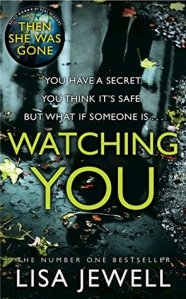
Watching You

2018: Watching You by Lisa Jewell – psychological suspense, someone was murdered, but who was it and why, and just who was the killer?

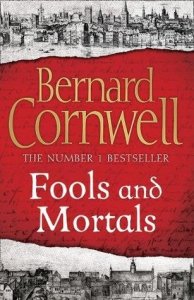
Fools and mortals

2017: Fools and Mortals by Bernard Cornwell – historical fiction set in 1595 as the players are rehearsing a new play, A Midsummer Night’s Dream.

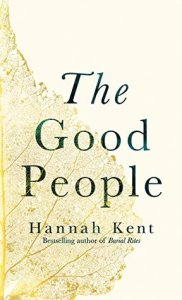
Good People

2016: The Good People by Hannah Kent – a tale of Irish rural life in the early 19th century, when superstition and a belief in fairies held sway.

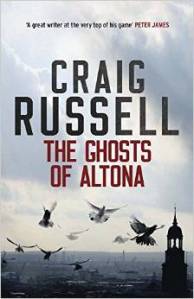
ghosts of altona

2015: The Ghosts of Altona by Craig Russell – a modern Gothic tale as well as being a crime thriller set in Hamburg.

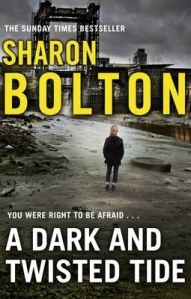
Dark and Twisted Tide

2014: A Dark and Twisted Tide by Sharon Bolton – PC Lacey Flint investigates the murder of a young woman found floating on the River Thames. Terrifying if you have a fear of drowning!

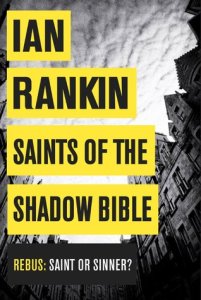
Saints

2013: Saints of the Shadow Bible by Ian Rankin – Rebus had retired but is now back on the police force re-investigating one of his early cases when he was a young Detective Constable.

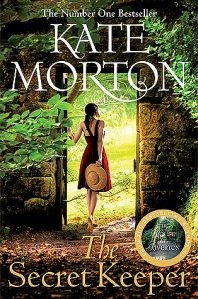
Secret keeper

2012: The Secret Keeper by Kate Morton – historical fiction moving between the 1930s, the 1960s and the present, revealing many secrets.

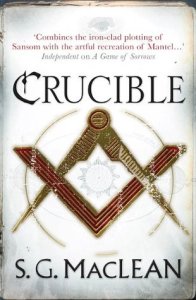
Crucible

2011: Crucible by S G MacLean – historical murder mystery set in Aberdeen in 1631 when Alexander Seaton stumbles across the body of his friend, Robert Sim, the college librarian.

Long Song

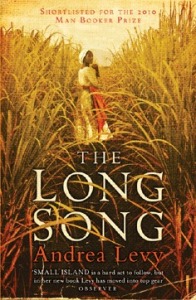
2010: The Long Song by Andrea Levy – historical fiction depicting the lives of slaves in Jamaica just as slavery was coming to an end.

Wolf Hall

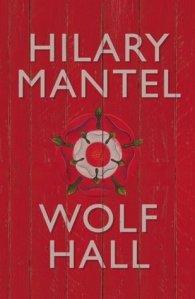
2009: Wolf Hall by Hilary Mantel – historical fiction about Thomas Cromwell, the son of a blacksmith, and his political rise, the first in a trilogy. The third book, The Mirror and the Light will be published next year.

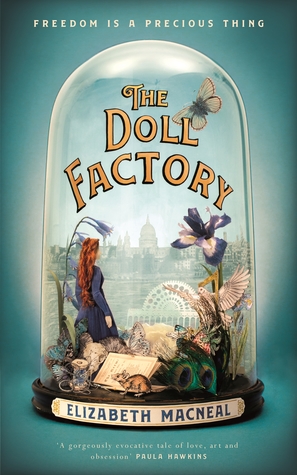
The Doll Factory by Elizabeth Macneal

An intoxicating story of art, obsession and possession

Doll Factory

Picador|2 May 2019|336 pages|Review e-book copy|5*

The Doll Factory by Elizabeth Macneal is one of the best books I read so far this year. It captivated me with its tale of Iris, the young woman who worked painting dolls in Mrs Salter’s Dolls Emporium, but who dreamed of being an artist. It tells of her involvement with the Pre-Raphaelite artists – in particular with Louis Frost (a fictional character) who attracted by her beauty and her red hair wants her to model for him. She agrees, despite the disapproval of her parents and twin sister Rose, on the condition that he teaches her to paint. Meanwhile Silas Reed, a taxidermist and a collector of curiosities, worships her from afar and fantasises that she returns his love.  

But it’s much more than my brief outline conveys. This is historical fiction that transports me back in time and place to the 1850s when the Great Exhibition is being constructed and then opened to the public, a time when the young artists who had recently formed the Pre-Raphaelite Brotherhood, first formed in the summer of 1848, are challenging the art world with their vivid paintings, at once both stylised and naturalistic. The descriptions take me straight into London of the early 1850s with all its sights and smells, its squalor and bustling crowds as people go about their daily lives.

There are some really memorable characters, such as ten year old Albie, who collects dead creatures for Silas. He lives with his sister, a prostitute, in a ramshackle house down a dead-end alley and with just one tooth he dreams of buying a set of false teeth. Rossetti, Millais and Holman Hunt also appear alongside the fictional characters and I loved all the details about their paintings, and their fascination with wombats. Rossetti owned two wombats – the inspiration for Louis’ wombat, Guinevere, who lives in his studio.

As I read on I began to feel a growing sense of menace and the tension between the characters rose almost to an unbearable peak as the book reached its conclusion. It’s full of atmosphere, dark and gothic towards the end as it reached its climax – and left me wanting more. It’s wonderful – historical fiction, art history, and a love story as well as a dark tale of obsession, pulsing with drama, intrigue and suspense.  I loved it!

About the Author

Elizabeth Macneal was born in Edinburgh and now lives in East London. She is a writer and potter and works from a small studio at the bottom of her garden. She read English Literature at Oxford University, before working in the City for several years. In 2017, she completed the Creative Writing MA at UEA in 2017 where she was awarded the Malcolm Bradbury scholarship.

The Doll Factory, Elizabeth’s debut novel, won the Caledonia Noel Award 2018. It will be published in twenty-eight languages and TV rights have sold to Buccaneer Media.

Many thanks to the publishers, Picador, for my review copy via NetGalley.

My Friday Post: The Greedy Queen by Annie Gray

Book Beginnings Button

Every Friday Book Beginnings on Friday is hosted by Gillion at Rose City Reader where you can share the first sentence (or so) of the book you are reading, along with your initial thoughts about the sentence, impressions of the book, or anything else the opener inspires.

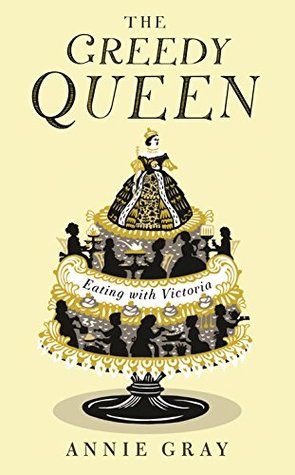
The book I’m featuring this week is The Greedy Queen: Eating with Victoria by Annie Gray, a library book.

Greedy Queen


In July 2005 a pair of extraordinarily large bloomers were auctioned in Wiltshire. They sold for £12,900, breaking the record for the previous pair of similarly generously proportioned underwear, which fetched £6,200 a year earlier, and the news of their sale was widely reported across the media.

Also every Friday there is The Friday 56, hosted by Freda at Freda’s Voice.

30879-friday2b56These are the rules:

  1. Grab a book, any book.
  2. Turn to page 56, or 56% on your eReader. If you have to improvise, that is okay.
  3. Find any sentence (or a few, just don’t spoil it) that grabs you.
  4. Post it.
  5. Add the URL to your post in the link on Freda’s most recent Friday 56 post.

Page 56:

Once again she complains of headaches and lethargy, and turned to food as a solace. Creevey remarked that, ‘she eats as heartily as she laughs, I think I may say she gobbles.’

Blurb:

What does it mean to eat like a queen? Elizabeth gorged on sugar, Mary on chocolate and Anne was known as ‘Brandy Nan’. Victoria ate all of this and more. The Greedy Queen celebrates Victoria’s appetite, both for food and, indeed, for life.

Born in May 1819, Victoria came ‘as plump as a partridge’. In her early years she lived on milk and bread under the Kensington system; in her old age she suffered constant indigestion yet continued to over-eat. From intimate breakfasts with the King of France, to romping at tea-parties with her children, and from state balls to her last sip of milk, her life is examined through what she ate, when and with whom. In the royal household, Victoria was surrounded by ladies-in-waiting, secretaries, dressers and coachmen, but below stairs there was another category of servant: her cooks. More fundamental and yet completely hidden, they are now uncovered in their working environment for the first time.

Voracious and adventurous in her tastes, Queen Victoria was head of state during a revolution in how we ate – from the highest tables to the most humble. Bursting with original research, The Greedy Queen considers Britain’s most iconic monarch from a new perspective, telling the story of British food along the way.

~~~

With chapters on kitchens, cooks, and ordinary eating as well as extraordinary eating this is a different look at Queen Victoria’s life and reign plus an appendix of modernised recipes.

What do you think? Would you keep reading?