Six Degrees of Separation from We Have Always Lived in the Castle to Ryan’s Christmas

This is a monthly link-up hosted by Kate at Books Are My Favourite and Best. On the first Saturday of every month, a book is chosen as a starting point and linked to six other books to form a chain. Readers and bloggers are invited to join in by creating their own ‘chain’ leading from the selected book.

Books can be linked in obvious ways – for example, books by the same authors, from the same era or genre, or books with similar themes or settings. Or, you may choose to link them in more personal ways: books you read on the same holiday, books given to you by a particular friend, books that remind you of a particular time in your life, or books you read for an online challenge.

A book doesn’t need to be connected to all the other books on the list, only to the ones next to them in the chain.
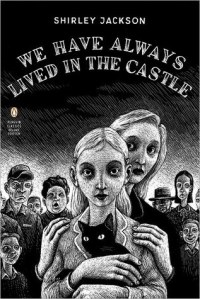
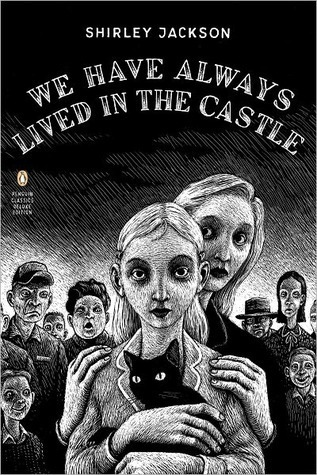
This month we are starting with We Have Always Lived in the Castle by Shirley Jackson is a fantastic book; a weirdly wonderful book about sisters, Merricat and Constance. They live in a grand house, away from the village, behind locked gates, feared and hated by the villagers. Merricat is an obsessive-compulsive, both she and Constance have rituals that they have to perform in an attempt to control their fears. Merricat is a most unreliable narrator.
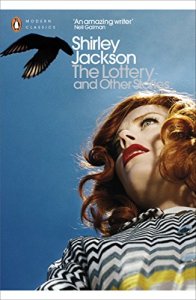
I’m starting my chain with The Lottery is a short story also written by Shirley Jackson. It was first published on June 25, 1948, in The New Yorker, (the link takes you to the story.) The lottery is an annual rite, in which a member of a small farming village is selected by chance. This is a creepy story of casual cruelty, which I first read several years ago. The shocking consequence of being selected in the lottery is revealed only at the end.
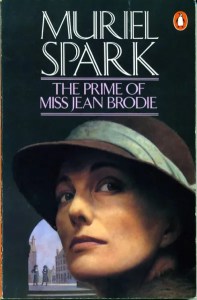
The Prime of Miss Jean Brodie by Muriel Spark, was first published in The New Yorker magazine on 14th October 1961. It is perhaps Muriel Spark’s most famous novel about the ‘Brodie set’. But which one of them causes her downfall and her loss of pride and self-absorption? What really impresses me about this book is the writing, so compact, so perceptive and so in control of the shifts in time backwards and forwards. It’s a joy to read.
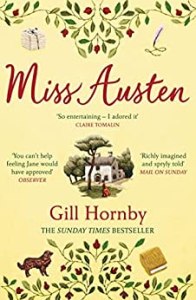
Another book that was a joy to read is Miss Austen by Gill Hornby. This is the untold story of the most important person in Jane’s life – her sister Cassandra. After Jane’s death, Cassandra lived alone and unwed, spending her days visiting friends and relations and quietly, purposefully working to preserve her sister’s reputation. Cassandra is convinced that her own and Jane’s letters to Eliza Fowle, the mother of Cassandra’s long-dead fiancé, are still somewhere in the vicarage. Eventually she finds the letters and confronts the secrets they hold, secrets not only about Jane but about Cassandra herself. Will Cassandra reveal the most private details of Jane’s life to the world, or commit her sister’s legacy to the flames?
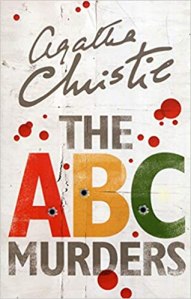
My next link is also a book in which letters play a key part. It’s The ABC Murders by Agatha Christie, a Golden Age of Detective Fiction novel first published in 1936. A series of murders are advertised in advance in letters to Poirot, and signed by an anonymous ‘ABC’. An ABC Railway guide is left next to each of the bodies. So the first murder is in Andover, the victim a Mrs Alice Ascher; the second in Bexhill, where Betty Barnard was murdered; and then Sir Carmichael Clarke in Churston is found dead. The police are completely puzzled and Poirot gets the victims’ relatives together to see what links if any can be found. Why did ABC commit the murders and why did he select Poirot as his adversary?
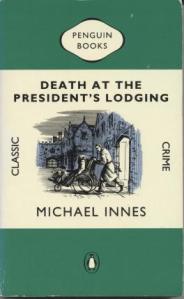
Another Golden Age murder mystery published in 1936 is Death at the President’s Lodging by Michael Innes. This is essentially a ‘locked room’ mystery. Dr Umpleby, the unpopular president of St Anthony’s College (a fictional college similar to an Oxford college)  is found in his study, shot through the head. His head was swathed in a black academic gown, a human skull beside his body and surrounding it, little piles of human bones. Inspector Appleby from Scotland Yard is in charge of the investigation, helped by Inspector Dodd from the local police force. 

Innes’s writing is intellectual, detailed, formal and scattered with frequent literary allusions and quotations. The plot is complex and in the nature of a puzzle. There are plenty of characters, the suspects being the dons of the college. 
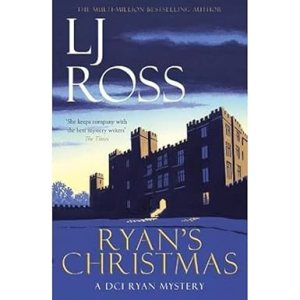
And my final link is Ryan’s Christmas by L J Ross, another ‘locked room mystery’. DCI Ryan, and DS Phillips and their wives are stranded in Chillingham Castle when a snowstorm forces their car off the main road and into the remote heart of Northumberland. Cut off from the outside world by the snow, with no transport, mobile signals or phone lines they join the guests who had booked a ‘Candlelit Ghost Hunt’. Then Carole Black, the castle’s housekeeper is found dead lying in the snow, stabbed through the neck. There’s only one set of footpaths in the snow, and those are Carole’s, so who committed the murder?

My chain includes books by the same author, books first published in the same magazine, letters, Golden Age murder mysteries, and ‘locked room’ mysteries.

‘Next month (December 6, 2025), we’ll start with a novella that you may read as part of this year’s Novellas in November – Seascraper by Benjamin Wood.

Top Ten Tuesday: Books with the Word HOUSE in the Title

Top Ten Tuesday is a weekly meme created by The Broke and the Bookish and now hosted by Jana at That Artsy Reader Girl. For the rules see her blog.

The topic this week is Books with the Word “[Insert Word Here]” in the Title. I decided to choose books with the word HOUSE in the title. These ten books are all books I’ve read.

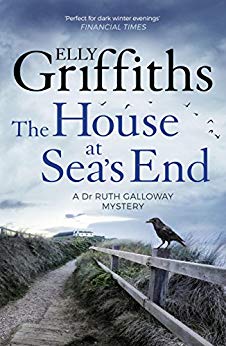
The House at Sea’s End by Elly Griffiths – a Ruth Galloway mystery.

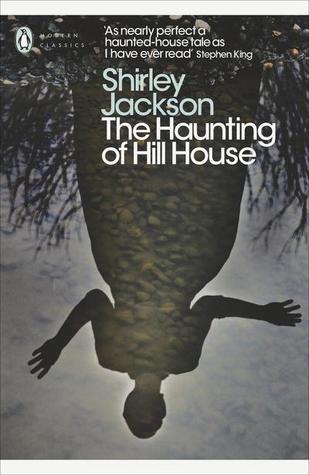
The Haunting of Hill House by Shirley Jackson – more of a psychological study than a horror story.

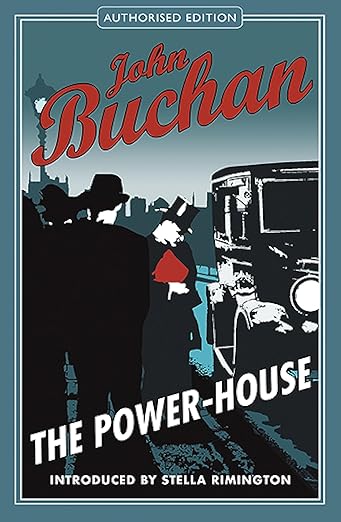
The Power-House by John Buchan – a thriller, the first of five featuring the barrister and Tory MP Edward Leithen.

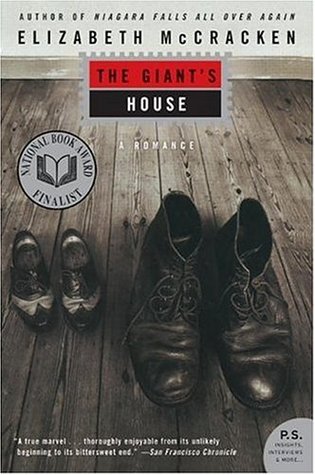
The Giant’s House by Elizabeth McCracken – a love story.

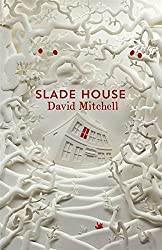
Slade House by David Mitchell – a mixture of a ghost story, science fiction and horror.

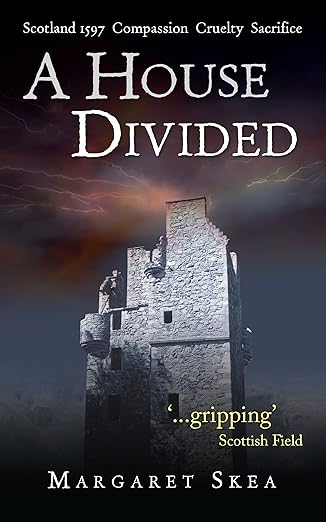
A House Divided by Margaret Skea – historical fiction set in 15th century Scotland.

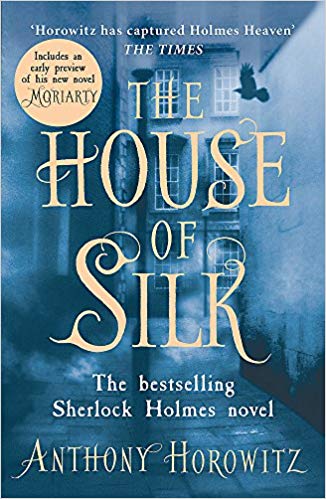
The House of Silk by Anthony Horowitz – a Sherlock Holmes novel.

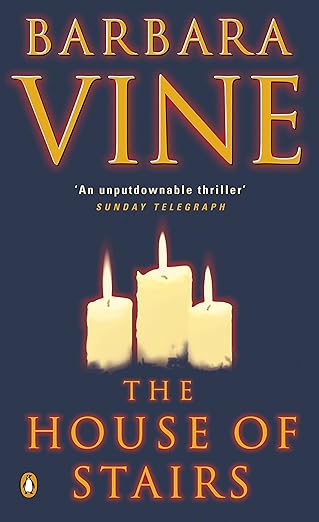
The House of Stairs by Barbara Vine – a psychological thriller.

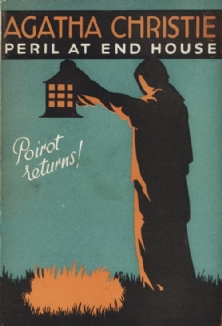
Peril at End House by Agatha Christie – a Poirot mystery.

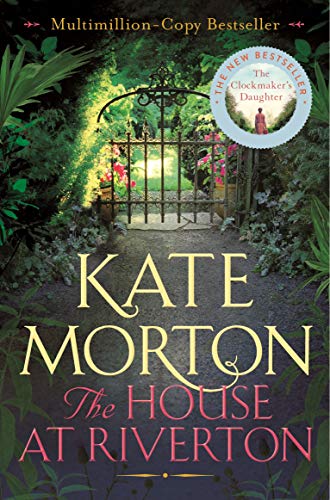
The House at Riverton by Kate Morton – historical fiction.

Have you read any of them?

Top Five Tuesday:Top 5 books with a pronoun in the title

Top 5 Tuesday was created by Shanah at Bionic Book Worm, and it is now being hosted by Meeghan at Meeghan Reads. For details of all of the latest prompts for January to March, see Meeghan’s post here.

Today the topic is Top 5 books with a pronoun in the title – Find all of your he, she, they, we or you books and then shout them from the rooftops!! Or just on your blog page.

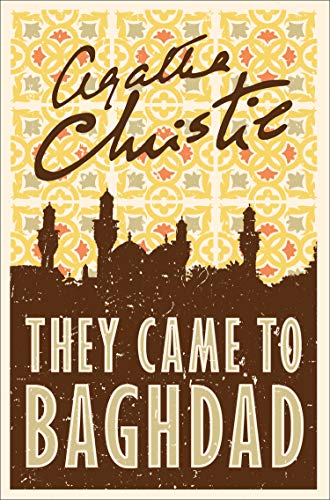
They Came to Baghdad by Agatha Christie. This is not one of Agatha Christie’s detective novels – no Miss Marple or Hercule Poirot –  just Victoria Jones, a short-hand typist, a courageous girl with a ‘natural leaning towards adventure’ and a tendency to tell lies. Set in 1950 this is a story about international espionage and conspiracy. 

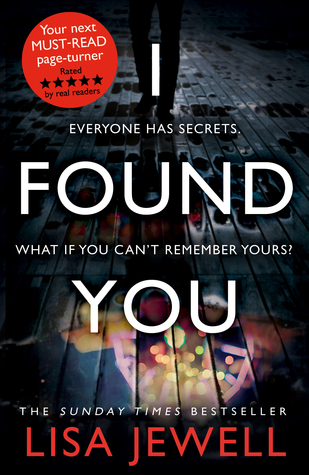
I Found You by Lisa Jewell. This is the mystery of the identity of the man Alice Lake found sitting on the beach at Ridinghouse Bay (a fictional seaside resort) in the pouring rain. He can’t remember who he is, or how or why he is sitting there. 

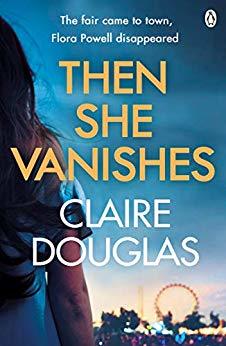
Then She Vanishes by Claire Douglas. The opening is dramatic as a killer calmly and coolly considers which house harbours the victim and then enters and shoots first a man and then an older woman. Who are they and why were they killed in cold blood?

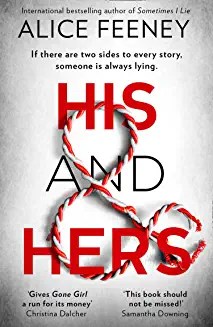
His and Hers by Alice Feeney. When a woman is murdered in Blackdown village, newsreader Anna Andrews is reluctant to cover the case. Anna’s ex-husband, DCI Jack Harper, is suspicious of her involvement, until he becomes a suspect in his own murder investigation.

We Have Always Lived in the Castle by Shirley Jackson, a weirdly wonderful book. Mary Katherine Blackwood is nicknamed Merricat. But she is anything but merry and as the book opens she is eighteen, living with her sister Constance. Everyone else in her family is dead. How they died is explored in the rest of the book. It’s a macabre tale, with its portrayal of fear, resentment, hostility and the persecution of its disturbed and damaged characters.

The Haunting of Hill House by Shirley Jackson

I read The Haunting of Hill House by Shirley Jackson at the end of September and it is one of the books that’s in my ‘to be reviewed pile’, which is getting far too big, as I keep reading book after book without writing about them!

About the book:

It is the story of four seekers who arrive at a notoriously unfriendly pile called Hill House: Dr. Montague, an occult scholar looking for solid evidence of a “haunting”; Theodora, the lighthearted assistant; Eleanor, a friendless, fragile young woman well acquainted with poltergeists; and Luke, the future heir of Hill House. At first, their stay seems destined to be merely a spooky encounter with inexplicable phenomena. But Hill House is gathering its powers—and soon it will choose one of them to make its own. (Goodreads)

This is a horror story, but thank goodness there is no gore. Instead it is macabre and has a chilling atmosphere. It’s more of a psychological study than a horror story and as such I don’t think it’s as good or as terrifying as her later book, We Have Always Lived in the Castle.

Dr. Montague, a doctor of philosophy with a keen interest in the supernatural and psychic manifestations had been looking for a ‘haunted’ house to investigate all his life. So, when he heard the stories about the strange goings on at Hill House he decided he would spend three months living there and see what happened, and he set about finding other people to stay there with him.

Eleanor is the main character in the book, next to the House itself, and what happens is told from Eleanor’s point of view. As a child Eleanor had once seemed to activate a poltergeist, although she doesn’t remember that. As an adult she had spent eleven years looking after her invalid mother and it had left her a lonely, embittered spinster of thirty two. After her mother died she sees Dr. Montague’s invitation to spend the summer at Hill House as something she had been waiting for all her life, an opportunity to change her life. Theodora is not at all like Eleanor – her ‘world was one of delight and soft colors’ and after arguing with her friend with whom she shared an apartment, she accepted Dr. Montague’s invitation too. The third person to accept was Luke, the nephew of the owner of Hill House, who would one day inherit the House. He was a liar and also a thief.

These four people arrived at Hill House where they were met by the Dudleys – Mr Dudley, the surly caretaker and his dour wife, the housekeeper. Neither of them live in the house but having told the guests which rooms they were to sleep in, and the arrangements for meals, they leave them alone at night. They leave before it gets dark.

Eleanor realises she should have turned back at the gate and a voice inside her tells her to ‘get away from here, get away.’ There are stories about the tragedies connected with the house, scandal, madness and a suicide – when a girl hanged herself from the turret in the tower. Dr Montague believes

the evil is in the house itself and that it has enchained and destroyed its people and their lives, it is a place of contained ill will.

Strange things happen, doors open themselves, the walls and floors are at odd angles, the rooms all connect so Eleanor and the others lose their sense of direction and get lost, the rooms they want to find eluding them. There are places where there are ‘cold spots’, and strange noises scare them at night. The tone shifts from the bright sunlight outside to the chill and foreboding of the house. Nothing is what it first appears to be and as I read on I felt I was sinking into the story in an unpleasant way – Eleanor becomes increasingly unstable and I began to realise that she is an unreliable narrator. The story took several ambiguous turns, so that I was not quite sure what was really happening. Was the house really haunted or was it all an effect of what was going on in their minds, or was it all just in Eleanor’s fevered imagination?

The book is well written, full of confusion and misdirection. There are moments of pure fear, a sense of excitement, friendship and even humour with the arrival of Dr Montague’s wife and her pompous friend Arthur Parker, and their ridiculous efforts with a ‘planchette’, a device similar to a Ouija Board. I thought was an odd interlude in the story, and not really necessary. The best parts are, I think, the descriptions of Hill House – the dark horror at the centre of the story.

No human eye can isolate the unhappy coincidence of line and place which suggests evil in the face of a house, and yet somehow a manic juxtaposition, a badly turned angle, some chance meeting of roof and sky turned Hill House into a place of despair, more frightening because the face of Hill House seemed awake, with a watchfulness from the blank windows and a touch of glee in the eyebrow of a cornice. …

It was a house without kindness, never meant to be lived in, not a fir place for people or for love or for hope. Exorcism cannot alter the countenance of a house; Hill House would stay as it was until it was destroyed. (pages 34 – 35)

WWW Wednesday: 30 September 2020

WWW Wednesday is run by Taking on a World of Words.

The Three Ws are:

What are you currently reading?
What did you recently finish reading?
What do you think you’ll read next?

The Three Ws are:

 What are you currently reading?
What did you recently finish reading?
What do you think you’ll read next?

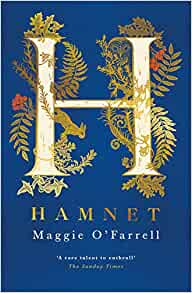
I’m currently reading Hamnet by Maggie O’Farrell and am surprised that I’m not feeling enthusiastic about it; surprised because I’ve enjoyed her earlier books and Hamnet won the Women’s Prize for Fiction this year. It looks just the sort of book I usually enjoy. It’s historical fiction, set in Elizabethan England and it is beautifully written.

It has a strange, fairy-tale feel and I’m finding hard to settle into this book. I don’t feel involved. I feel I’m on the outside looking on from a distance. I think it’s O’Farrell’s use of the present tense, but I’m hoping I’ll feel more involved as I read on.

The last book I read was The Haunting of Hill House by Shirley Jackson, a disturbing novel to say the least. My review will follow. For now here is the description from Goodreads:

Four seekers have arrived at the rambling old pile known as Hill House: Dr. Montague, an occult scholar looking for solid evidence of psychic phenomena; Theodora, his lovely and lighthearted assistant; Luke, the adventurous future inheritor of the estate; and Eleanor, a friendless, fragile young woman with a dark past. As they begin to cope with chilling, even horrifying occurrences beyond their control or understanding, they cannot possibly know what lies ahead. For Hill House is gathering its powers – and soon it will choose one of them to make its own.

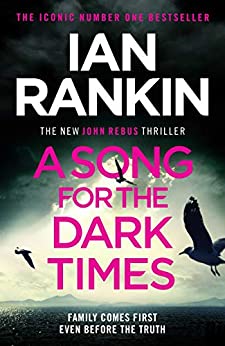
Reading Next: I’m really looking forward to reading A Song for the Dark Times by Ian Rankin, published tomorrow, his latest Rebus novel.

When his daughter Samantha calls in the dead of night, John Rebus knows it’s not good news. Her husband has been missing for two days.

Rebus fears the worst – and knows from his lifetime in the police that his daughter will be the prime suspect.

He wasn’t the best father – the job always came first – but now his daughter needs him more than ever. But is he going as a father or a detective?

As he leaves at dawn to drive to the windswept coast – and a small town with big secrets – he wonders whether this might be the first time in his life where the truth is the one thing he doesn’t want to find…

My Friday Post: The Haunting of Hill House by Shirley Jackson

Every Friday Book Beginnings on Friday is hosted by Gillion at Rose City Reader where you can share the first sentence (or so) of the book you are reading. You can also share from a book you want to highlight just because it caught your fancy.

Today my Book Beginning is from The Haunting of Hill House by Shirley Jackson.

No living organism can continue for long to exist sanely under conditions of absolute reality; even larks and katydids are supposed by some to dream. Hill House, not sane, stood by itself against its hills, holding darkness within; it had stood so for eighty years and might stand for eighty more. Within, walls might continue upright, bricks met neatly, floors were firm, and doors were sensibly shut; silence lay steadily against the wood and stone of Hill House, and whatever walked there, walked alone.

Also every Friday there is The Friday 56, hosted by Freda at Freda’s Voice. *Grab a book, any book. *Turn to Page 56 or 56% on your  ereader . If you have to improvise, that is okay. *Find a snippet, short and sweet, but no spoilers!

These are the rules:

  1. Grab a book, any book.
  2. Turn to page 56, or 56% on your eReader. If you have to improvise, that is okay.
  3. Find any sentence (or a few, just don’t spoil it) that grabs you.
  4. Post it.
  5. Add the URL to your post in the link on Freda’s most recent Friday 56 post.

  1. Grab a book, any book.
  2. Turn to page 56, or 56% on your eReader. If you have to improvise, that is okay.
  3. Find any sentence (or a few, just don’t spoil it) that grabs you.
  4. Post it.
  5. Add the URL to your post in the link on Freda’s most recent Friday 56 post.

Page 56:

The sun went down smoothly behind the hills, slipping almost eagerly, at last, into the pillowy masses. There were already long shadows on the lawn as Eleanor and Theodora came up the path toward the side veranda of Hill House, blessedly hiding its mad face in the growing darkness.

This book has been described as a ‘perfect work of unnerving terror’, so it’s ideal reading for Hallowe’en.

Blurb:

Alone in the world, Eleanor is delighted to take up Dr Montague’s invitation to spend a summer in the mysterious Hill House. Joining them are Theodora, an artistic ‘sensitive’, and Luke, heir to the house. But what begins as a light-hearted experiment is swiftly proven to be a trip into their darkest nightmares, and an investigation that one of their number may not survive. Twice filmed as The Haunting, and the inspiration for a 10-part Netflix series, The Haunting of Hill House is a powerful work of slow-burning psychological horror.