Top Ten Tuesday: Books I Did Not Finish

Top Ten Tuesday is a weekly meme created by The Broke and the Bookish and now hosted by Jana at That Artsy Reader Girl. For the rules see her blog.

The topic this week is Books I Did Not Finish. I rarely give up on books I’ve bought but I borrow lots of library books and often take them back before I’ve finished them. Sometimes it’s because they’re books that are due back before I’ve finished them, or because I’ve borrowed them to see if I’d like them and decide not to read them.

These are books on the library’s list of books I’ve borrowed over the last couple of years that I had to return before I’d read them:

Pianos and flowers : brief encounters of the romantic kind by Alexander McCall Smith, a short story collection

A possible life by Sebastian Faulks

Sugar money : a novel by Jane Harris

The Shrouded Path by Sarah Ward

Cuddy by Benjamin Myers

Daphne Du Maurier and her sisters : the hidden lives of Piffy, Bird and Bing by Jane Dunn

Maltese Falcon by Dashiel Hammett

Hag-seed : the Tempest retold by Margaret Atwood

The beginner’s goodbye by Anne Tyler

Your beautiful lies by Louise Douglas

Have you read any of them?

Top Ten Tuesday: Books Set in Another Time

Top Ten Tuesday is a weekly meme created by The Broke and the Bookish and now hosted by Jana at That Artsy Reader Girl. For the rules see her blog.

The topic this week is Books Set in Another Time (These can be historical, futuristic, alternate universes, or even in a world where you’re not sure when it takes place you just know it’s not right now.)

The difficulty I had with this post was choosing which books to feature out of so many possibilities. I decided to pick books that are set in the past and also in the future. I’ve listed them in chronological order.

The Past:

1.Imperium by Robert Harris, the first in his Cicero Trilogy, beginning in 79 BC, this book set in the Republican era is a fictional biography of Marcus Tullius Cicero by Tiro, his slave secretary.

Tiro was a real person who did write a biography of Cicero, which has since been lost in the collapse of the Roman Empire. Harris has based Imperium on, among other sources, Cicero’s letters, which Tiro had recorded, successfully interweaving Cicero’s own words with his own imagination.  It is basically a political history, a story filled with intrigue, scheming and treachery in the search for political power as Cicero, a senator, works his way to power as one of Rome’s two consuls. I marked many passages that struck me as interesting and felt much of the struggle for power applies as much today as it did in Ancient Rome.
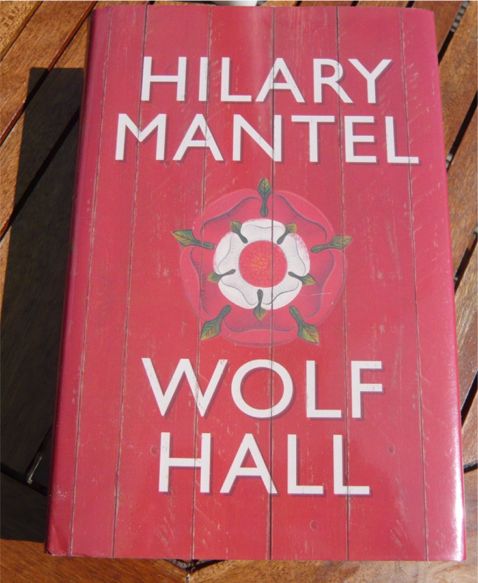
2. The Man on a Donkey by H,M, F. Prescott – set in 1536 -1537 (covering the same period as Hilary Mantel’s Wolf Hall trilogy)

An enthralling novel about a moment in history when England’s Catholic heritage was scattered to the four winds by a powerful and arrogant king. In 1536, Henry VIII was almost toppled when Northern England rose to oppose the Dissolution of the Monasteries. For a few weeks Robert Aske, the leader of the rebels, held the fate of the entire nation in his hand. It’s written in the form of a chronicle, written from the various characters’ viewpoints telling the story of the Pilgrimage of Grace. The Pilgrimage of Grace was not a revolution against Henry but an attempt to get him to change his mind and to understand how people felt. They wanted Henry to stop the dissolution and his attacks on the monks and nuns and to return the country to following the Pope.

Just like Mantel’s books, this book transported me back to that time, with lyrical descriptions of the settings, both of the countryside and of the towns, of Marrick Priory and of the king’s court, of the people, and the mood of the times, both religious and political. 

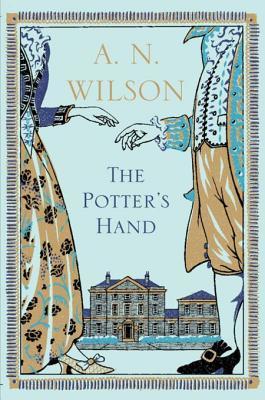
3. The Potter’s Hand by by A N Wilson – beginning in 1768 and roughly following the fortunes of the Wedgwood family until 1805, ten years after the death of Josiah Wedgwood, an English potter and the founder of the Wedgwood company.

For me it really did convey what it must have been like to live in that period – whilst the the American War of Independence, the French Revolution, were taking place. It was a time of great change (what time isn’t?) both social and political change as the industrial revolution got under way in England. It’s full of ideas about colonialism, the abolition of slavery, working conditions, and women’s rights. It brought about small changes as well as big ones.
It’s big on character (lots of them), the main ones being Josiah Wedgwood himself, ‘Owd Wooden Leg‘, his daughter Sukey, his nephew Tom Byerley, his childhood friend Caleb Bowers and Blue Squirrel, an American Cherokee Tom fell in love with in America. Overall it is the story of a remarkable family, their lives, loves, work, illnesses, depressions, addictions and deaths. 
4. Mrs Whistler by Matthew Plampin – 1876 to 1880

I loved this novel about the American artist James McNeill Whistler and his model and mistress, Maud Franklin, the ‘Mrs Whistler‘ of the title. The book covers two episodes in their lives during the years 1876 to 1880 – a bitter feud with his patron Francis Leyland about his fee for painting The Peacock Room, and the libel trial in which Whistler sued the art critic John Ruskin, over a review that dismissed him as a fraud. These two events brought Whistler to the point of bankruptcy.

It’s a long book that moves quite slowly through these four years. I loved all the detail – of Whistler’s impetuous and rebellious character, his relationship with his brother and mother (the real Mrs Whistler), as well as with Maud – and the details of the house he had built in London on Tite Street in Chelsea, which he called the White House, his flight to Venice and most of all about his paintings.

5. The Watchmaker of Filigree Street by Natasha Pulley – Victorian times, a mixture of historical fact and fantasy

This is set both in London and Japan, following the lives of the main characters, Thaniel Stapleton, Keita Mori and Grace Carrow. I was completely convinced by the setting in a different time in a world that was familiar and yet so different.

Keita Mori is an interesting character and as I read my opinion of him kept changing – just who is he? He is an enigma, why is he living in London, is he the bomb maker, does he in fact know what is going to happen, is he a magician? He baffled and confused me as much as he baffled and confused the other characters.

Equally fascinating are the sections set in Japan; Grace’s story, her research into luminiferous ether (a bit hard to follow), her relationship with Akira Matsumoto, the elegant son of a Japanese nobleman; the Japanese show village in Hyde Park where Gilbert and Sullivan went to research for the Mikado; the early days of the London Underground; and of course the clockwork inventions, in particular Katsu, the clockwork octopus.

6. The Summer Before the War by Helen Simonson – 1914

This is really a book of two parts – the months before the outbreak of the First World War and then the events as the war got underway. It’s set in the  summer of 1914, in Rye in East Sussex when spinster Beatrice Nash arrives to teach Latin at the local grammar school. It begins slowly with the first part describing the lazy, idyllic summer and in which all the characters are introduced. Although there is a clear distinction between the classes in society cracks are beginning to appear which will only widen as the century gets under way and the war acts as a catalyst for change.

Simonson doesn’t hold back on the horrific conditions under which the war took place and from a gentle beginning the book moves into a war novel, emotional and moving.

7. Corpus by Roy Clements – 1936

Set in 1936, a time when Europe was once more on the brink of war. Civil war has broken out in Spain, in Britain some people are openly supporting the Nazis in Germany and politicians are torn between wanting Edward VIII to abdicate the throne or give up his relationship with Wallis Simpson.

When a renowned member of the county set and his wife are found horribly murdered, Tom Wilde a history professor, finds himself dragged into a world of espionage which, until now, he has only read about in books. But the deeper he delves, the more he wonders whether the murders are linked to the death of the girl with the silver syringe – and, just as worryingly, to the scandal surrounding King Edward VIII and his mistress Wallis Simpson…

The Future:

8. The Passengers by John Marrs – the near future

This is a shocking book. I found it riveting, even if it is preposterous, and sinister with a frightening view of the future that may not be that ridiculous. It kept me glued to the page right to the end. Driverless cars have been developed to Level Five, with no steering wheels, pedals or a manual override option. A Hacker has taken over control of the cars, set them on a collision course, and tells each passenger that the destination they programmed into their GPS has been replaced with an alternative location. In approximately two hours time they are going to die. They are trapped inside unable to contact the outside world.

9.The Library of the Dead by T L Huchu, the first book in the Edinburgh Nights series, set in a future or alternative Edinburgh

It’s urban fantasy, with a wealth of dark secrets in its underground. Teenager Ropa, has dropped out of school to become a ghost talker and when a child goes missing in Edinburgh’s darkest streets, Ropa investigates his disappearance. Now she speaks to Edinburgh’s dead, carrying messages to those they left behind. A girl’s gotta earn a living, and it seems harmless enough. Until, that is, the dead whisper that someone’s bewitching children – leaving them husks, empty of joy and strength. It’s on Ropa’s patch, so she feels honor-bound to investigate. But what she learns will rock her world.

10. The Uncertain Midnight by Edmund Cooper – set on Earth in 2113

Earth is a world run by machines, androids, who have taken over the burdens of work and responsibility, a world where the humans are required to spend their lives in leisure pursuits, but are subject to ‘Analysis’ (brain-washing) if the androids think they are maladjusted.

John Markham emerges in 2113 after spending 146 years in suspended animation, frozen deep under ground after an atomic holocaust had devastated his world. In 2113 not all humans were happy to leave everything to the androids. Known as Runners these humans believed in ‘human dignity, freedom of action and the right to work’. Markham struggles to adapt and this raises the question of whether the androids could be said to be alive – leading to discussions about the definition of life, the difference between determinism and free will, and eventually leading to war between the androids and the Runners.

Top Ten Tuesday: 2024 Releases I Was Excited to Read but Still Haven’t …Yet

Top Ten Tuesday is a weekly meme created by The Broke and the Bookish and now hosted by Jana at That Artsy Reader Girl. For the rules see her blog.

The topic this week is 2024 Releases I Was Excited to Read but Still Haven’t … Yet.

Camino Ghosts by John Grisham

Set on Camino Island, popular bookseller Bruce Cable tells Mercer Mann an irresistible tale that might be her next novel. A giant resort developer is using its political muscle and deep pockets to claim ownership of a deserted island between Florida and Georgia. Only the last living inhabitant of the island, Lovely Jackson, stands in its way. What the developer doesn’t know is that the island has a remarkable history, and locals believe it is cursed . . . and the past is never the past . . .

The Trial by Jo Spain

2014, Dublin: at St Edmunds, an elite college on the outskirts of the city, twenty-year-old medical student Theo gets up one morning, leaving behind his sleeping girlfriend, Dani, and his studies – never to be seen again. With too many unanswered questions, Dani simply can’t accept Theo’s disappearance and reports him missing, even though no one else seems concerned, including Theo’s father.

Ten years later, Dani returns to the college as a history professor. With her mother suffering from severe dementia, and her past at St Edmunds still haunting her, she’s trying for a new start. But not all is as it seems behind the cloistered college walls – meanwhile, Dani is hiding secrets of her own.

The Wild Swimmers (DS Alexandra Cupidi Book 5): by William Shaw

The body of a local woman is found washed up on the Folkstone shoreline. Cupidi must find the missing link between a group of wild swimmers, an online dating profile and a slippery killer who feels remarkably close to home.

The Last Word by Elly Griffiths

Natalka and Edwin are running a detective agency in Shoreham, Sussex. Despite a steady stream of minor cases, Natalka is frustrated, longing for a big juicy investigation to come the agency’s way.

Then a murder case turns up. Local writer, Melody Chambers, is found dead and her family are convinced it is murder. Edwin, a big fan of the obit pages, thinks there’s a link to the writer of Melody’s obituary who pre-deceased his subject.

The Wrong Sister by Claire Douglas

Tasha and her husband Aaron are having a much-needed week away in Venice. With their two young children being cared for back home by Tasha’s older sister Alice, it’s the perfect opportunity for them to reconnect as a couple. Until they start to feel they’re being followed. Then Tasha receives a phone call to say Alice and her husband Kyle have been attacked. Alice is in intensive care, and Kyle has died.

Then Tasha receives a note: It was supposed to be you. What soon emerges are secrets buried far deeper than any of this family realise. Everyone has a history. But how far would you go to protect those you love?

They Thought I Was Dead by Peter James

Her name is Sandy. You might know her as the loving wife of Detective Superintendent Roy Grace. But there’s more to her than meets the eye. A woman with a dubious past, a complicated present and an uncertain future. Then she was gone.

Her disappearance caused a nationwide search. Even the best detective on the force couldn’t find her. They thought she was dead. Where did she go? Why did she run? What would cause a woman to leave her whole life behind and simply vanish?

A Refiner’s Fire by Donna Leon, the 33rd Commissario Guido Brunetti in which he confronts a present-day Venetian menace and the ghosts of a heroism that never was.

The Dark Wives by Ann Cleeves , Vera, Book 11, crime fiction, following on from The Rising Tide, which I loved. A young man’s body is found in the early morning light by a local dog walker in the park outside Rosebank, a home for troubled teens in the coastal village of Longwater. The victim is Josh, a staff member, who was due to work the previous night but never showed up.

Precipice by Robert Harris, historical fiction, summer 1914, 26-year-old Venetia Stanley – aristocratic, clever, bored, reckless – is having a love affair with the Prime Minister, H. H. Asquith, a man more than twice her age.

Midnight and Blue by Ian Rankin, a John Rebus thriller. John Rebus spent his life as a detective putting Edinburgh’s most deadly criminals behind bars. Now, he’s joined them…

Have you read any of these? What did you think?
Which should I read first?

Top Ten Tuesday: Bookish Goals for 2025

Top Ten Tuesday is a weekly meme created by The Broke and the Bookish and now hosted by Jana at That Artsy Reader Girl. For the rules see her blog.

This week’s topic is Bookish Goals for 2025 (How many books do you want to read this year? Are you hoping to read outside your comfort zone? Are there books you meant to read last year but never got to? Are there new-to-you authors you’re hoping to read?)

  1. Read 60 or more books. I used to read 90 to 100 books a year, but the last few years my reading rate has dropped a lot, so I’m being more realistic and not making this a target. It all depends on what else is going on in my life and the length of the books I read.
  2. Read the four books on my NetGalley shelf.
  3. Read more of the physical books on my bookshelves. My eyesight is not as good as it was, which means that I’m struggling with the font size in some of these books.
  4. Be more realistic about whether I will actually read these books and recycle those I know I won’t read. This is difficult because in the past when I have recycled books I find I often regret the fact that I did.
  5. Be more careful when considering whether to accept books for review.
  6. Write something about each book I read, even if it’s just a short paragraph.
  7. Read more nonfiction.
  8. I enjoy making lists of books to fit into a challenge, but I need to resist the temptation to join too many reading challenges. There’s a limit to how many books one can read in a lifetime.
  9. I like to read what I like and when I like without any pressure to read to a deadline.
  10. Enjoy the books I’m reading and abandon any that I’m not enjoying.

Top Ten Tuesday: Best Books I Read in 2024

This week’s topic is:  Best Books I Read In 2024.

Top 5 fiction:

The Stars Look Down by A.J. Cronin, a family saga chronicling the lives of a number of interconnected families over a period of thirty years. 

The story starts in 1903 in a North Country mining town, Sleescale, a fictional town, as its inhabitants experienced social and political upheaval. It ends in 1933. It highlights the terrible conditions in the coal mines, the lack of workers’ rights and the need for change in the relationship between the coal miners and the mine owners.

It’s a long book, but I read it quickly, completely absorbed in all the sub plots and keen to know how it would all be resolved. There is plenty of drama, with scenes including a flood in the pit, killing one hundred and five miners, including David’s father and brother. Cronin’s descriptive writing is so strong, conveying the terrible conditions in the pit, as the miners find themselves trapped and slowly realise there is no way out. Those scenes in particular made a big impression on me and will stay with me for quite some time.

I Let You Go by Clare Mackintosh, a powerful novel that kept me glued to its pages;

It is set partly in Bristol, England where Jacob is killed, and then moves into a small coastal village in Wales where Jenna is trying to make a new life for herself. It’s heart-wrenching reading as Jenna tries to put the past behind her and at times I thought this was a romantic novel. But it’s not, as it becomes clear that there are secrets in her past that haunt her. It’s almost a book of two parts and the second half is dark and violent, full of suspense and menace, and really shocking twists and turns. The characters are fully rounded, extremely well-drawn and realistic. The settings are vividly described, especially of the beautiful Welsh coast line. I could picture it so well and it made me long to be there.

The Tree of Hands by Ruth Rendell, one of her best standalone books.

Why I enjoyed it so much is that it thoroughly gripped me and made me want to read on and on. It’s a psychological thriller, full of suspense, with several twists and turns that made me unsure how it would end. I was delighted by the final twist!

Benet’s son, James aged four dies from croup whilst in hospital soon after Mopsa, her mother with a history of mental illness, comes to visit. Meanwhile Carol, a young widow with three kids, two of them in care, is living nearby with Barry, her younger boyfriend. He adores her but she doesn’t want to marry him, content for him to do all the housework and look after Jason her two year old son when he is not being looked after by babysitters. The trouble starts when Mopsa kidnaps Jason and brings him back to Benet as a replacement for James.

The Silence Between Breaths by Cath Staincliffe, about a group of people on the 10.35 train from Manchester Piccadilly to London Euston. It’s a story of a routine journey that takes a terrifying turn. You know early on both from the description on Amazon and from the back cover that one of the passengers, Saheel, has a ‘deadly secret’ ie a bomb, in his rucksack. So, the tension is there from the beginning of the book and I was wondering when he was going to the let off the bomb and what would happen to the passengers.

The characterisation is superb, so that I cared about each person, the setting is so well described in such detail that it all happened before my eyes and the drama and tension grew as the events played out. One of the standout books that I’ve read this year.

The Flower Arranger at All Saints by Lis Howell

There is a lot to like in this book. The setting is Tarnfield, a fictional Cumbrian village. The setting is described so well that I could ‘see’ it all. It’s picturesque, quiet and secluded, a place where everyone knows everybody’s business. The church plays a huge part in village life, but traditions are being upended by the new vicar and his fondness for playing the guitar during sermons.

And the characters are so ‘real’. I believed in them and even though there are many of them they’re all easily distinguishable and I loved the biblical references and flower clues – they’re intriguing. The plot too kept me keen to carry on reading, wanting to know the identity of the murderer.

Top 5 nonfiction:

Shakespeare: The Man who Pays the Rent by Judi Dench, Brendan O’Hea, an enthralling book.

Reading it is like being in the room with Dame Judi Dench and Brendan O’Hea as they talked about Judi’s career, her love for Shakespeare, and the numerous roles she has played over the years. Shakespeare to Judi Dench is a passionate affair, she talks about it with love.

This book is a wonderful run through the plays told from Judi’s perspective and, of course, her life, giving her insight not only into the characters but also into the world of the theatre. She talks about the rehearsals, the costumes, the sets, other actors, about critics, Shakespeare’s language – similes and metaphors, the use of rhyme, prose and verse, soliloquies, asides and how to adjust your breathing – and so on. Whatever she is talking about is all so clear and relevant, full of wit and humour and understanding.

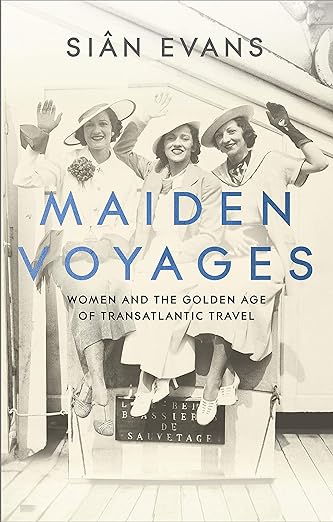
Maiden Voyages by Sian Evans, a fascinating portrait of the women, and their lives on board magnificent ocean liners as they sailed between the old and the new worlds.

It covers a wide range of topics that fascinate me – not just travel, but also social history, both World Wars, the sinking of the Titanic, emigration, the impact that the ocean liners had on the economy. and on women’s working lives and independence, adventure and so much more besides.

The ocean liner was a microcosm of contemporary society, divided by class: from the luxury of the upper deck, playground for the rich and famous, to the cramped conditions of steerage or third class travel. These iconic liners were filled with women of all ages, classes and backgrounds: celebrities and refugees, migrants and millionairesses, aristocrats and crew members.

Great Meadow by Dirk Bogarde, first published in 1992,  is volume five of Bogarde’s best-selling memoirs.

A recollection of his childhood, from 1927 to 1934 when he was a 19 year old, living in a remote cottage in the Sussex Downs with his sister Elizabeth and their strict but loving nanny, Lally. For the children it was an idyllic time of joy and adventure: of gleaning at the end of summer, of oil lamps and wells, of harvests and harvest mice in the Great Meadow.

Into the Tangled Bank: Discover the Quirks, Habits and Foibles of How We Experience Nature by Lev Parikian

This is non fiction about nature. It’s easy reading, Parikian writes with humour, in a chatty style, but also richly descriptive. I loved it, it is compulsive reading. He is a storyteller, so there are lots of anecdotes and stories, plus his thoughts on nature and how we view it. Amongst many other topics he ponders about the ethics of zoos – something that puzzles me too – and wonders if the definition of a nature lover is becoming that of one who loves nature programmes. There’s a lot packed into this book.

Getting Better by Michael Rosen

Michael Rosen has grieved the loss of a child, lived with debilitating chronic illness, and faced death itself when seriously unwell in hospital with Covid. In spite of this he has survived, and has even learned to find joy in life in the aftermath of tragedy. In Getting Better, he shares his story and the lessons he has learned along the way. Exploring the roles that trauma and grief have played in his own life, Michael investigates the road to recovery, asking how we can find it within ourselves to live well again after – or even during – the darkest times of our lives. Moving and insightful, this is a wonderful book.

Top Ten Tuesday: Books on my TBR list with the Earliest Publishing Dates

Top Ten Tuesday is a weekly meme created by The Broke and the Bookish and now hosted by Jana at That Artsy Reader Girl. For the rules see her blog.

This week’s topic is Books on my TBR list with the earliest publishing dates.

The IIiad by Homer – in the 8th century B.C., around 750 B.C, telling the story of the Trojan War

Don Quixote by Miguel de Cervantes Saavedra – 1605 and 1615

Moll Flanders by Daniel Defoe – 1722

Gulliver’s Travels by Jonathan Swift – 1726

Waverley by Sir Walter Scott – 1814

The Pickwick Papers by Charles Dickens – 1837

Mary Barton by Elizabeth Gaskell – 1848

North and South by Elizabeth Gaskell – 1855

The House by the Churchyard by Sheridan Le Fanu – 1861

The Idiot by Fyodor Dostoevsky – 1869