Corvus: A Life With Birds by Esther Woolfson

Corvus by Esther Woolfson is a remarkable book about the birds she has has had living with her; birds that were found out of the nest that would not have survived if she had not taken them in.

‘Corvus’ is a genus of birds including jackdaws, ravens, crows, magpies and rooks. The specific birds Esther Woolfson has looked after are a rook, called Chicken (short for Madame Chickieboumskaya), a young crow, a cockatiel, a magpie, two small parrots and two canaries. But it all started with doves, which live in an outhouse, converted from a coal store into a dove-house, or as they live in Aberdeen in Scotland, a doo’cot.

Although the book is mainly about the rook, Chicken, Esther Woolfson also writes in detail about natural history, the desirability or otherwise of keeping birds, and a plethora of facts about birds, their physiology, mechanics of flight, bird song and so on. As with all good non-fiction Corvus has an extensive index, which gives a good idea of the scope of the book. Here are just a few entries for example under ‘birds’ the entries include – aggression in, evolution of, navigation, in poetry, speeds of, vision, wildness of, wings’

It’s part memoir and part nature study and for me it works best when Esther Woolfson is writing about Chicken and the other birds living in her house, how she fed them, cleared up after them, and tried to understand them. Although at times I had that feeling I get when I visit a zoo – these are wild birds kept captivity and I’m not very comfortable with that, I am reassured by Esther Woolfson’s clarification that reintroducing these birds to the wild was unlikely to be successful and indeed they lived longer than they would have done in the wild. Though Chicken and Spike (and the other birds) live domesticated lives they are still wild birds:

I realise that if ‘wild’ was once the word for Chicken, it still is, for nothing in her or about her contains any of the suggestions hinted at by the word ‘tame’. Chicken, Spike, Max, all the birds I have known over the years, live or lived their lives as they did by necessity or otherwise, but were and are not ‘tame’. They are afraid of the things they always were, of which their fellow corvids are, judiciously, sensibly; of some people, of hands and perceived danger, of cats and hawks, of things they do not know and things of which I too am afraid. ‘Not tamed or diminished’. (pages 115-6)

At times, where Esther Woolfson goes into intricate detail, for example in the chapter on ‘Of Flight and Feathers‘ I soon became completely out of my depth, lost in the infinity of specialised wing shapes and the complexities of the structure of feathers. But that is a minor criticism, far out weighed by her acute observations of the birds, her joy in their lives and her grief at their deaths – her description of Spike’s unexpected death and her reaction is so moving:

I wept the night he died. Sitting in bed, filled with the utter loss of his person, I felt diminished, bereft. I talked about him, but not very much, in the main to members of the family, who felt the same, but to few others.

It’s the only way, this compact and measured grief, for those of us who are aware that there has to be proportion in loss and mourning; we laugh at ourselves for our grief, trying to deal with this feeling that is different in quality, incomparable with the loss of a human being.

We felt – we knew – that something immeasurable had gone. (page 209)

Anyone who has lived through the death of a loved animal can recognise that sense of loss.

Corvus is a beautiful book and I have learned so much by reading it. I must also mention the beautiful black and white illustrations by Helen Macdonald – I think this is the Helen Macdonald who was awarded the 2014 Samuel Johnson Prize for Non-Fiction for H is For Hawk.

Esther Woolfson was brought up in Glasgow and studied Chinese at the Hebrew University of Jerusalem and Edinburgh University. Her acclaimed short stories have appeared in many anthologies and have been read on Radio 4. She has won prizes for both her stories and her nature writing and has been the recipient of a Scottish Arts Council Travel Grant and a Writer’s Bursary. Her latest book, Field Notes from a Hidden City (Granta Books), was shortlisted for the 2014 Thwaites Wainwright Prize for Nature and Travel Writing. She lives in Aberdeen. For more information see her website.

Books Read in October

October was a bumper reading month for me. I read 11 books and 1 novella and reviewed all of them except one – To the Lighthouse by Virginia Woolf, which was a re-read. Two books are non-fiction, and 2 books are from my TBR shelves.

I’ve included a brief description of each book, for the full posts click on the book titles.

  1. The Brief History of the Dead by Kevin Brockmeier €“ TBR – this is fantasy fiction set some time in the future, about a place between heaven and earth, and the people who end up there after they’ve died and what happens to them.  It didn’t quite live up to my expectations.
  2. The Lake District Murder by John Bude – first published in 1935, this is a police procedural, showing in intricate detail how the detectives investigate a crime. In this case a body is discovered in a car outside a lonely garage on a little used road.
  3. The Sittaford Mystery by Agatha Christie, one of the earlier of her books, first published in the UK in 1931 and in the US as Murder at Hazelmoor, featuring Inspector Narracott. It begins with a seance, or rather a table-turning session which tells of the death of Captain Trevelyan.
  4. The Assassination of Margaret Thatcher by Hilary Mantel – a collection of short stories that are brooding, somewhat melancholic, dark, disturbing and full of sharp and penetrating observations.
  5. A Short Book about Drawing by Andrew Marr – NF – not an instruction book, but it’s full of insight into what happens when you draw and it’s dotted throughout with personal information.
  6. Almost Invincible: a biographical novel of Mary Shelley by Suzanne Burdon – a remarkable novel about Mary Shelley’s life and relationship with the poet Percy Bysshe Shelley, a story of scandal, love and loss. 
  7. Time’s Echo by Pamela Hartshorne – a time-slip story with an element of mystery and suspense set in York in the 1870s and the modern day.
  8. In Our Time by Melvyn Bragg €“ NF, TBR -transcript of the Radio 4 programme covering a wide variety of subjects including the history of ideas €“ philosophy, physics, history, religion, literature and science.
  9. Cauldstane by Linda Gillard – a ghost story, set in a Scottish tower house in the Highlands where a malign presence threatens the MacNab family and ghost writer Jenny Ryan.
  10. To the Lighthouse by Virginia Woolf – a review may follow.
  11. A Study in Scarlet by Arthur Conan Doyle – Sherlock Holmes and Dr Watson investigate the murder of Enoch J Drebber, an American found dead in the front room of an empty house off the Brixton Road,  with the word ‘RACHE’ scrawled in blood on the wall beside the body.
  12. She Never Came Home by Dorte Hummelshøj Jacobsen (novella) – ghost story with a chilling atmosphere and shocking twist at the end.

With such a variety of books it’s impossible to pick a book of the month, but in particular both the non-fiction books are excellent:

In our time

and in fiction,  Hilary Mantel’s book of short stories and Suzanne Burdon’s autobiographical novel of Mary Shelley are two that still linger in my memory:

Mantel & Burdon

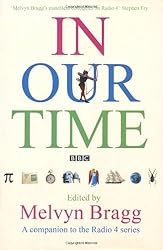
In Our Time edited by Melvyn Bragg

I began reading In Our Time, A Companion to the Radio 4 series back in August and I’ve been reading short sections on most days since then, finally finishing it this morning. It is long book and I didn’t want to read it quickly.

Melvyn Bragg has selected episodes on a wide variety of subjects encompassing the history of ideas – philosophy, physics, history, religion, literature and science. This book contains transcripts of 26 programmes, a selection from hundreds of programmes broadcast over eleven years. The benefit of having it in book form means that it’s easy to pause, think, or re-read to make sure I was understanding the subject as much as possible.

The programmes are listed on the back cover – Darwin was covered by four programmes:

In Our Time P1010233

With such a wide range of subjects it’s not so surprising that I found some more interesting than others, but I was surprised that some that didn’t appeal from the titles were actually fascinating and I now know more about black holes and antimatter than before – how much I can remember is another matter! I’m not alone in this, as Bragg said in the Afterword, his:

… only regret is that in the more testing subject areas he finds that his memory after the programme will not retain some or even much of what made the programme intriguing. (pages 573-4)

But it’s there in print, so I can refresh my memory at any time! I liked the fact that these are transcripts, not formal lectures, so that it comes across as conversations between experts with Bragg, every now and then asking the questions that someone like me, not knowing much about the subject, would want to ask. An ideal book for an eclectic reader!

It’s not easy to pick out highlights as there are so many that fascinated me. As Halloween is approaching I’m remembering the chapter on ‘Witchcraft’, but others as diverse as ‘Tea’, ‘Socrates’ and the four ‘Darwin’ programmes also stand out. And where else could you go from ‘Agincourt’ to ‘Plate Tectonics’?

In Our Time is broadcast each Thursday at 9am on BBC Radio 4. This week’s episode was ‘Rudyard Kipling’. This and all the other programmes are available as downloads.

  • Hardcover: 608 pages
  • Publisher: Hodder & Stoughton (17 Sep 2009)
  • Language: English
  • ISBN-10: 0340977507
  • ISBN-13: 978-0340977507
  • Source: my own copy

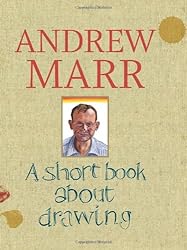
A Short Book About Drawing by Andrew Marr

I have called this a “A Short Book About Drawing” because that’s what it is. But it is also a book about being happy and the importance of drawing and making, for a happy life. I’ve written books about all sorts of things, but I have never enjoyed one as much as this. (Introduction, page 8)

Reading this book was a pleasure. I thoroughly enjoyed it – it made me happy and it encouraged me to carry on with my drawing. It’s not an instruction book, but it’s full of insight into what happens when you draw and it’s dotted throughout with personal information, such as how Marr began drawing, like most of us at school, what he drew, and how he lingered over drawings and paintings, going to exhibitions such as those at the Royal Scottish Academy.

He refers to artists and their paintings without including illustrations – the only paintings/drawings are his own!  He writes that ‘there isn’t a single drawing here I would regard as a real work of art, but I think most of them will encourage people to try for themselves.’  

He draws most days. This book was written not long before Marr suffered a stroke and it was only after he found himself drawing again – on his iPad – that he began to feel himself again. I would have liked more details about his drawings, about the medium he used –  some are obviously digital, and others are pencil sketches, but others are less obvious, maybe pen and wash?

It is a short book – just 144 pages – but there is a lot packed into those pages. Here are some more quotations that give a flavour of the book:

Chapter 2 ‘On Drawing and Happiness’:

Flow is the proposition that we are happiest when concentrating as much as possible on something that’s both quite hard  and for which we have an aptitude. … Drawing is a source of happiness and inner strength not because it is easy but because it is hard. (pages 30 -35)

Chapter 8 ‘When Did Normal People Start Drawing’. This is a very interesting chapter moving through the centuries and countries until the 1700s in London when

… the real drawing craze spreads from small numbers of enthusiasts to the new middle classes.

Marr states:

Drawing will make you a better person – not morally, necessarily, but it makes you think. It will help you see the hidden patterns all around you, and make you a discriminating lover of landscape, faces and mundane objects. It becomes an education, which changes your brain as much as learning to play the piano or to dance. It is about striving to become more fully human. (page 90)

Today we have been well educated to understand that most of us cannot draw. In the nineteenth century, foolish folk, they did not realise this, so they went off and drew anyway. (page 92)

A Short Book About Drawing is a special book. I thoroughly recommend it.

I read it because I love art, but after I finished reading I realised that it is another book, and a very different one, for the Read Scotland 2014 Challenge as

‘Andrew Marr was born in Glasgow in 1959. He studied English at the University of Cambridge and has since enjoyed a long career in political journalism, working for the Scotsman, the Independent, the Daily Express and the Observer. From 2000 to 2005 he was the BBC’s Political Editor. He has written and presented TV documentaries on history, science and politics, and presents the weekly Andrew Marr Show on Sunday mornings on BBC1 and Start the Week on Radio 4. Andrew lives in London with his family.’ (copied from the back cover)

Mount TBR: Checkpoint #3

It’s time for the third quarterly checkpoint in the Mount TBR Reading Challenge 2014
Bev asks 2 questions:
 
1. Tell us how many miles you’ve made it up your mountain (# of books read).  

I have read 40 books. The full list is on my TBR Challenge page. In terms of how many mountains I’ve scaled this means that I have just 8 books left to read to reach my target of Mt Ararat (48 books) by the end of the year. Looking at the photo from Wikipedia I think I’m probably at the top of the Lesser Ararat. I should reach Greater Ararat by the end of the year if not earlier. 

2. Pair up two of your reads using whatever connection you want to make. Written by the same author? Same genre? Same color cover? Both have a main character named Clarissa? Tell us the books and what makes them a pair.

It was obvious when I looked at my list which two books make a pair:

Shakespeare’s Restless World by Neil MacGregor and Shakespeare: a Biography by Peter Ackroyd. Both books are non-fiction and obviously about Shakespeare and they complement each other very well.

Shakespeare’s Restless World is a beautiful book recreating Shakespeare’s world through examining twenty objects. It reveals so much about the people who lived then, who went to see Shakespeare’s plays in the 1590s and 1600s, and about their ideas and living conditions.

And Shakespeare: a Biography is structured mainly around the plays.  But above all, Ackroyd Shakespeareit places Shakespeare within his own time and place, whether it is Stratford or London or travelling around the countryside with the touring companies of players. Shakespeare spans the reigns of two monarchs, which saw great changes and Ackroyd conjures up vividly the social, religious and cultural scene. It’s a very readable book, full of detail. 

Sunday Selection

I’m currently reading The Brief History of the Dead by Kevin Brockmeier and Almost Invincible: a biographical novel of Mary Shelley.  But I like to think about the books I’ve got waiting to be read. They are:

  • The Sittaford Mystery by Agatha Christie – set in a remote house in the middle of Dartmoor, a group of six people gather round a table for a séance. The spirits spell out a chilling message of murder. This is an early Agatha Christie book, first published in 1931 and is one I’ve been looking for, for ages.
  • A Short Book about Drawing by Andrew Marr. This is a library book and I have already flipped through it and read little bits. It has colour photos of his paintings along with his ideas about the differences between fine art and drawing, the mechanics of drawing and how drawing and painting can help us to think and see the world differently and so on. It looks fascinating and I’ll read this very soon I think.
  • Assassin’s Apprentice by Robin Hobb – this is free on Kindle at the moment. I know that other book bloggers like Robin Hobbs’ books and I’ve been thinking of trying one myself. This one is the first in the Farseer Trilogy. I’m not sure what to expectIf you’ve read it what do you think?
  • The Vanishing Witch by Karen Maitland. Another library book I’ve borrowed – this one from the mobile library. I loved Company of Liars and The Owl Killers, so I’m expecting great things from this book – I hope I won’t be disappointed. It’s set in the reign of Richard II, the time of the Peasants Revolt, a time of murder and mayhem and when suspicions of witchcraft were high as people started to die unnatural deaths.

The thing is that I want to read them all right now!