Castlerigg Stone Circle

Stone circles are amongst the most tangible and durable connections to the past. They have fascinated me ever since I was a young teenager and saw Stonehenge. We were on our way to Girl Guide camp in the New Forest, travelling overnight by coach from Cheshire and reached Stonehenge just before dawn. I was just about awake as we scrambled down from the coach and made our way over the field to be at Stonehenge as the sun came up. It was magical.

We were the only people there and in those days Stonehenge was fully accessible. I’ve been there since, and seen it on TV but I am so glad I had that experience before full access to Stonehenge was available, before there was a carpark and a visitor centre, shop and cafe. Now you can only view the stones from a short distance away along a tarmac pathway – after you’ve planned your visit in advance, parked your car and been driven 10 minutes by a shuttle bus, because entry to Stonehenge is by timed tickets. (Access is free at the solstices.)  I understand the need for all this but it still makes me shudder.

When I discovered that there is a stone circle near Keswick I was keen to go there whilst we were staying in the Lake District last week. Although there were more people at Castlerigg Stone Circle than I would have liked I really did appreciate the informality of the site.  There are no restrictions and you can wander around the stones as much you like. I suppose you’d have to get there at dawn or at least a lot earlier than we did to be there on your own.

Castlerigg is set on a plateau near Keswick, surrounded by hills, including Skiddaw and Blencathra. There is no carpark, visitor centre or shop – and I hope it stays that way. You can park in a little lane, where there was an ice-cream van selling delicious home-made ice-cream on the day we were there.

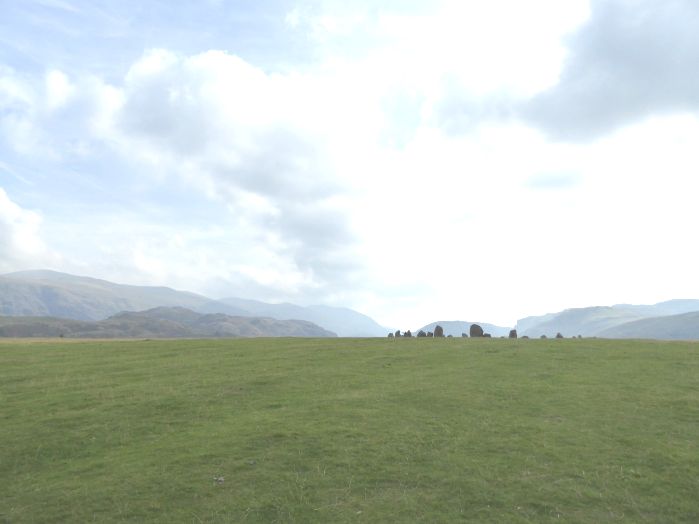
This was our first sight of the stones:

Approaching Castlerigg Stone Circle (1)  P1010056

Stone circles are ancient monuments. There are over 50 stone circles in the Lake District, made with locally available stones. Nobody knows what their function was, although there is much debate about whether they had a ritual and religious use, an astronomical significance or an economic function.

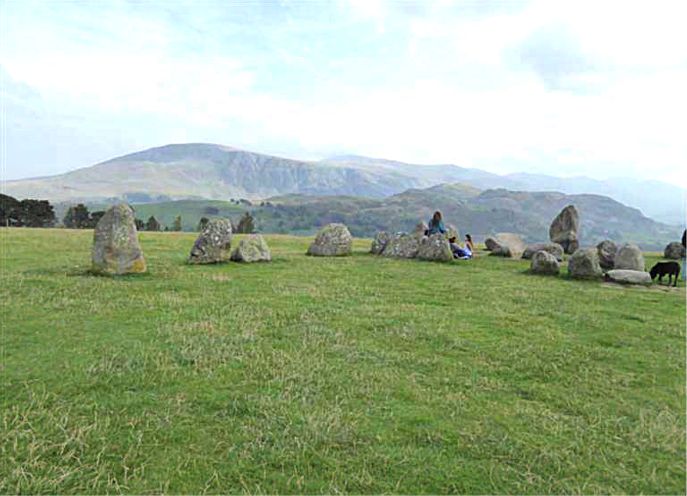
Castlerigg dates from around 5,200 BC which makes it older than the pyramids! Here is part of the circle. It is about 30 metres in diameter, which makes it quite difficult to take photos of the whole circle:

Castlerigg view 2

As you can see that the stones vary in size. The tallest stone is 2.3 metres and the largest weighs about 16 tonnes.

Castlerigg P1010061

And here are two photos of parts of the interpretation boards:

Int Bd Castlerigg P1010051

Int Bd Castlerigg P1010052

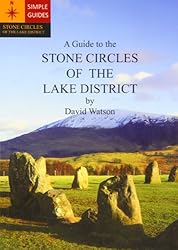
Castlerigg Stone Circle is described A Guide to the Stone Circles of the Lake District by David Watson, published in 2009 with colour photographs, maps and directions to the sites. The cover photo shows Castlerigg Stone Circle.

For more Saturday Snapshots see Melinda’s blog West Metro Mommy Reads.

My Sunday Selection

I haven’t been writing many blog posts recently for a number of reasons – one being the length of some of the books I’m reading.

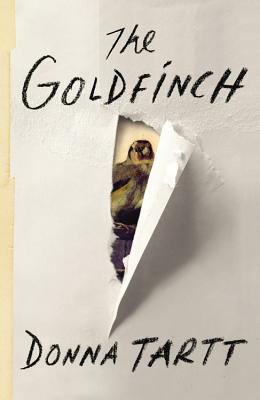
Donna Tartt’s The Goldfinch for example at 771 pages is not a quick read. I’m nearing the end on page 623, but even so my Kindle tells me that it will take me another 2 hours and 38 minutes to finish the book. I’m not sure I really like this feature, maybe it sounds better saying I’ve read 81%, or that I have 148 pages left to read! I began to think this book was too long ages ago, with too much description and too many minor characters, but then I come across sections that have me gripped and wanting to carry on regardless. So, I will be glad to finish it – the story could really have been over pages ago!

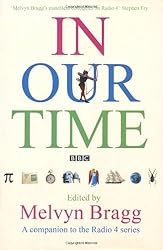
One of the other books I’m reading is also long at nearly 600 pages. This is non-fiction, though, and I’m deliberately taking it slowly, reading short sections most days. It’s In Our Time edited by Melvyn Bragg, which has episodes from his radio programmes – a selection from several hundred episodes broadcast over eleven years. It’s ideal for anyone, who like me, likes to read a wide variety of subjects. It covers such a wide range of subjects, such as The Field of the Cloth of Gold in 1520, programmes about Darwin, The Peasants’ Revolt in 1381 (I haven’t got to this chapter yet), programmes about the Origins of Mathematics, and Anti Matter, Shakespeare’s Language and J S Mill to mention just a few. My copy is a hardback book, which is a pleasure to read – even if a little heavy to hold, so I can’t read it in bed. I have no idea how long it will take me to finish it, but in contrast to The Goldfinch, I’ll be sorry when I reach the end.

I entered the Classics Club Spin, which gave me Gulliver’s Travels to read by the beginning of October. But, I’ve not even started it yet and can’t see myself reading it soon. I keep getting distracted by other books and wanting to read anything but Gulliver’s Travels. I’ve decided that it’s reading to ‘deadlines’ that is my problem – I don’t like it. Reading is my hobby, something I choose to do in my own time and at my own pace. I occasionally accept review books (and currently I have some still to write about), but I’ve come to the conclusion that this is not a good thing for me to do – so from now on (when I’ve completed the books I’ve accepted) I’m not going to accept any more books for the foreseeable future.

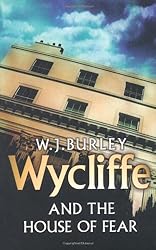
As always I keep looking at my TBRs – those books that I’ve had for a while (years for some of them) and I find myself itching to read them. So this morning whilst my Kindle was re-charging I got Wycliffe and the House of Fear down off the shelves and began that. I think it’s just starting to rain so I’m going to get back to it this afternoon (and maybe read a bit of The Goldfinch too).

July's Books

In July I read lots – 11 books. I’ve written about 6 of them (the links underlined go to my posts on the books). For the books without reviews I’ve added a few thoughts in this post, although I do intend to write more fully about some of them later on.

Three of them are TBRs (books I’ve had since before January 2014), which is good, but as I’ve acquired more than three this month the total number of TBRs is rising, not falling! I read three non-fiction and the rest are fiction of various genres.

  1. Midnight in St Petersburg by Vanora Bennett – a review copy, historical fiction. I thought this portrayal of the Russian Revolution and the effect it had on ordinary people was well done and I did enjoy it.
  2. Casting the Net by Pam Rhodes – a review copy from LibraryThing. A light easy-to-read book that deals with serious issues from the Christian perspective. Life in Dunbridge is far from peaceful and the Neil, the curate has many crises to face, not the least being his vicar’s loss of faith. It’s full of interesting characters, painting a picture of life in a small town.
  3. A Place for Us by Harriet Evans – I received this from Lovereading as a mystery book – no author or title and no publication date. It’s a family saga about the Winters, who at first appear to be the perfect family, but no family can be that perfect and one by one their secrets begin to surface. The book has a slow start as the Winter family is large and it took me a while to get them all clear in my mind. I thought some characters were more fully developed than others, which makes the book rather disjointed. However, after the slow start I soon guessed what the big secret was and I thought it all became too predictable. An entertaining, if undemanding book, which I think could have benefited from being shorter. The book is to be published in 4 parts – Parts 1 and 2 are available now.
  4. Shadows on Our Skin by Jennifer Johnston – another review copy, this is the story of Joe, living in Derry (Londonderry), Northern Ireland before the Troubles and the Bloody Sunday attack in 1972.  An engrossing book, the writing is taut and spare and yet poetical, and the scenes standing out vividly in my mind.
  5. Shakespeare: The Biography by Peter Ackroyd  – a fascinating book which enhanced my understanding of the world in which Shakespeare lived and wrote. A book I’ve been meaning to read for ages.
  6. The Last Runaway by Tracy Chevalier – historical fiction. I really liked this book about the life of Honor Bright after she emigrated from Dorset to America in 1850 where she joined a Quaker community in Ohio. It intertwines her story with that of the €˜Underground Railroad’, helping the runaway slaves from the southern states to escape to Canada.
  7. Wycliffe and the Four Jacks by W J Burley – crime fiction, set in Cornwall. This is a quick read, with plenty of red herrings, but not too difficult to unravel. I enjoyed it.
  8. The Cuckoo’s Calling by Robert Galbraith (J K Rowling) – crime fiction. I’ll be writing what I think about this book in a separate post.
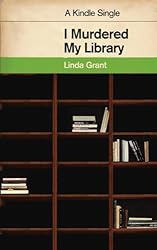
  9. I Murdered My Library by Linda Grant – an essay of just 28 pages in which Linda Grant tells about moving house and downsizing her considerable book collection to fit into a small flat. I really liked this little e-book.
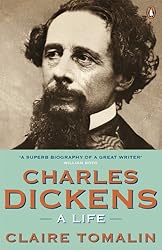
  10. Charles Dickens: a Life by Claire Tomalin – I intend to write a separate post for this one too. One of my TBRs it’s a long and detailed biography that taught me a lot about Dickens.
  11. The Prime of Miss Jean Brodie by Muriel Spark -I’ve read this book for the third time now and I still think it is an excellent book. I last read it in July 2008. I may write more in a separate post.

It’s always hard deciding which book I enjoyed this most and this month it’s even more difficult as I enjoyed most of them very much. But, for the second month on the run, it’s non-fiction, and mainly because it is so well researched and detailed – and even more so because it made me want to read more of Charles Dickens’ books it has to be Charles Dickens: a Life by Claire Tomalin.

I Murdered My Library by Linda Grant

Following on from yesterday’s post on books I’ve read recently and not reviewed, I have three more I have not written about and here is one of them:

I Murdered My Library by Linda Grant. This is an essay of just 28 pages in which Linda Grant tells about moving house and downsizing her considerable book collection to fit into a small flat. She had had books everywhere:

Books multiplied, books swarmed; they were a papery population explosion. When they had exhausted the shelves, they started to take over the stairs. You cannot have a taste for minimalist decor if you seriously read books.

Well, I know all about that and all about trying to find more space for books or to reduce my book collection, so I really liked this little e-book. Linda Grant can read my mind – and those of many other book-lovers, I’m sure – as she went through her books deciding which ones could go. It could be me saying this too:

I am kidding myself if I think that I am going to reread a fraction of the books I have brought with me or a fraction of those I have never got round to reading.

In my youth, I imagined old age and retirement as the time when one sat back, relaxed and read. There would be all the time in the world for reading. Sixty was so far away, and 80 stretching out into a future not imaginable, that you might as well be talking about living forever. Now time gobbles up my life.

I have tried, but I’ve never managed to be as ruthless as she was, never seen empty bookshelves and I doubt I ever will, because there have been so many books I’ve given away only to realise later that I want to re-read/read them, or to look up a reference. So it’s made me think twice, or even ten times before I actually part with a book. And indeed as Linda Grant looks at her shelves of the books she has kept she mourns the ones she killed off!

Shakespeare and The Classics Club’s July question

The question this month is:

Have you ever read a biography on a classic author? If so, tell us about it. If you had already read works by this author, did reading a biography of his/her life change your perspective on the author’s writing? Why or why not? // Or, if you’ve never read a biography of a classic author, would you? Why or why not?

This question came at just the right time for me because I’ve just finished reading Shakespeare: The Biography by Peter Ackroyd. It’s taken me a long time to read because I began it in March and have been reading it almost daily a few short chapters each day.

Shakespeare biography

I bought the book in Stratford-upon-Avon some years ago after going to the theatre there. I first came across Shakespeare’s plays at school – doesn’t everyone? Years later I took an Open University course and studied more plays and managed to see productions of each one, either at the Barbican in London or at the Stratford.

So, I’m familiar with several plays, which helps enormously with reading Ackoyd’s biography as he has structured it mainly around the plays.  But above all, he has placed Shakespeare within his own time and place, whether it is Stratford or London or travelling around the countryside with the touring companies of players. Shakespeare spans the reigns of two monarchs, which saw great changes and Ackroyd conjures up vividly the social, religious and cultural scene. It’s a very readable book, full of detail. My only reservation about it is one I often have when reading biographies – there are inevitably assumptions, those phrases such as ‘must have’  ‘would have’, ‘most likely’, ‘could have’, ‘there is also a possibility that’ and so on that biographers use.
I learnt a lot that I hadn’t known before as my study of Shakespeare hadn’t gone much beyond the plays, and studying them as entities in themselves is not the same as seeing them in their contemporary settings, or as a part of his whole work. I knew very little (or if I did learn anything years ago, I’ve forgotten) for example of the theatrical world, of how the actors worked, their patrons and managers, nor about how Shakespeare interacted with other writers, or of how his work was received by the public and the monarchy. I particularly liked the sections on religion and the religious conflicts of the late 16th and early 17th centuries and his discussion about Shakespeare’s own beliefs and practices:

This raises the vexed question of his religion, endlessly debated through the centuries. It is true that he used the language and the structure of the old faith in his drama, but that does not imply that he espoused Catholicism. His parents are likely to have been of the old faith, but he did not necessarily take it with him into his adulthood. The old religion was part of the landscape of his imagination, not of his belief.

His own adult beliefs are much more difficult to estimate. It is possible that he was, in the language of the period, a ‘church papist’; he outwardly conformed, as in the ceremony of christening, but secretly remained a Catholic. This was a perfectly conventional stance at the time. (pages 446 – 7)

Ackroyd’s account of the language of the plays is also fascinating. Understanding the plays can be demanding. I’ve found that when I’ve seen a play acted it makes much more sense to me than when I’ve only read it and I’ve often wondered how the plays were understood by their 16th century audiences. Ackroyd considers that

Some of Shakespeare’s more recondite phrases would have passed over them, as they baffle even the most highly educated contemporary audience, but the Elizabethans understood the plots and were able to appreciate the contemporary allusions. Of course scholars of a later age have detected in Shakespeare’s plays a subtlety of theme and intention that may well have escaped Elizabethan audiences. But it may be asked whether these are the inventions of scholars rather than the dramatist. (page 349)

In a book of over 500 pages there is much more to be said about it than I’ve attempted in this post – I’ve only just touched the surface!

My overall view of this biography is that it is well researched, with an extensive bibliography, notes and index. Ackroyd acknowledges that he ‘came to this study as a Shakespearian enthusiast‘ rather than as an expert and lists other biographies that he found ‘most illuminating’.

In answer to the Classics Club question on whether reading a biography has changed my perspective on an author’s writing I think the answer has to be that it hasn’t really changed it but it has enhanced my understanding of the world in which Shakespeare lived and wrote and emphasised the fact that the plays are/were made for an audience:

Shakespeare relied upon the audience and, with such devices as the soliloquy, extended the play towards it; the drama did not comprehend a completely independent world, but needed to be authenticated by the various responses of the crowd. (page 349)

Sisters of Sinai by Janet Soskice

Sisters of Sinai

The full title of this book is Sisters of Sinai: How Two Lady Adventurers Found the Hidden Gospels. This is biography so well written that it almost reads like a novel. In fact, if this was a novel I would think it was a most unlikely story of twin sisters in the latter half of the nineteenth century, travelling to St Catherine’s Monastery at Mount Sinai where they discover one of the earliest copies of the Gospels written in ancient Syriac.

Janet Soskice has written a compelling account of two Scottish sisters – Agnes and Margaret Smith born in 1843 in Irvine, a town south-west of Glasgow. Their mother died two weeks after they were born and they were brought up by their father, John Smith. He was unusual in that he gave his daughters an unconventional education for that period. He approved of independence of mind and foreign travel. The girls had an aptitude for languages and mastered French, German, Spanish and Italian whilst they were still quite young – helped by visits to each country. Their taste for learning, travels and adventure was set for life with long hours of study and plenty of exercise. Add to this intensely-held Presbyterian beliefs and Bible study.

John Smith inherited a huge sum of money (today’s equivalent would be around £7 million) from a relative. He died when the twins were 23 leaving his fortune to them (which had built up considerably by then); they were very rich indeed. They decided to have a trip down the Nile. And that was just the beginning; their lives were transformed.

They learnt Greek, Arabic, Hebrew and Syriac and they returned to Egypt and Sinai many times, befriending the monks of St Catherine, despite their religious differences, and getting embroiled in disputes with Cambridge academics who were initially very reluctant to accept that these two middle-aged (by then) women with no university qualifications (women were not permitted to receive degrees from the university at that time), could possibly have found anything of value or interest to them.

What they discovered in a ‘dimly lit little room  below the prior’s quarters’ in the monastery was a dirty volume, its leaves nearly all stuck together, written in Syriac. It was a collection of lives of women saints, but written underneath that was something else that was clearly an earlier text – of the Gospels. This was a palimpsest – the earliest writing having been scraped off and overwritten at a later date, the old ink becoming visible at a later date through the effects of the atmosphere. This eventually proved that the Gospels had been written much earlier than had previously been thought, moving the date back to the late second century.

Not only is that remarkable in itself, but it is astonishing to me that these two middle-aged women travelled to Egypt, Sinai, Jerusalem and beyond at the latter half of the nineteenth century across the desert on camel or walking miles on foot. Their courage and resolve overcame all the difficulties they encountered, coping with physical discomfort and  dishonest dragomen abroad and the hostility and scepticism at home.

I would never have known of this enthralling book if it hadn’t been for Cath’s review of it on Read-Warbler. I was intrigued and looked for it in my library straight away and was delighted to find that there was a copy in another branch.  Biographies and historical books are probably my most favourite of non-fiction books and accounts of  the Bible and how it came to be compiled have long been of interest to me, but I hadn’t come across these two sisters before. Janet Soskine has thoroughly researched her subject and the book is complemented by a ‘select’ bibliography that runs to nearly 5 pages and an extensive index.

This is an excellent non-fiction book, just right for Peggy Ann’s Read Scotland 2014 Challenge.