The Sleepwalker by Joseph Knox

The Sleepwalker Knox

The Sleepwalker by Joseph Knox is the third Detective Aidan Waits novel. It has to be the most complicated book that I’ve read in a very long time. Two years ago I read the second book, The Smiling Man, even though I hadn’t read the first one, Sirens, and loved it, so I was keen to read the third one. It certainly didn’t disappoint me and although I think the books read well as stand-alones, it would probably be best to read them in order. To say that Waits has troubled background is an understatement. He is a disturbed and complex character, other police officers don’t trust him or want to work with him.  He plays very close to the edge and has little regard for his own safety. 

The Sleepwalker is dark, violent and absolutely brilliant. I just didn’t want it to end and at the same time I just had to know what happened next. There are so many strands that you have to keep in mind, so many characters to sort out where they fit into the story and it’s all so cleverly linked together. You think you have it sorted and then you realise there’s more to come. It’s perfectly paced throughout, culminating in an astounding and shocking conclusion that had me reeling.

Quite simply, I loved it.

My thanks to Transworld Publishers for a review copy via NetGalley.


Library Loans 27 February 2020

The mobile library van visit was this week and I borrowed these books:

Library bks Feb 2020

The Mystery of Princess Louise by Lucinda Hawksley, subtitled Queen Victoria’s Rebellious Daughter. On the back cover it says that this is ‘packed with intrigues, scandals and secrets’. I know very little about Princess Louise, Queen Victoria’s sixth child, so I’m keen to find out about her. From the opening page I’ve already found out she was a friend to artists, such as Dante Rossetti, James Whistler and John Millais and that she was a sculptor.

Caught Out in Cornwall by Janie Bolitho. I’ve read two of her books before. This is the seventh book in her Rose Trevelyan series of mysteries, in which she sees four year old Beth Jones being carried away from the beach at Marazion by someone she assumes is her father. But her mother insists he is a stranger.

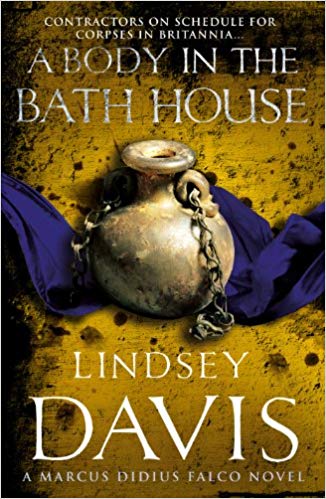
A Body in the Bath House by Lindsey Davis the 13th book in her Marcus Didio Falco series of historical crime fiction mysteries. It’s set in Rome and Britain in AD 75. Falco is Britain and he hates it. A thousand miles from home he realises someone with murderous intentions is after him.

The Hunting Party by Lucy Foley. A while ago I kept seeing reviews of this book and wondered about reading it, so when I saw it on the library van shelves I decided to see what it’s like for myself. It’s a murder mystery set in a remote hunting lodge in the Scottish wilderness where old friends gather for New Year. The description makes me wonder if it is like In a Dark, Dark Wood by Ruth Ware about a group of friends who spend a weekend in a remote cottage and everything goes wrong. I’m not sure I’ll like it …

I think I’ll start with The Mystery of Princess Louise – a friend borrowed it before me and said it’s very good, but first I’ll have to finish The Sleepwalker by Joseph Knox, his latest instalment in the Detective Aidan Waits series.

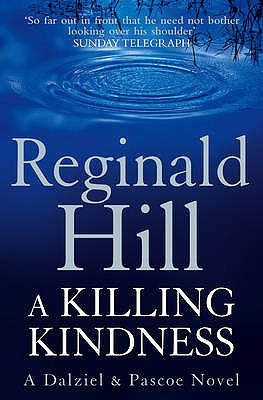
A Killing Kindness by Reginald Hill

A killing kindness

HarperCollins | 2013 | 372 pages | Paperback | my own copy | 5*

A Killing Kindness is Reginald Hill’s sixth Dalziel and Pascoe novel, first published in November 1980 and was televised in 1997 with the actors Warren Clarke and Colin Buchanan in the lead roles.

I wrote about the opening and quoted a short extract from page 56 in a My Friday post in January. I enjoyed it very much. For completeness I’m including the opening paragraph and the extract from page 56 in this post too:

The opening paragraph

… it was green, all green, all over me, choking, the water, then boiling at first, and roaring, and seething, till all settled down, cooling, clearing, and my sight up drifting with the last few bubbles, till through the glassy water I see the sky clearly, and the sun bright as a lemon, and birds with wings wide as a windmill’s sails slowly drifting round it, and over the bank’s rim small dark faces peering, timid as beasts at their watering, nostrils sniffing danger and shy eyes bright and wary, till a current turns me over, and I drift, and am still drifting …

What the hell’s going on here! Stop it! This is sick …

Page 56:

… all over me, choking, the water all boiling at first, and roaring, and seething …. Pascoe shook the medium’s taped words out of his mind and went on with his reading.

There was a degree of lividity down the left side which was unusual for a corpse taken from the water, but could be explained by the fact that the body seemed to have been wedged in the debris by the canal bank rather than rolling free in the current.

With each book getting better and better, I think this is the best of the early Dalziel and Pascoe novels. The main characters are now clearly established and moving on with their lives. Dalziel continues to be a boorish, angry man, not afraid to speak his mind and most definitely politically incorrect in all aspects. Pascoe and Ellie are expecting their first child, and D S Wield’s personal life is not going well.

The plot is nicely convoluted and tricky to solve, as it looks as though the police are faced with a serial killer. Three women have been found dead, strangled and a mysterious caller phones the local paper with a quotation from Hamlet. As more murders follow,  the killer is soon known as the Choker and it seems as if his motive for the murders is  compassion:

… ‘this man’s motivation does not seem to be based so much on hate as on compassion.’

‘Compassion? You mean he kills women because he’s sorry for them?’ asked Pascoe with interest.

‘In a way, yes. There’s good case-law here. The impulse to euthanasia is a strong one in all advanced civilisations.’ (p, 145)

Dalziel is angry when he finds out that Wield had involved a clairvoyant to help and Pascoe was talking to linguistic specialists and psychiatrists to help identify the killer. There are a lot of characters for the police to consider – Ellie’s feminist friends in the Women’s Rights Action Group, the members of the Aero Club, the fairground people and the local gypsies. By the time I got near the end of the book I had little idea of the identity of the murderer, but then with one sentence all was made clear. I just needed Pascoe, helped by Wield to work it out for me.

The 7th book in the series is Deadheads and I shall be reading that very soon, I hope.

These are the Dalziel and Pascoe books I’ve read so far:

1. A Clubbable Woman (1970) 
2. An Advancement of Learning (1971)
3. Ruling Passion (1973)
4. An April Shroud (1975)
5. A Pinch of Snuff (1978)
8. Exit Lines (1984)
11. Bones and Silence (1990) 
14. Pictures of Perfection (1993) – read, no post
17.On Beulah Height (1998) 
20. Death’s Jest Book(2002) 
21. The Death of Dalziel (2007)

My Friday Post: Deadheads by Reginald Hill

Book Beginnings Button

Every Friday Book Beginnings on Friday is hosted by Gillion at Rose City Reader where you can share the first sentence (or so) of the book you are reading, along with your initial thoughts about the sentence, impressions of the book, or anything else the opener inspires.

Yesterday I finished reading the 6th book in Reginald Hill’s Dalziel and Pascoe series, A Killing Kindness so I decided to look at the next book in the series Deadheads.

Deadheads


MISCHIEF

(Hybrid tea, coral and salmon, sweetly scented, excellent in the garden, susceptible to blackspot.)

Mrs Florence Aldermann was distressed by the evidence of neglect all around her.

Also every Friday there is The Friday 56, hosted by Freda at Freda’s Voice.

30879-friday2b56These are the rules:

  1. Grab a book, any book.
  2. Turn to page 56, or 56% on your eReader. If you have to improvise, that is okay.
  3. Find any sentence (or a few, just don’t spoil it) that grabs you.
  4. Post it.
  5. Add the URL to your post in the link on Freda’s most recent Friday 56 post.

Page 56:

‘Tell me, Mrs Aldermann, is there anyone you can think of who might have wanted to do you a bad turn?’

Blurb – from the back cover of my tatty secondhand copy:

Life was a bed of roses for Patrick Aldermann when his Great Aunt Florence collapsed into her Madame Louis Laperrières and he inherited Rosemont House with its splendid gardens.

But when his boss, ‘Dandy’ Dick Elgood, suggested to Peter Pascoe that Aldermann was a murderer – then retracted the accusation – the Inspector was left with a thorny problem.

By then Police Cadet Singh, Mid-Yorkshire’s first Asian copper had dug up some very interesting information about Patrick’s elegant wife, Daphne.

Superintendent Dalziel, meanwhile, was attempting to relive the days of the Empire with Singh as his tea-wallah.

~~~

Have you read this book? What did you think?

WWW Wednesday: 12 February 2020

IMG_1384-0

WWW Wednesday is run by Taking on a World of Words.

The Three Ws are:

What are you currently reading?
What did you recently finish reading?
What do you think you’ll read next?

A killing kindnessSaving MisseyCurrently reading: I’m reading A Killing Kindness, a murder mystery, the 6th Dalziel and Pascoe book by Reginald Hill and enjoying it very much.  I’m also reading Saving Missy by Beth Morrey, which I’m also enjoying. It’s a feel good story and very different from A Killing Kindness. Missy Carmichael’s life has become small. Grieving for a family she has lost or lost touch with, she’s haunted by the echoes of her footsteps in her empty home; the sound of the radio in the dark; the tick-tick-tick of the watching clock.

Happy Old Me

Recently Finished: Happy Old Me: How to Live a Long Life and Really Enjoy It by Hunter Davies. This is an account of one year in his life after his wife, Margaret Forster died – poignant, moving and very interesting. I’ll write more about later on.

Reading Next: This is a movable feast, as I rarely decide until the time comes.

It could be The Year Without Summer by  Guinevere Glasfurd. 

Year without summer

Blurb:

1815, Sumbawa Island, Indonesia
Mount Tambora explodes in a cataclysmic eruption, killing thousands. Sent to investigate, ship surgeon Henry Hogg can barely believe his eyes. Once a paradise, the island is now solid ash, the surrounding sea turned to stone. But worse is yet to come: as the ash cloud rises and covers the sun, the seasons will fail.

1816
In Switzerland, Mary Shelley finds dark inspiration. Confined inside by the unseasonable weather, thousands of famine refugees stream past her door. In Vermont, preacher Charles Whitlock begs his followers to keep faith as drought dries their wells and their livestock starve.

In Suffolk, the ambitious and lovesick painter John Constable struggles to reconcile the idyllic England he paints with the misery that surrounds him. In the Fens, farm labourer Sarah Hobbs has had enough of going hungry while the farmers flaunt their wealth. And Hope Peter, returned from the Napoleonic wars, finds his family home demolished and a fence gone up in its place. He flees to London, where he falls in with a group of revolutionaries who speak of a better life, whatever the cost. As desperation sets in, Britain becomes beset by riots – rebellion is in the air.

The Year Without Summer is the story of the books written, the art made; of the journeys taken, of the love longed for and the lives lost during that fateful year. Six separate lives, connected only by an event many thousands of miles away. Few had heard of Tambora – but none could escape its effects.

Or it could be one of my TBRs – I simply don’t know yet.

Have you read any of these books?  Do any of them tempt you? 

The Winker by Andrew Martin

The Winker

Corsair| 6 June 2019| 272 pages| e-book| review copy via NetGalley|4 stars

I haven’t read anything by Andrew Martin before and as I began reading The Winker I found it decidedly odd and a bit creepy. I don’t like the cover at all and the title didn’t appeal to me either. But the description interested me:

London, 1976.

In Belgravia in the heat of summer, Lee Jones, a faded and embittered rock star, is checking out a group of women through the heavy cigarette smoke in a crowded pub. He makes eye contact with one, and winks. After allowing glances to linger for a while longer, he finally moves towards her.

In that moment, his programme of terror – years in the making – has begun.

Months later, the first of the many chilling headlines to come appears: ‘Police hunting winking killer.’

Meanwhile in France.

Charles Underhill, a wealthy Englishman living in Paris, has good reason to be interested in the activities of the so-called Winking Killer. With a past to hide and his future precarious, Charles is determined to discover the Winker’s identity.

In the overheating cities of London, Oxford, Paris and Nice, a game of cat and mouse develops, and catching someone’s eye becomes increasingly perilous. But if no one dares look, a killer can hide in plain sight . . .

From ‘a master of historical crime fiction’ (The Guardian), The Winker is a gripping thriller that won’t let you look away.

My thoughts:

I like the structure of this book. It is set in 1976 with flashbacks to 1951, in several locations, mainly London and Nice and sometimes in Paris and Oxford. Each time and place is clearly highlighted. The book is largely character-led. Lee Jones, a failed pop singer and psychopath is working on a ‘project’, nothing to do with music, aiming to achieve world-wide fame. He calls it a ‘programme’ and involves something he calls a ‘folder’ and his ‘trademark’. He is living in a fantasy world, accompanied by Abigail a journalist who intermittently interviews Lee. It was all a bit ambiguous at first and it took me a few pages to decide what I thought about Abigail and her role in the book. 

Then there is Charles Underhill, a man of about fifty,  living a self-imposed exile in France, because of an event in Oxford whilst he was a student there. He lives a very routine life in Paris with his mother Syl, except for his annual holiday in Nice. His routine is upset when he receives a postcard with a picture of the river at Oxford showing a boat full of university rowers, but no message on the back. When more unsigned postcards arrive he is worried that they are from Pat Price who was at the university with him in 1951.

In Nice Charles meets Howard Miller, a crime fiction writer. His first novel wasn’t a great success and he is looking for inspiration for his next novel, to prove to his father he wasn’t wasting his time. These three men are now set on a collision course as Charles offers to pay Howard for a couple of days work in Oxford to find out who had sent him the anonymous postcards. From that point onwards everything fell into place for me and I was hooked.

This is psychological crime fiction, you know right from the beginning who the ‘Winker’ is, but the precise method of the murders is not clear (at least not to me) until later in the book. And Charles’ secret is revealed quite early in the book. Neither Lee nor Charles are pleasant characters and this is decidedly a creepy tale, but it’s also a compelling one. Howard, on the other hand, is rather a naive character, who nevertheless gets to the bottom of the mystery. I loved the settings – they are so vivid and evocative of the 1970s; the places, the intense heat of the summer  of 1976, the people, their clothes, the hairstyles, sunglasses, cars, exotic cigarettes, and especially the music of the 70s, bring it all to life in technicolour. I think this is ripe for being made into a film.

Andrew Martin, a former Spectator Young Writer of the Year, grew up in Yorkshire. He has written for the Evening Standard, the Sunday Times, the Independent on Sunday and the Daily Telegraph, among others. His weekly column appears in the New Statesman and he is the author of numerous articles and books – of both fiction and non-fiction. For more information see his website.

I received a copy of this book from the publisher, via NetGalley, for review.