
Top Ten Tuesday is a weekly meme created by The Broke and the Bookish and now hosted by Jana at That Artsy Reader Girl. For the rules see her blog.
The topic this week is Bookish Places I’ve Visited (Share all the cool places you’ve been that are bookish or tied to books! This includes neat libraries, book stores, places featured in books, places inspired by books, author homes/places they’ve stayed, etc. You can also share your bucket list of the bookish places you’d like to visit someday.) (submitted by Susan @Bloggin’ ’bout Books)
Jane Austen
Several years ago I visited Winchester where Jane Austen spent the last six weeks of her life. She died on 18 July 18i7 at the age of 41 with her sister Cassandra by her side.
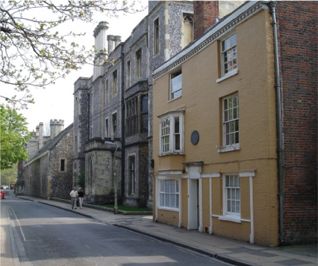
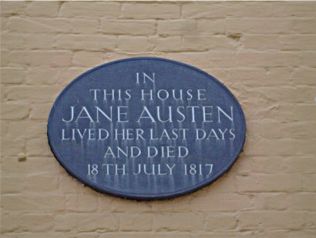
She was buried in the north aisle of the nave in Winchester Cathedral. A dark marble floor stone marks her actual burial site.
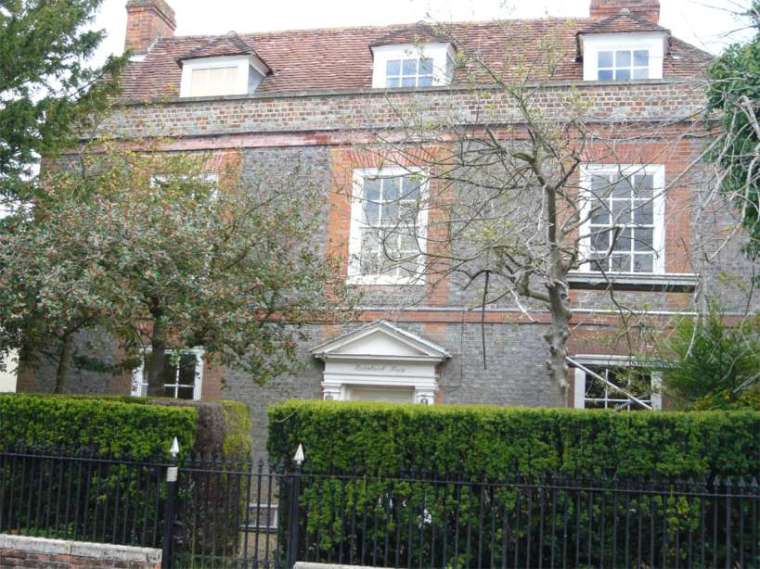
Agatha Christie lived in several houses during her lifetime, including Winterbrook House, near Wallingford, in Oxfordshire. She and her husband Max Mallowan bought the house in 1934 and it was where she died in 1976. It’s not open to the public but you can view it from the road, which I did in September 2009. I wrote about my visit in this post. You can read more about Wallingford and her life there on the Agatha Christie website.
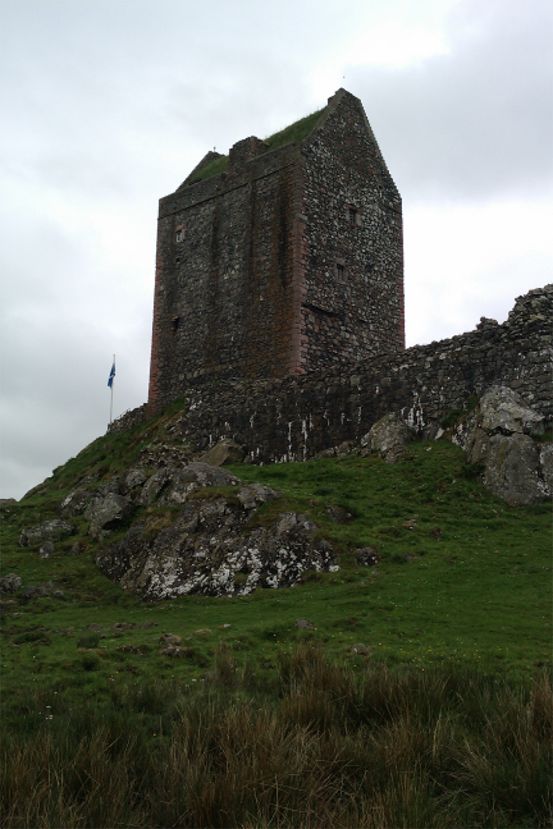
Smailholm Tower is a four-storey tower house on a base of volcanic rock, a stark feature on the skyline between Kelso and Selkirk in the Tweed Valley. Sir Walter Scott’s grandparents lived here and he lived at Smailholm for a while with his grandmother and Aunt Janet after he’d had polio because they thought the fresh country air would be good for him. It was his aunt who told him tales of the Border countryside which gave him his passion for folklore and history. This isn’t far from me and we’ve visited it several times.
Bateman’s, near Burwash in East Sussex was the home of Rudyard Kipling from 1902 until his death in 1936. The photo above is the front cover of the National Trust guide book showing Kipling’s study, which according to the guide book was not how he left it. He was a messy writer. He wrote on large blue pads and he and the desk would be covered in ink. At times his desk was chaotic.
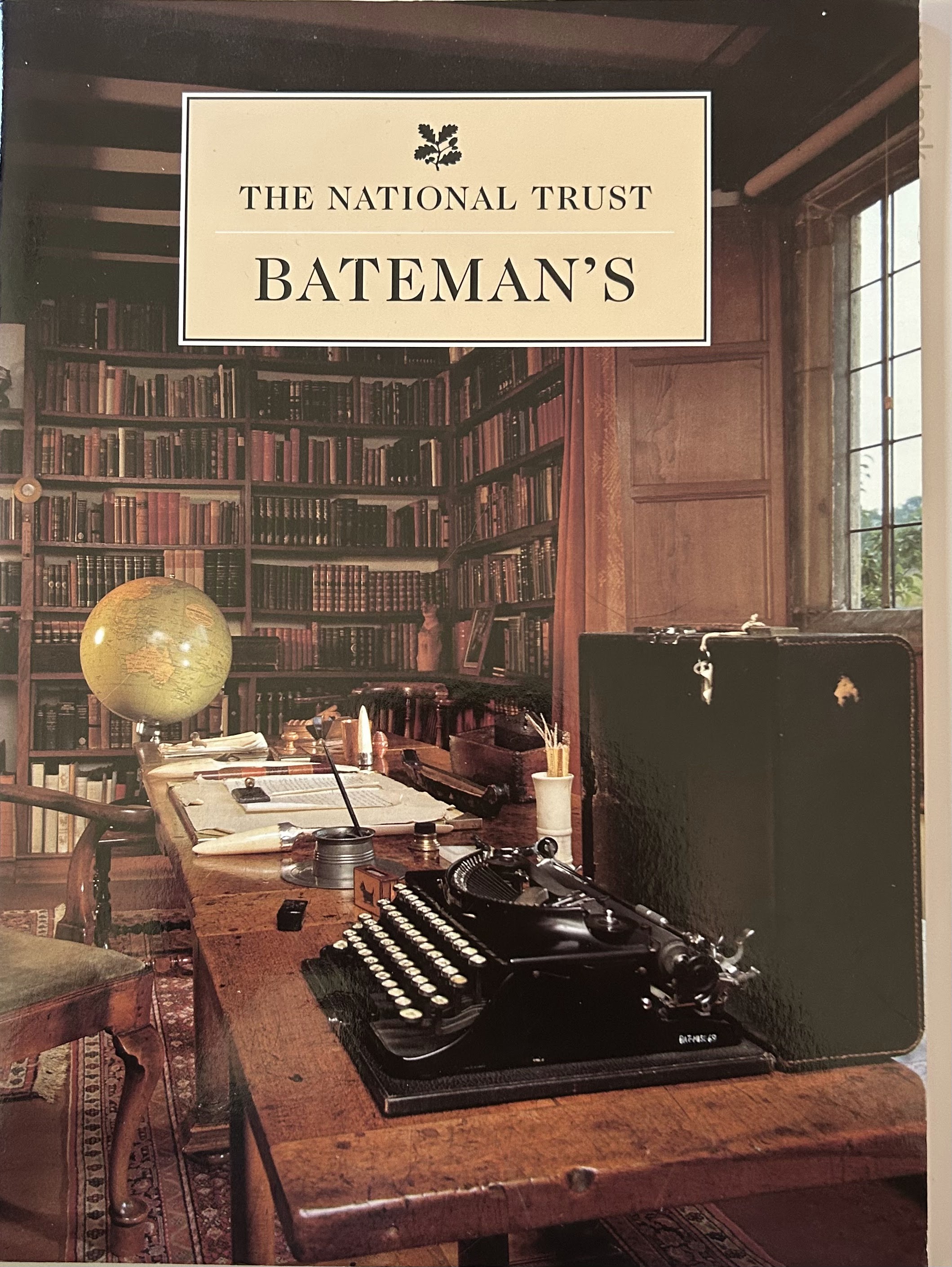
Lamb House (now a National Trust property) in the medieval town of Rye – Henry James lived here from 1898 until the autumn of 1914, when he moved to Cheyne Walk in London and deeply moved by the events of the war he became a British citizen. Rye House dates back to 1722-3 when the old house was rebuilt. It was here that James wrote The Wings of the Dove, The Ambassadors and The Golden Bowl. He had many visitors, established writers of the day including Edith Wharton. It has a lovely walled garden and it was in full bloom when we visited it.
E F Benson also lived here from 1919 – 1940. He used the house as the model for ‘Mallards,’ the home of Miss Mapp in his Mapp and Lucia novels (with Rye itself disguised as ‘Tilling’).
Rumer Godden, also lived here from 1967 to 1974. She wrote many volumes of poems, short stories and children’s fiction including The Diddakoi in 1972, which was awarded the first ever Whitbread Children’s Book Award. Godden lived at Lamb House from 1967 until 1974 and is buried in Rye.
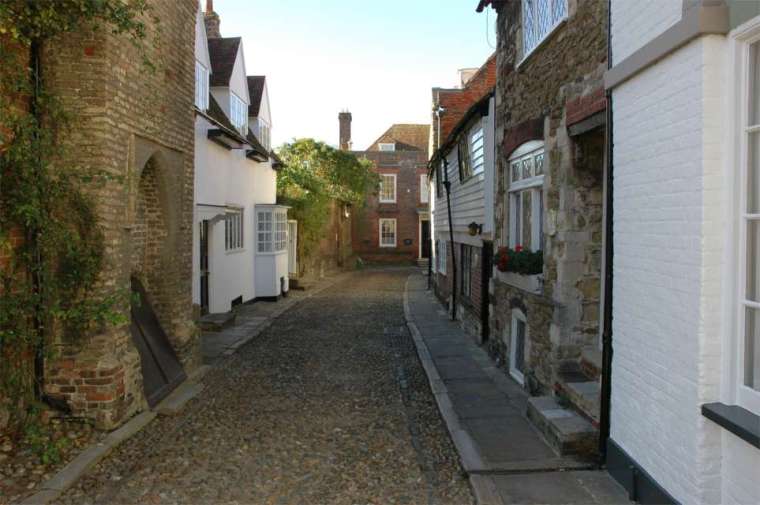
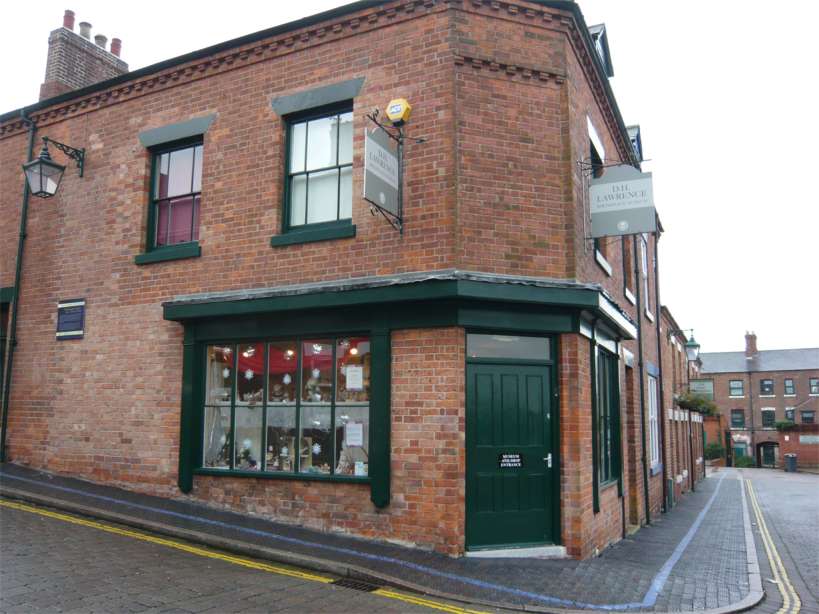
Nottingham – D H Lawrence – We visited D H Lawrence’s birthplace at Eastwood, 8 miles from Nottingham. 8A Victoria Street is the house where Lawrence was born on 11 September 1885 and I think it is a fascinating place. The house was newly built when the Lawrence family moved there in 1883, one of several rows of houses built for the miners by the local colliery company, Barber Walker and Co. It’s a redbrick two-up, two-down standing in a row of terraced houses. The adjoining end terrace house is now a museum and shop.
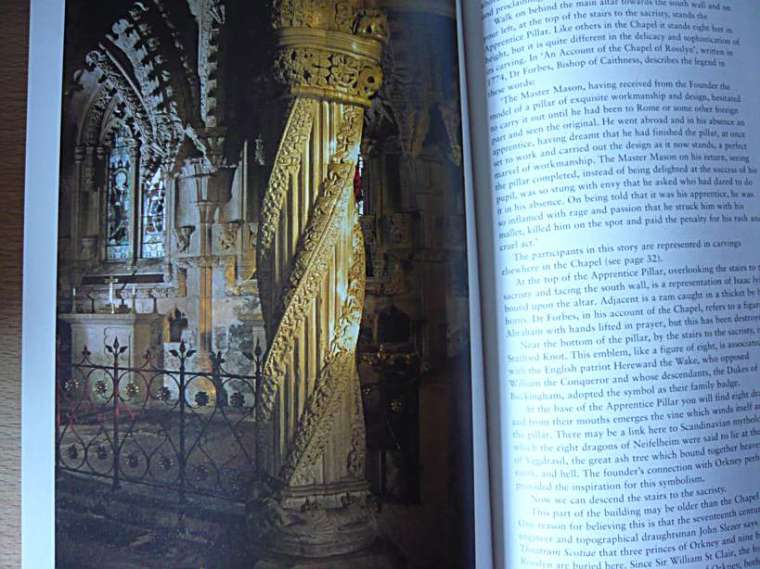
Rosslyn Chapel I first came across Rosslyn Chapel through reading Dan Brown’s The Da Vinci Code and was fascinated by it then. We’ve visited it twice, first on a cold windy day in March, which is probably the best time to go because on our second visit a few years later it was packed with visitors. It’s simply the most stunning building, packed with stone carvings. I was interested in all the mystery surrounding the carvings and their meanings and whether there really was a link with the Knights Templar. The guide book indicates that there were in fact connections – the carvings of the five-pointed star, the dove in flight carrying an olive branch, the floriated cross and the artichoke are all said to have Templar associations. But what struck me the most were the Mason’s Pillar, the Apprentice Pillar and the carvings of maize over one of the windows.
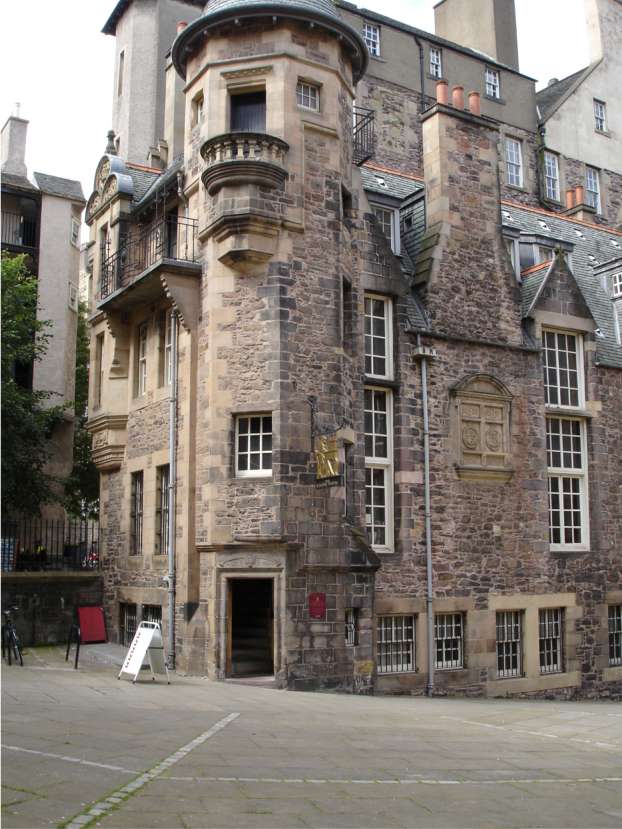
The Writers’ Museum, Lady Stairs House a 17th century house in Edinburgh, which I visited in 2010. This is a fascinating place full of things that belonged to Sir Walter Scott, Robbie Burns and Robert Lewis Stevenson. There are pictures, room displays containing Burns’s writing desk, Scott’s dining table and lots of memorabilia – including bibles, pipes and walking sticks.
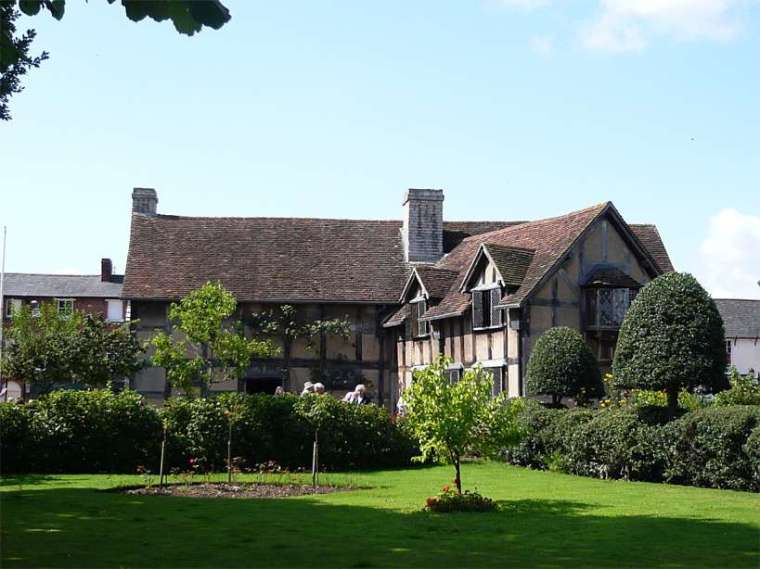
I’ve been to Stratford- Upon-Avon many times, going to see plays at The Royal Shakespeare Company and spent visiting some of the houses where William Shakespeare lived, including his Birthplace, Nash’s House,originally owned by his granddaughter’s first husband and adjacent to it is New Place, which Shakespeare bought in 1597 and where he died in 1616. We also visited Hall’s Croft, which belonged to his daughter Susannah and her husband John Hall, an eminent doctor.


What an interesting assortment of places you have visited!
LikeLiked by 1 person
What a wonderful idea for a post, Margaret! And you’re so fortunate you’ve been able to visit some fascinating places. There’s just something about homes where famous books were written or at least where authors lived, isn’t there? It links you in a way to that person, if I can put it like that. I know I felt that way when I visited Christie’s home Greenway in Torquay.
LikeLiked by 1 person
You have been able to visit so many wonderful bookish places. I have never been anywhere in Great Britain, but I’d love to go.
LikeLiked by 1 person
Smailholm Tower looks so interesting.
LikeLiked by 1 person
All of them look amazing. Have a good week. Here is my TTT. https://dmhoisington.wordpress.com/2026/08/25/top-ten-tuesday-39-books-covers-that-feel-like-summer/
LikeLiked by 1 person
What a wonderful list! I haven’t heard of some of these and would love to visit.
LikeLiked by 1 person
Such wonderful places, thanks for sharing your #TTT
LikeLiked by 1 person
Loved this, Margaret! I haven’t been to any of them, but really enjoyed hearing about them. I like the idea for this ‘Top Ten’ post. We all may have been to more ‘bookish’ places than we realize. :-)
LikeLiked by 1 person
Great list. I included Lady Stair’s House of course. How could I forget Rosslyn Chapel??
LikeLiked by 1 person
I was by Smailholm Tower last week in the most beautiful countryside! I haven’t been to Lawrence’s house so that’s a must and I’d love to have an explore of Christie’s Devon, lovely post!
LikeLiked by 1 person
I’ve been to some of these but why oh why did I miss out on Rye while I was living in England? Great selection and lovely write up about each one.
LikeLiked by 1 person
I’m set to leave for a trip to UK in a few weeks. We will be visiting Bath, Stratford-Upon-Avon and of course London. I am excited to try and find the spots you mentioned in this post. What a creepy-looking home where Sir Walter Scott’s grandparents lived.
LikeLiked by 1 person
I’d love to be able to visit Torquay, where Christie was born and raised. It’s funny that you mentioned Winchester, as that’s where my husband is from.
Here’s my TTT for the week: https://readbakecreate.com/fictional-bookstores-i-would-love-to-visit/
LikeLiked by 1 person
Great list, so much literary history in the UK. I’ve been to London and Scotland, but I’d love to see more of England some day.
My TTT:
LikeLiked by 1 person
That Writers Museum was really good. I was there many years go.
LikeLiked by 2 people
Color me green with envy. You have visited so many wonderful sites. I do like visiting home/locations of my favorite authors because it’s interesting to see the world that they saw, to a degree, accounting for modernization, etc.
Much as I love Austen, during my few trips to the UK, I haven’t been able to work in a visit to any Austen locations.
Great post!
LikeLiked by 1 person
You’ve been to some wonderful bookish places! My husband and I had planned on visiting Stratford-Upon-Avon last time we were in the U.K., but we ran out of time and only had time to do a quick drive by/look around. I’d love to go back and really look around.
Happy TTT (on a Wednesday)!
Susan
http://www.blogginboutbooks.com
LikeLiked by 1 person
A great post. I visited two of those – Bateman’s (Kipling) and The Writers’ Museum (Stevenson), but I do want to visit Agatha Christie locations very much.
LikeLike