Every Friday Book Beginnings on Friday is hosted by Gillion at Rose City Readerwhere you can share the first sentence (or so) of the book you are reading. You can also share from a book you want to highlight just because it caught your fancy.
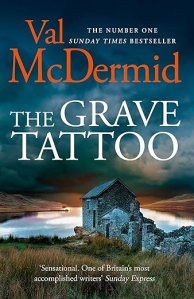
I’m featuring The Grave Tattoo by Val McDermid, a book I’m currently reading.
The Prelude
All landscapes hold their own secrets.
ChapterOne:
Jane Gresham stared at what she had written, then with an impatient stroke of her pen crossed it through so firmly the paper tore and split in the wake of a nib. Bloody Jake, she thought angrily.
Also every Friday there is The Friday 56, hosted by Freda at Freda’s Voice, but she is taking a break and Anne at My Head is Full of Books has taken on hosting duties in her absence. You grab a book and turn to page 56 (or 56% of an eBook), find one or more interesting sentences (no spoilers), and post them.
‘The black tattoos. They’re the sort that sailors used to get in the South Seas back in the old days when sailing ships put in at the islands to take on stores and trade with the natives,’ Jake explained.
Description
The award-winning and Number One bestselling Val McDermid crafts an electrifying psychological suspense thriller that mixes history, heritage and heinous crimes.
A 200 year-old-secret is now a matter of life and death.And it could be worth a fortune.
It’s summer in the Lake District and heavy rain over the fells has uncovered a bizarrely tattooed body. Could it be linked to the old rumour that Fletcher Christian, mutinous First Mate on the Bounty, had secretly returned to England?
Scholar Jane Gresham wants to find out. She believes that the Lakeland poet William Wordsworth, a friend of Christian’s, may have sheltered the fugitive and turned his tale into an epic poem – which has since disappeared.
But as she follows each lead, death is hard on her heels. The centuries-old mystery is putting lives at risk. And it isn’t just the truth that is waiting to be discovered, but a bounty worth millions …
My favourite genres are crime fiction and historical fiction. So, the combination of the two really appeals to me. What do you think, does this book appeal to you? What are you currently reading?
Head of Zeus — an Aries Book| 12 September 2024 | 372 pages|e-book | Review copy| 4*
Description from Amazon UK:
Basil Palmer has decided to murder a man called Louis Carson. There’s only one he doesn’t know anything about his intended victim, not who he is or where he lives.
Basil learns that Carson owns Hemlock Bay, a resort for the wealthy and privileged. Knowing that his plan will only work if he covers his tracks, he invents a false identity and, posing as Dr Seamus Doyle, journeys to the coast plotting murder along the way.
Meanwhile Rachel Savernake buys an intriguing painting of a place called Hemlock Bay, one that she cannot get out of her head. Macabre and strange, the image shows a shape that seems to represent a dead body lying on the beach.
Convinced that there is something sinister lurking amongst the glamour of the bay, Rachel books a cottage there – where she meets a mysterious doctor called Seamus Doyle…
My thoughts:
This is the 5th Rachel Savernack book, written in the style of the golden age of crime. I loved the first two books in the series but somehow managed to miss the next two. I had high expectations for Hemlock Bay and certainly wasn’t disappointed as I thoroughly enjoyed it.
Like the other two Rachel Savernack books this is also a complex mystery, with several strands and plenty of twists and misdirections. It begins with a Prologue. It is July 1930 as an unnamed couple in a basement room in Temple, London hear a newspaper vendor announce the death of Sir Arthur Conan Doyle. They are discussing death, ending as the man lifts a revolver and squeezes the trigger. Then in January 1931 Basil Palmer makes a New Year resolution – to murder a man he has never met, Louis Carson. But he doesn’t know where he lives, nor what he looks like. This sets in motion a sequence of events, involving numerous people, all with their own agendas, all gathered together in Hemlock Bay.
Hemlock Bay is a seaside resort on the north-west coast of Lancashire. It was originally just ‘a small bay with a splendid beach, flanked by a stretch of sheer cliffs on one side and a tiny secluded cove on the other side of the steep headland‘ and on ‘a treacherous outcrop of rock was an old lighthouse‘. J M W Turner had visited the Bay on a sketching trip and said it was ‘as pretty as Paradise‘. In the past, ships were often wrecked on the shore and contraband was smuggled through a maze of underground passages. But after the end of the First World War it had been developed into a small and select seaside resort. Pleasure Grounds had been built on Hemlock Head, with provision for dancing and all sorts of amusements, known as Paradise, adopting Turner’s description. Jackson, a speculator, and his wife had bought the resort and then opened a new venture, the Hemlock Sun and Air Garden, a nudist club.
Rachel Savernack is intrigued by a surrealist painting of Hemlock Bay depicting a body stretched out below the lighthouse. She and Jacob Flint go to Hemlock Bay, where among others, she meets Virginia Penrhos, the woman who painted the picture, a reclusive doctor named Seamus Doyle, a man named Louis Carson and Basil Palmer under an assumed name. It’s a well plotted novel with interesting characters in a beautiful setting.
Martin Edwards’ Author’s Note at the end of the book is interesting, explaining that although Hemlock Bay is a fictional place it is based on Heysham in Lancashire, overlooking Morecombe Bay (where I enjoyed several holidays as a child). The information in the Heritage Centre in Heysham helped him with the description of Paradise. And the ‘Cluefinder’ at the back of the book listing hints and clues is most enlightening. But I resisted the temptation to read it before I read the book. It is a baffling and most enjoyable murder mystery.
My thanks to NetGalley and Head of Zeus — AriesFiction, the publishers for the ARC.
It’s time again for Six Degrees of Separation, a monthly link-up hosted by Kate atBooks Are My Favourite and Best. Each month a book is chosen as a starting point and linked to six other books to form a chain. A book doesn’t need to be connected to all the other books on the list, only to the one next to it in the chain.
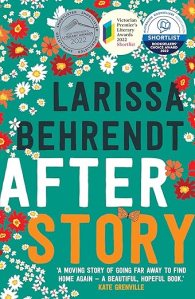
This month starts After Story by Larissa Behrendt. This is the description on Amazon UK:
When Indigenous lawyer Jasmine decides to take her mother, Della, on a tour of England’s most revered literary sites, Jasmine hopes it will bring them closer together and help them reconcile the past. Twenty-five years earlier the disappearance of Jasmine’s older sister devastated their tight-knit community. This tragedy returns to haunt Jasmine and Della when another child mysteriously goes missing on Hampstead Heath. As Jasmine immerses herself in the world of her literary idols – including Jane Austen, the Brontë sisters and Virginia Woolf – Della is inspired to rediscover the wisdom of her own culture and storytelling. But sometimes the stories that are not told can become too great to bear. Ambitious and engrossing, After Story celebrates the extraordinary power of words and the quiet spaces between. We can be ready to listen, but are we ready to hear?
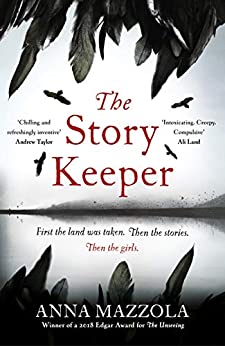
My first link is using the word Story, in the title, and it’s also a book about storytelling – The Story Keeper, set on the Isle of Skye in 1857, by Anna Mazzola. It stresses the importance of folk tales – stories that have been told to make sense of the world and reflect people’s strengths, flaws, hopes and fears.
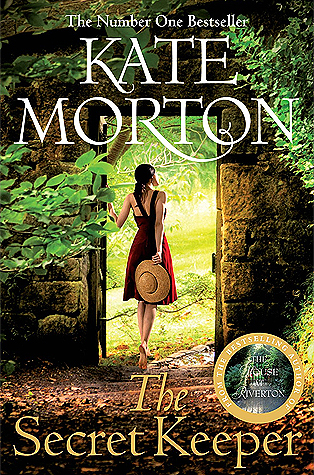
My second link is The Secret Keeper by Kate Morton, a story moving between time periods from 2011, back to the 1960s and also to the 1940s. It begins in 1961 in Suffolk when sixteen-year old Laurel is shocked when she sees her mother stabbing a stranger who had come to their farm.
In my third link another sixteen year old girl, Nouf ash-Shrawi, disappears from her home in Jeddah, in The Night of the Mi’raj by Zoë Ferraris, just before her arranged marriage. Her body is eventually found in a desert wadi. It appears that her death was an accident and that she died by drowning in the wadi after a sudden storm.
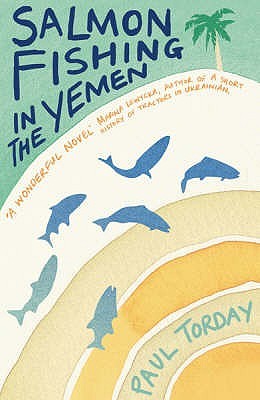
My fourth link is Salmon Fishing in the Yemen by Paul Torday about a project to introduce salmon fishing in the waters of the Wadi Aleyn in the heart of the mountains of Heraz, in Yemen.
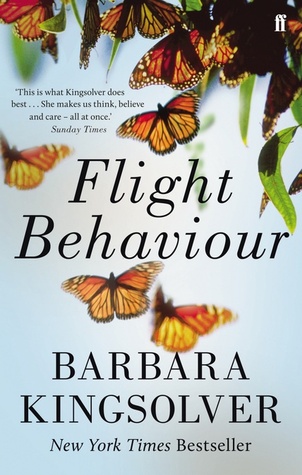
My fifth link takes the chain from the mountains of Heraz to the Appalachian Mountains in Flight Behaviour by Barbara Kingsolver in which a young mother discovers a beautiful and terrible marvel of nature: the monarch butterflies have not migrated south for the winter that year.
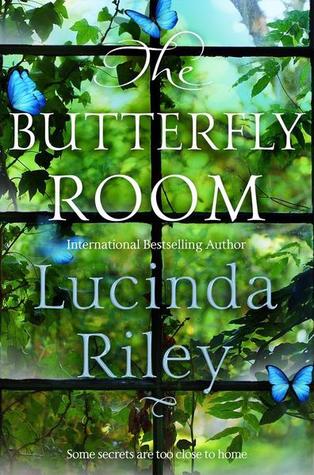
My final link is to The Butterfly Room by Lucinda Riley. The story revolves around Posy Montague and her family home, Admiral House in the Suffolk countryside. Her father encouraged her to draw plants and showed her how to catch butterflies. As a child Posy thought The Butterfly Room in the Folly in the grounds of Admiral House looked like a fairy-tale castle with its turret made of yellow sandy brick. But the Folly was not the wonderful place she imagined – and there is a dark secret hidden behind its locked door.
The books in my chain are all fiction including historical fiction, mysteries and crime fiction. The chain travels through Australia, the UK, Saudi Arabia, Yemen and the USA,
Next month (October 5, 2024), we’ll start with Colm Tóibín’s Long Island.
What are you currently reading? What did you recently finish reading? What do you think you’ll read next?
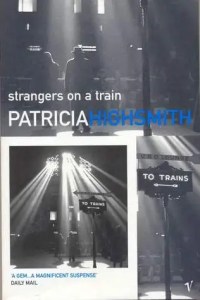
Currently I’m reading Strangers on a Train by Patricia Highsmith. This is the only book left I didn’t finish reading for my 20 Books of Summer Challenge 2024. It has been on my TBR list for a few years, so I am determined to read it soon. The reason I haven’t read it before now is that I have a paperback copy and I’ve got too used to reading on my Kindle with the ability to enlarge the text.
I have high hope that this psychological thriller will be good – maybe too high as so many people have enthused over this book. Can it live up to all the hype? Guy Haines and Charles Anthony Bruno meet on a train. Bruno manipulates Guy into swapping murders with him. “Some people are better off dead,” Bruno remarks, “like your wife and my father, for instance.” It begins slowly though and so far, I’m doubtful it will.
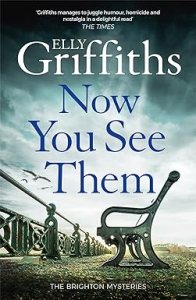
I’m also reading Now You See Them by Elly Griffiths, the 5th Brighton Mystery novel, also called the DI Edgar Stephens and Max Mephisto series. It’s about three young women who have gone missing in Brighton. Edgar is now a Superintendent and his wife, Emma, formerly a police officer, is now a private detective. Edgar’s friend, magician Max Mephisto, is reinventing himself as a movie star and trying not to envy his daughter Ruby’s television fame. It seems a bit pedestrian so far, maybe too formulaic.
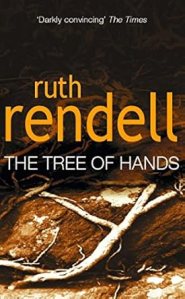
The last book I read was The Tree of Hands by Ruth Rendell, which I think is one of her best books I’ve read. It’s also a psychological thriller and compelling that I just didn’t want to stop reading until I finished it.
Description on Amazon
When Benet was about fourteen, she and her mother had been alone in a train carriage – and Mopsa had tried to stab her with a carving knife.
It has been some time since Benet had seen her psychologically disturbed mother. So when Mopsa arrives at the airport looking drab and colourless in a dowdy grey suit, Benet tries not to hate her.
But when the tragic death of a child begins a chain of deception, kidnap and murder in which three women are pushed to psychological extremes, family ties are strained to the absolute limit…
What will I read next? At the moment I have no idea. Once I’ve finished a challenge that involves reading from a planned list I have this great sense of freedom, that I can just decide on a whim what to read next.
Random House UK| 22 August 2024 | 335 pages|e-book |Review copy| 2*
Description:
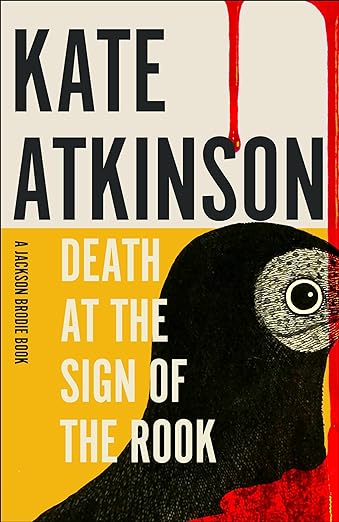
Ex-detective Jackson Brodie is staving off a bad case of midlife malaise when he is called to a sleepy Yorkshire town, and the seemingly tedious matter of a stolen painting. But one theft leads to another, including the disappearance of a valuable Turner from Burton Makepeace, home to Lady Milton and her family. Once a magnificent country house, Burton Makepeace has now partially been converted into a hotel, hosting Murder Mystery weekends. As paying guests, a vicar, an ex-army officer, impecunious aristocrats, and old friends converge, we are treated a fiendishly clever mystery; one that pays homage to the masters of the genre―from Agatha Christie to Dorothy Sayers.
My thoughts:
Death at the Sign of the Rook by Kate Atkinson begins so well I thought that I was in for a treat. But sadly, as I read on I was disappointed. I was looking forward to reading more about Jackson Brodie, but he only has a minor role. It is amusing in parts. But there are so many other characters, and the story became far too long winded, the narrative jumping around from one set of characters to another, and then another, which made it confusing. The ending was just pure farce, which I’ve never liked, pushing it into the absurd.
Looking back at some of Kate Atkinson’s other books I’ve read I see I had the same reaction to her previous book, Shrines of Gaiety. My favourite books by her are Life After Life and A God in Ruins, both of which I loved.
My thanks to NetGalley and the publishers for my review copy.
Spell the Month in Books is a linkup hosted by Jana on Reviews From the Stackson the first Saturday of each month. The goal is to spell the current month with the first letter of book titles, excluding articles such as ‘the’ and ‘a’ as needed. That’s all there is to it! Some months there are optional theme challenges, such as “books with an orange cover” or books of a particular genre, but for the most part, any book you want to use is fair game!
The optional theme this month is Water. These books all have water on the covers
A is for The Art of Drowning by Frances Fyfield, a very edgy and tense crime thriller.
Rachel Doe is a shy accountant at a low ebb in life when she meets charismatic Ivy Schneider, nee Wiseman, at her evening class and her life changes for the better. Ivy is her polar oppositte: strong, six years her senior and the romantic survivor of drug addiction, homelessness and the death of her child. Ivy does menial shift work, beholden to no one, and she inspires life; as do her farming parents, with their ramshackle house and its swan- filled lake, the lake where Ivy’s daughter drowned. As Rachel grows closer to them all she learns how Ivy came to be married to Carl, the son of a WWII prisoner, as well as the true nature of that marriage to a bullying and ambitious lawyer who has become a judge and who denies her access to her surviving child. Rachel wants justice for Ivy, but Ivy has another agenda and Rachel’s naive sense of fair play is no match for the manipulative qualities in the Wisemen women. (Goodreads)
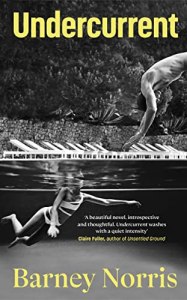
U is for Undercurrent by Barney Norris, a moving and intimate portrait of love, of life and why we choose to share ours with the people we do.
The main story centres around Ed and his immediate family, but the narrative also includes the stories of his grandparents and great grandparents. He had a troubled childhood, living on a farm in Wales with his mother, stepfather and stepsister, Rachel. When he was ten At the age of 10 in an almost accidental moment of heroism, he saved Amy from drowning. Years later when he meets Amy again by chance they form a relationship. But then tragedy overtakes him, and Ed must decide whether to let history and duty define his life, or whether he should push against the tide and write his own story.
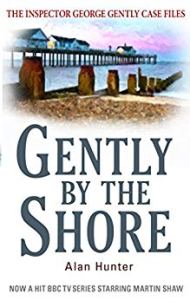
George Gently is called in to investigate a murder in Starmouth, a British seaside holiday resort. An unidentified body was found on the beach. The victim was naked, punctured with stab wounds. It was first published in 1956 and reflects that period of time. Gently smokes a pipe and puffs his way through the investigation often in a haze of smoke when questioning suspects who also smoke. And it has a very ‘English’ feel about it. The fifties were also the period where the death sentence was still in force and Gently and the main suspect discuss the ethics of killing comparing a hired killer with the hangman.
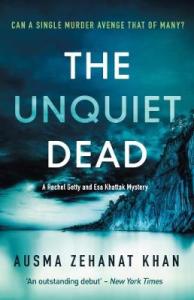
U is for The Unquiet Dead by Ausma Zehanat Khan, a powerful and thought provoking story.
When Christopher Drayton’s body is found at the foot of the Scarborough Bluffs, Detectives Esa Khattak and Rachel Getty are called to investigate his death. But as the secrets of his role in the 1995 Srebrenica Massacre surface, the harrowing significance of the case makes it difficult to remain objective. In a community haunted by the atrocities of war, anyone could be a suspect. And when the victim is a man with far more deaths to his name, could it be that justice has at long last been served?
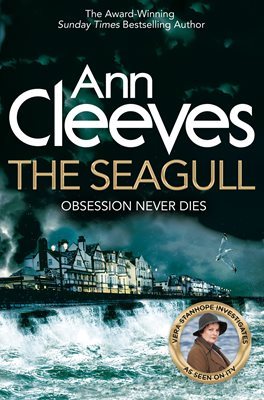
S is for The Seagull by Ann Cleeves, crime fiction, set in Northumberland.
In Ann Cleeves’ eighth novel in her Vera Stanhope series Vera investigates a cold case involving her late father, Hector. he had been one of a ‘Gang of Four’, who had traded in rare birds’ eggs and sold raptors from the wild for considerable sums. Was he also involved in the Gang’s illegal activities? At the same time Vera and her team, Joe, Charlie and Holly – Vera’s own ‘gang of four’ – investigate a present day murder that looks very much as though it links in with their cold case. I enjoy watching Vera on TV, but I enjoy the books even more.
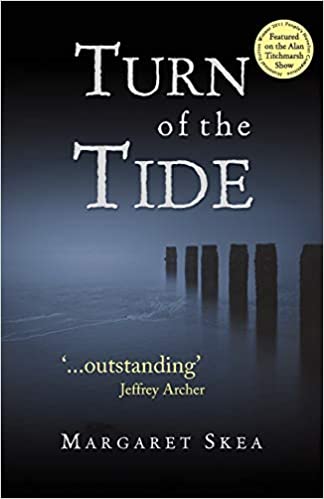
T is for Turn of the Tide by Margaret Skea, crime fiction set in 16th century Scotland.
This is historical fiction and it captivated me completely transporting me back in time to 16th century Scotland. If you have ever wondered, as I have, what it must have been like to live in a Tower House in the Scottish Borders then this book spells it out so clearly. And it puts you firmly in the middle of the centuries old feud between the Cunninghames and the Montgomeries, with all the drama of their battles, ambushes and schemes to further their standing with the young King James VI. It’s a tale of love, loyalty, tragedy and betrayal.
The next link up will be on September 7, 2024 when the optional theme will be Back to School.






 BooksPlease