First Chapter First Paragraph: Coffin Road by Peter May

Every Tuesday First Chapter, First Paragraph/Intros is hosted by Vicky of I’d Rather Be at the Beach sharing the first paragraph or two of a book she’s reading or plans to read soon.

This week I’m featuring a book that I’m thinking of reading soon – Coffin Road by Peter May.

Coffin Road

It begins:

The first thing I am aware of is the taste of salt. It fills my mouth. Pervasive. It dominates my being, smothering all other senses. Until the cold takes me. Sweeps me up and cradles me in its arms. Holding me so tightly I can’t seem to move. Except for the shivering. A raging, uncontrollable shivering. And somewhere in my mind I know this to be a good thing. My body is trying to generate heat. If I wasn’t shivering I would be dead.

I have written so many times that the use of the present tense is not my preferred tense – so why am I even thinking of reading this book? Well, it’s by Peter May and I’ve enjoyed all of his books that I’ve read. And I think this opening paragraph is so good at describing such extreme cold – the short sentences showing how hard it is to breathe – and at the same time without saying so lets you know this scene is by the sea. I hardly even noticed it’s written in the present tense!

This paragraph entices me to read this book – I want to know more. Why is this person in this situation?

The blurb tells you more:

A man stands bewildered on a deserted beach on the Hebridean Isle of Harris. He cannot remember who he is. The only clue to his identity is a folded map of a path named the Coffin Road. He does not know where this search will take him.

A detective from Lewis sits aboard a boat, filled with doubt. DS George Gunn knows that a bludgeoned corpse has been discovered on a remote rock twenty miles offshore. He does not know if he has what it takes to uncover how and why.

A teenage girl lies in her Edinburgh bedroom, desperate to discover the truth about her scientist father’s suicide. Two years on, Karen Fleming still cannot accept that he would wilfully abandon her. She does not yet know his secret.

Coffin Road follows three perilous journeys towards one shocking truth – and the realisation that ignorance can kill us.

∼ ∼ 

What do you think – would you read on?

Library Books

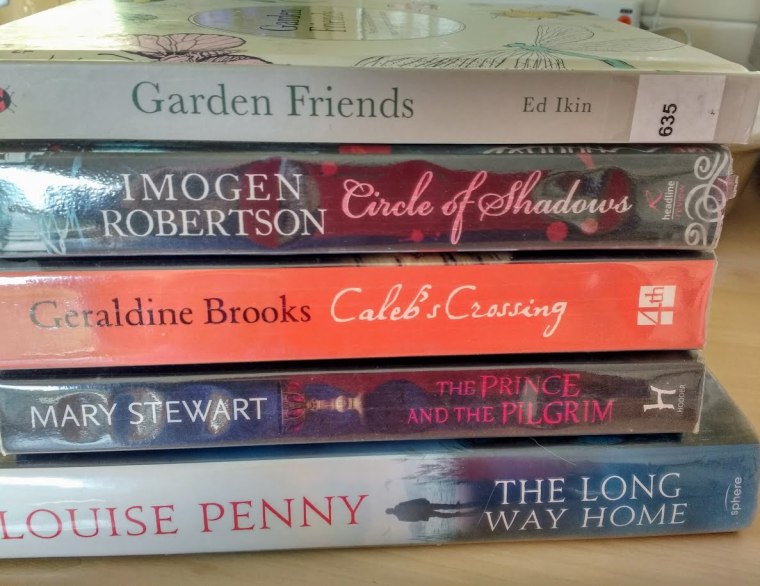
These are the latest library books I have out on loan, borrowed from the mobile library that visited here on Tuesday. I didn’t have any authors or titles in mind but browsed the shelves, choosing each one purely on instinct – hoping I’d like each one:

Lib bks Jan 2018

Garden Friends by Ed Ikin. This is a beautiful little book subtitled, Plants, animals and wildlife that are good for your garden. It’s full of information and photos and drawings, with chapters on plants, animal and insects that can help improve your garden, on dead wood, composting and planting by the moon – apparently there is ‘more than just hippy wisdom behind paying heed to the moon and its potential influence over your garden and wildlife.

Circle of Shadows by Imogen Robertson – historical fiction set in Germany in 1783. I haven’t read any her books before and as this is the third book in her series of books featuring Harriet Westerman and Gabriel Crowther, I’m hoping it won’t matter that I haven’t read the earlier books. The two English sleuths investigate the murder of Lady Martenson at a masked ball. There’s alchemy involved and automata – mirroring the luxury and artificiality of the German court.

Caleb’s Crossing by Geraldine Brooks. I’m a fan of her books so I have great hopes for this one. It’s inspired by a true story, but is a work of imagination. Set in the island now known as Martha’s Vineyard in the 1650s this is the story of Caleb, the son of a Wampanoag chieftain, who ‘crosses’ into the culture of the English settlers.

The Prince and the Pilgrim by Mary Stewart. This is a companion book to her Merlin trilogy, but I’m not too sure that I’ll enjoy this one as much. It’s not about Merlin and Arthur. Instead we have Alexander, nephew of King March of Cornwall seeking to avenge his father on a journey to Camelot in quest of justice. It leads him to the Dark Tower of the sorceress of Morgan le Fay.

The Long Way Home by Louise Penny. I hesitated before deciding to borrow this book, because it’s the 10th Chief Inspector Gamache novel – and I haven’t read any of the previous books. But I know that several bloggers love these books and I’d recently read Kay’s post on the 13th book – Glass Houses – describing Louise Penny’s books  as ‘some of the best and deepest character studies I’ve ever read‘ and  ‘filled with imagination and beautiful descriptions and pathos and terror.’ So I had to bring this one home to see for myself.

Set in Quebec, Gamache’s friend Clara’s has asked him for help as her husband, Peter had not come home on the first anniversary of their separation as he had promised. Gamache uncovers a deadly trail of jealousy and deceit.

If you’ve read any of these books do let me know what you think about them. If you haven’t, are you tempted by any of them?

My Week in Books: 24 January 2018

This Week in Books is a weekly round-up hosted by Lypsyy Lost & Found, about what I’ve been reading Now, Then & Next.

IMG_1384-0

A similar meme,  WWW Wednesday is run by Taking on a World of Words.

Now:

Victoria: A Life

I’m still reading Victoria: a Life by A N Wilson (I began reading it last October!) and am now in Part 6 (it’s in 7 parts). It is now 1883, the Queen is sixty four and ‘increasingly obese‘, so different from the young girl of eighteen who had ascended the throne in 1837. This biography is fascinating, with many excerpts from Victoria’s personal letters and diaries.

Then:

The last book I finished is The Confession by Jo Spain, which will be published tomorrow, 25 January 2018. I was quickly gripped by this book in which you know who the killer is right from the start. But the killer insists he didn’t know the victim and neither did he know what had come over him as he battered him to death – it was as though he’d been possessed. (My review is here.)

Next:

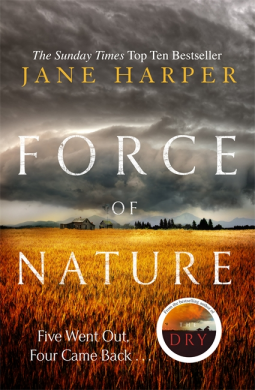
Force of Nature by Jane Harper, which  will be published on 8 February 2018.

Blurb:

FIVE WENT OUT. FOUR CAME BACK…

Is Alice here? Did she make it? Is she safe? In the chaos, in the night, it was impossible to say which of the four had asked after Alice’s welfare. Later, when everything got worse, each would insist it had been them.

Five women reluctantly pick up their backpacks and start walking along the muddy track. Only four come out the other side.

The hike through the rugged landscape is meant to take the office colleagues out of their air-conditioned comfort zone and teach resilience and team building. At least that is what the corporate retreat website advertises.

Federal Police Agent Aaron Falk has a particularly keen interest in the whereabouts of the missing bushwalker. Alice Russell is the whistleblower in his latest case – and Alice knew secrets. About the company she worked for and the people she worked with.

Far from the hike encouraging teamwork, the women tell Falk a tale of suspicion, violence and disintegrating trust. And as he delves into the disappearance, it seems some dangers may run far deeper than anyone knew.

Have you read any of these books?  Do any of them tempt you? 

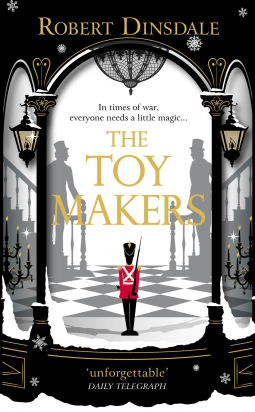
First Chapter First Paragraph: The Toymakers by Robert Dinsdale

Every Tuesday First Chapter, First Paragraph/Intros is hosted by Vicky of I’d Rather Be at the Beach sharing the first paragraph or two of a book she’s reading or plans to read soon.

This week I’m featuring a book that I’ve just started to read, The Toymakers by Robert Dinsdale, to be published on 8th February 2018. It promises to be A dark enchanting, spectacularly imaginative novel.

It begins:

PAPA JACK’S EMPORIUM, LONDON 1917

The Emporium opens with the first frost of winter. It is the same every year. Across the city, when children wake to see ferns of white stretched across their windows, or walk to school to hear ice crackling underfoot, the whispers begin: the Emporium is open! Christmas is coming and the goose is getting fat …

If, at a certain hour on a certain winter night, you too had been wandering the warren between New Bond Street and Avery row, you might have seen it for yourself. One moment there would be darkness, only the silence of shops shuttered up and closed for business. The next, the rippling snowflakes would part to reveal a mews you had not noticed before – and, along that mews, a storefront garlanded in lights. Those lights might be but pinpricks of white, no different to the snowflakes, but still they would draw you eyes. Lights like these captivate and refract the darkness. Lights like these can bewitch the most cynical of souls.

Blurb:

Do you remember when you believed in magic?

It is 1917, and while war wages across Europe, in the heart of London, there is a place of hope and enchantment.

The Emporium sells toys that capture the imagination of children and adults alike: patchwork dogs that seem alive, toy boxes that are bigger on the inside, soldiers that can fight battles of their own. Into this family business comes young Cathy Wray, running away from a shameful past. The Emporium takes her in, makes her one of its own.

But Cathy is about to discover that the Emporium has secrets of its own…

∼ ∼ 

This has me bewitched already.

What do you think – would you read on?

My Friday Post: The Lake House by Kate Morton

Book Beginnings Button

Every Friday Book Beginnings on Friday is hosted by Gillion at Rose City Reader where you can share the first sentence (or so) of the book you are reading, along with your initial thoughts about the sentence, impressions of the book, or anything else the opener inspires.

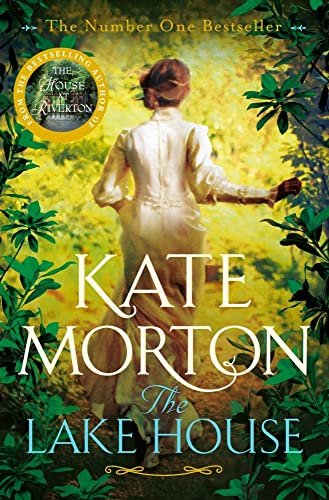
This week I’m featuring The Lake House by Kate Morton. This is one of my TBRs.

It begins in Cornwall in August 1933:

The rain was heavy now and the hem of her dress was splattered with mud. She’d have to hide it afterwards; no one could know that she’d been out.

Also every Friday there is The Friday 56, hosted by Freda at Freda’s Voice. These are the rules:

  1. Grab a book, any book.
  2. Turn to page 56, or 56% on your eReader.
  3. Find any sentence (or a few, just don’t spoil it) that grabs you.
  4. Post it.
  5. Add the URL to your post in the link on Freda’s most recent Friday 56 post.

Page 56

Sadie pictured the muddy lake and its eerie avian population. ‘Yes, that’s it. What happened there?’

‘A terrible business,’ Louise said, with a sad shake of her head. ‘Back in the thirties, before I was born. My mother used to talk about it, though – usually when she wanted to stop us kids from wandering too far. A child went missing on the night of a grand party. It was a big story at the time; the family was wealthy and the national press paid a lot of attention. There was a huge police investigation, and they even brought down the top brass from London. Not that any of it helped.

What a coincidence! I think these two extracts sum up what this book is about – an unsolved mystery of a child who disappeared without a trace.

I’ll be reading this book soon. What do you think? does it tempt you too?

A – Z of TBRs: P, Q and R

I’m now up to P, Q and R in my A – Z of TBRs, a series of posts in which I take a fresh look at some of my TBRs to inspire me to read more of them, or maybe to decide not to bother reading them after all. This time I’ve included one e-book.

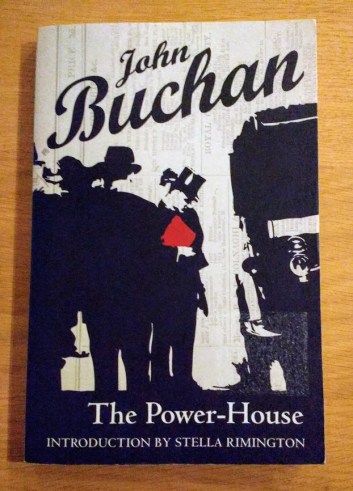
– is for The Power House by John Buchana book I’ve had since 2014. I bought this book because I’d read and enjoyed John Buchan’s The Thirty-Nine Steps.
The Power House

It’s a short book of just 108 pages and my copy has an introduction by Stella Rimington. She writes:

The Power House is one of the least known of Buchan’s mature works, a tale without a plot, and so full of holes that it calls to mind Samuel Johnson’s definition of a ‘network’ – ‘anything reticulated and desuccated at equal distances, with interstices between the intersections’. It is pure essence of Buchan – a demonstration of his magical power to weave a tale out of no materials but the threads and colours of his imagination.

When his friend Charles Pitt-Heron vanishes mysteriously, Sir Edward Leithen, MP, is at first only mildly concerned. But a series of strange events that follow Pitt-Heron’s disappearance convinces Leithen that he is dealing with a sinister secret society. Their code name is ‘The Power-House’.

I cast my mind back to gather recollections of Pitt-Heron, but all I could find was an impression of a brilliant, uncomfortable being, who had been too fond of the byways of life for my sober tastes. There was nothing crooked in him in the wrong sense, but there might be a good deal that was perverse. I remember consoling myself with the thought that, though he might shatter his wife’s nerves by his vagaries, he would scarcely break her heart.

To be watchful, I decided, was my business. And I could not get rid of the feeling that I might soon have cause for my vigilance. (page 9)

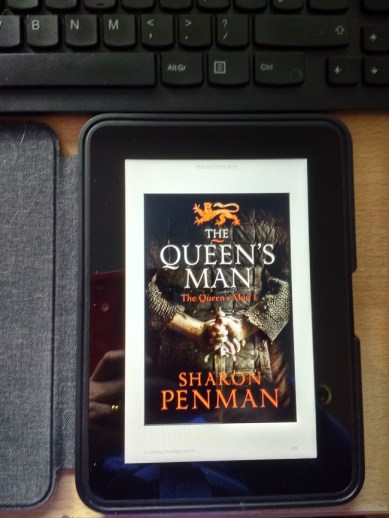
Q – is for The Queen’s Man by Sharon Penman (on my Kindle for two years). I bought this after reading her Sunne in Splendour, which I absolutely loved.
The Queen's Man

It’s set in AD 1183, when Richard the Lionheart is missing, thought to be dead and his brother Prince John is scheming to take the Crown. Justin de Quincy has just discovered his father is the Bishop of Chester. A dying man, a goldsmith, gives him a letter to deliver to Queen Eleanor, (Richard’s and John’s mother) which brings him into great danger as it reveals whether Richard is alive or dead.

Captured by Henry’s soldiers, she [Eleanor] was held prisoner for sixteen years, freed only by Henry’s death. Such a lengthy confinement would have broken most people. It had not broken Eleanor. The passionate young queen and the embittered, betrayed wife were ghosts long since laid to rest. Now in her seventy-first year, she was acclaimed and admired for her sagacity and shrewd counsel, reigning over England in her son’s absence, fiercely protective of his interests, proud matriarch of a great dynasty. A living legend. And this was the woman expecting a letter from a murdered goldsmith? Justin thought it highly unlikely. (location 323)

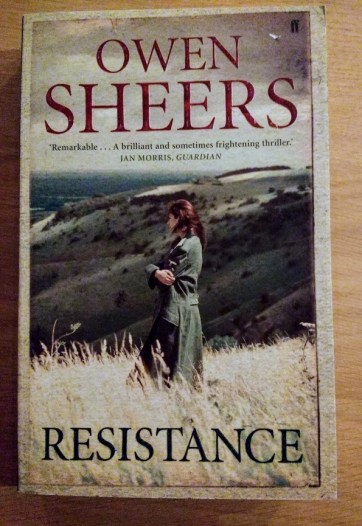
R– is for Resistance by Owen Sheers a book I’ve had for nearly ten years. One of the reasons I haven’t read this before now is that I couldn’t find it for a while until I discovered it out of order behind other books that I’d double-shelved. I can’t remember now what had prompted me to buy this book. Owen Sheers is an author, poet and playwright.
Resistance

Resistance gives an alternative outcome to World War Two, one in which the D-Day landings had failed in 1944 and the Nazis had invaded the UK. Sarah Lewis wakes to discover her husband and all the men in the Welsh border valley of Olchon have gone. It’s the story of a community under siege.

The meeting with Atkins had happened too quickly for George to think on the consequences yet. His head was light, open, and he swung his scythe with a renewed energy. He felt exposed, as if a layer of skin had been shaved from him, bringing him into closer contact with the world. The blade’s edge against the young stalks of bracken, the calligraphy of the swallows above him. Everything seemed clearer, brought into sharper focus. Just an hour ago the war was a different country, the contours of which he’d traced through the newspapers, in radio reports. But now he was involved, connected. He had the strange sensation of his life simultaneously diminishing and expanding under the impression of Atkins’s words and for the second time that week he felt older than his seventeen years. (page 25)

What do you think? Do you fancy any of them? Would you ditch any of them?