Saturday Snapshot

Coldstream

Coldstream is our nearest Scottish town, the other side of the River Tweed. The view as you approach from the English side of the border is dominated by this monument that towers 70 feet above the town. It’s known as ‘Charlie‘ and was erected in 1834 as a tribute to Sir Charles Marjoribanks who was the first Liberal Member of Parliament for Berwickshire after the Reform Act of 1832. He died in 1833 at the age of 39.

'Charlie' - Sir Charles Marjoribanks

Below my photo is rather dark, just showing the silhouette of the statue as it rears up behind the houses in front and below it.

Coldstream - Marjoribanks Monument

For more Saturday Snapshots see Alyce’s blog At Home with Books.

The Victorian Chaise-Longue by Marghanita Laski: Book Review

After I finished reading Little Boy Lost by Marghanita Laski I wanted to read more by her and borrowed The Victorian Chaise-Longue from my local library. It’s very different from Little Boy Lost and although it’s described as ‘a little jewel of horror’, I didn’t find it very horrifying, or even the slightest bit frightening. It’s about Melanie, a young woman who falls asleep on a Victorian chaise-longue in 1953 and wakes up in a different body, that of Millie, in 1864. No one believes that she is anyone other than Millie, a very sick young woman.

Melanie is a  spoilt, pampered young woman, who is recovering from tuberculosis and the birth of a baby. She is indulged by her husband and although she affects a silly, giggly manner she is not stupid. Her doctor observes to himself after hearing a conversation between Melanie and her husband, Guy:

But Melanie isn’t the fool he thinks her, not by a long chalk, she’s simply the purely feminine creature who makes herself into anything her man wants her to be. Not that I’d call her clever, rather cunning – his thoughts checked, a little shocked at the word he had chosen, but he continued resolutely – yes, cunning as a cartload of monkeys if ever she needed to be. (page 5)

It is Melanie’s cunning that helps her in the nightmare situation in which she finds herself, trapped and powerless inside Millie’s body. The book is not really about the paranormal, or time-travel, but more a study of morals, of identity and the changing attitudes towards women, illness and death.

The Victorian Chaise-Longue is an extraordinary little book, but for me it was nowhere nearly as good or as satisfying as Little Boy Lost. The characters are somewhat shallow and insubstantial, although there is a feeling of claustrophobia and suspense as the end drew near and Melanie’s fate is in doubt – would she too die? I go along with P D James, who writes in the Preface of how Marghanita Laski went alone to a remote house to induce the fear she needed to write the book, but thinks:

What precisely she was trying to tell us is unclear; there may be a clue in the lines of T S Eliot which she reprinted at the beginning of the novel: ‘I am dying in my own death and the deaths of those after me.’

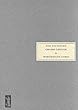
The Victorian Chaise-Longue Endpapers (click to enlarge)
  • Paperback: 99 pages
  • Publisher: Persephone Books Ltd; New edition edition (22 Jun 1999)
  • Language English
  • ISBN-10: 0953478041
  • ISBN-13: 978-0953478040
  • Source: library book
  • My Rating: 3/5

Saturday Snapshot

There is a field at the back of our garden which is on a steep slope (it is much steeper than it looks in my photos). A couple of weeks ago I spotted three roe deer at the top of the field, grazing, and quickly took a few photos using the zoom lens.

They soon were aware I was around and began to move away.

They jumped over the fence and were soon out of sight. You can just see their white rumps – one getting ready to jump and two on the other side.

See more Saturday Snapshots on Alyce’s blog At Home With Books.

Standing Water by Terri Armstrong

Standing Water

Last week (28 February 2012) Terri Armstrong’s debut novel Standing Water was published. Pre-publication it won the 2010 Yeovil Literary Prize and I can understand why. I thoroughly enjoyed it. It’s a fascinating story set in and near the fictional town of Marrup in the Western Australia Wheatbelt, an area suffering from drought – there’s been no rain for a couple of years. This is the scene that greets Dom Connor on his return home for his mother’s funeral after eight years away:

Boards blanked out the doors and windows of the old stone post office. Abandoned shops, charming wooden structures with wide windows and tin roofs, gaped out into the road, their facia lettering bleached to vague outlines by the sun. Wheat-coloured grasses grew out of cracks in the footpath in front of what used to be the bakery, a seventies building of pale brick, where his mum had bought creamy vanilla slices on Saturday mornings. (page 22)

Dom is returning to the family farm which his older brother, Neal has been running ever since their father died. Dom and Neal don’t get on and despite Dom’s attempts to improve their relationship, the tension between them is on a short fuse. Neal can’t express his emotions and thoughts until they are forced out him uncontrollably. His relationship with his wife, Hester, is also on a knife edge, although he loves her.

The book is narrated in the third person mode, through three of the characters’ perspectives – Dom, Hester and Andy, a boyhood friend of Dom’s. We never get Neal’s point of view, but each of the other characters cast light on his personality. Hester, has never met Dom before his return, but Andy, a recovering drug addict, has links with her past as well as with Neal’s and Dom’s. When Andy turns up, looking for reconciliation with his parents, secrets of both the past and the present are gradually revealed and the tension inexorably mounts.

I was completely engrossed in this book, which is about friendships, sibling rivalry, parent/child relationships, and love and betrayal. The characters are convincing and the setting is superb. I could feel the heat, see the landscape, the farms, the plants, birds and the Dog Rock, a huge rock overlooking a panorama of flat land below its sixty foot height, with tiny caves at its base.

It’s not surprising that the location is so convincing as Terri Armstrong is an Australian, now living in Norwich, having moved to the UK in the late 1980s. For more information visit Terri’s website. She is currently working on her second novel, which is based in London. I’ll be looking out for it.

  • Paperback: 320 pages
  • Publisher: Pewter Rose Press (28 Feb 2012)
  • Language English
  • ISBN-10: 1908136006
  • ISBN-13: 978-1908136008
  • Source: supplied by the publishers

My Rating 4.5/5

Saturday Snapshot: Cragside Again

Following on from last Saturday’s snapshots of Cragside here are a few more photos.

There were many other visitors when we were there and it was difficult sometimes to get a good photo and I had to be quick before someone moved in front of my camera. So, some of my photos are a bit out of focus and rather dark. (It’s amazing that you can take photos in National Trust properties – in the past it was strictly forbidden. I asked one of the room stewards why they allowed them now and he explained that because you can take photos on mobile phones it was impossible to stop people. It’s good to take your own photos, but actually there are much better ones than mine in the guidebook.)

The first room we saw was the kitchen. As you can see the area is fenced off. It’s not very big but there are also sculleries and larder and cellar storage beneath the kitchen, with a ‘dumb waiter’ to carry food and equipment up and down. The Butler, Housekeeper and Cook each had their own areas.

In the next photo you can see the spits with joints of meat in front of the range.

There is a dishwasher. Rather primitive compared to the modern models this dishwasher has wire compartments for crockery, a motor turned it whilst hot soapy water was squirted into it from a boiler. This had been invented in 1886 by a wealthy American, Josephine Cochrane whose servants had chipped her fine china.

None of the rooms at Cragside are very large, apart from the Drawing Room, and I could imagine being comfortable in most of them, such as the Dining Room. It has a lovely inglenook fireplace with stained glass windows designed by William Morris.

The windows either side represent the Four Seasons. the photo below shows two of the windows – Spring and Summer.

I still have more photos, but these are enough for one post. (Click the photos to see a larger view.)

Cragside is open to visitors from today. I  would really like to go there again this year, there is so much I didn’t take in and I only had a brief look at the grounds.

See more Saturday Snapshots on Alyce’s blog At Home With Books.

February’s Books: Little Boy Lost

February was a good reading month. I read 9 books. The full list is on my Books Read in 2012 page (see the tab above).

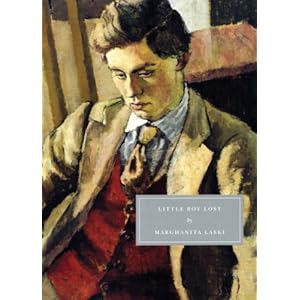
My Book of the Month is Little Boy Lost by Marghanita Laski. It is a beautiful book. Once I started reading I didn’t want to put it down; I just had to know what happened. It’s the story of Hilary Wainwright, who is searching for his son, lost five years earlier in the Second World War. Hilary had left France just after his wife, Lisa, had given birth to John. Lisa, unable to leave France, worked for the Resistance, but was killed by the Gestapo and her son disappeared.

After the war ended Hilary is contacted by Pierre, a friend of Lisa’s, who told him he may have found the boy, living in an orphanage in rural France and Hilary sets out to discover if the boy is really his son.

It’s written in such clear, straightforward language and yet at the same time it is emotional, heart-wrenching and nerve-wracking, full of tension, but never sentimental. The depiction of post-war France is chilling conveying the deprivations, suspicion and bitterness of the times. Hilary is a solitary person, a poet and an intellectual, who has difficulty with relationships. This makes it difficult for him to accept that the little boy is his without an instinctive feeling or conclusive evidence – looks, mannerisms or the child’s own recollections. Whilst he is longing to find his son, after he Lisa had died and he had lost the boy, he had closed himself off from feelings:

I couldn’t endure being hurt again: I’d sooner feel nothing. I don’t like children as such; they bore me. I used to think that a child of my own would make me happy, but I know that isn’t true any more. I’ve got nothing to offer a child … I just want to be left alone so that I can’t be hurt again. (page 75)

It’s not only the little boy who is lost, it is also his father.

He goes through mental agonies once he meets the child, unsure that he is his son, and in several minds about what he should do. The boy is adorable and by the end of the book I began to think it didn’t matter whether he was his son or not, I just wanted them to be happy together.

My rating: 5/5

  • Paperback: 240 pages
  • Publisher: Persephone Books Ltd (23 Oct 2008)
  • Language English
  • ISBN-10: 1906462054
  • ISBN-13: 978-1906462055
  • Source: I bought my copy

Kerrie at Mysteries in Paradise is collecting crime fiction ‘picks of the month’. During February I read 4 crime fiction and my Crime Fiction Pick of the Month is Sleeping Murder by Agatha Christie – Miss Marple’s last case.