Spell the Month in Books – November 2026

Spell the Month in Books is a linkup hosted by Jana on Reviews From the Stacks on the first Saturday of each month. The goal is to spell the current month with the first letter of book titles, excluding articles such as ‘the’ and ‘a’ as needed. That’s all there is to it! Some months there are optional theme challenges, such as “books with an orange cover” or books of a particular genre, but for the most part, any book you want to use is fair game!

Currently Jana is not assigning themes, so I’ve chosen to feature Novellas as I’m also taking part in Novellas in November. These are novellas that I’ve read in the past.
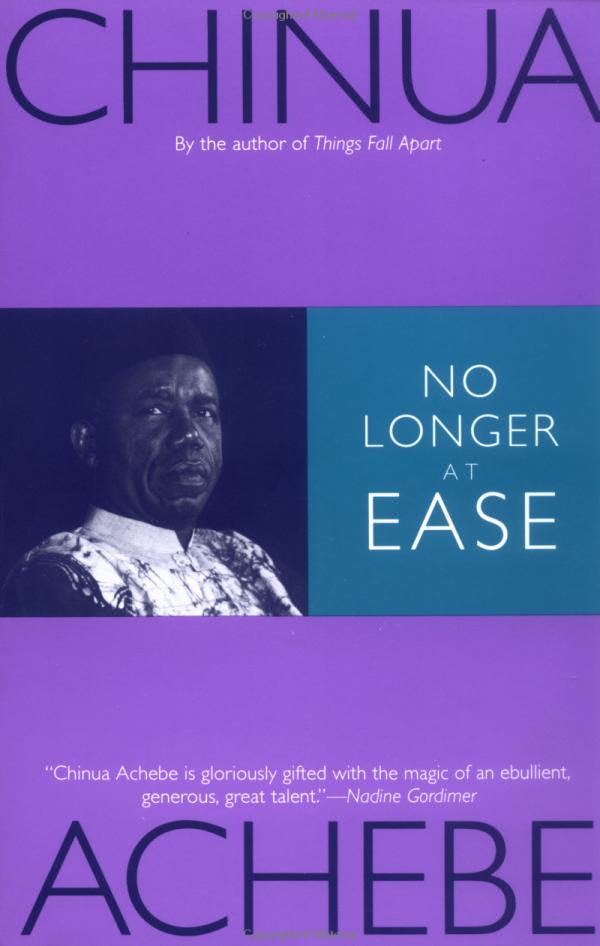
N is for No Longer at Ease by Chinua Achebe. This book follows on from Achebe’s Things Fall Apart being the third book about the family of Okonkwo in Nigeria from the time of European colonisation up to the 1950s. No Longer at Ease is set in the 1950s. Obi Okonkwo has been educated in England and returns to Lagos where he works as a civil servant. He soon falls victim to the corruption in the city. This is the story of pressure from a changing world that Obi doesn’t understand and his struggles to adjust. It’s a downward spiral and a sense of foreboding pervades the whole book.

O is for The Old Man and the Sea by Ernest Hemingway. This is the story of an old Cuban fisherman and his supreme ordeal: a relentless, agonizing battle with a giant marlin far out in the Gulf Stream. There’s this old man alone on the sea pondering about life and death, what he has achieved and also his failures. He is at the end of his strength and yet he endures. He has perseverance and determination and pride. Pride in his ability and in his way of life. The matter of sin occupies his mind and he thinks it was a sin to kill the fish, even though he did it to keep himself alive and feed many people. It’s a simple story on the surface, told in a few pages, yet full of depth.

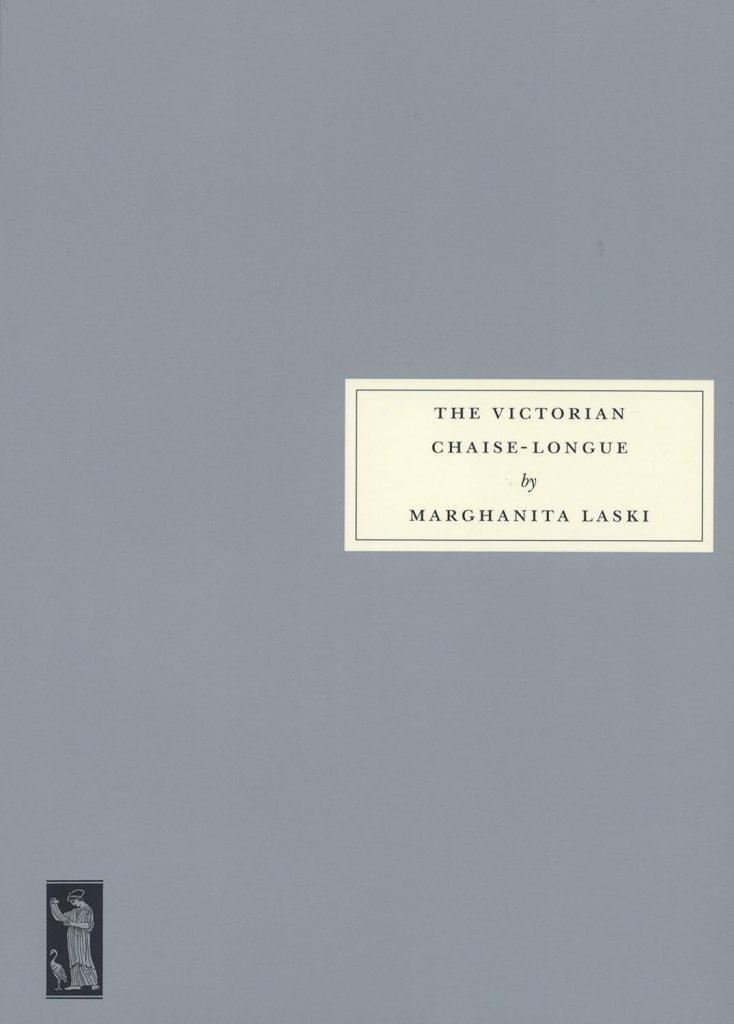
V is for The Victorian Chaise-Longue by Marghanita Laski, about Melanie, a young woman who falls asleep on a Victorian chaise-longue in 1953 and wakes up in a different body, that of Millie, in 1864. No one believes that she is anyone other than Millie, a very sick young woman. It is Melanie’s cunning that helps her in the nightmare situation in which she finds herself, trapped and powerless inside Millie’s body. The book is not really about the paranormal, or time-travel, but more a study of morals, of identity and the changing attitudes towards women, illness and death.

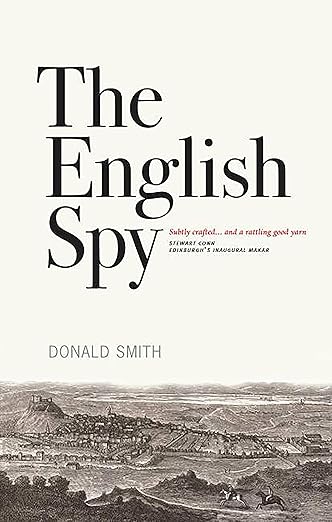
E is for The English Spy by Donald Smith, a novel about the build up to the political Union of England and Scotland in 1707. It tells the story of how Daniel Defoe, at that time still known as Daniel Foe, was sent to Scotland under secret instructions from the English government to persuade the Scots to give up their independence. It’s a fascinating story of intrigue and backstabbing amongst the members of the Scottish parliament!

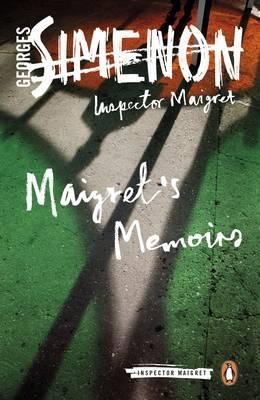
M is for Maigret’s Memoirs by Georges Simenon. This a memoir written by Simenon writing as his fictional character, Maigret. It begins in 1927 or 1928 when Maigret and Simenon, calling himself Georges Sim, first ‘met’. it’s a quick entertaining read as Maigret looks back to his first ‘meeting’ with Sim. He fills in some of the background of his early life and talks about his father and how he first met his wife, Louise. Simenon had written 34 Maigret novels before this one and Maigret took this opportunity to correct some of Simenon’s inaccuracies.

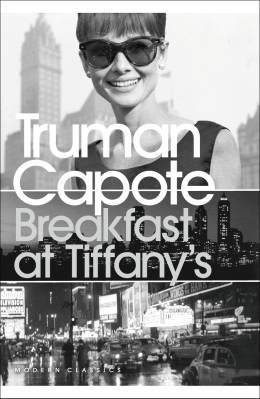
B is for Breakfast at Tiffany’s by Truman Capote, a quick read and very entertaining. The narrator is not named, although Holly Golightly calls him ‘Fred’ after her brother. He’s a writer and at the beginning of the book he is reminiscing about Holly with Joe Bell, who ran a bar around the corner on Lexington Avenue. They hadn’t seen or heard from Holly for over two years. She used to live in the apartment below Fred’s in a brownstone in the East Seventies in New York. Her past is almost as unknown as her present whereabouts. I loved Capote’s writing – it’s lively, richly descriptive with sparkling dialogue, and his ability to conjure up characters with depth in a few paragraphs is impressive, to say the least.

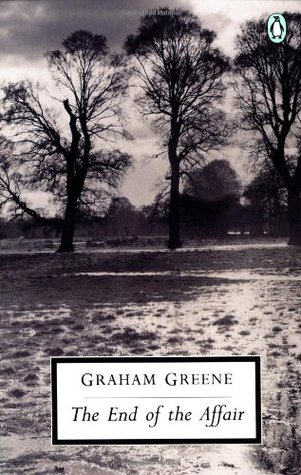
E is for The End of the Affair by Graham Greene. Maurice and Sarah had begun a love affair during the London Blitz and then Sarah had broken off the relationship. Maurice, driven by obsessive jealousy and grief sends a private detective to find out the truth. It’s a study of love and hate, of desire, of jealousy, of pain, of faithfulness, and of the interaction between God and people.

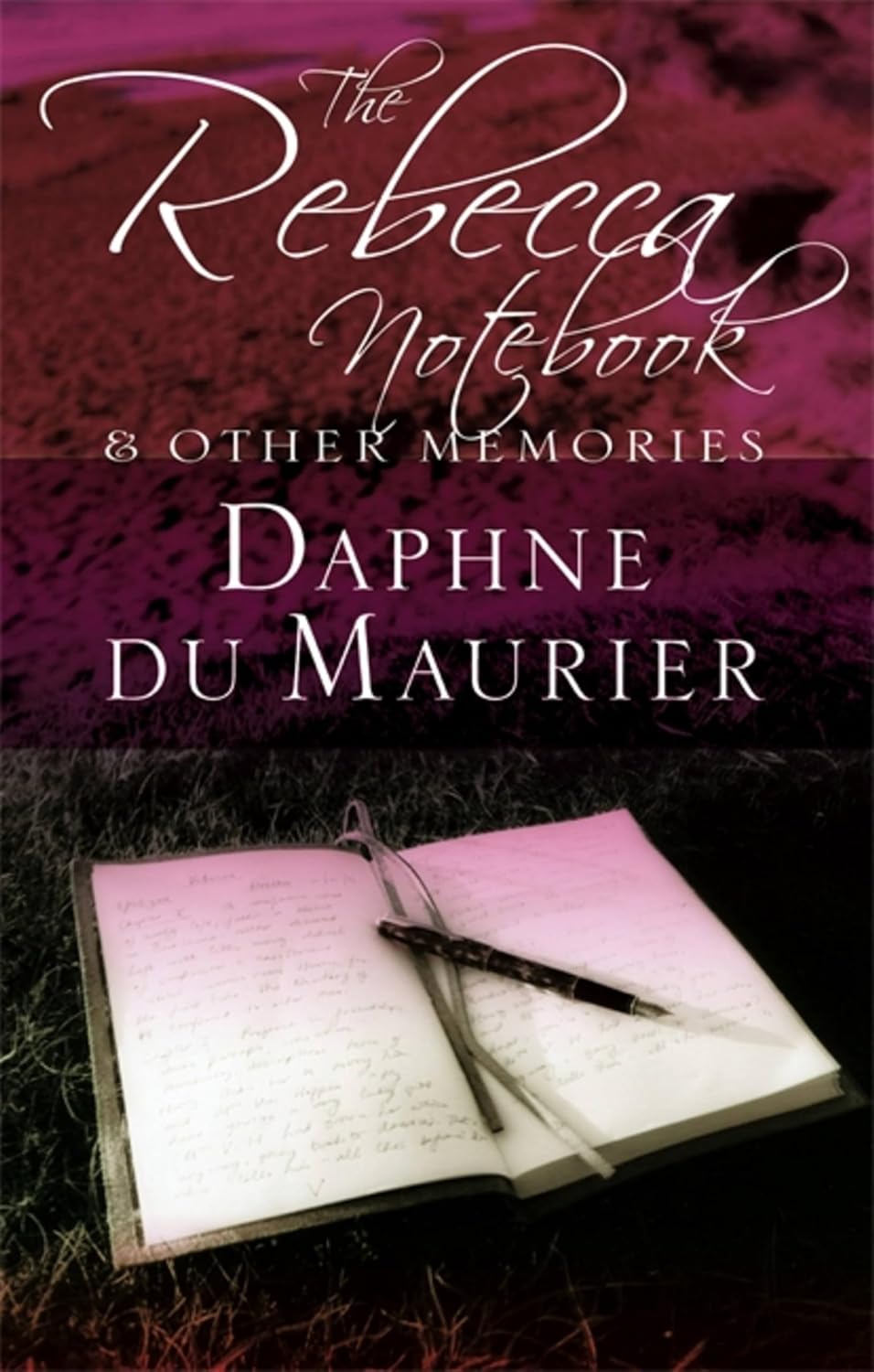
R is for The Rebecca Notebook and Other Memories by Daphne Du Maurier, gives a glimpse into the mind of Daphne Du Maurier. She began to write Rebecca in 1937 when she was thirty years old, living in Alexandria and feeling homesick for Cornwall. She jotted down chapter summaries in a notebook, setting the book in the mid 1920s ‘about a young wife and her slightly older husband, living in a beautiful house that had been in his family for generations.’ As she thought about it ideas sprang to her mind – a first wife – jealousy, something terrible would happen – a wreck at sea. I enjoyed the other short pieces in this book – her ‘memories’ of her family and her own life and beliefs.

The Village by Marghanita Laski: A Book Review


Persephone edition endpapers

The Village was first published in 1952 and chronicles life in an English village immediately after the end of the Second World War. It begins with two women meeting to go on duty at the Red Cross post as they had done throughout the war. They are from different ends of the village, Wendy Trevor from up the hill where  the gentry live and Edith Wilson from Station Road where the working-class live.  Both knew that the breaking down of social barriers had just been one of those things that happened during a war. Mrs Wilson acknowledged that she would miss the camaraderie:

‘There’s a lot of us will miss it’, Edith said. ‘We’ve all of us felt at times, you know, how nice it was, like you and me being able to be together and friendly, just as if we were the same sort, if you know what I mean.’ (page19)

But the war had changed much and the social barriers were rising, but when Wendy’s daughter, Margaret, falls in love with Edith’s son, Roy, the Trevors are horrified and refuse to give their permission for the couple to marry. Margaret does not have the same attitude as her parents:

‘The trouble with you, Miss Margaret, is that you’ve got no sense of class.’ (page 113)

I thought at first that this book was not as good as Laski’s Little Boy Lost, which I loved, but as I read on I realised the simple direct style of writing contained depth and complexity and  by the end I was convinced I was living in the village, amongst these people at the end of the war. It’s not as heart-rending as Little Boy Lost, but it is absorbing reading.

The Village is not only a love story, it’s a novel exploring the issues of class and social mobility, family relationships, parental control and the position of women. Although the Trevors and the Wilsons are the main characters, it’s a novel about the whole community,with a list of all the characters at the beginning of the book, including their station in life.

Included in the mix are the Wetheralls, Ralph and his American wife, Martha. They provide an interesting perspective on the complex British class system, comparing it with the American attitudes to different groups of people. Ralph, a business man, explains to Martha because they’re in ‘trade’, the Trevors who are gentry but hard up, still look down on them – and class is still most important. Martha wants to help Margaret and can’t understand that class doesn’t go by money, until Ralph points out that it was the same in America – ‘Plenty of your old Boston families are nearly as poor as the Trevors, but they still look down their noses at everyone else.’ (page 166)

He goes even further comparing the position of the working-classes in Britain to that of negroes in the United States, not the southern states but in the ‘enlightened North‘:

‘Many’s the time I’ve sat in your mother’s apartment in New York and heard you all talking in a broadminded way about treating the negro properly, but I’ve never come in and found a black man dropped in casually for cocktails, and I wouldn’t expect it, any more that I’d expect to find the Trevors  accepting Roy Wilson as a son-in-law.

…

Honestly now, you wouldn’t have married a negro, would you? You’d do your best to stop your daughter from marrying a negro. Well, you take my word for it, the Trevors will feel just the same way about Margaret marrying Roy Wilson, if there’s any question of it, which I very much doubt.’ (pages 231-2)

It ‘s certainly a book I’d like to re-read.

  • Paperback: 312 pages
  • Publisher: Persephone Books Ltd; First Edition edition (22 Sep 2004)
  • Language English
  • ISBN-10: 1903155428
  • ISBN-13: 978-1903155424
  • Source: I borrowed the book from a friend, and now want my own copy!
  • My Rating: 5/5

I wrote about the beginning of The Village here.

Book Beginnings on Friday

This is the opening sentence of the book I’m going to read next:

The night the war ended, both Mrs Trevor and Mrs Wilson went on duty at the Red Cross post as usual.

from The Village by Marghanita Laski. As this sentence indicates the setting is at the end of World War Two – in fact, the very day it ended. It seems to me as though Mrs Trevor and Mrs Wilson don’t want to give up the routine they had during the war and I’m keen to see what effect the end of the war will have on them.

This opening reminds me a bit of One Fine Day by Mollie Panter-Downes, also set in 1946 and chronicles the changes the Marshall family encountered, a book which I loved.

Book Beginnings on Friday is now hosted by Gilion at Rose City Reader.

The Victorian Chaise-Longue by Marghanita Laski: Book Review

After I finished reading Little Boy Lost by Marghanita Laski I wanted to read more by her and borrowed The Victorian Chaise-Longue from my local library. It’s very different from Little Boy Lost and although it’s described as ‘a little jewel of horror’, I didn’t find it very horrifying, or even the slightest bit frightening. It’s about Melanie, a young woman who falls asleep on a Victorian chaise-longue in 1953 and wakes up in a different body, that of Millie, in 1864. No one believes that she is anyone other than Millie, a very sick young woman.

Melanie is a  spoilt, pampered young woman, who is recovering from tuberculosis and the birth of a baby. She is indulged by her husband and although she affects a silly, giggly manner she is not stupid. Her doctor observes to himself after hearing a conversation between Melanie and her husband, Guy:

But Melanie isn’t the fool he thinks her, not by a long chalk, she’s simply the purely feminine creature who makes herself into anything her man wants her to be. Not that I’d call her clever, rather cunning – his thoughts checked, a little shocked at the word he had chosen, but he continued resolutely – yes, cunning as a cartload of monkeys if ever she needed to be. (page 5)

It is Melanie’s cunning that helps her in the nightmare situation in which she finds herself, trapped and powerless inside Millie’s body. The book is not really about the paranormal, or time-travel, but more a study of morals, of identity and the changing attitudes towards women, illness and death.

The Victorian Chaise-Longue is an extraordinary little book, but for me it was nowhere nearly as good or as satisfying as Little Boy Lost. The characters are somewhat shallow and insubstantial, although there is a feeling of claustrophobia and suspense as the end drew near and Melanie’s fate is in doubt – would she too die? I go along with P D James, who writes in the Preface of how Marghanita Laski went alone to a remote house to induce the fear she needed to write the book, but thinks:

What precisely she was trying to tell us is unclear; there may be a clue in the lines of T S Eliot which she reprinted at the beginning of the novel: ‘I am dying in my own death and the deaths of those after me.’

  • Paperback: 99 pages
  • Publisher: Persephone Books Ltd; New edition edition (22 Jun 1999)
  • Language English
  • ISBN-10: 0953478041
  • ISBN-13: 978-0953478040
  • Source: library book
  • My Rating: 3/5

February’s Books: Little Boy Lost

February was a good reading month. I read 9 books. The full list is on my Books Read in 2012 page (see the tab above).

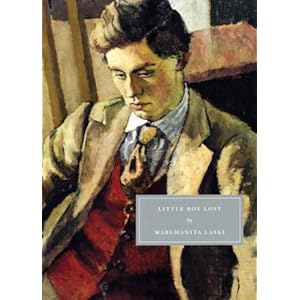
My Book of the Month is Little Boy Lost by Marghanita Laski. It is a beautiful book. Once I started reading I didn’t want to put it down; I just had to know what happened. It’s the story of Hilary Wainwright, who is searching for his son, lost five years earlier in the Second World War. Hilary had left France just after his wife, Lisa, had given birth to John. Lisa, unable to leave France, worked for the Resistance, but was killed by the Gestapo and her son disappeared.

After the war ended Hilary is contacted by Pierre, a friend of Lisa’s, who told him he may have found the boy, living in an orphanage in rural France and Hilary sets out to discover if the boy is really his son.

It’s written in such clear, straightforward language and yet at the same time it is emotional, heart-wrenching and nerve-wracking, full of tension, but never sentimental. The depiction of post-war France is chilling conveying the deprivations, suspicion and bitterness of the times. Hilary is a solitary person, a poet and an intellectual, who has difficulty with relationships. This makes it difficult for him to accept that the little boy is his without an instinctive feeling or conclusive evidence – looks, mannerisms or the child’s own recollections. Whilst he is longing to find his son, after he Lisa had died and he had lost the boy, he had closed himself off from feelings:

I couldn’t endure being hurt again: I’d sooner feel nothing. I don’t like children as such; they bore me. I used to think that a child of my own would make me happy, but I know that isn’t true any more. I’ve got nothing to offer a child … I just want to be left alone so that I can’t be hurt again. (page 75)

It’s not only the little boy who is lost, it is also his father.

He goes through mental agonies once he meets the child, unsure that he is his son, and in several minds about what he should do. The boy is adorable and by the end of the book I began to think it didn’t matter whether he was his son or not, I just wanted them to be happy together.

My rating: 5/5

  • Paperback: 240 pages
  • Publisher: Persephone Books Ltd (23 Oct 2008)
  • Language English
  • ISBN-10: 1906462054
  • ISBN-13: 978-1906462055
  • Source: I bought my copy

Kerrie at Mysteries in Paradise is collecting crime fiction ‘picks of the month’. During February I read 4 crime fiction and my Crime Fiction Pick of the Month is Sleeping Murder by Agatha Christie – Miss Marple’s last case.