Spell the Month in Books is a linkup hosted by Jana on Reviews From the Stacks on the first Saturday of each month. The goal is to spell the current month with the first letter of book titles, excluding articles such as ‘the’ and ‘a’ as needed. That’s all there is to it! Some months there are optional theme challenges, such as “books with an orange cover” or books of a particular genre, but for the most part, any book you want to use is fair game!

Currently Jana is not assigning themes, so I’ve chosen to feature Novellas as I’m also taking part in Novellas in November. These are novellas that I’ve read in the past.
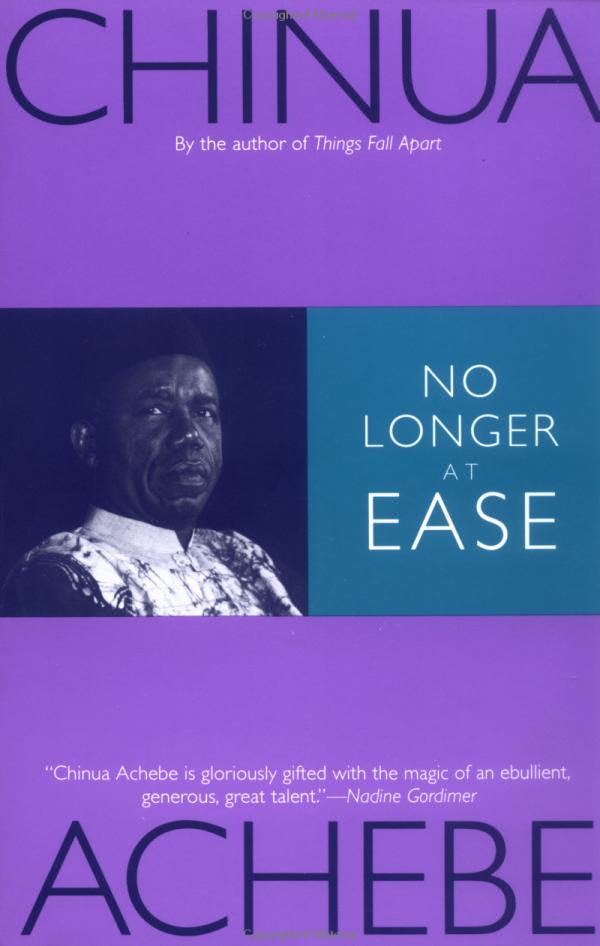

N is for No Longer at Ease by Chinua Achebe. This book follows on from Achebe’s Things Fall Apart being the third book about the family of Okonkwo in Nigeria from the time of European colonisation up to the 1950s. No Longer at Ease is set in the 1950s. Obi Okonkwo has been educated in England and returns to Lagos where he works as a civil servant. He soon falls victim to the corruption in the city. This is the story of pressure from a changing world that Obi doesn’t understand and his struggles to adjust. It’s a downward spiral and a sense of foreboding pervades the whole book.
O is for The Old Man and the Sea by Ernest Hemingway. This is the story of an old Cuban fisherman and his supreme ordeal: a relentless, agonizing battle with a giant marlin far out in the Gulf Stream. There’s this old man alone on the sea pondering about life and death, what he has achieved and also his failures. He is at the end of his strength and yet he endures. He has perseverance and determination and pride. Pride in his ability and in his way of life. The matter of sin occupies his mind and he thinks it was a sin to kill the fish, even though he did it to keep himself alive and feed many people. It’s a simple story on the surface, told in a few pages, yet full of depth.
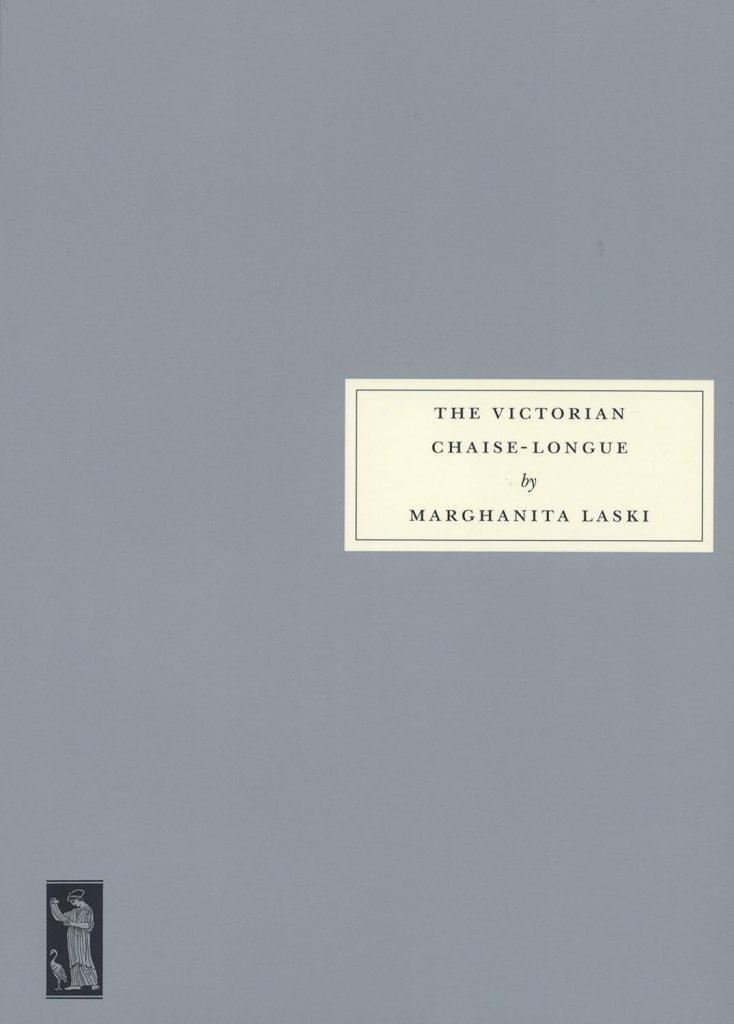
V is for The Victorian Chaise-Longue by Marghanita Laski, about Melanie, a young woman who falls asleep on a Victorian chaise-longue in 1953 and wakes up in a different body, that of Millie, in 1864. No one believes that she is anyone other than Millie, a very sick young woman. It is Melanie’s cunning that helps her in the nightmare situation in which she finds herself, trapped and powerless inside Millie’s body. The book is not really about the paranormal, or time-travel, but more a study of morals, of identity and the changing attitudes towards women, illness and death.
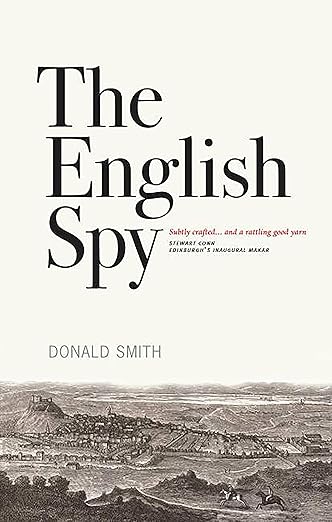
E is for The English Spy by Donald Smith, a novel about the build up to the political Union of England and Scotland in 1707. It tells the story of how Daniel Defoe, at that time still known as Daniel Foe, was sent to Scotland under secret instructions from the English government to persuade the Scots to give up their independence. It’s a fascinating story of intrigue and backstabbing amongst the members of the Scottish parliament!
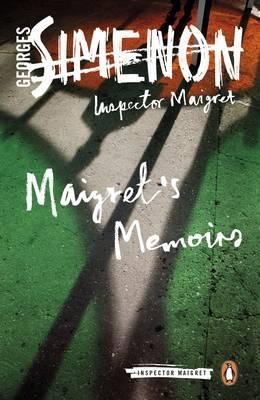
M is for Maigret’s Memoirs by Georges Simenon. This a memoir written by Simenon writing as his fictional character, Maigret. It begins in 1927 or 1928 when Maigret and Simenon, calling himself Georges Sim, first ‘met’. it’s a quick entertaining read as Maigret looks back to his first ‘meeting’ with Sim. He fills in some of the background of his early life and talks about his father and how he first met his wife, Louise. Simenon had written 34 Maigret novels before this one and Maigret took this opportunity to correct some of Simenon’s inaccuracies.
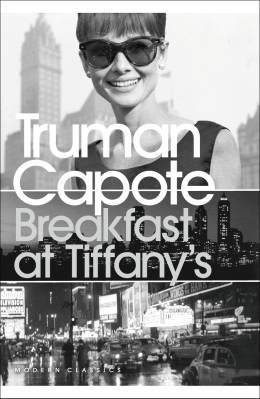
B is for Breakfast at Tiffany’s by Truman Capote, a quick read and very entertaining. The narrator is not named, although Holly Golightly calls him ‘Fred’ after her brother. He’s a writer and at the beginning of the book he is reminiscing about Holly with Joe Bell, who ran a bar around the corner on Lexington Avenue. They hadn’t seen or heard from Holly for over two years. She used to live in the apartment below Fred’s in a brownstone in the East Seventies in New York. Her past is almost as unknown as her present whereabouts. I loved Capote’s writing – it’s lively, richly descriptive with sparkling dialogue, and his ability to conjure up characters with depth in a few paragraphs is impressive, to say the least.
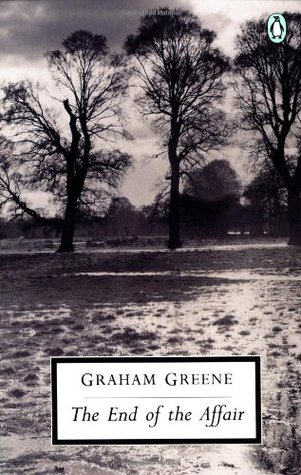
E is for The End of the Affair by Graham Greene. Maurice and Sarah had begun a love affair during the London Blitz and then Sarah had broken off the relationship. Maurice, driven by obsessive jealousy and grief sends a private detective to find out the truth. It’s a study of love and hate, of desire, of jealousy, of pain, of faithfulness, and of the interaction between God and people.
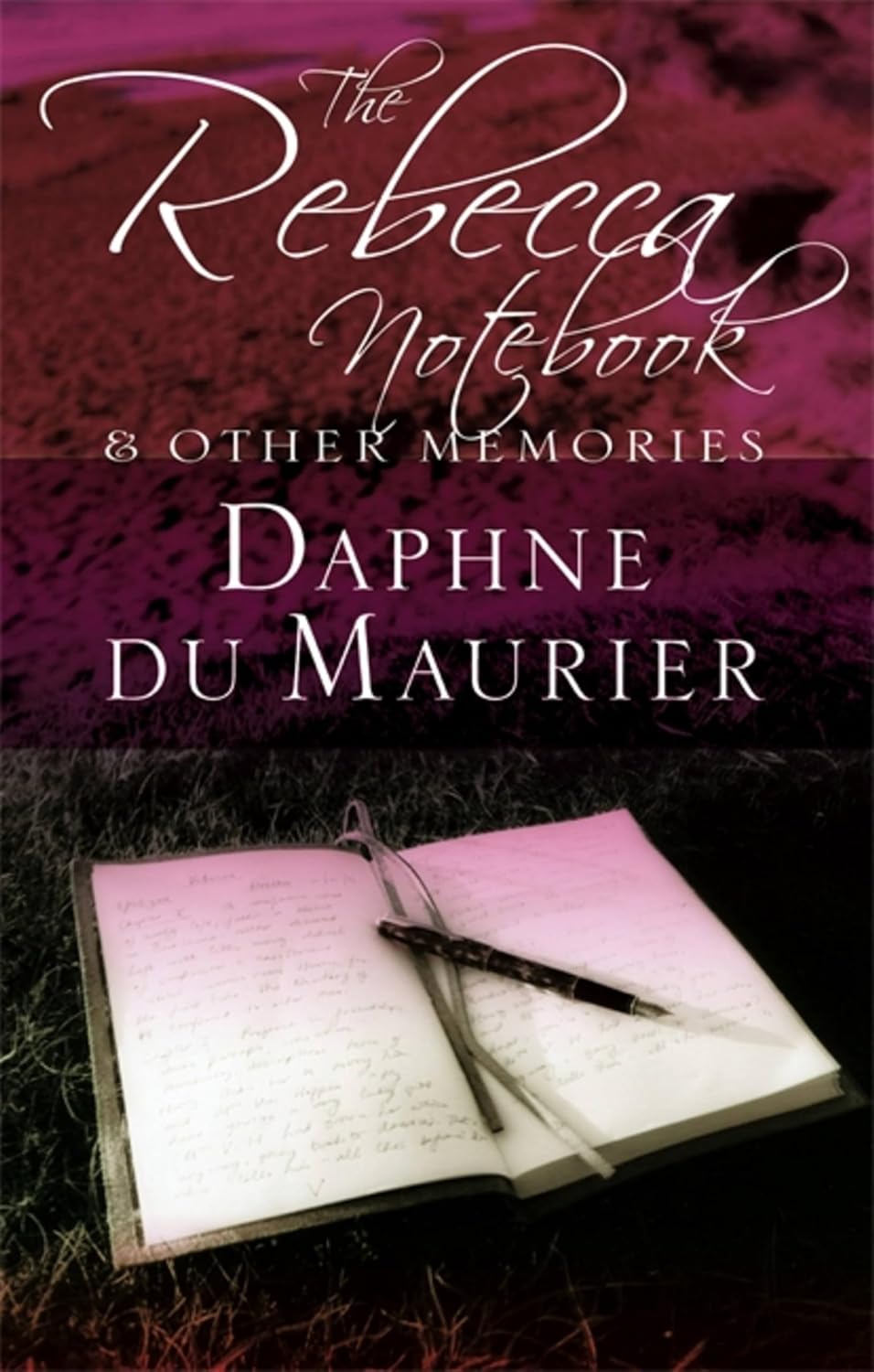
R is for The Rebecca Notebook and Other Memories by Daphne Du Maurier, gives a glimpse into the mind of Daphne Du Maurier. She began to write Rebecca in 1937 when she was thirty years old, living in Alexandria and feeling homesick for Cornwall. She jotted down chapter summaries in a notebook, setting the book in the mid 1920s ‘about a young wife and her slightly older husband, living in a beautiful house that had been in his family for generations.’ As she thought about it ideas sprang to her mind – a first wife – jealousy, something terrible would happen – a wreck at sea. I enjoyed the other short pieces in this book – her ‘memories’ of her family and her own life and beliefs.