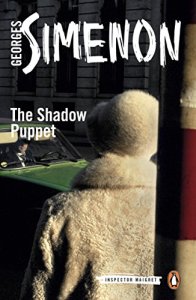
The Shadow Puppet by Georges Simenon

The Shadow Puppet

Penguin Classics|2 October 2014|160 pages|Paperback|4*

Georges Simenon wrote his 13th Maigret book, The Shadow Puppet in December 1931 at the villa Les Roches Grises at Antibes (Alpes-Maritimes) on the French Riviera. It was first published in 1932 under the title L’Ombre chinoise. 

It’s the second Maigret book I’ve read in the last two days and I think this is better than the other one I read, The Saint-Fiacre Affair. It is a more typical murder mystery – a man is shot dead in his office in the Place des Vosges in Paris and Maigret uncovers a tragedy involving desperate lives, unhappy people, addiction and an all-consuming greed. He gets to the truth through careful examination of the facts, questioning those involved and applying his knowledge and understanding of human nature.

One evening Raymond Couchet, the owner of a serum company in the Place des Vosges, was shot dead, seated at his desk, and the safe behind him was empty, the 3600 francs that should have been there have gone. The building contains Couchet’s medical laboratory  as well as residential apartments, set around a central courtyard. Called to the scene Maigret notices the shadowy figures in the lighted windows of the building and suspects that the murderer could be one of the residents of the apartments where Couchet’s first wife, Juliette Martin and her husband live. Then there is his son, Roger, a drug addict living in the Hôtel Pigalle, and in the next room to him, Couchet’s girlfriend, Nine Moinard, a dancer at the Moulin Bleu.

It is an entertaining mystery and Maigret finds himself getting to really like Couchet as the details of his life emerge – and equally disliking both his son and his bitter ex-wife. What I like about these Maigret books are that they are concise and tightly structured yet convey such convincing characters and depths of perception. In this particular book Maigret comes across feelings of enmity, greed, class distinction, hatred and paranoia in the course of his investigations.

Reading Challenges – Calendar of Crime (the setting is a place of employment), and Mount TBR 2019 (a book I’ve owned for 2 years)
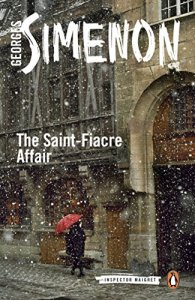

The Saint-Fiacre Affair by Georges Simenon

The Saint-Fiacre Affair

Penguin Classics|6 November 2014|160 pages|Paperback|3*

The Saint-Fiacre Affair by Georges Simenon was first published in January 1932, under the title Maigret Goes Home. My copy is one of the Penguin Classics publications in new translations.

Saint-Fiacre is where Maigret was born and grew up. His father had been the steward of the château there for thirty years. So when an anonymous note predicting a crime during All Souls’ Day mass at the church is handed in to the Moulins police office, Maigret went back there for the first time since his father had died. It is a melancholy visit for as well as a death to investigate, Maigret finds so much had changed and the atmosphere was oppressing him – he had never imagined that he would find the village in such a sorry state.

The predicted death took place in the church whilst Maigret was attending the the first Mass on All Soul’s Day – the old Countess of Saint-Fiacre died during the mass, of heart failure.  But Maigret soon discovers that the heart attack had been brought on when the Countess read a fake newspaper story of her son’s suicide that had been planted in her missal. Maigret suspects a number of people could have been responsible – her son, Maurice, her secretary/lover, Jean, the steward, Ernest and his son, Emile.

I enjoyed this book, although I found it rather disjointed and at times couldn’t follow very easily who was speaking, so it was a bit difficult keeping track of what was going on – maybe that was my problem, I’m not sure. But I thought the melancholy atmosphere and the descriptions of the chateau and Maigret himself were well done and it is packed with drama and tension. The denouement in which Maigret reveals the truth reminded me of the way Poirot rounds up all the people involved and explains who had done the deed and why, and why it was a crime that was not punishable by the law. 

 Reading ChallengesCalendar of Crime (winter scene on the cover), and Mount TBR 2019(a book I’ve owned for 2 years)

Virtual Mount TBR Final Checkpoint

e5ba7-virtual2bmount2btbr2bblog

The Virtual Mount TBR Challenge, a challenge for reading books you do not own, hosted by Bev @ My Reader’s Block, comes to an end on 31 December.  I read 12 library books, so completing the first level – Mount Rum Doodle.

  1. Great Britain’s Great War by Jeremy Paxman
  2. Destroying Angel by S G. MacLean
  3. The Tea Planter’s Wife by Dinah Jefferies
  4. I Found You by Lisa Jewell
  5. Breakfast at Tiffany’s by Truman Capote
  6. Printer’s Devil Court by Susan Hill
  7. The Seeker by S G Maclean
  8. The Stranger Diaries by Elly Griffiths
  9. Dolly by Susan Hill
  10. The Riviera Set by Mary S Lovell
  11. A Lovely Way to Burn by Louise Welsh
  12. Our Betty by Liz Smith
This is My Life According to Books, using titles from my list: 
  1. My Ex is/was [a] Destroying Angel
  2.  My best friend is The Tea Planter’s Wife
  3. Lately, at work [it’s been like] Great Britain’s Great War
  4. If I won the lottery, [I’d join] The Riviera Set
  5. My fashion sense [is] A Lovely Way to Burn
  6. My next ride [will be with] Our Betty
  7. The one I love is The Seeker
  8. If I ruled the world, everyone would [be invited to] Breakfast at Tiffany’s
  9. When I look out my window, I see Printer’s Devil Court
  10. The best things in life are [because] I Found You

My Books of the Decade

I like the idea other bloggers have had to list their ‘books of the decade’, so here is my list, with links to my posts (some are very short notes). These are books I’ve read during the decade and loved, but not necessarily books that were published during the decade. They are all books that kept me wondering what happens next, that kept me engrossed, that have remained in my memory ever since I read them and that in ideal world I’d like to re-read. And, of course, this is just the tip of the iceberg as there are many more that I could have chosen.

This list shows I like a lot of fiction, mainly historical and crime fiction with a few non-fiction books as well. Which books would you have on your list?


The Classics Club Spin Result

Classics Club
The spin number in The Classics Club Spin was announced yesterday. It’s number … 13

which for me is Oliver Twist by Charles Dickens. The rules of the Spin are that this is the book for me to read by January 31, 2020.

Charles Dickens oliver twist etc

I’m delighted with this as I’ve been meaning to read it for years and never got round to it.

The story of the orphan Oliver, who runs away from the workhouse to be taken in by a den of thieves, shocked readers with its depiction of a dark criminal underworld peopled by vivid and memorable characters – the arch-villain Fagin, the artful Dodger, the menacing Bill Sikes and the prostitute Nancy. Combining elements of Gothic romance, the Newgate novel and popular melodrama, Oliver Twist created an entirely new kind of fiction, scathing in its indictment of a cruel society and pervaded by an unforgettable sense of threat and mystery.

Did you take part in the Classics Spin? What will you be reading?

This is my last post until after Christmas, so I’m wishing you all a very …

Christmas bells

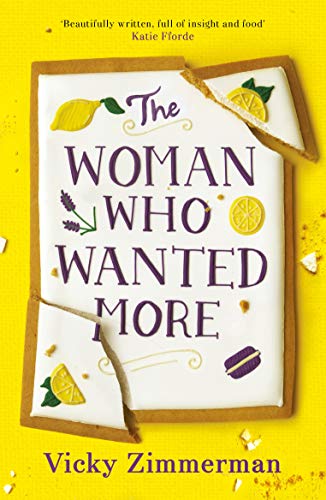
The Woman Who Wanted More by Vicky Zimmerman

Woman who wanted more

Zaffre|30 May 2019|448 pages|e-book via NetGalley|Review copy|3*

Publishers’ blurb:

Two lonely women.

An unlikely friendship.

And one big life lesson: never be ashamed to ask for more . . .

After a major life upheaval on the eve of her 40th birthday, a reluctant Kate Parker finds herself volunteering at Lauderdale House for Exceptional Ladies. There she meets 97-year-old Cecily Finn. Cecily’s tongue is as sharp as her mind but she has lost her spark, simply resigning herself to the Imminent End.

Having no patience with Kate’s plight, Cecily prescribes her a self-help book with a difference – it’s a 1957 cookery manual, featuring menus for anything life can throw at ‘the easily dismayed’. Will Kate find a menu to help her recover from her broken heart? If Kate moves forward, might Cecily too?

The cookbook holds the secrets of Cecily’s own remarkable past, and the story of the love of her life. It will certainly teach Kate a thing or two.

So begins an unlikely friendship between two lonely and stubborn souls – one at the end of her life, one stuck in the middle – who come to show each other that food is for feasting, life is for living and the way to a man’s heart is . . . irrelevant!

My thoughts:

The Woman Who Wanted More by Vicky Zimmerman begins very slowly and I soon felt this wasn’t a book for me. For a start it’s romantic fiction written in the present tense. Then there is Kate, who is nearly 40, single but preparing to move in with her boyfriend, Nick. But on holiday he tells her that he doesn’t want the commitment and she ends up back home living with her mother. Despite her friends’ warnings that he is not worth the bother, she still gives him chance after chance of starting again. And she goes on and on and on about him.

I breathed a sigh of relief when Cecily meets Kate! Cecily is 97 living in Lauderdale House for Exceptional Ladies, a grumpy old lady with intense brown eyes and a sharp tongue. When she hears Kate’s story about her relationship with Nick she tells her in no uncertain terms to give him short shrift and to find a man who isn’t too emotionally stunted to love her.

I was thinking of not finishing this book until Cecily came on the scene. After getting off to a bad start, with several cross words, Kate and Cecily get to know each other better and Cecily’s cookery book gives her some helpful advice mixed in with recipes. And when I got to the end of the book and read the Author’s Note I understood why Cecily’s part of the story appeals to me more – the character was inspired by a real person, Vicky Zimmerman’s grandmother. The book is a mix of fact and fiction – and for me Cecily’s story had the ring of truth. I’m glad I read on to the end.

My thanks to the publishers for my review copy via NetGalley.