Stacking the Shelves: 26 August 2025

Stacking the Shelves is hosted by Marlene at Reading Reality and the details are on her blog, as well as a huge amount of book reviews. Why not visit her blog if you haven’t already found it? The gorgeous graphic is also used courtesy of the site.

The idea is to share the books you are adding to your shelves, may they be physical or virtual. This means you can include books you buy in physical stores or online, books you borrow from friends or the library, review books, gifts and of course e-books!

I’ve been away on holiday near Gatehouse of Fleet in Dumfries and Galloway, Scotland. We had a brilliant time in a lodge overlooking Fleet Bay, part of the Solway Firth.

I bought these three paperbacks from a charity shop in Gatehouse of Fleet:

Birnam Wood by Eleanor Catton – Like her previous novel The Luminaries, which I loved, this book is set in a fictionalised New Zealand, primarily in and around a national park in the South Canterbury region. The title is taken from a line in Macbeth. It follows members of a guerilla gardening collective, Birnam Wood as, with the help of a charismatic tech billionaire, they undertake a new project on abandoned farmland.

Nutshell by Ian McEwan, a version of Hamlet. Trudy has betrayed her husband, John. She’s still in the marital home – a dilapidated, priceless London townhouse – but not with John. Instead, she’s with his brother, the profoundly banal Claude, and the two of them have a plan. But there is a witness to their plot: the inquisitive, nine-month-old resident of Trudy’s womb. I’ve enjoyed some of McEwan’s books, but this one looks rather different and, having read a few pages, I’m not sure about it.

A Bit on the Side by William Trevor, a collection of twelve short stories. I don’t think I’ve read any of Trevor’s books, but I thought this one looks interesting, with stories about adultery, secret passions and domestic infidelities. ‘A treat … each meditate[s] on the subject of love – adulterous, unspoken, clandestine, sometimes cruel. Whether set in rural Ireland or London, their pages whisper of relished secrets and dreams foolishly clung to’ Mail on Sunday.

These are e-books I’ve either bought for 99p or acquired for free this month:

The Testaments – Margaret Atwood’s sequel picks up the story more than fifteen years after Offred stepped into the unknown, with the explosive testaments of three female narrators from Gilead. The Republic of Gilead is beginning to rot from within. At this crucial moment, two girls with radically different experiences of the regime come face to face with the legendary, ruthless Aunt Lydia. But how far will each go for what she believes?

Step by Step: The Life In My Journeys by Simon Reeve. I love his TV travel programmes, so this was a 99p must for me. It’s his autobiography describing how he has journeyed across epic landscapes, dodged bullets on frontlines, walked through minefields and been detained for spying by the KGB. His travels have taken him across jungles, deserts, mountains and oceans, and to some of the most beautiful, dangerous and remote regions of the world. He gives the full story behind some of his favourite expeditions, and traces his own inspiring personal journey back to leaving school without qualifications, teetering on a bridge, and then overcoming his challenges by climbing to a ‘Lost Valley’ and changing his life … step by step.

The First Witch of Boston by Andrea Catalano, her debut novel. This was free from Amazon Prime this month. It is based on the true story of Margaret Jones, the first woman to be found guilty of witchcraft in Massachusetts Bay Colony, 1646. When Thomas and Margaret Jones arrive from England to build a life in the New World Margaret’s skill with healing herbs rouses suspicion of black magic. Personal tragedies, religious hysteria, and wariness of the unknown turn most against her, and even the devotion Margaret and her husband share is at risk.

I enjoy historical fiction and Mist Over Pendle by Robert Neill, (American title, The Elegant Witch) is one of my favourite novels. It tells the tale of witchcraft set in a wild inaccessible corner of Lancashire leading up to the trials of the famous Pendle witches in 1612. So, I thought it would be interesting to compare the two books.

CC Spin #41 Book Review: Brighton Rock by Graham Greene

The latest Classic Club Spin challenged you to read book 11 on your CC Spin #41 list by 24th August. That was Brighton Rock by Graham Greene for me.

Vintage Digital| 2 October 2010| 258 pages| e-book| 4*

Description on Amazon:

A gang war is raging through the dark underworld of Brighton. Seventeen-year-old Pinkie, malign and ruthless, has killed a man. Believing he can escape retribution, he is unprepared for the courageous, life-embracing Ida Arnold. Greene’s gripping thriller exposes a world of loneliness and fear, of life lived on the ‘dangerous edge of things.

In this gripping, terrifying, and unputdownable read, discover Greene’s iconic tale of the razor-wielding Pinkie.

I’ve enjoyed some of Greene’s books, so I’ve been meaning to get round to reading Brighton Rock for some years and I was pleased it came up as my Spin book. It was his ninth book, first published in 1938, and one of his Catholic Novels (the others being The End of the AffairThe Power and the Glory and The Heart of the Matter). In his Introduction J M Coetzee writes that it was his first serious novel, serious in the sense of working with serious ideas. Brighton in the 1930s had two faces, one the attractive seaside resort, and the other a nest of criminal activity in the desolate industrial suburbs.

The opening line sets the scene for a murder – “Hale knew, before he had been in Brighton three hours, that they meant to murder him.’ Later he is found dead, apparently from a heart attack. Ida Arnold, who had met Fred as he tried to evade the gang, had left him alone for a few minutes and when she returned he was nowhere to be seen. She is determined to find out what really had happened to him as the official account of his death doesn’t match up with what she knew. So when the police ignore what she says she carries out her own investigation. She believes in Right and Wrong – to Ida death was the end of everything, she didn’t believe in heaven or hell, and she wants justice for Fred.

To say that Pinkie Brown, the teenage gangleader, is a complex character is an understatement. He is desperately trying to cover up his involvement with Fred. Rose is a young innocent girl who could reveal his guilt although she doesn’t realise it. Pinkie believes that if he marries her she wouldn’t be able to give evidence against him. Both of them are Roman Catholics. Rose believes in Good and Evil and salvation, whereas Pinkie believes in Hell fire and damnation, but is unsure about the existence of Heaven. He becomes increasingly paranoiac, more desperate and violent.

This novel is bleak, full of violence, menace and suspense, not a book I could enjoy. I struggled at first to understand what was going on and who all the characters were. It’s an odd mixture really – a crime is committed and the amount of violence is shocking, but it is also a psychological character study and an in-depth consideration of the questions of life and death. It’s a tough book to read and to review without giving away any spoilers, which is why I haven’t gone into much detail about the plot. Whilst it is not my favourite book by Graham Greene, it is well written with memorable characters and brilliantly described which brings it all vividly and terrifyingly to life.

Top Ten Tuesday: Books with a High Page Count

Top Ten Tuesday is a weekly meme created by The Broke and the Bookish and now hosted by Jana at That Artsy Reader Girl. For the rules see her blog

The topic today is Books with a High Page Count (Share those doorstop books!) Today I’m sharing ten of the longest books I’ve ever read.

  1. Les Misérables by Victor Hugo 1,463 pages
  2. The Count of Monte Cristo by Alexandre Dumas 1,276 pages
  3. David Copperfield by Charles Dickens 1,095 pages
  4. The Pillars of the Earth by Ken Follett 1,076 pages.
  5. Little Dorrit by Charles Dickens 1,008 pages
  6. Wolf Hall by Hilary Mantel 965 pages
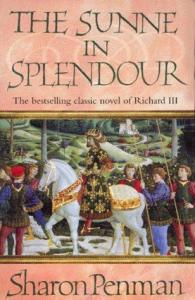
  7. The Sunne in Splendour by Sharon Penman 886 pages
  8. Tombland by C J Sansom 866 pages
  9. The Luminaries by Eleanor Catton 834 pages
  10. Our Mutual Friend by Charles Dickens 777 pages

The Testaments by Margaret Atwood: Book Beginnings on Friday & The Friday 56

Every Friday Book Beginnings on Friday is hosted by Gillion at Rose City Reader where you can share the first sentence (or so) of the book you are reading. You can also share from a book you want to highlight just because it caught your fancy.

The Testaments by Margaret Atwood is one of the time limited deals on Amazon at the moment and because I read The Handmaid’s Tale many years ago before I’d even heard of book blogs, I jumped at the chance to buy it.

The book begins:

Only dead people are allowed to have statues, but I have been given one while still alive. Already I am petrified.

Also every Friday there is The Friday 56, hosted by Freda at Freda’s Voice, but she is taking a break and Anne at My Head is Full of Books has taken on hosting duties in her absence. You grab a book and turn to page 56 (or 56% of an eBook), find one or more interesting sentences (no spoilers), and post them.

Page 56:

I don’t remember that school day very much, because why would I? It was normal. Normal is like looking out a car window. Things pass by, this and that and this and that, without much significance.You register such hours; they’re habitual. like brushing your teeth.

Description from Goodreads:

When the van door slammed on Offred’s future at the end of The Handmaid’s Tale, readers had no way of telling what lay ahead for her–freedom, prison or death.

With The Testaments, the wait is over.

Margaret Atwood’s sequel picks up the story more than fifteen years after Offred stepped into the unknown, with the explosive testaments of three female narrators from Gilead.

In this brilliant sequel to The Handmaid’s Tale, acclaimed author Margaret Atwood answers the questions that have tantalized readers for decades.

I’m probably way behind many other bloggers who have read this book! If you have read it what do you think? Did you like it?

Short Story September 2025

Lisa at ANZ LitLovers will be hosting a new reading event – Short Story September, running from September 1 to 30. On September 1st Lisa will set up a post where all contributions can be posted so that they form a valuable resource that is easy to find.

To participate, please keep it simple.  We all know that it’s hard to review short story collections, so all you are asked to do is to read a collection and then choose just one story from that collection to review.  To sidestep all the yada-yada about how many words a short story can be, just choose a story that can be read in under an hour.

Contributions should include the name of the short story and its author, and the title of the collection that you found it in, and its editor is there is one.  Please #NameTheTranslator for all translations.  It’s fine to mention the titles of other stories in the collection that you also enjoyed, of course.

Aim for a review that’s less than 800 words, but this is not a hard-and-fast rule because some stories need less and others need more.

I’ve four collections of Agatha Christie’s short stories I’ve been meaning to read for ages. So, I got them down from the bookshelves:

Poirot’s Early Cases – Captain Hastings recounts 18 of Poirot’s early cases from the days before he was famous from theft and robbery to kidnapping and murder – were all guaranteed to test Poirot’s soon-to-be-famous ‘little grey cells’ to their absolute limit.

The Golden Ball and Other Stories – bizarre romantic entanglements, supernatural visitations and classic murders.

Miss Marple and Mystery: the Complete Short Stories, an omnibus of 55 short stories, presented in chronological order 1923 -1958.

The Complete Parker Pyne, Private Eye – this edition brings together all 14 stories featuring the rather fat and unconventional Mr Parker Pyne.

Top Five Tuesday: Books with Colours in the Title

Top 5 Tuesday was created by Shanah at Bionic Book Worm, and it is now being hosted by Meeghan at Meeghan Reads. You can see the Top 5 Tuesday topics for the whole of 2025 here

Today the topic is Books with Colours in the Title.

Blonde by Joyce Carol Oates, a work of fiction, not a biography of Marilyn Monroe. I had to keep reminding myself of that as I was reading, because it was so easy to believe in the characters. it’s a tragic story, intense and shocking in parts. It begins with a Prologue – 3 August 1962 with Death hurtling along towards 12305 Fifth Helena Drive, Brentwood, California. It then follows Norma Jeane Baker’s life in chronological sections from The Child 1932 – 1938 to The Afterlife 1959 – 1962. It switches from one narrator to the next, and from third person to first person perspective throughout. It’s brutal, tender and both lyrical and fragmented

Blue Heaven by C J Box. The action takes place over four days in North Idaho one spring. It’s a story about two children, Annie and William who decide to go fishing without telling their mother, Monica, and witness a murder in the woods. One of the killers sees them and they run for their lives. It’s written in a style that appeals to me – straightforward storytelling, with good descriptions of locality and characters, secondly characters that are both likeable and downright nasty, but not caricatures, and finally the ending was what I hoped, and also dreaded it would be.

 The Crimson Rooms by Katharine McMahon, set in London in 1924, with Britain still coming to terms with the aftermath of the First World War. Evelyn Gifford, one of the few pioneer female lawyers, takes on the case of Leah Marchant, who wants to get back her children who had been taken into care. She was accused of trying to kidnap her own baby. It’s early days for women to be accepted as lawyers and Evelyn struggles to defend Leah who distrusts her and wants Daniel Breen, Evelyn’s boss to defend her. It clearly shows the prejudice these women had to overcome just to qualify as lawyers, never mind the difficulties of persuading law firms to employ them and clients to accept them.

Gray Mountain by John Grisham, a book that puts the big American coal companies under the microscope, companies that are  ruining the environment by strip-mining in the Appalachian mountains. I was amazed to read the details – clear-felling the forests, scalping the earth and then blasting away the mountain tops to get at the coal. All the trees, topsoil and rocks are then dumped into the valleys, wiping out the vegetation, wildlife and streams. Gray Mountain is one of the mountains destroyed in this way.

The Man in the Brown Suit by Agatha Christie. The novel is a mix of murder mystery and international crime organised by an arch-villain known as ‘the Colonel’, involving violence (but not graphic) and suspense. Anne Beddingfield saw a man fall to his death on the live rails at Hyde Park tube station. He had a terrified look on his face and turning round Anne sees a man in a brown suit, who quickly becomes The Man in the Brown Suit both to her and the newspapers. A second death follows, this time a young woman, found strangled at Mill House, the home of Sir Eustace Pedler, MP. She was thought to be a foreigner. Anne decides to investigate and the trail takes her on board the Kilmorden Castle sailing to Cape Town. As usual there are a number of suspects and Anne has to work out who she can trust and who to believe