Dirty Little Secrets by Jo Spain

Quercus Books|7 February 2019 |416 pages|e-book |Review copy|4.5*

I first came across Jo Spain’s books last year when I read The Confession, a standalone novel and then The Darkest Place, her 4th Inspector Tom Reynolds Mystery book, both very good books. So I was keen to read her latest book, a psychological thriller, Dirty Little Secrets, another standalone book. I really enjoyed this very readable page-turner, keen to discover all the secrets.

It’s set in Withered Vale, a small, gated community of just seven houses, outside the small village of Marwood in Wicklow in Ireland. On the surface it is a perfect place where the wealthy live their  privileged lives and keep themselves to themselves – until a cloud of bluebottles stream out of the chimney of number 4 and Olive Collins’ dead and disintegrating body is discovered inside. She had been dead for three months and none of the neighbours had bothered to find out why she hadn’t been seen all that time. But someone must have known what had happened to her – the question being who?

When DI Frank Brazil, near to his retirement, and his partner young Emma Child arrive it’s not clear whether Olive’s death was accidental death or suicide. But they quickly establish that the boiler had been pumping out carbon monoxide and the vents and the letter box had been taped up.  It was then obvious that her death was either suicide or murder. There is plenty of DNA in the house, as it turns out that all the neighbours had visited Olive. She had tried to interfere in each of their lives and each one of them had something to hide, from past crimes, past relationships, addictions, and blackmail. They’re all suspects as each one had a motive for killing Olive.

I liked the way Jo Spain has structured her book – each character is introduced and gradually more and more facts about their lives and personalities are revealed. And Olive’s dead voice is interspersed among these people, revealing her personality, thoughts and relationships with the others, and showing just went on behind all the closed doors. I was fascinated and went from one person to the next wondering who was guilty, changing my mind as the book progressed. The characters are convincing and so it was easy to work out who was who and how they all interacted. The ending surprised me as although I had suspected what had taken place I hadn’t foreseen the whole picture.

I was hooked from the beginning to the end. Withered Vale went from being a place where the neighbours lived their lives in isolation to a much more united community as together they faced the enormity of what had happened.

My thanks to the publishers, Quercus, for my review copy via NetGalley.

Note: this book is one of my TBRs, so qualifying for Bev’s Mount TBR challenge and as it will be published in February it also qualifies for Bev’s Calendar of Crime challenge in the category of a February publication.
New-To-Me Books

These are some books that I’ve recently added to my shelves, all Christmas presents:

bks xmas 2018

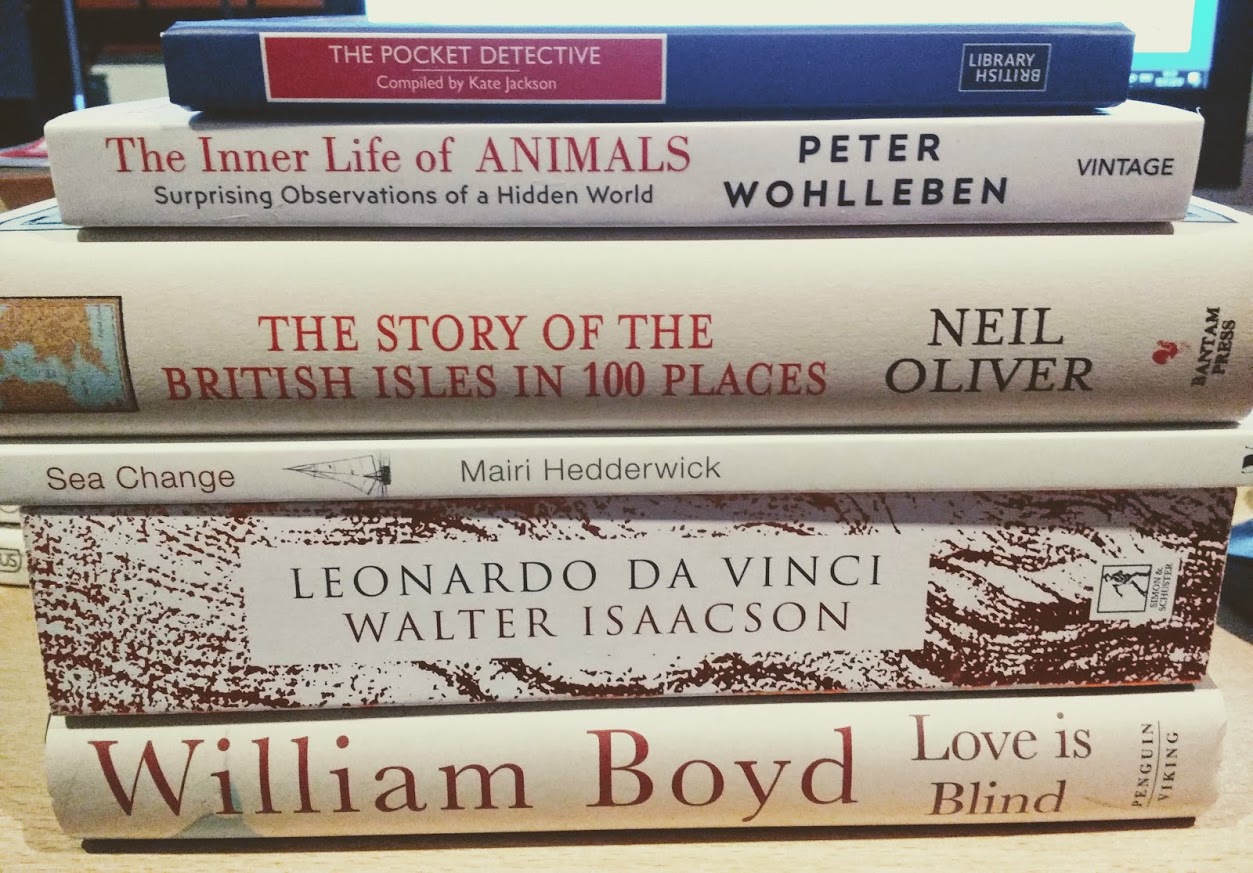
From top to bottom they are:

The Pocket Detective: (British Library Crime Classics) compiled by Kate Jackson –  including word searches, anagrams, snapshot covers, and crosswords based on the series of British Library Crime Classics and Golden Age Detection authors. I love word puzzles of all sorts, so this is just right for me.

The Inner Life of Animals: Surprising Observations of a Hidden World by Peter Wohllenben. This book looks fascinating as it is about what goes on aside animals’ heads with insights into their behaviour, emotions and instincts. In his Introduction Wohllenben says that the more he closely paid attention the more he noticed ‘our pets and their woodland relatives displaying what are supposed to be exclusively human emotions.’

The Story of the British Isles in 100 Places by Neil Oliver – described on the book jacket inside cover as ‘a broad sweep of British history and landscape’. I’ve enjoyed watching Neil Oliver’s TV documentaries and his book looks just as informative, encompassing our earliest history, via Romans and Vikings, civil war, industrial revolution and two world wars, looking at the places that he considers to be the most characteristic of our history, with many colour photographs.

Sea Change: The Summer Voyage from East to West Scotland by Mairi Hedderwick. This is a beautiful book with watercolours and pen and ink illustrations. It describes Marie Hedderwick’s journey in an antiquated 26-foot long yacht through the Caledonian Canal to the fjords of the west: Lochs Linnhe, Etive, Ailort, Moidart, Nevis and Leven.

Leonardo Da Vinci: the Biography by Walter Isaacson – A biography that brings Leonardo Da Vinci to life, a man of science and engineering, just as much as an artist and a man of endless curiosity about a vast range of subjects. I think this book could take me most of the year to read.

And finally a novel:

Love is Blind by William Boyd, set at the end of the nineteenth century about a Scottish musician, who leaves Edinburgh and his tyrannical father when he is offered a job in Paris. ‘A tale of dizzying passion and brutal revenge; of artistic endeavour and the illusions it creates; of all the possibilities that life can offer, and how cruelly they can be snatched away’.

Do any of any these books tempt you too?

The Good Son by You-Jeong Jeong

Blurb When Yu-jin wakes up covered in blood, and finds the body of his mother downstairs, he decides to hide the evidence and pursue the killer himself.  Then young women start disappearing in his South Korean town. Who is he hunting? And why does the answer take him back to his brother and father who lost their lives many years ago. The Good Son by You-jeong Jeong, translated by Chi-Young Kim, is the first of her books to be translated into English. You-jeong Jeong is a South Korean writer of psychological crime and thriller fiction. She is the author of four novels including Seven Years of Darkness, which was named one of the top ten crime novels of 2015 by the German newspaper Die Zeit. My thoughts: I thought that maybe I’d made a mistake in requesting The Good Son from NetGalley when I started reading it. And at 23% I was ready to abandon it – I was tired of reading about Yu-jin trying to get rid of all the blood in the apartment and on himself after he discovered his mother lying in a pool of blood – it was so repetitive and slow going. So I did something that I very rarely do and went to the end of the book to see if it was like that all the way through – and as it looked as though it wasn’t, I carried on reading. This is a dark book, but although there is a lot of blood around at the start it isn’t actually a gory, blood and guts story. It’s a psychological did-he-do-it murder mystery. It’s tense and puzzling as Yu-jin tries to uncover what happened, at first unable to remember the events of the night before the murder. It’s written totally from Yu-jin’s perspective, so for most of the book it was as though I was reading his mind – and it’s a very strange, mixed up mind. He has difficulty with honesty and admits that he tells more lies than other people, which means that he can tell any kind of story in a believable way, and for a large part of this book I was willing to believe him, or to think the murder was all in his mind and that his mother wasn’t dead. For years he had been taking pills which his mother told him were to control his epilepsy but he didn’t like the side effects so he had stopped taking them without telling his mother. Now he’s worried about having seizures and the blank spots in his memory are confusing him.  As more of his past life is revealed in flashbacks I began to revise my opinion of him and wondered if he could have killed his mother. When he was nine his father and older brother had died in tragic circumstances that are only revealed later on in the book and even then there are different versions of what actually happened. It’s an intricate plot and just as soon as I thought I could see where it was going I realised that I’d been hoodwinked. The book is set in South Korea, mainly in Incheon, a city south of Seoul but the main focus is on this dysfunctional family and their relationships. I’m glad I didn’t give up on the book at 23% as after that point the story picked up pace and it held my interest to the end. But it is certainly a dark and unsettling character study of a psychopath. My thanks to the publishers, Little, Brown Book Group, for my review copy via NetGalley.
  • Format: Kindle Edition
  • File Size: 1126 KB
  • Print Length: 322 pages
  • Publisher: Little, Brown Book Group (3 May 2018)
  • Source: Review copy
  • My Rating: 3*

Top Ten Tuesday: My Winter TBR

Top Ten Tuesday new

Top Ten Tuesday is a weekly meme created by The Broke and the Bookish and now hosted by Jana at That Artsy Reader Girl.

The rules are simple:

  • Each Tuesday, Jana assigns a new topic. Create your own Top Ten list that fits that topic – putting your unique spin on it if you want.
  • Everyone is welcome to join but please link back to The Artsy Reader Girl in your own Top Ten Tuesday post.
  • Add your name to the Linky widget on that day’s post so that everyone can check out other bloggers’ lists.
  • Or if you don’t have a blog, just post your answers as a comment.

This week’s topic is Winter 2018 TBR. I have plenty to choose from and for now (because I could change my mind!) here is my Top Ten List (in no particular order):

The first five are a mix of books on my TBR shelves and library books:

  1. Greenmantle by John Buchan – my Classics Club spin choice
  2. Bitter Lemons of Cyprus by Lawrence Durrell – my book group choice
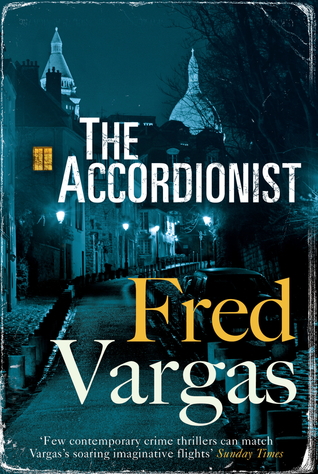
  3. The Accordionist by Fred Vargas – a library book
  4. The Old Man and the Sea by Ernest Hemingway – a library book
  5. Wild Fire by Ann Cleeves – from my TBR shelves

GreenmantleBitter Lemons of CyprusThe Accordionist (Three Evangelists 3)The Old Man and the SeaWild Fire (Shetland Island, #8)

The second five are a mix of NetGalley books and books from my TBR shelves:

  1. The Lost Man by Jane Harper – to be published in February
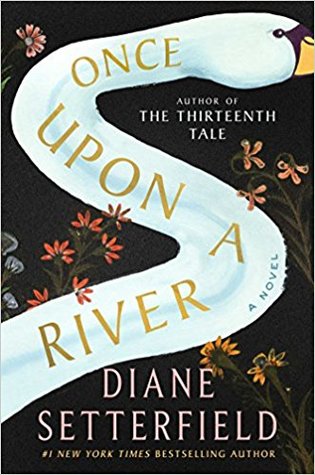
  2. Once Upon a River by Diane Setterfield – to be published in January
  3. The Glass Woman by Caroline Lea – to be published in January
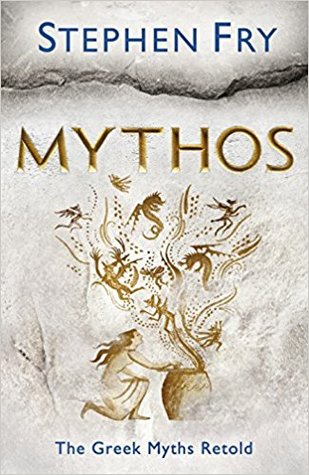
  4. Mythos: the Greek Myths Retold by Stephen Fry – from my TBR shelves
  5. The Brontës by Juliet Barker – from my TBR shelves

The Lost ManOnce Upon a RiverThe Glass WomanMythos: The Greek Myths RetoldThe Brontës

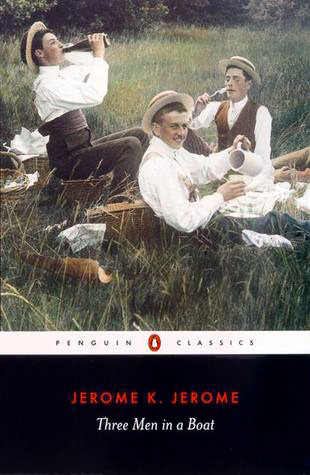
Three Men in a Boat by Jerome K Jerome

Three Men in a Boat

4*

I’ve wondered about reading Three Men in a Boat (to say nothing of the dog) by Jerome K Jerome for many years  – I first heard about it when I was at school when one of my friends read it and said she thought it was very good. And since I’ve been blogging I’ve seen that people love this book and think it’s very funny. So, I decided that it was about time that I read it.

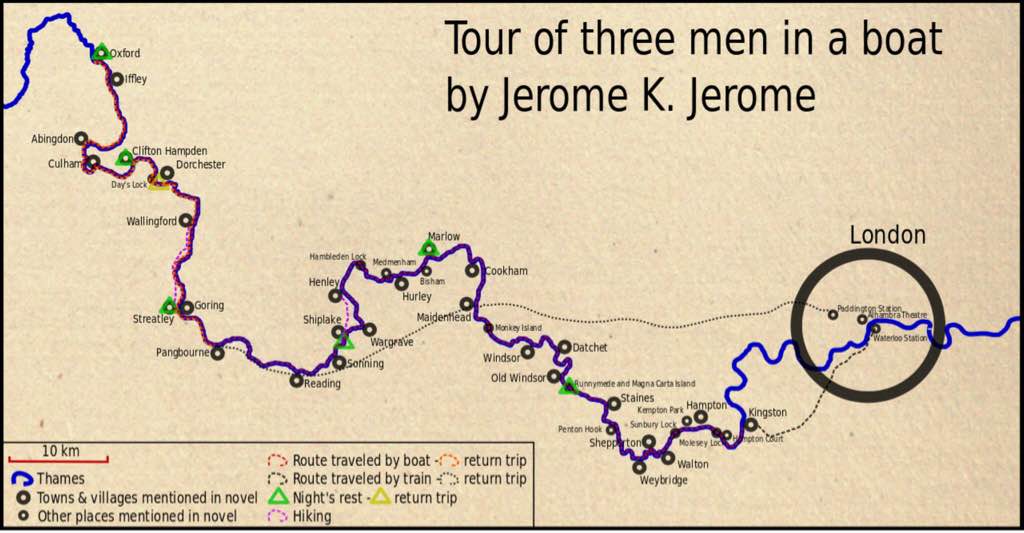
three men map

When Jerome began writing this book he intended it to be a serious travel book about the Thames, its scenery and history, but, as he wrote it turned into a funny book.  The Thames remains at the centre of the book but it is also full of anecdotes about the events that happened to him and his friends whilst out on the river, interspersed with passages about the scenery and history. The main characters were real people, Jerome’s friends – ‘George‘ is George Wingrave who was the best man at his wedding, and ‘Harris‘ is Carl Hentschel, a photographer. Only the dog ‘Montmorency‘ is fictional.

This book was first published in 1889, which means that the descriptions of the places they passed through or stayed the night, are like a snapshot in time of what life was like in the Thames Valley, showing the how use of the river had changed with the coming of the railways for transporting goods. Cheap excursion tickets to stations along the river also meant that people could reach places like Henley, Hampton Court and Windsor as the river became the place for picnics, and regattas and hiring skiffs and punts. As time went on the river became more and more popular for fishing, boating and photography as well as a fashionable venue for young ladies to parade their elegant dresses.

It’s a story of a journey, comparing their trip to Stanley’s expedition to Africa searching for Dr Livingstone. It’s satirical, ironic and farcical.The book is composed of amusing mishaps and situations as the three friends decide what to take with them and what not to take, come across the problems of packing and unpacking the boat, where to stop the night, what food to take, and showing how they entertained themselves, for example singing comic songs, accompanied by George’s banjo, and ending in sentiment as they break down in tears singing ‘Two Lovely Black Eyes’. George’s tale of getting lost in the Hampton Court Maze made me chuckle as time after time whichever route he took he couldn’t find the way out.

I liked the way Jerome breaks up his account of their journey with recording historical events, such as his imaginative description of the signing of Magna Carta when they reach Runnymede and his account of Henry VIII’s wooing of Anne Boleyn at the priory in the grounds of Ankerwyke House, describing him as ‘that foolish boy‘ and imagining that people would have come upon them ‘when they were mooning round Windsor and Wraysbury, and have exclaimed, “Oh! you here!” and Henry would have blushed’, and Anne would have said ‘isn’t it funny? I’ve just met Mr Henry VIII in the lane, and he’s going the same way I am.’

It’s  a gentle witty book that kept me entertained all the way through – and I can’t say that for every book I read. It’s been on my Classics Club list from the first time I complied my list in 2013 and it’s also a book I’ve owned for over 11 years.

Italian Shoes by Henning Mankell

Italian Shoes

I decided to read Italian Shoes by Henning Mankell, translated by Laurie Thompson, after reading After the Fire his second book about Frederick Welin.  The events in Italian Shoes take place eight years earlier and explains in more detail Welin’s background and why he lives in self-imposed exile on an island in the Swedish archipelago. The two books can be read as standalones, but I think it would be better to read them in order to make a complete whole. These books are not Kurt Wallender mysteries but are character studies of a man living on his own, trying to come to terms with his past and reflecting on ageing and death. He cuts a hole in the ice every morning and lowers himself into the freezing water to remind himself that he is alive.

If this description makes Welin sound cold that is because he is a loner and finds it difficult to open himself up to others. He is sixty six, lives alone, apart from his cat and his dog, both of them old and dying, and he has no real friends. There is Jansson, a hypochondriac, the  postman who visits daily, but Welin doesn’t like him. He has come to a point in his life when he can’t decide what to do but suspects that his life would continue in the same way and nothing would change.

How wrong he was! That January after a snowstorm he saw a figure standing out on the ice motionless leaning on a Zimmer frame three nautical miles from the mainland. It was Harriet, the woman he had loved and abandoned nearly 40 years earlier, leaving her without any explanation. From that point onwards his life changes dramatically, for Harriet is terminally ill and wants him to take her to a small lake in northern Sweden, hidden deep in the forest; a place Welin’s father took him to once as a boy. But there are more revelations and he is forced to face the mistakes he made in the past.

The book is written in four parts, or Movements – Ice, the winter in which Welin is frozen both in his emotions and feelings, The Forest, the spring as his life and feelings begin to emerge, The Sea as his life begins to change and finally, Winter Solstice as the days start to lengthen and Welin’s new life actually begins.

I was puzzled at first by two things – the title, Italian Shoes, which seemed to be at odds with the book’s description about a man living on his own in the Swedish archipelago. the first clue comes with the quotation at the beginning of the book from Chuang Chou:

When the shoe fits, you don’t think about the feet.

Feet and shoes are mention several times throughout the book – Welin wears cut-off wellington boots most of the time – Harriet used to work in a shoe shop – and an Italian shoemaker who lives in the forest promises to make him a pair of shoes.

The second thing that made me wonder is the presence of a gigantic anthill in Welin’s living room. I do not like ants at all and the thought of an anthill next to a table in the middle of the room, almost as high as the table, swallowing up the cloth hanging down over the edge is horrific. It has been there for eleven years, containing maybe a million or more ants and Welin does not want to part with it – until the end of the book. I decided it symbolised his  inertia during the time it had been growing and he watched the ants at work. Its removal signified the change that takes place in his life.

Although this is a dark and melancholy book, as it progresses Welin begins to come to life again and to interact with others, taking responsibility for his past actions. It’s a beautifully written book, with vivid descriptions of the settings and the weather and I found it absolutely fascinating.

This book slots into the only reading challenge I’m doing this year – What’s in a Name 2018. It fits into the category of a book with a nationality in the title. It’s also one of my TBRs.

  • Format: Kindle Edition
  • File Size: 783 KB
  • Print Length: 370 pages
  • Page Numbers Source ISBN: 0099548364
  • Publisher: Vintage Digital (2 April 2009)
  • Source: I bought it
  • My Rating: 4*