WWW Wednesday: 12 February 2020

IMG_1384-0

WWW Wednesday is run by Taking on a World of Words.

The Three Ws are:

What are you currently reading?
What did you recently finish reading?
What do you think you’ll read next?
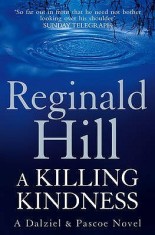
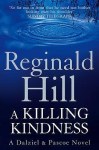
A killing kindnessSaving MisseyCurrently reading: I’m reading A Killing Kindness, a murder mystery, the 6th Dalziel and Pascoe book by Reginald Hill and enjoying it very much.  I’m also reading Saving Missy by Beth Morrey, which I’m also enjoying. It’s a feel good story and very different from A Killing Kindness. Missy Carmichael’s life has become small. Grieving for a family she has lost or lost touch with, she’s haunted by the echoes of her footsteps in her empty home; the sound of the radio in the dark; the tick-tick-tick of the watching clock.
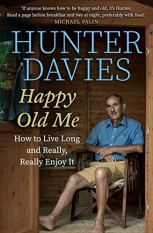
Happy Old Me

Recently Finished: Happy Old Me: How to Live a Long Life and Really Enjoy It by Hunter Davies. This is an account of one year in his life after his wife, Margaret Forster died – poignant, moving and very interesting. I’ll write more about later on.

Reading Next: This is a movable feast, as I rarely decide until the time comes.

It could be The Year Without Summer by  Guinevere Glasfurd. 
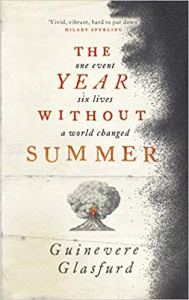
Year without summer

Blurb:

1815, Sumbawa Island, Indonesia
Mount Tambora explodes in a cataclysmic eruption, killing thousands. Sent to investigate, ship surgeon Henry Hogg can barely believe his eyes. Once a paradise, the island is now solid ash, the surrounding sea turned to stone. But worse is yet to come: as the ash cloud rises and covers the sun, the seasons will fail.

1816
In Switzerland, Mary Shelley finds dark inspiration. Confined inside by the unseasonable weather, thousands of famine refugees stream past her door. In Vermont, preacher Charles Whitlock begs his followers to keep faith as drought dries their wells and their livestock starve.

In Suffolk, the ambitious and lovesick painter John Constable struggles to reconcile the idyllic England he paints with the misery that surrounds him. In the Fens, farm labourer Sarah Hobbs has had enough of going hungry while the farmers flaunt their wealth. And Hope Peter, returned from the Napoleonic wars, finds his family home demolished and a fence gone up in its place. He flees to London, where he falls in with a group of revolutionaries who speak of a better life, whatever the cost. As desperation sets in, Britain becomes beset by riots – rebellion is in the air.

The Year Without Summer is the story of the books written, the art made; of the journeys taken, of the love longed for and the lives lost during that fateful year. Six separate lives, connected only by an event many thousands of miles away. Few had heard of Tambora – but none could escape its effects.

Or it could be one of my TBRs – I simply don’t know yet.

Have you read any of these books?  Do any of them tempt you? 

WWW Wednesday: 29 January 2020

IMG_1384-0

WWW Wednesday is run by Taking on a World of Words.

The Three Ws are:

What are you currently reading?
What did you recently finish reading?
What do you think you’ll read next?

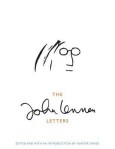
Currently reading: I’m still reading, very slowly, The John Lennon Letters edited by Hunter Davies and The Windsor Story by J Bryan III and Charles V Murphy.

 And I’m also enjoying Hunter Davies’ memoir Happy Old Me: How to Live a Long Life and Really Enjoy It. This is an account of one year in his life after his wife, Margaret Forster died – poignant, moving and very interesting.

Recently Finished: Death Has Deep Roots: a Second World War Mystery by Michael Gilbert. Set in 1950 it’s a mix of courtroom drama, spy novel and an adventure thriller. Victoria Lamartine, a hotel worker, and an ex-French Resistance fighter is on trial for the murder of Major Eric Thoseby, her supposed lover, and alleged father of her dead child. My full review is in this post.

Silence between breathsReading Next: This is a movable feast, as I rarely decide until the time comes.

Yesterday I picked up several books in Barter Books, and am itching to read The Silence Between Breaths by Cath Staincliffe – Passengers boarding the 10.35 train from Manchester Piccadilly to London Euston are bound for work, assignations, reunions, holidays or new starts, with no idea that their journey is about to be brutally curtailed.

I did begin reading it whilst having a cup of coffee in Barter Books and the opening chapters make me want to read more.

Or it could be one of my TBRs – I simply don’t know yet.

Have you read any of these books?  Do any of them tempt you? 

WWW Wednesday: 15 January 2020

IMG_1384-0

WWW Wednesday is run by Taking on a World of Words.

The Three Ws are:

What are you currently reading?
What did you recently finish reading?
What do you think you’ll read next?

Currently I’m reading three books:

Charles Dickens oliver twist etcOliver Twist by Charles Dickens, my Classics Club Spin book. It’s one of those books that I think I know the story from watching TV adaptations, but I have never read it. I’ve discovered that I only ‘know’ the beginning of the book up to the part where Oliver is rescued by Mr Brownlow from Fagin’s clutches, only to be snatched back by Nancy. After that the story is totally new to me.

John Lennon LettersI’m also reading The John Lennon Letters edited by Hunter Davies. It includes a brief biography and using almost three hundred of Lennon’s letters and postcards, to relations, friends, fans, strangers, and lovers follows his life more or less chronologically. It’s a large, heavy hardback book, illustrated with photos and reproductions of the letters etc. This is going to be a long-term read for me.

The Windsor StoryThe third book is one I’ve only just started – I’ve been struck by some of the parallels between Edward VIII’s abdication in 1936 in order to marry Wallis Simpson and the current situation of Prince Harry and Meghan in wanting to step back as senior royals, and I remembered I have The Windsor Story by J Bryan III and Charles V Murphy. It looks remarkably comprehensive and is another book that I think will take me a long time to read.

Lady of the ravensThe last book I finished reading is  The Lady of the Ravens by Joanna Hickson, historical fiction about about the early years of Henry’s reign as seen through the eyes of Joan Vaux, a lady in waiting to Elizabeth of York, whose marriage in 1486 to Henry united the Houses of Lancaster and York after the end of the Wars of the Roses.  I found this a fascinating book and posted my review a few days ago.

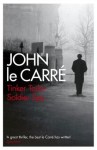
Tinker tailorI have several books lined up to read next including Tinker, Tailor, Soldier, Spy by John Le Carré because over the Christmas period I watched the film starring Gary Oldman as George Smiley, along with Colin FirthTom HardyJohn Hurt and others. I began reading the book years ago and have a bookmark at page 88, but I’ll have to go back to the beginning now.

A killing kindnessBut I’d also like to start A Killing Kindness, the next Dalziel and Pascoe novel, the 6th one in Reginald Hill’s series. It looks good – about Mary Dinwoodie whose body is found choked in a ditch following a night out with her boyfriend, and a mysterious caller phones the local paper with a quotation from Hamlet.

But knowing how long it could be until I start the next book, it could be something completely different!

Have you read any of these books?  Do any of them tempt you? 

Greenmantle by John Buchan

Greenmantle by John Buchan was my Classics Club Spin book to read by 31 January. I read the free Kindle edition (525 pages).

Greenmantle (Richard Hannay Book 2)

3*

Greenmantle is the second of five novels by John Buchan featuring the character of Richard Hannay, first published in 1916, the first being The Thirty-Nine Steps. It was written as the First World War was being fought, before the Battle of the Somme. Many of Buchan’s friends and his younger brother were killed in the war and his adventure stories are a form of escapism. It continues Hannay’s story, taking him from convalescence in  a big country house in Hampshire following the Battle of Loos in 1915, back to London for a vital meeting at the Foreign Office, and then to a top-secret and perilous mission across war-torn German-occupied Europe.

Narrated by Hannay, this is basically an adventure and spy story with a highly improbable plot. It’s pure escapism, as Hannay and his comrades, Sandy Arbuthnot, Peter Pienaar, a South African Boer, who Hannay met in South Africa when he was working as a mining engineer before the First World War, and an American, a dyspeptic businessman, John S Blenkiron embark on a quest, travelling incognito across Germany to Constantinople, reaching a climax at the battle of Erzurum in eastern Anatolia (Asian Turkey) in 1916.

Sandy, a master of disguise, is I think the hero of the book, although Hannay is the man in charge of their investigation. Ludovick Gustavus Arbuthnot, known as Sandy, was in the same battalion as Hannay during the Battle of Loos. The book begins as Hannay received a telegram from Sir Walter Bullivant summoning him to the Foreign Office where he offers him a ‘crazy and impossible mission’ to investigate the rumours of an uprising in the Muslim world. Bullivant tells him:

There is a dry wind blowing through the East, and the parched grasses wait the spark. And the wind is blowing towards the Indian border. Whence comes the wind, think you. (page 9)

The only clues they have to guide them are the words ‘Kasredin’, ‘cancer’ and ‘v.I’.

I was fascinated by the first half of the book as Hannay and the others set out on their mission, following the events of 1916, after the Gallipoli disaster as the Germans were supplying munitions to their allies, the Young Turks. Hannay describes his brief meeting with the Kaiser, Wilhelm II, who he felt had ‘loosed Hell, and the furies of Held had got hold of him.’

I didn’t think Buchan’s villains were particularly convincing as characters, the most evil being the mysterious Hilda von Einem. She fascinated Hannay whilst at the same time he instinctively hated her as he realised she was trying to cast a spell over him. The German Colonel von Stumm is a big man, a brute and a bully, whose ‘head was exactly the shape of a pear with the sharp end topmost’. Hannay thought he was

the German of caricature, the real German, the fellow we were up against.  He was as hideous as a hippopotamus, but effective. Every bristle on his odd head was effective. (page 84)

I liked the contrast between the ordinary and the exotic. The ordinary, such as the domestic scenes as in the opening scene of the book with Hannay just finishing breakfast and Sandy hunting for the marmalade. When Hannay returns from the Foreign Office with his mission in hand Sandy is eating teacakes and muffins. Blenkiron’s diet is mentioned several times as he only eats boiled fish and dry toast whilst drinking hot milk. On the other hand the exotic is found in the Garden-House of Suliman the Red, in the garden of a tumble-down coffee house, transformed from a common saloon into a place of mystery where the Companions of the Rosy Hours perform their potent magic of dance, making the world appear at one point ‘all young and fresh and beautiful’ then changing into something savage and passionate, ‘monstrous, inhuman, devilish’, until the spell is broken.

In the second half or the book the pace increases when they reach Constantinople and Buchan describes the action of the battle at Erzerum. But I found that it didn’t hold my attention as much as the earlier sections of the book, but then again I’m not keen on descriptions of battles and fighting. Overall, then I enjoyed it, which is why I’ve given it 3* on Goodreads.

This is my third book for the Mount TBR Challenge, a book I’ve owned for nearly 5 years, and as well as being on my Classics Club list it is also a book that fits into the When Are You Reading Challenge, being set in 1916, and as it it a spy/espionage story it also qualifies for the Calendar of Crime Challenge.


Six Degrees of Separation: from Like Water for Chocolate to The Spy Who Came In From The Cold

Six Degrees of Separation is a monthly link-up hosted by Kate at Books Are My Favourite and Best. Each month a book is chosen as a starting point and linked to six other books to form a chain. A book doesn’t need to be connected to all the other books on the list, only to the one next to it in the chain.

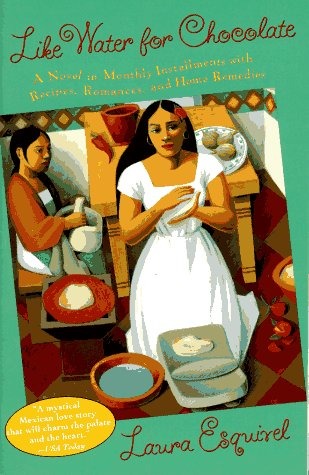
This month the chain begins begin with a book that Kate says people may not have discovered, were it not for the hugely popular movie version – Laura Esquivel’s Like Water for Chocolate. I hadn’t discovered it at all until now! But I see that it’s a ‘bestseller’, a book about passion and the magic of food (including recipes), a tale of family life in  Mexico.

Like Water for Chocolate

The first link in my chain is a book also set partly in Mexico:

The Lacuna

The Lacuna by Barbara Kingsolver is the story of Harrison Shepherd, the son of a Mexican mother and an American father and it’s told through his diaries and letters together with genuine newspaper articles, although whether they reported truth or lies is questionable. As you can see from the cover swimming plays a part in this book. As a boy, Harrison, loved swimming and diving into a cave, which was only available at certain tides, a cave that was there one day and gone the next – a lacuna.

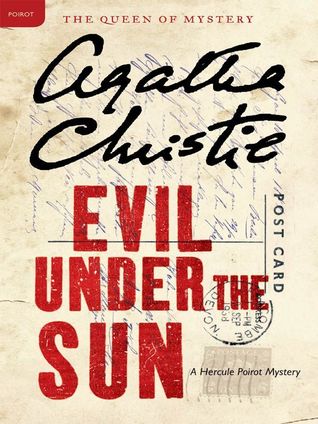
Swimming also features in Evil Under the Sun by Agatha Christie.

Evil Under the Sun (Hercule Poirot, #23)

Poirot is on holiday in Devon staying in a seaside hotel. It’s August, the sun is hot, people are enjoying themselves, swimming and sunbathing until Arlena is found dead – she’d been strangled.

The next book in my chain is also crime fiction  – Blue Heaven by C J Box.

Blue Heaven

This is a story set in North Idaho about two children, Annie and William who decide to go fishing without telling their mother, Monica, and witness a murder in the woods. One of the killers sees them and they run for their lives. It’s fast-paced and full of tension right to the end.

I chose Half of a Yellow Sun by Chimamanda Ngozi Adichie as the next link, a book that also has a colour in its title.

Half of a Yellow Sun

It’s based on the Nigeria-Biafra War of 1967 – 70. Focusing on the struggle between the north and the south, the Igbo, Yoruba and Hausa people, it brings home the horrors brought about by war, the ethnic, religious and racial divisions and the suffering that results.  It is also a novel about love and relationships, a beautiful and emotional book without being sentimental and factual without being boring.

Another book about war, but this one is non-fiction about a spy operation during World War Two – Operation Mincemeat by Ben Macintyre.

Operation Mincemeat: The True Spy Story That Changed the Course of World War II

It’s about the Allies’ deception plan in 1943, code-named Operation Mincemeat, which underpinned the invasion of Sicily. It was framed around a man who never was. I thought it was so far-fetched to be almost like reading a fictional spy story. I marvelled at the ingenuity of the minds of the plans’ originators and the daring it took to carry it out.

Operation Mincemeat led me to think about a fictional spy in The Spy Who Came in from the Cold by John Le Carré.

The Spy Who Came In from the Cold

This is set in the Cold War period in the 1960s and tells the story of Alex Leamas’s final assignment. It’s a dark, tense book and quite short, but very complicated; a story  full of secrecy, manipulation, of human frailty and its duplicitous nature.

What a journey! My chain moves through time and place – from Mexico to Devon, North Idaho, Nigeria, Sicily and Berlin. It encompasses fiction and non-fiction and takes in several wars. All, except for the book that starts the chain, are books I’ve read and enjoyed. Six Degrees of Separation is always fascinating to compile and I’m always surprised at where it goes and where it ends up. Who would have thought that a book about family life in Mexico would end up linked to a spy novel about the Cold War?

The Spy by Paulo Coelho


The Spy

Synopsis:

When Mata Hari arrived in Paris she was penniless.

Soon she was feted as the most elegant woman in the city.

A dancer who shocked and delighted audiences; a confidant and courtesan who bewitched the era’s richest and most powerful men.

But as paranoia consumed a country at war, Mata Hari’s lifestyle brought her under suspicion. Until, in 1917 she was arrested in her hotel room on the Champs Elysees and accused of espionage.

Told through Mata’s final letter, THE SPY tells the unforgettable story of a woman who dared to break the conventions of her time, and paid the price.

My thoughts:

Before I read this book I didn’t know much about Mata Hari, beyond the facts that she was an exotic dancer and that she was executed as a spy during the First World War, so I was interested to know more.

The Spy is a gripping tale and one I read quickly, fascinated by the story of Mata Hari, whose real name was Margaretha Zella, a name she detested. The book begins with a prologue describing the execution of Mata Hari in Paris on 15 October 1917. It is quite remarkable; she was calm, taking care with dressing herself and with her appearance and choosing to face the firing squad neither bound nor blindfolded.

It continues with her life story told through letters and news clippings and illustrated with photographs. She was accused of being a double agent, but claimed she was innocent and the evidence against her was indeed flimsy. The whole procedure was based on deductions, extrapolations and assumptions. Whatever the truth about her innocence, she comes across as a strong-minded, independent and arrogant woman, who believed she could use her beauty and charm to allure any man to get what she wanted.

I always like to know when I’m reading fictionalised biographies how much is based on fact and what has been fictionalised, so I appreciated the author’s explanatory note at the end of the book. Coelho writes that he had based his novel on facts, but he had created some dialogue, merged certain scenes, changed the order of a few events and left out anything he thought wasn’t relative to the narrative. His opening pages, for example are from a report for the International News Service by Henry G Wales in Paris and dated October 15, 1917 and he has borrowed some verbatim language from the report. He has used various sources such as the British Intelligence Service file on Mata Hari.

  • Format: Kindle Edition
  • File Size: 3598 KB
  • Print Length: 220 pages
  • Page Numbers Source ISBN: 1524732060
  • Publisher: Cornerstone Digital; 01 edition (22 Nov. 2016)

Many thanks to NetGalley for a review copy of this book.