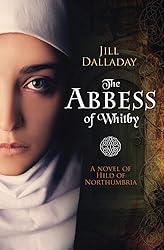
The Abbess of Whitby by Jill Dalladay

The Abbess of Whitby is subtitled A Novel of Hild of Northumbria. As Jill Dalloway explains in her Author’s Note at the end of the book what we know about Hild (St Hilda) comes from the Jarrow monk Bede’s  A History of the English Church and People written 40 years after her death. He gave no information about her between the ages of 13 and 33, so Jill Dalloway has based her fictional account of her life up to the age of 33 on the works of various modern scholars, assuming that like other royal girls of the time she was married for dynastic or political purposes. The major characters are historical, with a few exceptions and Hild’s husband and son are fictional. Hild was born in 614 and died in 680.

Knowing very little about the historical background to the story I found this a fascinating book, but could not have followed it very easily without the list of characters, the family tree of the royal families of Northumbria and the maps showing the Peoples of 7th Century Britain and of Hild’s Northumbria. I was surprised by how much people travelled in the 7th century. It spurred me on to find out more and I am now reading The King in the North: the Life and Times of Oswald of Northumbria by Max Adams. I would also like to read Edwin: High King of Britain and Oswald: Return of the King both by Edoardo Albert.

About two thirds of the book covers Hild’s early life, from the time she was chosen to lead the handmaidens of the fertility goddess  Eostre. It’s a time of transition as people are gradually being converted to Christianity, although at first it appears to be a matter of politics rather than of faith. Her marriage to Cerdic of the Goddodin tribe took her to Din Edin (Edinburgh). When home and family are lost in Oswy’s sack of Edinburgh, she finds herself in enemy hands, but meets the charismatic Aidan (St Aidan of Lindisfarne). The final part of the book covers her life as she helped establish various chapels and finally settled in Whitby as the Abbess there, involved in resolving the Easter dispute at the Synod of Whitby in 664. This settled that the calculations to establish the date of Easter would be according to the customs of Rome, rather than the Celtic customs practised by Irish monks at Iona and also to observe the monastic tonsure.

For me the first two thirds  of the book, showing the disputes between the separate kingdoms in Britain in the 7th century, the  transition from pagan to Christian beliefs and the harsh conditions and plague people had to endure, came to life more successfully than the later chapters.

I received this book for review from the publishers via LibraryThing’s Early Reviewers Program.

  • Paperback: 352 pages
  • Publisher: Lion Fiction; 1st New edition (21 Aug. 2015)
  • Language: English
  • ISBN-10: 1782641548
  • ISBN-13: 978-1782641544

Jill Dalloway is a classicist, historian and former head teacher who pioneered the Cambridge Latin Course. She lives in Whitby.

The Monocled Mutineer by John Fairley & William Allison

When I was asked if I would read and review a revised edition of The Monocled Mutineer by John Fairley and William Allison, the book on which the 1986 BBC TV series was based I was immediately interested as I had watched the TV series.

Description from the Press Release:

In 1917 British, New Zealand and Australian troops stationed at the Étaples Training Camp in northern France protested against the inhuman conditions and the protest erupted into mutiny. Private Percy Toplis was named by the authorities as a leader of this mutiny. While several of the mutineers were executed in its aftermath, Toplis escaped and remained at large for three years. The Army immediately covered up the mutiny, thousands of the participants died shortly afterwards in the Passchendaele offensive while the survivors remained silent for over fifty years. After three years as Britain’s most wanted man Percy Toplis was killed in 1920 by a policeman.

My thoughts:

This is the 2nd and updated edition of The Monocled Mutineer, which  includes a new introduction and epilogue that expand on newly discovered information about the events of the mutiny and the government’s response to it. It is primarily based on interviews and correspondence with survivors of the First World War nearly sixty years after the events they describe. In 1976 the authors advertised in newspapers asking whether any veterans from the First World War had recollections of the events in Étaples in September 1917. They received many replies containing:

  … sharp, bitter accounts of events long ago, but far from forgotten. Inevitably they were careful handwritten stories in old men’s script, teased out without any other prompting than the brief enquiry in their local paper. (page 2)

In addition to the anecdotal evidence the authors have used other sources including the published personal reminiscences of Edwin Woodhall,  Detective and Service Days and Lady Angela Forbes. Memories and Base Details; journalists’ accounts in various periodicals; and have drawn background material from records about the First World War in the  Imperial War Museum, The Public Record Office and the British Newspaper Library.

Not many contemporary records have survived that relate to the mutiny. One of the surviving records is the war diary of the Commandant at the Étaples Camp,  Brigadier-General Andrew Graham Thomson. Thompson describes what happened as a ‘disturbance’ and as ‘riots’ and ‘breakouts’:

Disturbance in Reinforcement Camp between military police and troops, Corporal Wood, 4th Gordons being accidentally shot … a crowd of about 1,000 gathered at Ã‰taples town, and about 7.30 pm tried to break into the Sevigne cafe where two policemen were hiding. (page 1)

But in 1978, after the publication of the 1st edition and the BBC dramatisation, the British government admitted that the events that took place at Ã‰taples had been a mutiny and also that  it was probable that the records relating to the board of inquiry into the events had been destroyed many years ago. The files on the mutiny and Percy Toplis’ military records are closed until 2017.

Historical accuracy is never easy to obtain, especially where records have been lost and where there is a limited number of sources to compare one against the other. In this case the main sources of information are the personal accounts from the veterans as they remembered them many years later.

And the picture they paint is a most remarkable and shocking one of the brutal and inhuman conditions which were in operation at the camp. As for Toplis’ part in the mutiny, the letters from the veterans occasionally mentioned him and whilst some thought he was the main ringleader, few thought he was the only one, but that there were a number of soldiers involved. One remembered Toplis’ name on a wanted poster and wrote:

If he was a villain then he was not the only one around Étaples. Maybe he too was tired of being humiliated, deprived, brutalized and treated like a dog. We had all got tired of being treated with less consideration than that given to horses. (page 91)

Another reported that Toplis, heading a mob of about 1,000 deserters confronted Thompson, surrounding his car. Toplis climbed on the running board and dictated the terms for ending the mutiny (page 93). After the mutiny ended, whilst some of the ringleaders were executed, Toplis escaped. Others were killed in the battle for Passchendale which began on 20th September.

Maybe more information will be available in 2017 when the files are opened and a fuller picture of what happened will emerge.

The Monocled Mutineer also goes into detail about Percy Toplis’ life before and after the war. Coming from a working-class background, by the age of eleven he was already a con artist and a thief. He must have been a charismatic character, able to both charm and deceive people, successfully impersonating officers, able to melt into the background deserting and then rejoining the army seemingly at will, not sentenced to execution by the firing squad (the penalty for desertion). But after the war ended in 1920 his luck ran out as he was accused of murdering a taxi-driver. The inquest held that he was guilty in his absence. Toplis fled, evading capture for six weeks and he was eventually shot down in a police ambush near Plumpton in Cumberland.

  • Paperback: 208 pages
  • Publisher: Souvenir Press Ltd; 2nd Revised edition edition (7 Sept. 2015)
  • Language: English
  • ISBN-10: 028564310X
  • ISBN-13: 978-0285643109
  • Source: review copy from the publisher

House of Shadows by Nicola Cornick

Nicola Cornick is a new-to-me author, but she is by no means a new author. She has written many books – see her website for more details. Not having read any of her books I wasn’t sure I’d like House of Shadows, her latest book due to be published on 5 November,  but the publishers’ press release persuaded me to read and review an uncorrected proof copy. I’m glad I did as I thoroughly enjoyed House of Shadows.
Press Release synopsis:

One House, Three Women. And a lie that will change history.

February 1662

On the eve of her death Elizabeth Stuart hands her faithful cavalier William Craven an ancient pearl with magical properties to be kept safe for her rightful heir. Craven, distraught with grief, builds Ashdown Estate in Elizabeth’s memory and places the pearl at the centre.

February 1801

Notorious Regency courtesan Lavinia Flyte is brought to Ashdown House with her protector, Lord Evershot, who is intent on uncovering the Winter Queen’s treasures. Evershot’s greedy pillage of the ancient house will unleash a dark power which has lain dormant for a hundred and fifty years.

February 2014

Holly Ansell’s brother has gone missing. As Holly retraces his footsteps, she discovers that her brother was researching the mystery of Elizabeth Stuart and her alleged affair with William Craven. A battered mirror and the diary of a Regency courtesan are the only clues she has, but Holly is determined to discover the truth: Where is the fabled pearl that Elizabeth gave to William Craven? What happened to Lavinia Flyte? And who is the Winter Queen’s rightful heir?

My thoughts:

This is a successful time-slip novel as I had no difficulty in following each strand of the story. And each is set firmly in its historical context. It’s a fascinating mix of factual history combined with historical interpretation/imagination to fill in the gaps in the records. Elizabeth Stuart, known as the Winter Queen, the daughter of James I of England and VI of Scotland was married to Frederick V, briefly the King of Bohemia, before his lands were taken from him after the Battle of White Mountain in 1620. There are rumours from 1660 onwards, but no proof, that Elizabeth either had an affair or secretly married William, the first Earl of Craven.

Once I started reading the House of Shadows I didn’t want to stop as the history of crystal mirror and the Sistrin pearl, a jewel of rare beauty and price unfolds. Both were inherited by Elizabeth from her godmother Elizabeth I. They had previously belonged to Mary Queen of Scots, Elizabeth Stuart’s grandmother. They were said to hold great magic – the mirror was said to have the power to destroy its enemies by fire, whilst the ring was supposedly a talisman for good. It was reported that Frederick was involved with the Knights of the Rosy Cross and the legend is that the Knights used the mirror and the pearl together in their necromancy to create firewater in which they could both see and transform the future.

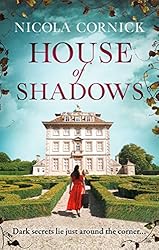
There is so much I loved in this book ‘“ the history, all the storylines,  the characters, and the settings against the backdrop of years from the 16th to the 21st centuries. It has mystery, elements of the supernatural as well as being a love story, not just the story of Elizabeth and William in the 17th century, but also of Lavinia in the early 19th century and Holly in the 21st. I loved the details of each period and in particular of Ashdown House, a real house in Oxfordshire that was built by William Craven for Elizabeth. It’s now owned by the National Trust, where Nicola Cornick has been a volunteer guide and historian for the last fourteen years. She has certainly done her research very well and incorporated it seamlessly into her book. The house shown on the front cover is Ashdown House

I also loved the details of Holly’s family history which her brother Ben had been researching before he went missing and how it all linked in to each time line. It’s the sort of thing you hope you be able to would find if you did your own family history.

It is a fascinating book. There is so much packed into its pages, a real page turner in each timeline, making me eager to find out what happened next. If this is representative of Nicola Cornick’s books there are plenty of others that I’m going to enjoy.

  • Paperback: 448 pages
  • Publisher: MIRA; First edition edition (5 Nov. 2015)
  • Language: English
  • ISBN-10: 1848454163
  • ISBN-13: 978-1848454163
  • Source: Uncorrected Proof Copy

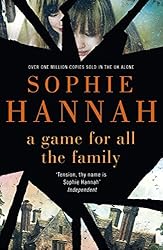
A Game For All the Family by Sophie Hannah

I’ve recently finished reading A Game For All the Family by Sophie Hannah, a standalone book, described as ‘ a literary puzzle to unlock the dark side of the mind.’

Publishers’ blurb:

Justine thought she knew who she was, until an anonymous caller seemed to know better…

After escaping London and a career that nearly destroyed her, Justine plans to spend her days doing as little as possible in her beautiful home in Devon.

But soon after the move, her daughter Ellen starts to withdraw when her new best friend, George, is unfairly expelled from school. Justine begs the head teacher to reconsider, only to be told that nobody’s been expelled – there is, and was, no George.

Then the anonymous calls start: a stranger, making threats that suggest she and Justine share a traumatic past and a guilty secret – yet Justine doesn’t recognise her voice. When the caller starts to talk about three graves – two big and one small, to fit a child – Justine fears for her family’s safety.

If the police can’t help, she’ll have to eliminate the danger herself, but first she must work out who she’s supposed to be…

Practically from the start I had my doubts about Justine. Was she an unreliable narrator? Could I believe her story, told in the third person but revealing what was going through her mind? Or was her daughter Ellen right when she told her mother that she was a ‘nutter‘? That sense of distrust pervaded my reading. Obviously something had happened to make Justine give up her job in TV drama production and want to ‘do Nothing’, something traumatic and life-changing – had it affected her mental stability or had it happened because she was mentally unstable? I couldn’t decide.

What I can say is that it’s a book about the truth – just who is telling the truth, just who is who they purport to be, and most of all about identity. Who is real, who is making it all up (well Sophie Hannah, obviously).

It is described as a ‘chilling ‘ novel, but I didn’t find it spine tingling, or scary, because it came over to me as artificial, and contrived. It’s also long-winded and mostly completely unbelievable, which made it lose any sense of tension or suspense. But it is a cleverly complicated plot, with stories within stories, – it’s just not chilling.

As well as the anonymous threatening phone calls, and the head teacher’s denial that George had not been expelled and indeed her insistence that he had never even been at the school, Justine is also puzzled by the story that Ellen is writing for her creative writing homework – a story set in their house about a strange family who had lived there in the past and a murder that had taken place there. Where did Ellen get this story, is it based on fact? Ellen simply won’t tell her. Are the phone calls connected to this story and to George?

Maybe it’s too complicated, because at times I just wished the endless questions that went through Justine’s mind would come to an end. They did of course and by the time I did get to the end I still couldn’t decide whether Ellen was right – is Justine a nutter and as I suspect an unreliable narrator, or not?

I didn’t love this book, but it certainly filled my mind and made me think both whilst I was reading it and for days afterwards – and I like that about a book. If Justine is a reliable narrator and was telling the truth all along then she is still a nutter, because if what she described actually happened at the end of the story it was terrible and she was mentally ill and in that case, definitely a chilling ending. I just can’t decide! It is an extraordinary and weird book.

My thanks to Lovereading for sending me an uncorrected proof copy of this book that has had me puzzling for days. A Game For All the Family is due to be published on 13 August 2015 by Hodder & Stoughton.

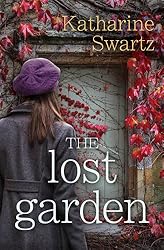
The Lost Garden by Katharine Swartz

The Lost Garden is  an emotionally intense novel of love, loss and grief, set in both the past and the present day, in a small village on the Cumbrian coast.

In 1919 Eleanor, the daughter of the vicar of Goswell, is struggling to adjust to the loss of her brother, Walter who died just before the Armistice was declared and in the present day half-sisters Marin and Rebecca are coming to terms with the death of their father and his wife.

The link between the two stories centres around the walled garden at the back of the Bower House, a small house next to the church. It was said to have been the herb garden for the monastery before the Reformation.

In 1919 the garden is covered in brambles and Eleanor decides she wants to make it into a garden of remembrance, a place to just be, to remember or to forget as much as you need. And she begins to restore it with the help of the church gardener, Jack. As they do so the garden begins to blossom as winter moves into spring and summer, but the mood of both the family and the country remains sombre as they come to terms with the aftermath of the First World War.

In the present day, Marin has bought the Bower House, not knowing its history. Rebecca discovers the walled garden once more overgrown with brambles and weeds and it captures her imagination. And when Marin she sees a photo of a young woman in the garden, thought to have been taken around 1920 she is determined to find out more – just who was the young woman and what is underneath the brambles. With the help of the local gardener, Joss, she begins to restore the garden and in doing so they discover secrets about both the past and the present.

The Lost Garden is a gentle story, well told and an enjoyable read, switching between the past and the present. The differences in attitudes and social conventions of the times provide a distinct contrast and highlights the parallels between the two stories. I liked the story-lines for both Marin and Eleanor, both have difficult relationships with their sisters and both are coming to terms with their grief, but on the whole I was more interested in Eleanor’s story, set against the backdrop of the post First World War.

My thanks to Lovereading for providing an advance proof of this novel, due to be published 15 May 2015. The Lost Garden is the second book in Katharine Swartz’s Tales from Goswell series – the first is The Vicar’s Wife.

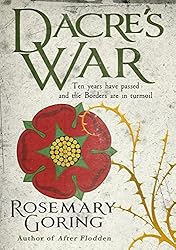
Dacre’s War by Rosemary Goring

Dacre’s War is compelling reading, a  thoroughly absorbing and beautifully written novel set in the Scottish and English Borders and London between 1523 – 1525 some ten years after the events described in Rosemary Goring’s earlier book, After Flodden. I wondered as I began reading whether it could equal After Flodden, a book I loved when I read it two years ago – it did. I think it even surpasses it.

I loved Dacre’s War and keen as I was to read to the end I didn’t want to leave the characters. Once again I was swept away by the story, re-living the scenes through Rosemary Goring’s vivid descriptions and the drama of the characters’ lives, people who came to life in the pages of this book.

Dacre’s War describes how Adam Crozier, the head of his clan, plots to take revenge on Lord Thomas Dacre, the Warden General of the English Marches and the Keeper of Carlisle, who had brought about the death of Adam’s father. Ten years after the Battle of Flodden, Dacre is the most powerful man in the north of England, but the Marches are a constant battlefield, dangerously out of control, and a hotbed of thieves and killers in thrall to the Warden. Without him Henry VIII believes the situation would be much worse.

It is against this background that Crozier forms an alliance with Dacre’s enemies, both English and Scots to inform Henry of Dacre’s crimes and bring about his downfall.

There are some remarkable scenes in this book, and amongst them are the scenes in the Star Chamber where Dacre is brought to answer the charges against him in front of Cardinal Wolsey and his imprisonment in the Fleet Prison. I felt as though I was there, watching, breathing the same air – not a pleasant experience. Similarly with Crozier, I could visualise his home, Crozier’s Keep, sense the tension and fear as his wife, Louise, is left at home, pregnant and in danger of losing the baby.

There is so much packed in this book, political intrigue, personal conflict and vengeance, and spies, manipulators and double crossers abound. It is impossible to write more without revealing the plot and the eventual ending. It’s a brilliant book.

Dacre’s War is due to be published in June 2015. My copy is a pre-publication review copy courtesy of www.lovereading.co.uk.

  • Hardcover: 352 pages
  • Publisher: Polygon (16 June 2015)
  • Language: English
  • ISBN-10: 1846973112
  • ISBN-13: 978-1846973116

Rosemary Goring was born in Dunbar and studied social and economic history at the University of St Andrews; and, after graduation, worked at W&R Chambers as a reference editor. Rosemary was the literary editor of Scotland on Sunday, followed by a brief spell as editor of Life & Work, the Church of Scotland’s magazine, before returning to newspapers as literary editor of the Herald, and later also of the Sunday Herald. In 2007 she published Scotland: The Autobiography: 2000 Years of Scottish History By Those Who Saw it Happen, which has since been published in America and Russia.

Reading Challenges: Read Scotland, Historical Fiction Challenge.