Novellas in November: Translation Week: Pietr the Latvian by Georges Simenon, Translated by David Bellos

This week’s  Novellas in November is Translation Week and I’ve chosen Georges Simenon’s Pietr the Latvian, translated by David Bellos (165 pages). It is officially the first Maigret book, although it was originally published in instalments in the magazine Ric et Rac between July and October 1930.

Rating: 3 out of 5.

Jules Maigret is a Detective Chief Inspector of the Flying Squad in Paris and we get a really detailed description of him – he was a broad heavy man, aged forty-five:

His clothes were well cut and made of fairly light worsted. He shaved every day and looked after his hands.

But his frame was proletarian. He was a big bony man. Iron muscles shaped his jacket sleeves and quickly wore through new trousers.

He had a way of imposing himself just by standing there. His assertive presence had often irked many of his own colleagues.

It was something more than self-confidence but less than pride. He would turn up and stand like a rock with his feet wide apart. On that rock all would shatter, whether Maigret moved forward or stayed exactly where he was.

His pipe was nailed to his jawbone. (page 21)

He has received messages that Pietr the Latvian, an international criminal, is en route by train from the Netherlands to Paris. He has a description of Pietr and went immediately to the Gare du Nord to intercept him. But on spotting him he had to let him go because a man had been murdered on the train – and that man also matched Pietr’s description. From that point on. I became increasingly confused. Who is Pietr the Latvian? Was he the man who got off the train or the man who was murdered?

There are many characters and for quite a lot of the book I struggled to work out who was who. Maigret spends his time going from place to place and interviewing many people and I really had little idea of what was going on. The question of identity plays a major part. Pietr was thought to be the head of a major international ring mainly involved in fraud, counterfeit money and forged documents and his known associates seem to be mainly British and American. The setting in the 1930s is a mix of glamorous hotels and bars in Paris, seedy back streets, and the seaside town of Fécamp in Normandy. The book does feel dated now along with the anti-antisemitism some of the characters voiced.

If you haven’t read any of the Maigret books I suggest you start with one of the later books, which are much better. What I liked about it is that it establishes Maigret’s character and appearance right from the beginning. He feels like a real person with solidity and presence. He’s also tough, carrying on chasing around after Pietr even after he’s been shot. I think it’s an interesting story, in which a lot happens and even if I was mystified at first it did become clearer as I read on and I was pleased to find that I had worked out Pietr’s identity before it was revealed.

Pietr the Latvian is included in the Inspector Maigret Omnibus 1. The four titles are Pietr the Latvian, The Hanged Man of Saint-Pholien, The Carter of ‘La Providence’, The Grand Banks Café.

Previously I’ve read:

and

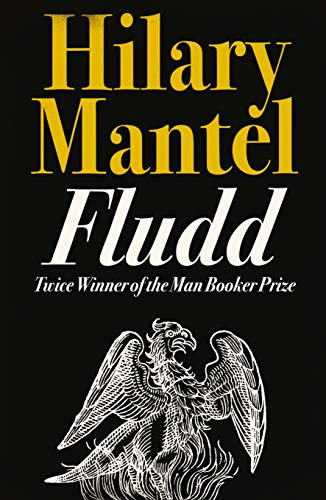
Contemporary Novellas: Fludd by Hilary Mantel

A dark fable of lost faith and awakening love amidst the moors

5*

Novellas in November began this week, hosted by Cathy and Rebecca. Each week they will take it in turns to host a “buddy read” of a featured book they hope you will join in reading – see their blogs for details.

The definition of a novella is loose – it’s based on word count rather than number of pages – but they suggest aiming for 150 pages or under, with a firm upper limit of 200 pages. The prompt for this week is contemporary fiction, defined as post 1980 and hosted by Cathy,

My choice this week is Fludd by Hilary Mantel, first published in 1989 by Viking. My copy, published in 2010 by Fourth Estate, has 181 pages followed by additional features at the end, including an About the Author section, and an interview with Hilary Mantel.

Description:

Fetherhoughton is a drab, dreary town somewhere in a magical, half-real 1950s north England, a preserve of ignorance and superstition protected against the advance of reason by its impenetrable moor-fogs. Father Angwin, the town’s cynical priest, has lost his faith, and wants nothing more than to be left alone. Sister Philomena strains against the monotony of convent life and the pettiness of her fellow nuns. The rest of the town goes about their lives in a haze, a never-ending procession of grim, grey days stretching ahead of them.

Yet all of that is about to change. A strange visitor appears one stormy night, bringing with him the hint, the taste of something entirely new, something unknown. But who is Fludd? An angel come to shake the Fetherhoughtonians from their stupor, to reawaken Father Angwin’s faith, to show Philomena the nature of love? Or is he the devil himself, a shadowy wanderer of the darkest places in the human heart?

Full of dry wit, compassionate characterisations and cutting insight, Fludd is a brilliant gem of a book, and one of Hilary Mantel’s most original works.

My thoughts:

It is 1956, set in the north of England in the fictional village of Fetherhoughton, which is loosely based on the village where Mantel grew up. She was brought up as a Catholic and the idea for the story came from a conversation with her mother about her childhood. When she was around four the Bishop decreed that all the statues in the church were to be removed which annoyed the parishioners and she heard the adults talking about what to do with the statues. One suggestion was to bury them. Her mother also told her about a young priest, who everyone liked, and who disappeared. It was assumed that there was a girl involved. The two events combined in her mind and came out as this novel.

Mantel clarifies in a Note before the story begins that the church in Fludd bears some resemblance, but not much to the Roman Catholic Church in the real world. Fludd was a real person (1574 – 1637), a physician, scholar and alchemist and she adds that

In alchemy, everything has a literal and factual description, and in addition a description that is symbolic and fantastical.

This sets the scene for what follows – there is a mystery that lies beyond the visible world, miraculous things appear to happen and very ordinary things appear miraculous. There is a hint of the supernatural.

The story centres on Fludd, a young priest who comes to the Church of St Thomas Aquinas to help Father Angwin, a cynical priest who has lost his faith. The Bishop, a modern man, is concerned about Father Angwin and wants to bring him and the Catholic community up to date – so the statues in the church have to go. This has a most disturbing effect on all concerned – not just the church and Father Angwin, but also the the nuns in the convent, and the school, both under the stern eye of Mother Perpetua.

Fludd, himself is something of a mystery. When he eats the food disappears, but he is not seen eating. When he pours out whisky for Father Anwin the bottle always remains full. Strange things happen, a wart disappears from one character’s face and finds its way to another’s, one character apparently spontaneously combusts, another disappears and there’s a tobacconist who may or may not be the devil. The real question is just who is Fludd?

I enjoyed it all immensely – partly about religion and superstition, but also a fantasy, a fairy tale, told with wit and humour with brilliant characterisation.

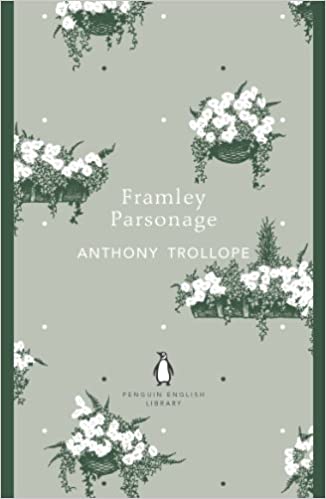
Framley Parsonage by Anthony Trollope

Framley Parsonage is my current Classics Club spin book. Although I read my previous spin book, Little Dorrit , I didn’t write a post about it. So, I decided to make an early start with Framley Parsonage to make sure I finished it before the 22nd August deadline – which I did!

Synopsis – Goodreads

A brilliant depiction of social climbing and scandal, Framley Parsonage tells the story of Mark Robarts, a young clergyman with ambitions beyond his small country parish of Framley. In a naive attempt to mix in influential circles, he makes a financial deal with the disreputable local Member of Parliament, but is instead brought to the brink of shame and ruin.

One of Trollope’s most enduringly popular novels, Framley Parsonage is an evocative portrayal of country life in nineteenth-century England, told with great compassion, humour and an acute insight into human nature. 

It is the fourth book in Anthony Trollope’s series, the Chronicles of Barsetshire, first published in serial form in the Cornhill Magazine in 1860, then in book form in 1861.

This is a long book – 688 pages in the Penguin classics edition – and begins slowly. It took me a while to settle into reading it and to sort out who all the characters are and how they relate to each other, There are several plot lines – there’s the clergyman Mark Robarts, the Vicar of Framley, and his attempts to climb up the church hierarchy. Mark through naivety, is bamboozled by Nathaniel Sowerby, a member of parliament. He guarantees a three-month bill of Sowerby’s for £400 (making Mark liable if Sowerby does not pay a £400 debt within that time) and then a further bill for £500. This does not go well for Mark!

Another plot line is that relating to Mark’s sister, Lucy and her on/off romance with Lord Lufton, much to the disapproval of his mother, Lady Lufton. Mark and Lord Lufton were childhood friends and Lady Lufton is Mark’s patroness, which causes problems all round, especially as she would much prefer her son to marry Griselda Grantley, the daughter of Doctor Theophilus Grantly, the Archdeacon of Barchester. There’s also a subplot involving Mrs Grantly and Mrs Proudie, Bishop Proudie’s wife, and their rivalry over their daughters’ marriages. There’s another marriage in the offing, that of the outspoken heiress, Martha Dunstable, to Doctor Thorne, the eponymous hero of the preceding novel in the series, Doctor Thorne.

Framley Parsonage is full of lifelike and interesting characters engaged in their everyday life and inevitable class inequalities and power struggles, described with a fair amount of wit and humour. Interspersed between the plotlines Trollope introduces several sections of political commentary on the Parliamentary shenanigans of the day, which I have to admit were less interesting to me. But it seems that not much has changed in the way the political parties carried on both in parliament and in their relationship with the press. The next book in the series is The Small House at Arlington, which I expect I’ll eventually get round to reading.

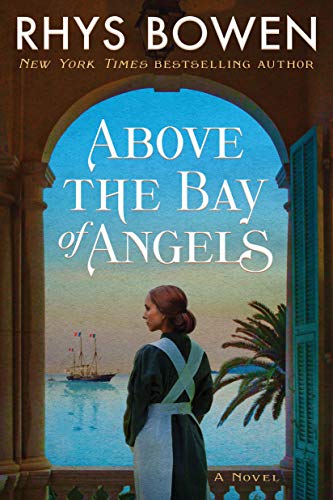
Above the Bay of Angels by Rhys Bowen

Lake Union| February 2020| 323 pages| 3*

A single twist of fate puts a servant girl to work in Queen Victoria’s royal kitchen, setting off a suspenseful, historical mystery by the New York Times bestselling author of The Tuscan Child and The Victory Garden.

Arriving as Helen Barton from Yorkshire, she pursues her passion for creating culinary delights, served to the delighted Queen Victoria herself. Best of all, she’s been chosen to accompany the queen to Nice. What fortune! Until the threat of blackmail shadows Bella to the Riviera, and a member of the queen’s retinue falls ill and dies.

Having prepared the royal guest’s last meal, Bella is suspected of the poisonous crime. An investigation is sure to follow. Her charade will be over. And her new life will come crashing down—if it doesn’t send her to the gallows.

Set towards the end of Queen Victoria’s reign in 1896/7 I thought this sounded interesting when I read the synopsis on NetGalley, and it is. It’s a pleasant easy read, but rather far-fetched.

The novel is based on facts to a certain extent. Rhys Bowen’s Historical Note explains that many aspects of the story are true, including the details about Abdul Karim, the Queen’s Indian Munshi. The Hotel Regina Excelsior above Nice was built for Queen Victoria – she had a separate wing with its own entrance – and she took a team of her cooks with her when she visited each winter.

I thought the beginning of the book was slow and predictable, and there are a few convenient coincidences. Isabella (Bella) Waverley’s father was a member of an aristocratic family, the second son of a second son, who fell on hard times and eventually died an alcoholic. Bella had gone into service and found she had a talent for baking. So when she had the opportunity to take Helen Barton’s position as an under cook at Buckingham Palace, she presented herself as Helen at the Palace. Keeping her real identity a secret was a problem that continued through the book, providing an element of suspense. Then when one of the Queen’s German relatives died, Bella is suspected of poisoning him, and I enjoyed the intrigue and the puzzle of who killed the Count.

Overall I did find the book entertaining. I enjoyed reading about the meals the Queen Victoria’s household were served and the settings both in Buckingham Palace and in the French Riviera are beautifully described. Compared to the slow start the ending is packed with action and romance as well as mystery.

With thanks to NetGalley and to the publishers for my review copy.

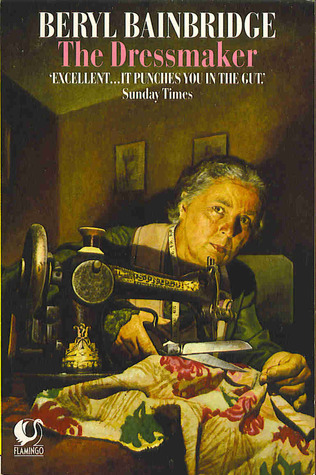
The Dressmaker by Beryl Bainbridge

This is another ‘catching-up’ post about a book I read a while ago. It’s one of my TBRs and also one of my 20 Books of Summer. It’s a novel with an under current of psychological suspense.

Description

Wartime Liverpool is a place of ration books and jobs in munitions factories. Rita, living with her two aunts Nellie and Margo, is emotionally naïve and withdrawn. When she meets Ira, a GI, at a neighbour’s party she falls in love as much with the idea of life as a GI bride as with the man himself. But Nellie and Margo are not so blind …

My thoughts:

I read The Dressmaker because I’ve enjoyed other books by Beryl Bainbridge. It’s a novella, really, as it’s only 160 pages. I love her style, clear, concise prose, with fully realised characters and descriptive settings. It was first published in 1973 – my copy is a Fontana edition published in 1985.

The Dressmaker was runner up for the 1973 Booker Prize and also for the Guardian Fiction Prize. The Sunday Times, is quoted on the back cover: ‘ Like the better Hitchcock films Miss Bainbridge suggests a claustrophobic horror … An impressive, haunting book.’

It’s a wartime story of life in Liverpool in 1944, where Rita, aged 17, is living with her two middle-aged aunts, Nellie (shown on the cover of my 1985 copy) and Margo, also called Marge. Her mother had died in childbirth, and she had lived with them as her father, their brother Jack, was unable to bring her up whilst single-handedly running his butcher’s shop. Rita, although she knows he is her father, calls him ‘Uncle Jack’. She is naive and innocent, and after meeting Ira she fantasises about being a GI bride, but her aunts are not taken in by him and view him in a very different light. She dreams about life in America as Ira’s wife:

After the war he would take her to the States, and they’d have a long black car and a grand piano with a bowl of flowers on the table. There’d be a house with a verandah and wooden steps, and she would run down them in a dress with lots of folds in the skirt and peep-toed shoes. Auntie Nellie would tell Mrs Mander how well-off they were, how Ira cared for her, the promotion he kept getting at work. (page 59)

The opening chapter signals with the word ‘afterwards‘ that something significant had happened, but with no indication of what it was. It left me wondering where this book was going. At first it seemed a rather mundane story of everyday life, but as the story played out I began to feel it was leading up to a tragedy – something terrible was coming towards this working class family.

And indeed it was – and it was shocking, particularly given the domestic setting. It’s only with the final denouement that the mystery hinted at in the opening chapter is revealed in a savage and violent climax. Even though I was expecting a tragedy the actual nature of it took me totally by surprise.

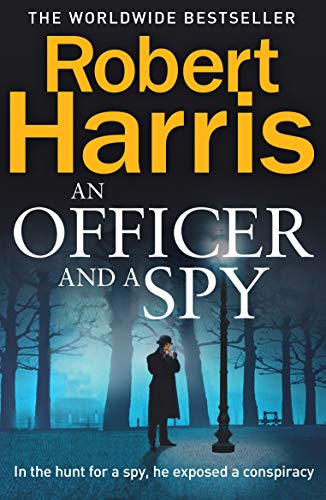
An Officer and a Spy by Robert Harris

I read An Officer and a Spy by Robert Harris in June, but as I was on a roll, reading but not reviewing books I’ve only just got round to writing about it. I loved it, one of my TBRS, a hardback book I bought in 2016. I’d heard of the Dreyfus affair but knew very little about it.

In his Author’s Note Harris writes that his aim in writing this novel was to ‘retell the true story of the Dreyfus affair‘, describing it as ‘perhaps the greatest political scandal and miscarriage of justice in history, which in the 1890s came to obsess France an ultimately the entire world‘. What follows is a chillingly dark, and realistic novel of conspiracy and espionage.

The book begins in Paris in 1895. Alfred Dreyfus, a young Jewish officer, has just been convicted of treason, sentenced to life imprisonment at Devil’s Island, and stripped of his rank in front of a baying crowd of twenty-thousand.

It’s narrated by Colonel George Picquart, Chief of the Statistical Section of the French Army, who became convinced that Dreyfus was innocent. But Picquart is told by his superiors to drop his investigation. Despite that he doesn’t and ends up losing his position and being relocated to North Africa, where he was assigned a dangerous mission. Eventually he was dismissed from the Army whilst Dreyfus remained imprisoned on Devil’s Island under the most appalling conditions. Dreyfus was released from prison in 1899 but was only exonerated in 1906.

What gives An Officer and a Spy such authenticity is that Harris has used transcripts of the various trials, inquiries and hearings, biographies, family letters as well as Dreyfus’s own writings in writing his novel. He goes into meticulous detail in staying accurate to the actual events, but even so this is a gripping book and I was completely absorbed by it from start to finish.

Robert Harris is one of my favourite writers and I have yet to read a book of his that disappointed me, but this book surpassed my expectations, and is one of his best in my opinion.