Six Degrees of Separation: from What I Loved by Siri Hustvedt to

It’s time again for Six Degrees of Separation, a monthly link-up hosted by Kate at Books Are My Favourite and Best. Each month a book is chosen as a starting point and linked to six other books to form a chain. A book doesn’t need to be connected to all the other books on the list, only to the one next to it in the chain.

This month the chain begins with What I Loved by Siri Hustvedt a book I read and loved some years ago.

In 1975 art historian Leo Hertzberg discovers an extraordinary painting by an unknown artist in a New York gallery. He buys the work, tracks down its creator, Bill Weschler, and the two men embark on a life-long friendship.

This is the story of their intense and trouble relationship, of the women in their lives and their work, of art and hysteria, love and seduction and their sons – born the same year but whose lives take very different paths.

Keeping the World Away by Margaret Forster – this is the story of a painting, a variant of Gwen John’s The Corner of the Artist’s Room in Paris, as over the years it passes from one woman to another. Her room was the image of how her lover, Rodin, wished her to be and she painted a sunlit corner of it where it was “all peace and calm and serenity” in contrast to Gwen herself who “radiated energy”.
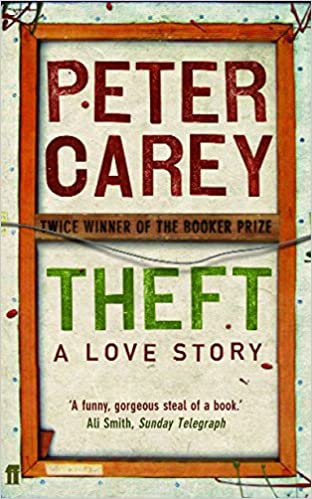
Theft by Peter Carey is set in the art world, about forgeries and details of the international art scene. The book ranges from Australia to Japan and America, with the two Boone brothers, Michael the artist, and Hugh his ‘broken’ brother, who he is ‘looking after’.

Peter Carey is an Australian author, as is Jane Harper. Her book The Lost Man is set in the Queensland outback, hundreds of miles from anywhere and revolves around the death of Cameron Bright, one of the three Bright brothers. They are part of a dysfunctional family. Cameron is found dead, lying at the the base of the headstone of the stockman’s grave. It was the location Cameron had painted – a painting that had won him a prize.

Another dysfunctional family, is the subject of Wakenhyrst by Michelle Paver. This is set in a remote hamlet in the Suffolk Fens, an eerie waterlogged landscape where Edmund Stearn, a historian, and his family live in a large manor house, Wake’s End. Edmund eventually went mad and spent the rest of his life in an asylum, where he created three paintings that astonished the world – grotesque paintings full of colour and tiny malevolent faces leering out of the canvas, the stuff of nightmares.

Another manor house is the setting of The Clockmaker’s Daughter by Kate Morton. Beginning in 1862, when a group of young artists led by the passionate and talented Edward Radcliffe descends upon Birchwood Manor in rural Berkshire. Their plan: to spend a secluded summer month in a haze of inspiration and creativity. But by the time their stay is over, one woman has been shot dead while another has disappeared; a priceless heirloom is missing; and Edward Radcliffe’s life is in ruins. it’s a story of murder, mystery and thievery, of art, love and loss.
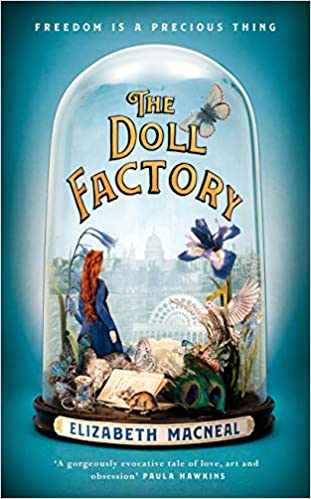
The Doll Factory by Elizabeth Macneal is about Iris, a young woman who worked painting dolls in Mrs Salter’s Dolls Emporium, but who dreamed of being an artist. It tells of her involvement with the Pre-Raphaelite artists and the Great Exhibition of 1851. It was a time when the young artists who had recently formed the Pre-Raphaelite Brotherhood, were challenging the art world with their vivid paintings.

~~~

The books in my chain are all linked by art, beginning in New York and moving to London, via Berkshire, the Suffolk fens, the Australian outback and Paris. Other links are the authors’ nationality, dysfunctional families and manor house settings, in both historical and crime fiction.

Next month (1 August 2020), the chain begins with – How To Do Nothing by Jenny Odell, a book I’ve never come across before.
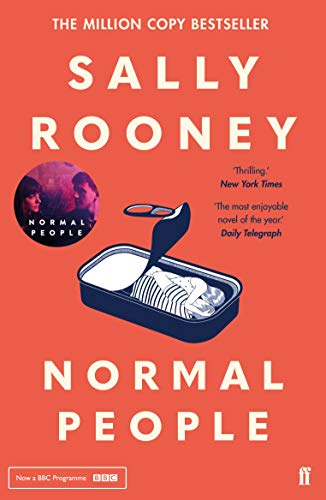
Six Degrees of Separation: from Normal People to The Inheritance of Loss

It’s time again for Six Degrees of Separation, a monthly link-up hosted by Kate at Books Are My Favourite and Best. Each month a book is chosen as a starting point and linked to six other books to form a chain. A book doesn’t need to be connected to all the other books on the list, only to the one next to it in the chain.

This month the chain begins with Normal People by Sally Rooney. This is one of my TBRs. I did begin it but it didn’t appeal to me. I’m in the minority, though, as I know it is very popular, many people love both the book and the TV series and it  has won several awards. It’s the story of two people who try to stay apart but find they can’t.

Normal People

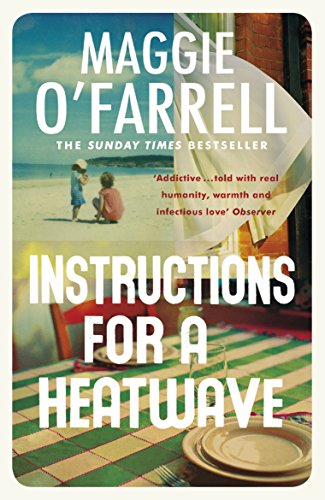
Sally Rooney is an Irish author, as is Maggie O’Farrell, whose book Instructions for a Heatwave was shortlisted for the 2013 Costa Novel Award. Robert Riordan tells his wife Gretta that he’s going round the corner to buy a newspaper. He doesn’t come back. The search for Robert brings Gretta’s children – two estranged sisters and a brother on the brink of divorce – back home, each with different ideas as to where their father might have gone.

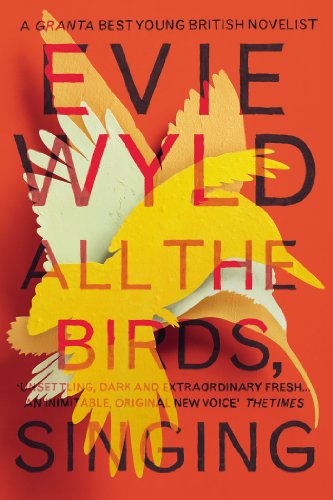
Also shortlisted for the 2013 Costa Novel Award was All the Birds, Singing by Australian author Evie Wyld, a book I would like to read. This is a novel, using reverse chronology techniques, telling the story of Jake Whyte who lives on an unnamed island off the coast of Britain, tending her flock of sheep with her dog, Dog. Someone, or something, is killing her sheep, and her investigations lead her and the reader back to her time in Australia to the ‘original sin’ that sets everything in motion.

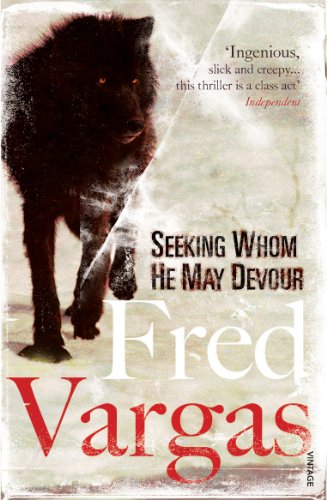
Another novel featuring the killing of sheep is Seeking Whom He May Devour by French author, Fred Vargas. It’s set in the French mountains. Johnstone, a Canadian is living there whilst he films a documentary about wolves. The problems start when more and more sheep are found with their throats torn out. This is the second in her Commissaire Adamsberg series. I thought it was quite quirky with touches of humour.

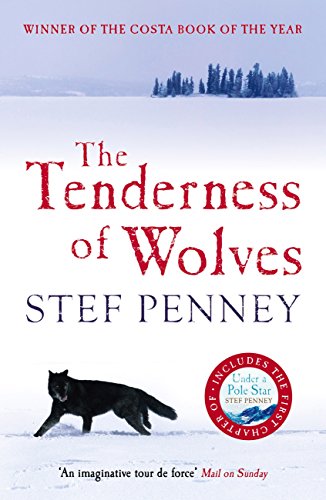
Thinking about wolves reminded me of Stef Penny’s novel, The Tenderness of Wolves, another Costa Award winning book. It’s set in Canada in 1867 beginning in a small place called Dove River on the north shore of Georgian Bay, narrated in part by Mrs Ross. It begins as she describes the last time she saw the French-Canadian trapper, Laurent Jammet alive.  He was the Ross’s closest neighbour and the next time she saw him was in his cabin, lying dead on his bed, his throat cut and he had been scalped.

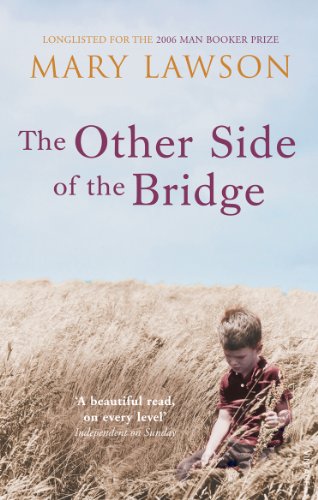
Next I thought of another book set in Canada, The Other Side of the Bridge by Mary Lawson. This is a beautiful book set in  in Northern Canada about two brothers, Arthur and Jake Dunn who grow up on a small farm near Struan (a fictional town) in the 1930s. Arthur is older, shy, dutiful, and set to inherit his father’s farm. Jake is younger and reckless, a dangerous to know. When Laura arrives in their 1930s rural community, an already uneasy relationship is driven to breaking point. It was longlisted for the Man Booker Prize in 2006.

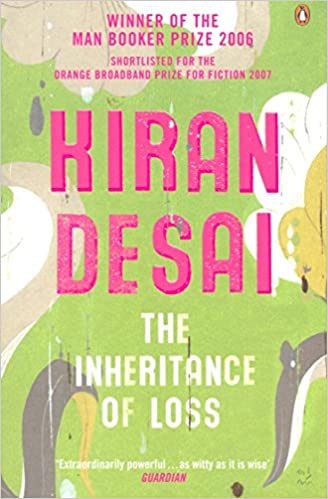
And that brings me to the last book in the chain – the winner of the Man Booker Prize in 2006 was Kiran Desai’s The Inheritance of Loss. This is set in the Himalayas where a judge and his granddaughter live in a dilapidated mansion. The judge, broken by a world too messy for justice, is haunted by his past. His orphan granddaughter has fallen in love with her handsome tutor, despite their different backgrounds and ideals. The cook’s heart is with his son, who is working in a New York restaurant, mingling with an underclass from all over the globe as he seeks somewhere to call home.

~~~

The books in my chain are linked either by the authors’ nationality, prize winning books and books about the killing of sheep! 

Next month (July 6, 2020), the chain begins with What I Loved by Siri Hustvedt – a book I loved!

Six Degrees of Separation: from The Road to The Dogs of Riga

It’s time again for Six Degrees of Separation, a monthly link-up hosted by Kate at Books Are My Favourite and Best. Each month a book is chosen as a starting point and linked to six other books to form a chain. A book doesn’t need to be connected to all the other books on the list, only to the one next to it in the chain.

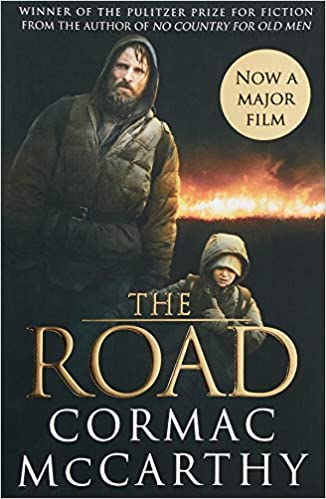
The Road film tie-in

This month the chain begins with The Road by Cormac McCarthy. This is one of my TBRs. It’s one of those books that I’m wary of reading and maybe now is not the right time – it’s a post-apocalyptic novel about a father and son walking alone through burned America, heading through the ravaged landscape to the coast.

So I’m beginning my chain by linking to the word ‘road’ in the title – Where Three Roads Meet by Salley Vickers. It’s one of the Canongate Myths series, modern versions of myths told by a number of different authors. It’s the Oedipus myth as told to Sigmund Freud during his last years when he was suffering from cancer of the mouth.

Another book that retells ancient myths is The Labours of Hercules by Agatha Christie. These were set for the Hercules by King Eurystheus of Tiryns as a penance. On completing them he was rewarded with immortality. Hercule Poirot sees himself as a superior modern day version of Hercules.

Also by Agatha Christie is Why Didn’t They Ask Evans? by Agatha Christie. The main character is Bobby Jones who is playing golf with Dr Thomas on a golf course on a misty day by the sea. They find a dying man, who had fallen off a cliff. He has no identification on him so Bobby has to discover the dead man’s true identity, with the help of Inspector Williams.

There is also a character called Bobby in Saving Missy by Beth Morrey – this Bobby is a dog, a splendid companion to Missy, a lonely old lady. But can Missy let go of the past and the guilt that is crippling her emotions?

Another book that looks at loneliness is After the Fire is Henning Mankell’s compelling last novel, set on an isolated island in the an isolated island in the Swedish archipelago. Fredrik, a retired doctor, is devastated by the fire which destroyed the house he had inherited from his grandparents. The main focus is not on crime but on Fredrik’s reflections on life, death, ageing, and loneliness.

Henning Mankell brings me to the last link in my chain –  and to a more traditional crime fiction novel – The Dogs of Riga It’s an Inspector Wallander book. A little raft is washed ashore on a beach in Sweden. It contains two men, shot dead. They’re identified as criminals, victims of a gangland hit. Wallander’s investigation takes him to Latvia.

~~~

My chain began with a dystopian novel and moved to books retelling ancient myths to crime fiction and books about loneliness.

Next month (June 6, 2020), the chain begins with Sally Rooney’s best seller (and now a TV series), Normal People.

Six Degrees of Separation: from Stasiland to A Lovely Way to Burn

It’s time again for Six Degrees of Separation, a monthly link-up hosted by Kate at Books Are My Favourite and Best. Each month a book is chosen as a starting point and linked to six other books to form a chain. A book doesn’t need to be connected to all the other books on the list, only to the one next to it in the chain.

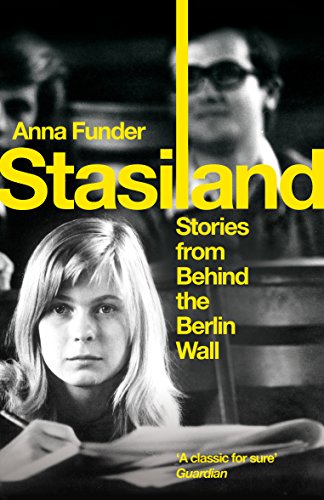
Stasiland

This month the chain begins with Stasiland: Stories From Behind the Berlin Wall by Anna Funder – the winner of the Samuel Johnson Prize for Non-Fiction 2004. It is a book I have not read but I’m wondering whether I will. It sounds both interesting and shocking.

My first link is Black Dogs by Ian McEwan, a novel about the aftermath of the Nazi era in Europe, and how the fall of the Berlin Wall in the late 1980s affected those who once saw Communism as a way forward for society. The question of the black dogs is not really answered though – were they symbolic of evil, or an expression of Churchill’s term for depression, or real creatures?  Part set in Berlin with Bernard, when the Wall came down in 1989 and part set in 1989 at the family house at St Maurice de Navacelles in Languedoc in southern France

There’s another character called Bernard, and also set partly in the Languedoc area in Carcassonne, in The Burning Chambers by Kate Mosse. Bernard Joubert, a bookseller had been imprisoned accused of being a traitor and a heretic after he had let slip information about a secret will. It’s a complicated story of war, conspiracies, love, betrayal, forgery, torture and family secrets.

Another book about a bookseller is The Bookman’s Tale by Charlie Lovett. Peter Byerly is an antiquarian bookseller. His wife has recently died and when he opens an eighteenth-century study on Shakespeare forgeries, he is shocked to find a Victorian portrait strikingly similar to his wife tumble out of its pages. He becomes obsessed with tracking down its origins. it becomes a chase around England, similar to a cross between a Dan Brown novel, an Enid Blyton Famous Five book and a murder mystery.

And that brings me to my next link – Dan Brown’s books. For pure escapism I really like them. They’re not great literature but they are great entertainment, even though they follow the same formula – a breathtaking race against time as Robert Langdon follows  clues as in The Lost Symbol. This book is set within the hidden chambers, tunnels, and temples of Washington, DC. as Langdon searches for his friend, Peter Solomon, a Mason.

And so to the next link, using the author’s name, Dan, brings me to Daniel Defoe’s A Journal of the Plague Year a novel about one man’s experiences of the year 1665, in which the Great Plague or the bubonic plague – known as the Black Death – struck the city of London.

Thinking about Defoe’s book reminded me of A Lovely Way to Burn by Louise Welsh, an apocalyptic novel in which a  new and unidentified virus, known as ‘the sweats’ sweeps the globe and London quickly descends into chaos – supermarkets are looted, roads are gridlocked as people try to flee the infection, then society just crumbles as people look out only for themselves, rioting and eventually succumbing to the mysterious illness and dying. Let’s hope the current corona virus pandemic doesn’t descend into this!

~~~

My chain began in Berlin and moved to France, then to Britain, America and ended back in Britain. It covered a variety of genres and time periods, including contemporary fiction, historical and crime fiction. The links are through places, words in the titles and authors’ names. And there is also a link that runs through the chain with the use of the letter ‘B’ either in the book titles, in the authors’ names, or in significant words in the descriptions.

Kate writes: ‘Given the current pandemic, the obvious choice for next month (May 2, 2020) is The Road by Cormac McCarthy.’

Six Degrees of Separation: from Wolfe Island to Blue Lightning

It’s time again for Six Degrees of Separation, a monthly link-up hosted by Kate at Books Are My Favourite and Best. Each month a book is chosen as a starting point and linked to six other books to form a chain. A book doesn’t need to be connected to all the other books on the list, only to the one next to it in the chain.

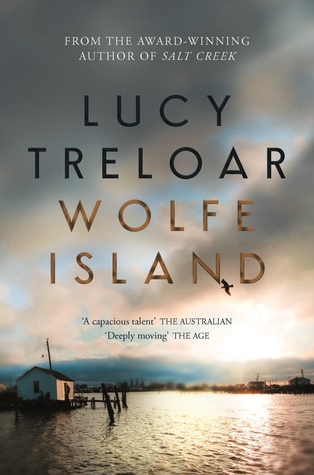
Wolfe Island

This month the chain begins with Lucy Treloar’s Wolfe Island. It is a book I have not read but one I think I’d like. It’s about Kitty Hawke, the last inhabitant of a dying island sinking into the wind-lashed Chesapeake Bay. She has resigned herself to annihilation… until one night her granddaughter blows ashore in the midst of a storm, desperate, begging for sanctuary.

I’m beginning my chain with a book by another LucyThe Book of Lost and Found by Lucy Foley. It’s the story of Tom and Alice beginning in 1928 in Hertfordshire and moving backwards and forwards in time and place to 1986, from Paris, to London, Corsica and New York. It all revolves around Kate, whose mother, June, had recently died in a plane crash.

The Flight by M R Hall is also about a plane crash. When Flight 189 plunges into the Severn Estuary, Coroner Jenny Cooper finds herself handling the case of a lone sailor whose boat appears to have been sunk by the stricken plane, and drawn into the mysterious fate of a ten year-old girl, Amy Patterson, a passenger on 189, whose largely unmarked body is washed up alongside his.

There is also a coroner in A Rustle of Silk by Alyis Clare – set in 1603 when former ship’s surgeon Gabriel Taverner has settled in Devon near his family and he is trying to set up a new practice as a physician. But it is not easy to gain the locals’ trust and someone is leaving gruesome little gifts on his doorstep. The local coroner, Theophilus Davey asks him to examine a partially decomposed body found beside the river.

Another book with the word ‘silk’ in the title is The House of Silk by Anthony Horowitz, a Sherlock Holmes continuation novel. It’s narrated by Watson as he looks back on two of the most puzzling and sinister cases he and Holmes had to solve November 1890 – that of The Man in the Flat Cap and The House of Silk. The first involves an art dealer, Mr Carstairs who is being threatened by a member of the American Flat Cap Gang, whereas the second concerns the murder of Ross, a new member of the Baker Street Irregulars.

The Sign of Four by Sir Arthur Conan Doyle is my next link – the second book about the original Sherlock Holmes. Holmes and Watson investigate the mystery Mary Morstan presents to them – it involves the murder of Bartholomew Sholto, the Agra treasure stolen during the Indian Mutiny of 1857 and a secret pact between the four thieves – the ‘Four’ of the title, resulting in a chase down the River Thames in a super-fast steam launch.  I listened to an audiobook of the novel, narrated by Derek Jacobi.

My last link is another audiobookBlue Lightning by Ann Cleeves, the fourth in her Shetland books, featuring Detective Jimmy Perez. It completes the chain too by linking back to Wolfe Island because it is set on another island, Fair Isle where Perez returns to his family home with his fiancée Fran. A woman’s body is discovered at the Fair Isle’s bird observatory, with feathers threaded through her hair, but as a storm sets in, Far Isle is cut off leaving Perez with no support from the mainland. 

My chain is a circle beginning and ending with books set on islands. They move from Chesapeake Bay in the Mid-Atlantic region through mainland Britain to Shetland in the Northern Atlantic covering a variety of genres and time periods, including contemporary fiction, historical and crime fiction.

Next month (4 April 2020), we’ll begin with Anna Funder’s ‘classic on tyranny and resistance’ – Stasiland the winner of the Samuel Johnson Prize for Non-Fiction 2004.

Six Degrees of Separation: from Fleishman is in Trouble to …

I love doing Six Degrees of Separation, a monthly link-up hosted by Kate at Books Are My Favourite and Best. Each month a book is chosen as a starting point and linked to six other books to form a chain. A book doesn’t need to be connected to all the other books on the list, only to the one next to it in the chain.

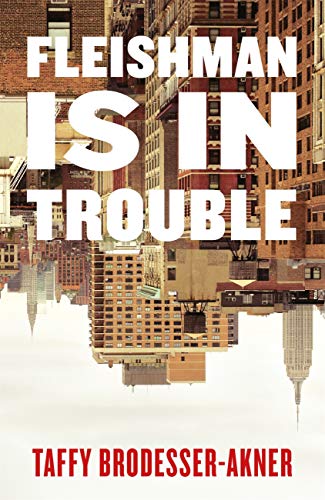
Fleishman

This month the chain begins with Fleishman is in Trouble by Taffy Brodesser-Akner,  a novel described as ‘a blistering satirical novel about Marriage, Divorce and Modern relationships‘. It’s a book that so many people declare is incredibly wise, a powerful feminist book, with depth, wit, nuance and life, shrewdly observed and and utterly of this moment. It is a book I have not read and also one that I doubt I will read.

Where to go from there? I had trouble deciding!

In the end I decided to go with the word ‘trouble‘ and that made me think of Bill Bryson’s book Troublesome Words, a book about the use of words, which is probably as far removed from Fleishman is in Trouble that you could get. It’s arranged like a dictionary, so a book to dip into rather than one to read straight through. For example if you want to know the difference between ‘that’ and ‘which’ this is the book to go to. And how about starting a sentence with the word ‘and’?  I was taught at school that you should never do that, not so says Bryson.

From Troublesome Words my mind jumped to The Sentence is Death by Anthony Horowitz, as a sentence is made up of words. Rosemary, the wife of wealthy George Barton dies suddenly at her birthday party at a West End Restaurant, the Luxembourg, after drinking a glass of champagne laced with cyanide.

And so onto Sparkling Cyanide by Agatha Christie. Rosemary, the wife of wealthy George Barton dies suddenly at her birthday party at a West End Restaurant, the Luxembourg, after drinking a glass of champagne laced with cyanide.

A birthday party features in Nicola Upson’s Fear in the Sunlight, the fourth novel featuring Josephine Tey. Summer, 1936. The writer, Josephine Tey, joins her friends in the holiday village of Portmeirion in Wales to celebrate her fortieth birthday. Alfred Hitchcock and his wife, Alma Reville, are there to sign a deal to film Josephine Tey’s novel, A Shilling for Candles.

So, my next link is to another book set in Wales, but in the Brecon Beacons not the coast. It’s Do Not Disturb by Claire Douglas. It also links back to Fleishman is in Trouble in that it’s about the trouble caused when Selena, Kirsty’s cousin, arrives at their new guesthouse and murder follows.

Finally, another troublesome character called Selena appears in Sweet Tooth by Ian McEwan. She was a spy whose mission failed – a story of deception, about writers and writing and readers and reading, with multiple stories within stories.

My chain begins and ends with a book about trouble, linked by a book about troublesome words, and murder mysteries involving the use of cyanide, birthday parties, books set in Wales and books with even more troublesome characters – a real mixed bag of connections.

Next month (7 March 2020), we’ll begin with Lucy Treloar’s Wolfe Island, a book that I know nothing about. (Bryson says it’s OK to end  sentence with a preposition).