The Day of the Lie by William Brodrick

William Brodrick’s books are meaty, books that make me think. Nothing is straight forward, they’re layered books, delving into the past, uncovering secrets and revealing crimes. They are well researched, bringing the past to life.
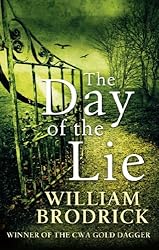
In The Day of the Lie (the 4th Father Anselm book) the past in question is post Second World War Poland, covering  the early 1950s, the early 1980s and the present day.

Blurb from the back cover of my paperback copy:

In present day Cambridge, Father Anselm receives a visit from an old friend with a dangerous story to tell – the story of a woman in Eastern Europe in the icy grip of the Cold War. She was brave, brilliant … and betrayed by someone close to her – someone still unknown. What became of this woman and the dark secret she kept?

No one can be trusted. Nothing is as it seems. Before more blood is spilt, Anselm must peel back years of history, decades of secrets and a half-century of lies in order to expose a secret so shocking that some would rather die than see it revealed.

Father Anselm’s old friend John has asked him to investigate who had betrayed  Roza Mojeska. She had been part of an underground resistance movement, had been arrested and tortured by the secret police, in particular by Otto Brack, in order to uncover the identity of the Shoemaker, the author of a dissident newspaper, Freedom and Independence.

Never explicitly graphic, Brodrick conveys the horror of the torture chamber and as Anselm’s Prior warns him he had to enter ‘the world of Otto Brack, this frightening man who learned how to bring about evil by exploiting someone who is good, laying – in part – the evil at their door.‘ (page 75-6) It’s a world where ‘twisted people lead twisted lives and the roads they build around them are never straight and true.’

My knowledge of the period is limited, so I found the historical setting quite difficult to follow, as the narrative switches between the time periods, but once I had sorted out the relationships between the characters (or I thought I had) it became clearer. But there is also the problem of working out who is ‘good’ and who is ‘bad’, just who is telling the truth, whose recollection of the past is ‘correct’? I thought I knew, but then there was a shift and I wasn’t sure right up to the end of the book.

Looking back on the book now (I finished reading it over a week ago) I can say I did enjoy it, but it was hard work in parts.

William Brodrick became a barrister, having been an Augustinian monk for six years (the other way round from his fictional character, Father Anselm). After 10 years at the Bar, his interest in writing led him to writing the Father Anselm books.

The Father Anselm books (with links to my posts) are:

  1. The Sixth Lamentation (2003)
  2. The Gardens of the Dead (2006)
  3. A Whispered Name (2008) – the best one in my opinion
  4. The Day of the Lie (2012)
  5. The Discourtesy of Death (2013)

And the latest book has just been published:
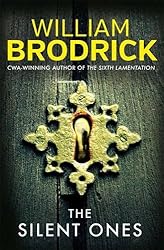
The Silent Ones by William Brodrick published 2 July 2015.

The Day of the Lie fits into the Mount TBR Challenge and is also a book I identified as one for the 10 Books of Summer Challenge.

Books Read in May 2015

I’m pleased that I’ve read 8 books in May as my reading and blogging was interrupted by gardening. The grass is now growing at a rate of knots and the weeds, especially the ground elder, are rampant, threatening to take over the borders. So I’ve spent a lot of time this month mowing, weeding and strimming.

But I’ve also read these books and written about all of them, except H is for Hawk – post to follow some time soon (I hope). Three of the books are non fiction, one is a book from Lovereading for review and six are library books – no TBR books (books acquired before 1 January 2015) this month! I must get back to reading from those books I’ve had for years very soon!

These are the books I read:

Bks May 2015

Gray Mountain by John Grisham (Library book) – this book is just as much a campaign against injustice and the misuse of power, about the good little guys against the big bad guys as his earlier books are. In this case it’s the big coal companies that come under the microscope, companies that are  ruining the environment by strip-mining in the Appalachian mountains. I liked the view of the small town community, the mountain scenery, the legal cases large and small and the tension created by the danger of opposing the big coal companies.

The Lost Garden by Katharine Swartz (Review book) – an emotionally intense novel of love, loss and grief, set in both the past and the present day, in a small village on the Cumbrian coast, a gentle story, well told and an enjoyable read. In 1919 Eleanor, the daughter of the vicar of Goswell, is struggling to adjust to the loss of her brother, Walter who died just before the Armistice was declared and in the present day half-sisters Marin and Rebecca are coming to terms with the death of their father and his wife.

Gently North West by Alan Hunter (Library book) – set in the fictitious village of Strathtudlem in Scotland in 1967 where Gently is on holiday with his friend, Barbara Merryn and his sister, Bridget and her husband. Gently gets involved in the investigations into the murder of Donnie Dunglass,  found, stabbed in the back, face down on the heather. I thought it was an enjoyable book although I thought the murder mystery was rather far-fetched.

Nothing To Be Frightened Of by Julian Barnes (Library book, Non Fiction) – a collection of thoughts centred around Barnes’s fear of death and so inevitably he considers the question of religion and especially God. Interwoven with his thoughts about his agnosticism and death are anecdotes about his family and himself, thoughts on literature (particularly French literature) and it’s relationship to life. I found it all fascinating.

Dry Bones That Dream by Peter Robinson (Library book) – Banks investigates the murder of Keith Rothwell, an accountant, a  mild-mannered, dull sort of person it seems. But is that all there is to Rothwell? Banks unearths the secrets the characters have kept hidden from their family and friends. There’s also money-laundering and international and political shenanigans involved. Maybe not the best Banks book I’ve read.

H is for Hawk by Helen Macdonald (KindleNon Fiction) – no post yet. In some ways a difficult book to read – about training a goshawk and the author’s struggle with grief, mourning the death of her father.

Harbour Street by Ann Cleeves (Library book) This is the fifth Vera book and I loved it. It’s so good I read it twice because I watched the TV version after I finished reading the book – and it confused me as it’s different from the book! So I went back and re-read it. It is so much better than the TV adaptation, which I think suffered from being condensed into just one hour and a half length programme.

Poirot and Me by David Suchet (Library book, Non Fiction) – this consists largely of Suchet’s summaries of the stories and how he went about analysing Poirot’s character and how he played the part. This is a fascinating account of both the Poirot series and of David Suchet’s career.

I have no difficulty this month with naming my favourite book of the month. All the time I was reading it I was thoroughly absorbed and intrigued by Harbour Street by Ann Cleeves.

The Lost Garden by Katharine Swartz

The Lost Garden is  an emotionally intense novel of love, loss and grief, set in both the past and the present day, in a small village on the Cumbrian coast.

In 1919 Eleanor, the daughter of the vicar of Goswell, is struggling to adjust to the loss of her brother, Walter who died just before the Armistice was declared and in the present day half-sisters Marin and Rebecca are coming to terms with the death of their father and his wife.

The link between the two stories centres around the walled garden at the back of the Bower House, a small house next to the church. It was said to have been the herb garden for the monastery before the Reformation.

In 1919 the garden is covered in brambles and Eleanor decides she wants to make it into a garden of remembrance, a place to just be, to remember or to forget as much as you need. And she begins to restore it with the help of the church gardener, Jack. As they do so the garden begins to blossom as winter moves into spring and summer, but the mood of both the family and the country remains sombre as they come to terms with the aftermath of the First World War.

In the present day, Marin has bought the Bower House, not knowing its history. Rebecca discovers the walled garden once more overgrown with brambles and weeds and it captures her imagination. And when Marin she sees a photo of a young woman in the garden, thought to have been taken around 1920 she is determined to find out more – just who was the young woman and what is underneath the brambles. With the help of the local gardener, Joss, she begins to restore the garden and in doing so they discover secrets about both the past and the present.

The Lost Garden is a gentle story, well told and an enjoyable read, switching between the past and the present. The differences in attitudes and social conventions of the times provide a distinct contrast and highlights the parallels between the two stories. I liked the story-lines for both Marin and Eleanor, both have difficult relationships with their sisters and both are coming to terms with their grief, but on the whole I was more interested in Eleanor’s story, set against the backdrop of the post First World War.

My thanks to Lovereading for providing an advance proof of this novel, due to be published 15 May 2015. The Lost Garden is the second book in Katharine Swartz’s Tales from Goswell series – the first is The Vicar’s Wife.

Dacre’s War by Rosemary Goring

Dacre’s War is compelling reading, a  thoroughly absorbing and beautifully written novel set in the Scottish and English Borders and London between 1523 – 1525 some ten years after the events described in Rosemary Goring’s earlier book, After Flodden. I wondered as I began reading whether it could equal After Flodden, a book I loved when I read it two years ago – it did. I think it even surpasses it.

I loved Dacre’s War and keen as I was to read to the end I didn’t want to leave the characters. Once again I was swept away by the story, re-living the scenes through Rosemary Goring’s vivid descriptions and the drama of the characters’ lives, people who came to life in the pages of this book.

Dacre’s War describes how Adam Crozier, the head of his clan, plots to take revenge on Lord Thomas Dacre, the Warden General of the English Marches and the Keeper of Carlisle, who had brought about the death of Adam’s father. Ten years after the Battle of Flodden, Dacre is the most powerful man in the north of England, but the Marches are a constant battlefield, dangerously out of control, and a hotbed of thieves and killers in thrall to the Warden. Without him Henry VIII believes the situation would be much worse.

It is against this background that Crozier forms an alliance with Dacre’s enemies, both English and Scots to inform Henry of Dacre’s crimes and bring about his downfall.

There are some remarkable scenes in this book, and amongst them are the scenes in the Star Chamber where Dacre is brought to answer the charges against him in front of Cardinal Wolsey and his imprisonment in the Fleet Prison. I felt as though I was there, watching, breathing the same air – not a pleasant experience. Similarly with Crozier, I could visualise his home, Crozier’s Keep, sense the tension and fear as his wife, Louise, is left at home, pregnant and in danger of losing the baby.

There is so much packed in this book, political intrigue, personal conflict and vengeance, and spies, manipulators and double crossers abound. It is impossible to write more without revealing the plot and the eventual ending. It’s a brilliant book.

Dacre’s War is due to be published in June 2015. My copy is a pre-publication review copy courtesy of www.lovereading.co.uk.

  • Hardcover: 352 pages
  • Publisher: Polygon (16 June 2015)
  • Language: English
  • ISBN-10: 1846973112
  • ISBN-13: 978-1846973116

Rosemary Goring was born in Dunbar and studied social and economic history at the University of St Andrews; and, after graduation, worked at W&R Chambers as a reference editor. Rosemary was the literary editor of Scotland on Sunday, followed by a brief spell as editor of Life & Work, the Church of Scotland’s magazine, before returning to newspapers as literary editor of the Herald, and later also of the Sunday Herald. In 2007 she published Scotland: The Autobiography: 2000 Years of Scottish History By Those Who Saw it Happen, which has since been published in America and Russia.

Reading Challenges: Read Scotland, Historical Fiction Challenge.

The Interpretation of Murder by Jed Rubenfeld

I was looking forward to reading The Interpretation of Murder by Jed Rubenfeld. It had sat on my shelves for nearly 8 years and I decided it was time to read it this year, including it in my TBR Pile Challenge list of books. It’s historical fiction – a mixture of murder mystery and psychoanalysis with an interpretation of ‘˜Hamlet‘˜ thrown in.

It began well as Sigmund Freud and Carl Jung arrived in New York in 1909 to give a series of lectures and to receive an honorary degree from Clark University. That much is fact, but this book is a work of fiction as Rubenfeld makes clear in his Author’s Note and most of the characters are fictional.

There are some things that I did think were well done, for example the descriptions of New York as the city grew, its architecture and streets, the building of the Manhattan Bridge; and as I mentioned earlier the interpretation of ‘Hamlet‘. But as I read on I began to lose interest and at times I felt it was slowed down too much by psychological exposition and debate. Rubenfeld is no doubt well grounded in Freud – as a Princeton undergraduate he wrote his senior thesis on Freud – and also in Shakespeare, which he studied at the Juilliard School of Drama. I found his ideas on interpreting ‘Hamlet‘ most interesting. But I was less enamoured with the dialogue between Freud and Jung, which as Rubenfeld explained is drawn from their own letters, essays and statements, which whilst being factually accurate, doesn’t come across as real conversation.

I thought the murder mystery was unconvincing and too convoluted. Briefly, the morning after Freud’s arrival a young woman is found brutally murdered and later a second, Nora Acton, is attacked in a similar fashion but she survives, although unable to speak. Freud is asked to help by psychoanalysing Nora and asks his young American colleague, Dr Stratham Younger to carry out the analysis. To cut a long story short Younger is helped in his investigations by Detective Jimmy Littlemore and together they discover what really happened.

Maybe I was expecting too much from this book, which is described in the blurb as’Spectacular … fiendishly clever‘, and a ‘thrilling heart-in-the-mouth read … Once you start reading, it’s impossible to put down.’  It jumps about a bit too much for my liking, between narrators and sub-plots, some of the characters came over a bit flat and I didn’t find it either ‘fiendishly clever‘ or ‘impossible to put down‘.

Stacking the Shelves

STSmall

Stacking The Shelves is all about sharing the books you are adding to your shelves. This means you can include ‘real’ and ‘virtual’ books (ie physical and ebooks) you’ve bought, books you’ve borrowed from friends or the library, review books, and gifts.

This is my first entry in Stacking the Shelves. These are last week’s new arrivals:

In the heart of the sea

First ‘real’ books. It was Mother’s Day last Sunday and my son bought me this book, In the Heart of the Sea: the Epic True Story that Inspired Moby Dick by Nathaniel Philbrick – wonderful!

From the back cover:

The sinking of the Nantucket whaleship Essex by an enraged spermwhale far out in the Pacific in November 1820 set in train one of the most dramatic sea stories of all time. Accounts of the unprecedented whale attack inspired Herman Melville’s mighty novel Moby Dick, but In the Heart of the Sea goes beyond these events to describe what happened when the twenty mixed-race crewmen took to three small boats and what, three months later, the whaleship Dauphin, cruising off the coast of South America, discovered when it spotted a tiny boat sailing erratically across an open ocean.

The other books in the photo above are library books:

  • Collins Artist’s Little Book of Inspiration by Hazel Soan – a lovely little book looking at the basics elements of a painting using watercolours, oils and acrylics, with demonstrations and projects to try. I like just looking at the paintings!
  • The Reckoning by Jane Casey, the second in her Maeve Kerrigan series. I reserved this because I’d enjoyed the first one, The Burning and wanted to read more. This one begins with the murders of two paedophiles.
  • Conan Doyle: the Man who Created Sherlock Holmes by Andrew Lycett. This book was on a display stand and even though it’s a huge, heavy book I fancied reading it. It was probably on display following the  recent TV drama Arthur and George, which I enjoyed. I read Julian Barnes’ book of the same name some years ago, which pre-dates this biography.

When Lovereading offered a review copy of Dacre’s War by Rosemary Goring I didn’t hesitate because I’d loved Rosemary Goring’s earlier novel, After Flodden.

Dacres War

Dacre’s War is set 10 years after the battle of Flodden in the Scottish and English borders, a story of ‘personal and political vengeance’ as Adam Crozier sets out to take revenge on Lord Thomas Dacre, who had ordered the death of his father. It’s due to be published on 14 May 2015.

Lastly, the latest ebook I’ve downloaded is today’s Kindle Daily Deal, Last Man in Tower by Aravind Adiga. A. N. Wilson ‘was absolutely mesmerized by this novel’ and thinks ‘that Aravind Adiga is already, with this, his second book, the most exciting novelist writing in English today.’ 

Last Man in Tower