The Interpretation of Murder by Jed Rubenfeld

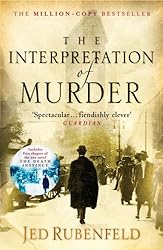
I was looking forward to reading The Interpretation of Murder by Jed Rubenfeld. It had sat on my shelves for nearly 8 years and I decided it was time to read it this year, including it in my TBR Pile Challenge list of books. It’s historical fiction – a mixture of murder mystery and psychoanalysis with an interpretation of ‘˜Hamlet‘˜ thrown in.

It began well as Sigmund Freud and Carl Jung arrived in New York in 1909 to give a series of lectures and to receive an honorary degree from Clark University. That much is fact, but this book is a work of fiction as Rubenfeld makes clear in his Author’s Note and most of the characters are fictional.

There are some things that I did think were well done, for example the descriptions of New York as the city grew, its architecture and streets, the building of the Manhattan Bridge; and as I mentioned earlier the interpretation of ‘Hamlet‘. But as I read on I began to lose interest and at times I felt it was slowed down too much by psychological exposition and debate. Rubenfeld is no doubt well grounded in Freud – as a Princeton undergraduate he wrote his senior thesis on Freud – and also in Shakespeare, which he studied at the Juilliard School of Drama. I found his ideas on interpreting ‘Hamlet‘ most interesting. But I was less enamoured with the dialogue between Freud and Jung, which as Rubenfeld explained is drawn from their own letters, essays and statements, which whilst being factually accurate, doesn’t come across as real conversation.

I thought the murder mystery was unconvincing and too convoluted. Briefly, the morning after Freud’s arrival a young woman is found brutally murdered and later a second, Nora Acton, is attacked in a similar fashion but she survives, although unable to speak. Freud is asked to help by psychoanalysing Nora and asks his young American colleague, Dr Stratham Younger to carry out the analysis. To cut a long story short Younger is helped in his investigations by Detective Jimmy Littlemore and together they discover what really happened.

Maybe I was expecting too much from this book, which is described in the blurb as’Spectacular … fiendishly clever‘, and a ‘thrilling heart-in-the-mouth read … Once you start reading, it’s impossible to put down.’  It jumps about a bit too much for my liking, between narrators and sub-plots, some of the characters came over a bit flat and I didn’t find it either ‘fiendishly clever‘ or ‘impossible to put down‘.

Stacking the Shelves

STSmall

Stacking The Shelves is all about sharing the books you are adding to your shelves. This means you can include ‘real’ and ‘virtual’ books (ie physical and ebooks) you’ve bought, books you’ve borrowed from friends or the library, review books, and gifts.

This is my first entry in Stacking the Shelves. These are last week’s new arrivals:

In the heart of the sea

First ‘real’ books. It was Mother’s Day last Sunday and my son bought me this book, In the Heart of the Sea: the Epic True Story that Inspired Moby Dick by Nathaniel Philbrick – wonderful!

From the back cover:

The sinking of the Nantucket whaleship Essex by an enraged spermwhale far out in the Pacific in November 1820 set in train one of the most dramatic sea stories of all time. Accounts of the unprecedented whale attack inspired Herman Melville’s mighty novel Moby Dick, but In the Heart of the Sea goes beyond these events to describe what happened when the twenty mixed-race crewmen took to three small boats and what, three months later, the whaleship Dauphin, cruising off the coast of South America, discovered when it spotted a tiny boat sailing erratically across an open ocean.

The other books in the photo above are library books:

  • Collins Artist’s Little Book of Inspiration by Hazel Soan – a lovely little book looking at the basics elements of a painting using watercolours, oils and acrylics, with demonstrations and projects to try. I like just looking at the paintings!
  • The Reckoning by Jane Casey, the second in her Maeve Kerrigan series. I reserved this because I’d enjoyed the first one, The Burning and wanted to read more. This one begins with the murders of two paedophiles.
  • Conan Doyle: the Man who Created Sherlock Holmes by Andrew Lycett. This book was on a display stand and even though it’s a huge, heavy book I fancied reading it. It was probably on display following the  recent TV drama Arthur and George, which I enjoyed. I read Julian Barnes’ book of the same name some years ago, which pre-dates this biography.

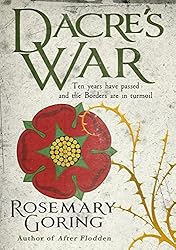
When Lovereading offered a review copy of Dacre’s War by Rosemary Goring I didn’t hesitate because I’d loved Rosemary Goring’s earlier novel, After Flodden.

Dacres War

Dacre’s War is set 10 years after the battle of Flodden in the Scottish and English borders, a story of ‘personal and political vengeance’ as Adam Crozier sets out to take revenge on Lord Thomas Dacre, who had ordered the death of his father. It’s due to be published on 14 May 2015.

Lastly, the latest ebook I’ve downloaded is today’s Kindle Daily Deal, Last Man in Tower by Aravind Adiga. A. N. Wilson ‘was absolutely mesmerized by this novel’ and thinks ‘that Aravind Adiga is already, with this, his second book, the most exciting novelist writing in English today.’ 

Last Man in Tower

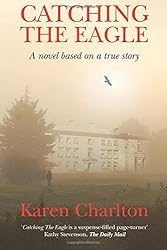
Catching the Eagle by Karen Charlton

I wanted to read a novel by a local author so I checked the library website for North East writers, where I found Catching the Eagle by Karen Charlton.
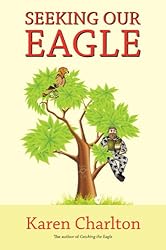
Summary from the book cover:

Easter Monday, 1809: Kirkley Hall manor house is mysteriously burgled. When suspicion falls on Jamie Charlton, he and his family face a desperate battle to save him from the gallows.

When 1,157 rent money is stolen from Kirkley Hall, it is the biggest robbery Northumberland has ever known. The owner sends for Stephen Lavender, a principal officer with the Bow Street magistrate’s court in London, to investigate the crime. Suspicion soon falls on impoverished farm labourer, Jamie Charlton, and the unpopular steward, Michael Aynsley.

Jamie Charlton is a loving family man but he is hot-tempered and careless. As the case grows against him, it seems that only his young brother, William, can save him from an impending miscarriage of justice.

But William is struggling with demons of his own–he is falling in love with Jamie’s wife.’Catching the Eagle’, the first novel in the Regency Reivers series, is a fictionalized account of a trial that devastated a family and divided a community.

This is not just by a local author, and set in Northumberland, it is also based on a true story –  that of Karen Charlton’s husband’s ancestors.

I liked the opening of Catching the Eagle beginning with a Prologue, setting the scene as an eagle soared over the Northumberland landscape:

… its huge shadow caressed the ruined walls of crumbling castles and the creaking rotting stumps of ancient gibbets.The eagle plucked unsuspecting prey from the bleak, snow-covered fells and drank from remote rocky waterfalls dripping with golden daggers.

It landed in a tree above a labourer’s cottage where Jamie Charlton lived with his wife Priscilla and their children. I like Karen Charlton’s leisurely descriptive style of writing and found the whole book to be fascinating.  She has written an even-handed account of the robbery and the subsequent trials, so much so that I began to wonder whether Jamie Charlton was innocent or guilty, although you know from the outset that he was transported as a convicted felon to New South Wales. Did he or did he not steal the money? And what will happen to the eagle?

This is the type of historical fiction that I like. The characters come across as real people, with real problems in a real time and place (Northumberland 1809 – 1811). It highlights the social and cultural setting. Jamie was without influence or money behind him up against a judicial system run by people with power who needed to find a culprit. His family suffered along with him as he languished in goal in squalor, where he was caged as he awaited trial – not once, but twice.

I wondered whether Stephen Lavender, the detective employed by  Nathaniel Ogle, the owner of Kirkley Hall was also a real historical figure. Karen Charlton has also written Seeking Our Eagle, another fascinating book, an account of how she came to write Catching the Eagle whilst researching her husband’s family history.  And yes, Stephen Lavender did exist and he was a detective. He later became the Deputy Chief Constable of Manchester after the formation of the police force by Sir Robert Peel.
Indeed reading Catching the Eagle reminded me of The Suspicions of Samuel Whicher by Kate Summerscale, featuring Detective Inspector Jonathan Whicher of Scotland Yard, the book that won the Samuel Johnson Prize for Non-Fiction in 2008.

Karen Charlton has done her research very well and has written a novel full of intrigue, tension and realism that kept me captivated from start to finish. See her website, Karen Charlton, to read more about Karen and her books.

She has also written The Heiress of Linn Hagh, a spin-off novel from Catching the Eagle, which features Detective Stephen Lavender and his sidekick, Constable Woods. And there are more Detective Lavender Series books on the way!

Catching the Eagle:

  • Paperback: 280 pages
  • Publisher: Famelton Publishing; 1 edition (19 July 2014)
  • ISBN-10: 0992803640
  • ISBN-13: 978-0992803643
  • Product Dimensions: 15.2 x 1.8 x 22.9 cm
  • Source: Library book

Seeking the Eagle:

  • Format: Kindle Edition
  • File Size: 1969 KB
  • Print Length: 166 pages
  • Publisher: Famelton Publishing; 1st edition (7 Aug. 2012)
  • Sold by: Amazon Media EU S.à r.l.
  • Language: English
  • ASIN: B008UZYOR2
  • Source: I bought it

As always I didn’t read either book just for any Reading Challenges, but Catching the Eagle does fit very well into a couple – the 2015  Historical Fiction Reading Challenge and the What’s in a Name Challenge, in the book with an animal in the title category and Seeking Our Eagle into the Nonfiction Reading Challenge.

First Chapter First Paragraph: The Zig Zag Girl

Every Tuesday Diane at Bibliophile by the Sea hosts First Chapter First Paragraph Tuesday Intros, where you can share the first paragraph, or a few, of a book you are reading or thinking about reading soon.

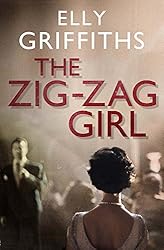
My choice this week is: The Zig Zag Girl by Elly Griffiths, a book I have just finished reading.

It begins:

 ‘Looks as if someone’s sliced her into three,’ said Solomon Carter, the police surgeon chattily. ‘We’re just missing the middle bit.’

I must not be sick, thought Edgar Stephens. That’s what he wants. Stay calm and professional at all times. You’re the policeman, after all.

What do you think? Would you read on?

I did. I’m a squeamish reader and don’t like anything too graphically gory and you might think this opening would put me off. But it didn’t – for one thing, it doesn’t go into detail about how the body got cut into three. Well, yes later down the page there’s mention of ‘clotted blood and smell of decaying flesh‘, but that’s it, it’s all secondhand, no scenes where the murderer is described doing the terrible act, no dwelling on what he/she was doing to the other person.

Blurb from the inside flap:

Brighton, 1950 – a post-war world of rationing, austerity, pea-souper fogs and seedy seaside resorts. When the body of a girl is found, cut into three, DI Edgar Stephens recalls a magic trick that he saw as a boy. The illusion is called the Zig Zag Girl and its inventor, Max Mephisto, is an old friend of his. They served together in the war as part of a shadowy unit called the Magic Men, formed to use stage trickery to confuse the enemy.

Edgar tracks down Max and asks for his help. Max is still on the circuit, touring seaside towns in the company of ventriloquists, sword-swallowers and dancing girls. Max is reluctant to get involved but the changes his mind when the dead girl turns out to be his former stage assistant. Another death follows, again gruesomely staged to resemble a magic trick, the Sword Cabinet.

Edgar and Max become convinced that the answer to the murders lies back in their army days and the antics of the Magic Men.

When Edgar receives a letter warning of another ‘trick’, he knows that they are all in danger. The Wolf Trap is the deadliest illusion of all, but who will be the next victim?

I’ve read some of Elly Griffiths’ Ruth Galloway, forensic archaeologist, crime novels, which I have enjoyed despite wishing they weren’t written in the present tense. So it was with relief that I came to The Zig Zag Girl and found it’s written in the past tense.

I enjoyed it in several ways – for its characters, particularly Edgar Stephens and its setting, recalling the atmosphere of the 1950s and how times were changing. The theatrical elements are fascinating – life on the variety circuit was not all glitz and glamour; and the activities of the  Magic Men unit during the war had of course an immense effect on all their lives. I worked out quite early on who the murderer was – but not why, which only dawned on me at the end of the book.

I don’t know if this is going to be the start of a new series – I’d read more if it is.

Turn of the Tide by Margaret Skea

I have read some wonderful debut novels this year –  Turn of the Tide by Margaret Skea is one of them. I loved it. It’s historical fiction and it captivated me completely transporting me  back in time to 16th century Scotland. If you have ever wondered,  as I have, what it must have been like to live in a Tower House in the Scottish Borders then this book spells it out so clearly. And it puts you firmly in the middle of the centuries old feud between the Cunninghames and the Montgomeries, with all the drama of their battles, ambushes and schemes to further their standing with the young King James VI. It’s a tale of love, loyalty, tragedy and betrayal.

It’s no wonder that the book was  the Historical Fiction Winner in the 2011 Harper Collins / Alan Titchmarsh People’s Novelist Competition and won the Beryl Bainbridge Award for Best First Time Author 2014.

There is a map setting the scene in Ayreshire on the west of Scotland between the Firth of Clyde and the Solway Firth, showing the major sites in the book. I found both the map and the list of main characters most useful whilst following the story. And to complete my understanding there is a Glossary of Scottish words at the back of the book, although the meaning of most of them was clear from the context.

It begins in 1586  with an ambush in which several of the Montgomerie Clan, on their way to James VI’s court at Stirling are killed, followed by the Clan’s reprisal on the Cunninghames. James, anxious to settle the feud between his nobles, asks them to swear to bring their feud to an end, which brings an uneasy peace between them – for a while.

Most of the characters are real historical figures, includingJames VI, the Cunninghames – William, the Master of Glencairn and the Montgomeries – Hugh, the Master of Braidstane and their families. The feud is also a matter of fact. It began in 1488 when James IV gave control of the Balliewick of Cunninghame to a Montgomerie! It didn’t come to an end until the beginning of the 17th century.

The main characters,  Munro and his wife Kate and a few of the others are fictional. Munro is a minor laird who whilst owing allegiance to the Cunninghames, has increasing sympathy and liking for the Montgomeries. His dilemma only increases throughout the book.

Margaret Skea has done her research well, not just the feud and battles but also the domestic settings are detailed down to descriptions of the clothing, the food and so on – even how the town house rooms were finished with limewash, which involved carrying bucket-load after bucket-load up four flights of stairs to rejuvenate the attic chamber where the children slept. But it slots seamlessly into the story, adding colour and life to the scenes.

It’s all fascinating  – the hunt arranged for the king, the account of his journey across the North Sea to bring home his bride, Anne of Denmark, the scenes as the royal party lands at Leith and the coronation in Edinburgh, as well as the jockeying for positions, and the battles all culminating in a tense and dramatic finale.

Not only is this riveting history it is also so well written, beautifully descriptive:

Across the valley the castle reared against the skyline, the town tumbling down the slope below, wisps of smoke beginning to unfurl, first one, then another, then too many to count, as Stirling awoke.

The countryside was spread out before him like a map; the distant hills to the south west smudged against the watery sky; the river a dark ribbon snaking through the marshland below, cradling Cambuskenneth in a giant u-shaped loop. (pages 98-99)

and this – such a startling image:

Daylight slipped into their bedchamber like wraith; grey and insubstantial, filtered through the grime and soot that coated the outside of the windowpanes. (page 247)

And I’m delighted that Margaret Skea is writing a sequel as I really want to know what happened next to Munro and his family. The working title is A House Divided, continuing the story in the late 1590s.

  • Paperback: 416 pages – also available on Kindle
  • Publisher: Capercaillie Books Limited; first edition (22 Nov. 2012)
  • Language: English
  • ISBN-10: 1909305065
  • ISBN-13: 978-1909305069
  • Source: I bought my copy
  • Author’s website: Margaret Skea, Writing yesterday, today

New-To-Me Books

I took a bagful of books back to Barter Books yesterday and came home with these books:

Christie encyclopedia 01 P1010423From top to bottom

  • Sad Cypress by Agatha Christie – this is one of the few of her books that I have yet to read. I’ve been looking out for this one, first published in 1940. It’s a Poirot mystery in which there are two victims murdered by poison.

As I hope to finish reading Agatha Christie’s books this year I’ve decided to attempt reading as many of Ruth Rendell’s books and those she has written as Barbara Vine:

  • End in Tears by Ruth Rendell – an Inspector Wexford murder mystery in which the victim’s father discovers her body near the family house.
  • The Chimney Sweeper’s Boy by Barbara Vine – in this case a daughter discovers that her perfect father was not all he appeared to be.

Then I browsed the shelves and found the next two books:

  • The Winter Garden by Jane Thynne is set in Berlin in 1937, where Clara Vine, an actress is an undercover agent for British Intelligence.  I thought the author’s name was familiar but couldn’t remember reading any of her books – until I got home and found that I already have Black Roses, the first Clara Vine book (set in 1933),  unread on the black hole that is my Kindle. I’d better read Black Roses first.

and finally: