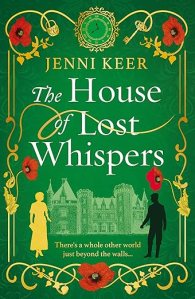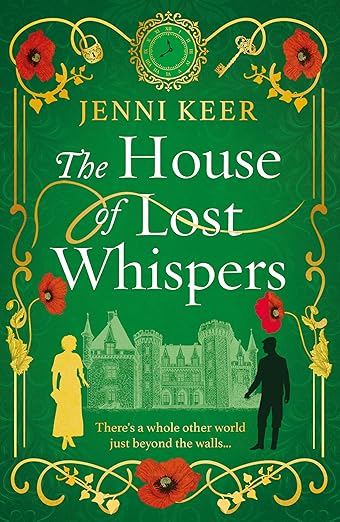
The House of Lost Whispers by Jenni Keer

Boldwood Books|25 April 2025| 378 pages| e-book| Review book| 3*

Summary:

What if another world existed… where the Titanic had never sunk?

When the ill-fated maiden voyage of the Titanic leaves Olivia Davenport orphaned, she’s sent to live with her guardians, the Fairchilds, in their huge Jacobean mansion. But the Fairchilds have more to worry about than a grieving young girl – with war in Europe imminent and four sons to protect.

Olivia feels alone and friendless. Until she hears a voice from behind the wall in her tower bedroom. A voice from a man called Seth. Convinced he’s merely a product of her grieving imagination, it’s not until after the heartbreak of war that Olivia discovers that he exists in an overlapping world, just a shudder in time away from her own. A world where the Titanic never sank… Where everything since has been just slightly… different.

All Olivia wants is to find a way into his reality. And not just to see the faces of her beloved parents once again. But also to meet Seth. Who might just be the love of her life…

I enjoyed reading Jenni Keer’s debut novel, The Hopes and Dreams of Lucy Baker several years ago and thought I’d like to read more of her books. This one is her eighth book, so I missed the books in between. I don’t often read romance or fantasy novels but The House of Lost Whispers has both elements and it’s also historical fiction set before, during and after the First World War. I preferred the historical element, especially the middle section about the War. But I also enjoyed reading the fantasy element about the anomaly in the magnetic field surrounding the earth causing vibrations, disrupting the fabric of space and time. This resulted in the formation of a duplicate earth, one parallel with our world, in which the Titanic did not sink on 12th April 1912.

I think this is a very interesting and possibly original idea, exploring what life would have been like for Olivia and her family if the Titanic had not been sunk. The book also explores loss and grief, family life, friendship and romantic relationships, as well as the devastating and horrific events of the First World War. As described in the blurb Olivia in the ‘real’ world and Seth in the parallel world can hear each other through the wall in her tower bedroom (the whispers), but despite their efforts they cannot break through to meet.

It’s beautifully descriptive, bringing the settings to life and there is also a murder mystery to solve. My only criticisms are that at times I did get a bit confused about Seth’s character and his parallel in the ‘real’ world, and I could have done without the love scenes (too descriptive in places). As I read on I was wondering how it would end and maybe Jenni Keer wondered too because the conclusion seemed rushed and rather neatly sown up. I was a bit disappointed, although I can’t imagine how else it could have ended. But overall it kept me reading, wanting to know what would happen next.

Many thanks to the publishers for a review copy via NetGalley.

WWW Wednesday: 14 May 2025

WWW Wednesday is run by Taking on a World of Words.

The Three Ws are:

What are you currently reading?
What did you recently finish reading?
What do you think you’ll read next?

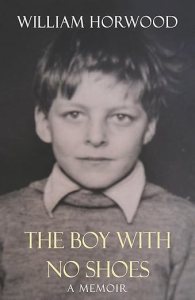
Currently I am reading The Boy With No Shoes: a Memoir by William Horwood, the author of The Duncton Chronicles an allegorical tale about the moles of Duncton Wood. It’s about his childhood in south-east England after the Second World War – the unwanted child of a mother who rejects him, and whose other children bully him.

I’m also reading The House of Lost Whispers by Jennie Kerr, a mix of historical fiction and magical realism. It begins in 1912 when thirteen-year-old Olivia goes to live at Merriford Manor with her guardians after her parents were drowned when the Titanic sank. She hears a voice through her bedroom wall. A voice from a man called Seth. At first she thinks he’s a ghost. But it soon becomes clear that he lives in an overlapping world that is just a shudder in time away from her own. I wasn’t too sure about the mix of genres, but it’s working well so far.

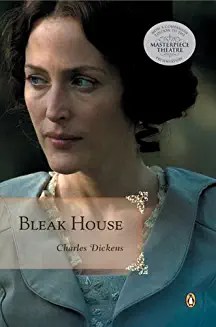
The last book I read was Bleak House by Charles Dickens, which is over 1000 pages full of description and lots of characters, about the complex and long-drawn out lawsuit of Jarndyce v Jarndyce. I’ll be writing more about it in a later post.

What will I read next? I’m thinking of reading The Curious Case of the Village in the Moonlight by Steve Wiley, a novella about Vincent Van Gogh. Van Gogh painted Starry Night whilst living in an asylum, near the village of Saint-Rémy, where a lamplighter is doing his rounds in the village. It will be his last round before electricity is installed during green hour — an absinthe-drenched celebration in his honour. The curious hour would transform the night from familiar to fantastical, with the village street lamps mysteriously vanishing.

But when the time comes I may find myself reading something different, as the mood takes me.

Spell the Month in Books May 2025

Spell the Month in Books is a linkup hosted by Jana on Reviews From the Stacks on the first Saturday of each month. The goal is to spell the current month with the first letter of book titles, excluding articles such as ‘the’ and ‘a’ as needed. That’s all there is to it! Some months there are optional theme challenges, such as “books with an orange cover” or books of a particular genre, but for the most part, any book you want to use is fair game!

This month’s there isn’t a theme. I’ve read the first two of these three books and the third is one of my TBRs.

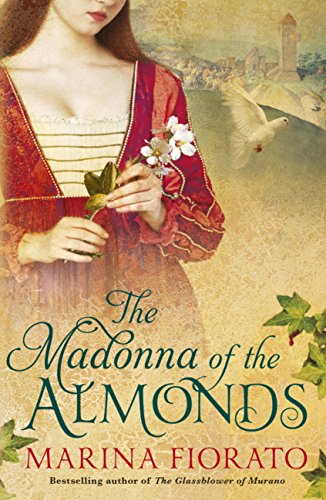
M is for The Madonna of the Almonds by Marina Fiorato, which I read soon after it was first published in 2009. It is a love story above all, but there is so much more as well. It’s set in Italy in the 16th century, about a young widow, Simonetta di Saronno, struggling to save her home, who meets the artist Bernadino, a protege of Leonardo da Vinci. 

Bernardino Luini, favoured apprentice of Leonardo da Vinci, is commissioned to paint a religious fresco in the hills of Lombardy. His eye is caught by the beautiful Simonetta di Saronno, a young noblewoman who has lost her husband to battle, and whose fortune is gone. Captivated by her beauty and sadness, Bernardino paints Simonetta’s likeness, immortalizing her as the Madonna in his miraculous frescoes in Saronno’s church. As the sittings progress, they fall in love, and Simonetta reciprocates Luini’s genius, with the help of a Jew, known as Manodorata (because of the golden hand replacing his own hand that had been chopped off by the Spanish Inquisition) by creating a drink for her lover a delicious liqueur, Amaretto, from the almond trees, the only crop growing on her estate.

I love the story-telling aspects of this book, its rich descriptions of art and the detailed history of the period. I love Italy, history, art history and almonds, especially Amaretto, so this book just could not fail to delight me.

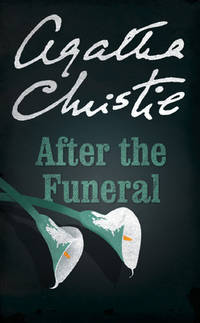
A is for After the Funeral by Agatha Christie, one of her Hercule Poirot murder mysteries. I read this in 2012 and loved it.

When Cora is savagely murdered, the extraordinary remark she made the previous day at her brother’s funeral takes on a chilling significance. At the reading of Richard’s will, Cora was clearly heard to say, “It’s been hushed up very nicely, hasn’t it…But he was murdered, wasn’t he?”  In desperation, the family solicitor turns to Hercule Poirot to unravel what happened next …

I read it quickly and consequently had little idea who had killed Cora. I did spend some time looking at the family tree at the beginning of the book, working out the family relationships and who was present at Richard Abernethie’s funeral and their reaction to Cora’s question. It seemed to me that any of the family could have done it – Agatha Christie goes through the actions and thoughts of each character and there’s cause for suspicion for each one.

Apart from trying to solve the mystery I was interested in the glimpses into life in post-war Britain, where jobs are scarce, servants even more scarce and there are complaints about the economic situation, with high taxation and the prospect of properties such as the Abernethie house being turned into a hotel, or institute, or even worse being pulled down and the whole estate built over.

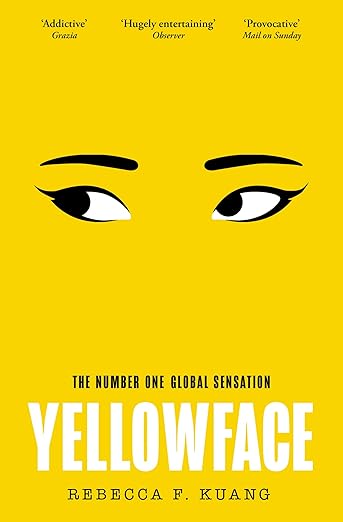
Y is for Yellowface by Rebecca F Yuang, one of my TBRs, which I bought because I’d read positive reviews from other bloggers.

THIS IS ONE HELL OF A STORY.

IT’S JUST NOT HERS TO TELL.

When failed writer June Hayward witnesses her rival Athena Liu die in a freak accident, she sees her opportunity… and takes it.

So what if it means stealing Athena’s final manuscript?

So what if it means ‘borrowing’ her identity?

And so what if the first lie is only the beginning…

Finally, June has the fame she always deserved. But someone is about to expose her…

What happens next is entirely everyone else’s fault.

Next month June 7: reflects the beginning of the library’s Summer Reading program: books that you found or currently see at the library.

The Summer Reading Challenge, delivered in partnership with public libraries across the UK, is back for 2025! Launching in June in Scotland and July in England and Wales, the Challenge invites children to embark on an exciting reading journey, either through their local library or online. This year’s theme, Story Garden, encourages young readers to explore nature and the great outdoors through reading. 

Top Ten Tuesday: Authors (or books by authors) Who Live In My State/Country

Top Ten Tuesday is a weekly meme created by The Broke and the Bookish and now hosted by Jana at That Artsy Reader Girl. For the rules see her blog.

The topic this week is Authors (or books by authors) Who Live In My State/Country. I live in the UK. I’ve chosen authors who live/have lived in two Counties of the UK – Northumberland, where I now live and Buckinghamshire, where I used to live. The titles marked with * are linked to my reviews and the rest to Goodreads.

Northumberland:

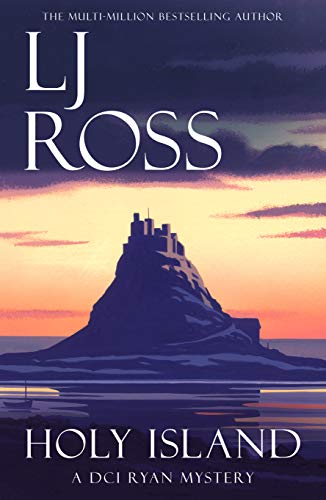
  • L J Ross — Holy Island – crime fiction (DCI Ryan)
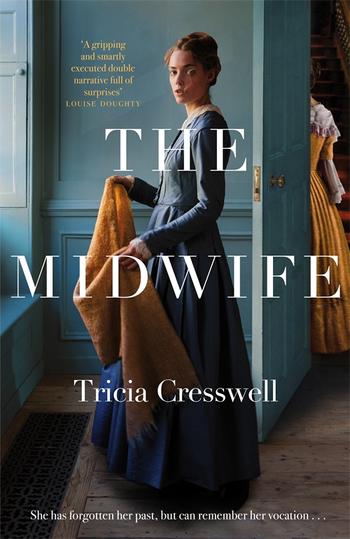
  • Tricia Cresswell – The Midwife – historical fiction
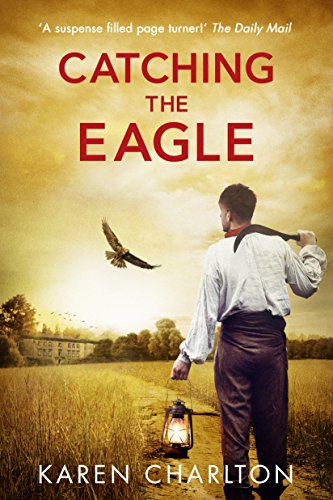
  • Karen Charlton – Catching the Eagle – historical fiction*
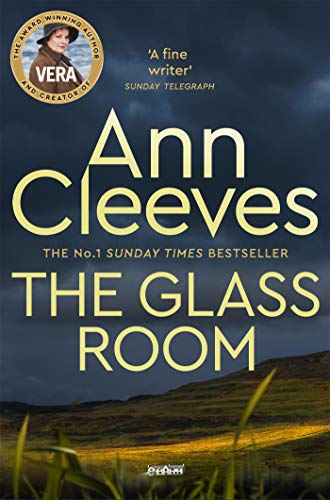
  • Ann Cleeves – The Glass Room – crime fiction (Vera Stanhope)*
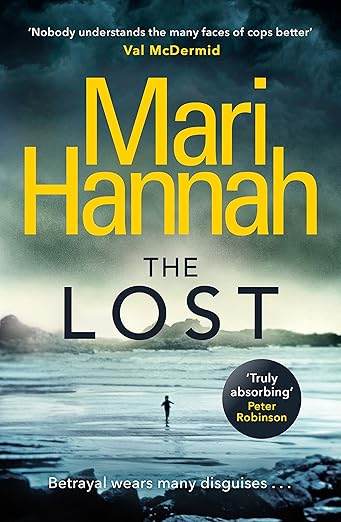
  • Mari Hannah – The Lost – crime fiction (DS Frankie Oliver and DI David Stone)

Buckinghamshire

Have you read any of them?

Six Degrees of Separation from Rapture to Persuasion

It’s time again for Six Degrees of Separation, a monthly link-up hosted by Kate at Books Are My Favourite and Best. Each month a book is chosen as a starting point and linked to six other books to form a chain. A book doesn’t need to be connected to all the other books on the list, only to the one next to it in the chain.

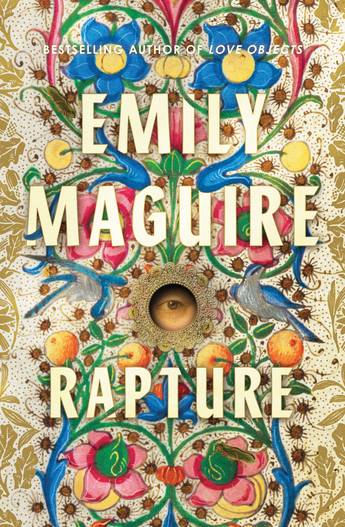
This month we start with Rapture by Emily Maguire. The motherless child of an English priest living in ninth-century Mainz, Agnes is a wild and brilliant girl with a deep, visceral love of God. At eighteen, to avoid a future as a wife or nun, Agnes enlists the help of a lovesick Benedictine monk to disguise herself as a man and secure a place at the revered Fulda monastery.

I haven’t read it and hadn’t heard of the author. According to a review in The Guardian she writes fiction and nonfiction and was shortlisted for the Stella prize, the Miles Franklin and book of the year at the Australian Book Industry awards for An Isolated Incident her 2016 novel. ‘In Rapture, her seventh novel, she turns her hand to historical fiction. Drawing inspiration from the life of Pope Joan, the woman who (according to legend) disguised herself as a man and served as pope for two years during the middle ages, Maguire examines questions of faith using the language of the body.’

I’ve had several false starts with this month’s chain, none of which I could complete. In the end I decided to start with another book about a pope, especially as the Roman Catholic Cardinals will start the procedure to elect a new pope on May 7.

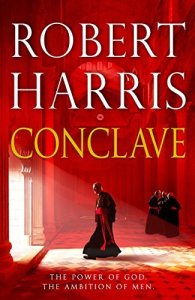
It’s Conclave by Robert Harris. I always learn a lot from reading Harris’s books. In this one he describes the procedure to elect a new pope. Cardinal Lomeli, the Dean of the College of Cardinals leads the 118 Cardinals through the voting stages. I felt as though I was a fly on the wall watching it throughout as the Cardinals are locked inside the Sistine Chapel, isolated from contact with the outside world. Harris has thoroughly researched the subject and seamlessly woven the facts into the novel. He visited the locations used during a Conclave that are permanently closed to the public and interviewed a number of prominent Catholics including a cardinal who had taken part in a Conclave, as well as consulting many reports and books.

The next book is another one by Robert Harris The Fear Index , a fast-paced story set in the world of high finance and computer technology, which is way out of my comfort zone. It’s about scientist Dr Alex Hoffman, who together with his partner Hugo Quarry, an investment banker, runs a hedge fund based in Geneva, that makes billions. Alex has developed a revolutionary form of artificial intelligence that tracks human emotions, enabling it to predict movements in the financial markets. It’s built around the standard measure of market volatility: the VIX or ‘Fear Index’. But I learnt a bit about hedge funds and how they operate, although I got lost in the computer technology details. 

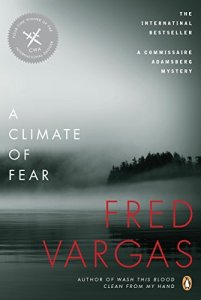
My third link is A Climate of Fear by Fred Vargas, 9th Commissaire Adamsberg book. I like Adamsberg; he’s original, a thinker, who doesn’t like to express his feelings, but mulls things over. He’s an expert at untangling mysteries, an invaluable skill in this, one of the most complicated and intricate mysteries I’ve read, involving a woman found bleeding to death in her bath, having apparently committed suicide, a strange symbol that appears at subsequent death scenes, and a secretive society studying and re-enacting scenes from the French Revolution.

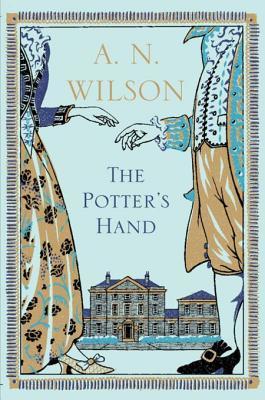
My fourth link is The Potter’s Hand by A N Wilson. it begins in 1768 and roughly follows the fortunes of the Wedgwood family until 1805, 10 years after the death of Josiah Wedgwood, an English potter and the founder of the Wedgwood company. For me it really did convey what it must have been like to live in that period – whilst the American War of Independence, and the French Revolution, were taking place. It’s full of ideas about colonialism, the abolition of slavery, working conditions, and women’s rights. There are many characters who come in and out of the narrative along the way, both fictional and historical, including Voltaire, George Stubbs (who painted the Wedgwood family portrait) and Samuel Taylor Coleridge.

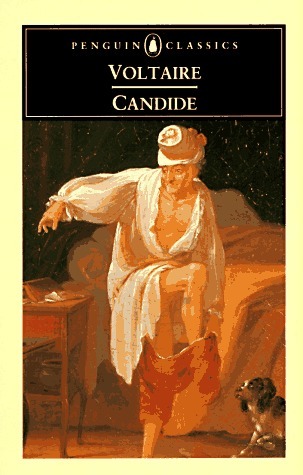
My fifth link is Voltaire’s Candide or Optimism, a small book I read many years ago. Candide was the most brilliant challenge to the idea endemic in Voltaire’s day, that ‘all is for the best in the best possible worlds‘.In Candide he whisks his young hero and friends through a ludicrious variety of tortures, tragedies and reversals of fortune, in the company of Pangloss, a ‘matapysico-theologo-cosmolo-nigologist’ of unflinching optimism. The result is one of the glories of the eighteenth-century satire. (Taken from the description on the back cover.)

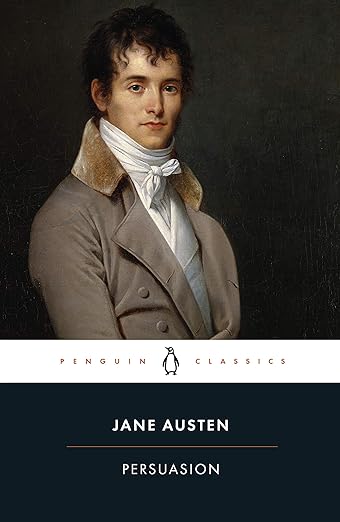
And my final link is Persuasion by Jane Austen. I read this first at school, when I was 17 for A Level GCE. It’s her last novel of missed opportunities and second chances centred on Anne Elliot, no longer young and with few romantic prospects. Eight years earlier, she was persuaded by others to break off her engagement to poor, handsome naval Captain Frederick Wentworth. ‘Set in the fashionable societies of Lyme Regis and Bath, Persuasion is a brilliant satire of vanity and pretension, and a mature, tender love story tinged with heartache.’ (Amazon) I’ll be re-reading it later in the year taking part with Brona at This Reading Life in her Austen 2025 project to reread her books, along with the Classics Club’s Sync Read (or readalong).

I certainly never thought I’d end my chain with Persuasion – but here it is! From Rapture to Persuasion in six moves. The links are the pope, books by Robert Harris, fear, the French Revolution, Voltaire and satire.

What is in your chain, I wonder?

Next month (June 7, 2025), we’ll start with Kate’s pick the 2025 Women’s Prize for Fiction All Fours by Miranda July.

Top Ten Tuesday: Books with the Word HOUSE in the Title

Top Ten Tuesday is a weekly meme created by The Broke and the Bookish and now hosted by Jana at That Artsy Reader Girl. For the rules see her blog.

The topic this week is Books with the Word “[Insert Word Here]” in the Title. I decided to choose books with the word HOUSE in the title. These ten books are all books I’ve read.

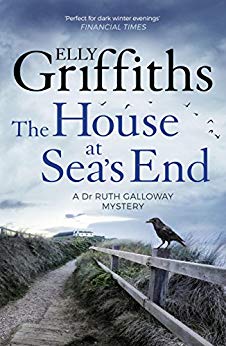
The House at Sea’s End by Elly Griffiths – a Ruth Galloway mystery.

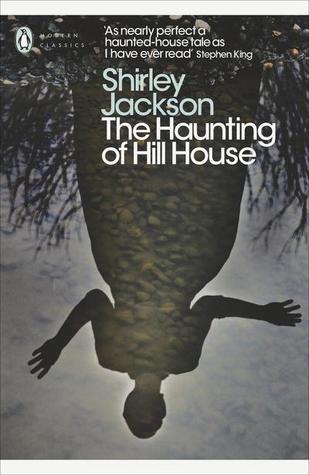
The Haunting of Hill House by Shirley Jackson – more of a psychological study than a horror story.

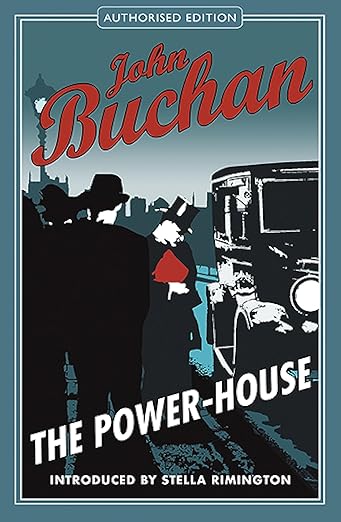
The Power-House by John Buchan – a thriller, the first of five featuring the barrister and Tory MP Edward Leithen.

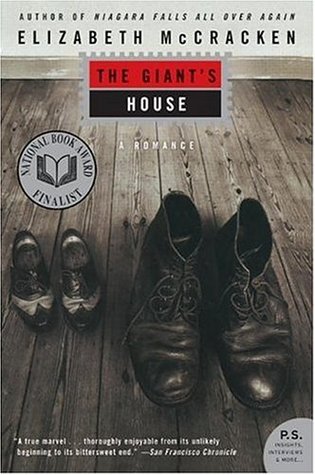
The Giant’s House by Elizabeth McCracken – a love story.

Slade House by David Mitchell – a mixture of a ghost story, science fiction and horror.

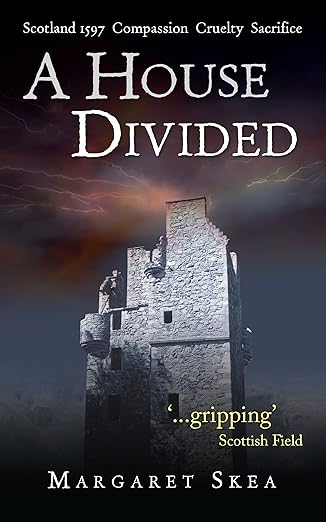
A House Divided by Margaret Skea – historical fiction set in 15th century Scotland.

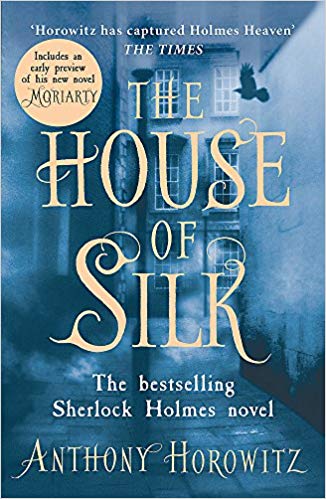
The House of Silk by Anthony Horowitz – a Sherlock Holmes novel.

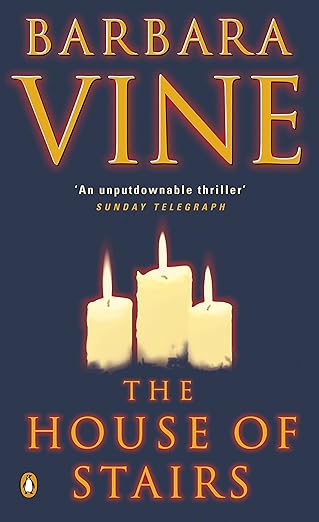
The House of Stairs by Barbara Vine – a psychological thriller.

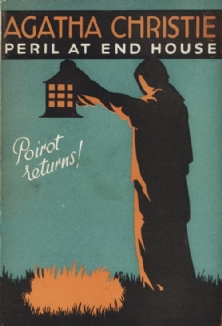
Peril at End House by Agatha Christie – a Poirot mystery.

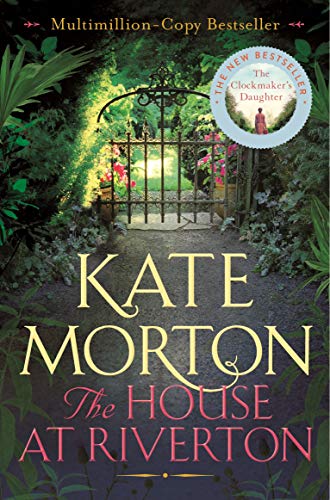
The House at Riverton by Kate Morton – historical fiction.

Have you read any of them?