Today I’m linking up with Davida @ The Chocolate Lady’s Book Review Blogfor Throwback Thursday. It takes place on the Thursday before the first Saturday of every month (i.e., the Thursday before the monthly #6Degrees post). The idea is to highlight one of your previously published book reviews and then link back to Davida’s blog.
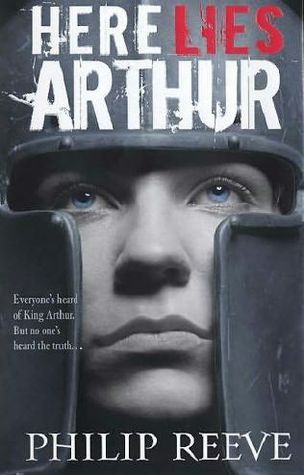
Here Lies Arthur by Philip Reeve. I first reviewed it on February 5, 2008.
My review begins:
This was one of the best books I read in 2007. Philip Reeve is a new author to me. Here Lies Arthur is an adventure story, set in Britain in AD 500. I have always been fascinated by the legend of King Arthur and this book tells his story, casting a new and original slant on the ‘facts’. Very little historical evidence has survived to give concrete information about life in Britain from the fifth to the sixth centuries. The picture Reeve paints is of a turbulent and harsh world, with Arthur as a war-leader in a land where opposing war-bands fight for supremacy. Arthur is not the romantic hero of legend but a dangerous, quick-tempered man, ‘solid, big-boned with a thick neck and a fleshy face. ‘A bear of a man.’
What are you currently reading? What did you recently finish reading? What do you think you’ll read next?
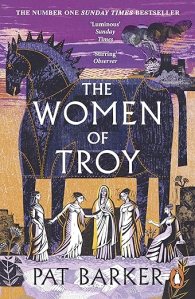
Currently I’m reading The Women of Troy by Pat Barker. this is the second book on The Women of Troy trilogy, a retelling of the classic Greek myth. I’ve recently read the first book, The Silence of the Girls (my review will follow shortly) which I loved. So far this second book looks as though it will be just as good. Troy has fallen but high winds are keeping the Greeks from sailing home.
Description from Goodreads:
Troy has fallen and the victorious Greeks are eager to return home with the spoils of an endless war—including the women of Troy themselves. They await a fair wind for the Aegean.
It does not come, because the gods are offended. The body of King Priam lies unburied and desecrated, and so the victors remain in suspension, camped in the shadows of the city they destroyed as the coalition that held them together begins to unravel. Old feuds resurface and new suspicions and rivalries begin to fester.
Largely unnoticed by her captors, the one time Trojan queen Briseis, formerly Achilles’s slave, now belonging to his companion Alcimus, quietly takes in these developments. She forges alliances when she can, with Priam’s aged wife the defiant Hecuba and with the disgraced soothsayer Calchas, all the while shrewdly seeking her path to revenge.
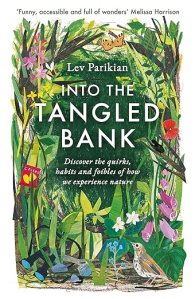
I’m also reading Into the Tangled Bank by Lev Parikian, non fiction about nature. It’s easy reading, Parikian writes with humour, in a chatty style, but also richly descriptive. I’m loving it, it is compulsive reading. He is a storyteller, so there are lots of anecdotes and stories, plus his thoughts on nature and how we view it. Amongst many other topics he ponders about the ethics of zoos – something that puzzles me too – and wonders if the definition of a nature lover is becoming that of one who loves nature programmes. There’s a lot packed into this book.
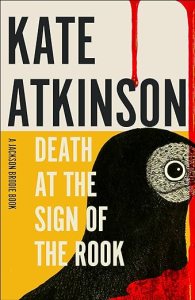
The last book I read was Death at the Sign of the Rook by Kate Atkinson, a review copy. My review will follow after the book is published on 22 August 2024. I have very mixed feelings about this book from loving parts of it to frustration at other parts.
Synopsis from Amazon:
The stage is set. The players are ready. By night’s end, a murderer will be revealed. Ex-detective Jackson Brodie is staving off a bad case of midlife malaise when he is called to a sleepy Yorkshire town, and the seemingly tedious matter of a stolen painting. But one theft leads to another, including the disappearance of a valuable Turner from Burton Makepeace, home to Lady Milton and her family. Once a magnificent country house, Burton Makepeace has now partially been converted into a hotel, hosting Murder Mystery weekends.
As paying guests, a vicar, an ex-army officer, impecunious aristocrats, and old friends converge, we are treated a fiendishly clever mystery; one that pays homage to the masters of the genre—from Agatha Christie to Dorothy Sayers.
What will I read next? At the moment I have no idea.
Top Ten Tuesday is a weekly meme created by The Broke and the Bookish and now hosted by Jana at That Artsy Reader Girl. For the rules see her blog.
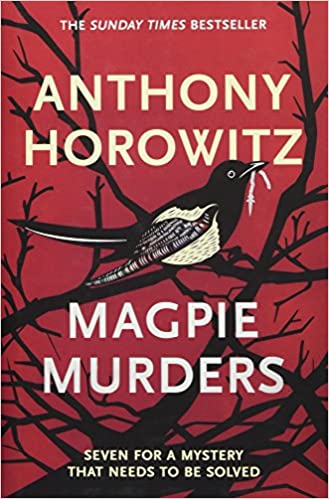
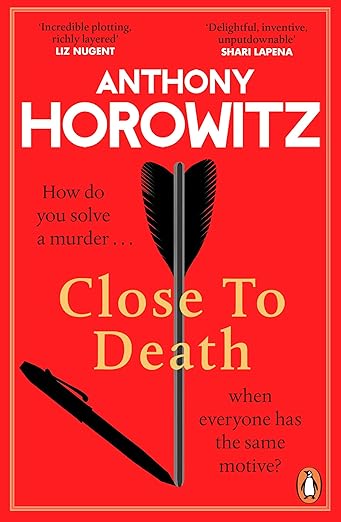
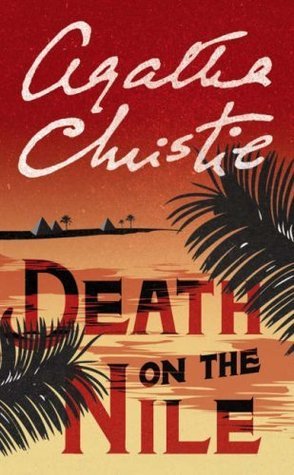
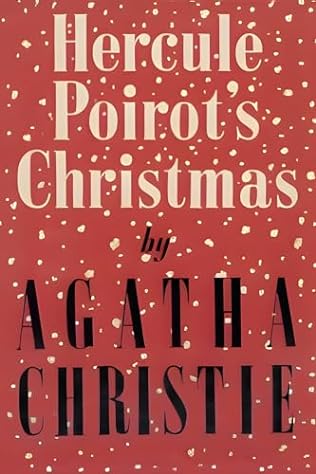
The topic this week is Books with My Favourite Colour on the Cover. Here they are in various shades of red:
Magpie Murders by Anthony Horowitz – a prime example of a puzzle-type of crime fiction combining elements of the vintage-style golden age crime novel with word-play and cryptic clues and allusions to Agatha Christie and Arthur Conan Doyle. It’s also a novel within a novel, with mystery piled upon mystery. I loved it.
The Sentence is Death by Anthony Horowitz – the second book in the Hawthorne and HorowitzMystery series in which Daniel Hawthorne, an ex-policeman, now a private investigator, who the police call in to help when they have a case they call a ‘sticker’. What I found particularly interesting was the way that Anthony Horowitz inserted himself into the fiction, recruited by Hawthorne to write a book about him and the cases he investigates.
Close to Death by Anthony Horowitz – the fifth literary whodunit in the Hawthorne and Horowitz series, Detective Hawthorne is once again called upon to solve an unsolvable case—a gruesome murder in an idyllic gated community in which suspects abound, aided by Horowitz, as a fictional character.
Wolf Hall by Hilary Mantel – historical fiction, the story of Thomas Cromwell, the son of a blacksmith, and his political rise, set against the background of Henry VIII’s England and his struggle with the Pope over his desire to marry Anne Boleyn. This is the first in the Wolf Hall trilogy, based on the life of Thomas Cromwell (c. 1485-1540), who rose from obscurity to become chief minister of King Henry VIII of England.
Death on the Nile by Agatha Christie, a pre-Second World War crime fiction novel. It shows Agatha Christie’s interest in Egypt and archaeology and also reflects much of the flavour and social nuances of the pre-war period. In it she sets a puzzle to solve – who shot Linnet Doyle, the wealthy American heiress? Although the novel is set in Egypt, an exotic location, it is essentially a ‘locked room mystery’.
Hercule Poirot’s Christmas by Agatha Chistie in which Poirot investigates the death of Simeon Lee, the head of the Lee family. None of his family like him, in fact most of them hate him and there are plenty of suspects for his murder. He is found dead with his throat cut in a locked room – locked from the inside.
Wild Fire by Ann Cleeves, the 8th and last book in Ann Cleeves’ Shetland series. I have loved this series ever since I read the first book, Raven Black, back in 2010. And because I began reading the books before they were televised my picture of Inspector Jimmy Perez is drawn from them rather than from the dramatisations. There are some significant changes between the TV dramatisations and the books. I love the books, but still enjoyed the TV adaptions.
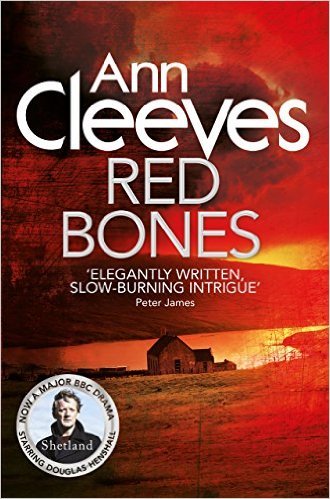
Red Bones by Ann Cleeves, the third book in her Shetland Quartet. It’s set on Whalsay, where two young archaeologists, excavating a site on Mima Williams’s land, discover human bones. They are sent away for testing – are they an ancient find or are the bones more contemporary?
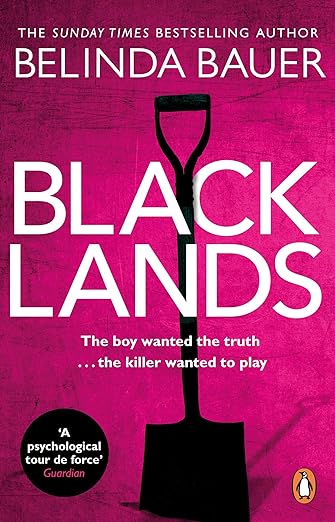
Blacklands by Belinda Bauer, crime fiction. This is an absolutely gripping battle of wits between Stephen aged twelve and serial killer Arnold Avery as they exchange letters about the whereabouts of Stephen’s uncle’s body.
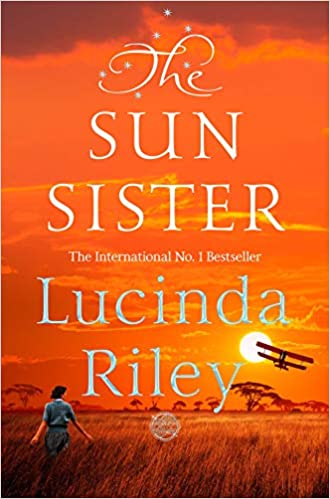
The Sun Sister by Lucinda Riley – the only book on this list that I haven’t yet read. It’s the sixth book in The Sven Sisters series, the storyof love and loss, inspired by the mythology of the famous star constellation. It’s one of my TBRs only because I’m reading the series in order and so far I’ve read the first three books.
Top Ten Tuesday is a weekly meme created by The Broke and the Bookish and now hosted by Jana at That Artsy Reader Girl. For the rules see her blog.
The topic this week is Most Anticipated Books Releasing During the Second Half of 2024. I don’t own any of these books – but I do fancy reading them:
To be published 2 July 2024:
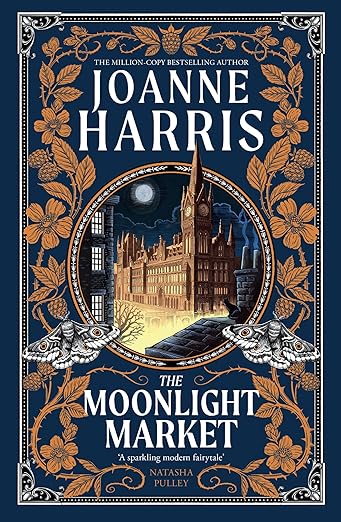
The Moonlight Market by Joanne Harris, a ‘modern fairy tale’ about a secret market that appears only in moonlight, where charms and spells are bought with memories.
To be published 18 July 2024:
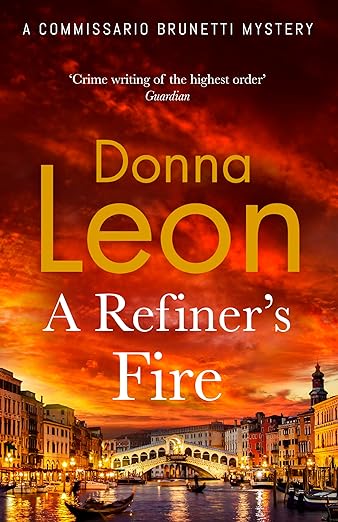
A Refiner’s Fire by Donna Leon, the 33rd Commissario Guido Brunetti in which he confronts a present-day Venetian menace and the ghosts of a heroism that never was.
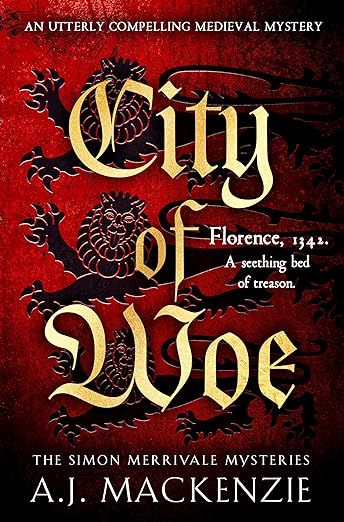
City of Woe by A.J. Mackenzie, the 2nd Simon Merrivale mystery. Florence, 1342. A city on the brink of chaos. Restored to favour at court, King’s Messenger Simon Merrivale accompanies an English delegation to Florence, to negotiate a loan to offset KingEdward III’s chronic debt.
To be published 22 August 2024:
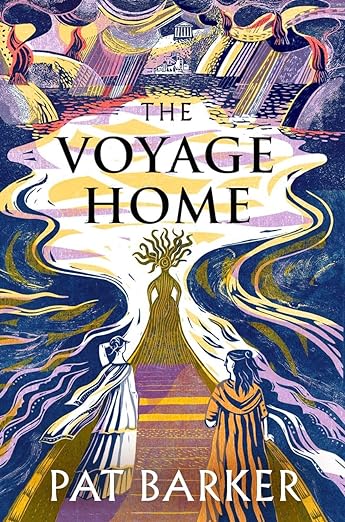
The Voyage Home by Pat Barker, the 3rd book in the Troy series, historical fiction, the follow-up to The Women of Troy and The Silence of the Girls.
Precipice by Robert Harris, historical fiction, summer 1914, 26-year-old Venetia Stanley – aristocratic, clever, bored, reckless – is having a love affair with the Prime Minister, H. H. Asquith, a man more than twice her age.
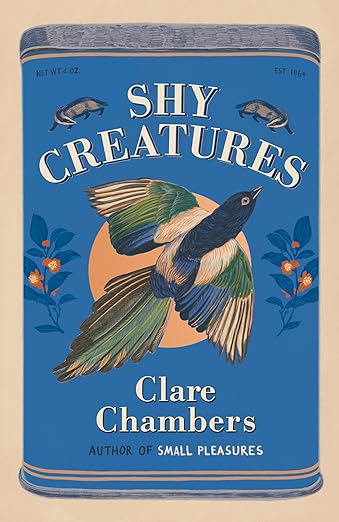
Shy Creatures by Clare Chambers, a novel about love, family and the joy of freedom.
To be published 12 September 2024:
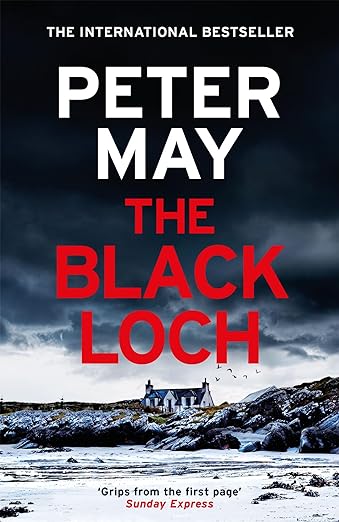
The Black Loch by Peter May, the return of Fin Macleod, hero of the Lewis Trilogy. A body is found abandoned on a remote beach at the head of An Loch Dubh – the Black Loch – on the west coast of the Isle of Lewis.
To be published 10 October 2024:
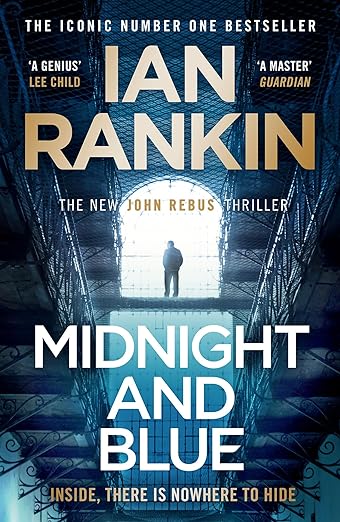
Midnight and Blue by Ian Rankin, a John Rebus thriller. John Rebus spent his life as a detective putting Edinburgh’s most deadly criminals behind bars. Now, he’s joined them…
To be published 24 October 2024:
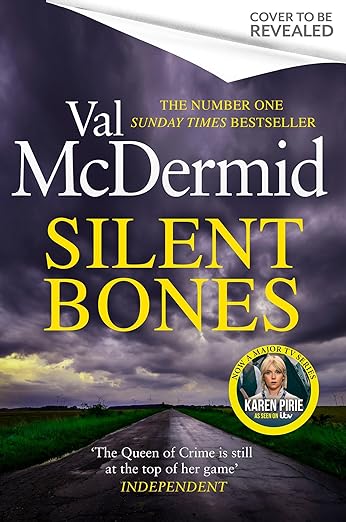
Silent Bones by Val McDermid. Book 8 in the Karen Pirie series. At the moment there is little information about this book, but as I’ve read a lot of the earlier books I’m expecting this one to be good. ‘The ingeniousplot kept me guessing all the way through. It delivers on every level‘ MARIAN KEYES
The Black Tulip is historical fiction, a love story, mixing historical characters with fictional ones. It was first published in 1850. I loved The Count of Monte Cristo by Alexandre Dumas, so I was hoping to enjoy The Black Tulip too. I did, but not quite as much. I think it’s because I don’t know much about Dutch history and so I found the early chapters, about the brothers Cornelius and Johan de Witt, a bit difficult to follow. They were Dutch statesmen, accused of treason, who were brutally killed by a mob in the Hague in 1672, during a period of political upheaval, when they escaped from prison.
The story centres on Cornelius von Baerle, the fictional godson of Cornelius de Witt and his desire to grow a black tulip. He became involved in the de Witts’ affairs when Cornelius de Witt left a sealed parcel of his correspondence with the French war minister, with him for safekeeping. He didn’t open the parcel and didn’t know what it contained.
When the Tulip Society of Haarlem offered a prize of a hundred thousand guilders for the development of a tulip ‘without a spot of colour‘, this set the tulip growers into a frenzy of activity, including Van Baerle and his neighbour, Isaac Boxtel. Boxtel spied on Van Baerle’s experiments to grow a black tulip, which were having more success than his own efforts. Indeed Boxtel was obsessed with what Van Baerle was doing, neglecting his own tulips to wither and rot as he observed, through a telescope, what his neighbour was doing both in his garden and in his laboratory.
Whilst observing Van Baerle’s laboratory, Boxtel had seen the meeting between Cornelius de Witt and Van Baerle when he entrusted his papers to his godson. On hearing that the de Witt brothers had been arrested Boxtel realised he could inform against Van Baerle and get him arrested, thus giving himself the opportunity to steal the bulb Van Baerle had produced. And the hundred thousand guilder prize would be his.
And so Van Baerle was thrown into prison, wrongly convicted of treason and under sentence of death. However William of Orange, Stadtholder of Holland granted him his life but condemned him to imprisonment for life. He was sent to the fortress of Loewestein and there kept in solitary confinement. What follows is a dark and somewhat farcical tale, as aided by the jailer’s daughter Rosa he continues to cultivate his tulip bulbs. He and Rosa fall in love, despite all the difficulties that assault them.
It’s a great story, full of drama and emotion. It’s a love story, a story about passion, hatred, jealousy, obsession and injustice. After the difficulties I had with the first four or five chapters (I had to re-read them to work out how the rest of the story was connected) I found it difficult to put down, keen to find out what would happen next. I didn’t love it like I loved The Count of Monte Cristo, but I really liked it.
Every Friday Book Beginnings on Friday is hosted by Gillion at Rose City Readerwhere you can share the first sentence (or so) of the book you are reading. You can also share from a book you want to highlight just because it caught your fancy.
Also every Friday there is The Friday 56, hosted by Freda at Freda’s Voice, but she is taking a break and Anne at My Head is Full of Books has taken on hosting duties in her absence. You grab a book and turn to page 56 (or 56% of an eBook), find one or more interesting sentences (no spoilers), and post them.
Frau Doktor Goebbels is the wife of the Minister of Public Enlightenment and Propaganda.’
Clara nodded politely, thinking what a dreadful mouthful that title was to be saddled with.
‘But we prefer to call her the First Lady of the Reich,
Synopsis from Amazon:
Berlin, 1933. Warning bells ring across Europe as Hitler comes to power. Clara Vine, an attractive young Anglo-German actress, arrives in Berlin to find work at the famous Ufa studios. Through a chance meeting, she is unwillingly drawn into a circle of Nazi wives, among them Magda Goebbels, Anneliese von Ribbentrop and Goering’s girlfriend Emmy Sonnemann. As part of his plan to create a new pure German race, Hitler wants to make sweeping changes to the lives of women, starting with the formation of a Reich Fashion Bureau, instructing women on what to wear and how to behave. Clara is invited to model the dowdy, unflattering clothes.
Then she meets Leo Quinn who is working for British intelligence and who sees in Clara the perfect recruit to spy on her new elite friends, using her acting skills to win their confidence. But when Magda Goebbels reveals to Clara a dramatic secret and entrusts her with an extraordinary mission, Clara feels threatened, compromised, desperately caught between her duty towards – and growing affection for – Leo, and the impossibly dangerous task Magda has forced upon her.
~~~
What do you think, does it appeal to you? What are you currently reading?









 BooksPlease