Top Ten Tuesday: Most Anticipated Books Releasing During the Second Half of 2024

Top Ten Tuesday is a weekly meme created by The Broke and the Bookish and now hosted by Jana at That Artsy Reader Girl. For the rules see her blog.

The topic this week is Most Anticipated Books Releasing During the Second Half of 2024. I don’t own any of these books – but I do fancy reading them:

To be published 2 July 2024:

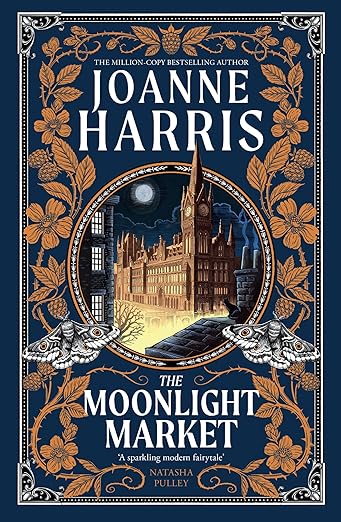
The Moonlight Market by Joanne Harris, a ‘modern fairy tale’ about a secret market that appears only in moonlight, where charms and spells are bought with memories.

To be published 18 July 2024:

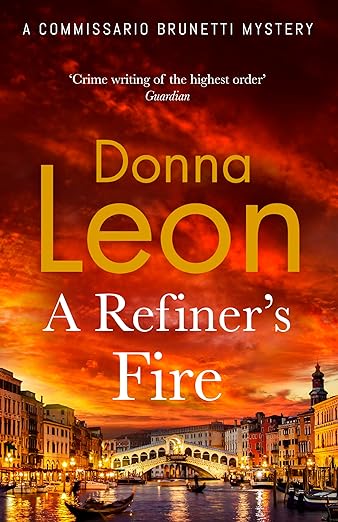
A Refiner’s Fire by Donna Leon, the 33rd Commissario Guido Brunetti in which he confronts a present-day Venetian menace and the ghosts of a heroism that never was.

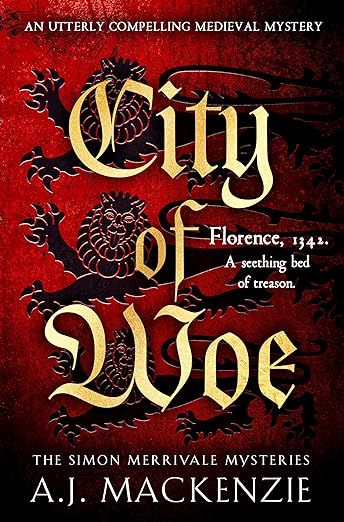
City of Woe by A.J. Mackenzie, the 2nd Simon Merrivale mystery. Florence, 1342. A city on the brink of chaos. Restored to favour at court, King’s Messenger Simon Merrivale accompanies an English delegation to Florence, to negotiate a loan to offset King Edward III’s chronic debt.

To be published 22 August 2024:

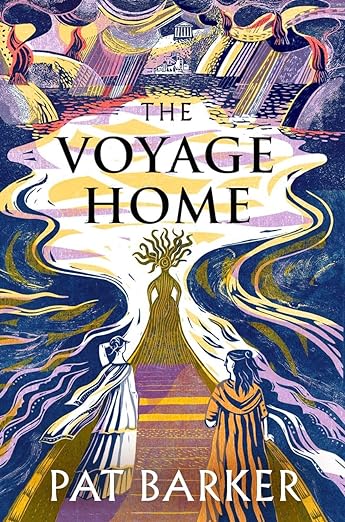
The Voyage Home by Pat Barker, the 3rd book in the Troy series, historical fiction, the follow-up to The Women of Troy and The Silence of the Girls.

To be published 29 August 2024:July 2024:

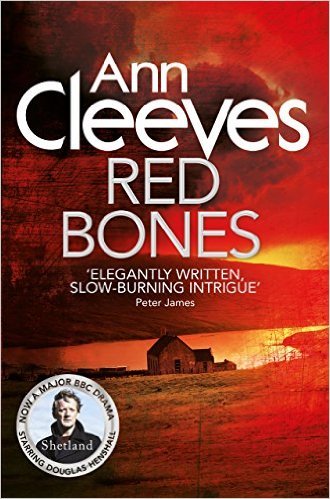
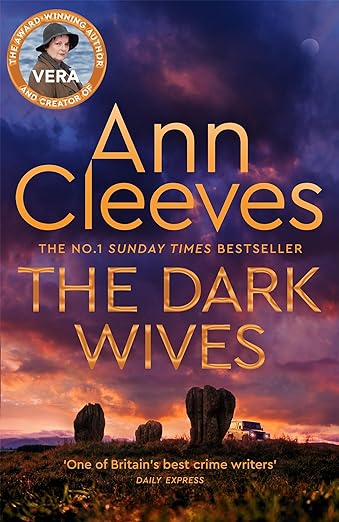
The Dark Wives by Ann Cleeves , Vera, Book 11, crime fiction, following on from The Rising Tide, which I loved.

Precipice by Robert Harris, historical fiction, summer 1914, 26-year-old Venetia Stanley – aristocratic, clever, bored, reckless – is having a love affair with the Prime Minister, H. H. Asquith, a man more than twice her age.

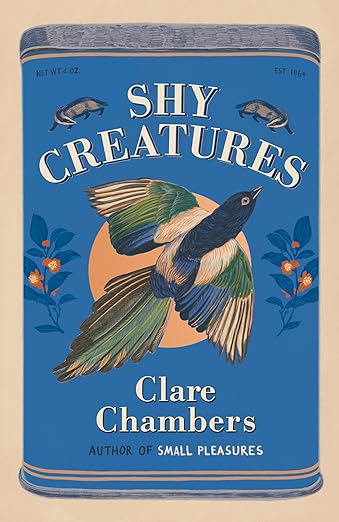
Shy Creatures by Clare Chambers, a novel about love, family and the joy of freedom.

To be published 12 September 2024:

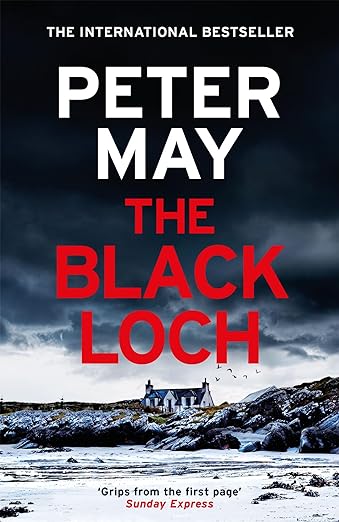
The Black Loch by Peter May, the return of Fin Macleod, hero of the Lewis Trilogy. A body is found abandoned on a remote beach at the head of An Loch Dubh – the Black Loch – on the west coast of the Isle of Lewis.

To be published 10 October 2024:

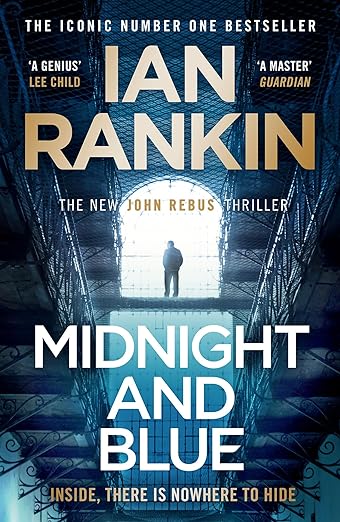
Midnight and Blue by Ian Rankin, a John Rebus thriller. John Rebus spent his life as a detective putting Edinburgh’s most deadly criminals behind bars. Now, he’s joined them…

To be published 24 October 2024:

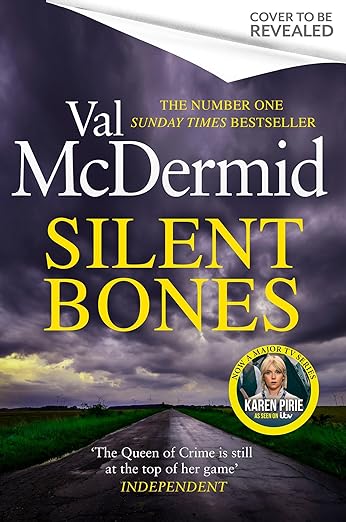
Silent Bones by Val McDermid. Book 8 in the Karen Pirie series. At the moment there is little information about this book, but as I’ve read a lot of the earlier books I’m expecting this one to be good. ‘The ingenious plot kept me guessing all the way through. It delivers on every level‘ MARIAN KEYES

The Black Tulip by Alexandre Dumas

4*

The Black Tulip is historical fiction, a love story, mixing historical characters with fictional ones. It was first published in 1850. I loved The Count of Monte Cristo by Alexandre Dumas, so I was hoping to enjoy The Black Tulip too. I did, but not quite as much. I think it’s because I don’t know much about Dutch history and so I found the early chapters, about the brothers Cornelius and Johan de Witt, a bit difficult to follow. They were Dutch statesmen, accused of treason, who were brutally killed by a mob in the Hague in 1672, during a period of political upheaval, when they escaped from prison.

The story centres on Cornelius von Baerle, the fictional godson of Cornelius de Witt and his desire to grow a black tulip. He became involved in the de Witts’ affairs when Cornelius de Witt left a sealed parcel of his correspondence with the French war minister, with him for safekeeping. He didn’t open the parcel and didn’t know what it contained.

When the Tulip Society of Haarlem offered a prize of a hundred thousand guilders for the development of a tulip ‘without a spot of colour‘, this set the tulip growers into a frenzy of activity, including Van Baerle and his neighbour, Isaac Boxtel. Boxtel spied on Van Baerle’s experiments to grow a black tulip, which were having more success than his own efforts. Indeed Boxtel was obsessed with what Van Baerle was doing, neglecting his own tulips to wither and rot as he observed, through a telescope, what his neighbour was doing both in his garden and in his laboratory.

Whilst observing Van Baerle’s laboratory, Boxtel had seen the meeting between Cornelius de Witt and Van Baerle when he entrusted his papers to his godson. On hearing that the de Witt brothers had been arrested Boxtel realised he could inform against Van Baerle and get him arrested, thus giving himself the opportunity to steal the bulb Van Baerle had produced. And the hundred thousand guilder prize would be his.

And so Van Baerle was thrown into prison, wrongly convicted of treason and under sentence of death. However William of Orange, Stadtholder of Holland granted him his life but condemned him to imprisonment for life. He was sent to the fortress of Loewestein and there kept in solitary confinement. What follows is a dark and somewhat farcical tale, as aided by the jailer’s daughter Rosa he continues to cultivate his tulip bulbs. He and Rosa fall in love, despite all the difficulties that assault them.

It’s a great story, full of drama and emotion. It’s a love story, a story about passion, hatred, jealousy, obsession and injustice. After the difficulties I had with the first four or five chapters (I had to re-read them to work out how the rest of the story was connected) I found it difficult to put down, keen to find out what would happen next. I didn’t love it like I loved The Count of Monte Cristo, but I really liked it.

Black Roses: Book Beginnings & The Friday 56

Every Friday Book Beginnings on Friday is hosted by Gillion at Rose City Reader where you can share the first sentence (or so) of the book you are reading. You can also share from a book you want to highlight just because it caught your fancy.

I’m featuring Black Roses by Jane Thynne. It’s on my 20 Books of Summer list, a book I’ve had for several years.

Chapter One:

For a wedding it would have made a good funeral.

Also every Friday there is The Friday 56, hosted by Freda at Freda’s Voice, but she is taking a break and Anne at My Head is Full of Books has taken on hosting duties in her absence. You grab a book and turn to page 56 (or 56% of an eBook), find one or more interesting sentences (no spoilers), and post them.

Frau Doktor Goebbels is the wife of the Minister of Public Enlightenment and Propaganda.’

Clara nodded politely, thinking what a dreadful mouthful that title was to be saddled with.

‘But we prefer to call her the First Lady of the Reich,

Synopsis from Amazon:

Berlin, 1933. Warning bells ring across Europe as Hitler comes to power. Clara Vine, an attractive young Anglo-German actress, arrives in Berlin to find work at the famous Ufa studios. Through a chance meeting, she is unwillingly drawn into a circle of Nazi wives, among them Magda Goebbels, Anneliese von Ribbentrop and Goering’s girlfriend Emmy Sonnemann. As part of his plan to create a new pure German race, Hitler wants to make sweeping changes to the lives of women, starting with the formation of a Reich Fashion Bureau, instructing women on what to wear and how to behave. Clara is invited to model the dowdy, unflattering clothes.

Then she meets Leo Quinn who is working for British intelligence and who sees in Clara the perfect recruit to spy on her new elite friends, using her acting skills to win their confidence. But when Magda Goebbels reveals to Clara a dramatic secret and entrusts her with an extraordinary mission, Clara feels threatened, compromised, desperately caught between her duty towards – and growing affection for – Leo, and the impossibly dangerous task Magda has forced upon her.

~~~

What do you think, does it appeal to you? What are you currently reading?

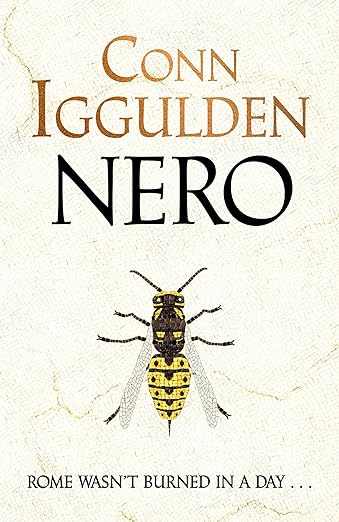
Nero by Conn Iggulden

Penguin 23 May 2024 | 392 pages|e-book |Review copy| 5*

Synopsis

ANCIENT ROME, AD 37

It begins with a man’s hand curled around another’s throat.

Emperor Tiberius first dispatches a traitor. Then his whole family.Next all his friends. It is as if he never existed.

THIS IS ROMAN JUSTICE.

Into this fevered forum, a child is born. His mother is Agrippina, granddaughter of Emperor Augustus. But their imperial blood is no protection. The closer you are to the heart of the empire, the closer you are to power, intrigue, and danger. She faces soldiers, senators, rivals, silver-tongued pretenders, each vying for position. One mistake risks exile, incarceration, execution. Or, worst of all, the loss of her infant son. For Agrippina knows that opportunity waits, even in your darkest moments. Her son is everything. She can make this boy, shape him into Rome itself – the one all must kneel before.

BUT FIRST, THEY MUST SURVIVE . . .

This then is the story of Nero’s birth and raising under the watchful and scheming eye of his mother Agrippina – a woman every man crossed at his peril.

My thoughts:

I’ve enjoyed three books by Conn Iggulden and Nero is no exception. It is excellent. It’s the first in a new trilogy and having read it I’m eagerly looking forward to reading the next two books about Nero. This is the story of his birth and early years up to his 10th year. But it’s more about his mother, Agrippina than about him. She was ruthless, scheming and ambitious for her son, allowing no one to stand in her way.

My interest in historical fiction about the Romans really began in 1976 when I watched the BBC adaptation of I, Claudius and Claudius the God by Robert Graves, starring  Derek Jacobi as Claudius. Later on I read the books, which I loved (I’m tempted to re-read them). Nero brought it back to me as it covers the reigns of Tiberius (the end of his reign), Nero’s uncle, Caligula, and then his great-uncle, Claudius.

Iggulden writes well, bringing life during this period vividly to life. He doesn’t hold back on describing the cruelty and brutality of the times. – he states in his Historical Note: ‘Tiberius was a horror of ancient Rome, who tainted or destroyed anything he touched. … Details of Tiberius’ parties on Capri are too grim to relate …’ There are episodes where, if I’d been watching on TV I would have been covering my eyes, and peeping through my fingers – but I am rather squeamish!

The Historical Note at the end of the book gives further details about the characters, their lives and relationships; and about the ad 43 invasion of Britain, about trade between the empire and Britain before the invasion, and the battle of Medway that took place in Kent.

Despite the gory and bloody scenes I thoroughly enjoyed Nero. Iggulden is a great storyteller.

My thanks to Michael Joseph / Penguin Random House, the publishers for a review copy via NetGalley.

Spell the Month in Books May 2024: Nature

Spell the Month in Books is a linkup hosted by Jana on Reviews From the Stacks on the first Saturday of each month. The goal is to spell the current month with the first letter of book titles, excluding articles such as ‘the’ and ‘a’ as needed. That’s all there is to it! Some months there are optional theme challenges, such as “books with an orange cover” or books of a particular genre, but for the most part, any book you want to use is fair game!

This month’s theme is Nature. This is a vast topic and looking through my books, both read and those I’ve yet to read, I have lots to choose from, but I only found a few that fit this theme in titles that begin with letters to spell the word MAY. I have read two of these books and the other one is one of my TBRS.

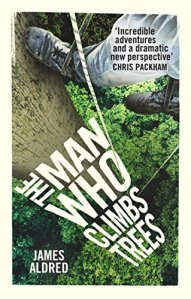
M is for The Man Who Climbed Trees by James Aldred 5*

If you have ever wondered how wildlife/nature documentaries are filmed this book has the answers.

James Aldred, a professional tree climber, wildlife cameraman, and adventurer, explains how he discovered that trees are places of refuge as well as providing unique vantage points to view the world. Trees enthral him, right from the time he first climbed into the canopy of an oak tree in the New Forest. Climbing trees gives him peace within himself and with the world around him. Since he first began climbing trees he has travelled the world climbing many of the world’s tallest trees, filming for the BBC and National Geographic magazine.

The Man Who Climbs Trees is a wonderful book, full of James Aldred’s adventures and his views on life and spirituality. I loved it. His travels brought him into contact with dozens of different religions and philosophies all containing ‘profound elements of truth’ that he respects very much, concluding that ‘spirituality is where you find it’ and he finds it ‘most easily when up in the trees’.

A is for All Among the Barley by Melissa Harrison, a TBR.

I bought this book because I enjoyed Melissa Harrison’s novella, Rain: Four Walks in English Weather, which is about four rain showers, in four seasons, across Wicken Fen, Shropshire, the Darent Valley and Dartmoor. I like the way she writes about the natural world and All Among the Barley looks as though it will bring to life a world governed by the old rural traditions, in an evocation of place and a lost way of life. It’s a novel set in the autumn of 1933 on a farm describing rural traditions as harvest time approaches.

Y is for The Year Without Summer by Guinevere Glasfurd 5*

The volcanic eruption of Mount Tambora on Sumbawa Island in Indonesia in 1815 had a profound and far reaching impact on the world. It led to sudden cooling across the northern hemisphere, crop failures, famine and social unrest in the following year, which became known as The Year Without Summer and in North America as Eighteen hundred and froze to death. But it wasn’t until the mid twentieth century that volcanic eruptions were shown to affect climate change.

Guinevere Glasfurd’s novel illustrates how the impact of the extreme weather conditions affected the lives of six people. They never meet, or know each other, but their stories are intertwined throughout the book in short chapters, giving what I think is a unique look at the events of 1816. I enjoyed all the stories.

The next link up will be on June 1, 2024 when the optional theme will be History.

Book Beginnings on Friday & The Friday 56: The Square of Sevens by Laura Shepherd-Robinson

Every Friday Book Beginnings on Friday is hosted by Gillion at Rose City Reader where you can share the first sentence (or so) of the book you are reading. You can also share from a book you want to highlight just because it caught your fancy.

I’m featuring The Square of Sevens by Laura Shepherd-Robinson, the last book I bought. It’s set in 18th century England, beautifully written, and it’s weird and wonderful!

Book Beginning:

People like to say they seek the truth. Sometimes they even mean it. The truth is they crave the warm embrace of a lie.

Also every Friday there is The Friday 56, hosted by Freda at Freda’s Voice, but she is taking a break and Anne at My Head is Full of Books has taken on hosting duties in her absence. You grab a book and turn to page 56 (or 56% of an eBook), find one or more interesting sentences (no spoilers), and post them.

Page 56:

The De Lacy family swiftly became my new obsession. I spent many hours up in the attic in that autumn of 1739, wedged between a moth-eaten crocodile, a broken astrolabe, and the tusk of a narwhale, curiosities banished here by Mrs Freemantle.

Description from Amazon:

Laura Shepherd-Robinson’s The Square of Sevens is an epic and sweeping mystery set in Georgian high society, a dazzling story offering up intrigue, heartbreak, and audacious twists.

A girl known only as Red, the daughter of a Cornish fortune-teller, travels with her father making a living predicting fortunes using the ancient method: the Square of Sevens. When her father suddenly dies, Red becomes the ward of a gentleman scholar.

Now raised as a lady amidst the Georgian splendour of Bath, her fortune-telling is a delight to high society. But she cannot ignore the questions that gnaw at her soul: who was her mother? How did she die? And who are the mysterious enemies her father was always terrified would find him?

The pursuit of these mysteries takes her from Cornwall and Bath to London and Devon, from the rough ribaldry of the Bartholomew Fair to the grand houses of two of the most powerful families in England. And while Red’s quest brings her the possibility of great reward, it also leads her into grave danger . . .

~~~

What do you think, does it appeal to you? What are you currently reading?