Throwback Thursday: 29 April 2021

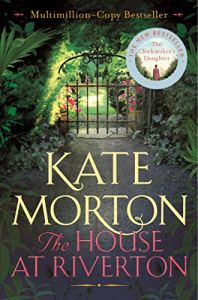
This month I’m looking back at my review of The House at Riverton by Kate Morton, which I first posted in August 2007. I loved this book.

These are the first two paragraphs:

It’s with a sense of loss that I finished reading The House at Riverton. I felt as though I’d now lost contact with the characters and the worlds they inhabit. I say worlds because this novel is split into two time zones, so widely different in all aspects that they could be separate worlds.

The novel opens in 1999 (reminiscent of Du Maurier’s Rebecca) with Grace’s dream of the night in 1924 when Robbie Hunter, a poet, committed suicide at Riverton Manor. Grace’s memories are revived after Ursula, an American film director who is making a film of the suicide had asked for her help as the only person involved who was still alive.

Click here to read my full review

Kate Morton is an Australian author, who has written six novels. The House at Riverton and The Secret Keeper are two of my favourite books. The six books are as follows (with links to my posts):

The House at Riverton (2006)
     aka The Shifting Fog
The Forgotten Garden (2008)
The Distant Hours (2010)
The Secret Keeper (2012)
The Lake House (2015)
The Clockmaker’s Daughter (2018)

The next Throwback Thursday post is scheduled for 3 June, 2021.

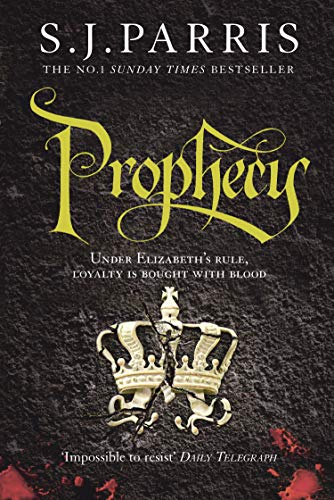
My Friday Post: Prophecy by S J Parris

Every Friday Book Beginnings on Friday is hosted by Gillion at Rose City Reader where you can share the first sentence (or so) of the book you are reading. You can also share from a book you want to highlight just because it caught your fancy.

This week I’m featuring one of my library books, Prophecy, It’s the second in S J Parris’ Giordano Bruno series set in the reign of Elizabeth I. Bruno was a monk, poet, scientist, and magician on the run from the Roman Inquisition on charges of heresy for his belief that the Earth orbits the sun and that the universe is infinite. In this book set in 1583, Elizabeth’s throne is in peril, threatened by Mary Stuart’s supporters scheme to usurp the rightful monarch.

It begins with a Prologue:

Mortlake, House of John Dee
3rd September, Year of Our Lord 1583

Without warning, all the candles in the room’s corners flicker and feint, as if a sudden gust has entered, but the air remains still. At the same moment, the hairs on my arms prickle and stand erect and I shudder; a cold breath descends on us, though outside the day is close.

Also every Friday there is The Friday 56, hosted by Freda at Freda’s Voice. *Grab a book, any book. *Turn to Page 56 or 56% on your  ereader . If you have to improvise, that is okay. *Find a snippet, short and sweet, but no spoilers!

Page 56:

‘Treaties be damned!’

Henry Howard throws back his chair and pounds a fist on the table, so suddenly that again we all jolt in our seats. The candles have burnt down so far that his shadow leaps and quivers up the panels behind him and creeps over the ceiling, looming like an ogre in a children’s tale.

Lord Henry Howard, was a devout Catholic and a dangerous man, the head of the most powerful Catholic family in England. He took part in the 1583 Throckmorton Plot, one of a series of attempts by English Roman Catholics to depose Elizabeth I of England and replace her with Mary, Queen of Scots, then held under house arrest in England.

Candles flickering, shadows cast and a feeling of dread and suspense in both these extracts set the scene for a thrilling story!

New Additions at BooksPlease

I’ve been lucky with some of the 99p e-books on offer on Amazon recently and bought three books, well five actually as one is a trilogy.

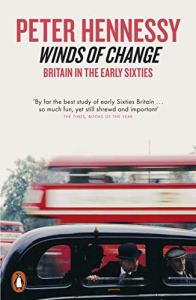
First a nonfiction book, Winds of Change: Britain in the Early Sixties by historian, Peter Hennessy. The centre of the book is 1963 – the year of the Profumo Crisis, the Great Train Robbery, the satire boom, de Gaulle’s veto of Britain’s first application to join the EEC, the fall of Macmillan and the unexpected succession to the premiership of Alec Douglas-Home. Then, in 1964, the battle of what Hennessy calls the tweedy aristocrat and the tweedy meritocrat – Harold Wilson, who would end 13 years of Conservative rule and usher in a new era. It’s the final book in Hennessy’s Post War trilogy.

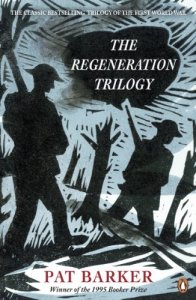
Then three novels – all historical fiction: The Regeneration Trilogy: Regeneration; The Eye in the Door; The Ghost Road by Pat Barker, three novels set during the First World War. I already had the third book, but hadn’t read it because I wanted to read the trilogy in order. It tells the story of three men, shell-shocked soldiers, who were sent back to the front. It’s based on the experiences of poets, Siegfried Sassoon and Wifred Owen who met at Craiglockhart Hospital near Edinburgh.

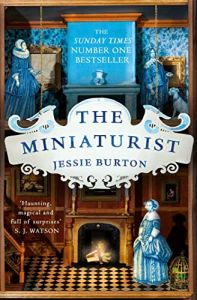
The Miniaturist by Jessie Burton – A few years ago I borrowed this book from the library but had to return it unread. Later on I watched the TV series and thought I’d like to read the book. So, when it was on offer for 99p I bought it. It’s set in Amsterdam in 1686. Nella Oortman marries a rich merchant, but life in her new home is unfulfilled. Even her cabinet house brings a mystery to the secretive world she has entered as the lifelike miniatures somehow start eerily foreshadowing her fate.

This last book is my choice this month from Amazon First Reads free books:

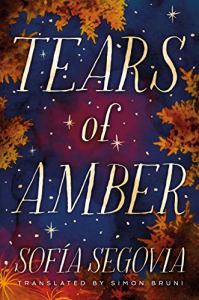
Tears of Amber by Sofía Segovia – a novel set during the Second World War in East Prussia between 1938 and 1947. In her author’s note Sofia Segovia says her novel was inspired by the story of Ilse and Arno Schipper, who established a factory in Monterrey, Mexico, her home town. It is a mix of fact and fiction. Publication date 1 May 2021. I have started reading and it’s looking good so far.

The Classics Club Spin Result

The spin number in The Classics Club Spin is number …

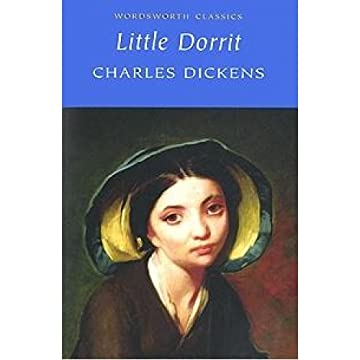
which for me is Little Dorrit by Charles Dickens. The rules of the Spin are that this is the book for me to read by 31 May, 2021.

Little Dorrit is a classic tale of imprisonment, both literal and metaphorical, while Dickens’ working title for the novel, Nobody’s Fault, highlights its concern with personal responsibility in private and public life. Dickens’ childhood experiences inform the vivid scenes in Marshalsea debtor’s prison, while his adult perceptions of governmental failures shape his satirical picture of the Circumlocution Office. The novel’s range of characters – the honest, the crooked, the selfish and the self-denying – offers a portrait of society about whose values Dickens had profound doubts.

Little Dorrit is indisputably one of Dickens’ finest works, written at the height of his powers. George Bernard Shaw called it ‘a masterpiece among masterpieces’, a verdict shared by the novel’s many admirers. (Description from Amazon)

I have started this a few times before, but found the small print in my paperback copy too off putting. I’ll be reading the e-book this time.

Did you take part in the Classics Spin? What will you be reading?

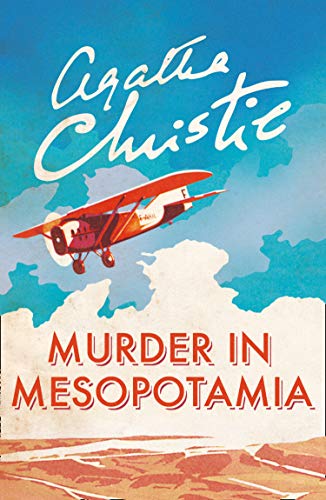
Murder in Mesopotamia by Agatha Christie

I first read Agatha Christie’s Murder in Mesopotamia in 2012 but never got round to writing about it. It was a good choice to re-read for the 1936 Club as I didn’t remember much about it. It’s a Poirot mystery, but he doesn’t appear until about halfway. As the title tells you it is set in Mesopotamia, the area in the Middle East between the two rivers, Tigris and Euphrates (the area of present-day Iraq, Kuwait, and parts of Iran, Syria, and Turkey).

An archaeologist’s wife is murdered on the shores of the River Tigris in Iraq…

It was clear to Amy Leatheran that something sinister was going on at the Hassanieh dig in Iraq; something associated with the presence of ‘Lovely Louise’, wife of celebrated archaeologist Dr Leidner.

In a few days’ time Hercule Poirot was due to drop in at the excavation site. But with Louise suffering from terrifying hallucinations, and tension within the group becoming almost unbearable, Poirot might just be too late…

Agatha Christie had first visited the Middle East in 1929 travelling on the Orient Express to Istanbul and then on to Damascus and Baghdad. She visited the excavations at Ur and returned there the following spring where she met archaeologist Max Mallowan – by the end of the summer they had decided to marry, which they did on 11 September 1930. So, by 1936 when she wrote Murder in Mesopotamia she had frequently accompanied Max on his archaeological digs and her books set in the Middle East are based on the everyday life that she experienced on a dig and on the people she met.

The murder victim is Louise Leidner, the wife of the leader of the expedition. The novel is narrated by Nurse Amy Leatheran, who had been asked by Dr Leidner to care for Louise, although he is vague about what is wrong with her. It seems she is scared and has nervous terrors. She has fearful visions and the other members of the expedition blame her for the oppressive atmosphere on the dig.

It’s a seemingly impossible murder – she is found in her room, dead from a blow on her head, and suspicion falls on Louise’s first husband who had been sending her threatening letters, or so she had claimed. But no strangers had been seen on or near the expedition house and it is down to Poirot to discover what had actually happened. Fortunately Poirot was in the area, having sorted out a military scandal in Syria (referred to at the beginning of Murder on the Orient Express) and was passing through the expedition site on his way to Baghdad before returning to London.

I thoroughly enjoyed this book, although I think the details of how the murder was committed are rather far-fetched. I was hoping that Agatha Christie had mentioned writing it in her Autobiography, but I couldn’t find any reference to it, although she wrote extensively about her time in the Middle East with Max, and in her fascinating memoir, Come, Tell Me How You Live she wrote about how much she loved the country and its people.

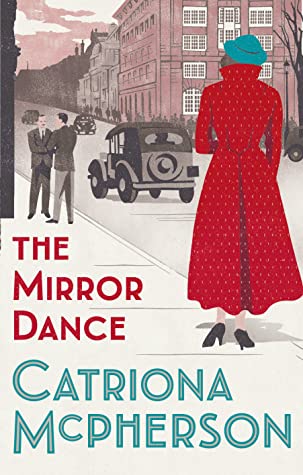
The Mirror Dance by Catriona McPherson

Hodder and Stoughton| 21 January 2021| 259 pages| e-book| Review copy| 3*

Description:

Something sinister is afoot in the streets of Dundee, when a puppeteer is found murdered behind his striped Punch and Judy stand, as children sit cross-legged drinking ginger beer. At once, Dandy Gilver’s semmingly-innocuous investigation into plagiarism takes a darker turn. The gruesome death seems to be inextricably bound to the gloomy offices of Doig’s Publishers, its secrets hidden in the real stories behind their girls’ magazines The Rosie Cheek and The Freckle.

On meeting a mysterious professor from St Andrews, Dandy and her faithful colleague Alex Osbourne are flung into the worlds of academia, the theatre and publishing. Nothing is quite as it seems, and behind the cheerful facades of puppets and comic books, is a troubled history has begun to repeat itself.

My thoughts:

I’ve read some of the Dandy Gilver mysteries by Catriona McPherson, set in the 1920s and 1930s Scotland. The Mirror Dance is the 15th book. The last one I read was the 6th, a few years ago now, so when I saw it on NetGalley I requested it. I was pleased to find, that although I’d missed so many of the books in the series, it’s easy to read as a standalone.

It begins on an August Bank Holiday weekend in 1937, when Dandy (short for Dandelion Dahlia!), a private detective, receives a phone call from Miss Sandy Bissett, a magazine publisher in Dundee. She asks Dandy to go to Dudhope Park to warn the Punch and Judy man there that he is infringing copyrighted property as he is using two of the magazine’s cartoon characters, Rosie Cheeke and Freckles in his show. So, the next day, Bank Holiday Monday, together with her female staff, Grant, her lady’s maid, Becky her housemaid and Mrs Tilling, her cook, Dandy goes to Dundee to see the puppet show, looking out for the appearance of the magazine characters.

But during the show, the puppet Scaramouche extended his neck upwards, unfolding from pleats like an accordion and then stayed still like a tableau. The children lost interest and the adults were grumbling. When Dandy and Grant went to the back of the Punch and Judy tent they found the puppeteer slumped dead behind the scene, with his throat cut. The police are called but Dandy and her partner, Alec take it upon themselves to investigate the murder, an apparently impossible murder, with no signs of the murderer, and no one knew the puppeteer’s name.

I liked the setting. There is a good sense of location in Dundee in the 1930s, when the effects of the First World War were still lingering and the threat of another war was on the horizon. This is a convoluted murder mystery, where there is more than meets the eye. There is a lot of detail about the publishing industry and the theatrical world of the time which was interesting, but overall the amount of detail of everyday life, with all its sights and smells, slowed the book down too much for me.

There are several complications, red herrings and apparent impossibilities and I was puzzled about the relevance of a murder 50 years earlier in the same park, of an earlier Punch and Judy man. I became a bit lost in the detail about the number of women suspects Dandy and Alec consider – there were two, and then perhaps there were three. Who were they and what was the motive for the murder? Gradually that became clear, but I got exasperated at the number of times Dandy and the others went over and over what was happening, working out how it could have happened and why. Although some of it is confusing and I hadn’t worked out the identity of the murderer some of it seemed so obvious to me that I couldn’t see why it took them so long to work it out. So, although I enjoyed the actual murder mystery and the mirror dance aspect, where everything is turned on its head, I did not enjoy how it was told.

My thanks to the publishers and NetGalley for my review copy.